Tissue Engineering/Regenerative Medicine 1. Making a tissue or organ to be used inside or outside the body. 2. Using tissue for research - drug applications
Fields for research 1) Biomaterials: direct the organization, growth, and differentiation of cells by providing both physical and chemical cues.  2) Cells: methods for cells to multiply and differentiate, and acquiring the appropriate source of cells.
3) Biomolecules: including angiogenic (blood vessel inducing) factors, growth factors, differentiation factors and bone morphogenic (shaping) proteins. 4) Engineering Design Aspects: including 2-d cell expansion, 3-d tissue growth, bioreactors, vascularization, cell and tissue storage and shipping (biological packaging).
5) Functional assessment: properties of native and engineered tissues, mechanical signals regulating engineered tissues, and efficacy and safety of engineered tissues. 6) Informatics to support tissue engineering: gene and protein sequencing, tissue and cell modeling, digital tissue manufacturing, other computer support.
Current therapies Autografting – harvest and use on the same patient  Ex: skin Allografting – harvest from a different person to be used on a patient  Ex: kidney Xenografting – harvest from an animal to be used on a patient  Ex: heart valve Man-made materials and devices  Ex: artificial heart
Problems with transplants Rejection Incompatible tissue/blood types Incompatible antibodies Failure to thrive Immune suppression drugs for life Long waiting lists Expense
Topics of research Trauma Wound healing Respiratory disease Bone and joint repair Heart and vascular disease
Trauma Advanced skin grafts  for burn wound treatment Smart bioscaffolds  to initiate tissue regeneration following traumatic wounding Advanced treatments  of large open abdominal wounds Novel resuscitation fluids  for treating shock due to hemorrhage Biomaterial  to promote craniofacial bone regeneration on the battlefield, to stabilize the bone wound for long-term treatment.
Wound healing Foam  that can be “sprayed” into a wound to rapidly control bleeding Advanced “bandages”  to accelerate wound closure and healing  Stem cell-based therapies  for closure of partial- and full-thickness burns Techniques  to promote scarless wound healing
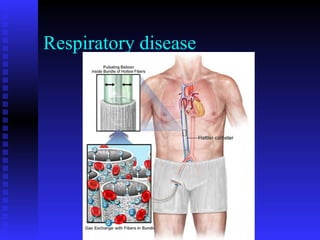
Respiratory disease
Bone/joint repair developing treatments that can slow the process of joint deterioration  One current project is focused on the design of an enhanced bone implant material for combat casualties and a variety of reconstructive orthopedic uses.
Heart/vascular disease growing functional heart valves in the laboratory creating a heart “patch” made of a biodegradable scaffold, seeded with healthy heart muscle cells to repair a section of heart damaged by heart attack
Basics of TE  CELLS can be classified as Tissue specific (adult) stem cells bone marrow is most versatile of these Umbilical cord stem cells – pluripotent Can cure upwards of 70 diseases Embryonic stem cells – totipotent Obtained from in vitro embryos or cloning Working on ways to revert adult cells to totipotent stage
Catholic Church’s viewpoint No ethical objection to the use of adult or umbilical stem cells Does not support the use of embryonic cells for any purpose Embryos are destroyed to obtain the cells Human cloning is also unethical (and illegal in the US)
Scaffolds The 3-D shape that cells will grow into to make a tissue Can be made of several things Natural materials – collagen, coral, decellularized tissues Synthetic materials – polyester, polylactic acid Can be biodegradable or not depending on what is needed. May be injectable
Bioreactor A machine that helps cells grow in the engineered tissues Proper temp, pH, humidity, pressure Nutrient addition and waste removal
Neuro-controlled prostheses “Bionic” limbs with servos and motors for fine and gross movements Hooked directly into the nerves that used to make a real limb move Electrical signals from nerves are detected and converted into movement Takes some practice to work, much like a baby learning to walk

Tissue engineering

  • 1.
    Tissue Engineering/Regenerative Medicine1. Making a tissue or organ to be used inside or outside the body. 2. Using tissue for research - drug applications
  • 2.
    Fields for research1) Biomaterials: direct the organization, growth, and differentiation of cells by providing both physical and chemical cues. 2) Cells: methods for cells to multiply and differentiate, and acquiring the appropriate source of cells.
  • 3.
    3) Biomolecules: includingangiogenic (blood vessel inducing) factors, growth factors, differentiation factors and bone morphogenic (shaping) proteins. 4) Engineering Design Aspects: including 2-d cell expansion, 3-d tissue growth, bioreactors, vascularization, cell and tissue storage and shipping (biological packaging).
  • 4.
    5) Functional assessment:properties of native and engineered tissues, mechanical signals regulating engineered tissues, and efficacy and safety of engineered tissues. 6) Informatics to support tissue engineering: gene and protein sequencing, tissue and cell modeling, digital tissue manufacturing, other computer support.
  • 5.
    Current therapies Autografting– harvest and use on the same patient Ex: skin Allografting – harvest from a different person to be used on a patient Ex: kidney Xenografting – harvest from an animal to be used on a patient Ex: heart valve Man-made materials and devices Ex: artificial heart
  • 6.
    Problems with transplantsRejection Incompatible tissue/blood types Incompatible antibodies Failure to thrive Immune suppression drugs for life Long waiting lists Expense
  • 7.
    Topics of researchTrauma Wound healing Respiratory disease Bone and joint repair Heart and vascular disease
  • 8.
    Trauma Advanced skingrafts for burn wound treatment Smart bioscaffolds to initiate tissue regeneration following traumatic wounding Advanced treatments of large open abdominal wounds Novel resuscitation fluids for treating shock due to hemorrhage Biomaterial to promote craniofacial bone regeneration on the battlefield, to stabilize the bone wound for long-term treatment.
  • 9.
    Wound healing Foam that can be “sprayed” into a wound to rapidly control bleeding Advanced “bandages” to accelerate wound closure and healing Stem cell-based therapies for closure of partial- and full-thickness burns Techniques to promote scarless wound healing
  • 10.
  • 11.
    Bone/joint repair developingtreatments that can slow the process of joint deterioration One current project is focused on the design of an enhanced bone implant material for combat casualties and a variety of reconstructive orthopedic uses.
  • 12.
    Heart/vascular disease growingfunctional heart valves in the laboratory creating a heart “patch” made of a biodegradable scaffold, seeded with healthy heart muscle cells to repair a section of heart damaged by heart attack
  • 13.
    Basics of TE CELLS can be classified as Tissue specific (adult) stem cells bone marrow is most versatile of these Umbilical cord stem cells – pluripotent Can cure upwards of 70 diseases Embryonic stem cells – totipotent Obtained from in vitro embryos or cloning Working on ways to revert adult cells to totipotent stage
  • 14.
    Catholic Church’s viewpointNo ethical objection to the use of adult or umbilical stem cells Does not support the use of embryonic cells for any purpose Embryos are destroyed to obtain the cells Human cloning is also unethical (and illegal in the US)
  • 15.
    Scaffolds The 3-Dshape that cells will grow into to make a tissue Can be made of several things Natural materials – collagen, coral, decellularized tissues Synthetic materials – polyester, polylactic acid Can be biodegradable or not depending on what is needed. May be injectable
  • 16.
    Bioreactor A machinethat helps cells grow in the engineered tissues Proper temp, pH, humidity, pressure Nutrient addition and waste removal
  • 17.
    Neuro-controlled prostheses “Bionic”limbs with servos and motors for fine and gross movements Hooked directly into the nerves that used to make a real limb move Electrical signals from nerves are detected and converted into movement Takes some practice to work, much like a baby learning to walk