Basic Terminology Mechanical
Ventilation
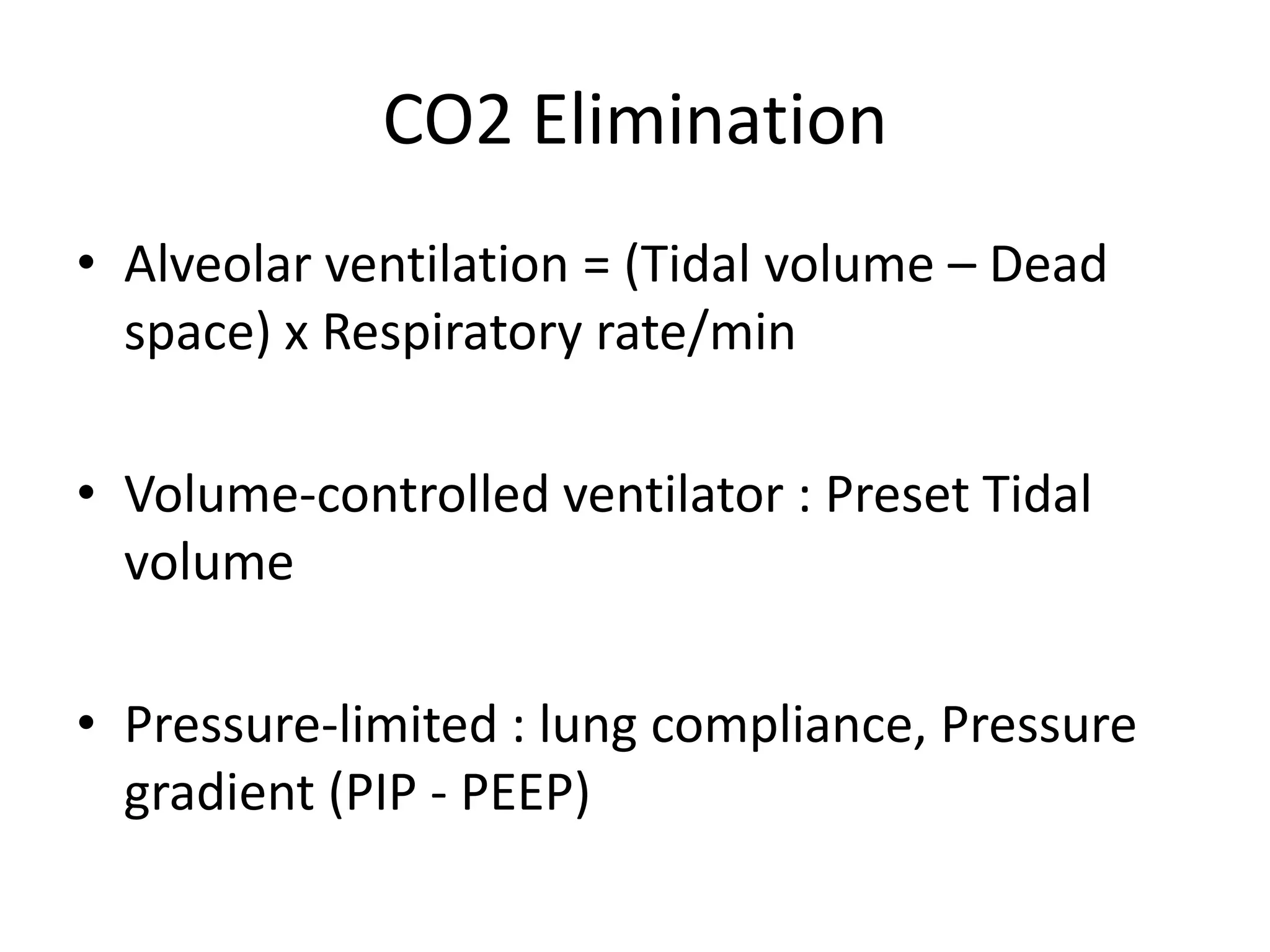
CO2 Elimination
• Alveolar ventilation = (Tidal volume – Dead
space) x Respiratory rate/min
• Volume-controlled ventilator : Preset Tidal
volume
• Pressure-limited : lung compliance, Pressure
gradient (PIP - PEEP)
O2 Uptake
• Depends on Mean Airway pressure (MAP)
• MAP - Area under airway pressure curve
divided by duration of the cycle
• MAP = K (PIP – PEEP) [Ti/(Ti – Te)] + PEEP
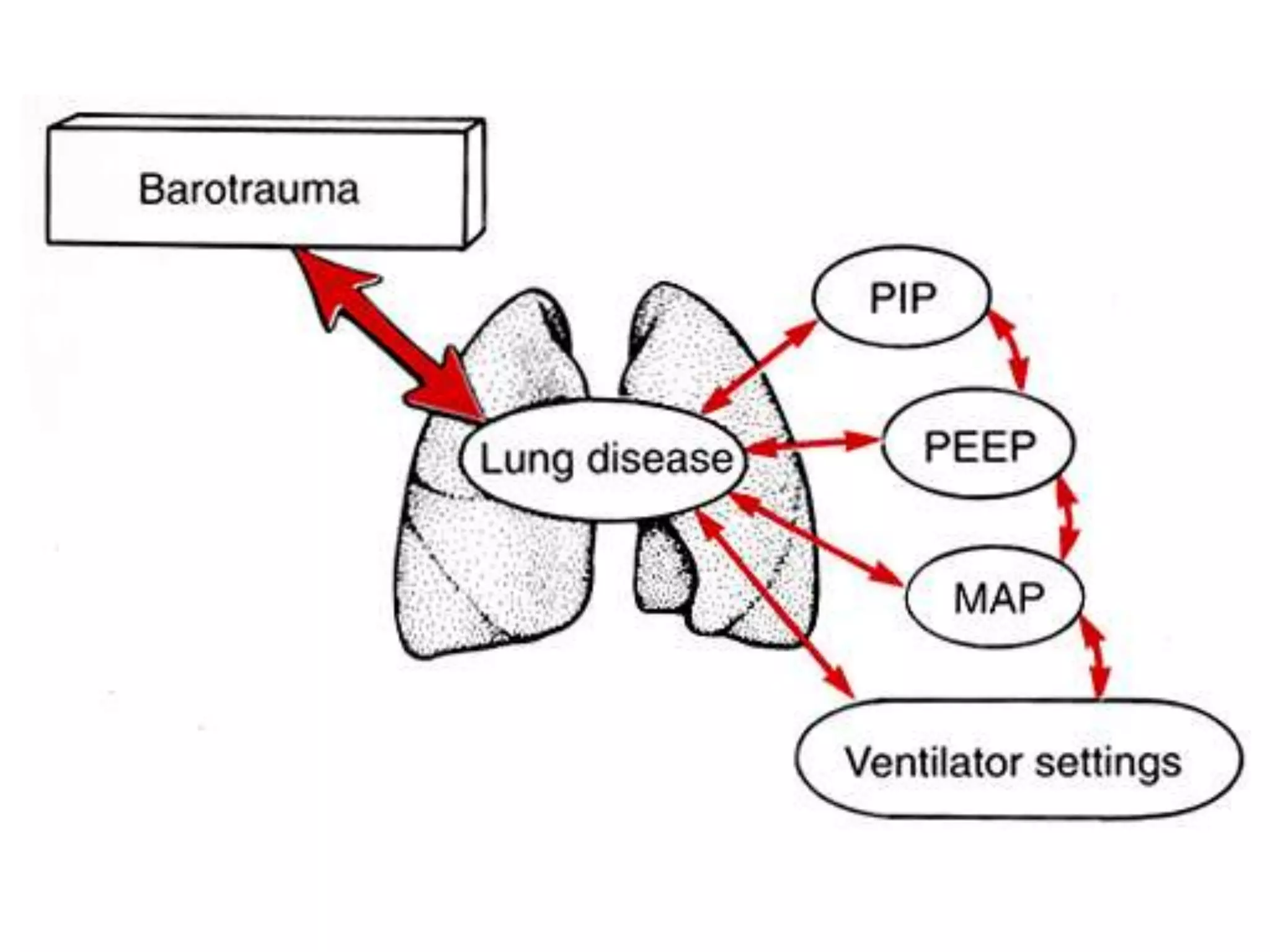
MAP
MAP can be augmented by:
o Inspiratory flow rate (increases K)
o Increasing PIP
o Increasing I:E ratio
o Increasing PEEP
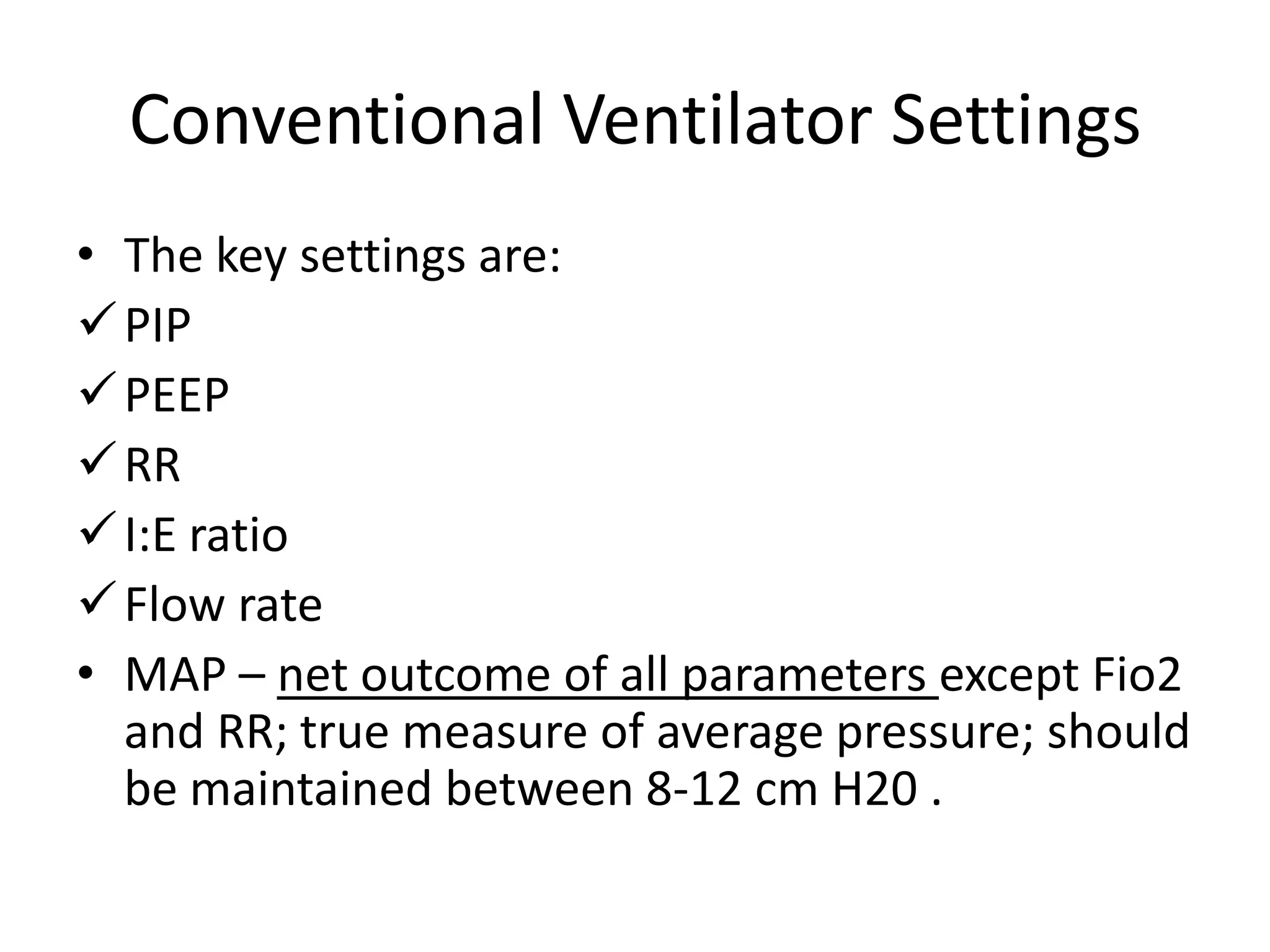
Conventional Ventilator Settings
• The key settings are:
PIP
PEEP
RR
I:E ratio
Flow rate
• MAP – net outcome of all parameters except Fio2
and RR; true measure of average pressure; should
be maintained between 8-12 cm H20 .
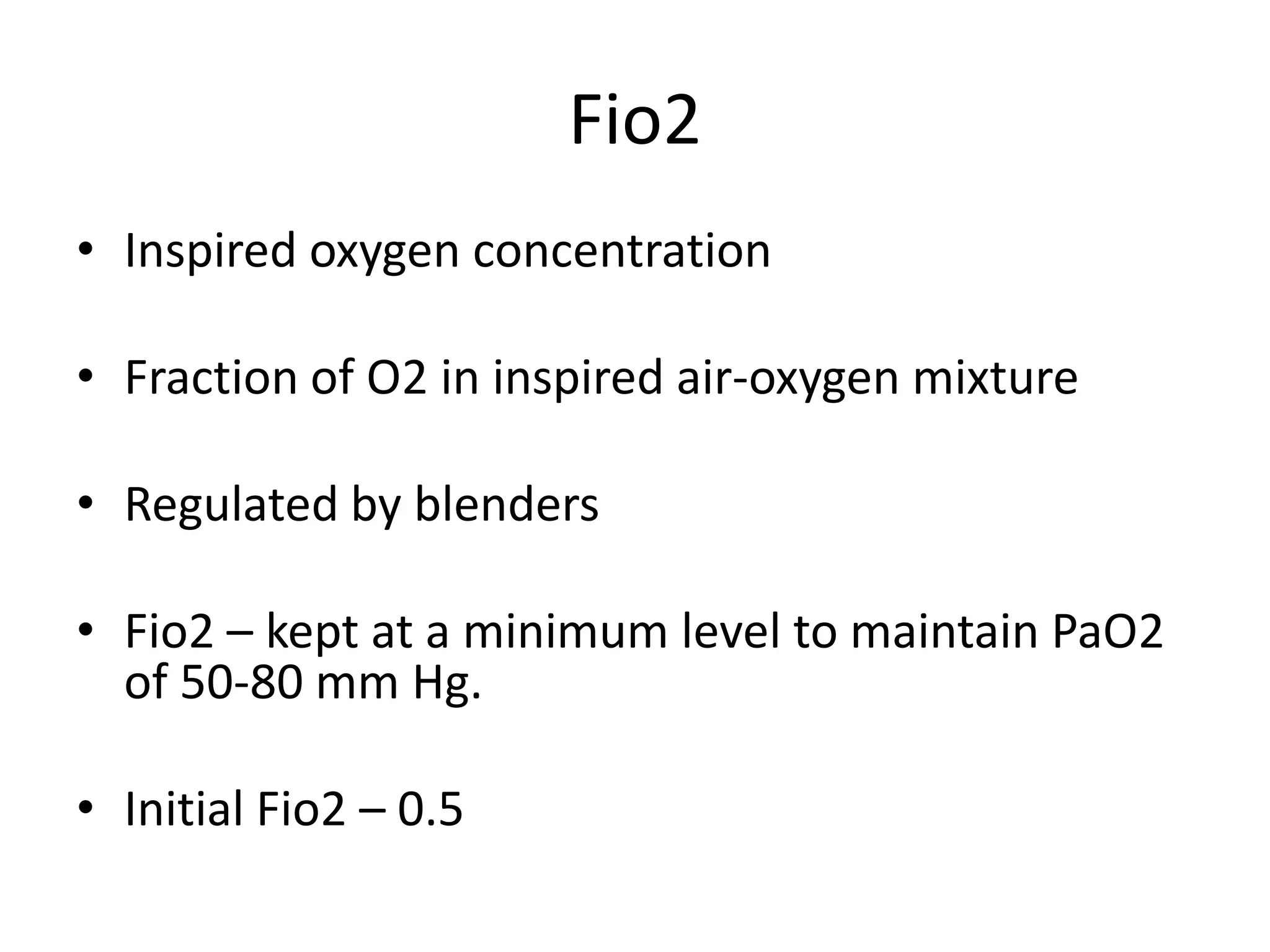
Fio2
• Inspired oxygen concentration
• Fraction of O2 in inspired air-oxygen mixture
• Regulated by blenders
• Fio2 – kept at a minimum level to maintain PaO2
of 50-80 mm Hg.
• Initial Fio2 – 0.5
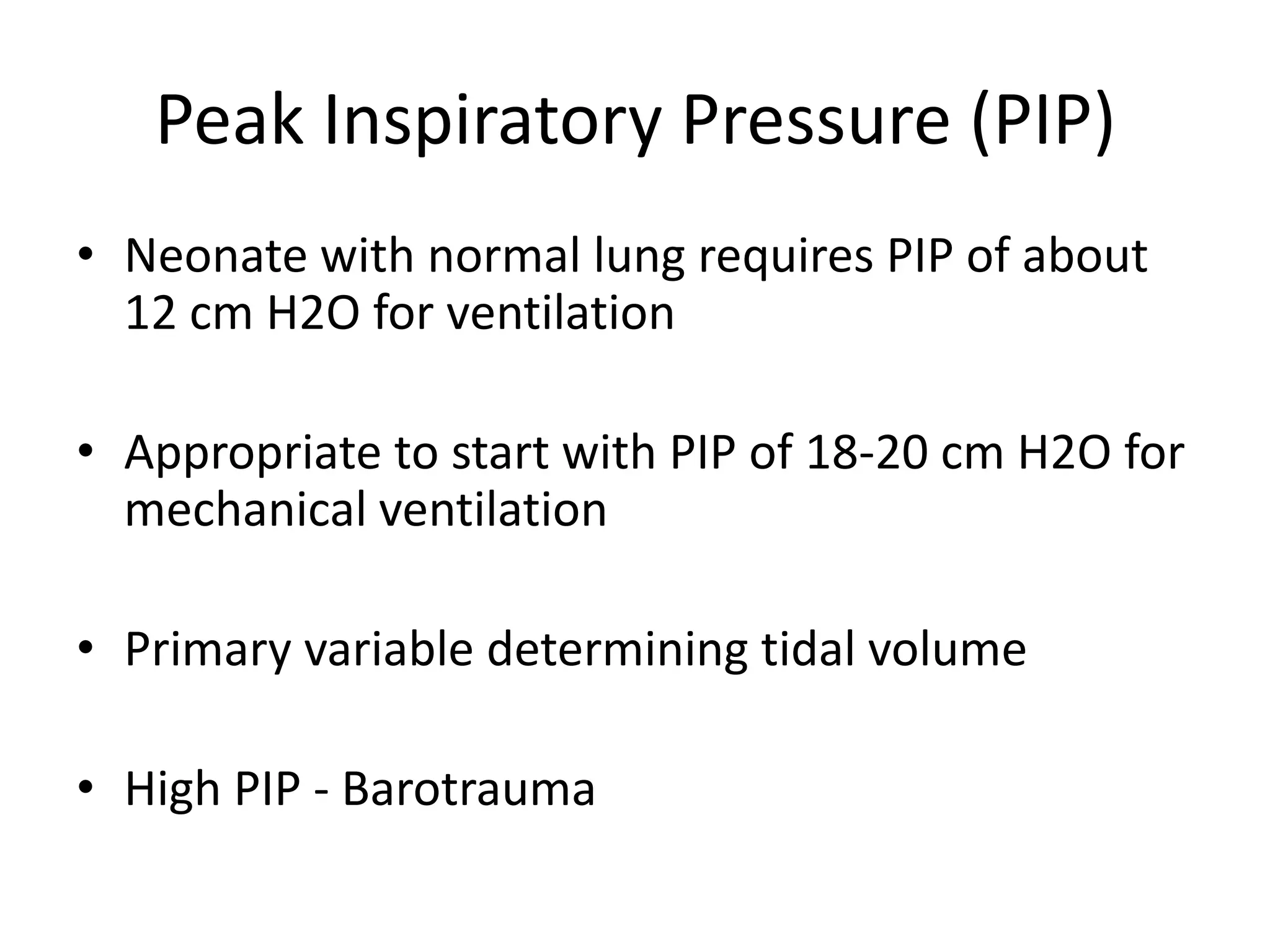
Peak Inspiratory Pressure (PIP)
• Neonate with normal lung requires PIP of about
12 cm H2O for ventilation
• Appropriate to start with PIP of 18-20 cm H2O for
mechanical ventilation
• Primary variable determining tidal volume
• High PIP - Barotrauma
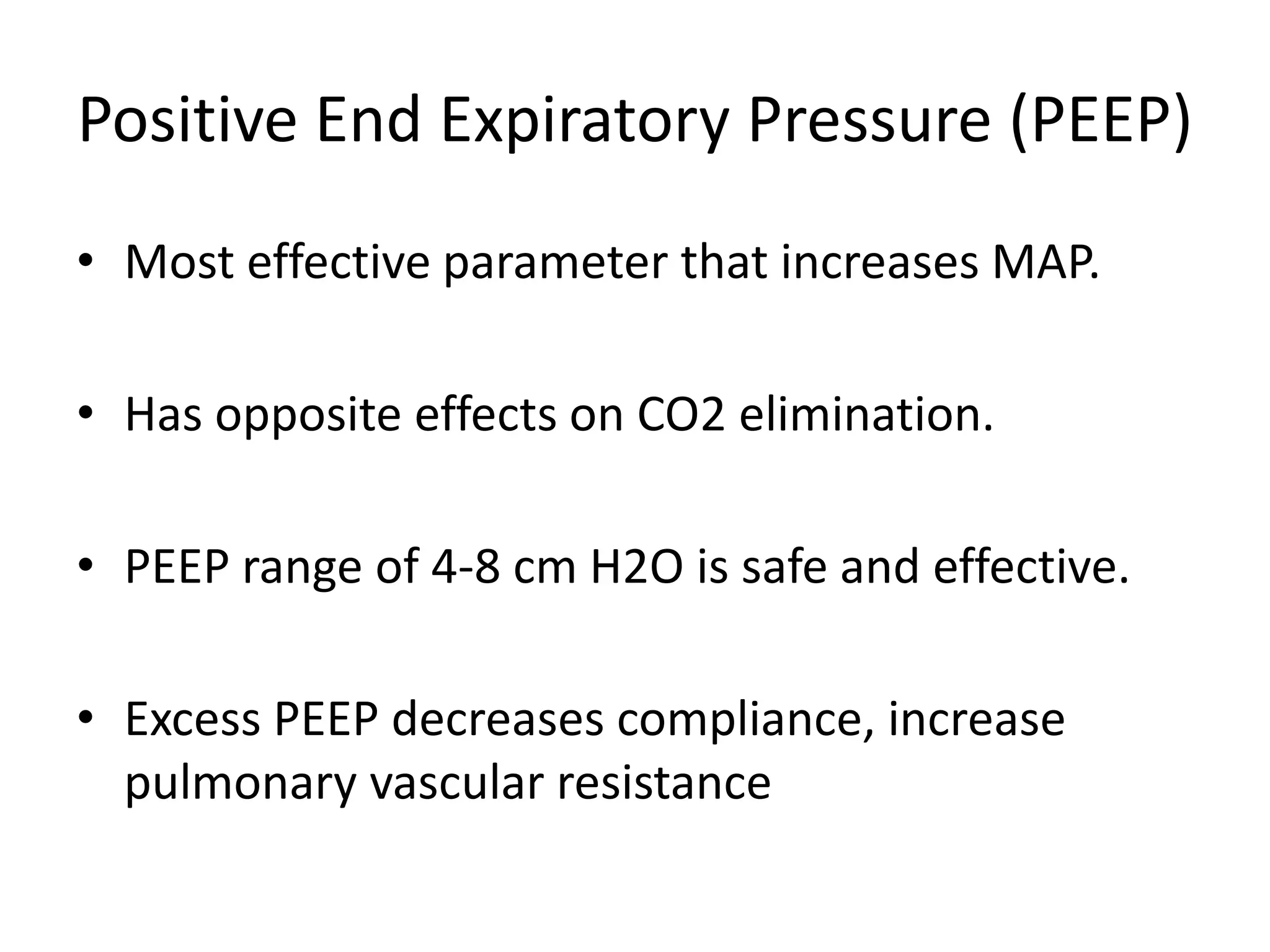
Positive End Expiratory Pressure (PEEP)
• Most effective parameter that increases MAP.
• Has opposite effects on CO2 elimination.
• PEEP range of 4-8 cm H2O is safe and effective.
• Excess PEEP decreases compliance, increase
pulmonary vascular resistance
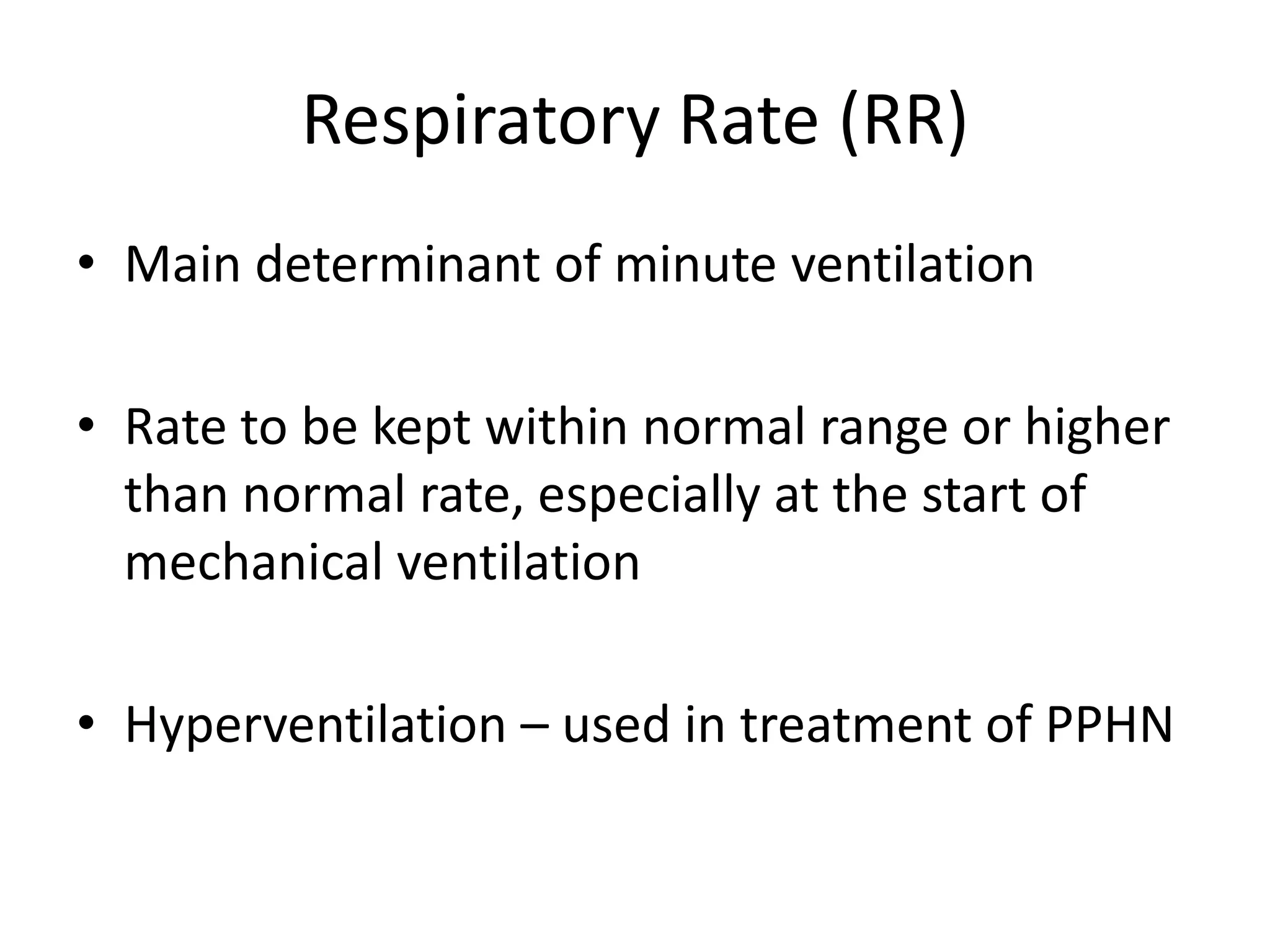
Respiratory Rate (RR)
• Main determinant of minute ventilation
• Rate to be kept within normal range or higher
than normal rate, especially at the start of
mechanical ventilation
• Hyperventilation – used in treatment of PPHN
I:E Ratio (Inspiratory-Expiratory ratio)
• Primarily effects MAP and oxygenation
• Physiological ratio : 1:1 or 1:1.5
• Reversed ratio (2:1 or 3:1) – FiO2 and PEEP can
be reduced.
• Prolonged expiratory rates (1:2 or 1:3) – MAS and
during weaning
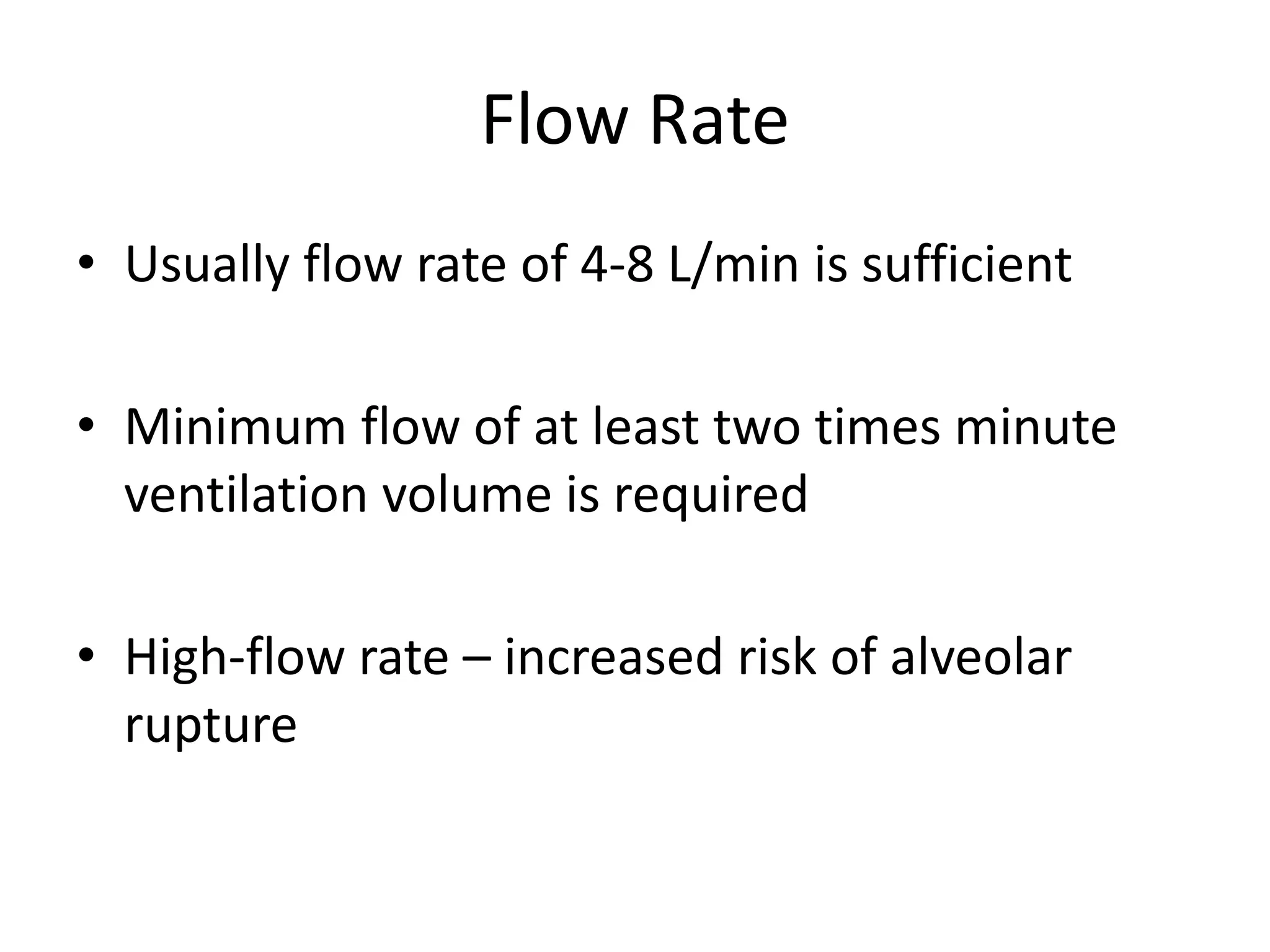
Flow Rate
• Usually flow rate of 4-8 L/min is sufficient
• Minimum flow of at least two times minute
ventilation volume is required
• High-flow rate – increased risk of alveolar
rupture
• Respiratory rate
• Tidal volume
• PEEP
• FiO2
• Auto PEEP
• Barotrauma
• Cardiac output
• O2 toxicity
Terminology mechanical ventilation

Terminology mechanical ventilation

  • 1.
  • 2.
    CO2 Elimination • Alveolarventilation = (Tidal volume – Dead space) x Respiratory rate/min • Volume-controlled ventilator : Preset Tidal volume • Pressure-limited : lung compliance, Pressure gradient (PIP - PEEP)
  • 3.
    O2 Uptake • Dependson Mean Airway pressure (MAP) • MAP - Area under airway pressure curve divided by duration of the cycle • MAP = K (PIP – PEEP) [Ti/(Ti – Te)] + PEEP
  • 5.
    MAP MAP can beaugmented by: o Inspiratory flow rate (increases K) o Increasing PIP o Increasing I:E ratio o Increasing PEEP
  • 7.
    Conventional Ventilator Settings •The key settings are: PIP PEEP RR I:E ratio Flow rate • MAP – net outcome of all parameters except Fio2 and RR; true measure of average pressure; should be maintained between 8-12 cm H20 .
  • 8.
    Fio2 • Inspired oxygenconcentration • Fraction of O2 in inspired air-oxygen mixture • Regulated by blenders • Fio2 – kept at a minimum level to maintain PaO2 of 50-80 mm Hg. • Initial Fio2 – 0.5
  • 9.
    Peak Inspiratory Pressure(PIP) • Neonate with normal lung requires PIP of about 12 cm H2O for ventilation • Appropriate to start with PIP of 18-20 cm H2O for mechanical ventilation • Primary variable determining tidal volume • High PIP - Barotrauma
  • 10.
    Positive End ExpiratoryPressure (PEEP) • Most effective parameter that increases MAP. • Has opposite effects on CO2 elimination. • PEEP range of 4-8 cm H2O is safe and effective. • Excess PEEP decreases compliance, increase pulmonary vascular resistance
  • 11.
    Respiratory Rate (RR) •Main determinant of minute ventilation • Rate to be kept within normal range or higher than normal rate, especially at the start of mechanical ventilation • Hyperventilation – used in treatment of PPHN
  • 12.
    I:E Ratio (Inspiratory-Expiratoryratio) • Primarily effects MAP and oxygenation • Physiological ratio : 1:1 or 1:1.5 • Reversed ratio (2:1 or 3:1) – FiO2 and PEEP can be reduced. • Prolonged expiratory rates (1:2 or 1:3) – MAS and during weaning
  • 13.
    Flow Rate • Usuallyflow rate of 4-8 L/min is sufficient • Minimum flow of at least two times minute ventilation volume is required • High-flow rate – increased risk of alveolar rupture
  • 14.
    • Respiratory rate •Tidal volume • PEEP • FiO2 • Auto PEEP • Barotrauma • Cardiac output • O2 toxicity