Troubleshooting
On Mechanical Ventilator
Precautions that would reduce
troubles
I. Power:
 Plug into a grounded AC power with
correct voltage receptacle.
 Secure the power cord properly.
Battery Back up:
 Check the battery level before connecting.
 Charging should be carried out regularly.
 Remember it is for short term use.
II. Gas Source
 Preferable to have centralised supply.
 If cylinders used, should be full
 Spare cylinders should be available
III. Personnel
 Properly trained personnel should only use.
 Familiarizing staff with operator’s manual before using on
a patient.
 (One manufacturer’s manual may not exactly match with
other brands).
 Appropriate monitoring the functioning state of the
ventilator while in use. Familiarizing staff with alarm
system.
 Do not place ventilators in a combustible or explosive
environment.
IV. Servicing and Testing
 Qualified personnel should undertake servicing.
 Follow specifications mentioned in service
manual
 General servicing at regular intervals
 Run prescribed tests and calibrations before using
ventilator on a patient.
 Ensure that ventilators pass all the tests before
putting them in to clinical use.
ALARMS
 All ventilators are equipped with visual
and audible alarms which notify user
problems.
• VC mode – High Pressure alarm
• PC mode – Low TV alarm
• PSV/CPAP – Apnea alarm
ALARMS
Points to remember
 Never ignore an alarm.
 Find out for yourself what alarm is on.
 Check the patient.
 Silence the alarm.
 Never mute the alarm on regular
basis.
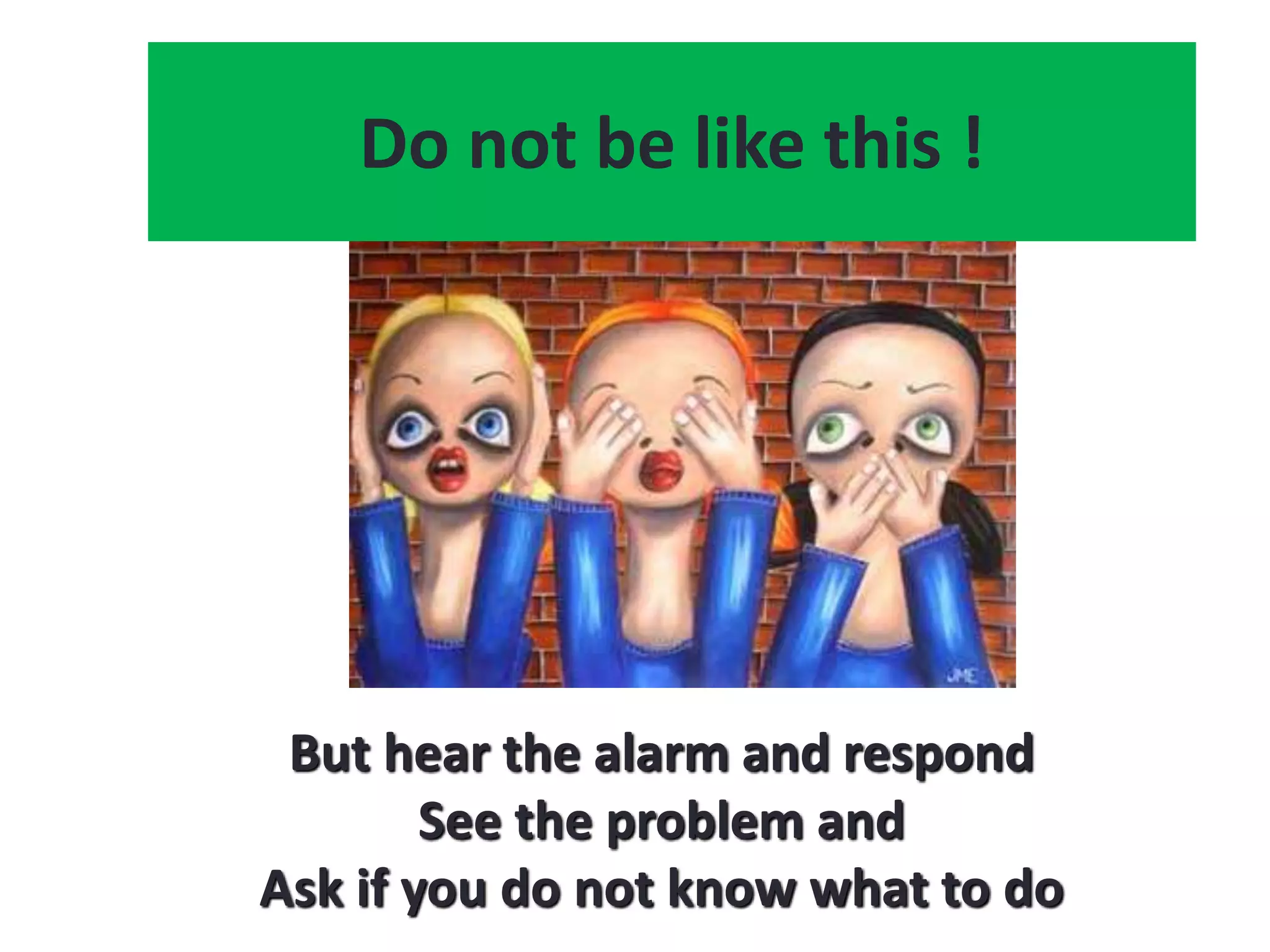
Do not be like this !
But hear the alarm and respond
See the problem and
Ask if you do not know what to do
Troubleshooting
• Is it working ?
– Look at the patient !!
– Listen to the patient !!
– Pulse Ox, ABG, EtCO2
– Chest X ray
– Look at the vent (PIP; expired TV; alarms)
CASE
• 18 yr old man intubated for
organophosphorus poisoning and
intermediate syndrome was stable for 3 days
• He suddenly devlops distress.You notice that
his resp rate is 35/min, heart rate is 120/min,
BP is 90/70mmHg.
• What would you do?
Troubleshooting
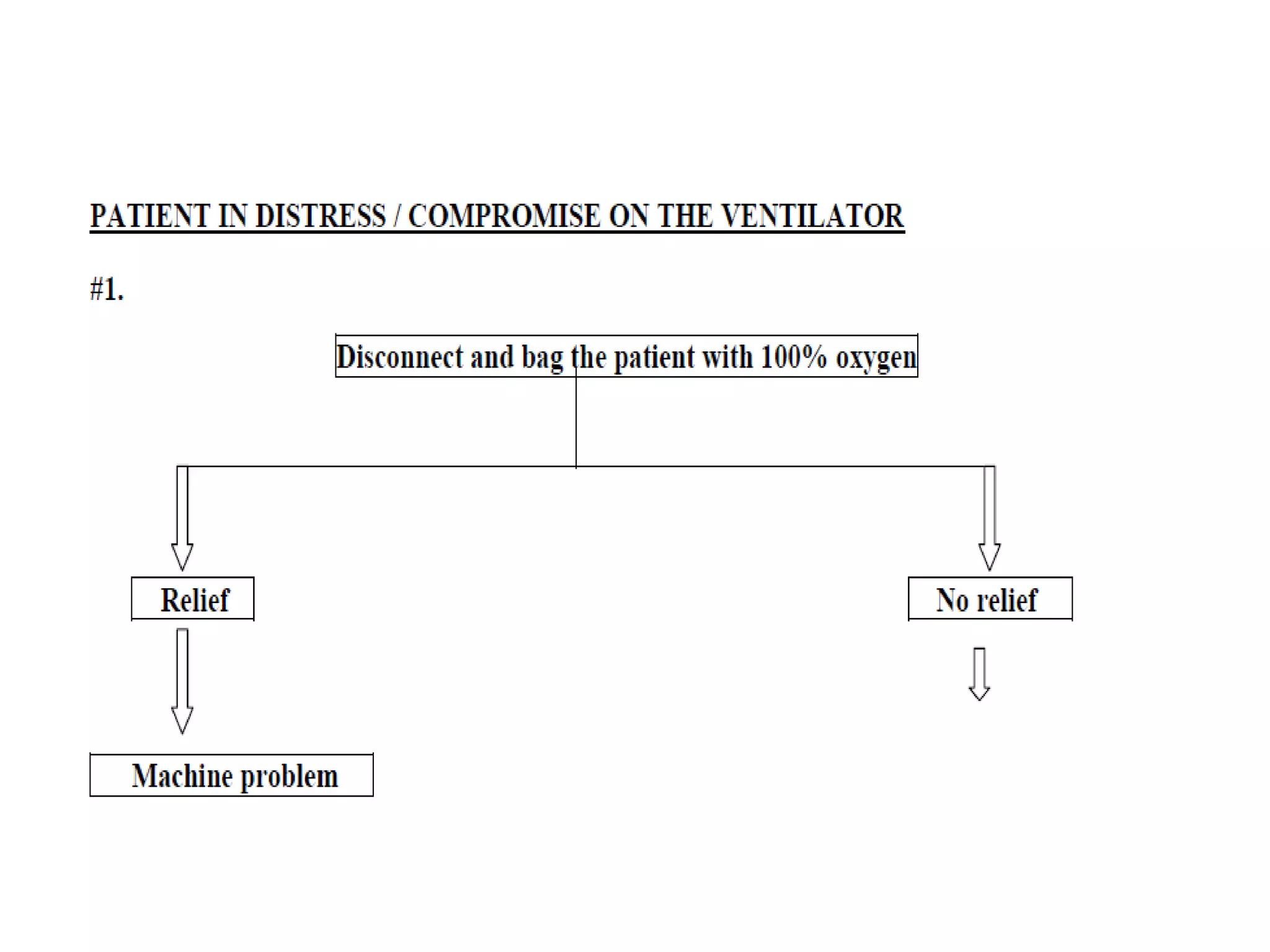
• When in doubt, DISCONNECT THE PATIENT
FROM THE VENT, and begin bag ventilation.
• Ensure you are bagging with 100% O2.
• This eliminates the vent circuit as the source
of the problem.
• Bagging by hand can also help you gauge
patient’s compliance
ALARMS
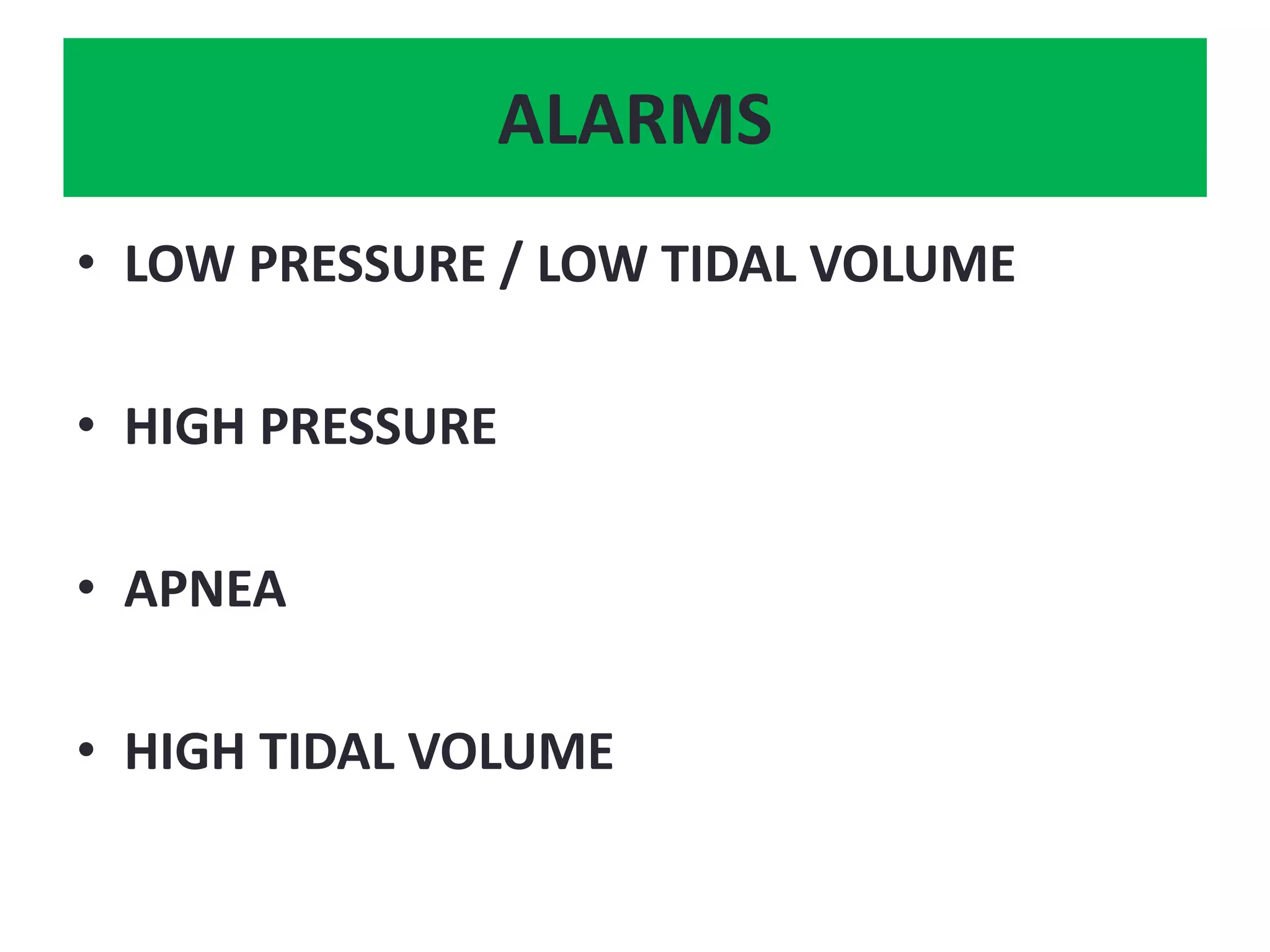
• LOW PRESSURE / LOW TIDAL VOLUME
• HIGH PRESSURE
• APNEA
• HIGH TIDAL VOLUME
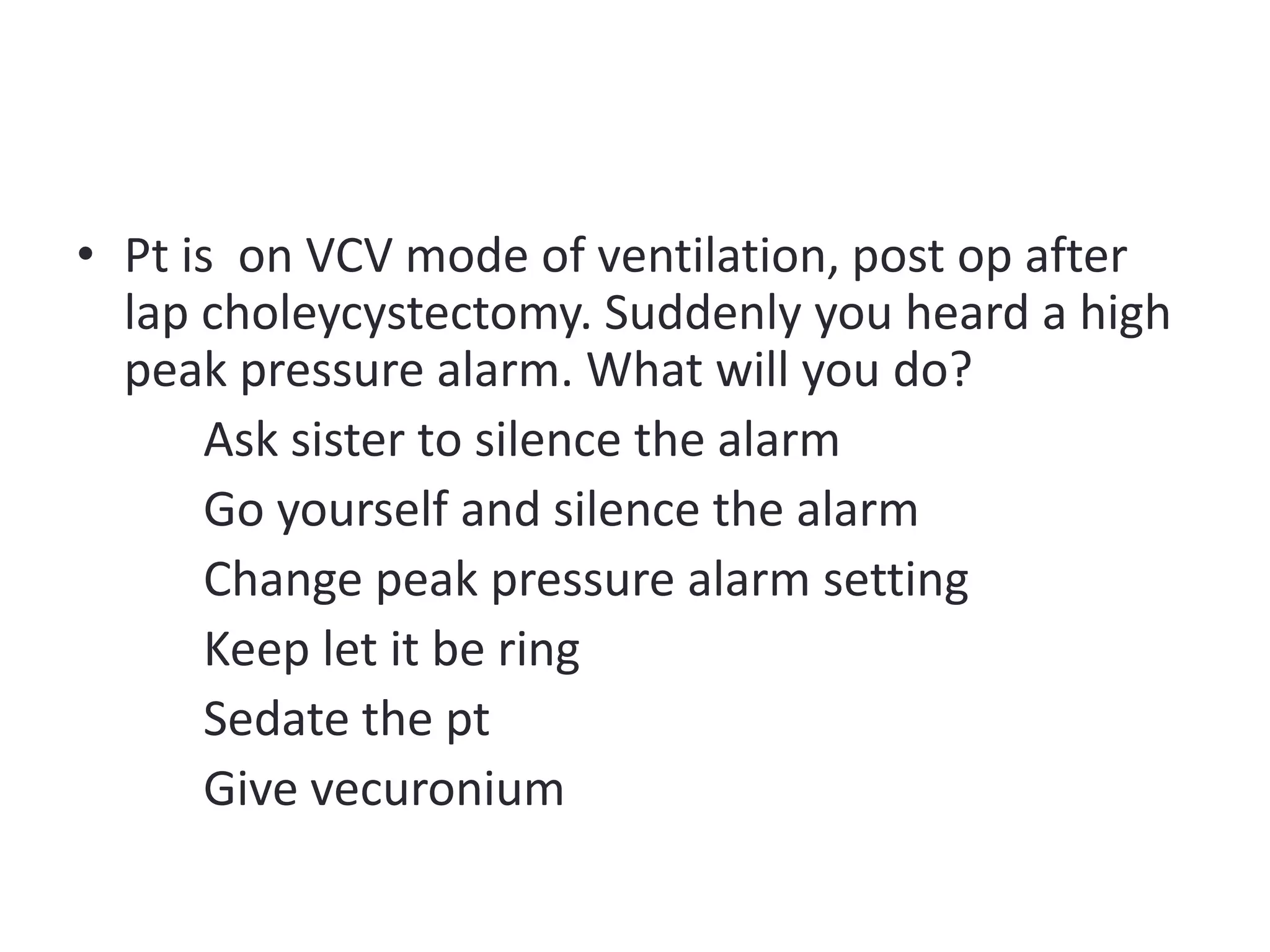
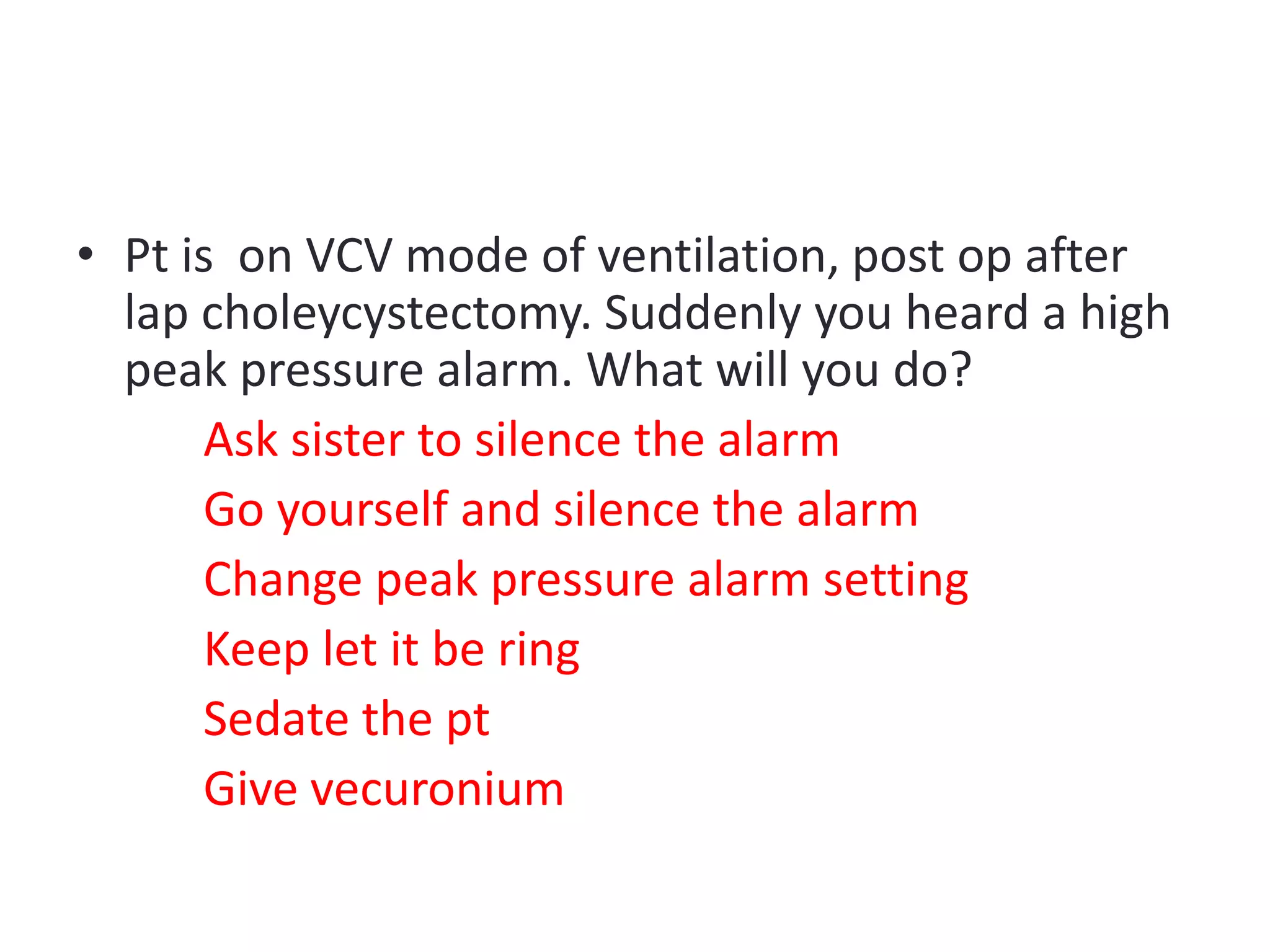
• Pt is on VCV mode of ventilation, post op after
lap choleycystectomy. Suddenly you heard a high
peak pressure alarm. What will you do?
Ask sister to silence the alarm
Go yourself and silence the alarm
Change peak pressure alarm setting
Keep let it be ring
Sedate the pt
Give vecuronium
• Pt is on VCV mode of ventilation, post op after
lap choleycystectomy. Suddenly you heard a high
peak pressure alarm. What will you do?
Ask sister to silence the alarm
Go yourself and silence the alarm
Change peak pressure alarm setting
Keep let it be ring
Sedate the pt
Give vecuronium
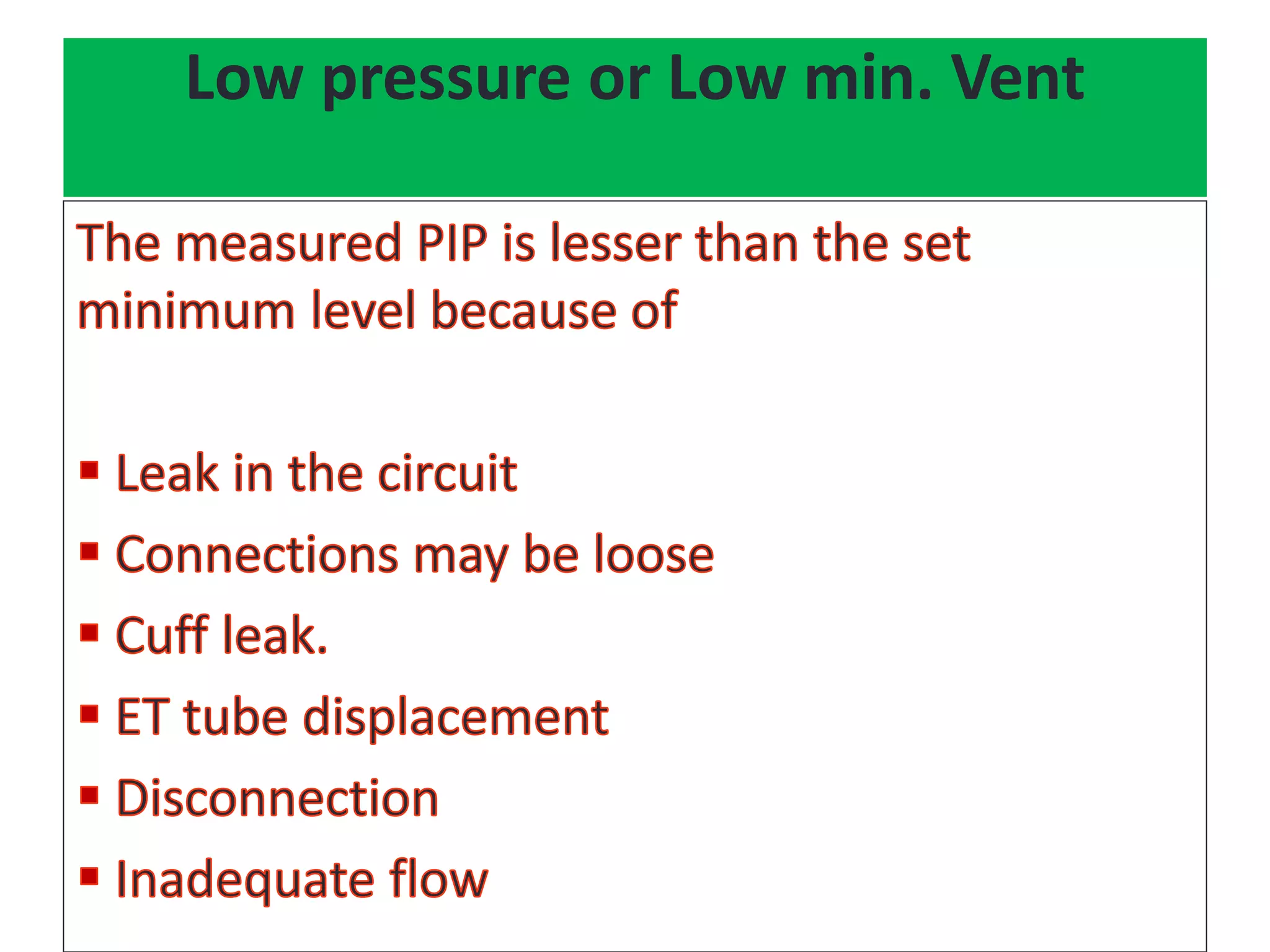
Low pressure or Low min. Vent
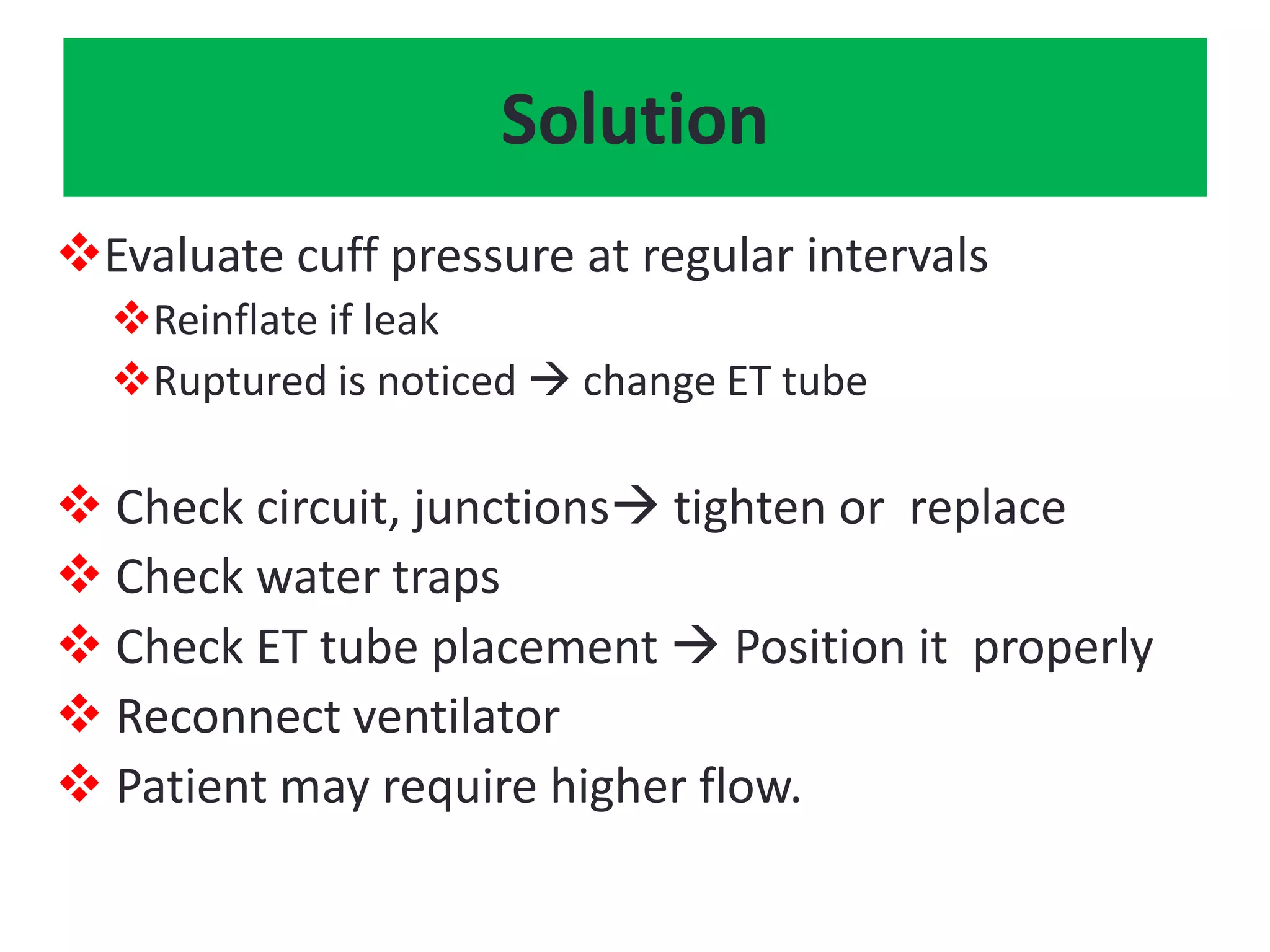
Solution
Evaluate cuff pressure at regular intervals
Reinflate if leak
Ruptured is noticed  change ET tube
 Check circuit, junctions tighten or replace
 Check water traps
 Check ET tube placement  Position it properly
 Reconnect ventilator
 Patient may require higher flow.
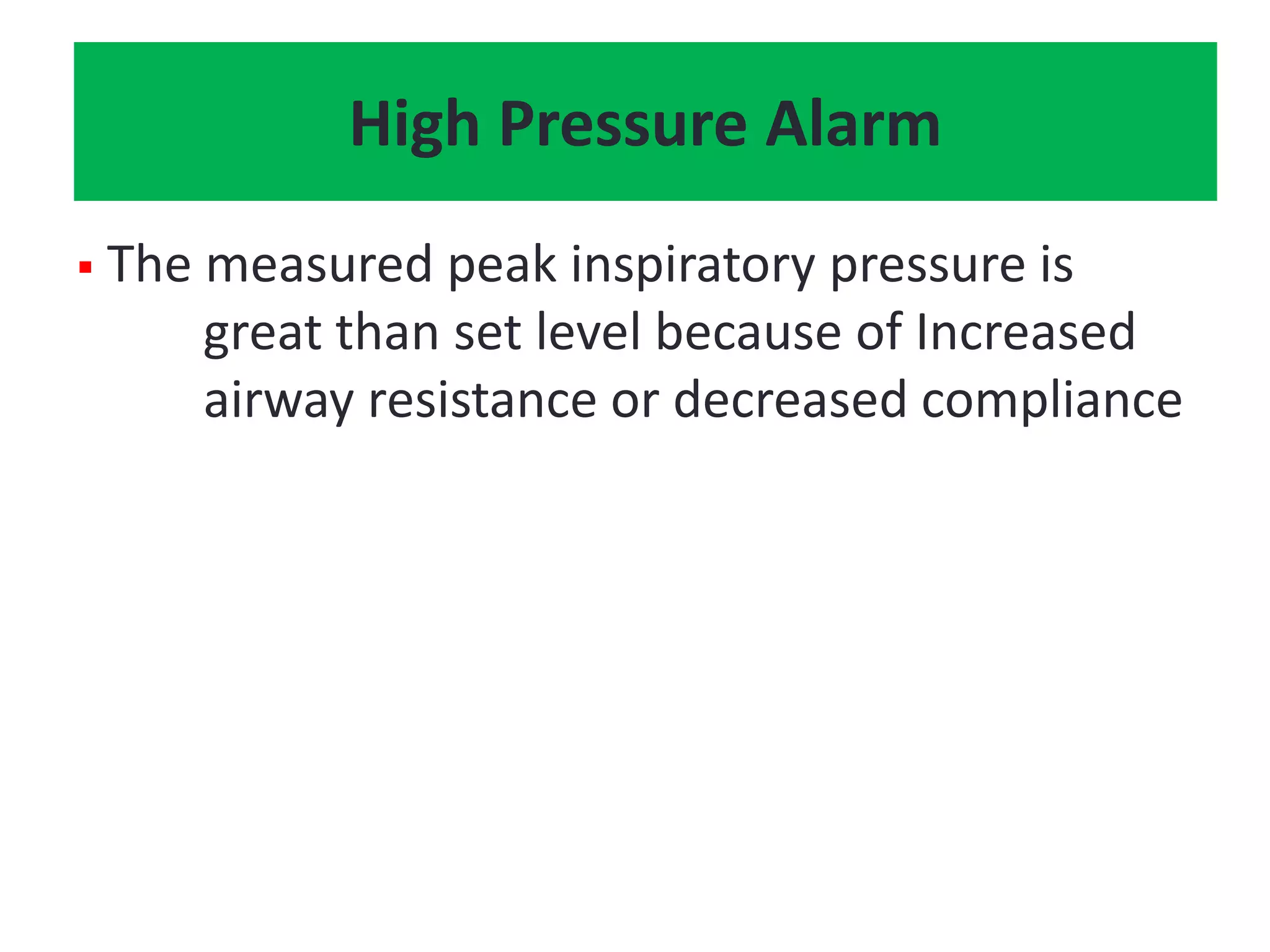
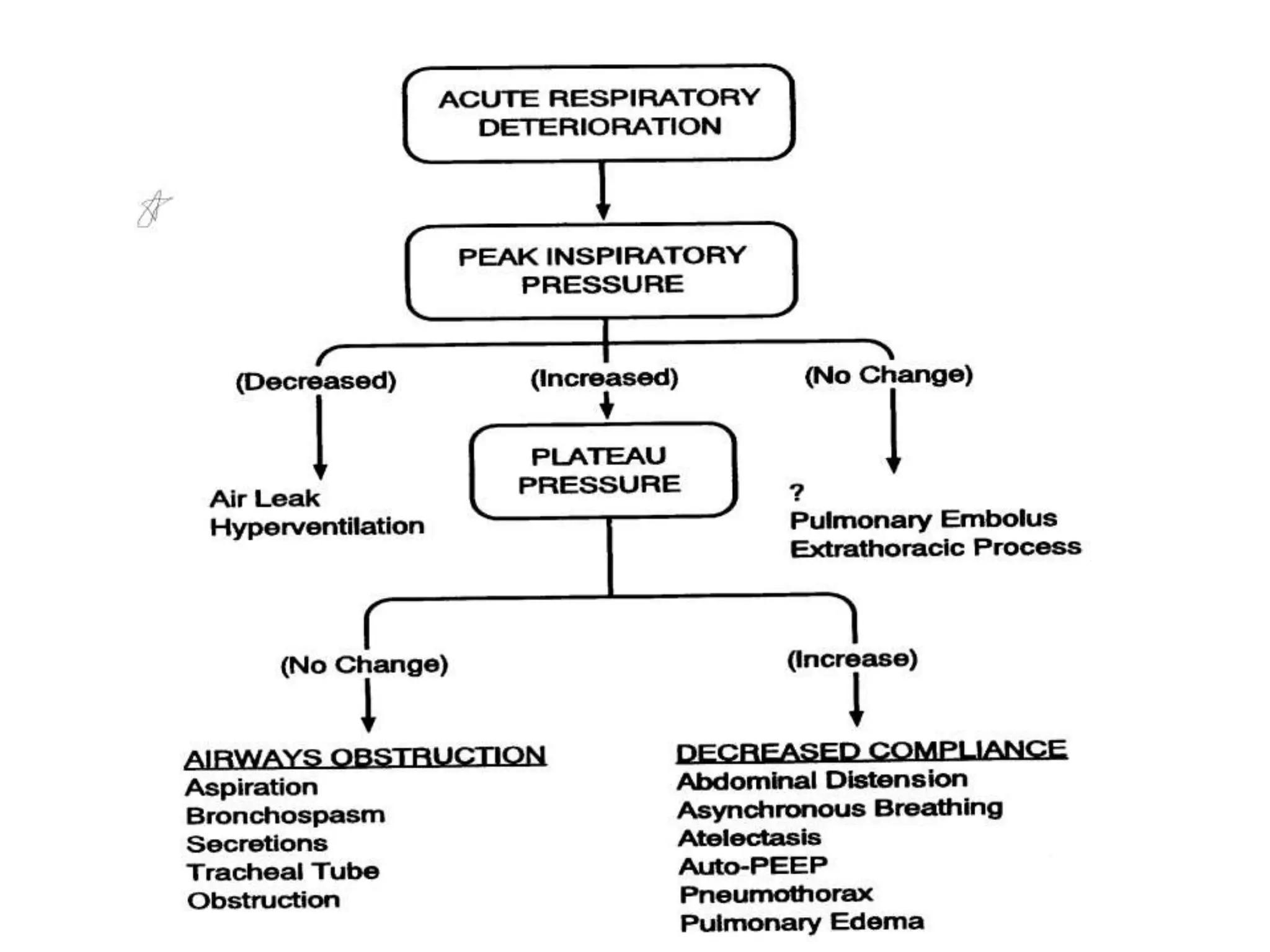
High Pressure Alarm
 The measured peak inspiratory pressure is
great than set level because of Increased
airway resistance or decreased compliance
• If your Pplat is high, you are faced with a
COMPLIANCE problem
• If your Pplat is N, you are faced with a
RESISTIVE problem
• DD?
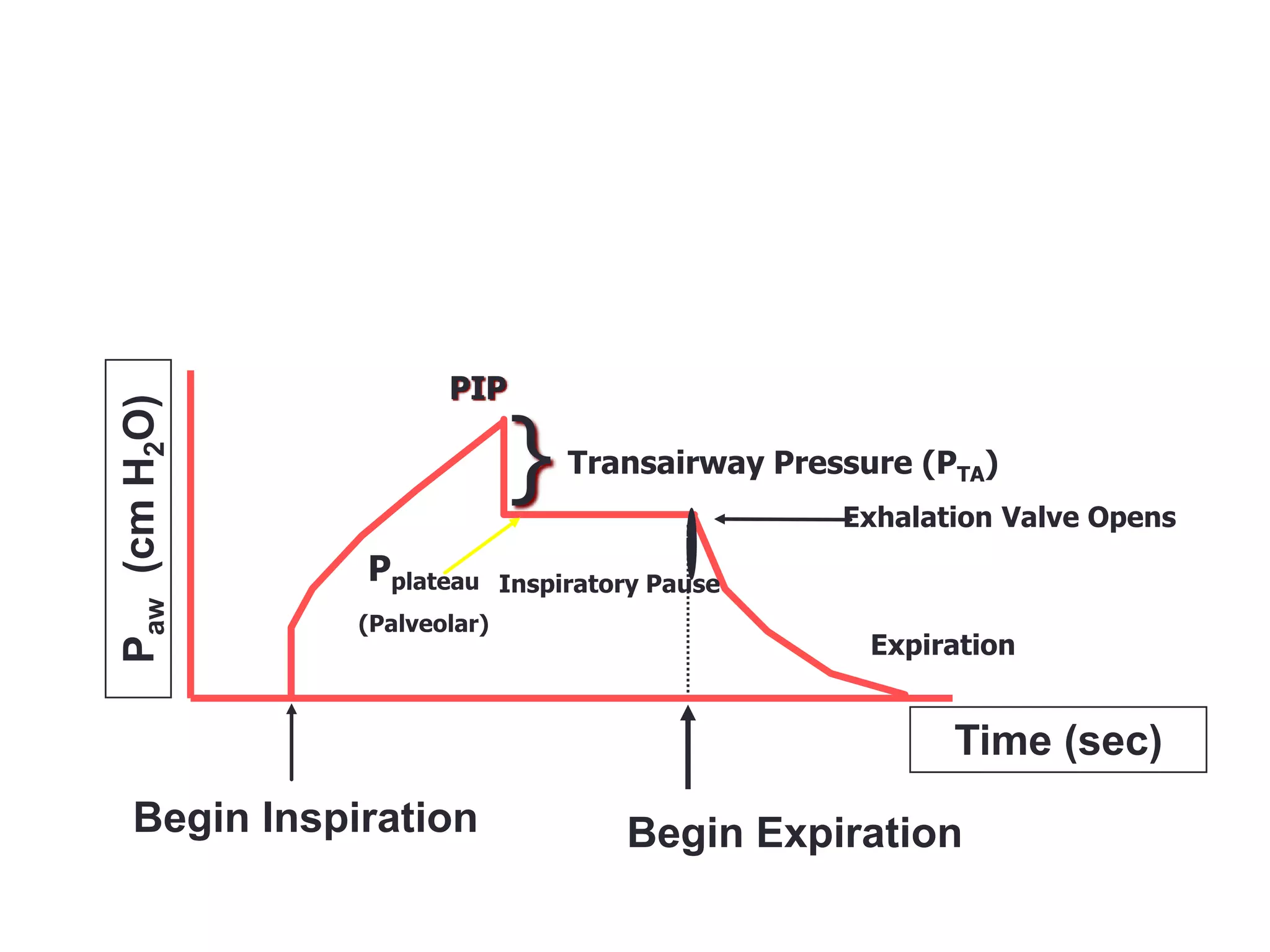
Begin Expiration
Paw(cmH2O)
Time (sec)
Begin Inspiration
PIP
Pplateau
(Palveolar)
Transairway Pressure (PTA)} Exhalation Valve Opens
Expiration
Inspiratory Pause
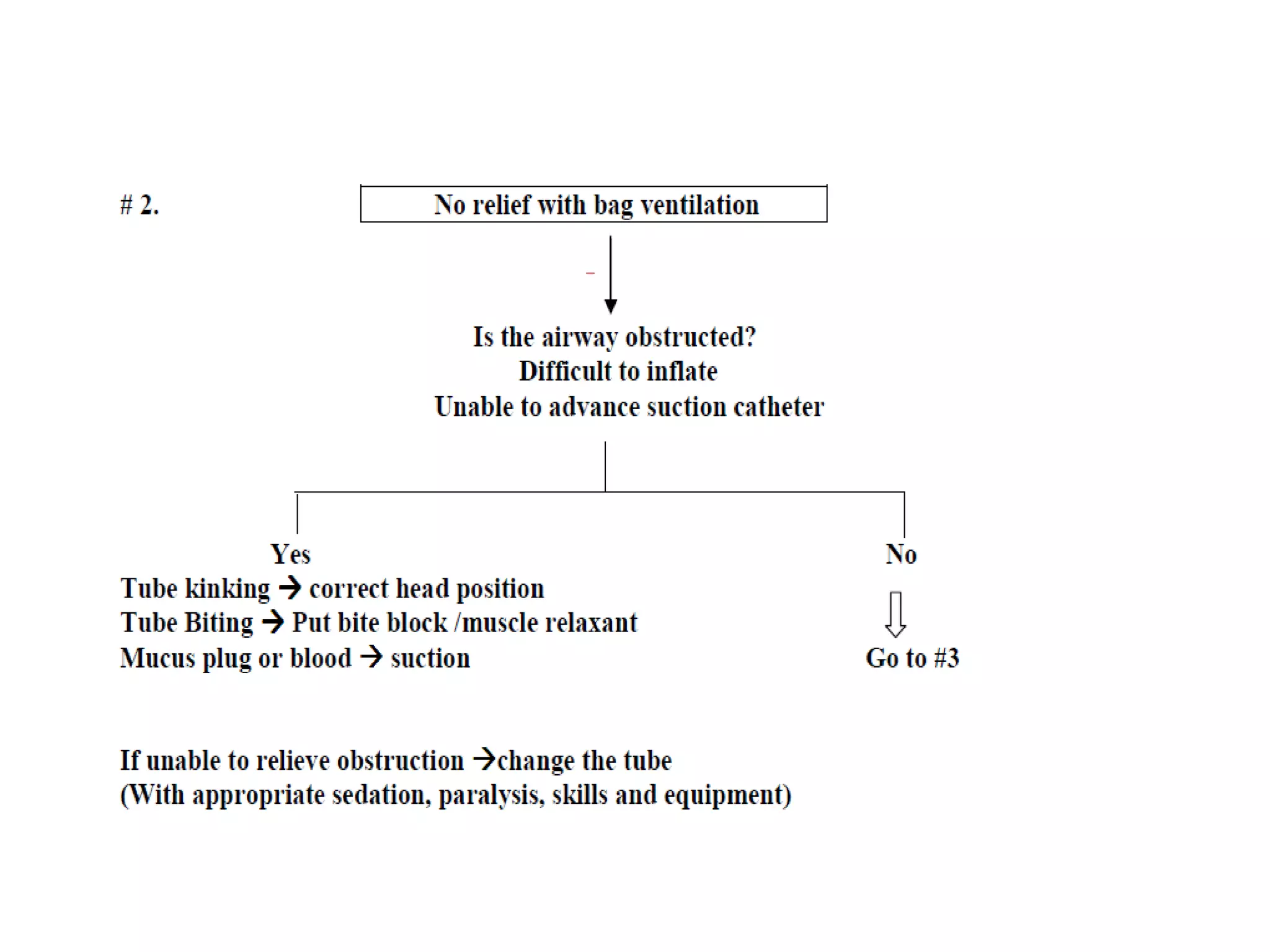
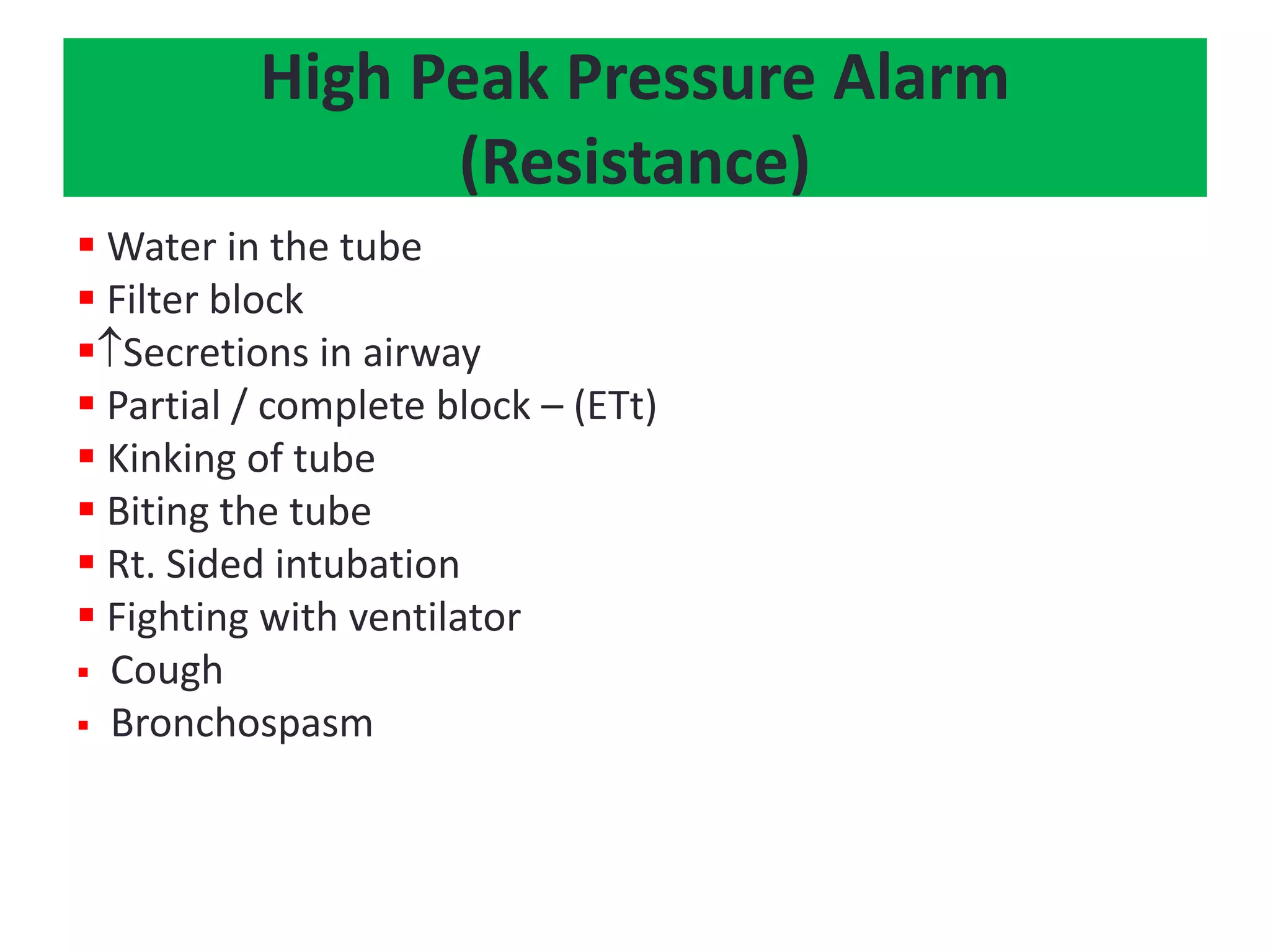
 Water in the tube
 Filter block
Secretions in airway
 Partial / complete block – (ETt)
 Kinking of tube
 Biting the tube
 Rt. Sided intubation
 Fighting with ventilator
 Cough
 Bronchospasm
High Peak Pressure Alarm
(Resistance)
Approach to high pressure
• Ppeak is up
– Look at your Pplat
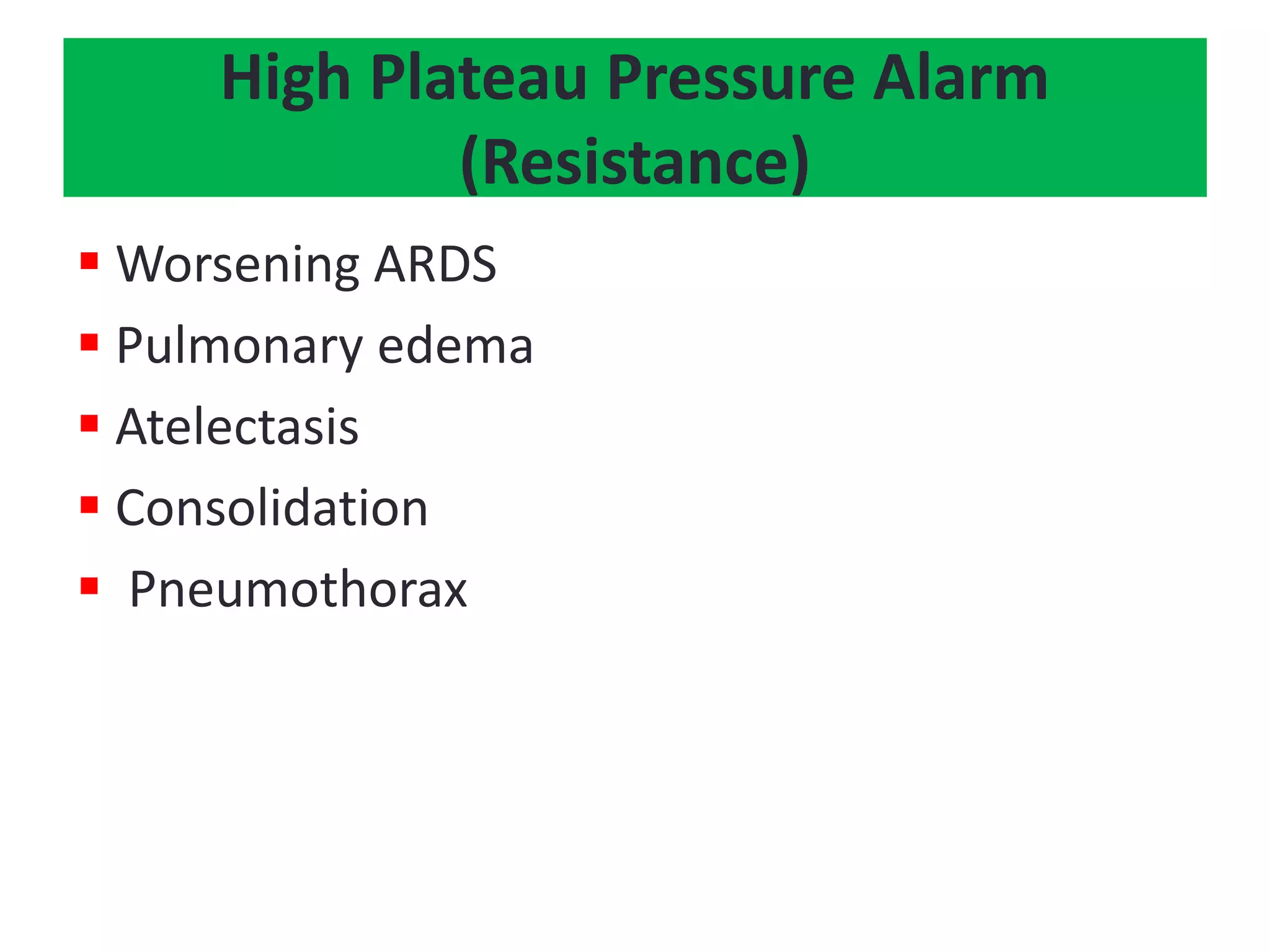
 Worsening ARDS
 Pulmonary edema
 Atelectasis
 Consolidation
 Pneumothorax
High Plateau Pressure Alarm
(Resistance)
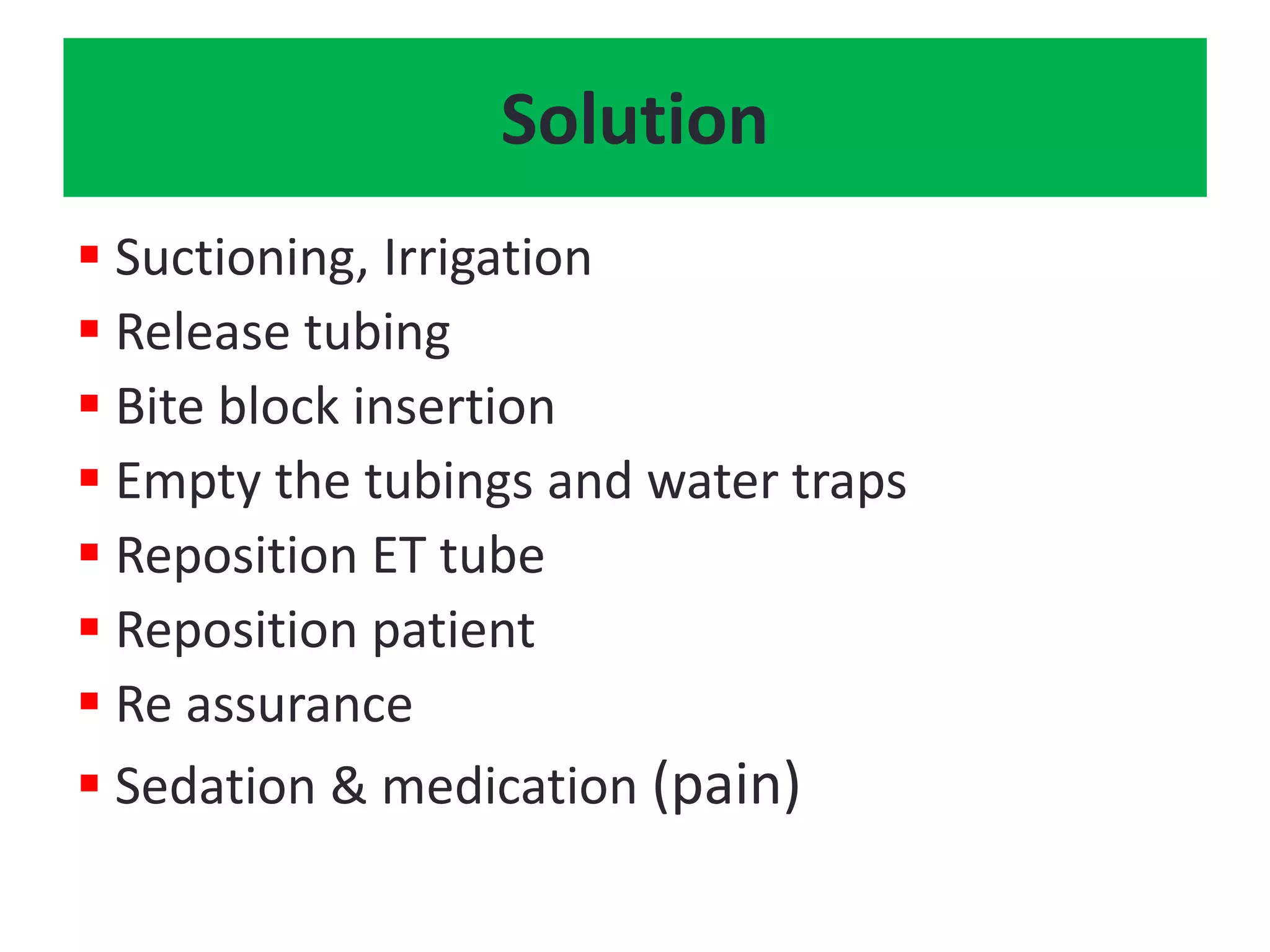
Solution
 Suctioning, Irrigation
 Release tubing
 Bite block insertion
 Empty the tubings and water traps
 Reposition ET tube
 Reposition patient
 Re assurance
 Sedation & medication (pain)
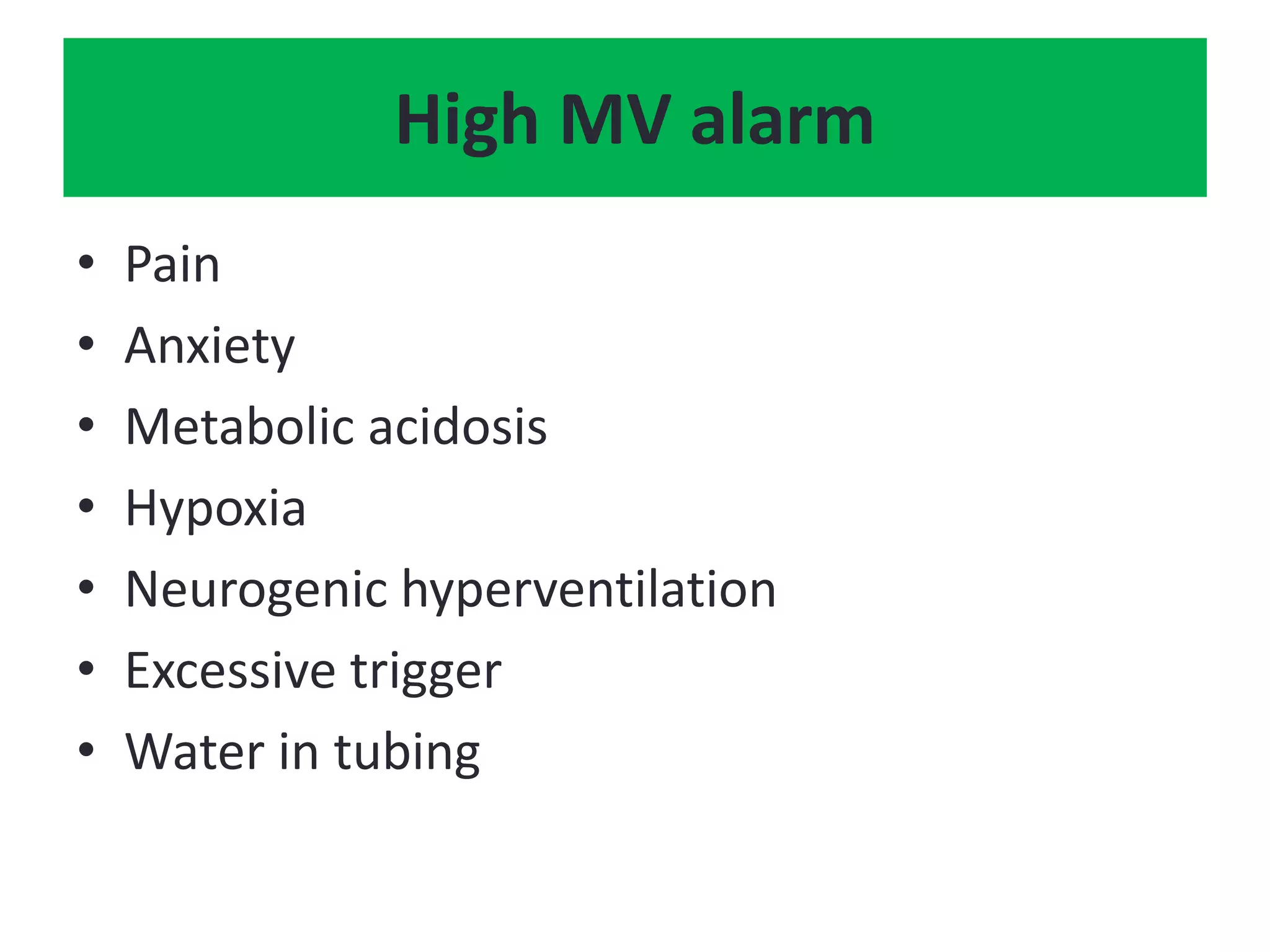
• Pain
• Anxiety
• Metabolic acidosis
• Hypoxia
• Neurogenic hyperventilation
• Excessive trigger
• Water in tubing
High MV alarm
Solution
 Check the patient Arouse if needed
 Activate back up facility if it was not
done already.
 Consider switching over to any
mandatory mode
 Set trigger level appropriately
Apnoea
No breath was delivered for the operator set
apnoea time in spont, SIMV, AC, CMV & NIV
modes
patient effort is too minimal
Trigger level set improperly.
Trouble shooting of mechanical ventilator

Trouble shooting of mechanical ventilator

  • 1.
  • 2.
    Precautions that wouldreduce troubles I. Power:  Plug into a grounded AC power with correct voltage receptacle.  Secure the power cord properly. Battery Back up:  Check the battery level before connecting.  Charging should be carried out regularly.  Remember it is for short term use.
  • 3.
    II. Gas Source Preferable to have centralised supply.  If cylinders used, should be full  Spare cylinders should be available
  • 4.
    III. Personnel  Properlytrained personnel should only use.  Familiarizing staff with operator’s manual before using on a patient.  (One manufacturer’s manual may not exactly match with other brands).  Appropriate monitoring the functioning state of the ventilator while in use. Familiarizing staff with alarm system.  Do not place ventilators in a combustible or explosive environment.
  • 5.
    IV. Servicing andTesting  Qualified personnel should undertake servicing.  Follow specifications mentioned in service manual  General servicing at regular intervals  Run prescribed tests and calibrations before using ventilator on a patient.  Ensure that ventilators pass all the tests before putting them in to clinical use.
  • 6.
    ALARMS  All ventilatorsare equipped with visual and audible alarms which notify user problems.
  • 7.
    • VC mode– High Pressure alarm • PC mode – Low TV alarm • PSV/CPAP – Apnea alarm ALARMS
  • 8.
    Points to remember Never ignore an alarm.  Find out for yourself what alarm is on.  Check the patient.  Silence the alarm.  Never mute the alarm on regular basis.
  • 9.
    Do not belike this ! But hear the alarm and respond See the problem and Ask if you do not know what to do
  • 10.
    Troubleshooting • Is itworking ? – Look at the patient !! – Listen to the patient !! – Pulse Ox, ABG, EtCO2 – Chest X ray – Look at the vent (PIP; expired TV; alarms)
  • 11.
    CASE • 18 yrold man intubated for organophosphorus poisoning and intermediate syndrome was stable for 3 days • He suddenly devlops distress.You notice that his resp rate is 35/min, heart rate is 120/min, BP is 90/70mmHg. • What would you do?
  • 12.
    Troubleshooting • When indoubt, DISCONNECT THE PATIENT FROM THE VENT, and begin bag ventilation. • Ensure you are bagging with 100% O2. • This eliminates the vent circuit as the source of the problem. • Bagging by hand can also help you gauge patient’s compliance
  • 15.
    ALARMS • LOW PRESSURE/ LOW TIDAL VOLUME • HIGH PRESSURE • APNEA • HIGH TIDAL VOLUME
  • 16.
    • Pt ison VCV mode of ventilation, post op after lap choleycystectomy. Suddenly you heard a high peak pressure alarm. What will you do? Ask sister to silence the alarm Go yourself and silence the alarm Change peak pressure alarm setting Keep let it be ring Sedate the pt Give vecuronium
  • 17.
    • Pt ison VCV mode of ventilation, post op after lap choleycystectomy. Suddenly you heard a high peak pressure alarm. What will you do? Ask sister to silence the alarm Go yourself and silence the alarm Change peak pressure alarm setting Keep let it be ring Sedate the pt Give vecuronium
  • 18.
    Low pressure orLow min. Vent
  • 19.
    Solution Evaluate cuff pressureat regular intervals Reinflate if leak Ruptured is noticed  change ET tube  Check circuit, junctions tighten or replace  Check water traps  Check ET tube placement  Position it properly  Reconnect ventilator  Patient may require higher flow.
  • 20.
    High Pressure Alarm The measured peak inspiratory pressure is great than set level because of Increased airway resistance or decreased compliance
  • 21.
    • If yourPplat is high, you are faced with a COMPLIANCE problem • If your Pplat is N, you are faced with a RESISTIVE problem • DD?
  • 22.
    Begin Expiration Paw(cmH2O) Time (sec) BeginInspiration PIP Pplateau (Palveolar) Transairway Pressure (PTA)} Exhalation Valve Opens Expiration Inspiratory Pause
  • 23.
     Water inthe tube  Filter block Secretions in airway  Partial / complete block – (ETt)  Kinking of tube  Biting the tube  Rt. Sided intubation  Fighting with ventilator  Cough  Bronchospasm High Peak Pressure Alarm (Resistance)
  • 24.
    Approach to highpressure • Ppeak is up – Look at your Pplat
  • 25.
     Worsening ARDS Pulmonary edema  Atelectasis  Consolidation  Pneumothorax High Plateau Pressure Alarm (Resistance)
  • 27.
    Solution  Suctioning, Irrigation Release tubing  Bite block insertion  Empty the tubings and water traps  Reposition ET tube  Reposition patient  Re assurance  Sedation & medication (pain)
  • 28.
    • Pain • Anxiety •Metabolic acidosis • Hypoxia • Neurogenic hyperventilation • Excessive trigger • Water in tubing High MV alarm
  • 29.
    Solution  Check thepatient Arouse if needed  Activate back up facility if it was not done already.  Consider switching over to any mandatory mode  Set trigger level appropriately
  • 30.
    Apnoea No breath wasdelivered for the operator set apnoea time in spont, SIMV, AC, CMV & NIV modes patient effort is too minimal Trigger level set improperly.