ED Thoracotomy
Rosie Stroud
(with a few slides from Jeremy’s presentation)
 https://www.youtube.com/watch?v=ZT152jD8C4Q
 Release of pericardial tamponade — improves cardiac
output and control of cardiac haemorrhage
 Control of intrathoracic vascular or cardiac
haemorrhage — improves cardiac output and myocardial
perfusion
 Control of massive air embolism or bronchopleural
fistula — resolves myocardial ischaemia and
hence improves myocardial contractility as well as prevents
neurological injury
 Open cardiac massage —improves resuscitative cardiac
output and coronary perfusion especially with limited
ventricular filling pressures
 Occlusion of the descending aorta (cross-clamping) —
Redistribution of limited blood volume to myocardium and
brain as well as limiting subdiaphragmatic losses.
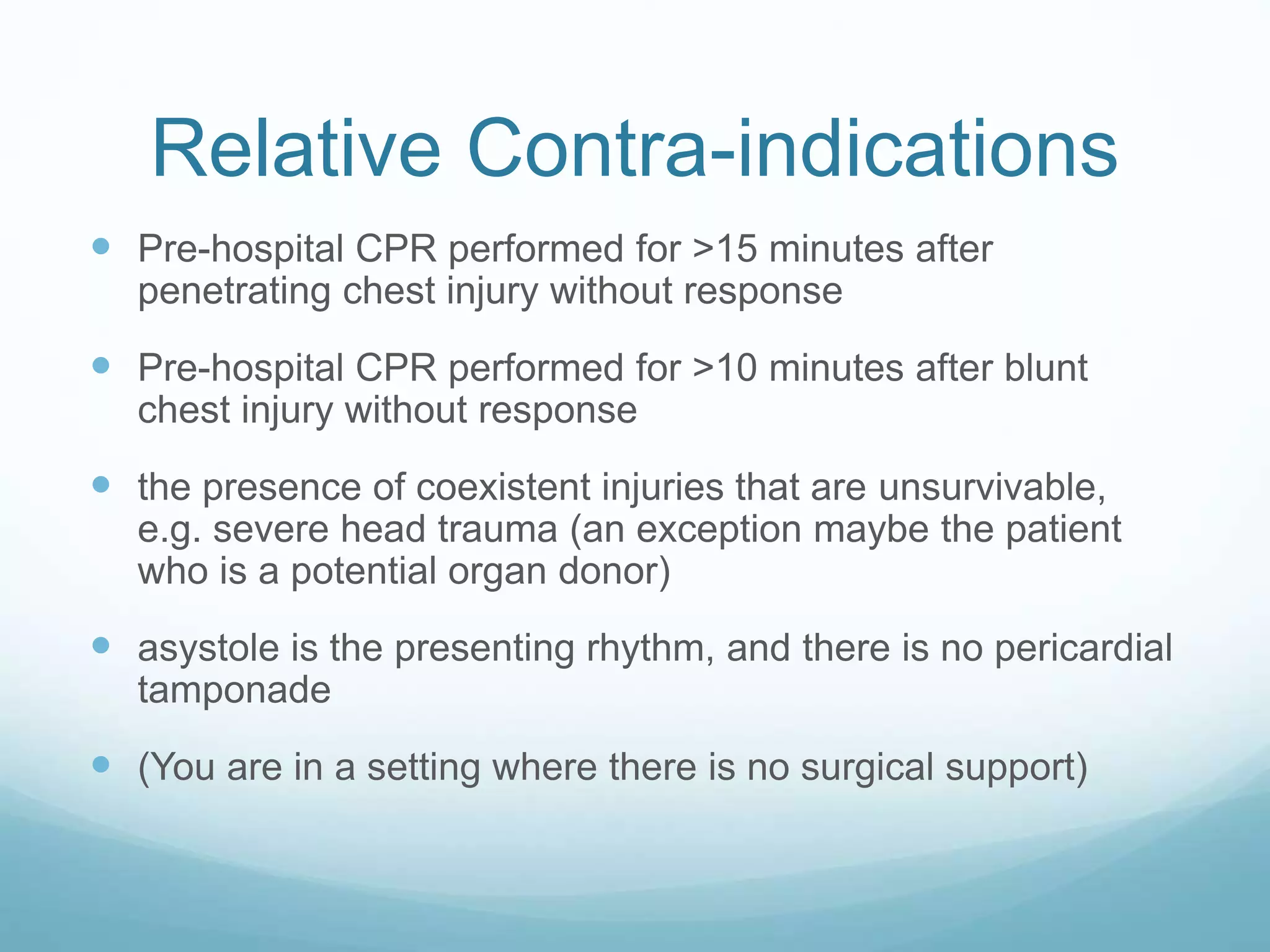
Relative Contra-indications
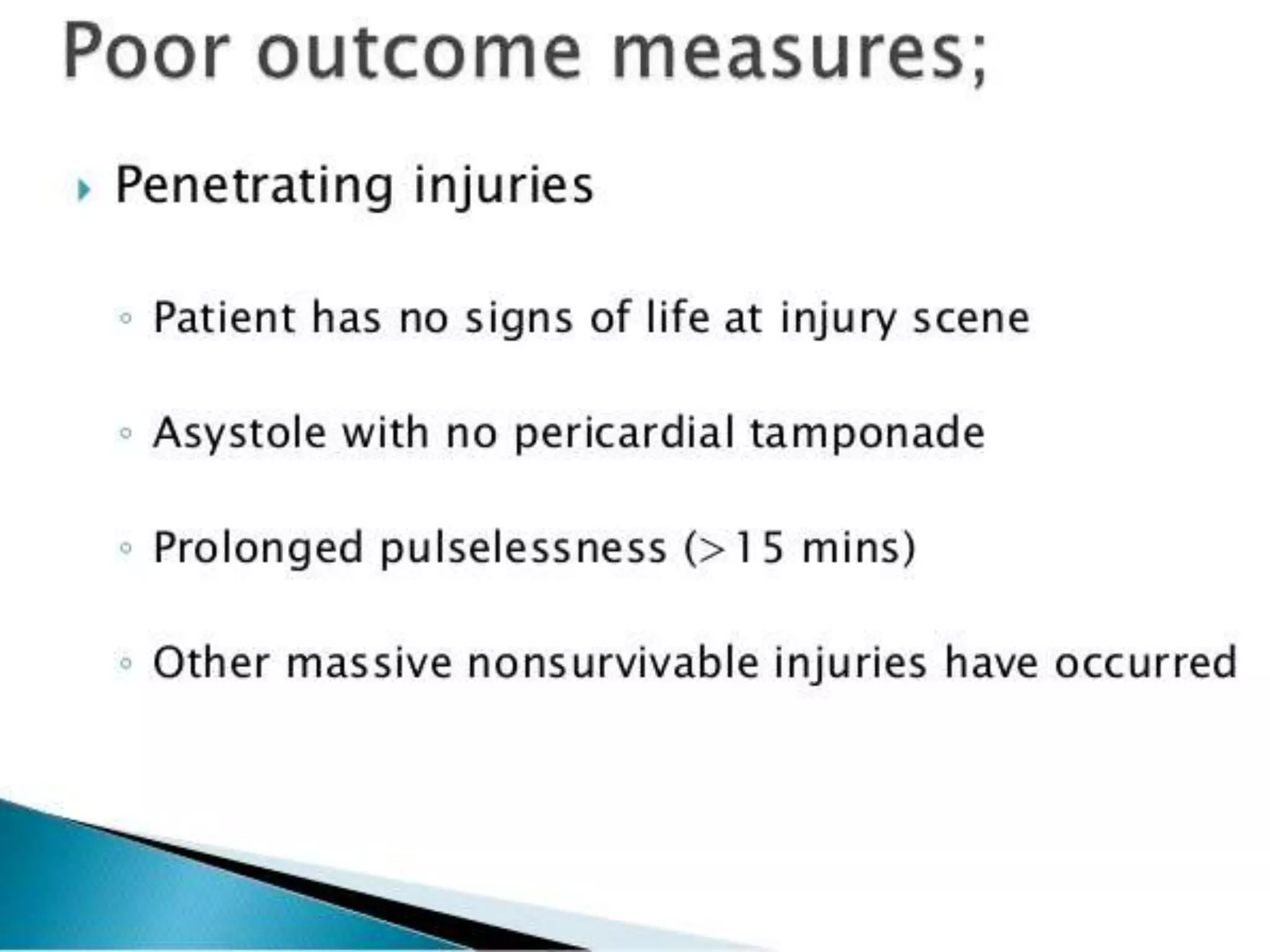
 Pre-hospital CPR performed for >15 minutes after
penetrating chest injury without response
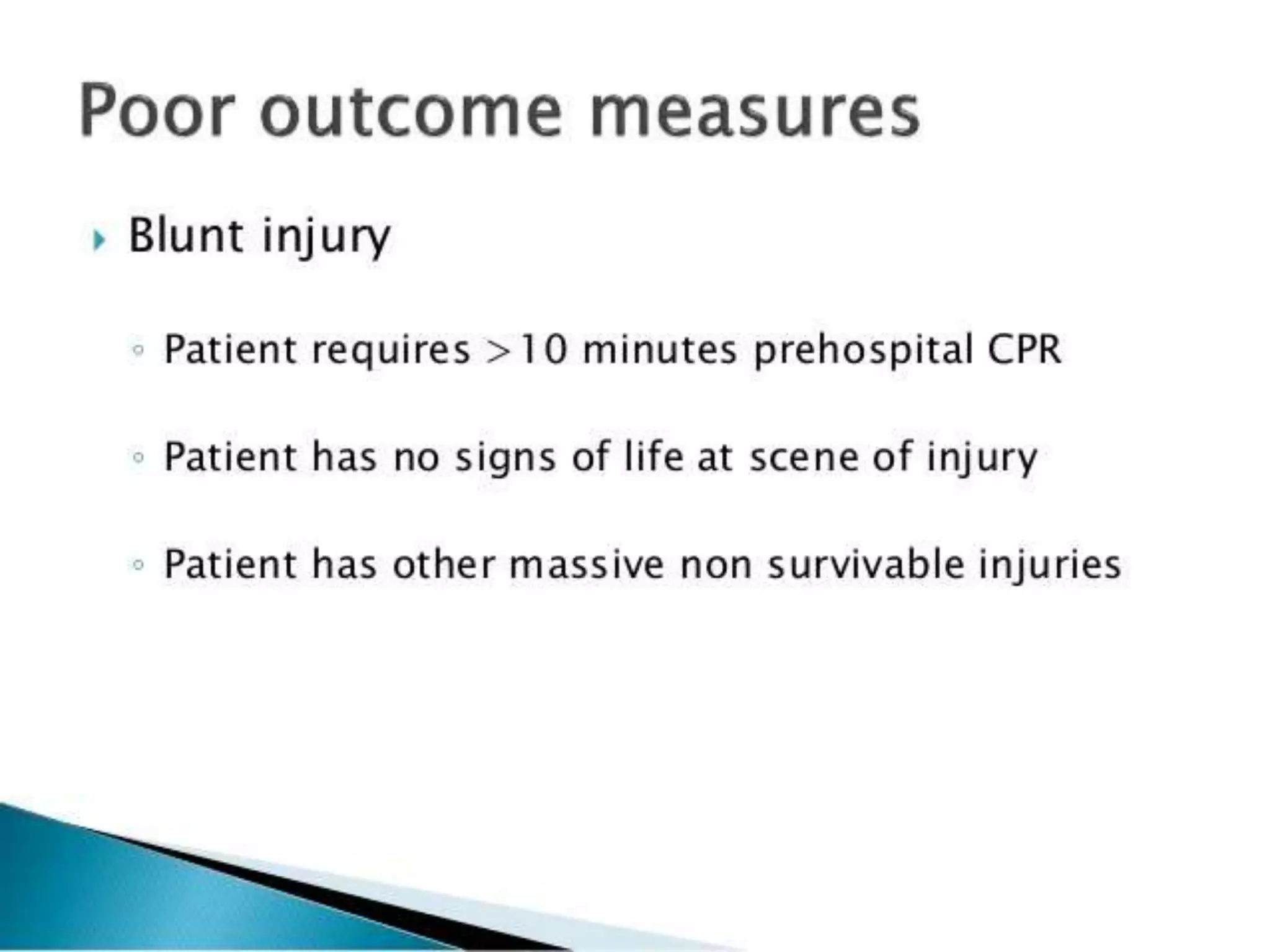
 Pre-hospital CPR performed for >10 minutes after blunt
chest injury without response
 the presence of coexistent injuries that are unsurvivable,
e.g. severe head trauma (an exception maybe the patient
who is a potential organ donor)
 asystole is the presenting rhythm, and there is no pericardial
tamponade
 (You are in a setting where there is no surgical support)
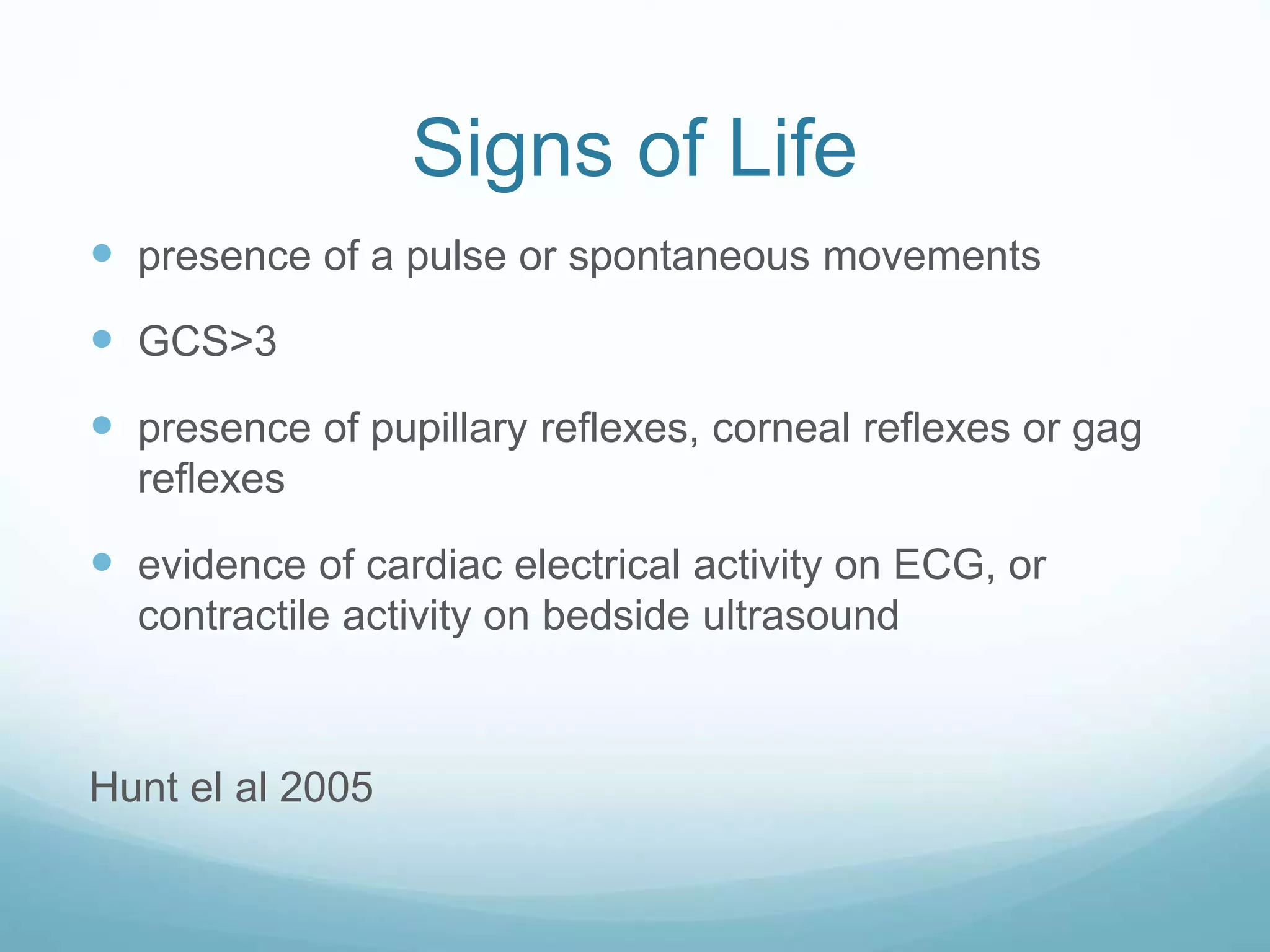
Signs of Life
 presence of a pulse or spontaneous movements
 GCS>3
 presence of pupillary reflexes, corneal reflexes or gag
reflexes
 evidence of cardiac electrical activity on ECG, or
contractile activity on bedside ultrasound
Hunt el al 2005
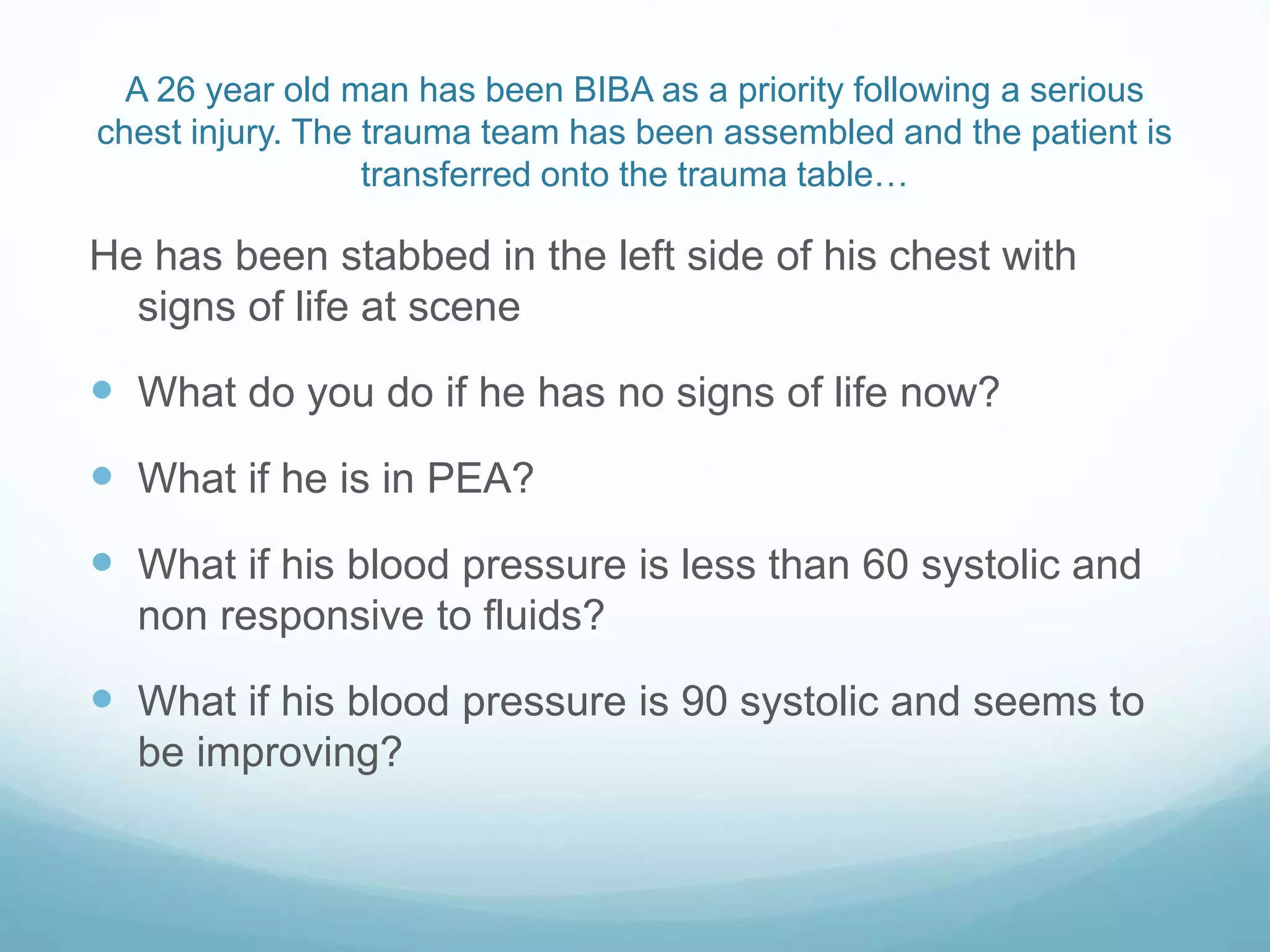
A 26 year old man has been BIBA as a priority following a serious
chest injury. The trauma team has been assembled and the patient is
transferred onto the trauma table…
He has been stabbed in the left side of his chest with
signs of life at scene
 What do you do if he has no signs of life now?
 What if he is in PEA?
 What if his blood pressure is less than 60 systolic and
non responsive to fluids?
 What if his blood pressure is 90 systolic and seems to
be improving?
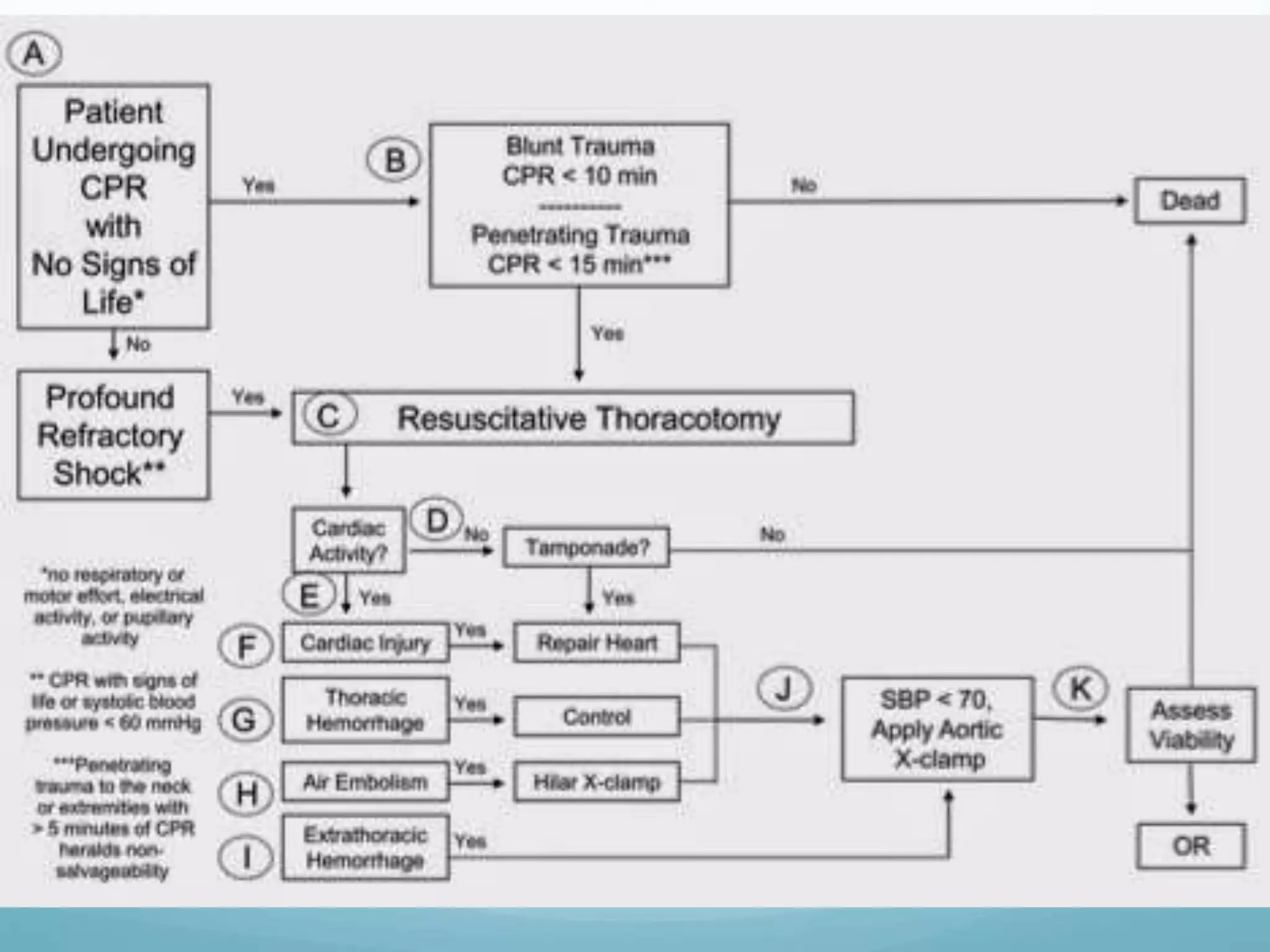
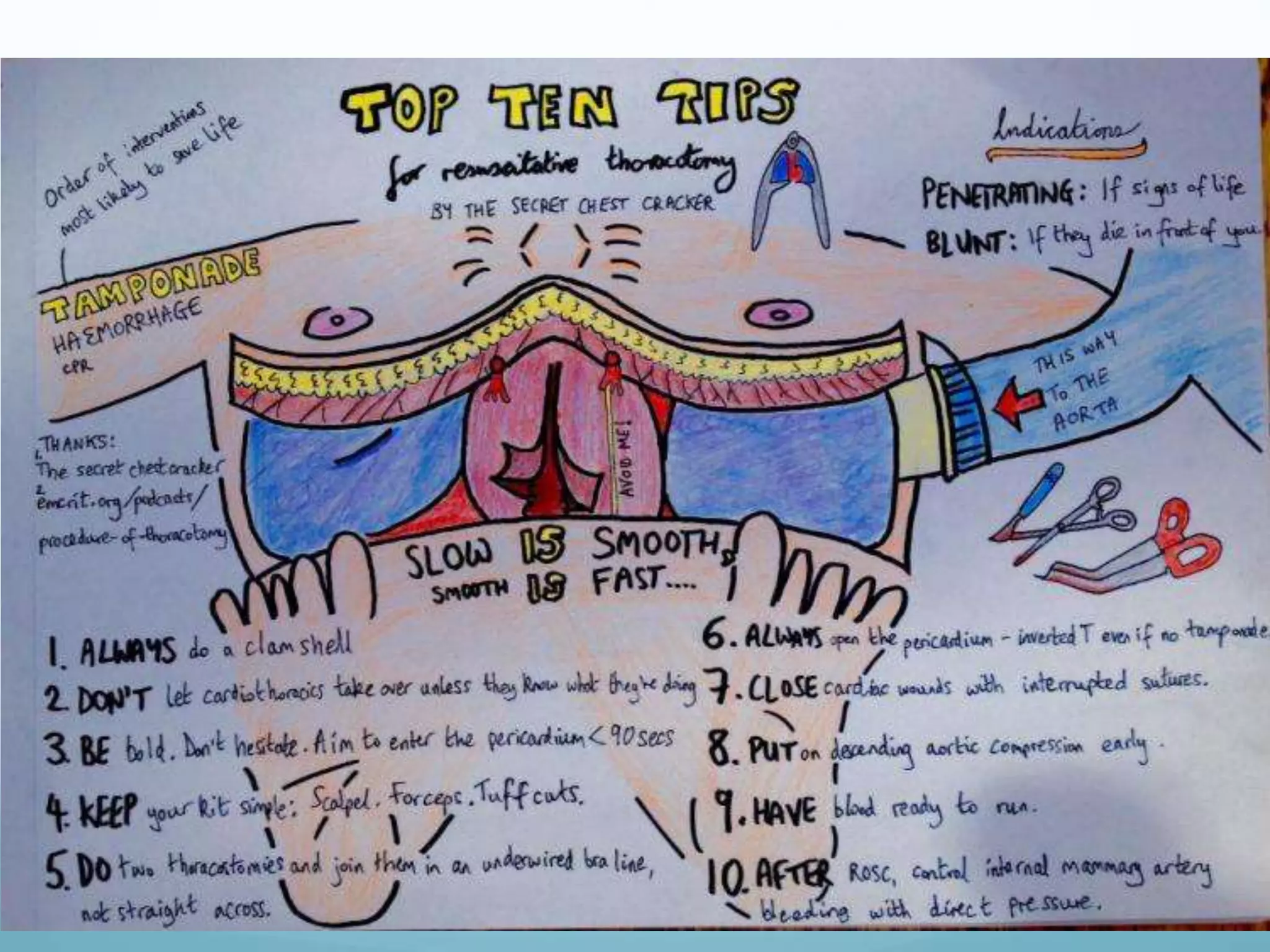
Resuscitative Thoracotomy

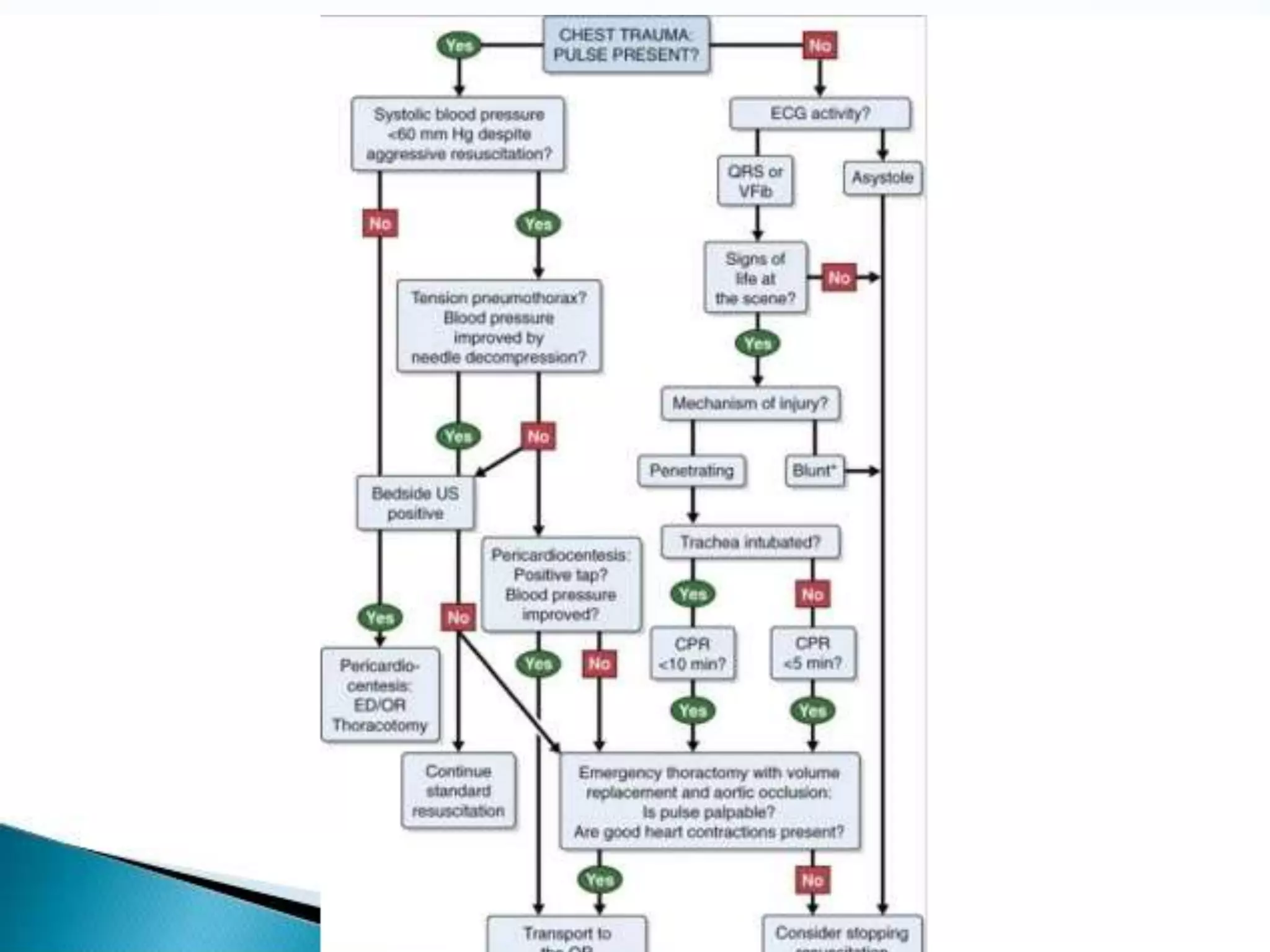
Resuscitative Thoracotomy

  • 1.
    ED Thoracotomy Rosie Stroud (witha few slides from Jeremy’s presentation)
  • 2.
  • 3.
     Release ofpericardial tamponade — improves cardiac output and control of cardiac haemorrhage  Control of intrathoracic vascular or cardiac haemorrhage — improves cardiac output and myocardial perfusion  Control of massive air embolism or bronchopleural fistula — resolves myocardial ischaemia and hence improves myocardial contractility as well as prevents neurological injury  Open cardiac massage —improves resuscitative cardiac output and coronary perfusion especially with limited ventricular filling pressures  Occlusion of the descending aorta (cross-clamping) — Redistribution of limited blood volume to myocardium and brain as well as limiting subdiaphragmatic losses.
  • 6.
    Relative Contra-indications  Pre-hospitalCPR performed for >15 minutes after penetrating chest injury without response  Pre-hospital CPR performed for >10 minutes after blunt chest injury without response  the presence of coexistent injuries that are unsurvivable, e.g. severe head trauma (an exception maybe the patient who is a potential organ donor)  asystole is the presenting rhythm, and there is no pericardial tamponade  (You are in a setting where there is no surgical support)
  • 7.
    Signs of Life presence of a pulse or spontaneous movements  GCS>3  presence of pupillary reflexes, corneal reflexes or gag reflexes  evidence of cardiac electrical activity on ECG, or contractile activity on bedside ultrasound Hunt el al 2005
  • 10.
    A 26 yearold man has been BIBA as a priority following a serious chest injury. The trauma team has been assembled and the patient is transferred onto the trauma table… He has been stabbed in the left side of his chest with signs of life at scene  What do you do if he has no signs of life now?  What if he is in PEA?  What if his blood pressure is less than 60 systolic and non responsive to fluids?  What if his blood pressure is 90 systolic and seems to be improving?