Acute Respiratory Distress Syndrome


ARDS
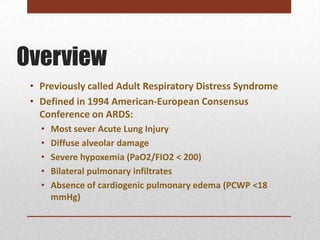
Overview
 • Previously called Adult Respiratory Distress Syndrome
 • Defined in 1994 American-European Consensus
   Conference on ARDS:
   •   Most sever Acute Lung Injury
   •   Diffuse alveolar damage
   •   Severe hypoxemia (PaO2/FIO2 < 200)
   •   Bilateral pulmonary infiltrates
   •   Absence of cardiogenic pulmonary edema (PCWP <18
       mmHg)
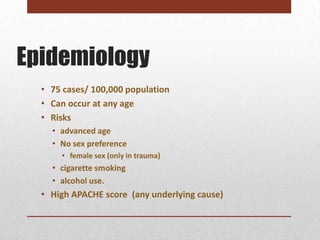
Epidemiology
  • 75 cases/ 100,000 population
  • Can occur at any age
  • Risks
    • advanced age
    • No sex preference
      • female sex (only in trauma)
    • cigarette smoking
    • alcohol use.
  • High APACHE score (any underlying cause)
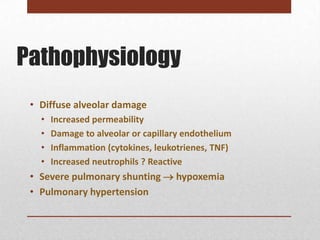
Pathophysiology
 • Diffuse alveolar damage
   •   Increased permeability
   •   Damage to alveolar or capillary endothelium
   •   Inflammation (cytokines, leukotrienes, TNF)
   •   Increased neutrophils ? Reactive
 • Severe pulmonary shunting  hypoxemia
 • Pulmonary hypertension
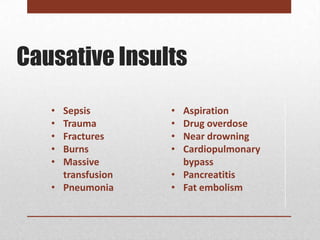
Causative Insults

   • Sepsis        • Aspiration
   • Trauma        • Drug overdose
   • Fractures     • Near drowning
   • Burns         • Cardiopulmonary
   • Massive         bypass
     transfusion   • Pancreatitis
   • Pneumonia     • Fat embolism
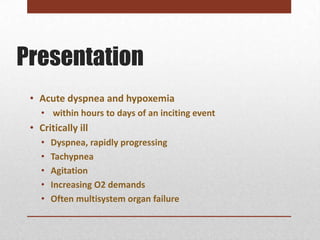
Presentation
 • Acute dyspnea and hypoxemia
    • within hours to days of an inciting event
 • Critically ill
    •   Dyspnea, rapidly progressing
    •   Tachypnea
    •   Agitation
    •   Increasing O2 demands
    •   Often multisystem organ failure
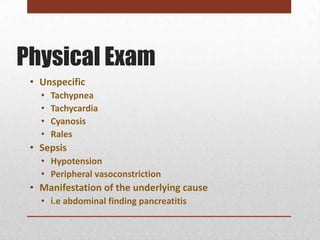
Physical Exam
 • Unspecific
   •   Tachypnea
   •   Tachycardia
   •   Cyanosis
   •   Rales
 • Sepsis
   • Hypotension
   • Peripheral vasoconstriction
 • Manifestation of the underlying cause
   • i.e abdominal finding pancreatitis
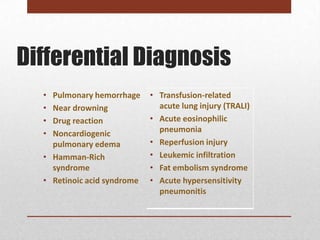
Differential Diagnosis
  • Pulmonary hemorrhage     • Transfusion-related
  • Near drowning              acute lung injury (TRALI)
  • Drug reaction            • Acute eosinophilic
  • Noncardiogenic             pneumonia
    pulmonary edema          • Reperfusion injury
  • Hamman-Rich              • Leukemic infiltration
    syndrome                 • Fat embolism syndrome
  • Retinoic acid syndrome   • Acute hypersensitivity
                               pneumonitis
Workup
 • ABG
   • Hypoxemia
   • Respiratory alkalosis initially
   • Respiratory Acidosis ( late)
 • BNP- exclude cardiogenic pulmonary edema
 • CXR diffuse bilateral infiltrates
 • Echocardiogram
 • Possible CT
Treatment
 • Treatment is supportive + underlying cause
 • No effective drug for prevention nor management
   • Xigris
   • Nitric Oxide
   • Liquid surfactant
 • New hopes
   • Simvastatin
   • TNF and interleukin antibodies
Treatment
 • Fluid management
   • Resuscitation vs. maintenance
   • Negative fluid balance “dry side of normal”
 • Ventilation
   • Lung protective
     • High PEEP ( , low TV ( 6 mL/kg)
     • Neuromuscular block- improved 90 day survival
     • ECMO- no improved survival
     • Proning- no improve survival
 • Nutrition
   • Enteral, antioxidants, eicosapentaenoic acid, and gamma-linoleic acid
Prognosis
 • Mortality
   •   Before 1990 , 40-70%
   •   Recent 30-40%
   •   Better understanding and treatment of sepsis.
   •   Increased in older patients
 • Morbidity
   • VAP
   • Weight loss/muscle weakness
   • Only 49% survivors return to work

Ard spresentation

  • 1.
  • 2.
    Overview • Previouslycalled Adult Respiratory Distress Syndrome • Defined in 1994 American-European Consensus Conference on ARDS: • Most sever Acute Lung Injury • Diffuse alveolar damage • Severe hypoxemia (PaO2/FIO2 < 200) • Bilateral pulmonary infiltrates • Absence of cardiogenic pulmonary edema (PCWP <18 mmHg)
  • 3.
    Epidemiology •75 cases/ 100,000 population • Can occur at any age • Risks • advanced age • No sex preference • female sex (only in trauma) • cigarette smoking • alcohol use. • High APACHE score (any underlying cause)
  • 4.
    Pathophysiology • Diffusealveolar damage • Increased permeability • Damage to alveolar or capillary endothelium • Inflammation (cytokines, leukotrienes, TNF) • Increased neutrophils ? Reactive • Severe pulmonary shunting  hypoxemia • Pulmonary hypertension
  • 5.
    Causative Insults • Sepsis • Aspiration • Trauma • Drug overdose • Fractures • Near drowning • Burns • Cardiopulmonary • Massive bypass transfusion • Pancreatitis • Pneumonia • Fat embolism
  • 6.
    Presentation • Acutedyspnea and hypoxemia • within hours to days of an inciting event • Critically ill • Dyspnea, rapidly progressing • Tachypnea • Agitation • Increasing O2 demands • Often multisystem organ failure
  • 7.
    Physical Exam •Unspecific • Tachypnea • Tachycardia • Cyanosis • Rales • Sepsis • Hypotension • Peripheral vasoconstriction • Manifestation of the underlying cause • i.e abdominal finding pancreatitis
  • 8.
    Differential Diagnosis • Pulmonary hemorrhage • Transfusion-related • Near drowning acute lung injury (TRALI) • Drug reaction • Acute eosinophilic • Noncardiogenic pneumonia pulmonary edema • Reperfusion injury • Hamman-Rich • Leukemic infiltration syndrome • Fat embolism syndrome • Retinoic acid syndrome • Acute hypersensitivity pneumonitis
  • 9.
    Workup • ABG • Hypoxemia • Respiratory alkalosis initially • Respiratory Acidosis ( late) • BNP- exclude cardiogenic pulmonary edema • CXR diffuse bilateral infiltrates • Echocardiogram • Possible CT
  • 10.
    Treatment • Treatmentis supportive + underlying cause • No effective drug for prevention nor management • Xigris • Nitric Oxide • Liquid surfactant • New hopes • Simvastatin • TNF and interleukin antibodies
  • 11.
    Treatment • Fluidmanagement • Resuscitation vs. maintenance • Negative fluid balance “dry side of normal” • Ventilation • Lung protective • High PEEP ( , low TV ( 6 mL/kg) • Neuromuscular block- improved 90 day survival • ECMO- no improved survival • Proning- no improve survival • Nutrition • Enteral, antioxidants, eicosapentaenoic acid, and gamma-linoleic acid
  • 12.
    Prognosis • Mortality • Before 1990 , 40-70% • Recent 30-40% • Better understanding and treatment of sepsis. • Increased in older patients • Morbidity • VAP • Weight loss/muscle weakness • Only 49% survivors return to work