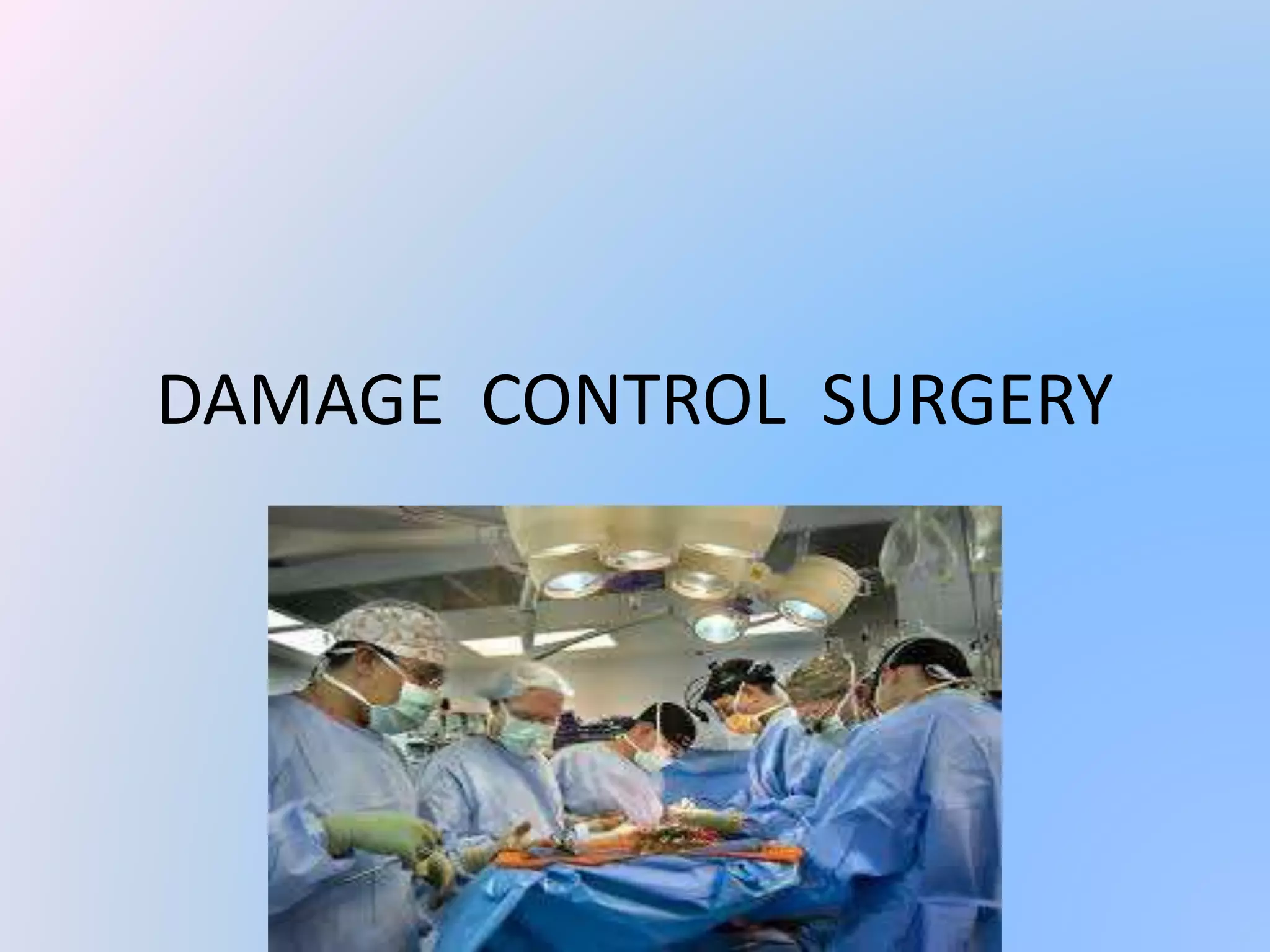
DAMAGE CONTROL SURGERY
Etymology
• The term damage control was coined by US
navy during WWII.
• Basic skill and procedure that can maintain
water tight integrity and offensiveness of war
ships.
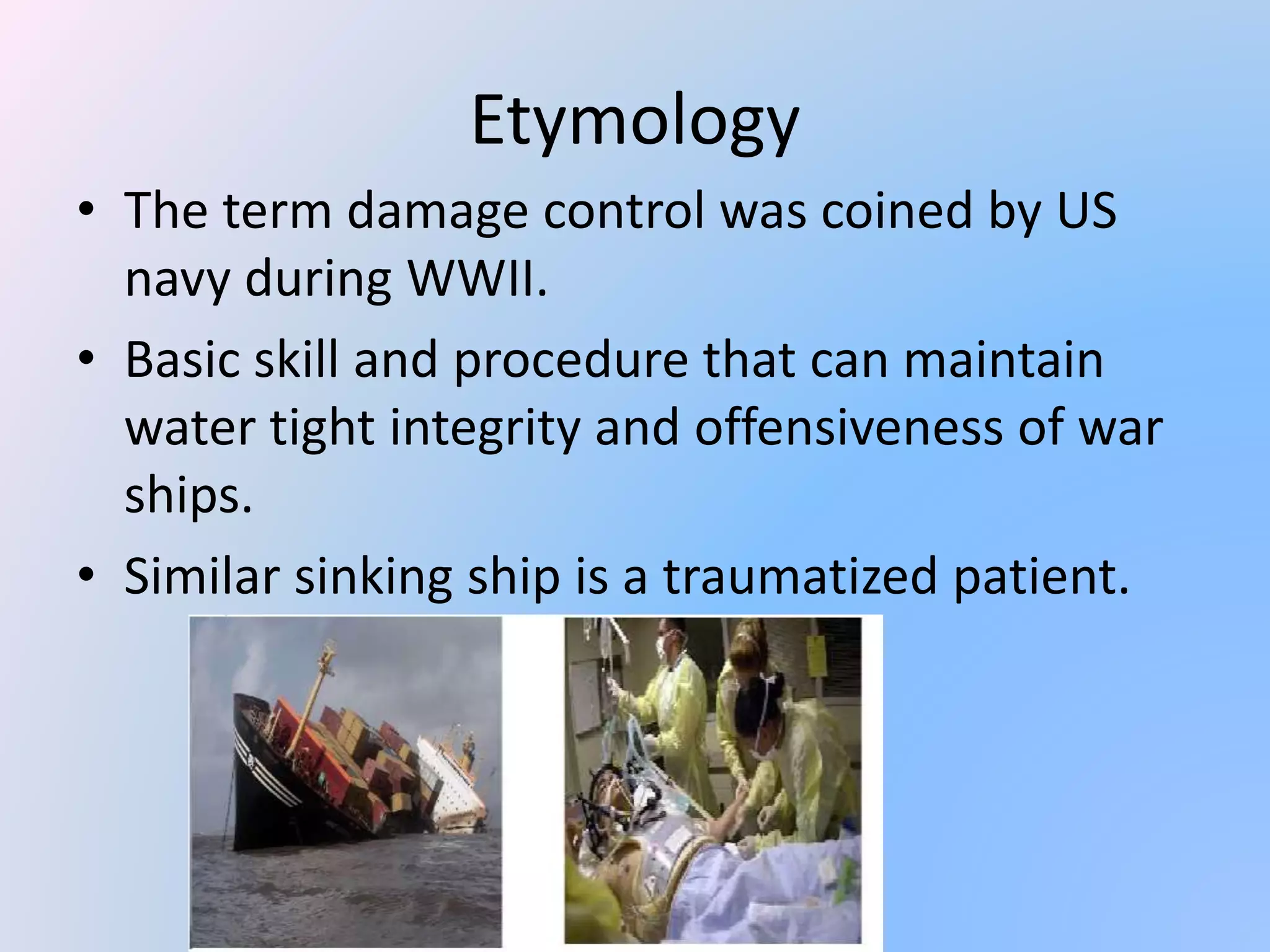
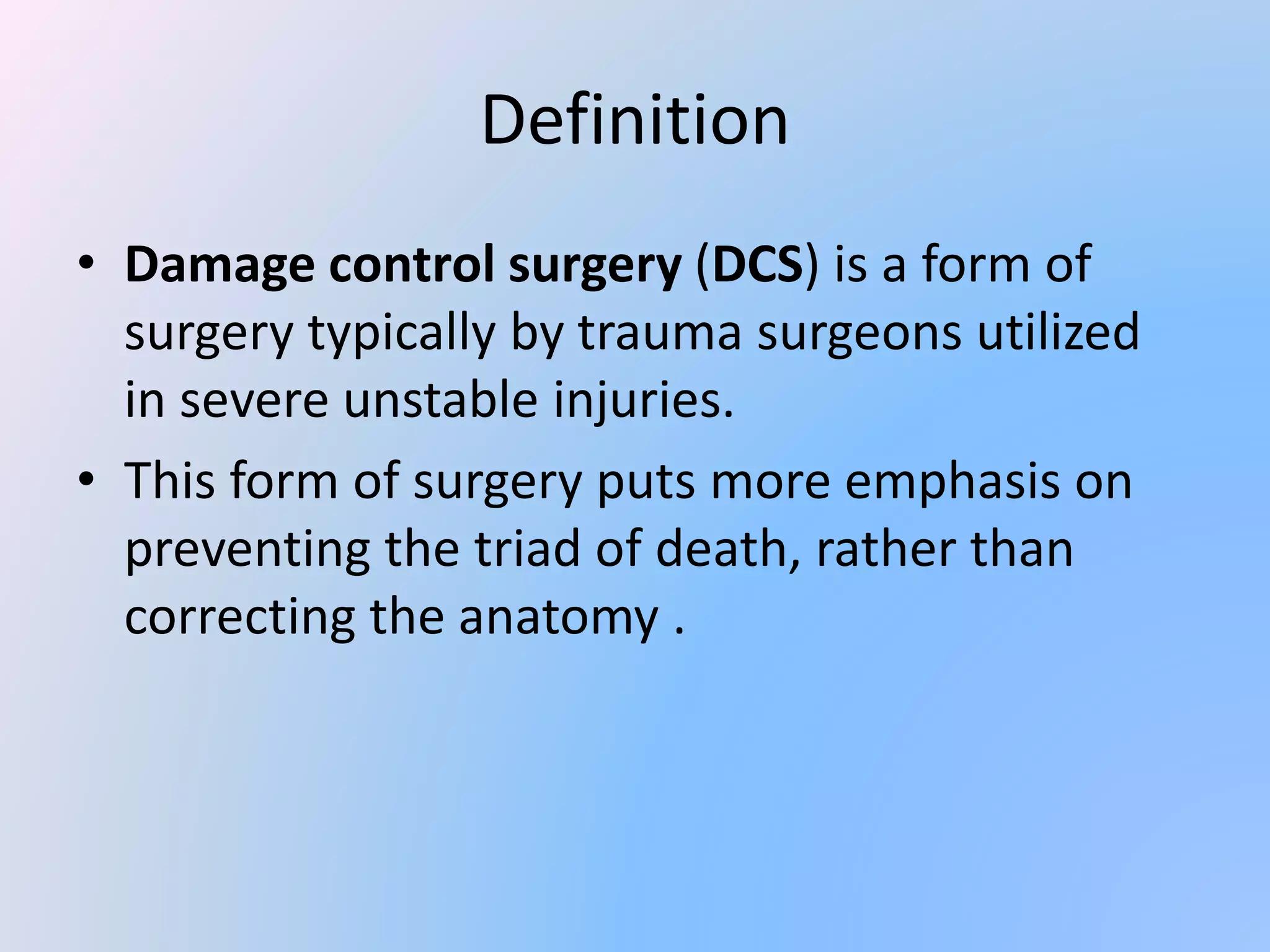
• Similar sinking ship is a traumatized patient.
Definition
• Damage control surgery (DCS) is a form of
surgery typically by trauma surgeons utilized
in severe unstable injuries.
• This form of surgery puts more emphasis on
preventing the triad of death, rather than
correcting the anatomy .
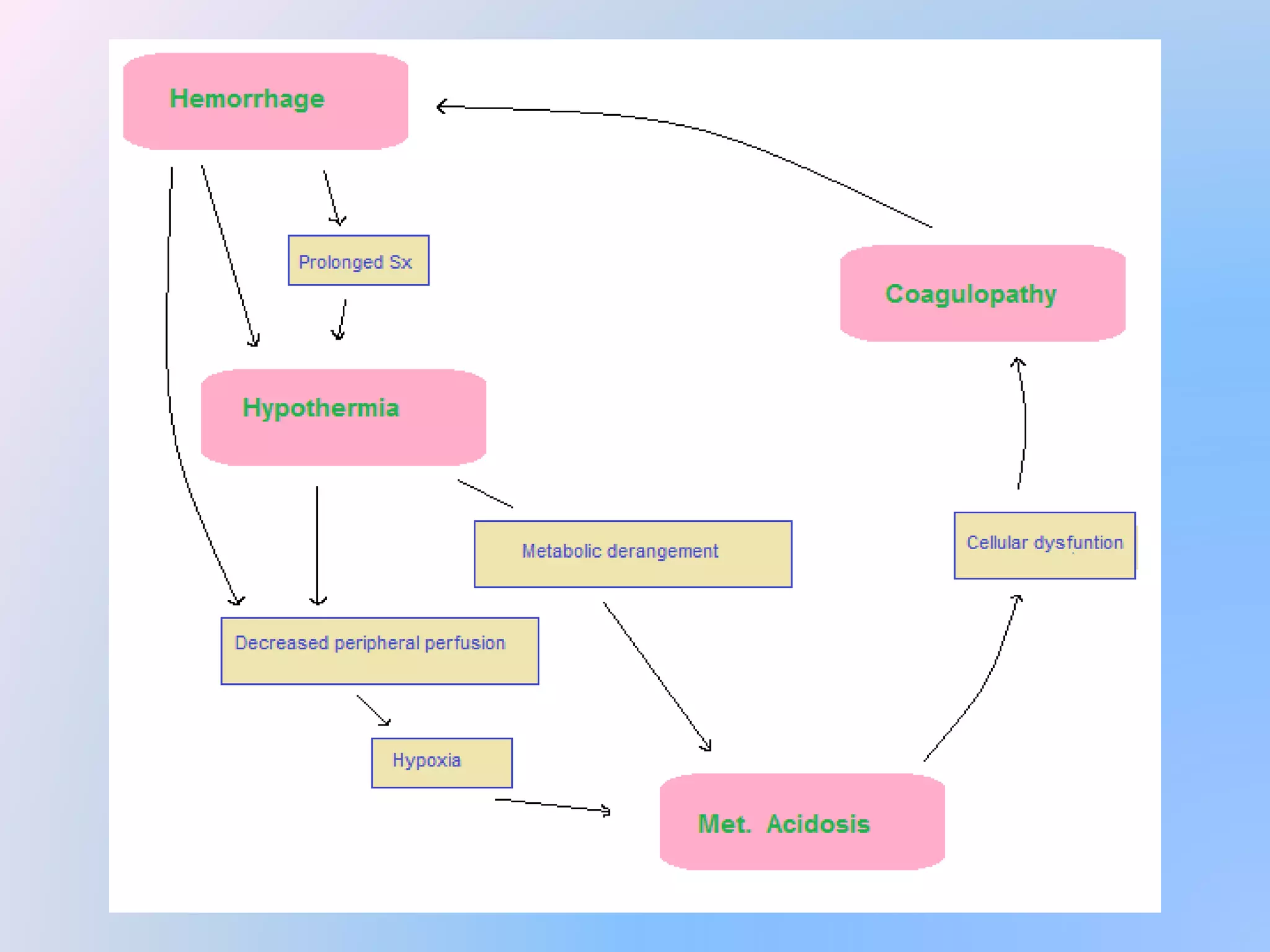
Trauma triad of death
Massive hemorrhage lead to :
1. Hypothermia
2. Metabolic acidosis
3. Coagulopathy
Hypothermia
1. Heat loss by evaporation and conduction
2. Inability to generate heat
Central cause of all derangements.
Metabolic acidosis
1. Massive transfusion
2. Vasopressors
3. Diminished cardiac function
Coagulopathy
1. Consumption dilution
2. Hypothermia
3. Acidosis
Principles of damage control Surgery
• Stone insisted for rapid closure of abdomen
for preventing hemorrhage.
• Now it is established that opening of
abdomen for a long leads to loss of heat
leading to hypothermia.
• Concomitant thoracic opening aggravates it.
• Try all possible methods to break the vicious
cycle of lethal triad and restore physiology.
Steps is damage control surgery
Bleeding raw surfaces, like that of the liver,
are packed with laparotomy pads.
 Small enteric injuries are closed with staples
Large ones are stapled on both sides with the
GIA stapling device and the damaged segment
removed.
Injuries of the pancreas and kidneys are not
treated if they are not bleeding
Clamps may be left on unrepaired vascular
injuries, or the vessels are ligated.
Vessels which cannot be ligated without loss
of life or limb can be treated with temporary
indwelling shunts.
 No drains are placed, and the abdomen is closed
with sharp towel clips placed two centimetres
apart which include only the skin.
Towel clips are used because they do not cause
bleeding as needles do and they can be applied
very rapidly, usually in 60–90 seconds.
 The closure of just the skin allows for the
abdominal or thoracic cavities to accommodate a
greater volume without increased pressure.
The clips are covered with a towel, and a
plastic adhesive sheet is placed over the towel
to prevent excessive fluid from draining onto
the patient's bedding.
Cold wet drapes are removed, and the patient
is covered from head to toe with layers of
warm blankets.
Definitive surgery
• Patient is taken for definitive surgery within 24
hours.
• If surgeon believes the metabolic
derangements will improve within 2 hours
patient can be kept in OT.
• If metabolic corrections will take a long time
patient can be shifted to SICU .
Indications for definitive surgery
1. Core temprature 36°F or above
2. Correction of acid base balance
3. Normalization of coagulation profile.
Advantages
A. A small study on penetrating abdominal injuries
showed a survival benefit over historical
controls(90% v 58%; P=0.02).
B. Mortality in Iraq war was 10% compared with 24% in
Gulf war.
Disadvantages
1. Sepsis and multi organ failure
2. Pneumonia
3. Intra abdominal abscess
4. Enteric fistula
5. Compartment syndrome
Damage control neurosurgery
1. Arrest intracranial hemorrhage.
2. Evacuate the hematoma.
3. Primary closure of dura to prevent infection.
4. Craniectomy to prevent compartment
syndrome.
Damage control orthopedics
• Control all hemorrhages primarily.
• Avoid early manipulations of long bone
fracture.
• Prevents fat embolism.
• Two hit theory.
Damage  control  surgery

Damage control surgery

  • 1.
  • 2.
    Etymology • The termdamage control was coined by US navy during WWII. • Basic skill and procedure that can maintain water tight integrity and offensiveness of war ships. • Similar sinking ship is a traumatized patient.
  • 3.
    Definition • Damage controlsurgery (DCS) is a form of surgery typically by trauma surgeons utilized in severe unstable injuries. • This form of surgery puts more emphasis on preventing the triad of death, rather than correcting the anatomy .
  • 4.
    Trauma triad ofdeath Massive hemorrhage lead to : 1. Hypothermia 2. Metabolic acidosis 3. Coagulopathy
  • 5.
    Hypothermia 1. Heat lossby evaporation and conduction 2. Inability to generate heat Central cause of all derangements.
  • 6.
    Metabolic acidosis 1. Massivetransfusion 2. Vasopressors 3. Diminished cardiac function
  • 7.
  • 9.
    Principles of damagecontrol Surgery • Stone insisted for rapid closure of abdomen for preventing hemorrhage. • Now it is established that opening of abdomen for a long leads to loss of heat leading to hypothermia. • Concomitant thoracic opening aggravates it. • Try all possible methods to break the vicious cycle of lethal triad and restore physiology.
  • 10.
    Steps is damagecontrol surgery Bleeding raw surfaces, like that of the liver, are packed with laparotomy pads.  Small enteric injuries are closed with staples Large ones are stapled on both sides with the GIA stapling device and the damaged segment removed.
  • 11.
    Injuries of thepancreas and kidneys are not treated if they are not bleeding Clamps may be left on unrepaired vascular injuries, or the vessels are ligated. Vessels which cannot be ligated without loss of life or limb can be treated with temporary indwelling shunts.
  • 13.
     No drainsare placed, and the abdomen is closed with sharp towel clips placed two centimetres apart which include only the skin. Towel clips are used because they do not cause bleeding as needles do and they can be applied very rapidly, usually in 60–90 seconds.  The closure of just the skin allows for the abdominal or thoracic cavities to accommodate a greater volume without increased pressure.
  • 14.
    The clips arecovered with a towel, and a plastic adhesive sheet is placed over the towel to prevent excessive fluid from draining onto the patient's bedding. Cold wet drapes are removed, and the patient is covered from head to toe with layers of warm blankets.
  • 15.
    Definitive surgery • Patientis taken for definitive surgery within 24 hours. • If surgeon believes the metabolic derangements will improve within 2 hours patient can be kept in OT. • If metabolic corrections will take a long time patient can be shifted to SICU .
  • 16.
    Indications for definitivesurgery 1. Core temprature 36°F or above 2. Correction of acid base balance 3. Normalization of coagulation profile.
  • 17.
    Advantages A. A smallstudy on penetrating abdominal injuries showed a survival benefit over historical controls(90% v 58%; P=0.02). B. Mortality in Iraq war was 10% compared with 24% in Gulf war.
  • 18.
    Disadvantages 1. Sepsis andmulti organ failure 2. Pneumonia 3. Intra abdominal abscess 4. Enteric fistula 5. Compartment syndrome
  • 19.
    Damage control neurosurgery 1.Arrest intracranial hemorrhage. 2. Evacuate the hematoma. 3. Primary closure of dura to prevent infection. 4. Craniectomy to prevent compartment syndrome.
  • 20.
    Damage control orthopedics •Control all hemorrhages primarily. • Avoid early manipulations of long bone fracture. • Prevents fat embolism. • Two hit theory.