 4am on Saturday morning, bat phone
rings….
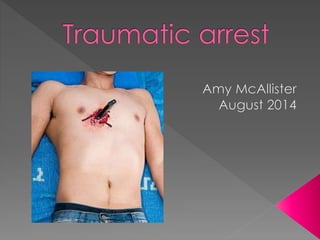
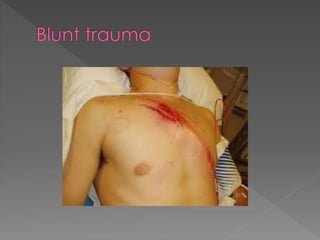
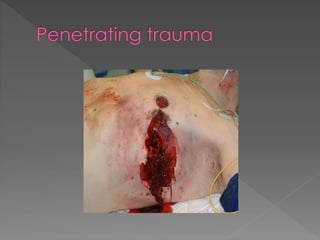
 29 year old male with bread knife lateral
to left sternum
 Initially had recordable vitals, then lost
output – CPR in progress
 ETA 2 minutes
 What would you do?
 Epidemiology
 Causes
 Blunt
 Penetrating
 Management
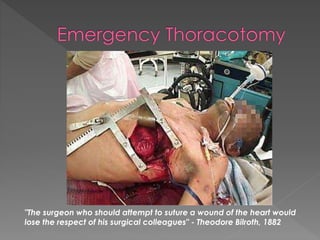
 Emergency Thoracotomy
 Cardiac arrest caused by trauma,
usually penetrating or blunt thoracic
injury
 Can also include abdominal and head
injury, as well as drowning, asphyxiation,
electrocution
 Patients usually young and healthy
 Usually not primary cardiac event
 Various papers with differing
mechanisms and standards
 1990s survival to hospital discharge 2.5%
 2000s 4-8%
 Poor survival persists
Hypoxia
 airway obstruction – vomit, foreign body,
facial fractures
 tracheobronchial injury
 CNS depression
 open/tension pneumothorax
 Hypoperfusion
 Haemorrhage  hypovolaemia
 Cardiac tamponade
 EMS Physicians and the American College
of Surgeons Committee on Trauma (COT)
guidelines 2003:
 WITHOLD RESUS…
 Blunt trauma patient who is found apnoeic,
pulseless, and without organized ECG
activity upon the arrival of EMS at the scene
 Penetrating trauma found apnoeic and
pulseless by EMS, without signs of life
 injuries obviously incompatible with life
 Rigor mortis
 15-20 minutes of unsuccessful CPR
 Transport to trauma centre >15 minutes
 Paediatrics
 Pregnant women – perimortem
caesarean
 “Medical” arrest
 Hypothermia
 London air ambulance retrospective
over 10 years
 Almost 1000 patients included -
 740 dead at scene
 7.5% survived to hospital d/c
 Up to 64% breached guidelines
 Airway
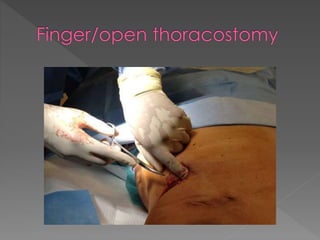
 Bilateral open thoracostomies
 Haemorrhage control
 Blood/ fluid
 Defib as necessary
 USS
 No venous return in TCA patients
 Delay procedures
 May cause further thoracic damage
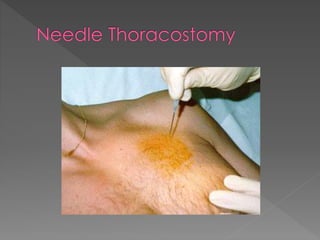
 Needle approach conventionally 2nd IC
space, midclavicular line
 Danger of going too medial and hitting
vessels
 Can kink, cause pneumothorax or not
reach
 Suggestion to go laterally or do finger
thoracostomies
 ABCs as with blunt injury
 Chest compressions not warranted
 Bilateral open thoracostomies
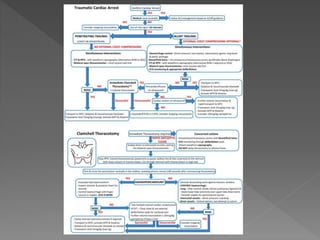
 Emergency thoractomy
"The surgeon who should attempt to suture a wound of the heart would
lose the respect of his surgical colleagues" - Theodore Bilroth, 1882
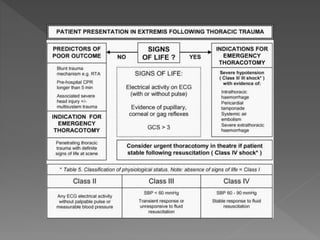
 Blunt trauma: limited to those with vital signs
on arrival and witnessed cardiac arrest or
unresponsive hypotension (BP < 70mmHg)
 Or Rapid exsanguination from chest tube
(>1500ml)
 Penetrating cardiac injuries who arrive at
the trauma centre within 20minutes with
witnessed signs of life or ECG activity
 Exsanguinating abdominal vascular injury
 Primary aims:
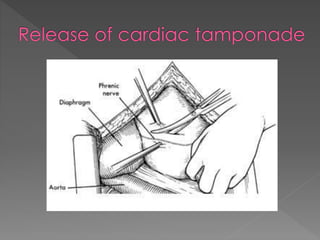
 Release of cardiac tamponade
 Control of haemorrhage – direct finger
pressure
 internal cardiac massage
 Secondary aims:
 cross-clamping of the descending
thoracic aorta
 supine anterolateral thoracotomy
 rapid skin preparation
 Incision 5th intercostal space; sternum to
mid-axillary line
 Incise through subcutaneous tissues to
reach intercostal musculature
 Enter chest bluntly with a finger through
intercostal muscles
 Extend opening with heavy scissors and
blunt dissection
 Insert the rib spreaders between the ribs
and open
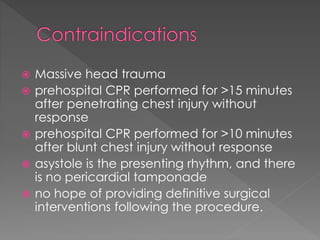
 Massive head trauma
 prehospital CPR performed for >15 minutes
after penetrating chest injury without
response
 prehospital CPR performed for >10 minutes
after blunt chest injury without response
 asystole is the presenting rhythm, and there
is no pericardial tamponade
 no hope of providing definitive surgical
interventions following the procedure.
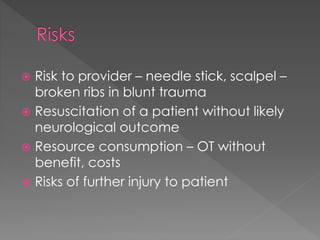
 Risk to provider – needle stick, scalpel –
broken ribs in blunt trauma
 Resuscitation of a patient without likely
neurological outcome
 Resource consumption – OT without
benefit, costs
 Risks of further injury to patient
 Get blood/ trauma pack
 Get access – IO/IV
 Permissive hypotension
 Look for sources of bleeding and close
 ?head – scalp wound
 ?FAST exam
 Pelvic binder
 Traction on long bones
 Call surgeons
 Signs of life
 Previous documented vital signs
 USS showing cardiac activity
 Age
 Rhythm
 Isolated penetrating cardiac injury
 Stab wounds vs gunshot
 PREPARE
 Major trauma call
 Staff - Call in consultant and
cardiothoracics…..GOWN UP!
 Trauma bay
 Equipment - thoracotomy kit, USS
 Call for trauma pack
 Know limitations of yourself and
colleagues
 Traumatic cardiac arrest has grim
survival rates
 Should be carried out in correct setting
and with appropriate surgical backup
 Emergency thoracotomy for penetrating
wounds, otherwise bilateral
thoracostomies
 DON’T use closed CPR or vasopressors
 http://emcrit.org/podcasts/traumatic-arrest/
 http://www.ncbi.nlm.nih.gov/pmc/articles/PMC3672499/

 http://www.trauma.org/index.php/main/article/361/

 http://www.alabmed.com/uploadfile/2014/0515/20140515
070229503.pdf
 http://www.biomedcentral.com/content/pdf/cc10558.pd
f
 http://resuscitation-
guidelines.articleinmotion.com/article/S0300-
9572(10)00441-7/aim/8i-traumatic-cardiorespiratory-arrest
Traumatic arrest

Traumatic arrest

  • 2.
     4am onSaturday morning, bat phone rings….  29 year old male with bread knife lateral to left sternum  Initially had recordable vitals, then lost output – CPR in progress  ETA 2 minutes  What would you do?
  • 3.
     Epidemiology  Causes Blunt  Penetrating  Management  Emergency Thoracotomy
  • 4.
     Cardiac arrestcaused by trauma, usually penetrating or blunt thoracic injury  Can also include abdominal and head injury, as well as drowning, asphyxiation, electrocution
  • 5.
     Patients usuallyyoung and healthy  Usually not primary cardiac event
  • 6.
     Various paperswith differing mechanisms and standards  1990s survival to hospital discharge 2.5%  2000s 4-8%  Poor survival persists
  • 7.
    Hypoxia  airway obstruction– vomit, foreign body, facial fractures  tracheobronchial injury  CNS depression  open/tension pneumothorax
  • 8.
     Hypoperfusion  Haemorrhage hypovolaemia  Cardiac tamponade
  • 9.
     EMS Physiciansand the American College of Surgeons Committee on Trauma (COT) guidelines 2003:  WITHOLD RESUS…  Blunt trauma patient who is found apnoeic, pulseless, and without organized ECG activity upon the arrival of EMS at the scene  Penetrating trauma found apnoeic and pulseless by EMS, without signs of life  injuries obviously incompatible with life  Rigor mortis
  • 10.
     15-20 minutesof unsuccessful CPR  Transport to trauma centre >15 minutes
  • 11.
     Paediatrics  Pregnantwomen – perimortem caesarean  “Medical” arrest  Hypothermia
  • 12.
     London airambulance retrospective over 10 years  Almost 1000 patients included -  740 dead at scene  7.5% survived to hospital d/c  Up to 64% breached guidelines
  • 14.
     Airway  Bilateralopen thoracostomies  Haemorrhage control  Blood/ fluid  Defib as necessary  USS
  • 15.
     No venousreturn in TCA patients  Delay procedures  May cause further thoracic damage
  • 16.
     Needle approachconventionally 2nd IC space, midclavicular line  Danger of going too medial and hitting vessels  Can kink, cause pneumothorax or not reach  Suggestion to go laterally or do finger thoracostomies
  • 20.
     ABCs aswith blunt injury  Chest compressions not warranted  Bilateral open thoracostomies  Emergency thoractomy
  • 21.
    "The surgeon whoshould attempt to suture a wound of the heart would lose the respect of his surgical colleagues" - Theodore Bilroth, 1882
  • 22.
     Blunt trauma:limited to those with vital signs on arrival and witnessed cardiac arrest or unresponsive hypotension (BP < 70mmHg)  Or Rapid exsanguination from chest tube (>1500ml)  Penetrating cardiac injuries who arrive at the trauma centre within 20minutes with witnessed signs of life or ECG activity  Exsanguinating abdominal vascular injury
  • 23.
     Primary aims: Release of cardiac tamponade  Control of haemorrhage – direct finger pressure  internal cardiac massage  Secondary aims:  cross-clamping of the descending thoracic aorta
  • 24.
     supine anterolateralthoracotomy  rapid skin preparation  Incision 5th intercostal space; sternum to mid-axillary line  Incise through subcutaneous tissues to reach intercostal musculature  Enter chest bluntly with a finger through intercostal muscles  Extend opening with heavy scissors and blunt dissection  Insert the rib spreaders between the ribs and open
  • 26.
     Massive headtrauma  prehospital CPR performed for >15 minutes after penetrating chest injury without response  prehospital CPR performed for >10 minutes after blunt chest injury without response  asystole is the presenting rhythm, and there is no pericardial tamponade  no hope of providing definitive surgical interventions following the procedure.
  • 27.
     Risk toprovider – needle stick, scalpel – broken ribs in blunt trauma  Resuscitation of a patient without likely neurological outcome  Resource consumption – OT without benefit, costs  Risks of further injury to patient
  • 29.
     Get blood/trauma pack  Get access – IO/IV  Permissive hypotension  Look for sources of bleeding and close  ?head – scalp wound  ?FAST exam  Pelvic binder  Traction on long bones  Call surgeons
  • 30.
     Signs oflife  Previous documented vital signs  USS showing cardiac activity  Age  Rhythm  Isolated penetrating cardiac injury  Stab wounds vs gunshot
  • 31.
     PREPARE  Majortrauma call  Staff - Call in consultant and cardiothoracics…..GOWN UP!  Trauma bay  Equipment - thoracotomy kit, USS  Call for trauma pack  Know limitations of yourself and colleagues
  • 32.
     Traumatic cardiacarrest has grim survival rates  Should be carried out in correct setting and with appropriate surgical backup  Emergency thoracotomy for penetrating wounds, otherwise bilateral thoracostomies  DON’T use closed CPR or vasopressors
  • 33.
     http://emcrit.org/podcasts/traumatic-arrest/  http://www.ncbi.nlm.nih.gov/pmc/articles/PMC3672499/  http://www.trauma.org/index.php/main/article/361/   http://www.alabmed.com/uploadfile/2014/0515/20140515 070229503.pdf  http://www.biomedcentral.com/content/pdf/cc10558.pd f  http://resuscitation- guidelines.articleinmotion.com/article/S0300- 9572(10)00441-7/aim/8i-traumatic-cardiorespiratory-arrest

Editor's Notes

  • #7 Overall survival 5.6%, with full neurological recovery in 1.6% 1990s 2.5%, mid 2000s up to 4-8%
  • #10 Sign s of life – pupillary reflexes, spontaneous movement, organised ECG activity
  • #14 Mechanisms: Mechanisms by which BCI may occur include motor vehicle crashes (MVCs), falls from heights, direct blows to the chest and explosions, commotio cordis
  • #15 Tension pneumothorax is only thing with any evidence of good outcome Pressure dressings, tourniquets, pelvic binders, long bone splinting Give blood early, limit fluid and vasopressors IV/IO access
  • #17 Needle – doesn’t reach, kinks, can cause pneumo Finger – make incision, small haemostat and puncture through, poke through parietal pleura with finger
  • #24 Foley catheter, sutures for cardiac laceration The rationale for clamping the aorta is to redistribute blood flow to the coronary vessels, lungs and brain, to reduce exsanguination from injuries in the lower torso. 3.Control of massive air embolism or bronchopleural fistula —
  • #31 Rhythm – asystole and bradycardia = poor Length of CPR - more than 15mins – poor Blunt – less than 2% survival with ET Time to trauma centre Exceptions – hypothermia ETCO2 Cardiac injuries > great vessels, pulmonary hila
  • #33 20% of stroke volume at best (closed cardiac compressions)