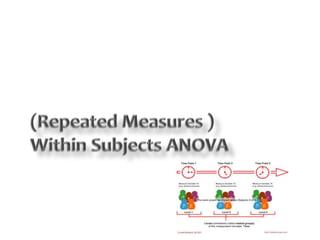
 Independent-measures analysis of 
variance (Oneway ANOVA) 
 Repeated measures designs (t-tests) 
 Individual differences
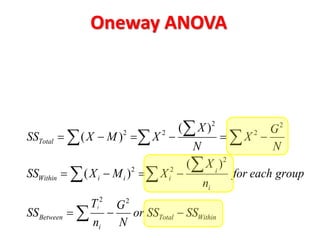
Oneway ANOVA 
      
X 
X 
    
Total Within 
i 
Total 
Between 
i 
i 
Within i i i 
or SS SS 
G 
N 
T 
n 
SS 
G 
for each group 
n 
SS X M X 
N 
X 
N 
SS X M X 
i 
 
   
 
  
 
 
  
2 2 
2 
2 2 
2 
2 
2 
2 2 
( ) 
( ) 
( ) 
( )
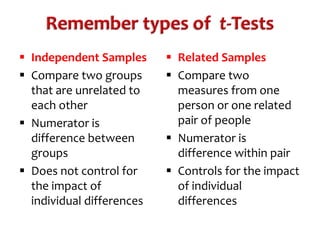
 Independent Samples 
 Compare two groups 
that are unrelated to 
each other 
 Numerator is 
difference between 
groups 
 Does not control for 
the impact of 
individual differences 
 Related Samples 
 Compare two 
measures from one 
person or one related 
pair of people 
 Numerator is 
difference within pair 
 Controls for the impact 
of individual 
differences
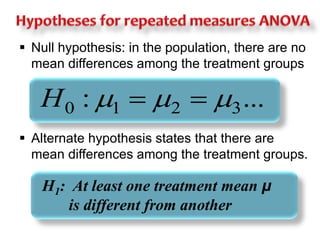
 Null hypothesis: in the population, there are no 
mean differences among the treatment groups 
: ... 0 1 2 3 H    
 Alternate hypothesis states that there are 
mean differences among the treatment groups. 
H1: At least one treatment mean μ 
is different from another
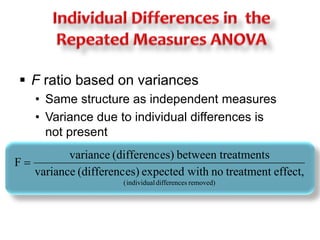
 F ratio based on variances 
variance (differences) between treatments 
variance (differences) expected with no treatment effect, 
(individual differences removed) 
F  
• Same structure as independent measures 
• Variance due to individual differences is 
not present
 Participant characteristics that vary from 
one person to another. 
• Not systematically present in any treatment 
group or by research design 
 Characteristics may influence 
measurements on the outcome variable 
• Eliminated from the numerator by the 
research design 
• Must be removed from the denominator 
statistically
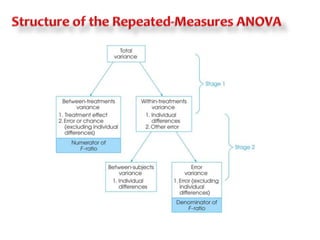
 Numerator of the F ratio includes 
• Systematic differences caused by treatments 
• Unsystematic differences caused by random 
factors (reduced because same individuals in 
all treatments) 
 Denominator estimates variance 
reasonable to expect from unsystematic 
factors 
• Effect of individual differences is removed 
• Residual (error) variance remains
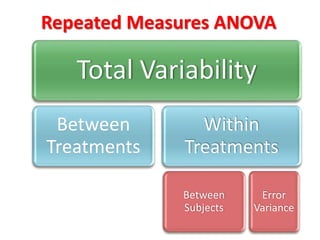
Repeated Measures ANOVA 
Total Variability 
Between 
Treatments 
Within 
Treatments 
Between 
Subjects 
Error 
Variance
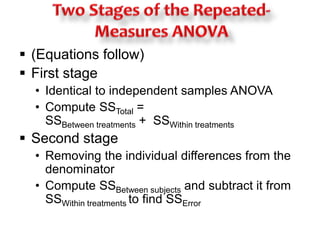
 (Equations follow) 
 First stage 
• Identical to independent samples ANOVA 
• Compute SSTotal = 
SSBetween treatments + SSWithin treatments 
 Second stage 
• Removing the individual differences from the 
denominator 
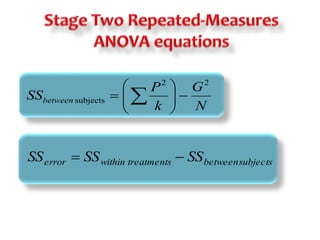
• Compute SSBetween subjects and subtract it from 
SSWithin treatments to find SSError
 There is a computational equation for the Sum 
of Squared Deviations from the Mean: 
2 ( X 
) 
N 
 X 
 
2 
 With ANOVA, we sum groups of means 
• G2 = Sum of all the scores squared 
• T1 = sum of scores in Treatment Group 1 
• P1 = sum of scores of Person 1 across time 
• TA 1 and TB 1 = sums of scores across levels of a factor.
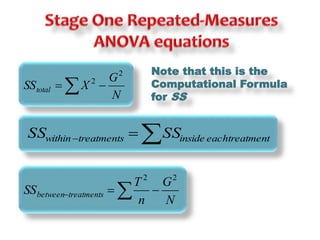
G 
N 
SS X total 
2 
2   
Note that this is the 
Computational Formula 
for SS 
 withintreatments inside each treatment SS SS 
G 
N 
T 
n 
SS between treatments 
2 2 
  
G 
N 
P 
k 
SSbetween 
2 2 
 
 
  
subjects    
 
  
 
error within treatments between subjects SS  SS  SS
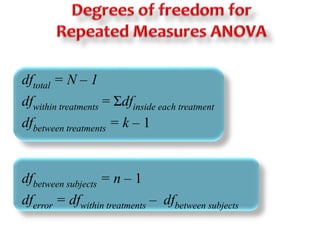
dftotal = N – 1 
dfwithin treatments = Σdfinside each treatment 
dfbetween treatments = k – 1 
dfbetween subjects = n – 1 
dferror = dfwithin treatments – dfbetween subjects
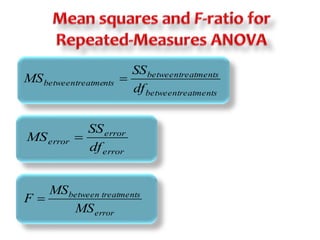
MS  
error 
SS 
error 
MS  
error df 
between treatments 
SS 
between treatments 
between treatments df 
between treatments 
MS 
error 
MS 
F 
 Find your partners 
 Solve the ANOVA 
table problem 
 Try to finish in 10 
minutes (1 minute 
per slot to complete)
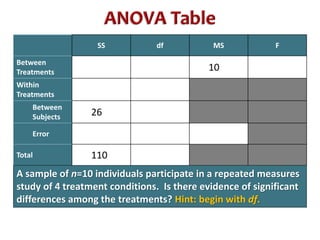
SS df MS F 
Between 
Treatments 10 
Within 
Treatments 
Between 
Subjects 26 
Error 
Total 110 
A sample of n=10 individuals participate in a repeated measures 
study of 4 treatment conditions. Is there evidence of significant 
differences among the treatments? Hint: begin with df.
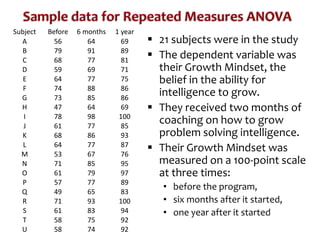
Subject Before 6 months 1 year 
A 56 64 69 
B 79 91 89 
C 68 77 81 
D 59 69 71 
E 64 77 75 
F 74 88 86 
G 73 85 86 
H 47 64 69 
I 78 98 100 
J 61 77 85 
K 68 86 93 
L 64 77 87 
M 53 67 76 
N 71 85 95 
O 61 79 97 
P 57 77 89 
Q 49 65 83 
R 71 93 100 
S 61 83 94 
T 58 75 92 
U 58 74 92 
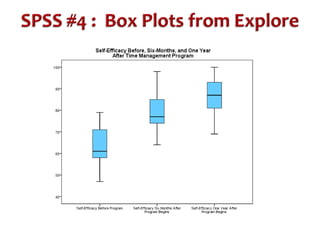
 21 subjects were in the study 
 The dependent variable was 
their Growth Mindset, the 
belief in the ability for 
intelligence to grow. 
 They received two months of 
coaching on how to grow 
problem solving intelligence. 
 Their Growth Mindset was 
measured on a 100-point scale 
at three times: 
• before the program, 
• six months after it started, 
• one year after it started
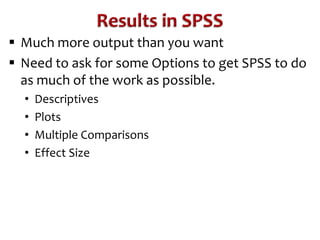
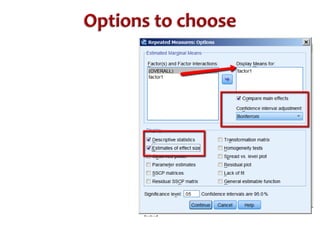
 Much more output than you want 
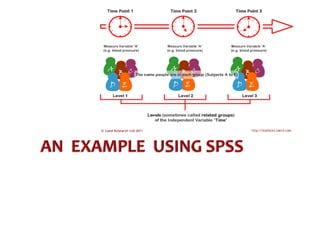
 Need to ask for some Options to get SPSS to do 
as much of the work as possible. 
• Descriptives 
• Plots 
• Multiple Comparisons 
• Effect Size
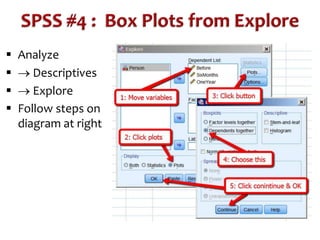
 Analyze 
  Descriptives 
  Explore 
 Follow steps on 
diagram at right
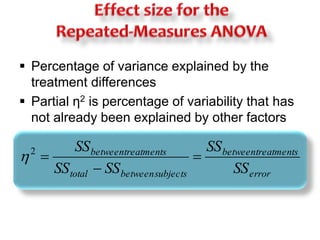
 Percentage of variance explained by the 
treatment differences 
 Partial η2 is percentage of variability that has 
not already been explained by other factors 
between treatments 
error 
between treatments 
SS 
total between subjects 
SS 
SS 
SS SS 
 
 
 2 
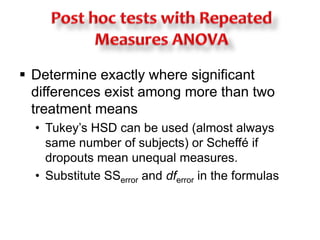
 Determine exactly where significant 
differences exist among more than two 
treatment means 
• Tukey’s HSD can be used (almost always 
same number of subjects) or Scheffé if 
dropouts mean unequal measures. 
• Substitute SSerror and dferror in the formulas
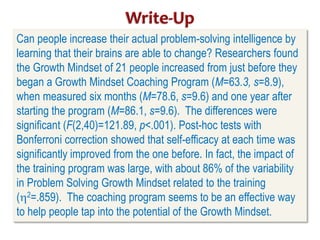
Can people increase their actual problem-solving intelligence by 
learning that their brains are able to change? Researchers found 
the Growth Mindset of 21 people increased from just before they 
began a Growth Mindset Coaching Program (M=63.3, s=8.9), 
when measured six months (M=78.6, s=9.6) and one year after 
starting the program (M=86.1, s=9.6). The differences were 
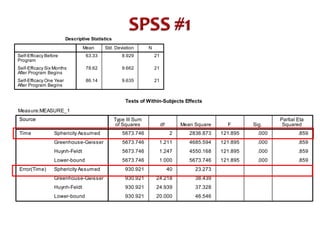
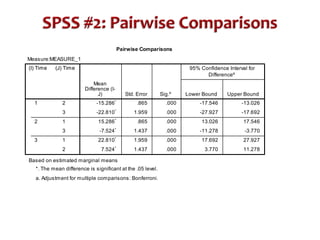
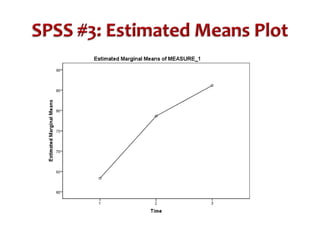
significant (F(2,40)=121.89, p<.001). Post-hoc tests with 
Bonferroni correction showed that self-efficacy at each time was 
significantly improved from the one before. In fact, the impact of 
the training program was large, with about 86% of the variability 
in Problem Solving Growth Mindset related to the training 
(2=.859). The coaching program seems to be an effective way 
to help people tap into the potential of the Growth Mindset.
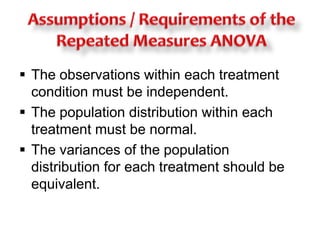
 The observations within each treatment 
condition must be independent. 
 The population distribution within each 
treatment must be normal. 
 The variances of the population 
distribution for each treatment should be 
equivalent.
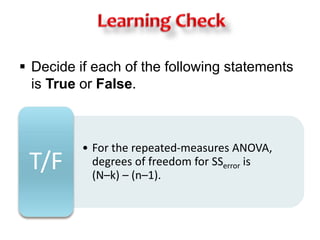
 Decide if each of the following statements 
is True or False. 
• For the repeated-measures ANOVA, 
degrees of freedom for SSerror is 
(N–k) – (n–1). 
T/F
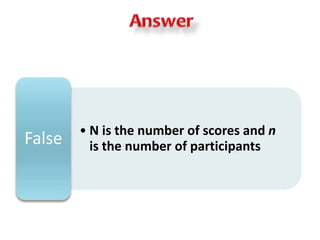
• N is the number of scores and n 
is the number of participants False
Repeated Measures ANOVA - Overview

Repeated Measures ANOVA - Overview

  • 2.
     Independent-measures analysisof variance (Oneway ANOVA)  Repeated measures designs (t-tests)  Individual differences
  • 3.
    Oneway ANOVA      X X     Total Within i Total Between i i Within i i i or SS SS G N T n SS G for each group n SS X M X N X N SS X M X i            2 2 2 2 2 2 2 2 2 2 ( ) ( ) ( ) ( )
  • 4.
     Independent Samples  Compare two groups that are unrelated to each other  Numerator is difference between groups  Does not control for the impact of individual differences  Related Samples  Compare two measures from one person or one related pair of people  Numerator is difference within pair  Controls for the impact of individual differences
  • 5.
     Null hypothesis:in the population, there are no mean differences among the treatment groups : ... 0 1 2 3 H     Alternate hypothesis states that there are mean differences among the treatment groups. H1: At least one treatment mean μ is different from another
  • 6.
     F ratiobased on variances variance (differences) between treatments variance (differences) expected with no treatment effect, (individual differences removed) F  • Same structure as independent measures • Variance due to individual differences is not present
  • 7.
     Participant characteristicsthat vary from one person to another. • Not systematically present in any treatment group or by research design  Characteristics may influence measurements on the outcome variable • Eliminated from the numerator by the research design • Must be removed from the denominator statistically
  • 8.
     Numerator ofthe F ratio includes • Systematic differences caused by treatments • Unsystematic differences caused by random factors (reduced because same individuals in all treatments)  Denominator estimates variance reasonable to expect from unsystematic factors • Effect of individual differences is removed • Residual (error) variance remains
  • 9.
    Repeated Measures ANOVA Total Variability Between Treatments Within Treatments Between Subjects Error Variance
  • 11.
     (Equations follow)  First stage • Identical to independent samples ANOVA • Compute SSTotal = SSBetween treatments + SSWithin treatments  Second stage • Removing the individual differences from the denominator • Compute SSBetween subjects and subtract it from SSWithin treatments to find SSError
  • 12.
     There isa computational equation for the Sum of Squared Deviations from the Mean: 2 ( X ) N  X  2  With ANOVA, we sum groups of means • G2 = Sum of all the scores squared • T1 = sum of scores in Treatment Group 1 • P1 = sum of scores of Person 1 across time • TA 1 and TB 1 = sums of scores across levels of a factor.
  • 13.
    G N SSX total 2 2   Note that this is the Computational Formula for SS  withintreatments inside each treatment SS SS G N T n SS between treatments 2 2   
  • 14.
    G N P k SSbetween 2 2     subjects        error within treatments between subjects SS  SS  SS
  • 15.
    dftotal = N– 1 dfwithin treatments = Σdfinside each treatment dfbetween treatments = k – 1 dfbetween subjects = n – 1 dferror = dfwithin treatments – dfbetween subjects
  • 16.
    MS  error SS error MS  error df between treatments SS between treatments between treatments df between treatments MS error MS F 
  • 18.
     Find yourpartners  Solve the ANOVA table problem  Try to finish in 10 minutes (1 minute per slot to complete)
  • 19.
    SS df MSF Between Treatments 10 Within Treatments Between Subjects 26 Error Total 110 A sample of n=10 individuals participate in a repeated measures study of 4 treatment conditions. Is there evidence of significant differences among the treatments? Hint: begin with df.
  • 21.
    Subject Before 6months 1 year A 56 64 69 B 79 91 89 C 68 77 81 D 59 69 71 E 64 77 75 F 74 88 86 G 73 85 86 H 47 64 69 I 78 98 100 J 61 77 85 K 68 86 93 L 64 77 87 M 53 67 76 N 71 85 95 O 61 79 97 P 57 77 89 Q 49 65 83 R 71 93 100 S 61 83 94 T 58 75 92 U 58 74 92  21 subjects were in the study  The dependent variable was their Growth Mindset, the belief in the ability for intelligence to grow.  They received two months of coaching on how to grow problem solving intelligence.  Their Growth Mindset was measured on a 100-point scale at three times: • before the program, • six months after it started, • one year after it started
  • 22.
     Much moreoutput than you want  Need to ask for some Options to get SPSS to do as much of the work as possible. • Descriptives • Plots • Multiple Comparisons • Effect Size
  • 23.
     Analyze  Descriptives   Explore  Follow steps on diagram at right
  • 29.
     Percentage ofvariance explained by the treatment differences  Partial η2 is percentage of variability that has not already been explained by other factors between treatments error between treatments SS total between subjects SS SS SS SS    2 
  • 30.
     Determine exactlywhere significant differences exist among more than two treatment means • Tukey’s HSD can be used (almost always same number of subjects) or Scheffé if dropouts mean unequal measures. • Substitute SSerror and dferror in the formulas
  • 31.
    Can people increasetheir actual problem-solving intelligence by learning that their brains are able to change? Researchers found the Growth Mindset of 21 people increased from just before they began a Growth Mindset Coaching Program (M=63.3, s=8.9), when measured six months (M=78.6, s=9.6) and one year after starting the program (M=86.1, s=9.6). The differences were significant (F(2,40)=121.89, p<.001). Post-hoc tests with Bonferroni correction showed that self-efficacy at each time was significantly improved from the one before. In fact, the impact of the training program was large, with about 86% of the variability in Problem Solving Growth Mindset related to the training (2=.859). The coaching program seems to be an effective way to help people tap into the potential of the Growth Mindset.
  • 32.
     The observationswithin each treatment condition must be independent.  The population distribution within each treatment must be normal.  The variances of the population distribution for each treatment should be equivalent.
  • 33.
     Decide ifeach of the following statements is True or False. • For the repeated-measures ANOVA, degrees of freedom for SSerror is (N–k) – (n–1). T/F
  • 34.
    • N isthe number of scores and n is the number of participants False