Measures
of Variability
MARY KRYSTLE DAWN D. SULLEZA
Reporter
CHAPTER FOUR:
VARIABILITY: the “spread” in a set of measurement.
-it refers to how spread out a group of data is.
In other words, variability measures how much your
scores differ from each other. Variability is also
referred to as dispersion or spread. Data sets with
similar values are said to have little variability, while
data sets that have values that are spread out have
high variability.
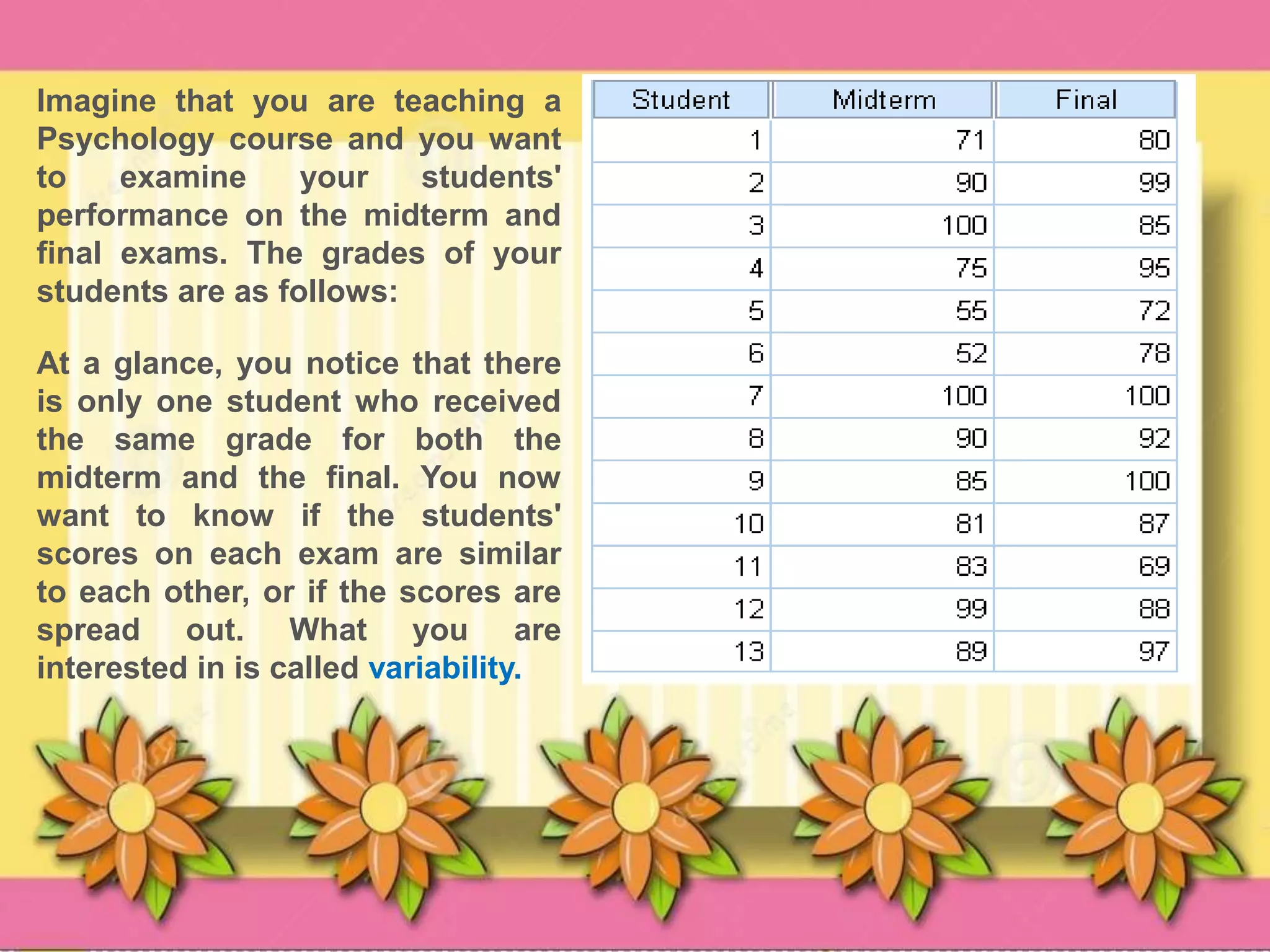
Imagine that you are teaching a
Psychology course and you want
to examine your students'
performance on the midterm and
final exams. The grades of your
students are as follows:
At a glance, you notice that there
is only one student who received
the same grade for both the
midterm and the final. You now
want to know if the students'
scores on each exam are similar
to each other, or if the scores are
spread out. What you are
interested in is called variability.
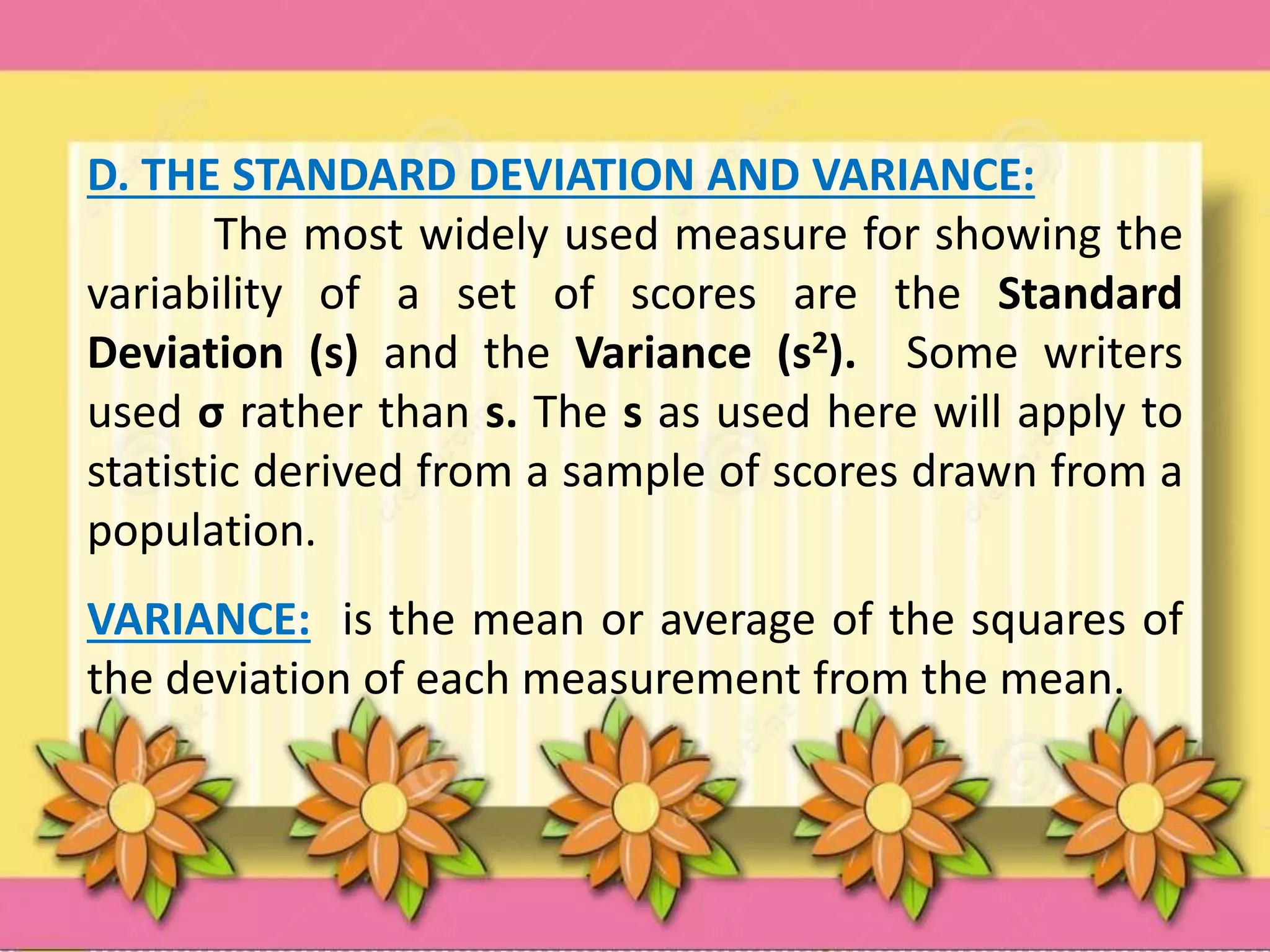
D. THE STANDARD DEVIATION AND VARIANCE:
The most widely used measure for showing the
variability of a set of scores are the Standard
Deviation (s) and the Variance (s2). Some writers
used σ rather than s. The s as used here will apply to
statistic derived from a sample of scores drawn from a
population.
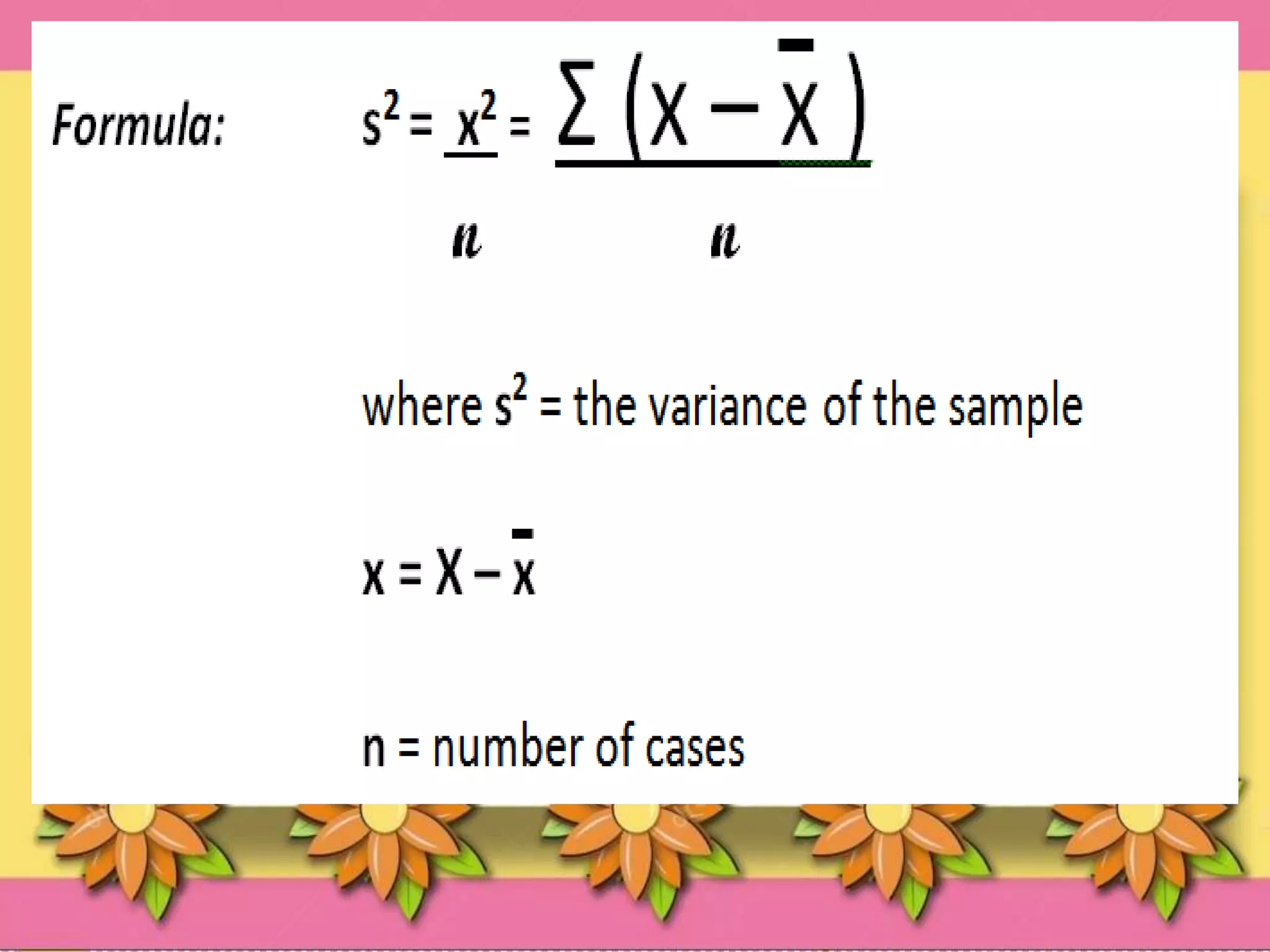
VARIANCE: is the mean or average of the squares of
the deviation of each measurement from the mean.
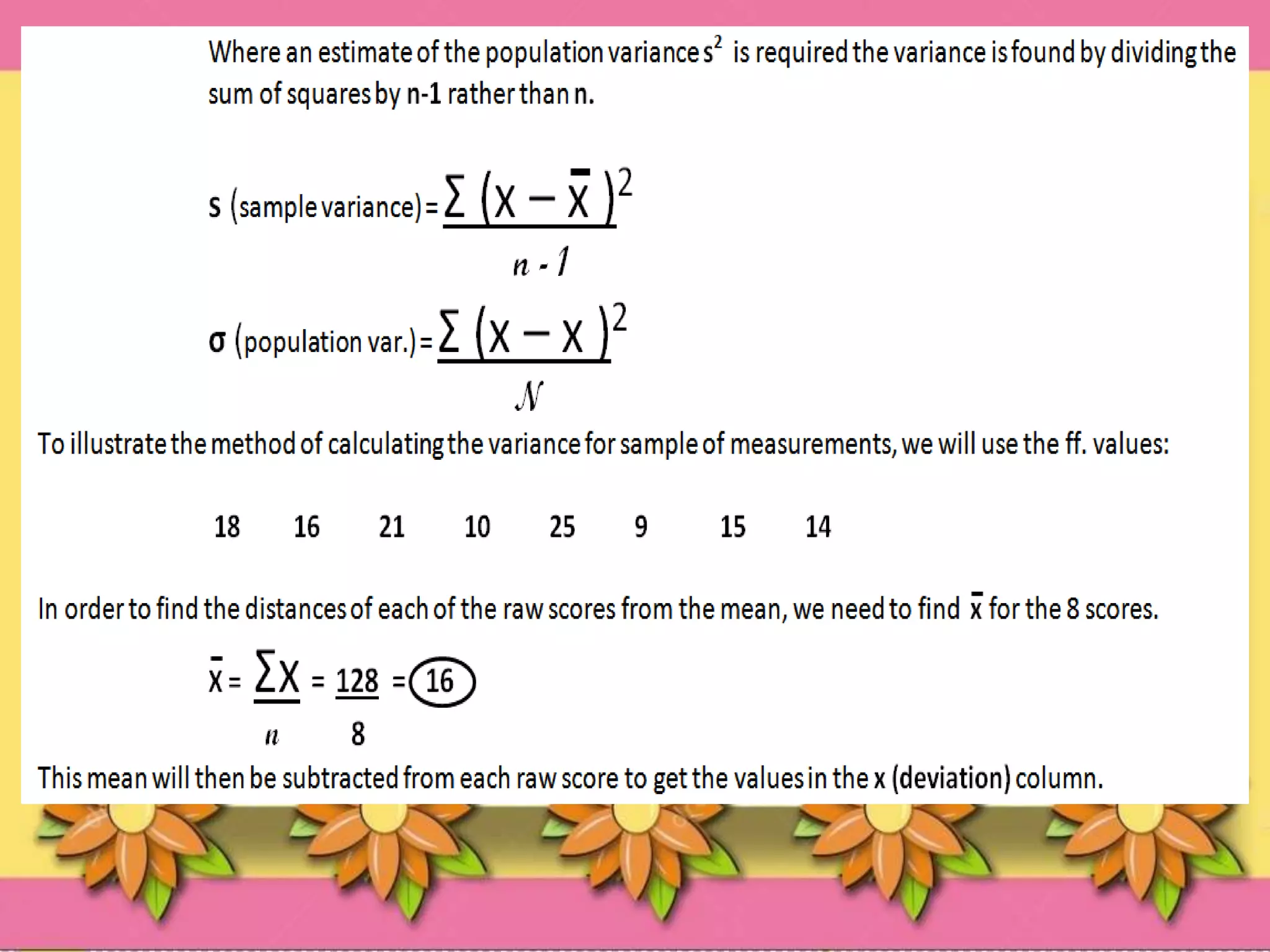
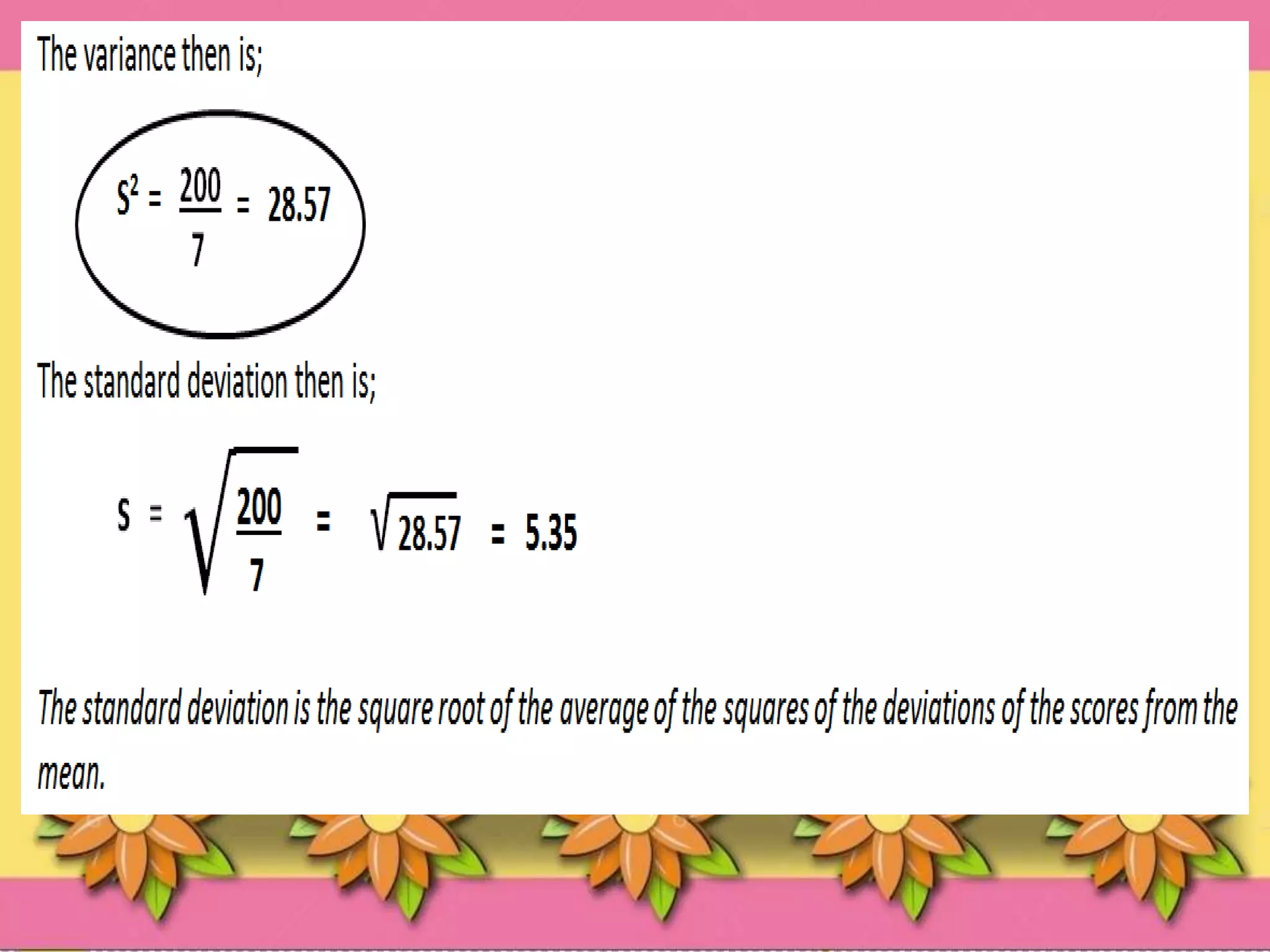
The variance cannot easily be related to the original
measures from which it was obtained because all the
differences from the mean were squared. A measure
of variability that is compatible to the original
measure is obtained by taking the square root of the
variance. The result is called the Standard Deviation.
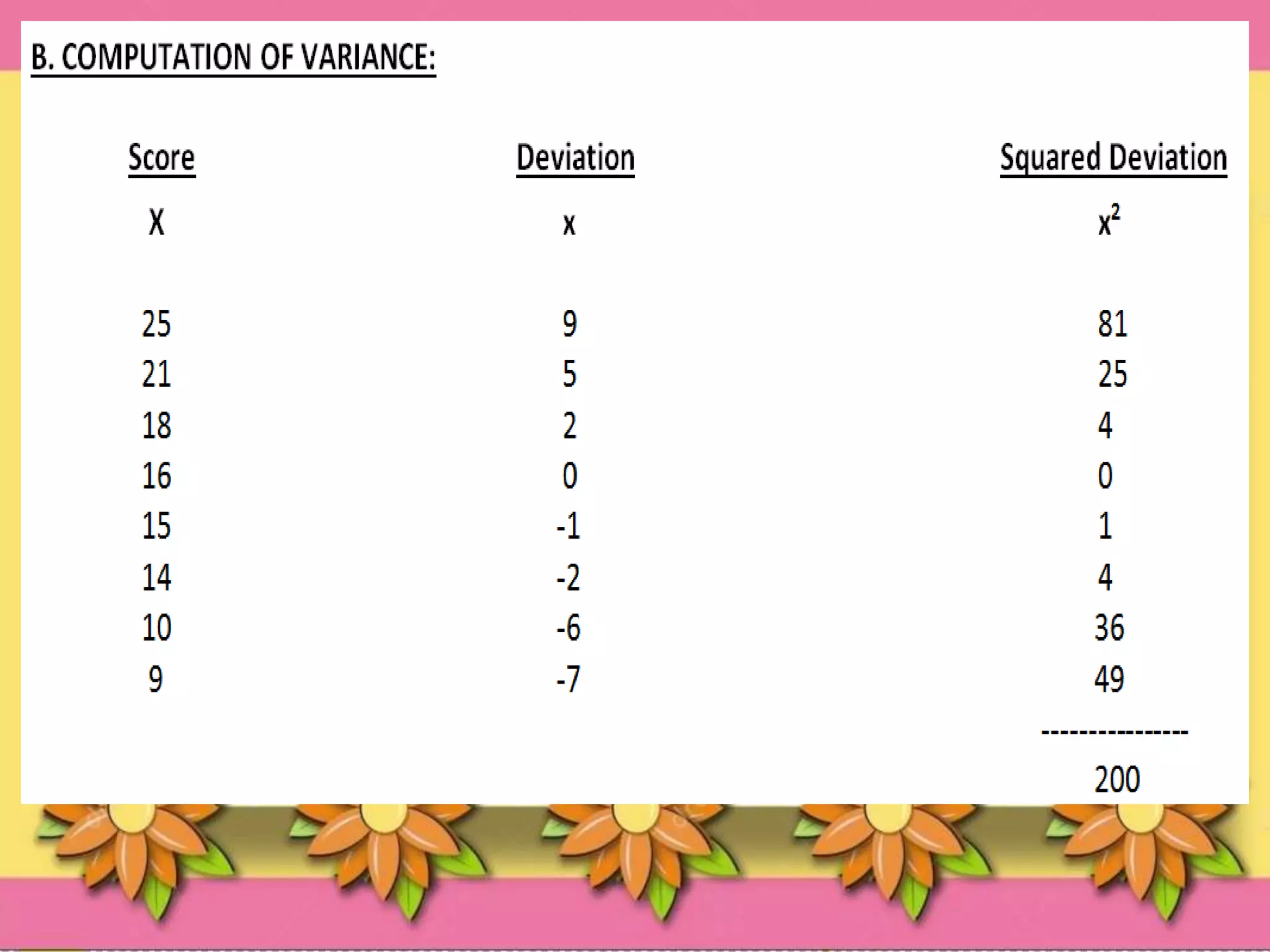
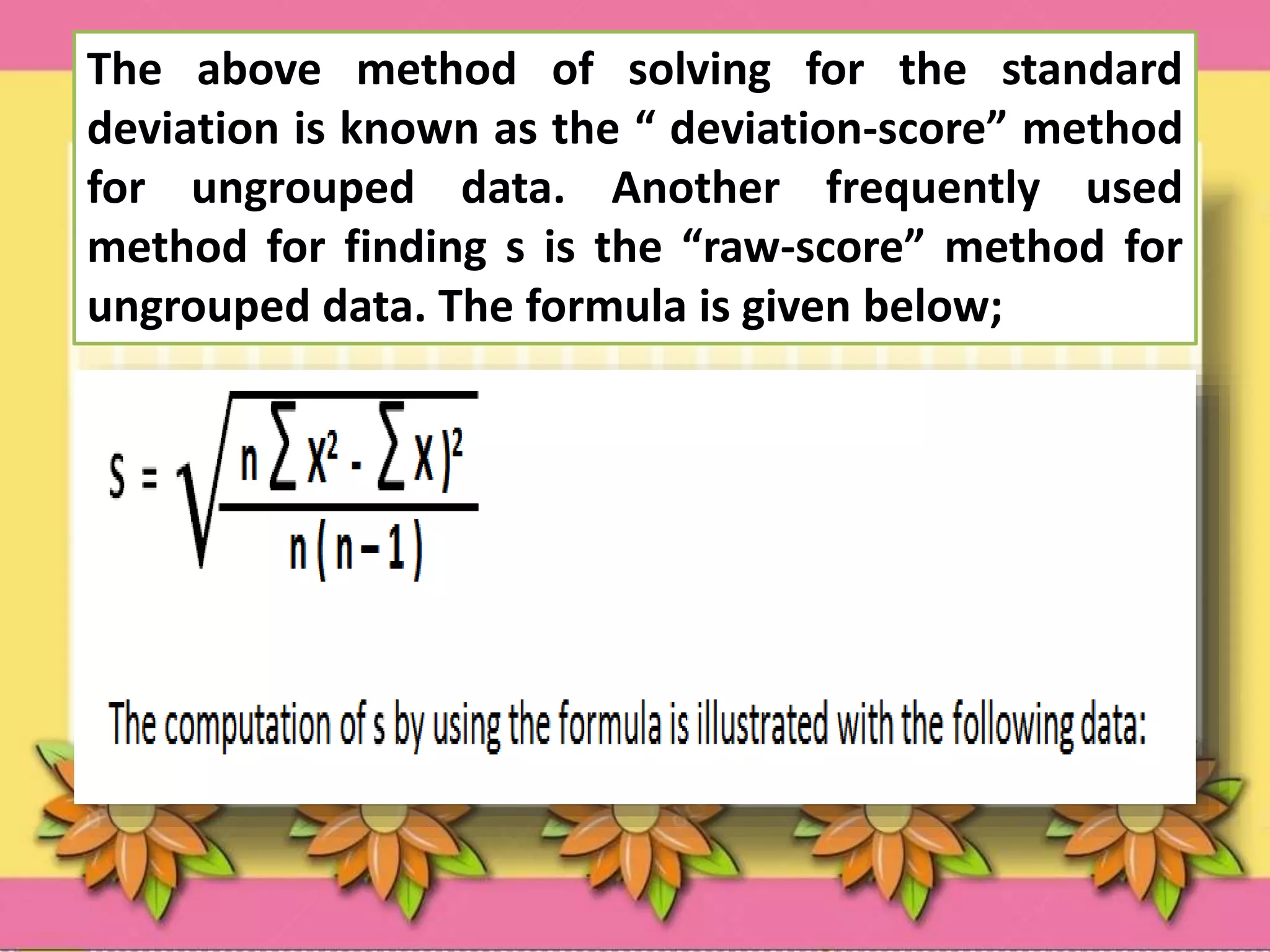
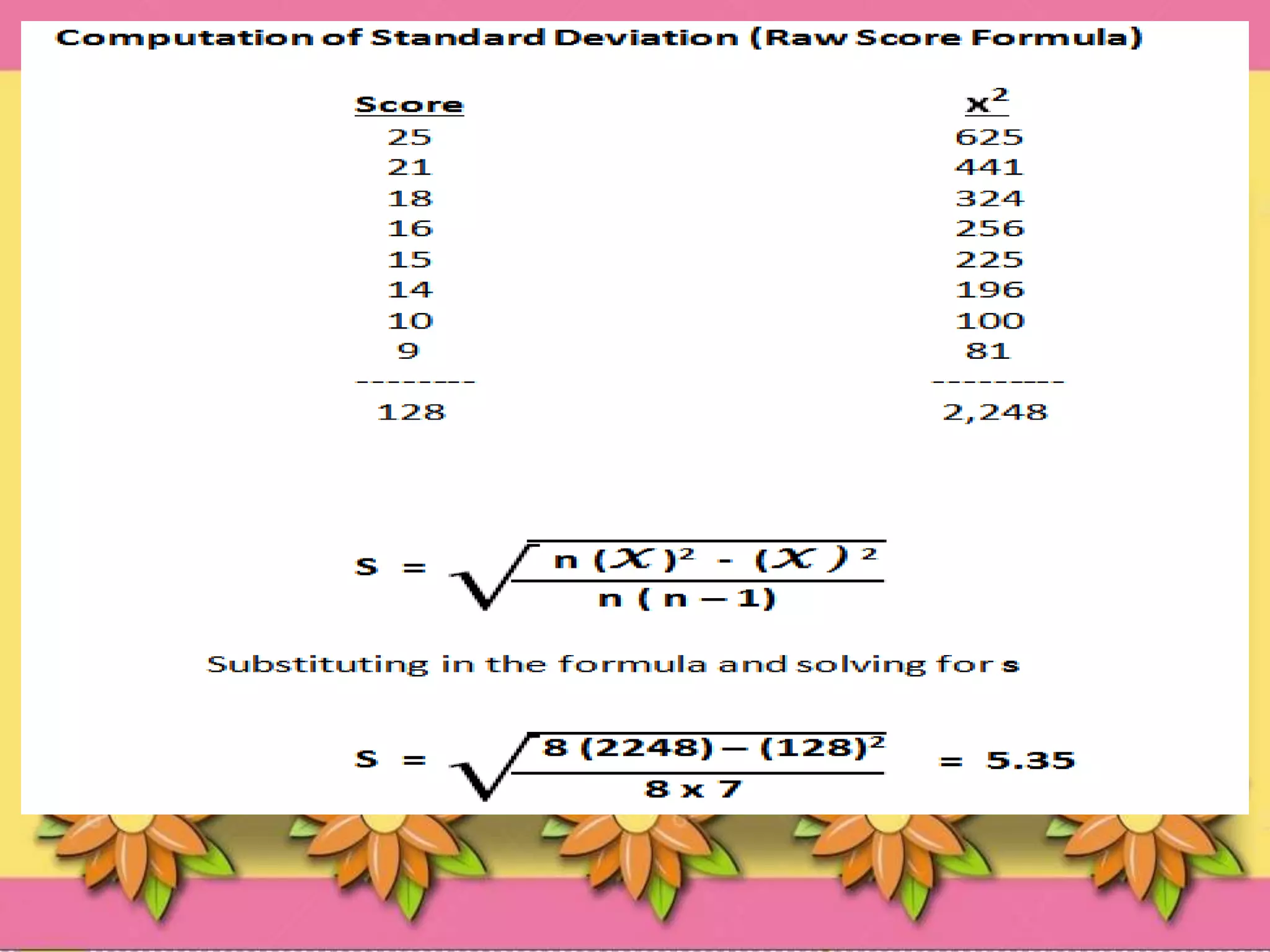
The above method of solving for the standard
deviation is known as the “ deviation-score” method
for ungrouped data. Another frequently used
method for finding s is the “raw-score” method for
ungrouped data. The formula is given below;
THE END!!!
  
Thank You for
Listening.

Measures of Variability

  • 1.
    Measures of Variability MARY KRYSTLEDAWN D. SULLEZA Reporter CHAPTER FOUR:
  • 2.
    VARIABILITY: the “spread”in a set of measurement. -it refers to how spread out a group of data is. In other words, variability measures how much your scores differ from each other. Variability is also referred to as dispersion or spread. Data sets with similar values are said to have little variability, while data sets that have values that are spread out have high variability.
  • 3.
    Imagine that youare teaching a Psychology course and you want to examine your students' performance on the midterm and final exams. The grades of your students are as follows: At a glance, you notice that there is only one student who received the same grade for both the midterm and the final. You now want to know if the students' scores on each exam are similar to each other, or if the scores are spread out. What you are interested in is called variability.
  • 8.
    D. THE STANDARDDEVIATION AND VARIANCE: The most widely used measure for showing the variability of a set of scores are the Standard Deviation (s) and the Variance (s2). Some writers used σ rather than s. The s as used here will apply to statistic derived from a sample of scores drawn from a population. VARIANCE: is the mean or average of the squares of the deviation of each measurement from the mean.
  • 13.
    The variance cannoteasily be related to the original measures from which it was obtained because all the differences from the mean were squared. A measure of variability that is compatible to the original measure is obtained by taking the square root of the variance. The result is called the Standard Deviation.
  • 14.
    The above methodof solving for the standard deviation is known as the “ deviation-score” method for ungrouped data. Another frequently used method for finding s is the “raw-score” method for ungrouped data. The formula is given below;
  • 16.
    THE END!!!   Thank You for Listening.