PRESENTED BY
SIMRAN KAUR
 Quality is some prescribed or desired
characteristics present in raw materials,
semi finished or finished items
 Quality is used with reference to end use of
product viz fitness for purpose, degree of
preference, degree of excellence, etc
 Quality control is the process of verification
or correction in quality of product when the
deviations in the quality are found to be
more than expected
 Assessment of quality standards at different
stages of the production process
 To recommend for remedial or corrective
action when the process goes out of control
 Reliability
 To suggest suitable improvements in quality
of product, if any, without affecting cost of
production
 Quality control operations introduce quality
consciousness in organization
 Quality control starts with quality assessment
and includes action taken to do away with
unacceptable quality
 Quality assurance is quality control but with
an emphasis on quality in design of products,
processes and jobs and in selection of
personnel and higher training
 Total Quality Control (TQC) refers to a total
commitment to quality in all its aspects, to
commitment of quality in all functional areas
of work and makes use of behavioural
techniques
 Quality Circles is a group of employees whose
task is to identify problems, formulate
solutions and present their results to
management with suggestions for
implementation
 Quality is built into product at product
concept stage and is ubiquitous all
throughout its life
 Top management’s commitment to quality is
a proper beginning
 Continuous training is a key to Quality
Control
 Quality function can be organized in several
alternatives
 Cause of variation
1. Chance variation
2. Assignable cause of variation
 Functions of quality control
1. To see that the product or service is
designed in such a way so that it meets
customers’ specifications
2. To maintain discipline amongst employees
and to boost their morale
3. To reduce the proportion of scrap, waste
and spoilage during the process
4. To make the employees quality conscious
 Quality audit
1. JUSE and other organizations conduct
external audits
 Education and Training
1. JUSE offers programmes for management
and workers
 Applications of Statistical methods
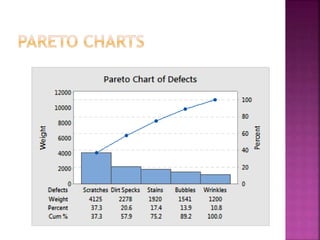
1. Pareto charts
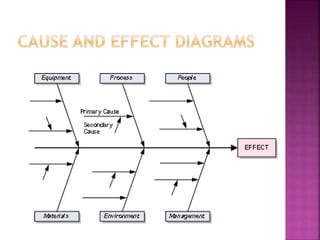
2. Cause and effect diagrams
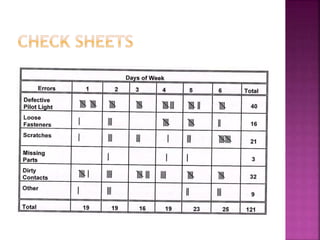
3. Check sheets
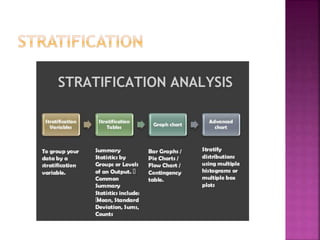
4. Stratification
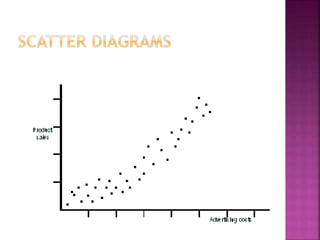
5. Scatter diagrams
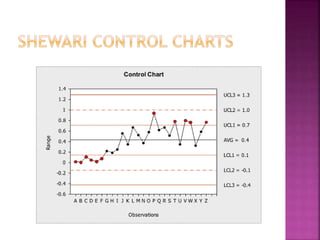
6. Shewari control charts
 Design and engineering department
determines design/specification/ standards
for raw materials, components, parts, tools,
equipment, processes or methods of
production, etc
 Product specifications or design should be
based on needs of consumers; otherwise it
will proven to be useless even if it is
outstanding
 An error or fault at this stage affects the
quality of final product adversely and cost of
production may increase due to more scrap
or spoilage or defective material
 Responsibility for procurement of materials,
components, parts, tools, equipment, etc of
standard specifications, in a required
quantity at a reasonable price rests with the
purchase department
 Quality control system or equipment of
suppliers should be checked to determine
their ability to supply quality materials
regularly in desired quantity
 Production department is responsible for
production of quality products as per the
specifications, determined by design and
engineering department
 Quality of product is affected by
manufacturing processes, tools and
equipment and also testing and measuring
instruments and methods used
 Manufacturing processes or methods must be
faultless and carefully designed
 Measuring and testing instruments of
standard and well known manufacturers
should only be used to maintain great
accuracy
 Careful handling, proper stage and
systematic packing save the products from
rain, dust, sunlight, temperature, etc and
maintain quality of products
 Complaints from customers should be
entertained properly
Quality control

Quality control

  • 1.
  • 2.
     Quality issome prescribed or desired characteristics present in raw materials, semi finished or finished items  Quality is used with reference to end use of product viz fitness for purpose, degree of preference, degree of excellence, etc  Quality control is the process of verification or correction in quality of product when the deviations in the quality are found to be more than expected
  • 3.
     Assessment ofquality standards at different stages of the production process  To recommend for remedial or corrective action when the process goes out of control  Reliability  To suggest suitable improvements in quality of product, if any, without affecting cost of production  Quality control operations introduce quality consciousness in organization
  • 4.
     Quality controlstarts with quality assessment and includes action taken to do away with unacceptable quality  Quality assurance is quality control but with an emphasis on quality in design of products, processes and jobs and in selection of personnel and higher training  Total Quality Control (TQC) refers to a total commitment to quality in all its aspects, to commitment of quality in all functional areas of work and makes use of behavioural techniques
  • 5.
     Quality Circlesis a group of employees whose task is to identify problems, formulate solutions and present their results to management with suggestions for implementation
  • 6.
     Quality isbuilt into product at product concept stage and is ubiquitous all throughout its life  Top management’s commitment to quality is a proper beginning  Continuous training is a key to Quality Control  Quality function can be organized in several alternatives
  • 7.
     Cause ofvariation 1. Chance variation 2. Assignable cause of variation
  • 8.
     Functions ofquality control 1. To see that the product or service is designed in such a way so that it meets customers’ specifications 2. To maintain discipline amongst employees and to boost their morale 3. To reduce the proportion of scrap, waste and spoilage during the process 4. To make the employees quality conscious
  • 9.
     Quality audit 1.JUSE and other organizations conduct external audits
  • 10.
     Education andTraining 1. JUSE offers programmes for management and workers
  • 11.
     Applications ofStatistical methods 1. Pareto charts 2. Cause and effect diagrams 3. Check sheets 4. Stratification 5. Scatter diagrams 6. Shewari control charts
  • 18.
     Design andengineering department determines design/specification/ standards for raw materials, components, parts, tools, equipment, processes or methods of production, etc  Product specifications or design should be based on needs of consumers; otherwise it will proven to be useless even if it is outstanding
  • 19.
     An erroror fault at this stage affects the quality of final product adversely and cost of production may increase due to more scrap or spoilage or defective material
  • 20.
     Responsibility forprocurement of materials, components, parts, tools, equipment, etc of standard specifications, in a required quantity at a reasonable price rests with the purchase department  Quality control system or equipment of suppliers should be checked to determine their ability to supply quality materials regularly in desired quantity
  • 21.
     Production departmentis responsible for production of quality products as per the specifications, determined by design and engineering department  Quality of product is affected by manufacturing processes, tools and equipment and also testing and measuring instruments and methods used  Manufacturing processes or methods must be faultless and carefully designed
  • 22.
     Measuring andtesting instruments of standard and well known manufacturers should only be used to maintain great accuracy
  • 23.
     Careful handling,proper stage and systematic packing save the products from rain, dust, sunlight, temperature, etc and maintain quality of products  Complaints from customers should be entertained properly