Protein Structure
and Function
Shape = Amino Acid Sequence
Proteins are made of 20 amino acids linked by
peptide bonds
Polypeptide backbone is the repeating sequence of
the N-C-C-N-C-C… in the peptide bond
The side chain or R group is not part of the backbone
or the peptide bond
Polypeptide
Backbone
Amino Acids
NOTE: You need to know this table
Hydrophilic Hydrophobic
Protein Folding
The peptide bond allows for rotation around it and
therefore the protein can fold and orient the R groups
in favorable positions
Weak non-covalent interactions will hold the protein
in its functional shape – these are weak and will take
many to hold the shape
Globular Proteins
The side chains will help determine the
conformation in an aqueous solution
Hydrogen Bonds in Proteins
H-bonds form between 1) atoms involved in the
peptide bond; 2) peptide bond atoms and R groups;
3) R groups
Protein Folding
Proteins shape is determined by the sequence of
the amino acids
The final shape is called the conformation and has
the lowest free energy possible
Denaturation is the process of unfolding the
protein
Can be down with heat, pH or chemical compounds
In the chemical compound, can remove and have
the protein renature or refold
Protein Folding
2 regular folding patterns
have been identified –
formed between the bonds
of the peptide backbone
α-helix – protein turns like
a spiral – fibrous proteins
(hair, nails, horns)
β-sheet – protein folds
back on itself as in a ribbon
–globular protein
β Sheets
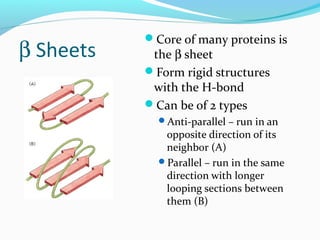
Core of many proteins is
the β sheet
Form rigid structures
with the H-bond
Can be of 2 types
Anti-parallel – run in an
opposite direction of its
neighbor (A)
Parallel – run in the same
direction with longer
looping sections between
them (B)
α Helix
Formed by a H-bond
between every 4th
peptide
bond – C=O to N-H
Usually in proteins that
span a membrane
The α helix can either coil
to the right or the left
Can also coil around each
other – coiled-coil shape –
a framework for structural
proteins such as nails and
skin
Levels of Organization
PrimaryPrimary structure
Amino acid sequence of the protein
SecondarySecondary structure
H bonds in the peptide chain backbone
 α-helix and β-sheets
TertiaryTertiary structure
Non-covalent interactions between the R groups
within the protein
QuanternaryQuanternary structure
Interaction between 2 polypeptide chains
Protein Structure
Domains
A domaindomain is a basic structural unit of a protein
structure – distinct from those that make up the
conformations
Part of protein that can fold into a stable structure
independently
Different domains can impart different functions
to proteins
Proteins can have one to many domains
depending on protein size
Domains
Useful Proteins
There are thousands and thousands of
different combinations of amino acids that can
make up proteins and that would increase if
each one had multiple shapes
Proteins usually have only one useful
conformation because otherwise it would not
be efficient use of the energy available to the
system
Natural selection has eliminated proteins that
do not perform a specific function in the cell
Protein
Families
Have similarities in amino acid sequence and
3-D structure
Have similar functions such as breakdown
proteins but do it differently
Proteins – Multiple Peptides
Non-covalent bonds can form interactions between
individual polypeptide chains
Binding site – where proteins interact with one another
Subunit – each polypeptide chain of large protein
Dimer – protein made of 2 subunits
 Can be same subunit or different subunits
Single Subunit Proteins
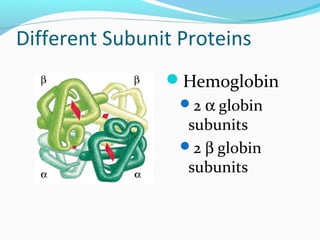
Different Subunit Proteins
Hemoglobin
2 α globin
subunits
2 β globin
subunits
Protein structure & function

Protein structure & function

  • 1.
  • 2.
    Shape = AminoAcid Sequence Proteins are made of 20 amino acids linked by peptide bonds Polypeptide backbone is the repeating sequence of the N-C-C-N-C-C… in the peptide bond The side chain or R group is not part of the backbone or the peptide bond
  • 3.
  • 4.
    Amino Acids NOTE: Youneed to know this table Hydrophilic Hydrophobic
  • 5.
    Protein Folding The peptidebond allows for rotation around it and therefore the protein can fold and orient the R groups in favorable positions Weak non-covalent interactions will hold the protein in its functional shape – these are weak and will take many to hold the shape
  • 6.
    Globular Proteins The sidechains will help determine the conformation in an aqueous solution
  • 7.
    Hydrogen Bonds inProteins H-bonds form between 1) atoms involved in the peptide bond; 2) peptide bond atoms and R groups; 3) R groups
  • 8.
    Protein Folding Proteins shapeis determined by the sequence of the amino acids The final shape is called the conformation and has the lowest free energy possible Denaturation is the process of unfolding the protein Can be down with heat, pH or chemical compounds In the chemical compound, can remove and have the protein renature or refold
  • 9.
    Protein Folding 2 regularfolding patterns have been identified – formed between the bonds of the peptide backbone α-helix – protein turns like a spiral – fibrous proteins (hair, nails, horns) β-sheet – protein folds back on itself as in a ribbon –globular protein
  • 10.
    β Sheets Core ofmany proteins is the β sheet Form rigid structures with the H-bond Can be of 2 types Anti-parallel – run in an opposite direction of its neighbor (A) Parallel – run in the same direction with longer looping sections between them (B)
  • 11.
    α Helix Formed bya H-bond between every 4th peptide bond – C=O to N-H Usually in proteins that span a membrane The α helix can either coil to the right or the left Can also coil around each other – coiled-coil shape – a framework for structural proteins such as nails and skin
  • 12.
    Levels of Organization PrimaryPrimarystructure Amino acid sequence of the protein SecondarySecondary structure H bonds in the peptide chain backbone  α-helix and β-sheets TertiaryTertiary structure Non-covalent interactions between the R groups within the protein QuanternaryQuanternary structure Interaction between 2 polypeptide chains
  • 13.
  • 14.
    Domains A domaindomain isa basic structural unit of a protein structure – distinct from those that make up the conformations Part of protein that can fold into a stable structure independently Different domains can impart different functions to proteins Proteins can have one to many domains depending on protein size
  • 15.
  • 16.
    Useful Proteins There arethousands and thousands of different combinations of amino acids that can make up proteins and that would increase if each one had multiple shapes Proteins usually have only one useful conformation because otherwise it would not be efficient use of the energy available to the system Natural selection has eliminated proteins that do not perform a specific function in the cell
  • 17.
    Protein Families Have similarities inamino acid sequence and 3-D structure Have similar functions such as breakdown proteins but do it differently
  • 18.
    Proteins – MultiplePeptides Non-covalent bonds can form interactions between individual polypeptide chains Binding site – where proteins interact with one another Subunit – each polypeptide chain of large protein Dimer – protein made of 2 subunits  Can be same subunit or different subunits
  • 19.
  • 20.
    Different Subunit Proteins Hemoglobin 2α globin subunits 2 β globin subunits