Protein
Synthesis
Molecular Genetics:
Background
The structure of DNA explains how DNA
can be copied but it does not explain how
genes work.
Genes are coded DNA instructions that
control the production of proteins
within the cell.
What are proteins?
•Chains of amino acids
•Amino acids (created based on the
sequence of the nitrogen bases)
•Sequence of nitrogen bases => amino acids => proteins
Why are proteins important?
. Control biochemical pathways
. Direct the formation of lipids,
carbohydrates, and nucleotides
. Responsible for the cell’s structure and
movement
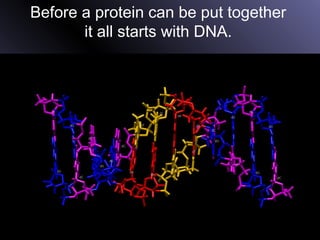
Before a protein can be put together
it all starts with DNA.
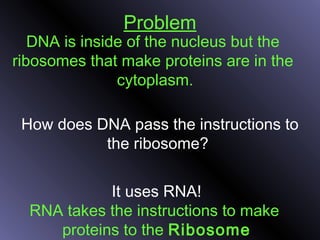
Problem
DNA is inside of the nucleus but the
ribosomes that make proteins are in the
cytoplasm.
It uses RNA!
RNA takes the instructions to make
proteins to the Ribosome
How does DNA pass the instructions to
the ribosome?
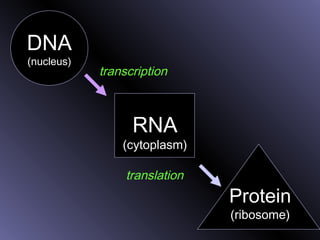
DNA
(nucleus)
RNA
(cytoplasm)
Protein
(ribosome)
transcription
translation
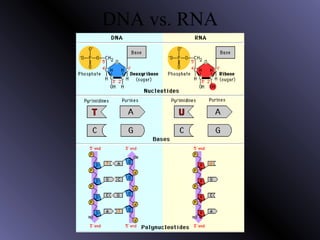
The Structure of RNA
(Ribonucleic Acid)
•Single chain of nucleotides (1/2 of a ladder)
•Sugar (ribose)
•Phosphate group
•Nitrogen bases (A,U, C, G)
•3 types of RNA (mRNA, tRNA, rRNA)
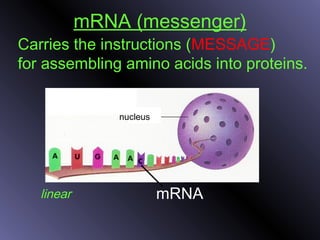
mRNA (messenger)
Carries the instructions (MESSAGE)
for assembling amino acids into proteins.
mRNA
nucleus
linear
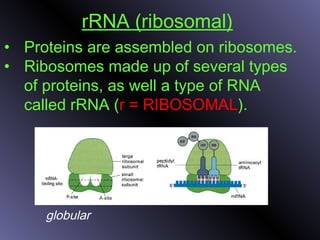
rRNA (ribosomal)
• Proteins are assembled on ribosomes.
• Ribosomes made up of several types
of proteins, as well a type of RNA
called rRNA (r = RIBOSOMAL).
globular
Pharm201 Lecture 2 2008 11
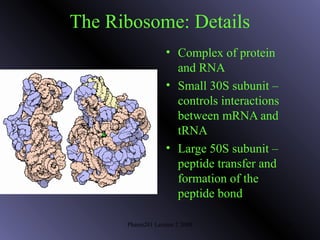
The Ribosome: Details
• Complex of protein
and RNA
• Small 30S subunit –
controls interactions
between mRNA and
tRNA
• Large 50S subunit –
peptide transfer and
formation of the
peptide bond
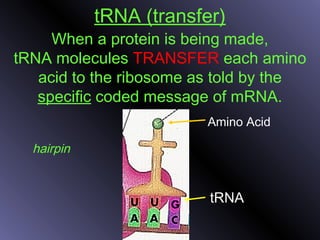
tRNA (transfer)
When a protein is being made,
tRNA molecules TRANSFER each amino
acid to the ribosome as told by the
specific coded message of mRNA.
tRNA
Amino Acid
hairpin
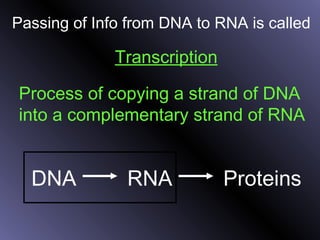
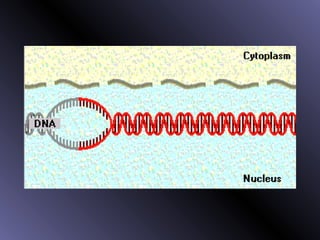
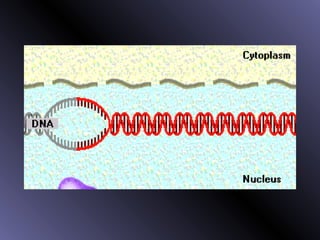
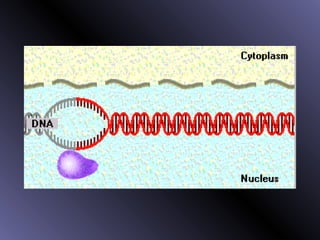
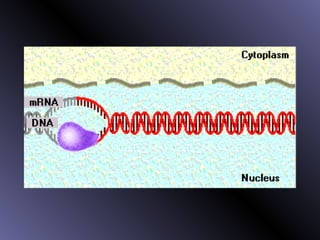
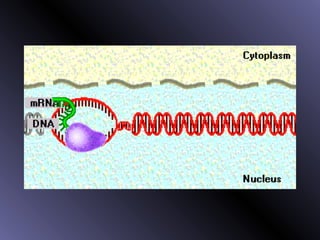
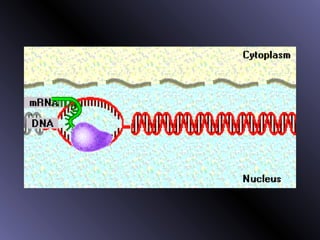
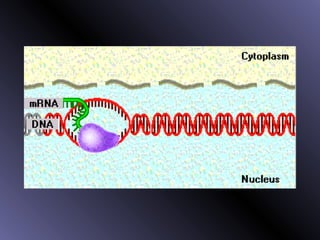
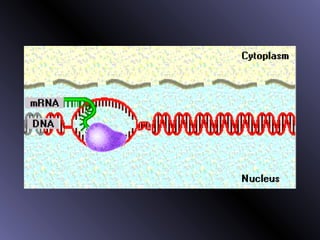
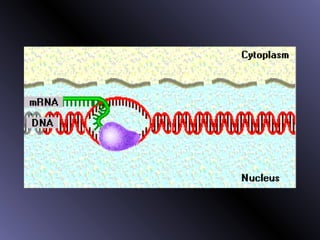
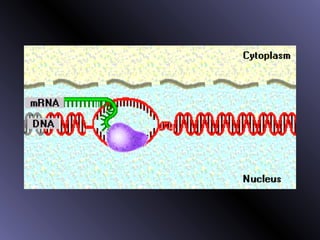
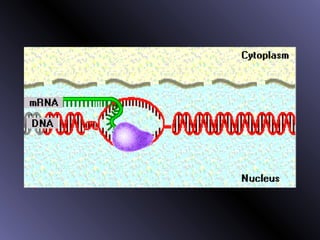
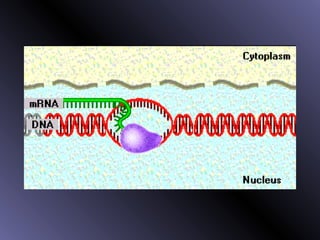
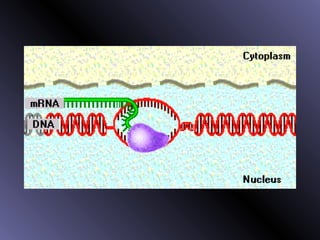
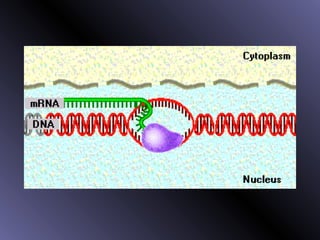
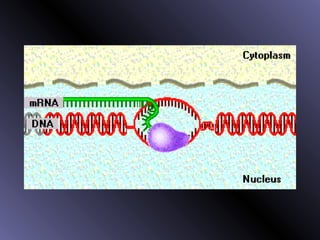
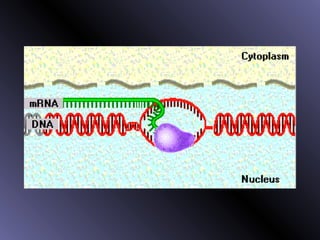
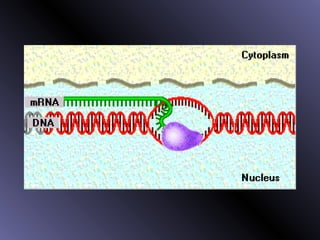
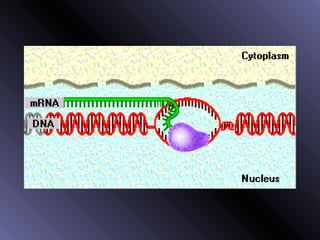
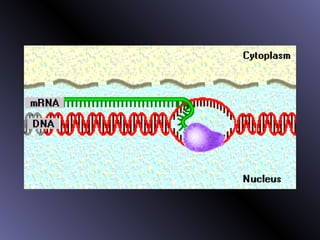
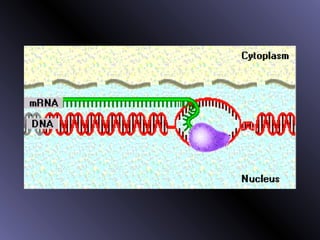
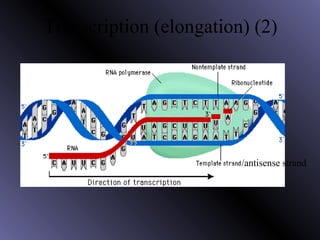
Passing of Info from DNA to RNA is called
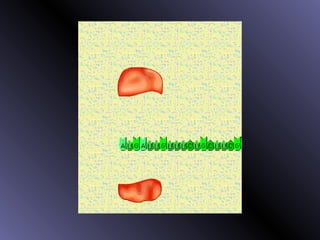
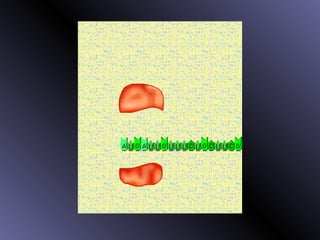
Process of copying a strand of DNA
into a complementary strand of RNA
Transcription
DNA RNA Proteins
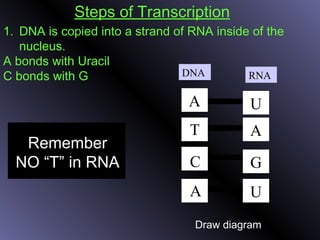
Steps of Transcription
1. DNA is copied into a strand of RNA inside of the
nucleus.
A bonds with Uracil
C bonds with G
A
T
C
A
A
U
U
G
DNA RNA
Remember
NO “T” in RNA
Draw diagram
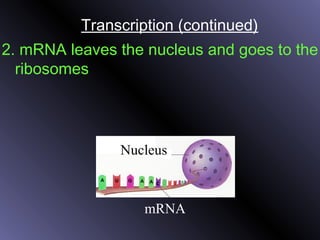
2. mRNA leaves the nucleus and goes to the
ribosomes
Transcription (continued)
Nucleus
mRNA
• Transcription Animation
• Protein Synthesis Interactive
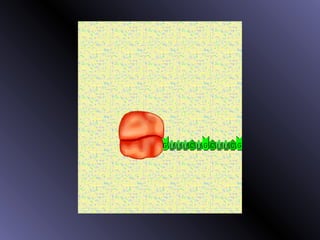
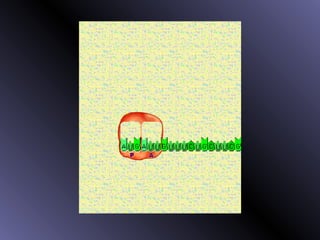
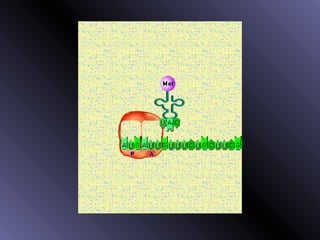
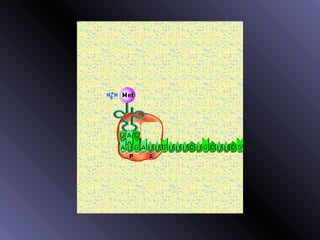
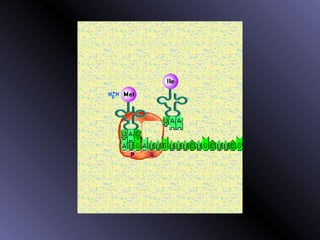
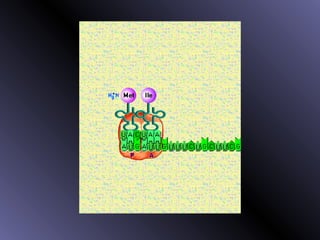
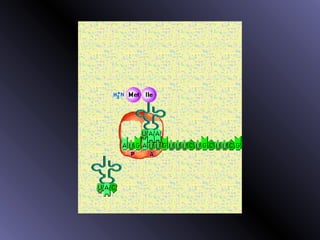
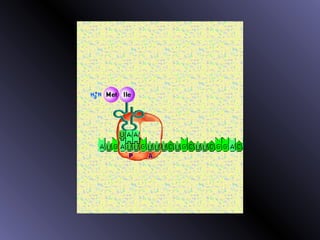
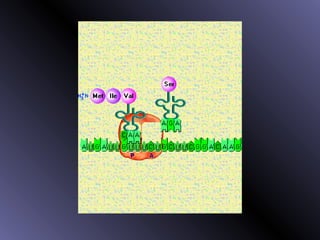
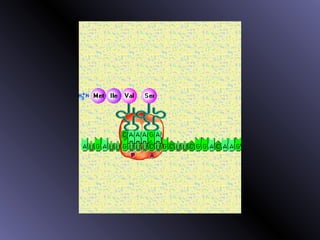
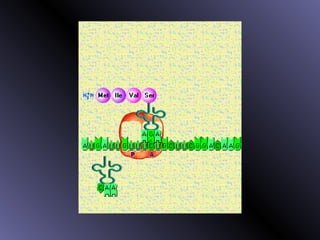
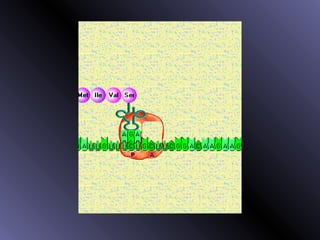
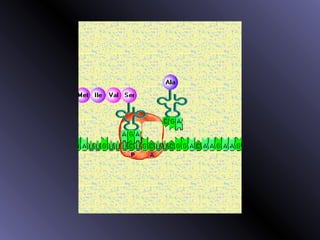
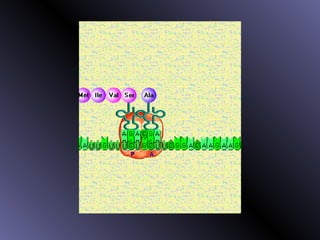
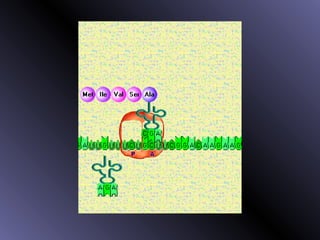
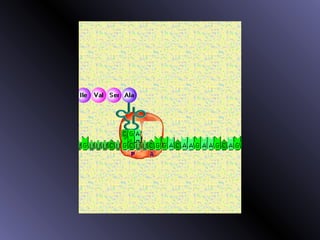
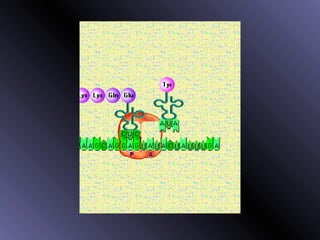
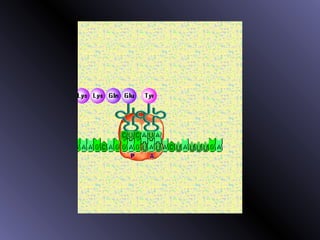
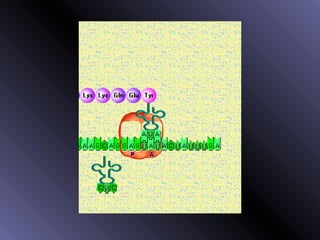
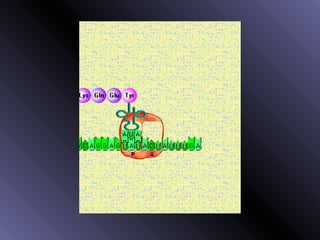
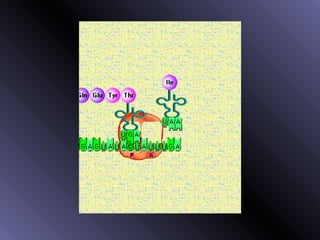
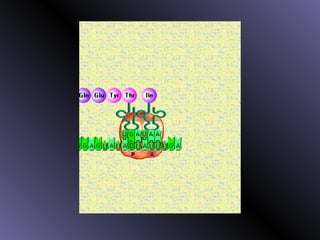
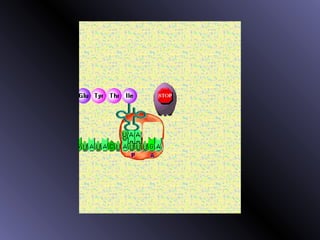
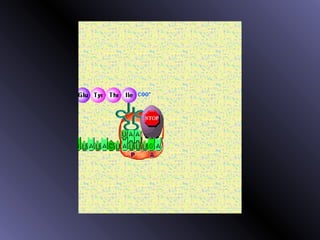
Translation
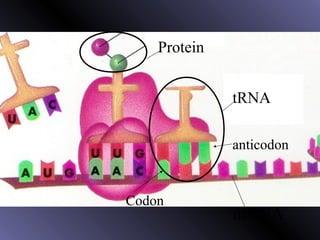
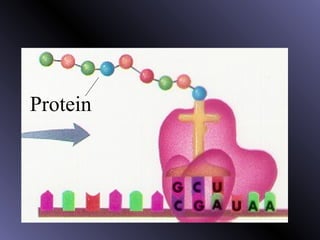
Taking the instructions from mRNA and producing proteins
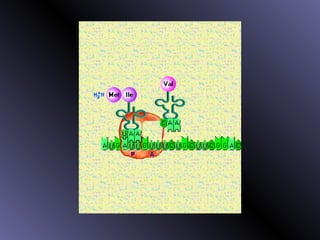
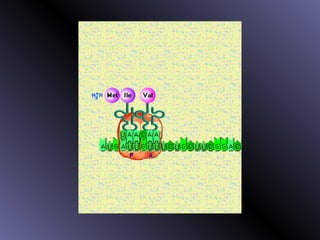
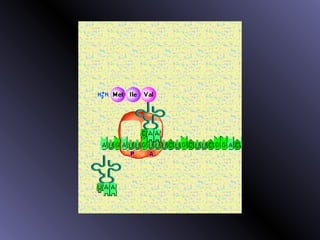
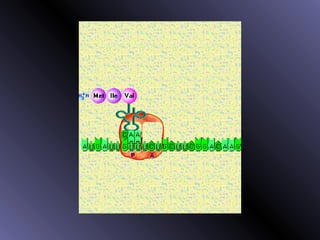
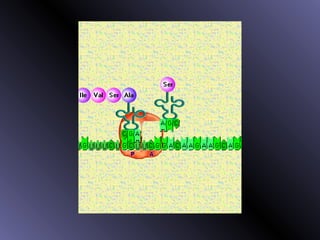
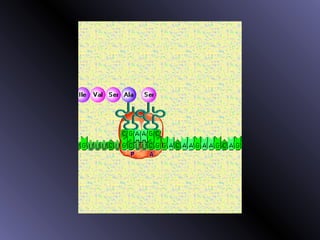
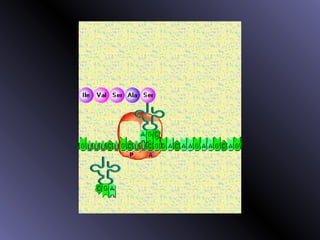
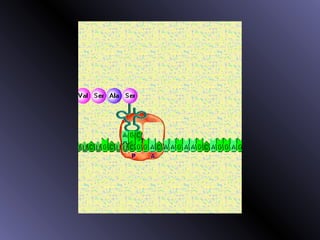
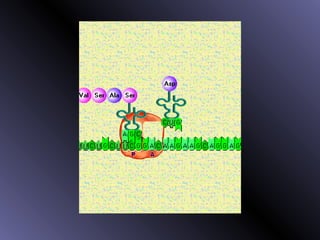
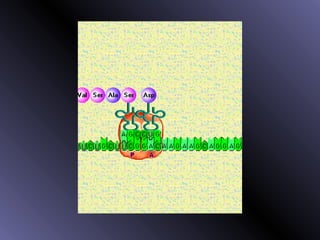
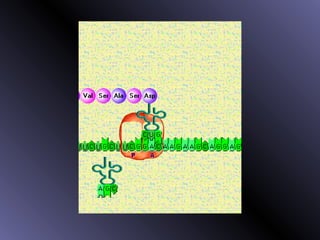
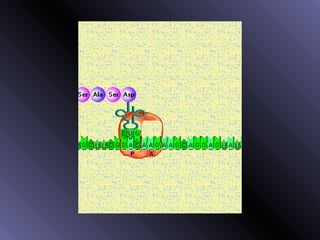
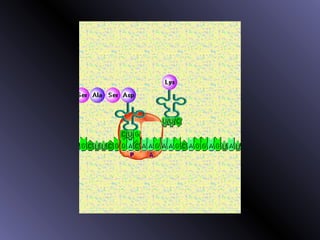
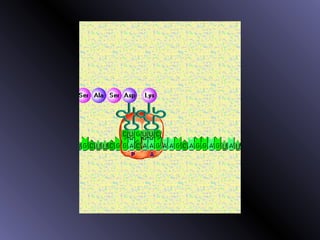
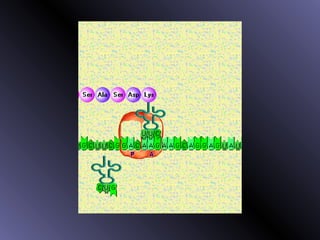
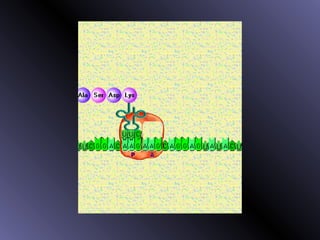
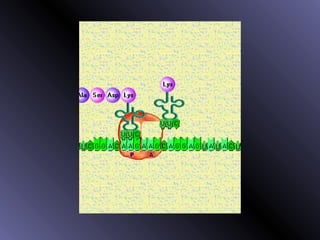
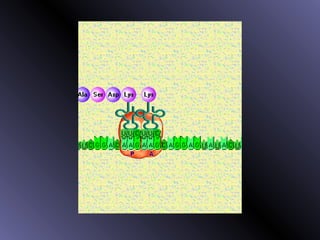
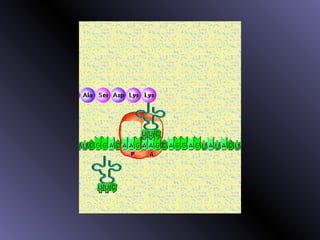
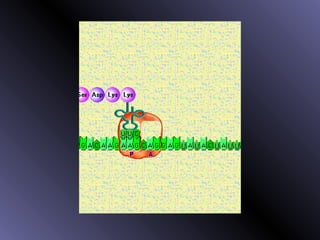
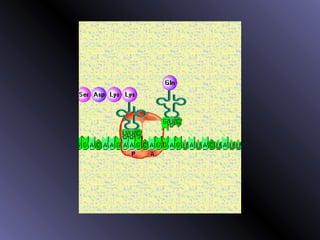
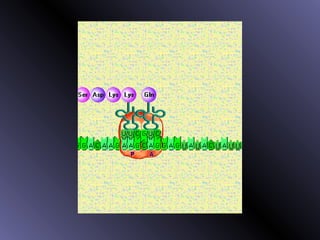
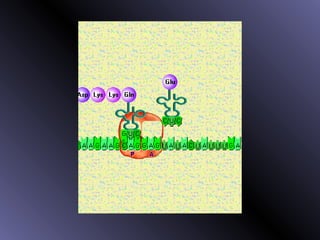
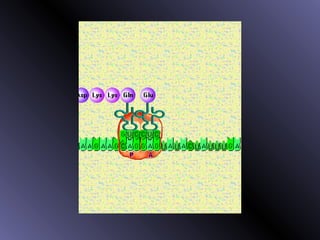
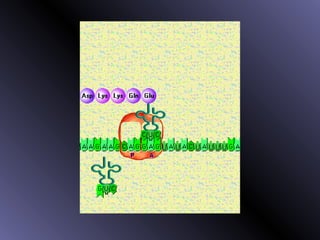
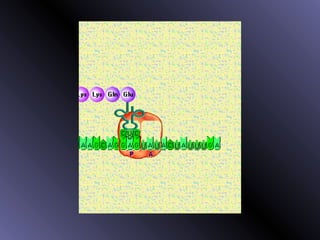
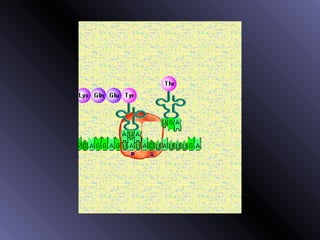
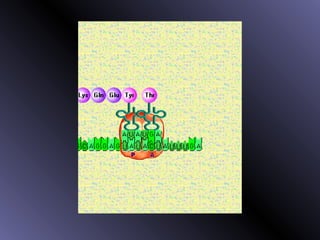
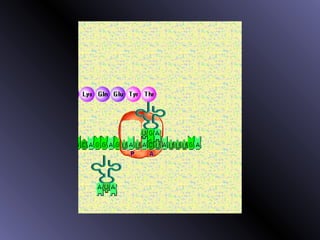
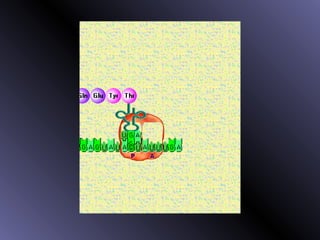
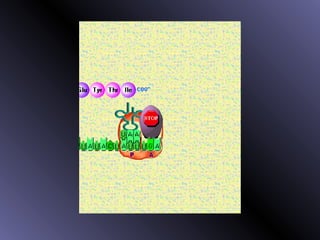
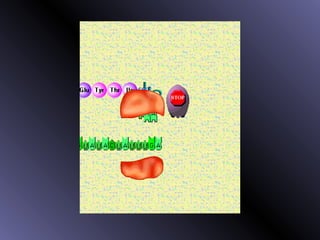
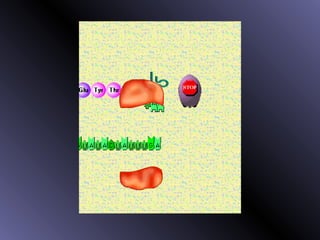
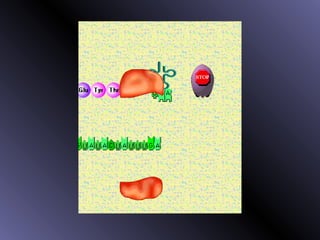
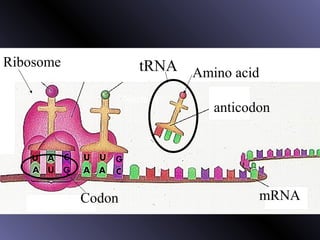
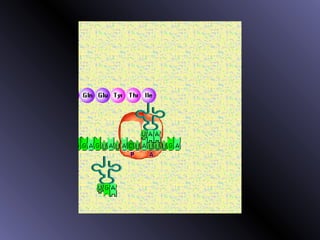
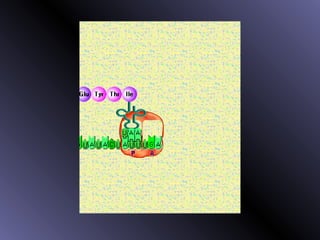
. The mRNA arrives at the ribosome
. tRNA (transfer RNA) brings free floating
amino acids to the mRNA
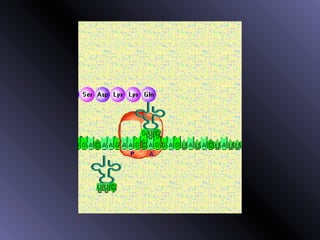
.The mRNA and tRNA match correct bases
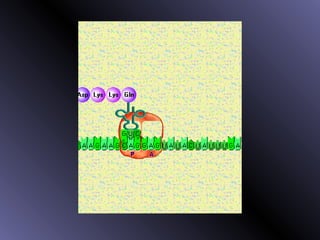
. The amino acids then bond to each other
creating a protein chain
Nucleus
Ribosome
Nucleus
mRNACodon
anticodon
Amino acidtRNA
mRNA
tRNA
Protein
Codon
anticodon
Protein
Genetic Code
The “language” of mRNA instructions is
called the genetic code. RNA contains
four bases, A,U,G, & C. The code is
written using 4 letters only.
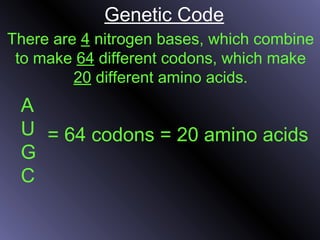
There are 4 nitrogen bases, which combine
to make 64 different codons, which make
20 different amino acids.
Genetic Code
A
U
G
C
= 64 codons = 20 amino acids
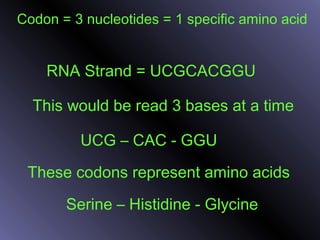
Codon = 3 nucleotides = 1 specific amino acid
RNA Strand = UCGCACGGU
This would be read 3 bases at a time
UCG – CAC - GGU
These codons represent amino acids
Serine – Histidine - Glycine
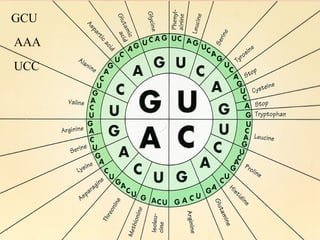
GCU
AAA
UCC
DNA vs. RNA
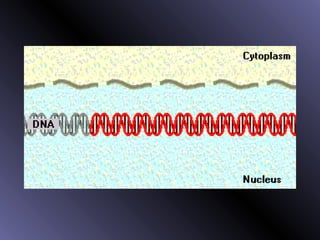
Transcription (elongation) (2)
/antisense strand

Molecular Genetics: Protein Synthesis