Proteins
Learning Objectives
• Understand the importance of the levels of
  protein structures
• Understand the basis for the stability of protein
  structures
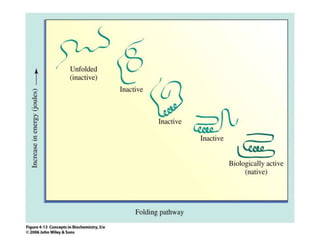
• Understand how proteins fold into, and unfold
  from, their native conformation
• Understand the methods employed to analyze
  proteins
Biologically Active Peptides

•   Aspartame
•   Glutathione
•   Vasopressin
•   Oxytocin
•   Enkephalins
•   Insulin
dipeptide
tripeptide
nanopeptide
nanopeptide
pentapeptide
2 polypeptides
Protein classification based on:
   Composition
• Simple proteins – no other biomolecules
  present

• Conjugated proteins – presence of metal
  atom or small organic molecule
Protein classification based on:
   Solubility
• Globular – water soluble; transport function,
  immune protection and catalysis

• Fibrous – water insoluble; structural functions
  collagen, elastin
Protein classification based on:
Function
Protein classification based on:
Function
Levels of protein structure

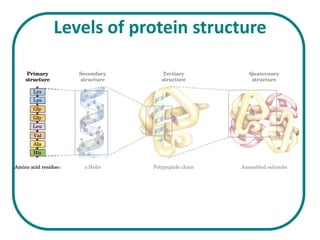
• Primary – sequence of amino acids
• Secondary – H-bonds bet. backbone C=O and
  backbone NH (pleated sheet and helix)
• Tertiary – interactions of secondary structures
• Quaternary – association of polypeptide subunits
Levels of protein structure
Non-polar amino acids
Polar, non-charged amino acids
Negatively-charged amino acids
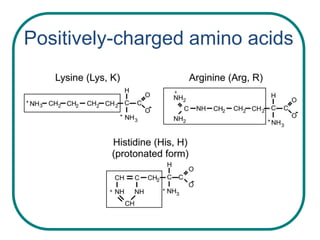
Positively-charged amino acids
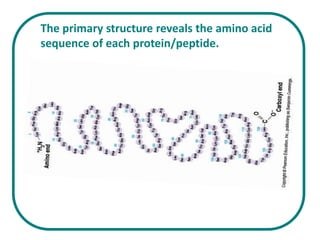
The primary structure reveals the amino acid
sequence of each protein/peptide.
Levels of protein structure
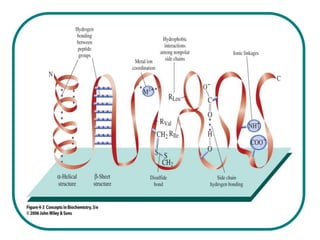
Secondary structures
• The polar N-H and C=O peptide units in the
  interior of the protein are held by H-bonds
• Two types which are regular structures in
  protein
• a-helix and b-pleated sheet
a-helix features
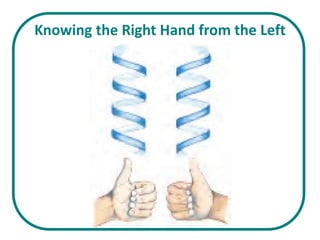
• Coil direction – left handed or right handed
• L- amino acids favor the right hand coil
• One coil has about 3.6 aa residues; there can be several coils
  with 650 aa residues(1000Å)
• Average length of helix in a globular protein is 15-20Å
• H-bonds occur between 1st O of backbone C=O to 13th H atom
  of backbone NH
• The presence of the ff amino acids do not favor the helix
  formation: Pro, adjacent basic or acidic amino
  acids, Asn, Tyr, Ser, Thr, Ile and Cys
Knowing the Right Hand from the Left
b-pleated sheet
• Two adjacent peptides
• Parallel (both NC or CN)
• Antiparallel (N to C running in opposite
  directions)
• Antiparallel more common in the structure of
  proteins
• Peptides with this structure are rich in alanine
  and glycine (silk fiber and spider web)
Supersecondary structures
          or structural motifs
• The clusters are held together by favorable
  non covalent interactions
• Some structural motifs of folded proteins: aa
  motif; bb motif antiparallel; the Greek key
  (bbbb) motif; bab motif parallel
Structure of triose phosphate isomerase with several bab
motifs combine to form a superbarrel (a) side view (b) top
view of the protein
Levels of protein structure
Tertiary structure
• Combination of several motifs of secondary
  structures into a compact arrangement

• Noncovalent forces bring about the
  interactions and stability;
  – H-bonds,
  – electrostatic,
  – hydrophobic,
  – Van Der Waal’s,
  – pi-pi complexation between R-side chains
  – Disulfide bonds occur between Cys residues
Tertiary structures are quite varied
Charged/polar R-groups generally map to
     surfaces on soluble proteins
Non-polar R-groups tend to be buried in the cores of
soluble proteins


                              Myoglobin

                              Blue = non-polar R-group
                              Red = Heme
Membrane proteins have adapted to
   hydrophobic environments
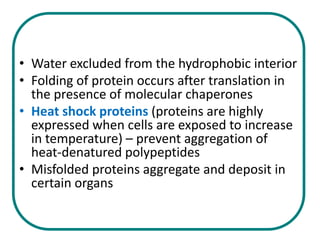
• Water excluded from the hydrophobic interior
• Folding of protein occurs after translation in
  the presence of molecular chaperones
• Heat shock proteins (proteins are highly
  expressed when cells are exposed to increase
  in temperature) – prevent aggregation of
  heat-denatured polypeptides
• Misfolded proteins aggregate and deposit in
  certain organs
The diagram shows the role of heat-
shock proteins and a chaperonin in
protein folding.

 As the ribosome moves along the
molecule of messenger RNA, a chain
of amino acids is built up to form a
new protein molecule.
The chain is protected against
unwanted interactions with other
cytoplasmic molecules by heat-shock
proteins and a chaperonin molecule
until it has successfully completed its
folding.
PROTEIN
DENATURATION
Levels of protein structure
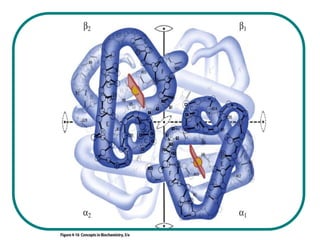
Quaternary structure of proteins
• Oligomeric –two or more polypeptide chains;
  subunits
• Homotypic – almost identical subunits
• Heterotypic – different subunits
• Defines the arrangement and position of each
  subunit in an intact protein
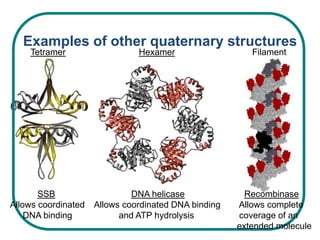
Examples of other quaternary structures
    Tetramer                   Hexamer                   Filament


       SSB                    DNA helicase              Recombinase
Allows coordinated   Allows coordinated DNA binding   Allows complete
    DNA binding            and ATP hydrolysis         coverage of an
                                                      extended molecule
How do biochemists determine the sequence
              of amino acids?
• Sanger technique
• Edmann technique
• Dansyl chloride technique
Sanger Technique
Edmann Technique
Large Proteins should be sequenced in smaller fragments
Protein isolation
• Ion exchange chrom.–based on charge
• Gel filtration chrom- based on molecular size
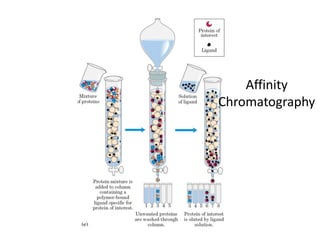
• Affinity chrom- selective binding to a specific
  molecule
• Gel electrophoresis- Based on charge and molecular
  size
Column
Chromatography
Ion-exchange
Chromatography
Gel/ Size -
   exclusion
Chromatography
Affinity
Chromatography
Gel Electrophoresis- generally used
support medium is cellulose or thin gels made up of either polyacrylamide or agarose.
Polyacrylamide is used as
support medium for low molecular weight biochemicals such as amino acid and
carbohydrates whereas agarose for large molecules like proteins


                 Components of the mixture have a uniform
                 charge, electrophoretic mobility depends primarily on
                 size
End of lecture 

Proteins biochem

  • 1.
  • 2.
    Learning Objectives • Understandthe importance of the levels of protein structures • Understand the basis for the stability of protein structures • Understand how proteins fold into, and unfold from, their native conformation • Understand the methods employed to analyze proteins
  • 3.
    Biologically Active Peptides • Aspartame • Glutathione • Vasopressin • Oxytocin • Enkephalins • Insulin
  • 4.
  • 5.
  • 6.
  • 7.
  • 8.
  • 9.
  • 10.
    Protein classification basedon: Composition • Simple proteins – no other biomolecules present • Conjugated proteins – presence of metal atom or small organic molecule
  • 12.
    Protein classification basedon: Solubility • Globular – water soluble; transport function, immune protection and catalysis • Fibrous – water insoluble; structural functions collagen, elastin
  • 14.
  • 15.
  • 17.
    Levels of proteinstructure • Primary – sequence of amino acids • Secondary – H-bonds bet. backbone C=O and backbone NH (pleated sheet and helix) • Tertiary – interactions of secondary structures • Quaternary – association of polypeptide subunits
  • 18.
  • 19.
  • 21.
  • 22.
  • 23.
  • 24.
  • 25.
    The primary structurereveals the amino acid sequence of each protein/peptide.
  • 26.
  • 27.
    Secondary structures • Thepolar N-H and C=O peptide units in the interior of the protein are held by H-bonds • Two types which are regular structures in protein • a-helix and b-pleated sheet
  • 28.
    a-helix features • Coildirection – left handed or right handed • L- amino acids favor the right hand coil • One coil has about 3.6 aa residues; there can be several coils with 650 aa residues(1000Å) • Average length of helix in a globular protein is 15-20Å • H-bonds occur between 1st O of backbone C=O to 13th H atom of backbone NH • The presence of the ff amino acids do not favor the helix formation: Pro, adjacent basic or acidic amino acids, Asn, Tyr, Ser, Thr, Ile and Cys
  • 29.
    Knowing the RightHand from the Left
  • 31.
    b-pleated sheet • Twoadjacent peptides • Parallel (both NC or CN) • Antiparallel (N to C running in opposite directions) • Antiparallel more common in the structure of proteins • Peptides with this structure are rich in alanine and glycine (silk fiber and spider web)
  • 35.
    Supersecondary structures or structural motifs • The clusters are held together by favorable non covalent interactions • Some structural motifs of folded proteins: aa motif; bb motif antiparallel; the Greek key (bbbb) motif; bab motif parallel
  • 37.
    Structure of triosephosphate isomerase with several bab motifs combine to form a superbarrel (a) side view (b) top view of the protein
  • 38.
  • 39.
    Tertiary structure • Combinationof several motifs of secondary structures into a compact arrangement • Noncovalent forces bring about the interactions and stability; – H-bonds, – electrostatic, – hydrophobic, – Van Der Waal’s, – pi-pi complexation between R-side chains – Disulfide bonds occur between Cys residues
  • 41.
  • 42.
    Charged/polar R-groups generallymap to surfaces on soluble proteins
  • 43.
    Non-polar R-groups tendto be buried in the cores of soluble proteins Myoglobin Blue = non-polar R-group Red = Heme
  • 44.
    Membrane proteins haveadapted to hydrophobic environments
  • 45.
    • Water excludedfrom the hydrophobic interior • Folding of protein occurs after translation in the presence of molecular chaperones • Heat shock proteins (proteins are highly expressed when cells are exposed to increase in temperature) – prevent aggregation of heat-denatured polypeptides • Misfolded proteins aggregate and deposit in certain organs
  • 46.
    The diagram showsthe role of heat- shock proteins and a chaperonin in protein folding. As the ribosome moves along the molecule of messenger RNA, a chain of amino acids is built up to form a new protein molecule. The chain is protected against unwanted interactions with other cytoplasmic molecules by heat-shock proteins and a chaperonin molecule until it has successfully completed its folding.
  • 48.
  • 49.
  • 50.
    Quaternary structure ofproteins • Oligomeric –two or more polypeptide chains; subunits • Homotypic – almost identical subunits • Heterotypic – different subunits • Defines the arrangement and position of each subunit in an intact protein
  • 52.
    Examples of otherquaternary structures Tetramer Hexamer Filament SSB DNA helicase Recombinase Allows coordinated Allows coordinated DNA binding Allows complete DNA binding and ATP hydrolysis coverage of an extended molecule
  • 53.
    How do biochemistsdetermine the sequence of amino acids? • Sanger technique • Edmann technique • Dansyl chloride technique
  • 54.
  • 55.
  • 56.
    Large Proteins shouldbe sequenced in smaller fragments
  • 59.
    Protein isolation • Ionexchange chrom.–based on charge • Gel filtration chrom- based on molecular size • Affinity chrom- selective binding to a specific molecule • Gel electrophoresis- Based on charge and molecular size
  • 60.
  • 61.
  • 62.
    Gel/ Size - exclusion Chromatography
  • 63.
  • 64.
    Gel Electrophoresis- generallyused support medium is cellulose or thin gels made up of either polyacrylamide or agarose. Polyacrylamide is used as support medium for low molecular weight biochemicals such as amino acid and carbohydrates whereas agarose for large molecules like proteins Components of the mixture have a uniform charge, electrophoretic mobility depends primarily on size
  • 65.