Synthesis and estimation of third order non 
linear optical parameters of silver nano 
colloids using Z- Scan technique.
Introduction 
 Nonlinear Optics is the study of various phenomena 
related to the interaction of intense electromagnetic 
radiation with matter
Applications of NLO 
 Telecommunications 
 Optical switching 
 Sensor protections 
 Optical information storage 
 Optical computing.
Requirements 
 Materials which are chosen for these applications 
require excellent optical quality with large and stable 
optical nonlinearity in the solid state form. So the 
present need is to identify such materials
Nonlinear optical properties of metal 
nanoparticles 
 Recently there has been a growing interest in the 
nonlinear optical properties of metal nanoparticles 
particularly of metal nanoparticles in colloidal 
solutions doped composite films.
Metal nanoparticles in colloidal 
solutions can be prepared by 
 Laser ablation. 
 Z- Scan Techniques.
Laser ablation technique 
 Laser ablation is the process of removing material 
from a solid surface by irradiating it with a laser beam.
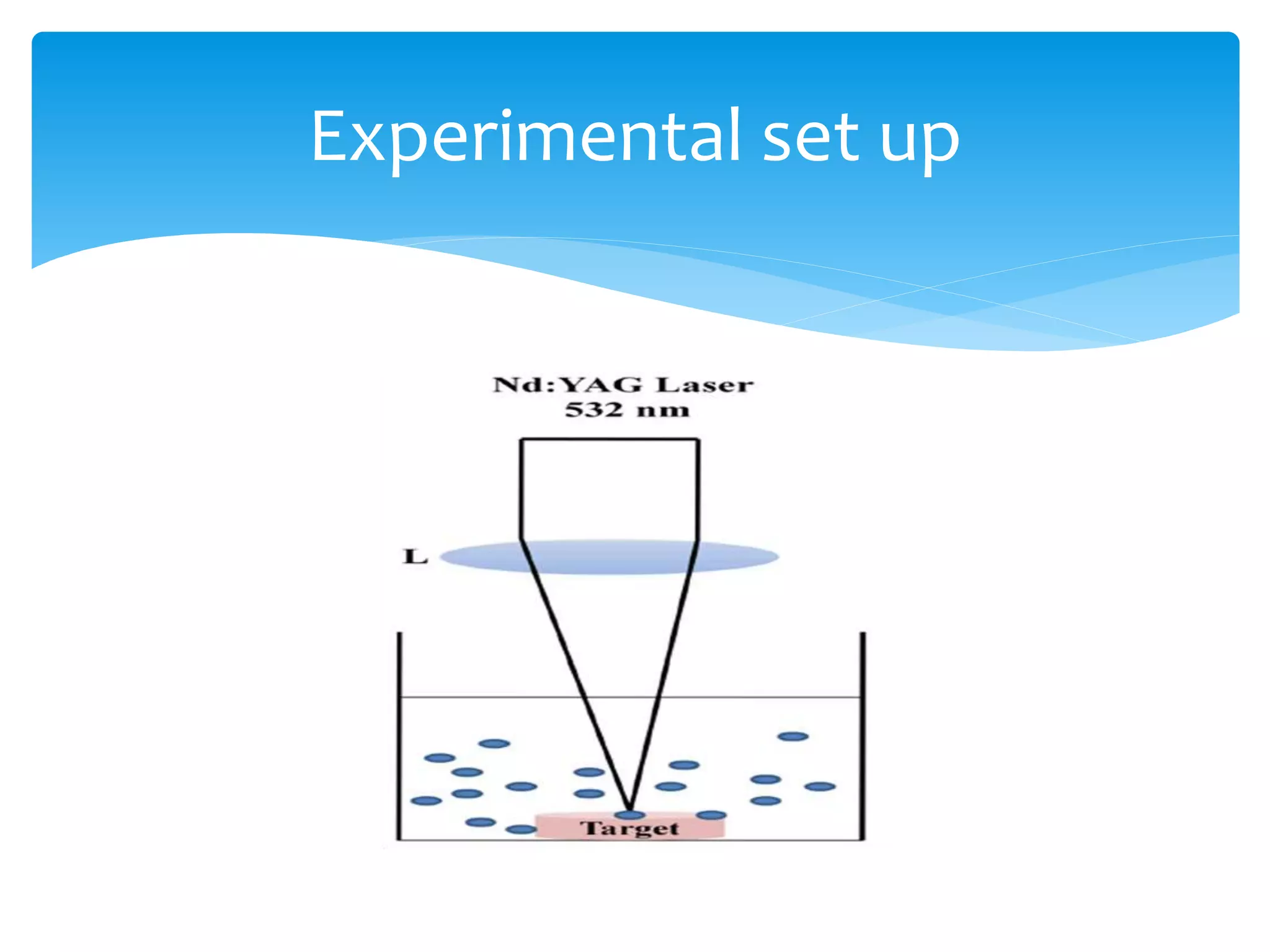
Experimental set up
Z-Scan 
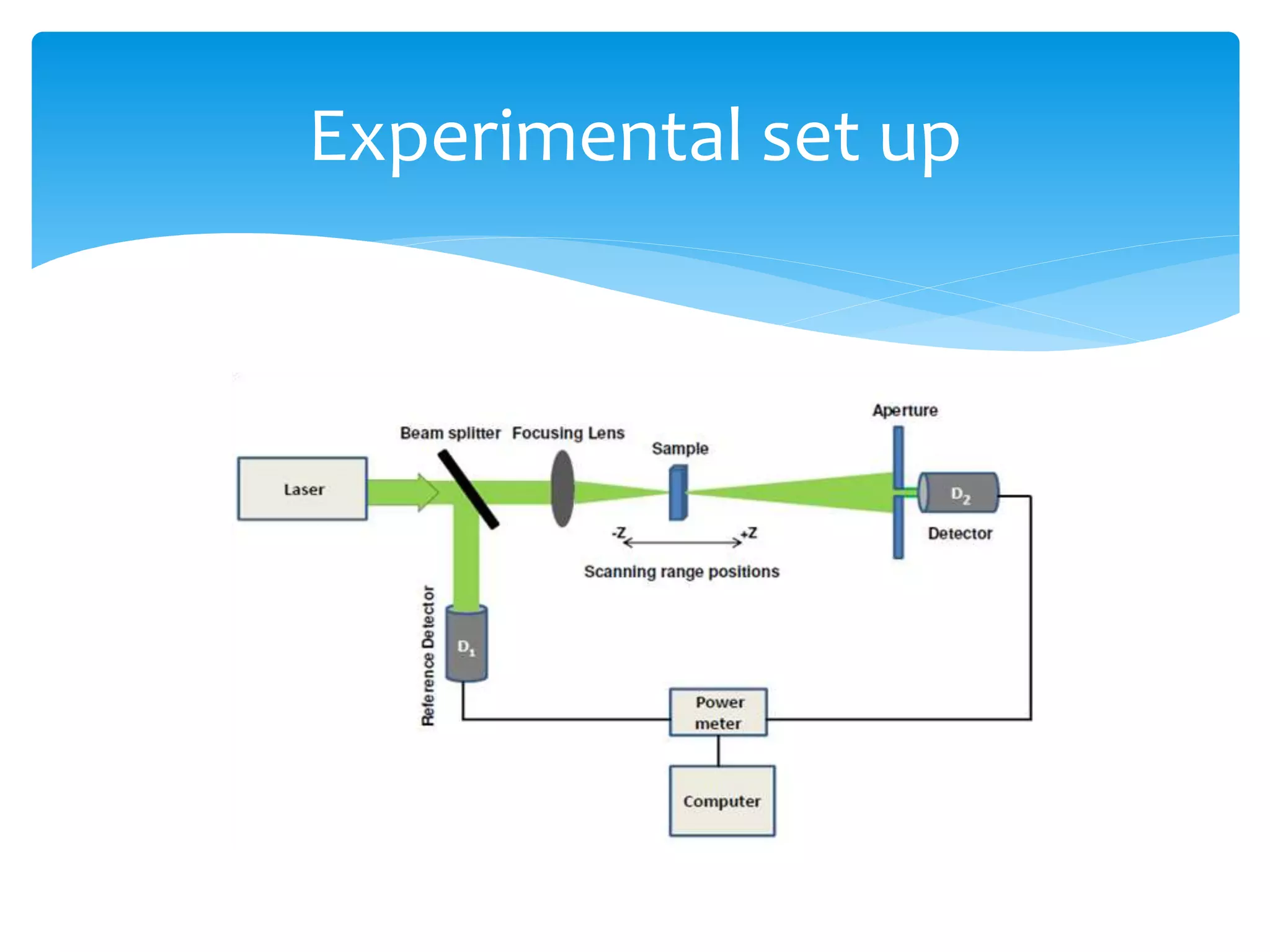
 The Z-scan technique is to measure intensity dependent nonlinear 
susceptibilities of materials . 
 The technique is particularly useful when the nonlinear refraction is 
accompanied by nonlinear absorption and it allows the simultaneous 
measurement of nonlinear refractive index and nonlinear absorption 
coefficient. 
 The sample is translated in the Z-direction along the axis of a focused 
Gaussian beam and the far field intensity is measured as function of sample 
position. 
 The interaction of the medium with the laser light changes as the sample is 
moved. This is because the sample experiences different intensities, 
dependent on the sample position relative to the focus. 
 By measuring the transmittance through the sample as a function of the - 
position of the sample, information about the light-matter interaction can 
be extracted.
Experimental set up
Preparation of Silver Metal 
nanocomposites 
SEM Image of Ag.
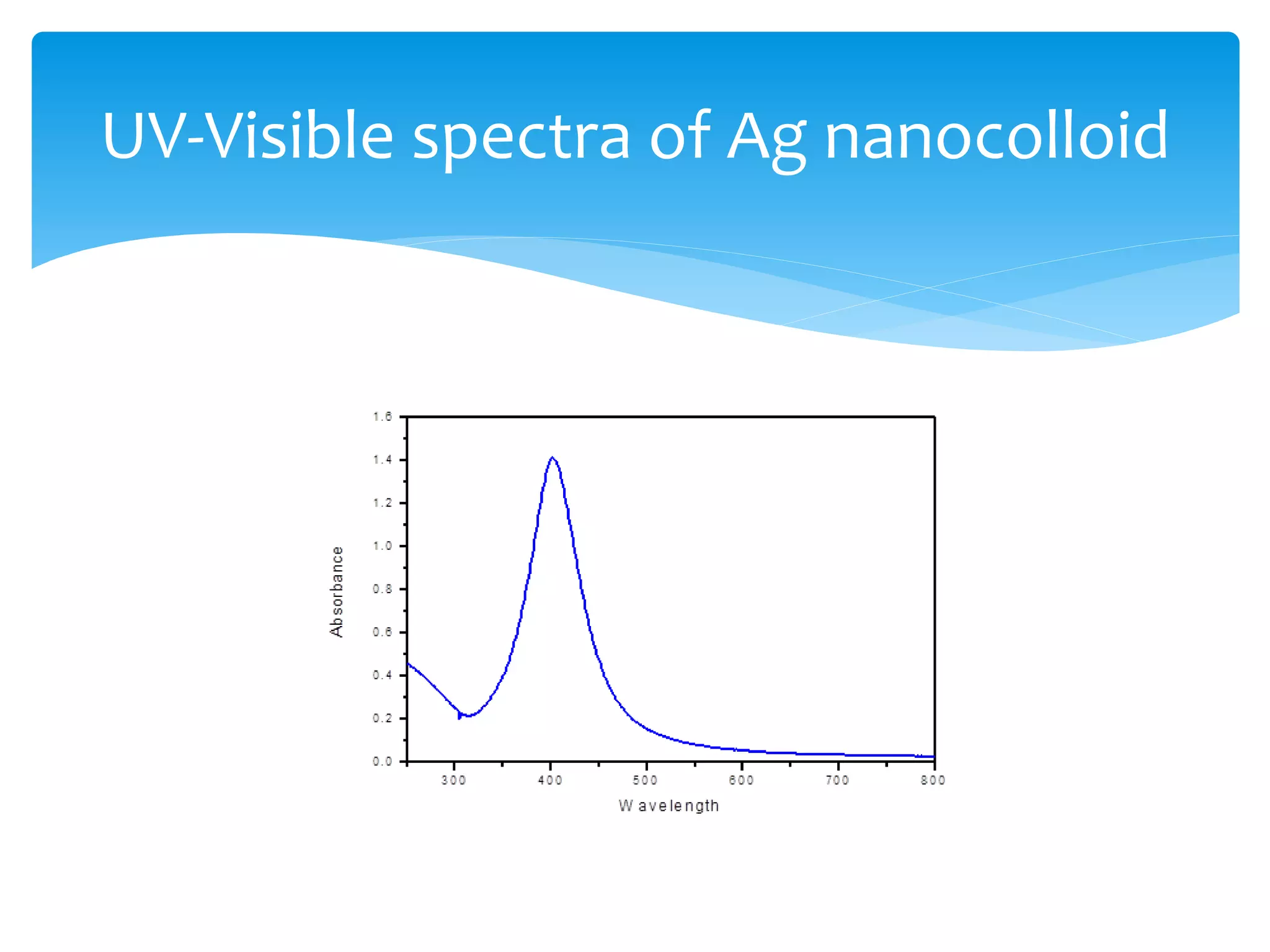
UV-Visible spectra of Ag nanocolloid
RESULT 
 In the present work, metal nanoparticles of silver prepared by 
laser ablation technique and nonlinear characterization were 
performed using Z-scan experiment using a pulsed laser.
CONCLUSIONS AND FUTURE SCOPE 
 The nanoparticle formation through laser ablation techniques 
was confirmed with SEM and UV-Visible images . 
 The result suggests that silver nanocolloids are one of the 
suitable candidates for photonic applications. 
 Future directions are to executing the time-resolved studies of 
all these molecules to ascertain the response times. 
 model the nonlinear absorption behavior based on a five level 
model including all the possible absorption mechanisms such as 
excited state absorption, 2PA, 3PA etc. 
 fabricating the actual devices and testing their performance.

Powerpoint slides

  • 1.
    Synthesis and estimationof third order non linear optical parameters of silver nano colloids using Z- Scan technique.
  • 2.
    Introduction  NonlinearOptics is the study of various phenomena related to the interaction of intense electromagnetic radiation with matter
  • 3.
    Applications of NLO  Telecommunications  Optical switching  Sensor protections  Optical information storage  Optical computing.
  • 4.
    Requirements  Materialswhich are chosen for these applications require excellent optical quality with large and stable optical nonlinearity in the solid state form. So the present need is to identify such materials
  • 5.
    Nonlinear optical propertiesof metal nanoparticles  Recently there has been a growing interest in the nonlinear optical properties of metal nanoparticles particularly of metal nanoparticles in colloidal solutions doped composite films.
  • 6.
    Metal nanoparticles incolloidal solutions can be prepared by  Laser ablation.  Z- Scan Techniques.
  • 7.
    Laser ablation technique  Laser ablation is the process of removing material from a solid surface by irradiating it with a laser beam.
  • 8.
  • 9.
    Z-Scan  TheZ-scan technique is to measure intensity dependent nonlinear susceptibilities of materials .  The technique is particularly useful when the nonlinear refraction is accompanied by nonlinear absorption and it allows the simultaneous measurement of nonlinear refractive index and nonlinear absorption coefficient.  The sample is translated in the Z-direction along the axis of a focused Gaussian beam and the far field intensity is measured as function of sample position.  The interaction of the medium with the laser light changes as the sample is moved. This is because the sample experiences different intensities, dependent on the sample position relative to the focus.  By measuring the transmittance through the sample as a function of the - position of the sample, information about the light-matter interaction can be extracted.
  • 10.
  • 11.
    Preparation of SilverMetal nanocomposites SEM Image of Ag.
  • 12.
    UV-Visible spectra ofAg nanocolloid
  • 13.
    RESULT  Inthe present work, metal nanoparticles of silver prepared by laser ablation technique and nonlinear characterization were performed using Z-scan experiment using a pulsed laser.
  • 14.
    CONCLUSIONS AND FUTURESCOPE  The nanoparticle formation through laser ablation techniques was confirmed with SEM and UV-Visible images .  The result suggests that silver nanocolloids are one of the suitable candidates for photonic applications.  Future directions are to executing the time-resolved studies of all these molecules to ascertain the response times.  model the nonlinear absorption behavior based on a five level model including all the possible absorption mechanisms such as excited state absorption, 2PA, 3PA etc.  fabricating the actual devices and testing their performance.