ocean and man
• At the time of birth the earth was a 
molten sphere, but with the passage of 
time its surface is cooled, but inside it 
was boiling one. Due to volcanic 
eruption several gases came out and 
became cover of the earth 
• Then due to further cooling the water 
condensed into rain, as a result water 
bodies were formed, thus ocean formed
• Life emerged on the earth gradually, 
and now all the creatures 
depending on the ocean
ocean 
• 71% of earth surface is 
surrounded by water 
• The inter connected body of 
water on the earth comprising 
all oceans forms world ocean
activity 
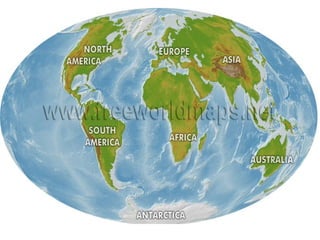
•Examine the globe 
and find out the 
major oceans
Bay and gulf 
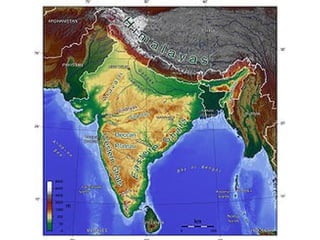
• Bay is wide segment of ocean 
extending into the sea 
• E.g. bay of Bengal 
• Narrow portion of n ocean 
extending into land 
• E.g. gulf of Cambeth
• It is believed that the land we see 
today is formed as one land mass 
called Pangaea, it was 
surrounded by a mega ocean 
called Panthalassa 
• When this land mass separated 
and drifted away and formed 
different forms of oceans
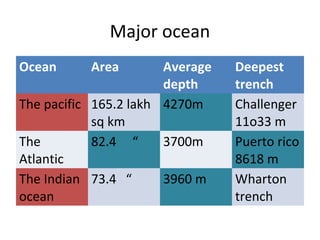
Major ocean 
Ocean Area Average 
depth 
Deepest 
trench 
The pacific 165.2 lakh 
sq km 
4270m Challenger 
11o33 m 
The 
Atlantic 
82.4 “ 3700m Puerto rico 
8618 m 
The Indian 
ocean 
73.4 “ 3960 m Wharton 
trench
• Pacific ocean has the greatest number of 
islands about 20000 numbers 
• Salient features of Atlantic ocean is Mid 
Atlantic ridge which is 14000 km in 
length, the island found in this region are 
volcanic origin 
• The number of island in Indian ocean is 
comparatively small 
• Madagascar and Srilanka are examples 
for continental island
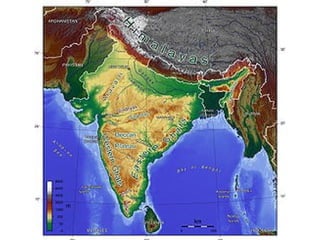
• Andaman- Nicobar islands are the 
part of chain of islands stretching 
from Myanmar to Australia 
• Coral islands are also found in Indian 
ocean, it is formed by the accretion 
of dead remain called polyps, it 
found in coral reefs, Lakshadweep 
and Maldives in Indian ocean are 
examples
Salinity and temperature in ocean 
water 
• Salinity in the ocean is the amount of 
salt present in the sea water 
• It usually expressed in grams per 1000 
grams 
• Average salinity of the ocean water is 
35/1000 grams 
• Main reason for salinity is sodium 
chloride (common salt)
Other salts 
• Magnesium chloride 
• Magnesium sulphate 
• Calcium sulphate 
• Potassium sulphate 
• Calcium carbonate 
• Magnesium bromide
Factors affecting salinity 
• When evaporation increases salinity 
increases 
• Salinity will be low in the region of heavy 
rainfall 
• Water reaches to ocean from the melting ice 
causes salinity decline 
• Salinity is less near the estuaries 
• In the areas of cold and warm current meets 
salinity is comparatively low
• Temperature of the ocean water is 
ranges between 2-33 degree Celsius 
• Latitude salinity presents of land 
gulf are affects the distribution of 
temperature 
• When the latitude increases 
temperature decreases
thanks

ocean and man

  • 1.
  • 2.
    • At thetime of birth the earth was a molten sphere, but with the passage of time its surface is cooled, but inside it was boiling one. Due to volcanic eruption several gases came out and became cover of the earth • Then due to further cooling the water condensed into rain, as a result water bodies were formed, thus ocean formed
  • 3.
    • Life emergedon the earth gradually, and now all the creatures depending on the ocean
  • 4.
    ocean • 71%of earth surface is surrounded by water • The inter connected body of water on the earth comprising all oceans forms world ocean
  • 6.
    activity •Examine theglobe and find out the major oceans
  • 7.
    Bay and gulf • Bay is wide segment of ocean extending into the sea • E.g. bay of Bengal • Narrow portion of n ocean extending into land • E.g. gulf of Cambeth
  • 10.
    • It isbelieved that the land we see today is formed as one land mass called Pangaea, it was surrounded by a mega ocean called Panthalassa • When this land mass separated and drifted away and formed different forms of oceans
  • 11.
    Major ocean OceanArea Average depth Deepest trench The pacific 165.2 lakh sq km 4270m Challenger 11o33 m The Atlantic 82.4 “ 3700m Puerto rico 8618 m The Indian ocean 73.4 “ 3960 m Wharton trench
  • 12.
    • Pacific oceanhas the greatest number of islands about 20000 numbers • Salient features of Atlantic ocean is Mid Atlantic ridge which is 14000 km in length, the island found in this region are volcanic origin • The number of island in Indian ocean is comparatively small • Madagascar and Srilanka are examples for continental island
  • 14.
    • Andaman- Nicobarislands are the part of chain of islands stretching from Myanmar to Australia • Coral islands are also found in Indian ocean, it is formed by the accretion of dead remain called polyps, it found in coral reefs, Lakshadweep and Maldives in Indian ocean are examples
  • 16.
    Salinity and temperaturein ocean water • Salinity in the ocean is the amount of salt present in the sea water • It usually expressed in grams per 1000 grams • Average salinity of the ocean water is 35/1000 grams • Main reason for salinity is sodium chloride (common salt)
  • 17.
    Other salts •Magnesium chloride • Magnesium sulphate • Calcium sulphate • Potassium sulphate • Calcium carbonate • Magnesium bromide
  • 18.
    Factors affecting salinity • When evaporation increases salinity increases • Salinity will be low in the region of heavy rainfall • Water reaches to ocean from the melting ice causes salinity decline • Salinity is less near the estuaries • In the areas of cold and warm current meets salinity is comparatively low
  • 19.
    • Temperature ofthe ocean water is ranges between 2-33 degree Celsius • Latitude salinity presents of land gulf are affects the distribution of temperature • When the latitude increases temperature decreases
  • 20.