Electricity-free Thermopneumatic Single Dose Micropump
for Low-Resource Setting Applications
Jeff Briner
Travis Gehman
Tariq Packer
Dharma Varapula
Objective
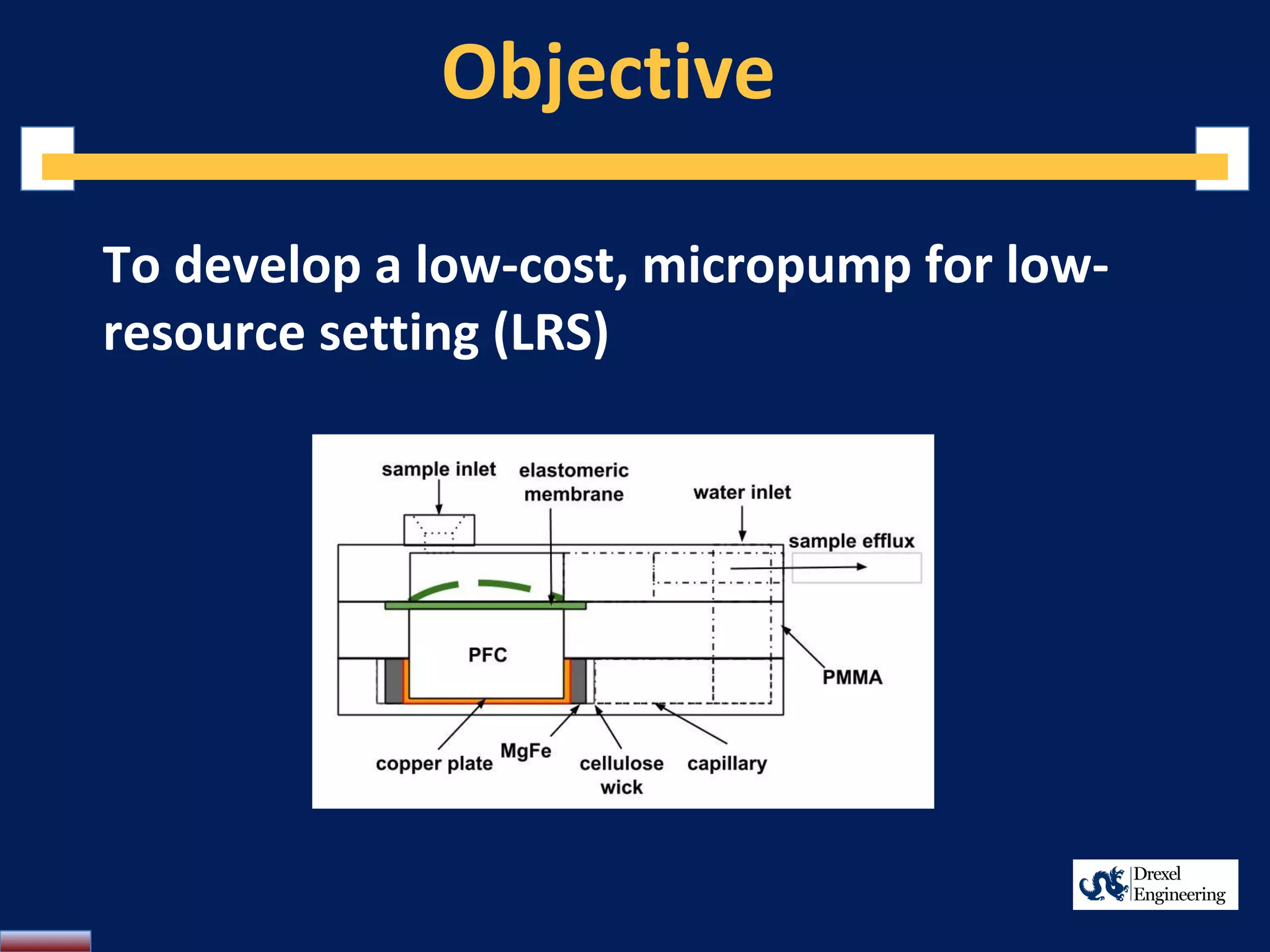
To develop a low-cost, micropump for low-
resource setting (LRS)
Literature Review
A typical MEMS thermopneumatic
micropump by Jeong and Yang (2000)
[1]
A peristaltic PDMS thermopneumatic
micropump by Jeong et al (2005) [2]
Literature Review
A thermopneumatic dispensing
micropump by Cooney et al
(2004) [3]
A thermopneumatic micropump
using surface tensions by Jun et
al (2007) [4]
Design - Need statement
There is a need for a
1. simple,
2. inexpensive, and
3. electricity-free
fluid actuation device for point-of-care diagnostics
technology for Low-Resource Setting (LRS).
Design Overview
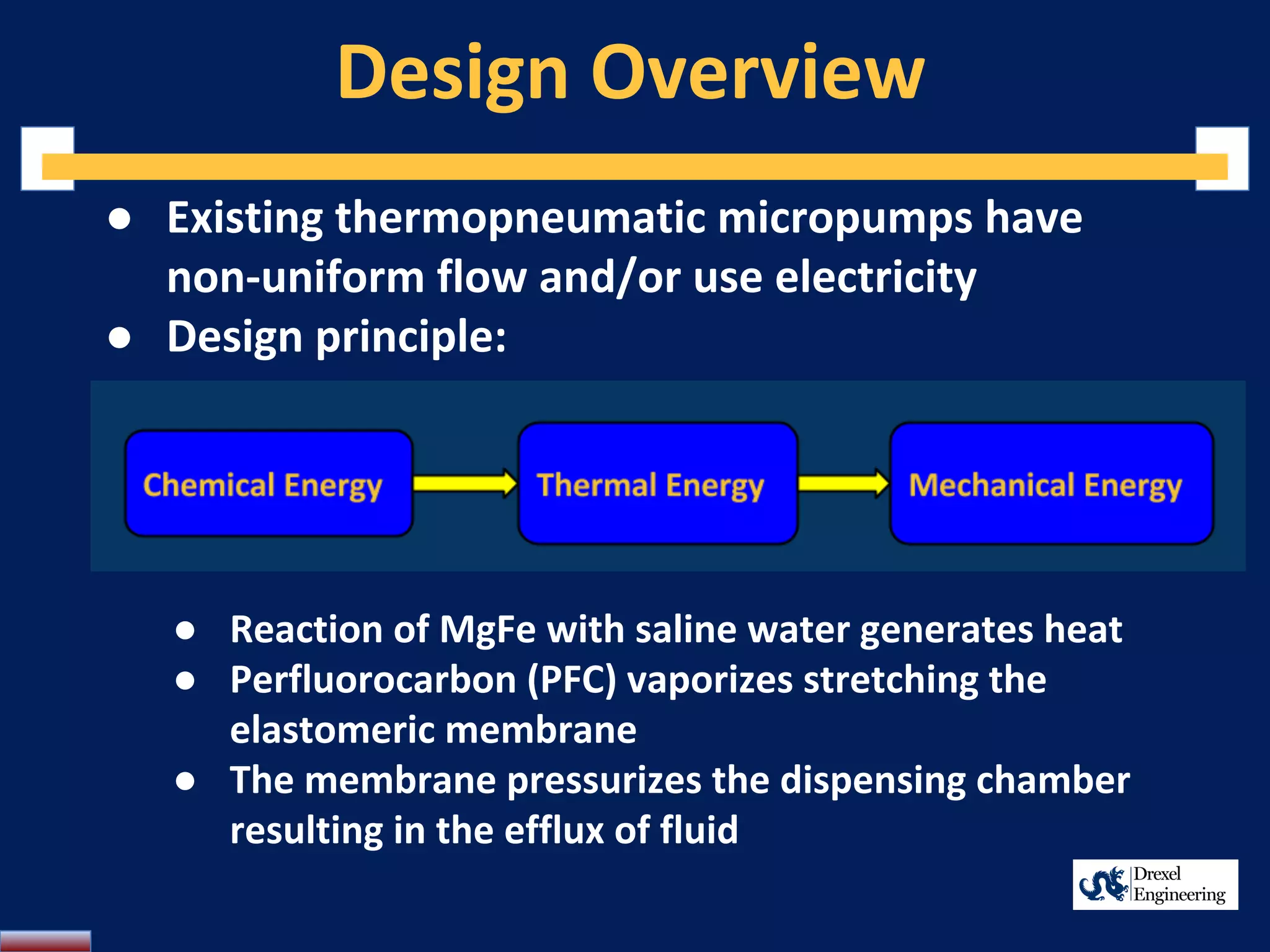
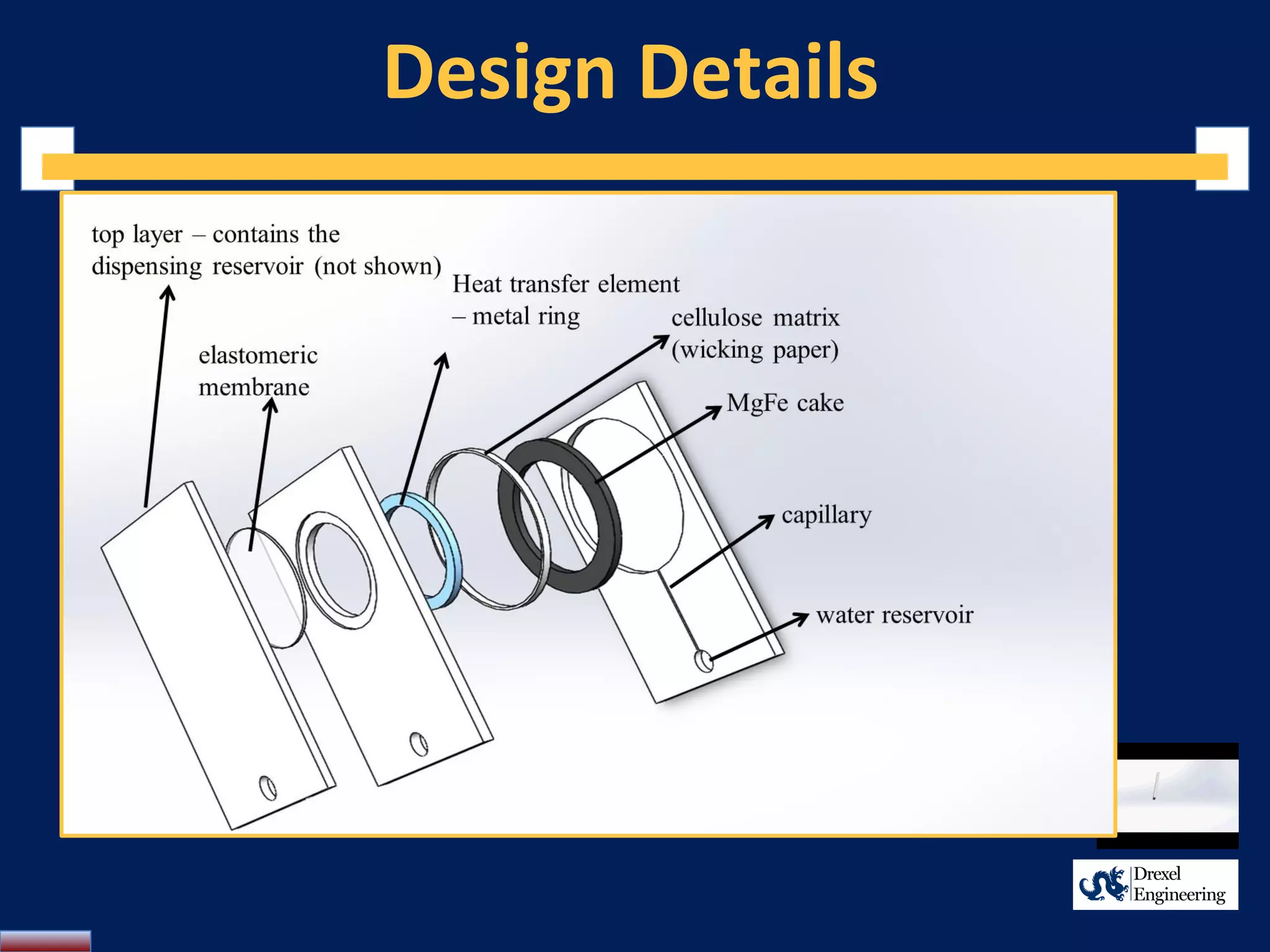
● Existing thermopneumatic micropumps have
non-uniform flow and/or use electricity
● Design principle:
● Reaction of MgFe with saline water generates heat
● Perfluorocarbon (PFC) vaporizes stretching the
elastomeric membrane
● The membrane pressurizes the dispensing chamber
resulting in the efflux of fluid
Design Details
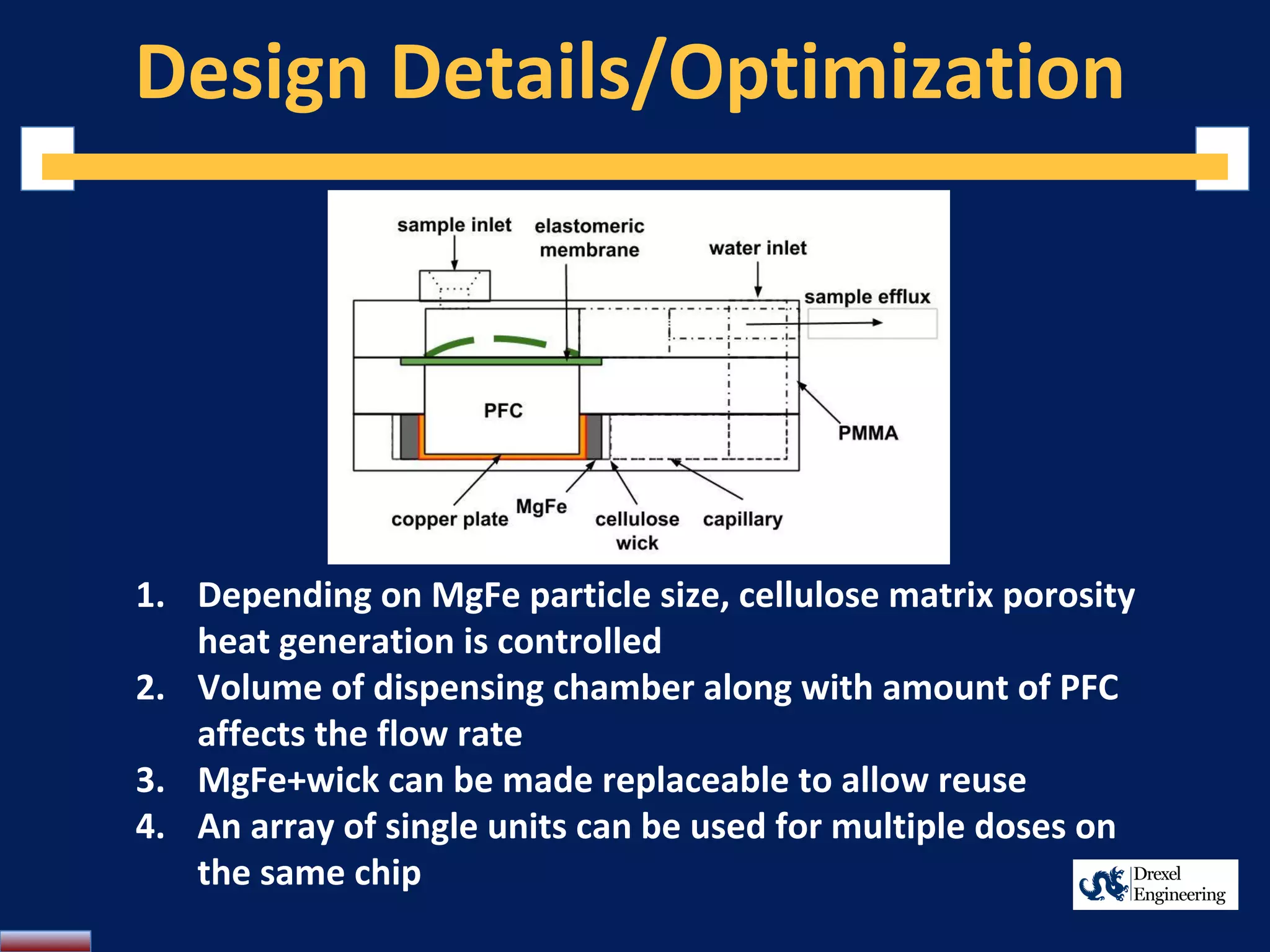
Design Details/Optimization
1. Depending on MgFe particle size, cellulose matrix porosity
heat generation is controlled
2. Volume of dispensing chamber along with amount of PFC
affects the flow rate
3. MgFe+wick can be made replaceable to allow reuse
4. An array of single units can be used for multiple doses on
the same chip
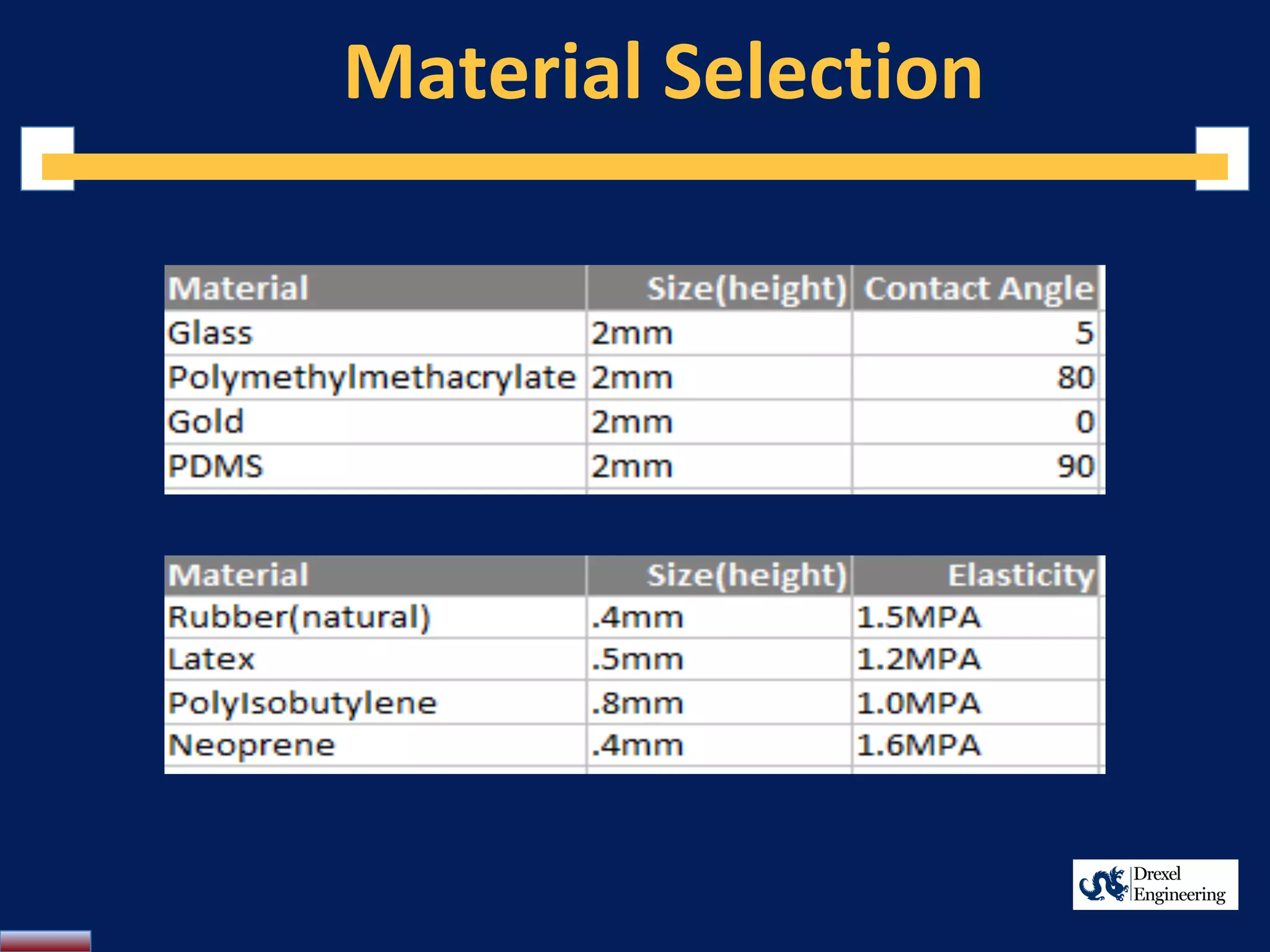
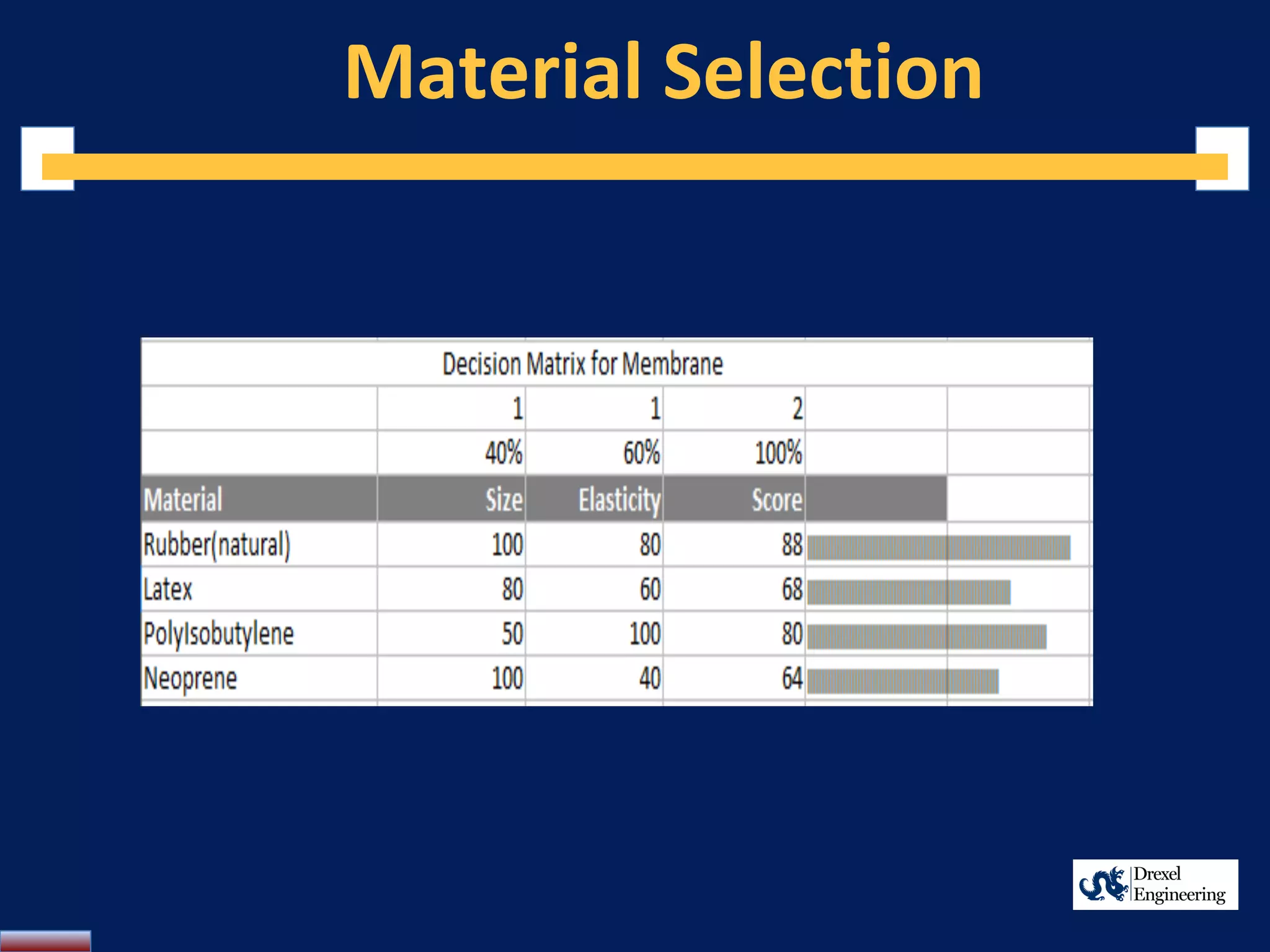
Material Selection [3]
Material Selection
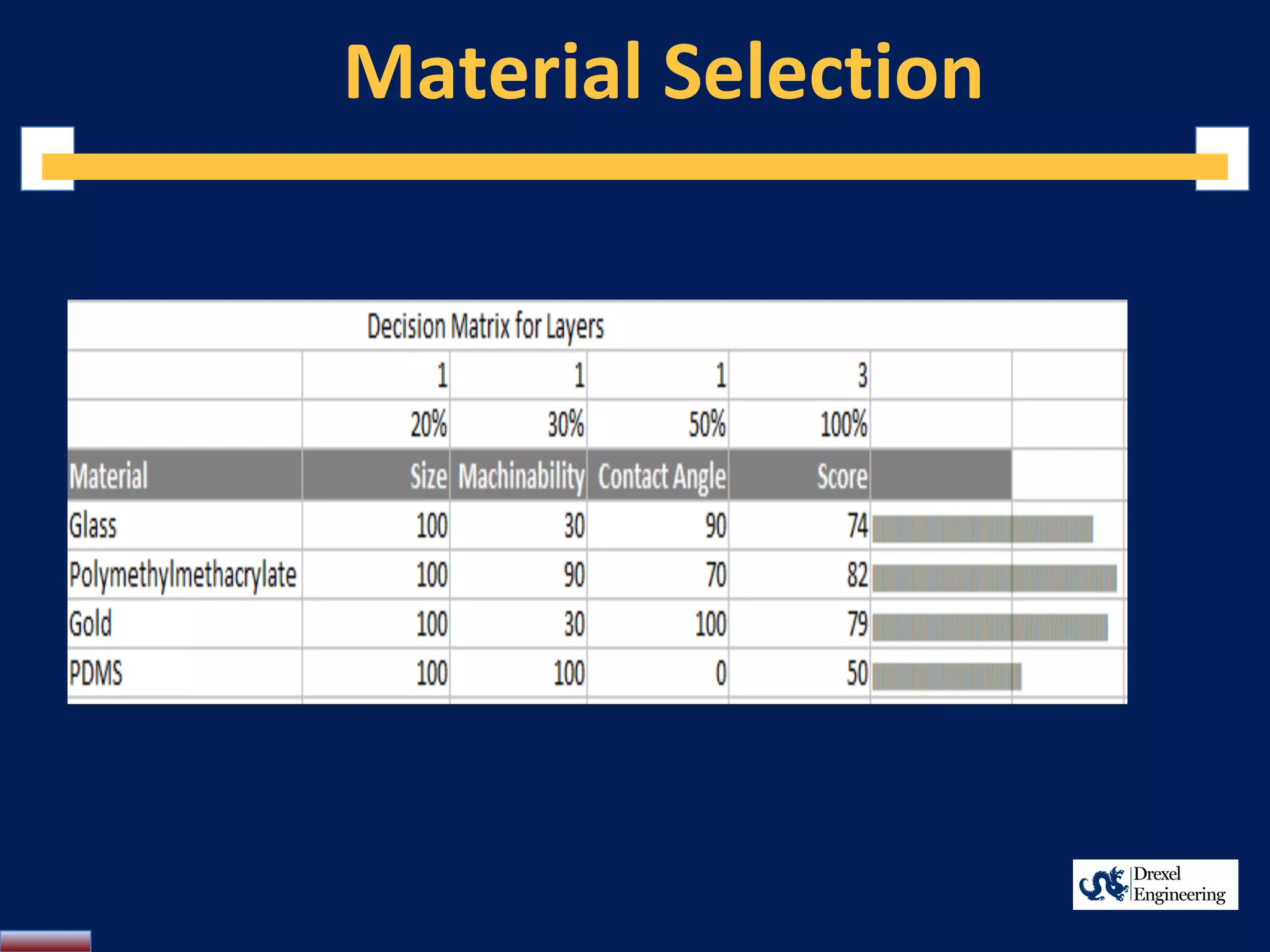
Material Selection
Material Selection
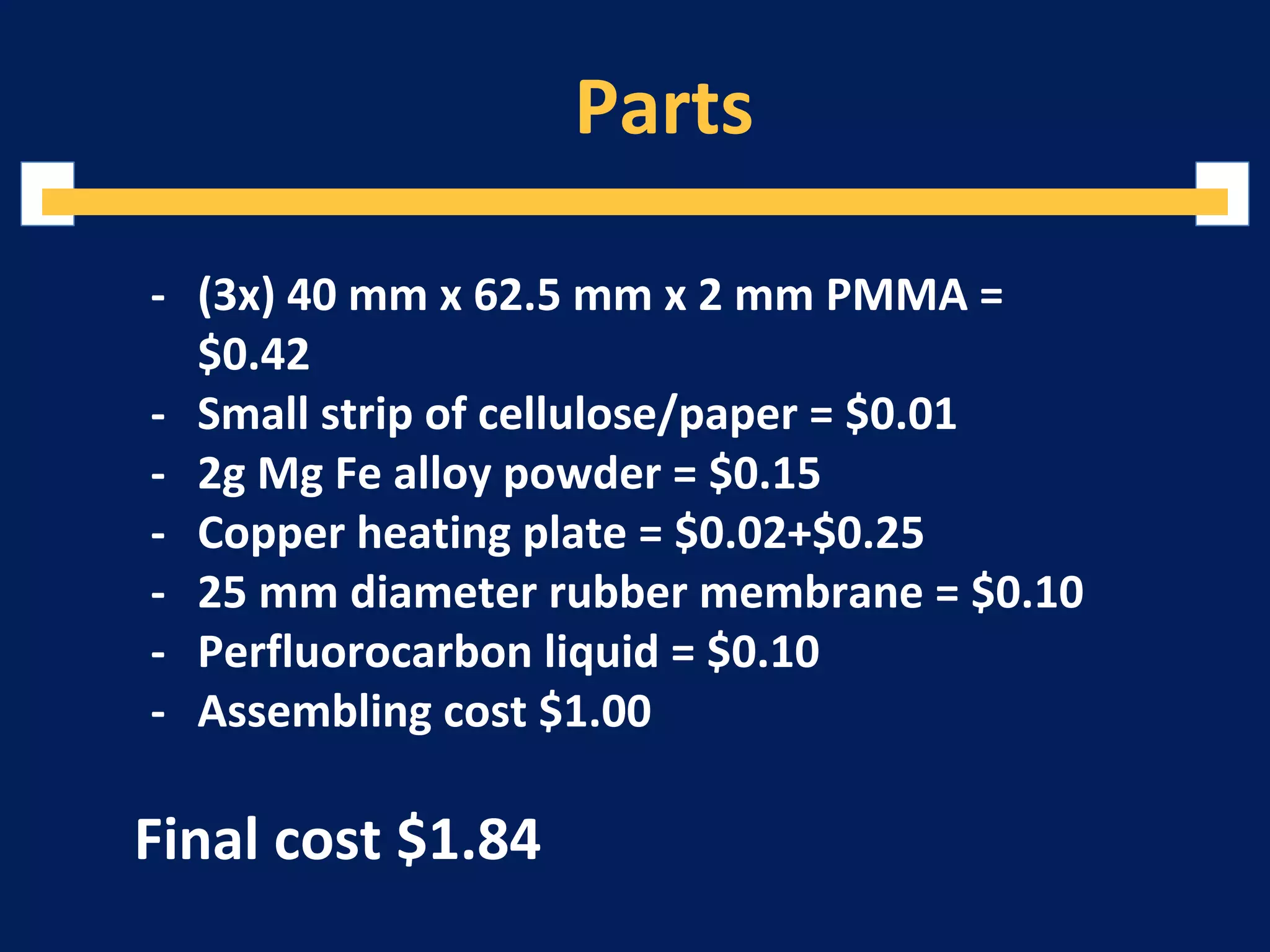
Parts
- (3x) 40 mm x 62.5 mm x 2 mm PMMA =
$0.42
- Small strip of cellulose/paper = $0.01
- 2g Mg Fe alloy powder = $0.15
- Copper heating plate = $0.02+$0.25
- 25 mm diameter rubber membrane = $0.10
- Perfluorocarbon liquid = $0.10
- Assembling cost $1.00
Final cost $1.84
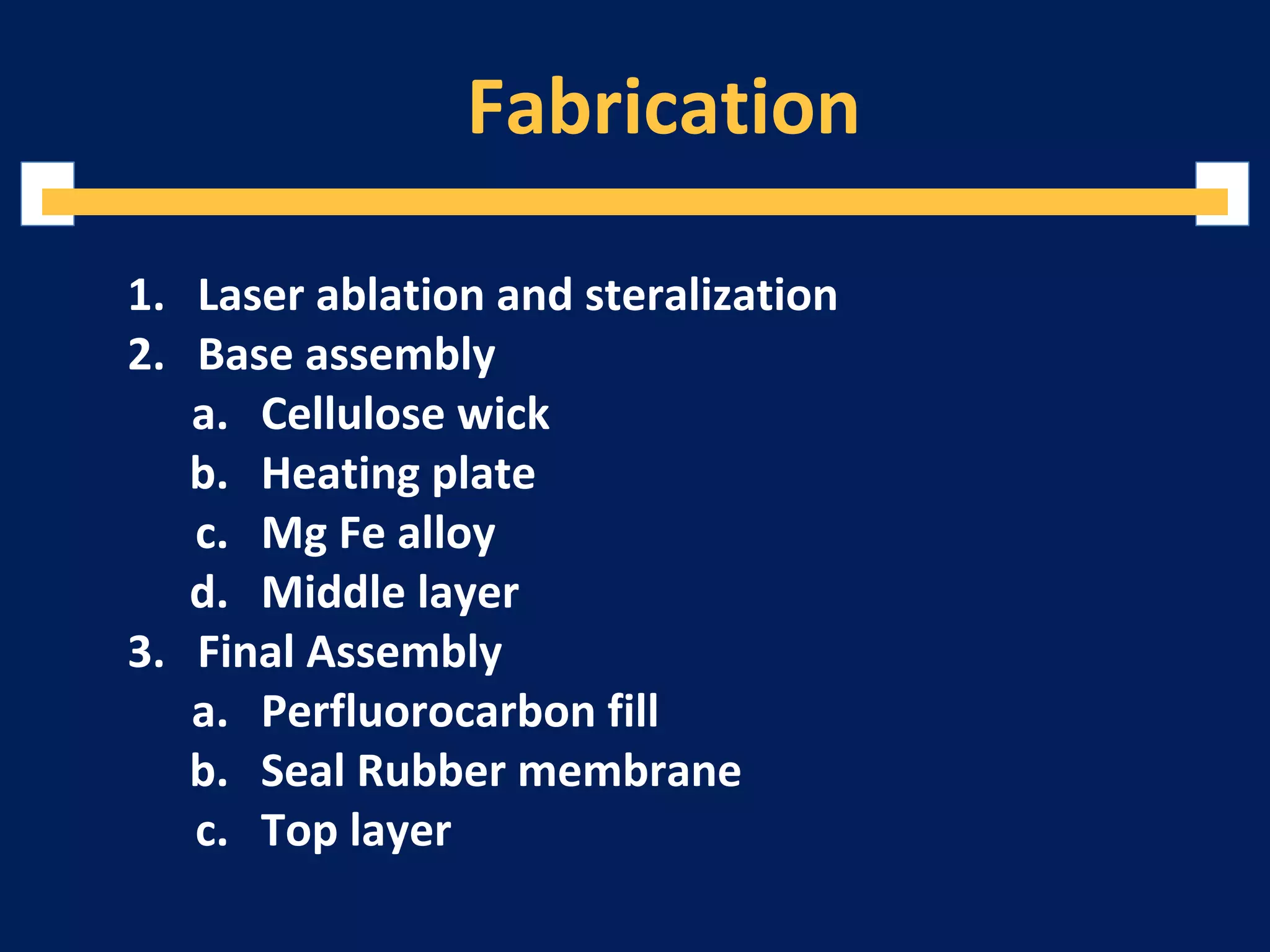
Fabrication
1. Laser ablation and steralization
2. Base assembly
a. Cellulose wick
b. Heating plate
c. Mg Fe alloy
d. Middle layer
3. Final Assembly
a. Perfluorocarbon fill
b. Seal Rubber membrane
c. Top layer
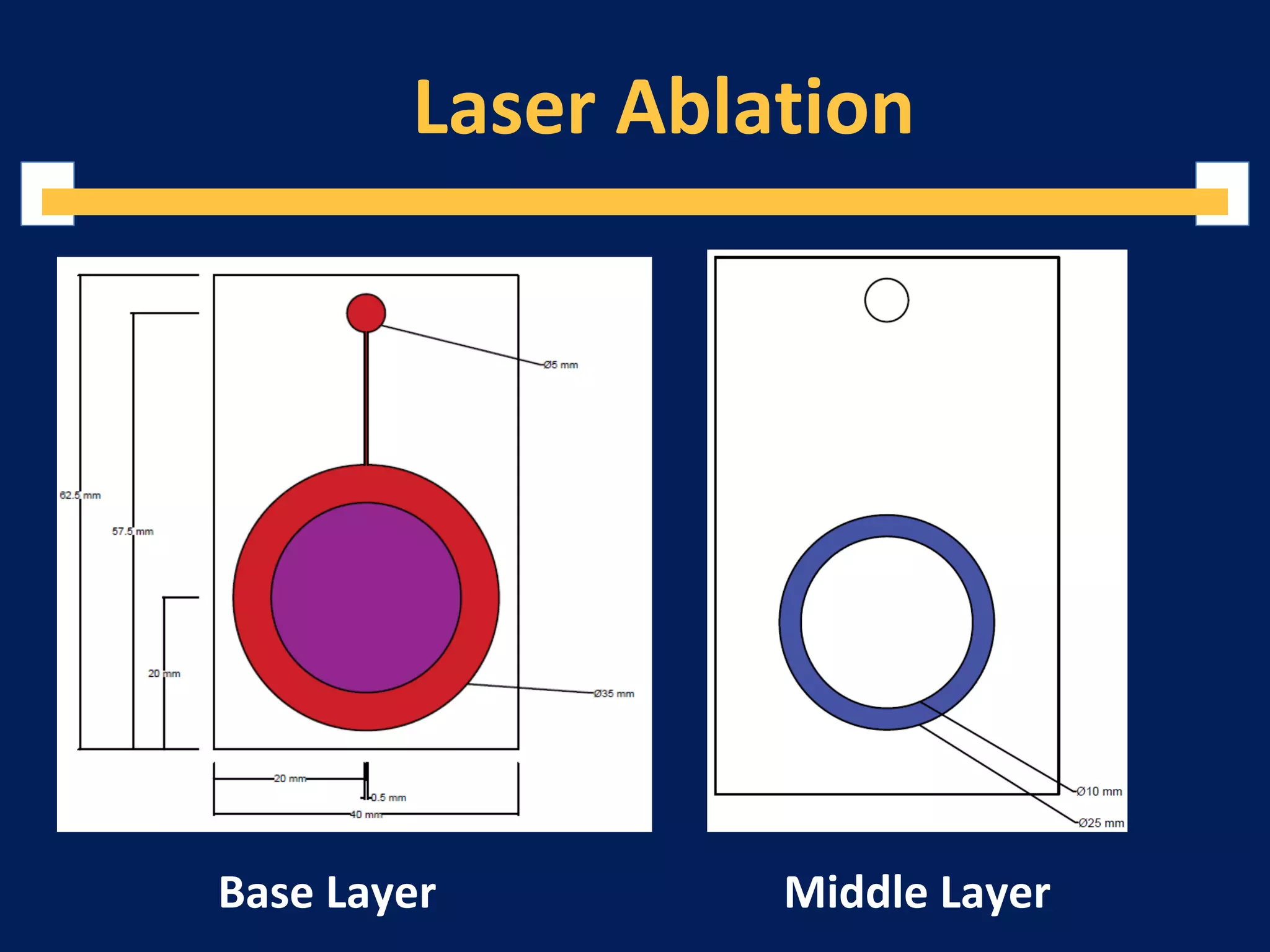
Laser Ablation
Base Layer Middle Layer
Laser Ablation
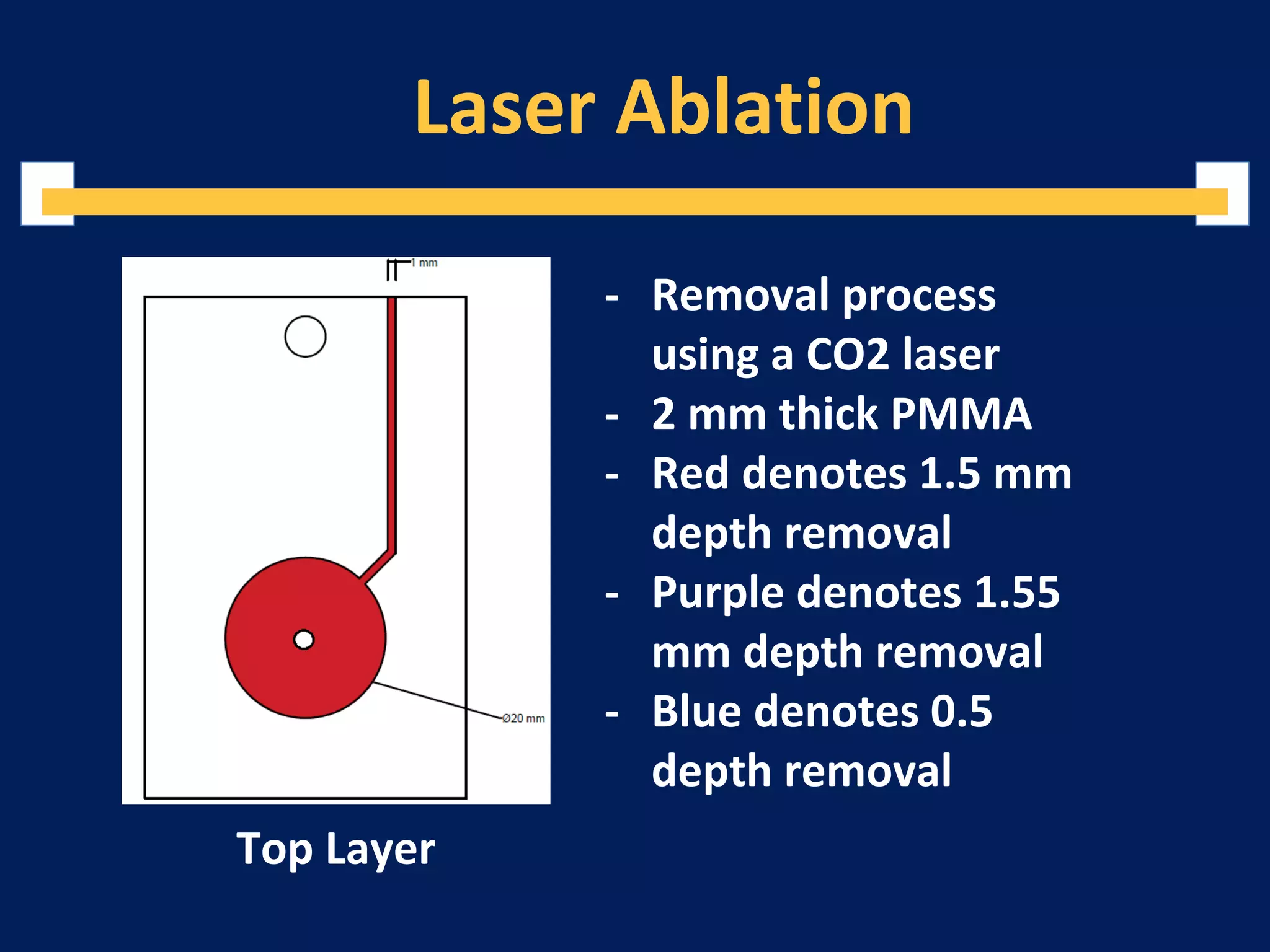
- Removal process
using a CO2 laser
- 2 mm thick PMMA
- Red denotes 1.5 mm
depth removal
- Purple denotes 1.55
mm depth removal
- Blue denotes 0.5
depth removal
Top Layer
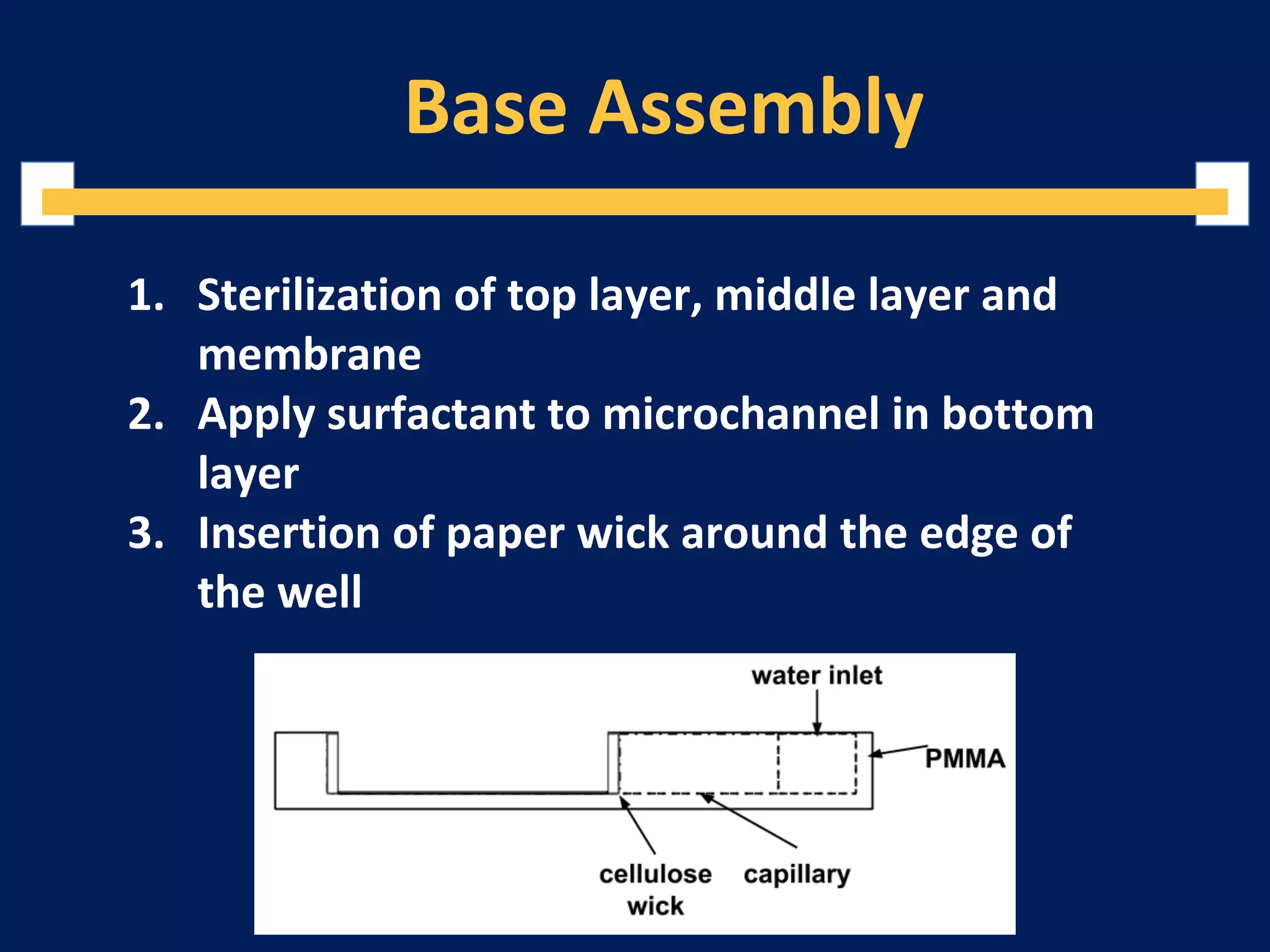
Base Assembly
1. Sterilization of top layer, middle layer and
membrane
2. Apply surfactant to microchannel in bottom
layer
3. Insertion of paper wick around the edge of
the well
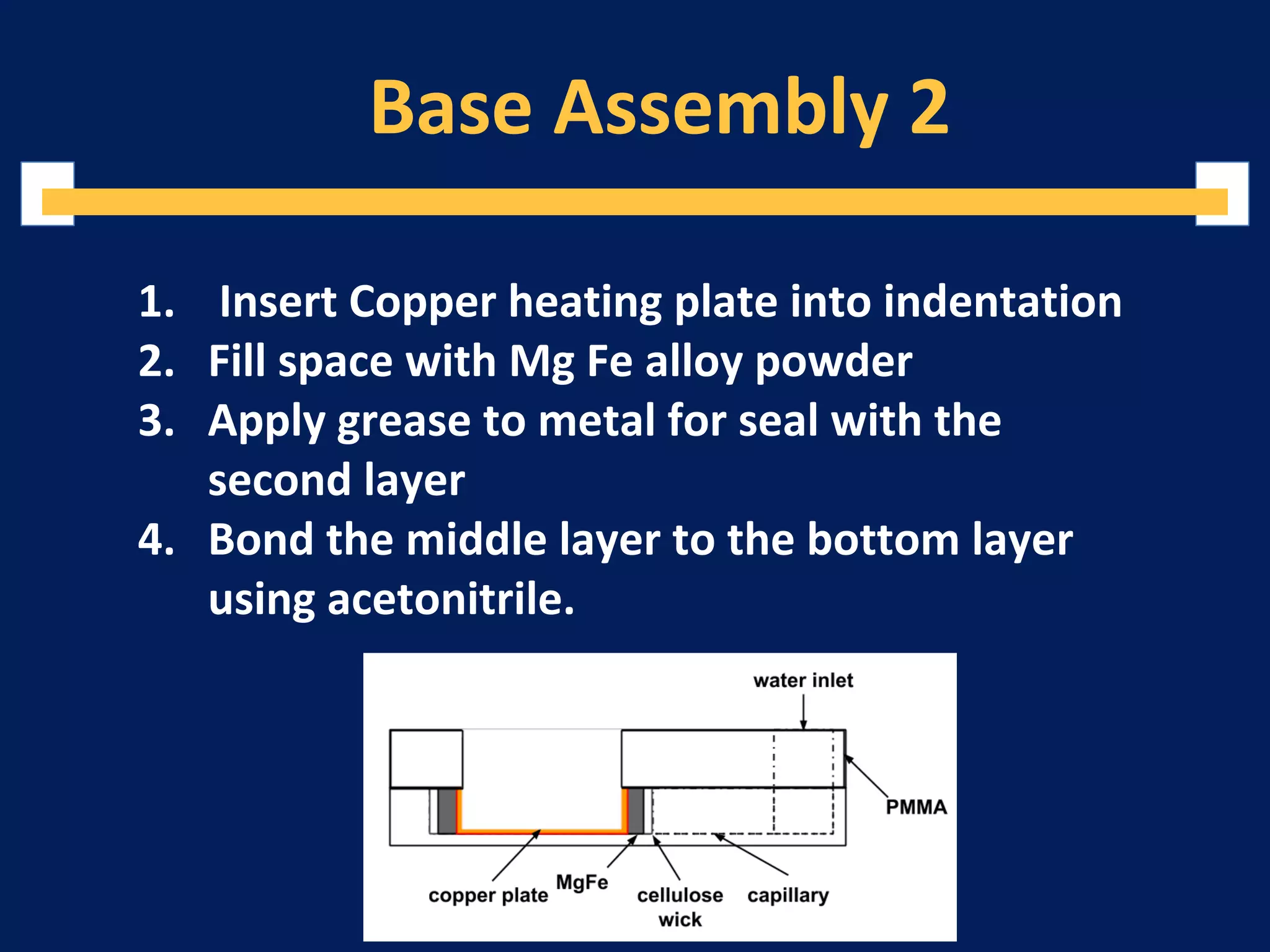
Base Assembly 2
1. Insert Copper heating plate into indentation
2. Fill space with Mg Fe alloy powder
3. Apply grease to metal for seal with the
second layer
4. Bond the middle layer to the bottom layer
using acetonitrile.
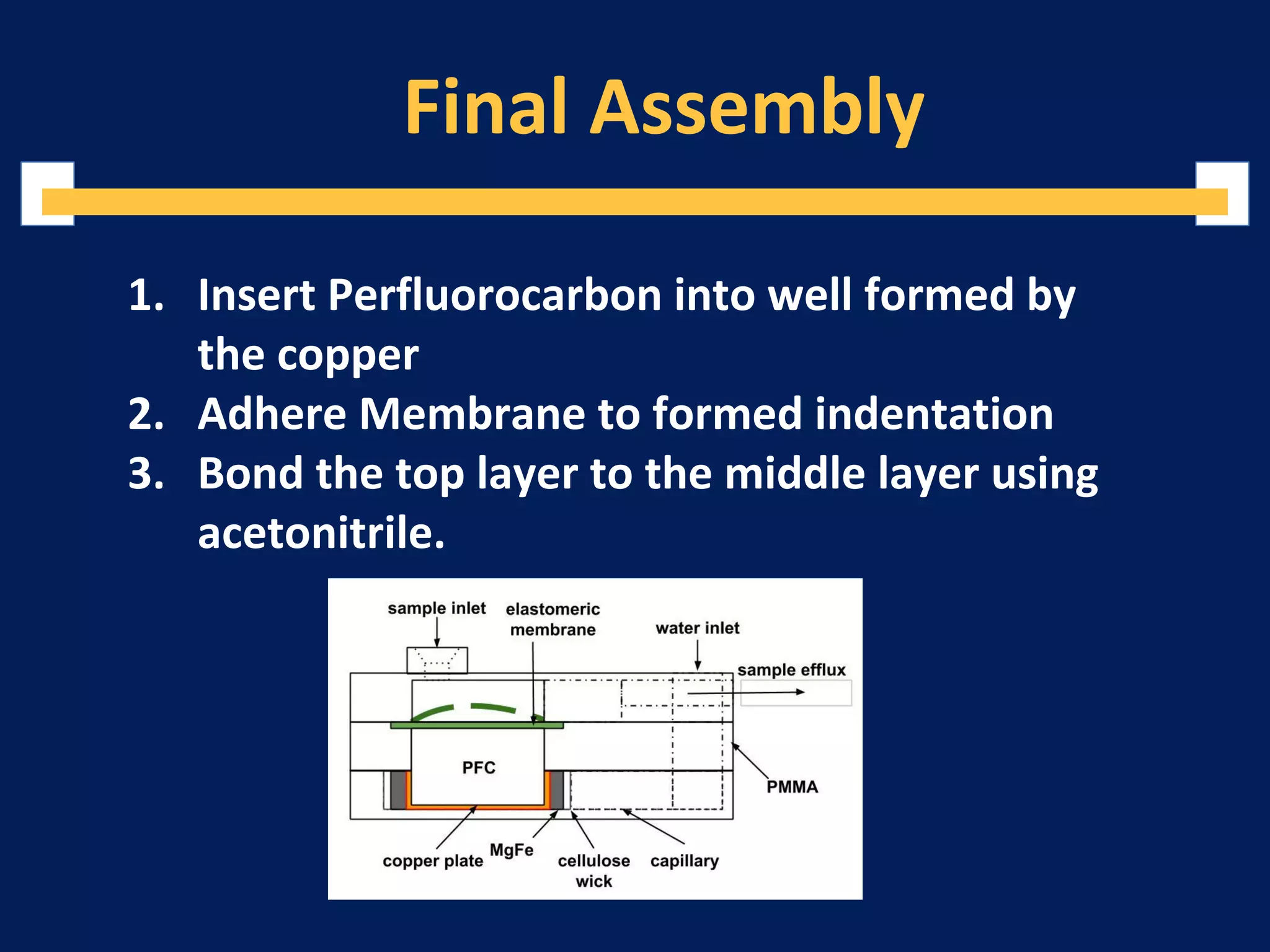
Final Assembly
1. Insert Perfluorocarbon into well formed by
the copper
2. Adhere Membrane to formed indentation
3. Bond the top layer to the middle layer using
acetonitrile.
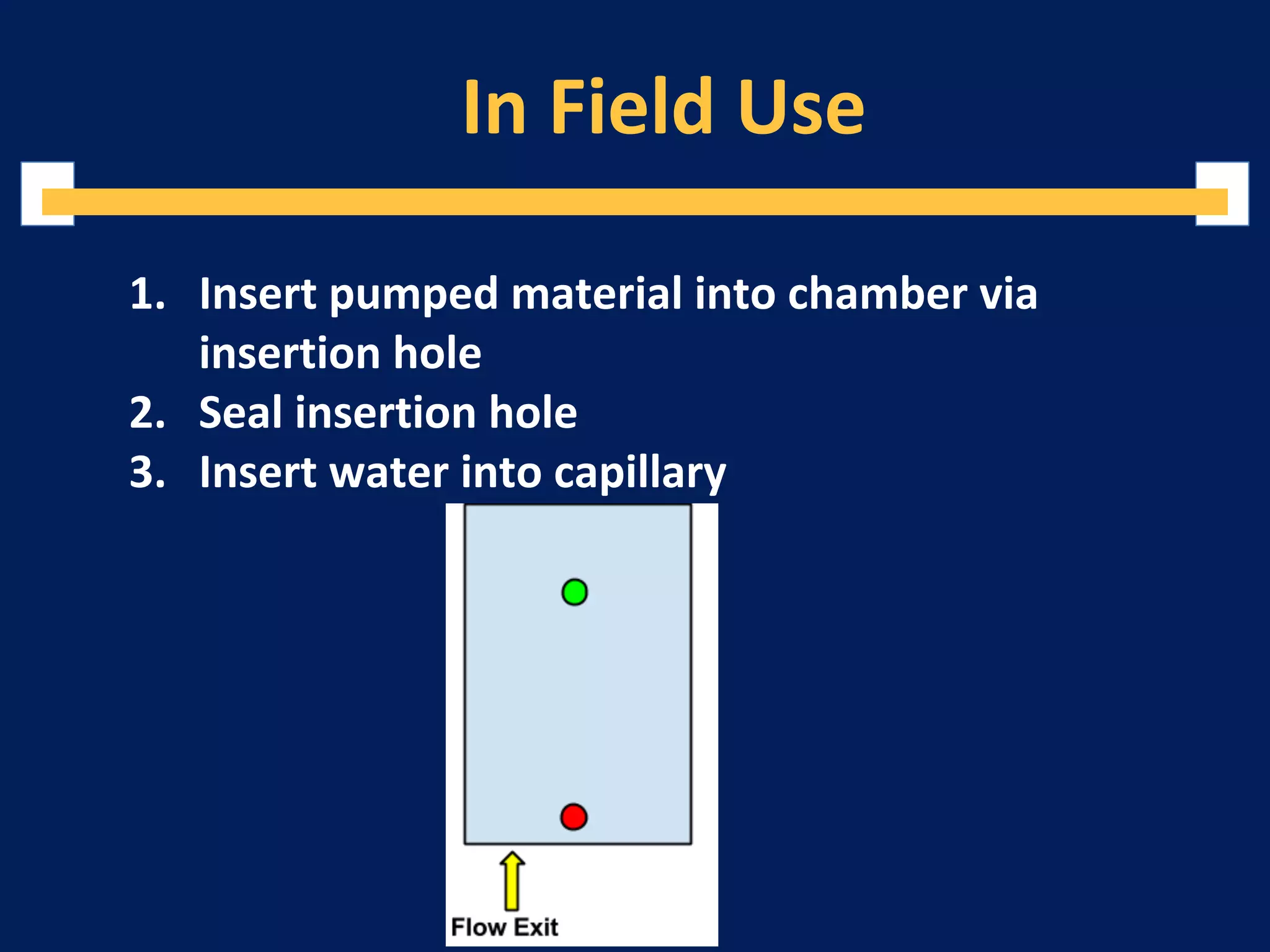
In Field Use
1. Insert pumped material into chamber via
insertion hole
2. Seal insertion hole
3. Insert water into capillary
Testing
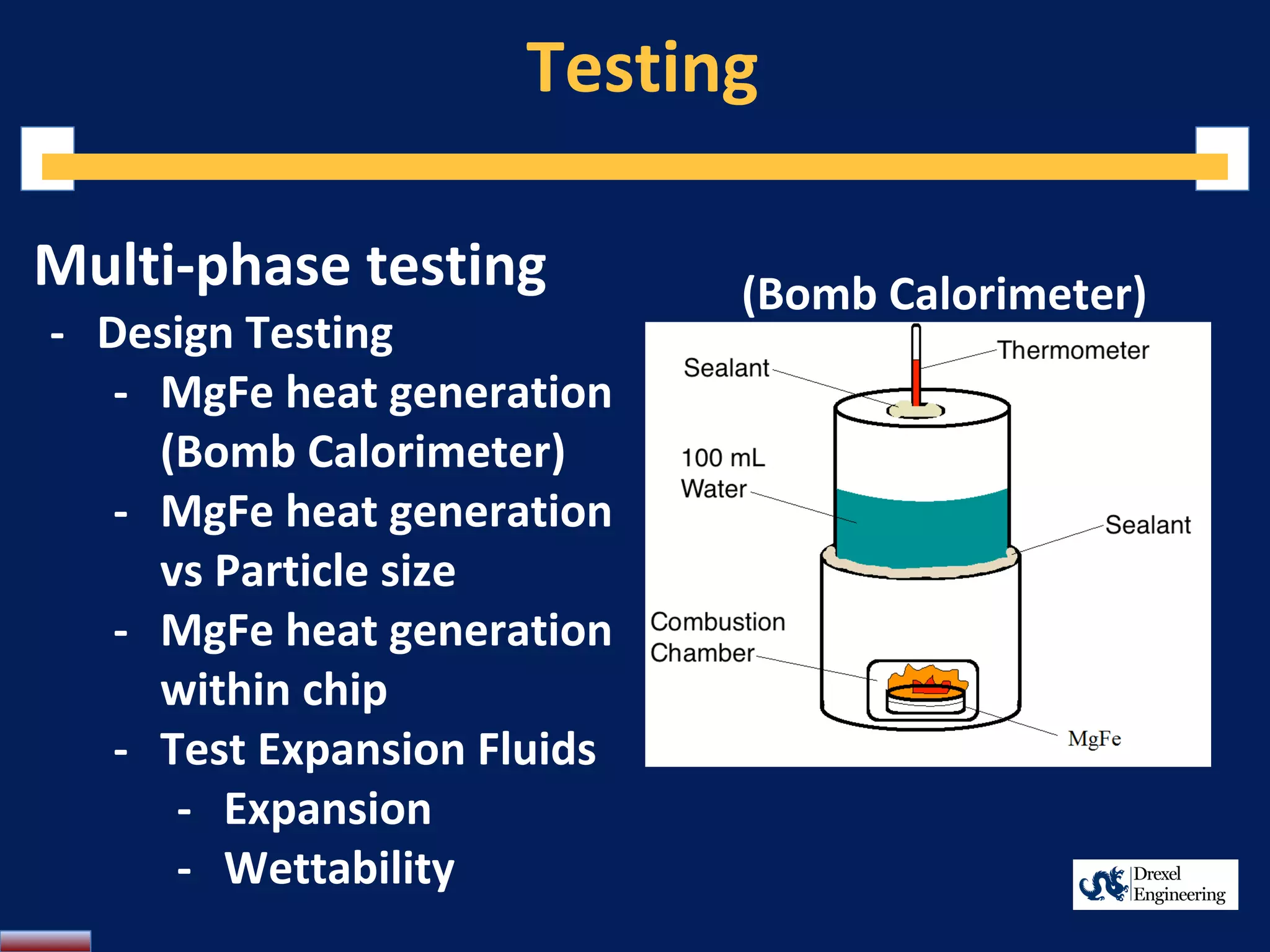
Multi-phase testing
- Design Testing
- MgFe heat generation
(Bomb Calorimeter)
- MgFe heat generation
vs Particle size
- MgFe heat generation
within chip
- Test Expansion Fluids
- Expansion
- Wettability
(Bomb Calorimeter)
Testing
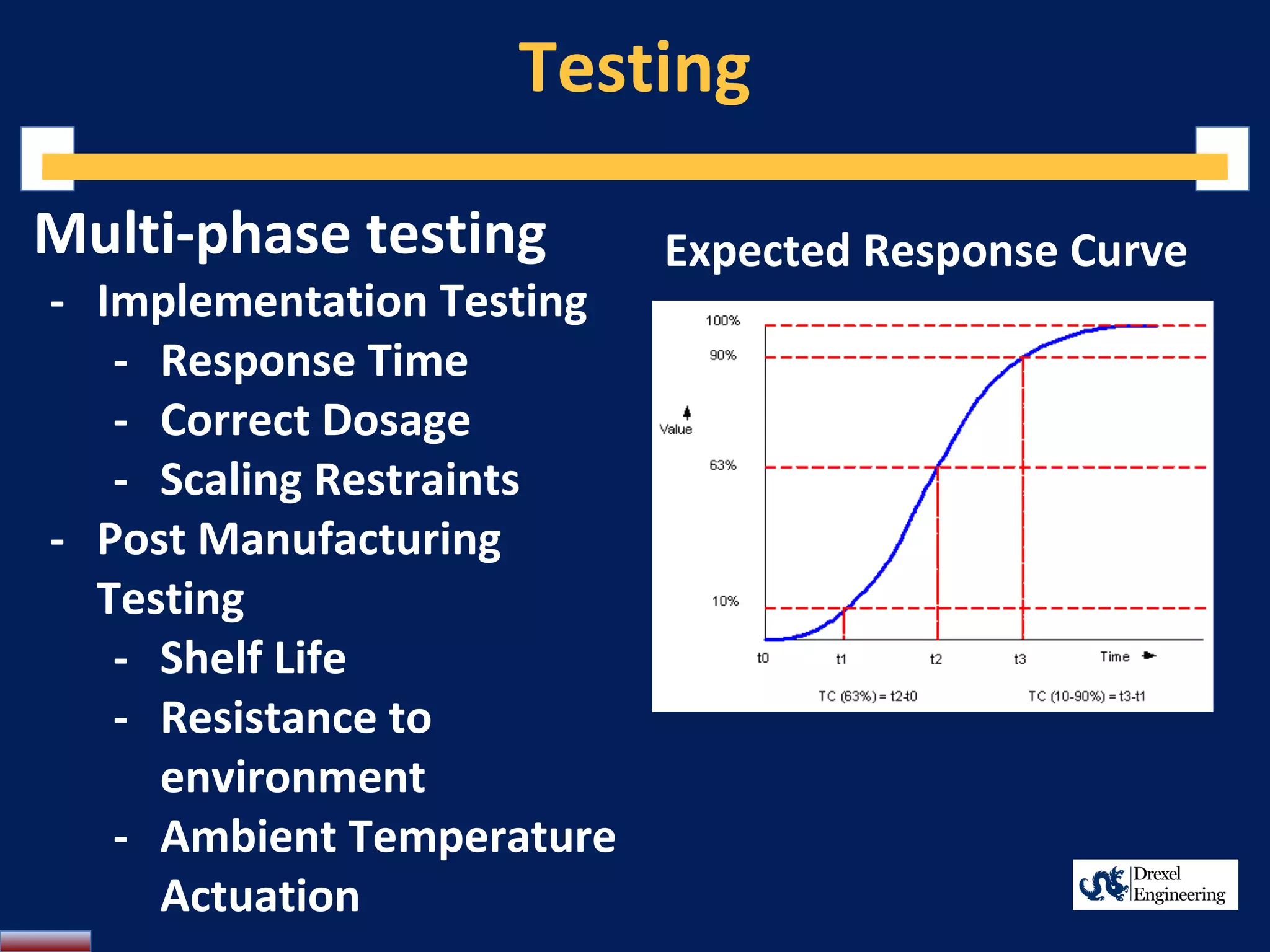
Multi-phase testing
- Implementation Testing
- Response Time
- Correct Dosage
- Scaling Restraints
- Post Manufacturing
Testing
- Shelf Life
- Resistance to
environment
- Ambient Temperature
Actuation
Expected Response Curve
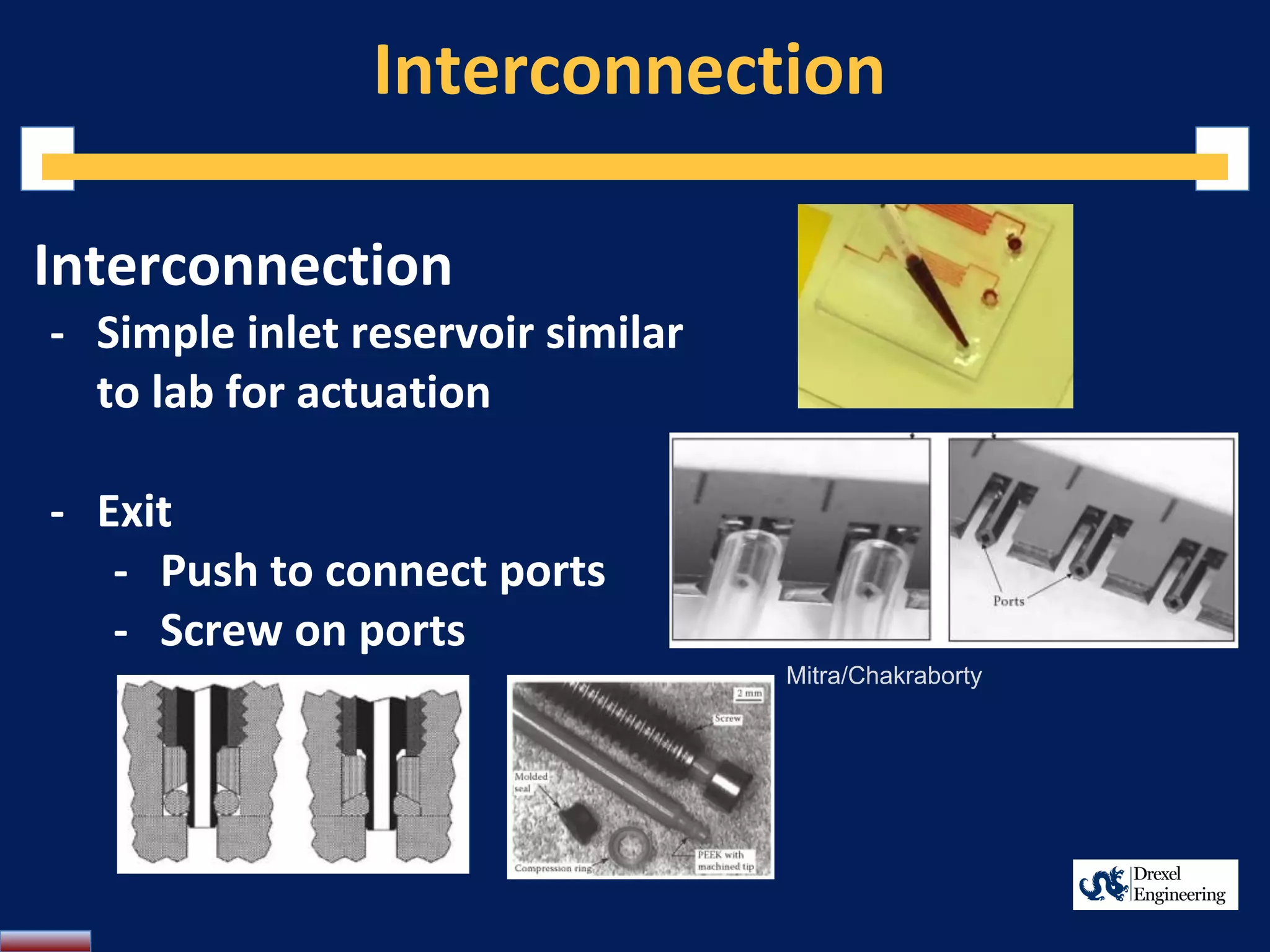
Interconnection
Interconnection
- Simple inlet reservoir similar
to lab for actuation
- Exit
- Push to connect ports
- Screw on ports
Mitra/Chakraborty
References
[1] Jeong, Ok Chan, and Sang Sik Yang. "Fabrication and Test of a Thermopneumatic Micropump with a
Corrugated p+ Diaphragm." Sensors & Actuators: A.Physical 83.1 (2000): 249-55.
[2] Jeong, Ok Chan, Sin Wook Park, and Sang Sik Yang. "Fabrication and Drive Test of a Peristaltic
Thermopnumatic PDMS Micropump." Journal of Mechanical Science and Technology 19.2 (2005): 649-54.
[3] Cooney, Christopher G., and Bruce C. Towe. "A Thermopneumatic Dispensing Micropump." Sensors &
Actuators: A.Physical 116.3 (2004): 519-24.
[4] Jun, Do Han, Woo Young Sim, and Sang Sik Yang. "A Novel Constant Delivery Thermopneumatic
Micropump using Surface Tensions." Sensors & Actuators: A.Physical 139.1 (2007): 210-5.
For more info on MgFe: http://en.wikipedia.org/wiki/Flameless_ration_heater
Answers
Questions?

Electricity-free Thermopneumatic Single Dose Micropump for Low-Resource Setting Applications

  • 1.
    Electricity-free Thermopneumatic SingleDose Micropump for Low-Resource Setting Applications Jeff Briner Travis Gehman Tariq Packer Dharma Varapula
  • 2.
    Objective To develop alow-cost, micropump for low- resource setting (LRS)
  • 3.
    Literature Review A typicalMEMS thermopneumatic micropump by Jeong and Yang (2000) [1] A peristaltic PDMS thermopneumatic micropump by Jeong et al (2005) [2]
  • 4.
    Literature Review A thermopneumaticdispensing micropump by Cooney et al (2004) [3] A thermopneumatic micropump using surface tensions by Jun et al (2007) [4]
  • 5.
    Design - Needstatement There is a need for a 1. simple, 2. inexpensive, and 3. electricity-free fluid actuation device for point-of-care diagnostics technology for Low-Resource Setting (LRS).
  • 6.
    Design Overview ● Existingthermopneumatic micropumps have non-uniform flow and/or use electricity ● Design principle: ● Reaction of MgFe with saline water generates heat ● Perfluorocarbon (PFC) vaporizes stretching the elastomeric membrane ● The membrane pressurizes the dispensing chamber resulting in the efflux of fluid
  • 7.
  • 8.
    Design Details/Optimization 1. Dependingon MgFe particle size, cellulose matrix porosity heat generation is controlled 2. Volume of dispensing chamber along with amount of PFC affects the flow rate 3. MgFe+wick can be made replaceable to allow reuse 4. An array of single units can be used for multiple doses on the same chip
  • 9.
  • 10.
  • 11.
  • 12.
  • 13.
    Parts - (3x) 40mm x 62.5 mm x 2 mm PMMA = $0.42 - Small strip of cellulose/paper = $0.01 - 2g Mg Fe alloy powder = $0.15 - Copper heating plate = $0.02+$0.25 - 25 mm diameter rubber membrane = $0.10 - Perfluorocarbon liquid = $0.10 - Assembling cost $1.00 Final cost $1.84
  • 14.
    Fabrication 1. Laser ablationand steralization 2. Base assembly a. Cellulose wick b. Heating plate c. Mg Fe alloy d. Middle layer 3. Final Assembly a. Perfluorocarbon fill b. Seal Rubber membrane c. Top layer
  • 15.
  • 16.
    Laser Ablation - Removalprocess using a CO2 laser - 2 mm thick PMMA - Red denotes 1.5 mm depth removal - Purple denotes 1.55 mm depth removal - Blue denotes 0.5 depth removal Top Layer
  • 17.
    Base Assembly 1. Sterilizationof top layer, middle layer and membrane 2. Apply surfactant to microchannel in bottom layer 3. Insertion of paper wick around the edge of the well
  • 18.
    Base Assembly 2 1.Insert Copper heating plate into indentation 2. Fill space with Mg Fe alloy powder 3. Apply grease to metal for seal with the second layer 4. Bond the middle layer to the bottom layer using acetonitrile.
  • 19.
    Final Assembly 1. InsertPerfluorocarbon into well formed by the copper 2. Adhere Membrane to formed indentation 3. Bond the top layer to the middle layer using acetonitrile.
  • 20.
    In Field Use 1.Insert pumped material into chamber via insertion hole 2. Seal insertion hole 3. Insert water into capillary
  • 21.
    Testing Multi-phase testing - DesignTesting - MgFe heat generation (Bomb Calorimeter) - MgFe heat generation vs Particle size - MgFe heat generation within chip - Test Expansion Fluids - Expansion - Wettability (Bomb Calorimeter)
  • 22.
    Testing Multi-phase testing - ImplementationTesting - Response Time - Correct Dosage - Scaling Restraints - Post Manufacturing Testing - Shelf Life - Resistance to environment - Ambient Temperature Actuation Expected Response Curve
  • 23.
    Interconnection Interconnection - Simple inletreservoir similar to lab for actuation - Exit - Push to connect ports - Screw on ports Mitra/Chakraborty
  • 24.
    References [1] Jeong, OkChan, and Sang Sik Yang. "Fabrication and Test of a Thermopneumatic Micropump with a Corrugated p+ Diaphragm." Sensors & Actuators: A.Physical 83.1 (2000): 249-55. [2] Jeong, Ok Chan, Sin Wook Park, and Sang Sik Yang. "Fabrication and Drive Test of a Peristaltic Thermopnumatic PDMS Micropump." Journal of Mechanical Science and Technology 19.2 (2005): 649-54. [3] Cooney, Christopher G., and Bruce C. Towe. "A Thermopneumatic Dispensing Micropump." Sensors & Actuators: A.Physical 116.3 (2004): 519-24. [4] Jun, Do Han, Woo Young Sim, and Sang Sik Yang. "A Novel Constant Delivery Thermopneumatic Micropump using Surface Tensions." Sensors & Actuators: A.Physical 139.1 (2007): 210-5. For more info on MgFe: http://en.wikipedia.org/wiki/Flameless_ration_heater
  • 25.