Limb length discrepancy
Introduction
• Limb length discrepancy has two concerns,
cosmetic and functional concerns. The leg gait
is awkward, increases energy expenditure
because of the excessive vertical rise and fall
of the pelvis and may result in backache from
long standing significant discrepancies. Higher
reported incidence of osteo­arthritis on the
longer side due to pelvic obliquity leading to
uncovering of the femoral head.
• Commonest causes are: trauma, paralytic
conditions like poliomyelitis, cerebral palsy,
infection, tumor and tumor­like conditions,
idiopathic unilateral hypo­plasia and
hyperplasia growth of the long bones may be
affected asymmetrically in some conditions
like juvenile rheumatoid arthritis.
• The simplest way of measuring limb length
discrepancy is to place wooden blocks of known
heights under the short leg till the pelvis is level
however asymmetrical pelvic development or
pelvic obliquity may cause mis­calculation. By
using tape measure from anterior superior iliac
spine to the medial malleolus is another method
but this does not include foot height.
Roentgenographic technique by stand­ing
orthoroentgenogram and Scano­gram are two
imaging techniques.
• Treatment of limb length discrepancy can be
done by: shoe rising of the shorter limb if the
discrepancy is 2.5 cm, epiphysiodesis of the
longer limb, shortening of the long leg and
lengthening of the short leg. The program
requires patient and family full committed to
maximal participation in an extend project.
The patient and his parent benefit from
meeting other patients in various stages of
lengthening.
• Historical development of bone lengthening: In 1905
Codivilia per­formed limb lengthening for the first time
following intraoperative osteotomy, he distracted the
bone fragments using powerful tension exerted via
nails in the bone, and he minted the gap by
incorporating the nail in the plaster. Wagner in 1977
performed open osteotomy, immediate diastasis 1 mm
per day of lengthening followed by plate fixation and
bone grafting. DeBastni in 1987 applied similar but
more versatile fixator (orthofix). In the early 1950
Gavril Lizarove devised a thin wire circular external
fixator, he performed per­cutaneous tibial
corticotomy.
• In children, the fixator is worn approximately one month for each
centimeter of lengthening, in adults about 1.5 months for each
centimeter of lengthening. This lengthening period of fixator wear
is one of the major disadvantages of Ilizarove techniques. Paley
classified complications of limb lengthening as: Pin tract infection,
obstacles which needs a secondary procedure such as repeat
corticotomy for permanent consolidation of the lengthening gap
neither problems nor obstacles necessary prevent a good result.
Complications like residual equines contracture and knee stiffness.
Under optimal stable conditions, bone is formed via
intramembranous ossification, while in unstable environment bone
forms via enchondral ossification or in an extremely unstable
environment, pseudoarthrosis may occurs.
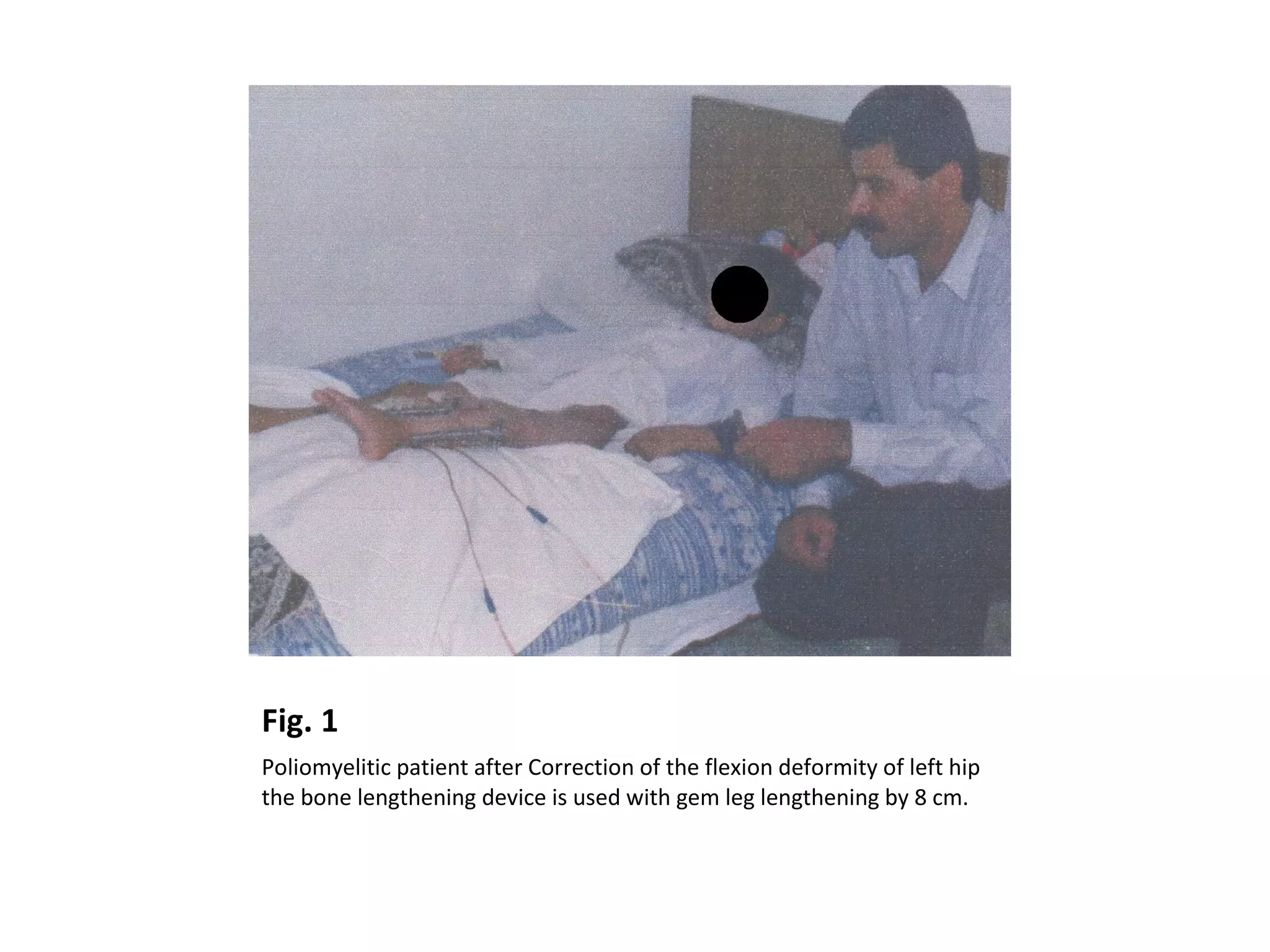
Fig. 1
Poliomyelitic patient after Correction of the flexion deformity of left hip
the bone lengthening device is used with gem leg lengthening by 8 cm.
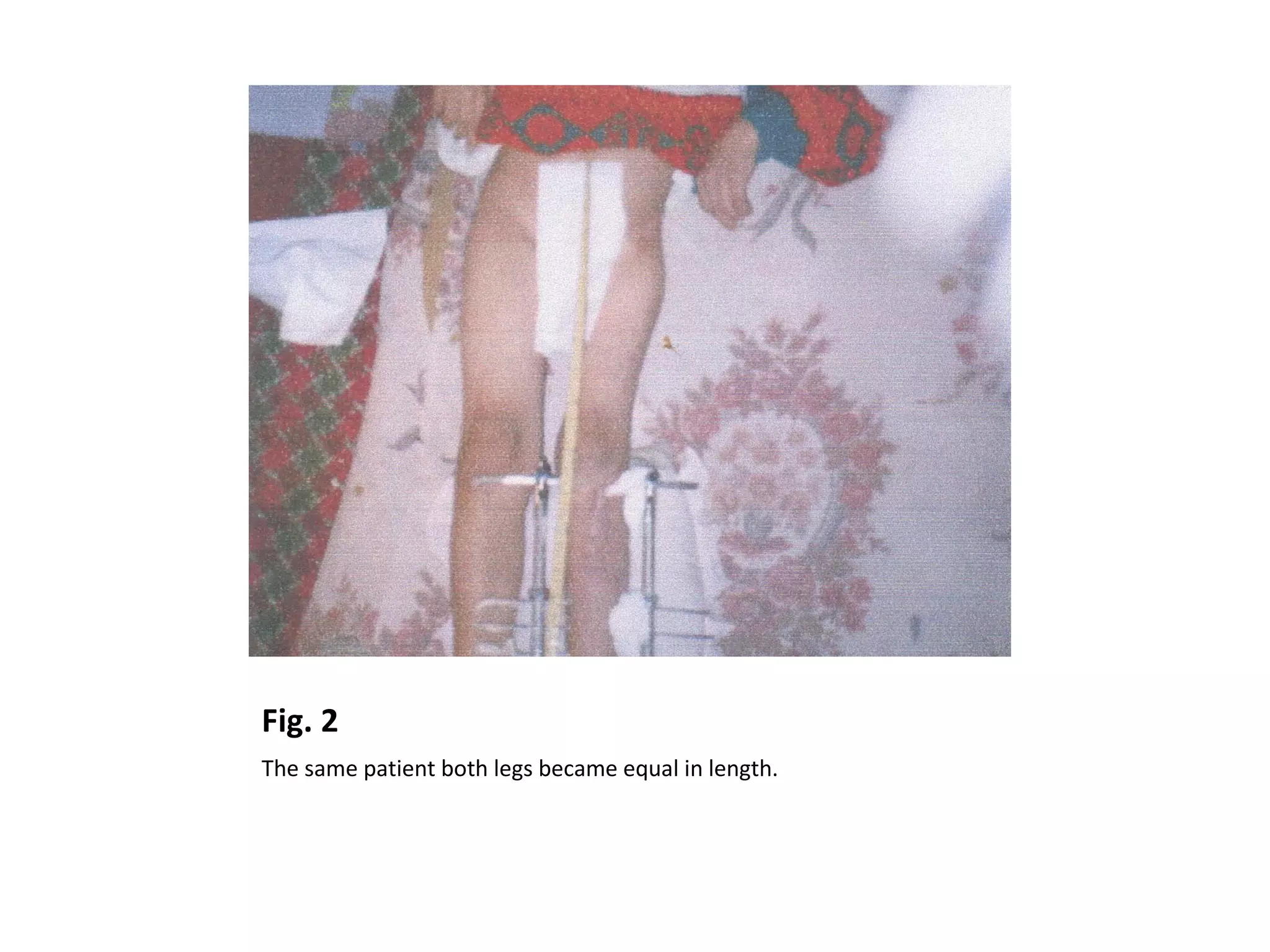
Fig. 2
The same patient both legs became equal in length.
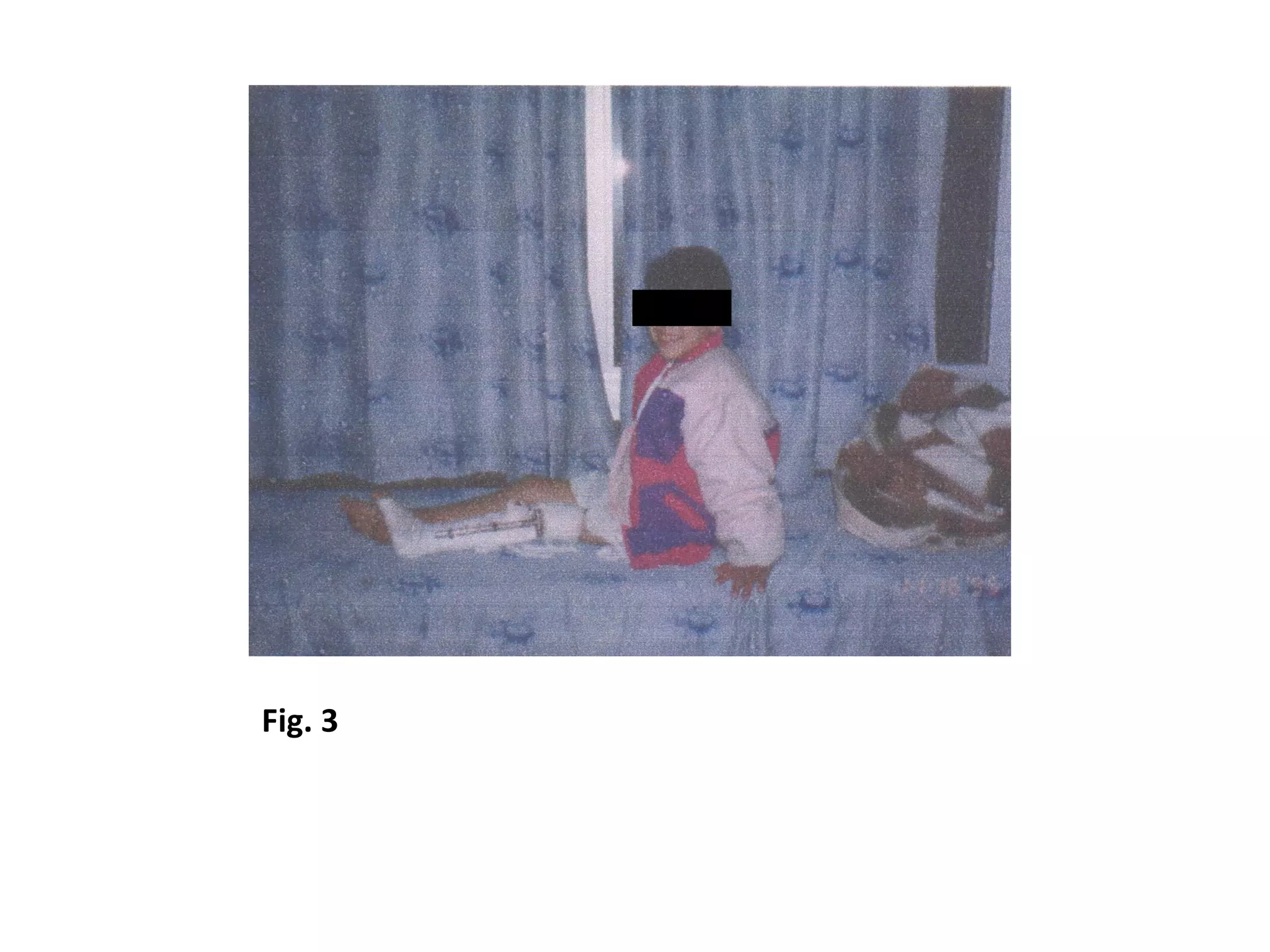
Fig. 3
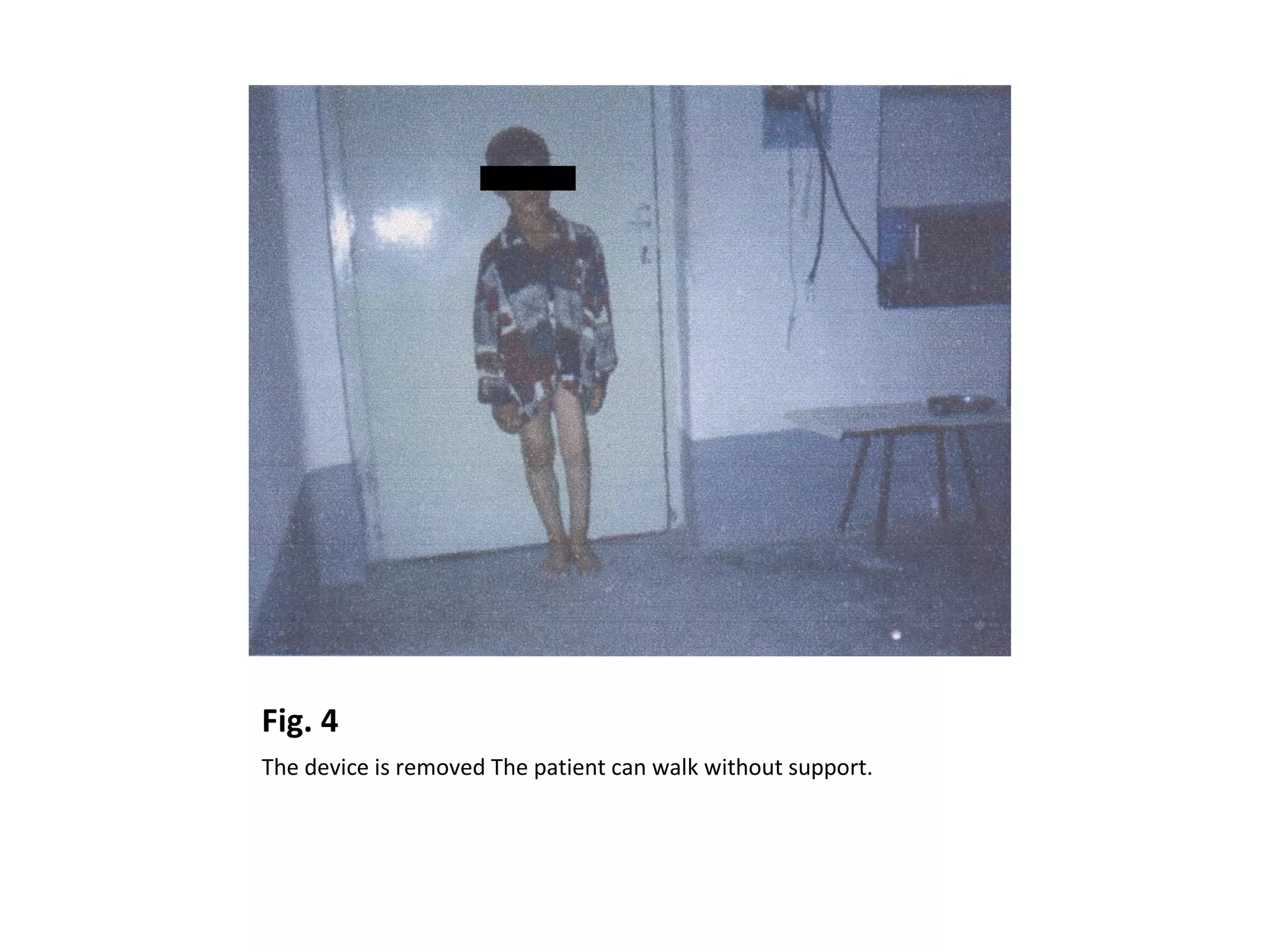
Fig. 4
The device is removed The patient can walk without support.
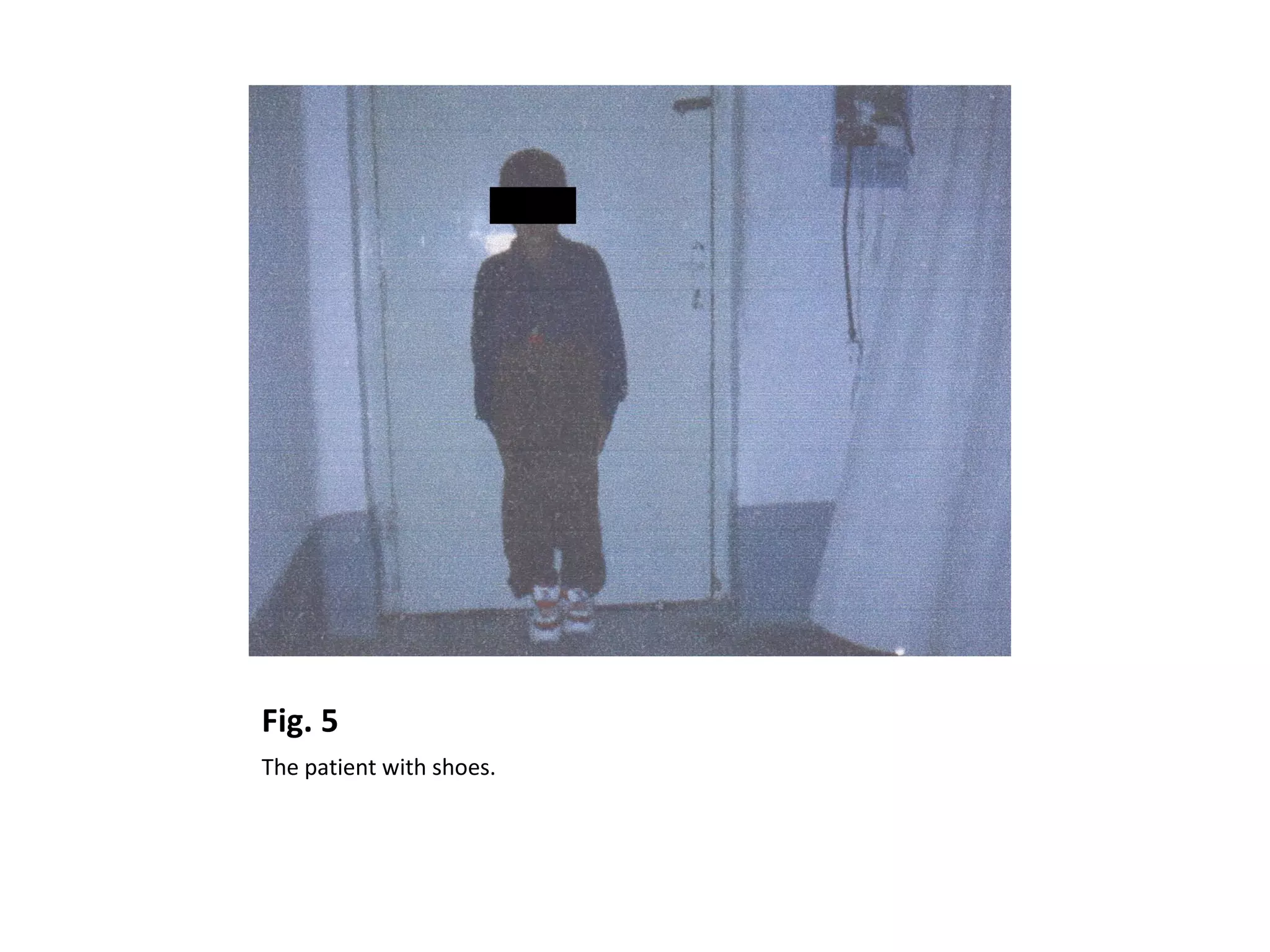
Fig. 5
The patient with shoes.
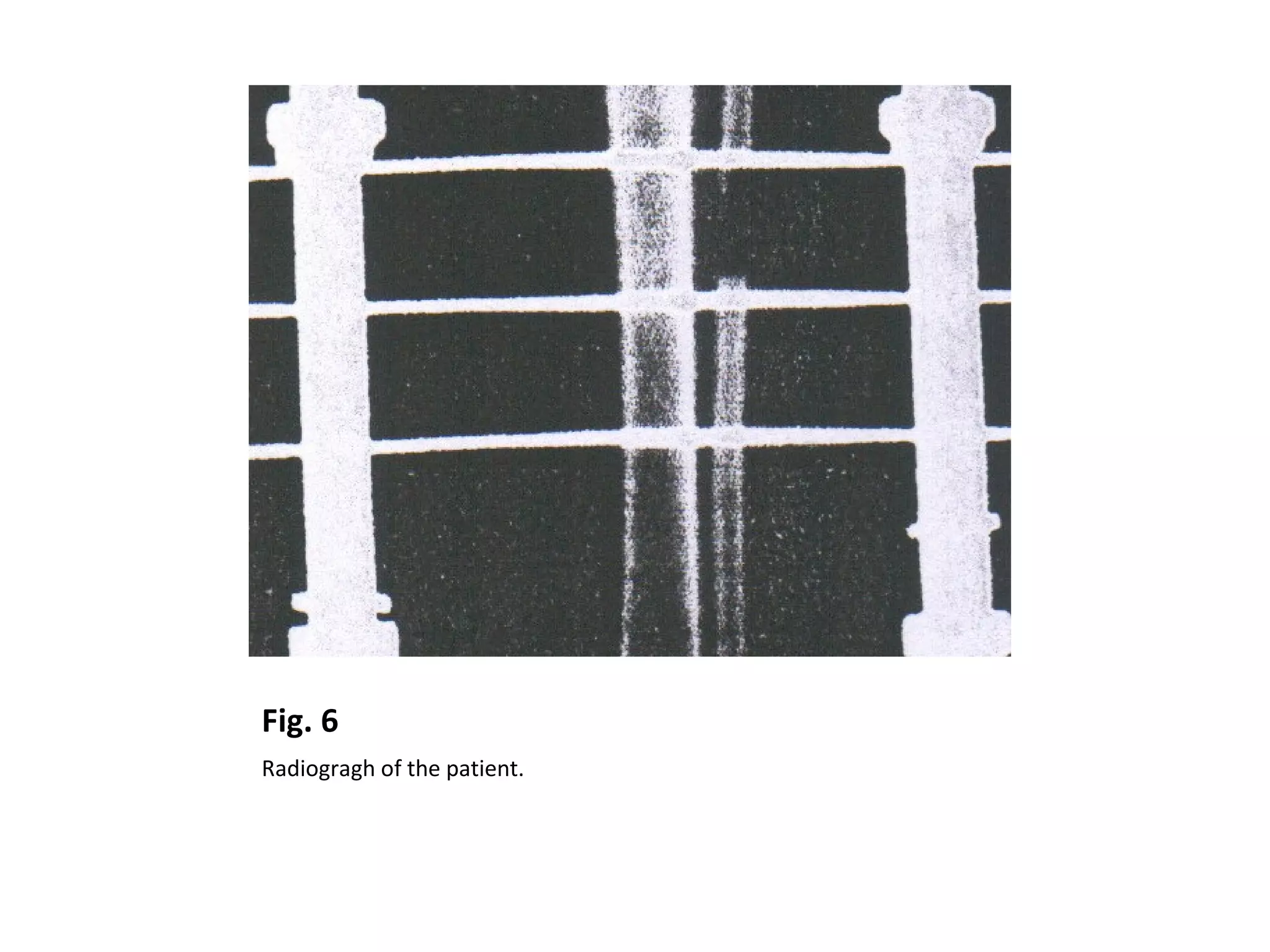
Fig. 6
Radiogragh of the patient.
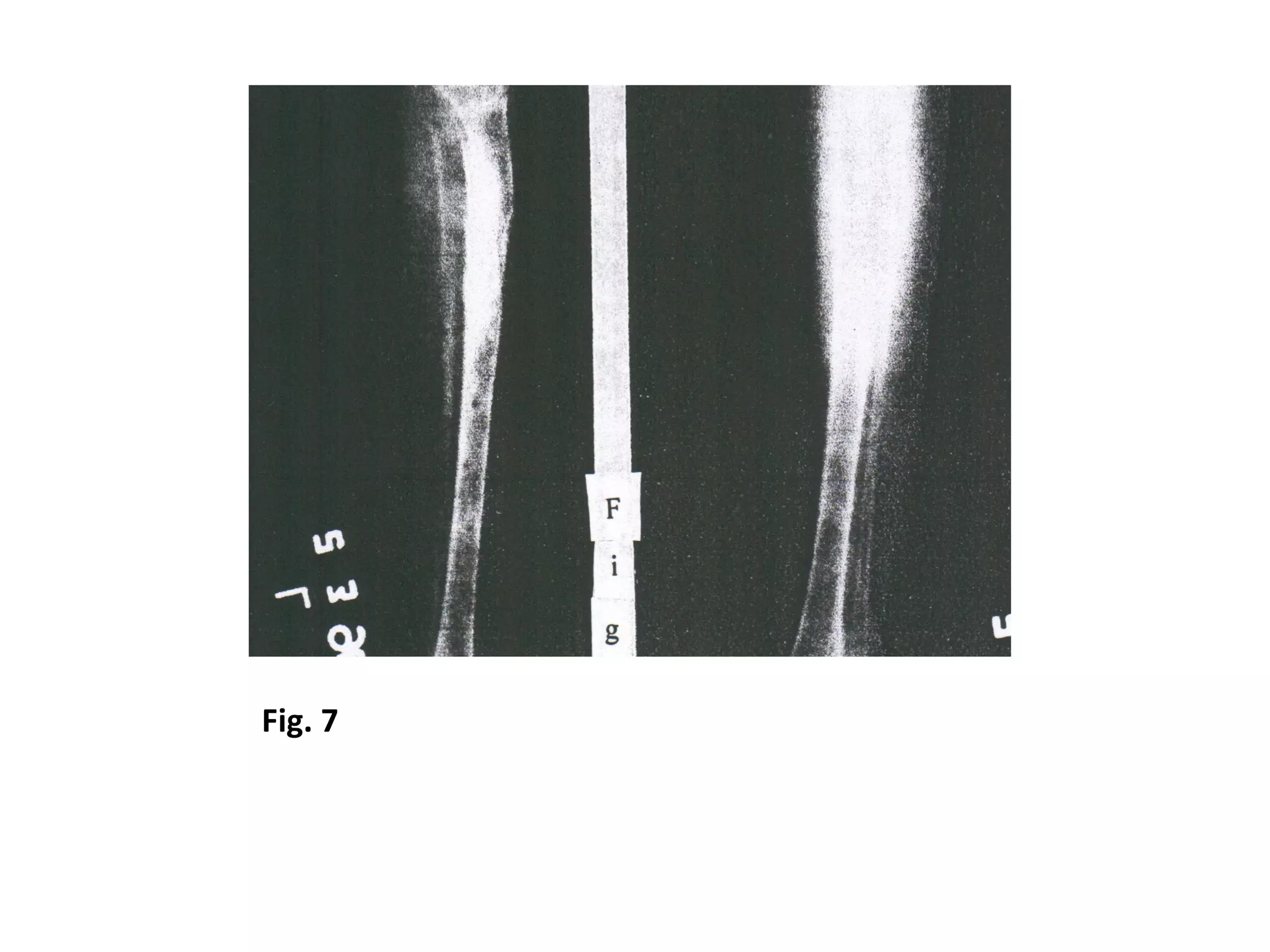
Fig. 7
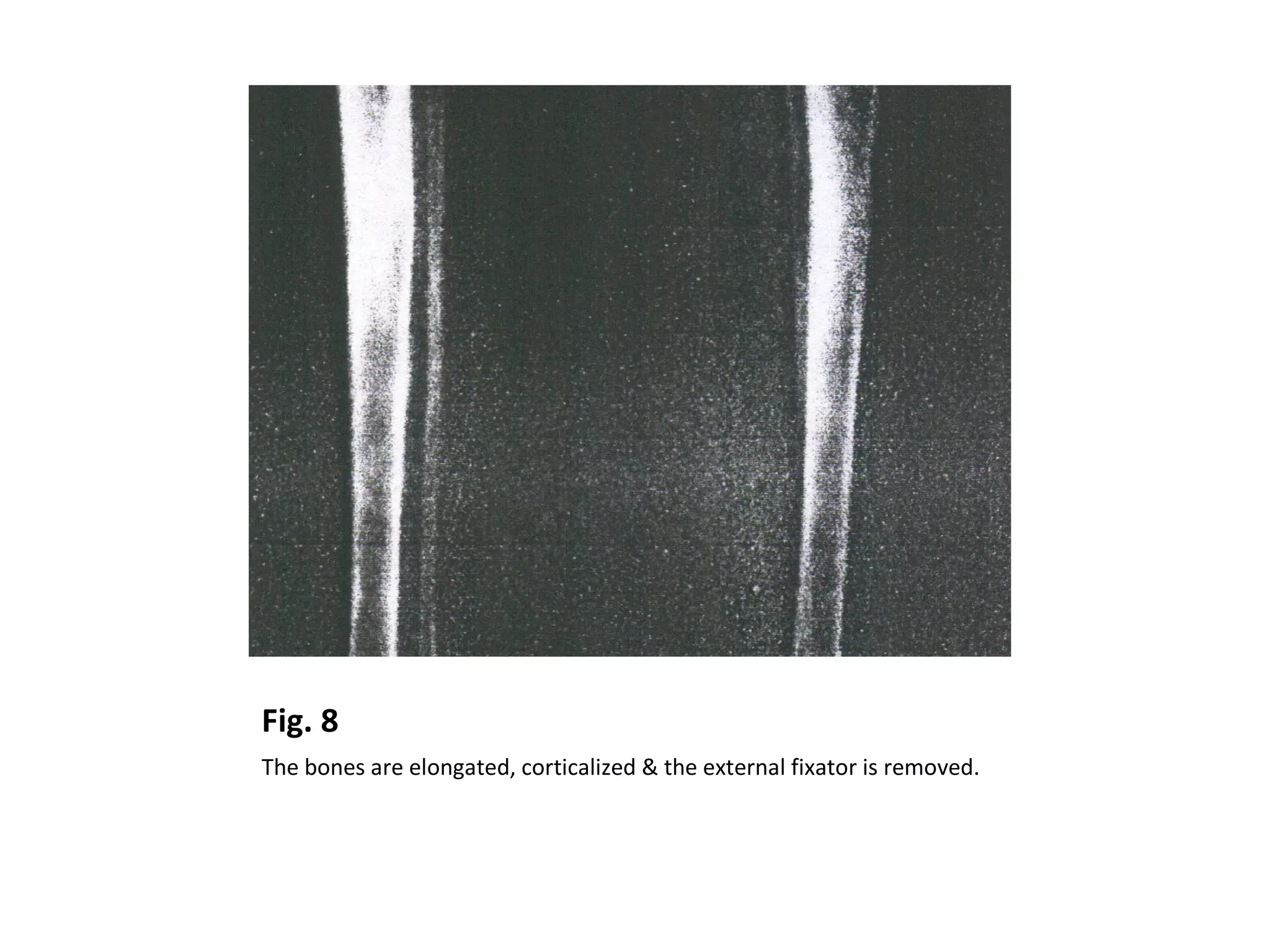
Fig. 8
The bones are elongated, corticalized & the external fixator is removed.

Orthopedics 5th year, 7th lecture (Dr. Omar Barawi)

  • 1.
  • 2.
    Introduction • Limb lengthdiscrepancy has two concerns, cosmetic and functional concerns. The leg gait is awkward, increases energy expenditure because of the excessive vertical rise and fall of the pelvis and may result in backache from long standing significant discrepancies. Higher reported incidence of osteo­arthritis on the longer side due to pelvic obliquity leading to uncovering of the femoral head.
  • 3.
    • Commonest causesare: trauma, paralytic conditions like poliomyelitis, cerebral palsy, infection, tumor and tumor­like conditions, idiopathic unilateral hypo­plasia and hyperplasia growth of the long bones may be affected asymmetrically in some conditions like juvenile rheumatoid arthritis.
  • 4.
    • The simplestway of measuring limb length discrepancy is to place wooden blocks of known heights under the short leg till the pelvis is level however asymmetrical pelvic development or pelvic obliquity may cause mis­calculation. By using tape measure from anterior superior iliac spine to the medial malleolus is another method but this does not include foot height. Roentgenographic technique by stand­ing orthoroentgenogram and Scano­gram are two imaging techniques.
  • 5.
    • Treatment oflimb length discrepancy can be done by: shoe rising of the shorter limb if the discrepancy is 2.5 cm, epiphysiodesis of the longer limb, shortening of the long leg and lengthening of the short leg. The program requires patient and family full committed to maximal participation in an extend project. The patient and his parent benefit from meeting other patients in various stages of lengthening.
  • 6.
    • Historical developmentof bone lengthening: In 1905 Codivilia per­formed limb lengthening for the first time following intraoperative osteotomy, he distracted the bone fragments using powerful tension exerted via nails in the bone, and he minted the gap by incorporating the nail in the plaster. Wagner in 1977 performed open osteotomy, immediate diastasis 1 mm per day of lengthening followed by plate fixation and bone grafting. DeBastni in 1987 applied similar but more versatile fixator (orthofix). In the early 1950 Gavril Lizarove devised a thin wire circular external fixator, he performed per­cutaneous tibial corticotomy.
  • 7.
    • In children,the fixator is worn approximately one month for each centimeter of lengthening, in adults about 1.5 months for each centimeter of lengthening. This lengthening period of fixator wear is one of the major disadvantages of Ilizarove techniques. Paley classified complications of limb lengthening as: Pin tract infection, obstacles which needs a secondary procedure such as repeat corticotomy for permanent consolidation of the lengthening gap neither problems nor obstacles necessary prevent a good result. Complications like residual equines contracture and knee stiffness. Under optimal stable conditions, bone is formed via intramembranous ossification, while in unstable environment bone forms via enchondral ossification or in an extremely unstable environment, pseudoarthrosis may occurs.
  • 8.
    Fig. 1 Poliomyelitic patientafter Correction of the flexion deformity of left hip the bone lengthening device is used with gem leg lengthening by 8 cm.
  • 9.
    Fig. 2 The samepatient both legs became equal in length.
  • 10.
  • 11.
    Fig. 4 The deviceis removed The patient can walk without support.
  • 12.
    Fig. 5 The patientwith shoes.
  • 13.
  • 14.
  • 15.
    Fig. 8 The bonesare elongated, corticalized & the external fixator is removed.