Renal stones  endoscopic  management         Dr sarwar noori mahmood F.I.C.MS(urology), F.E.B.U
Indications for treatment Presence of symptoms and /or obstruction  in a functioning kidney
Treatment of Renal Stones Four Options 1) conservative ,   2) non-invasive:  ESWL  3) minimal invasive : PCNL, URS  4) open surgery New technology :    morbidity,    hospital stay,      invasiveness
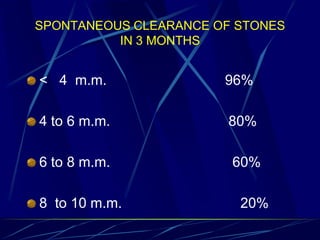
Natural history of renal stones
 
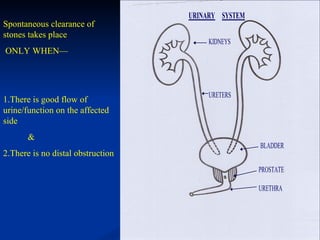
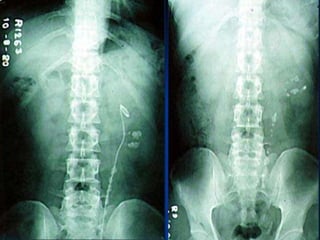
Spontaneous clearance of stones takes place  ONLY WHEN— 1.There is good flow of urine/function on the affected side & 2.There is no distal obstruction
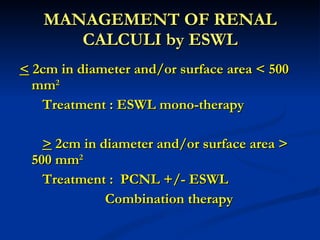
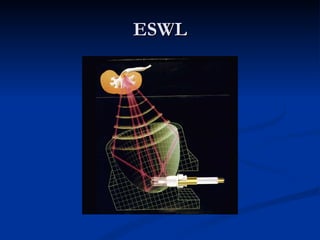
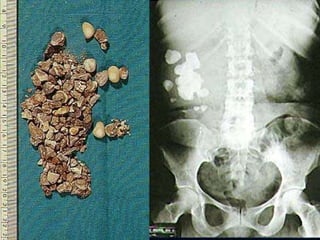
MANAGEMENT OF RENAL CALCULI by ESWL <  2cm in diameter and/or surface area < 500 mm 2   Treatment : ESWL mono-therapy   >  2cm in diameter and/or surface area > 500 mm 2   Treatment :  PCNL +/- ESWL     Combination therapy
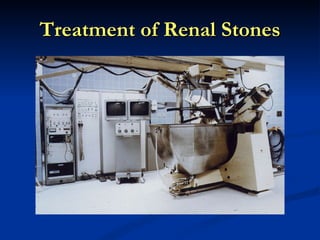
Treatment of Renal Stones
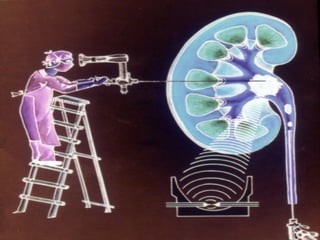
ESWL
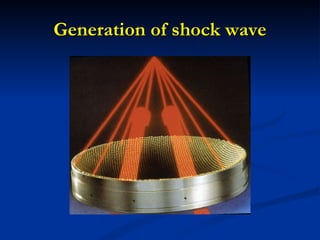
Generation of shock wave
T H E  M A G I C  W O R D---  LITHOTRIPSY EXTRA CORPOREAL SHOCK WAVE  LITHOTRIPSY WHAT  ARE  SHOCK  WAVES?
 
 
There should be a limited amount of gravel , which is expected to be passed out spontaneously within  reasonable time limit , without causing much discomfort/colics .
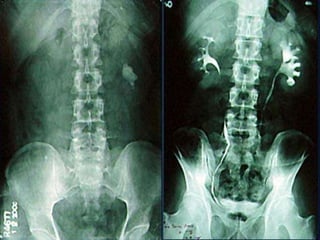
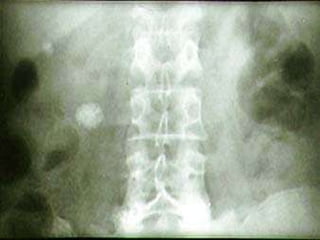
IDEAL  SITUATION  FOR  SUCCESSFUL  E.S.W.L.  Renal  calculus of less than 2 cm having hetrogenous calcification/ architecture  In X- ray , in a well functioning renal unit with no distal obstruction


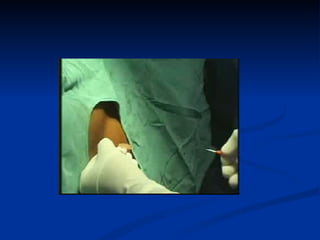
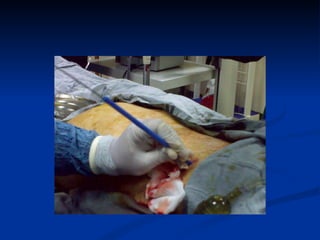
Percutaneous nephrolithomy PCNL  The key-hole surgery
Indication of PCNL:  >2.5-3.0 cm failure of ESWL (matrix,cystine,ca oxalate monohydrate) cystine stone >1.5 cm lower calyx stone ≥ 2.0cm(narrow, long, acute angel infuldibulopelvic angel) caliceal diverticulum UU stone >1cm not respond to ESWL or difficult with URS.
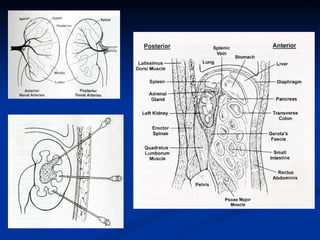
FUCTIONAL ANATOMY OF KIDNEY FOR  PERCUTANEOUS TECHNIQUE   1.              VASCULAR    2.              CALYCEAL   3.              ANATOMIC RELATION   
 
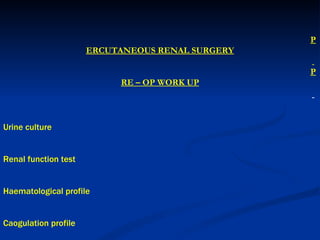
PERCUTANEOUS RENAL SURGERY   PRE – OP WORK UP   Urine culture Renal function test Haematological profile Caogulation profile KUB and IVU US .                                
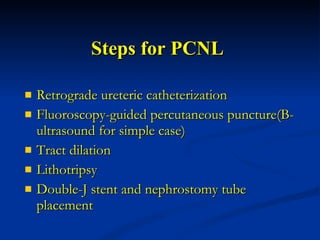
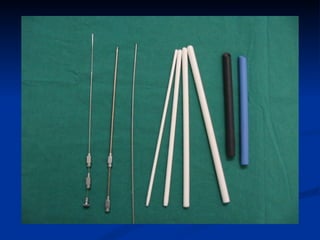
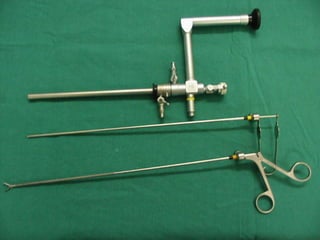
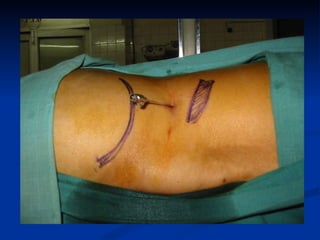
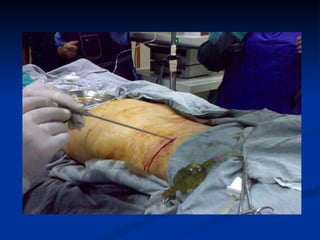
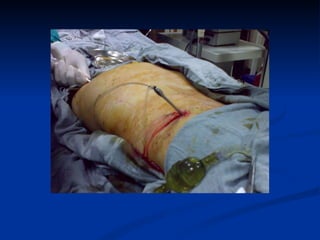
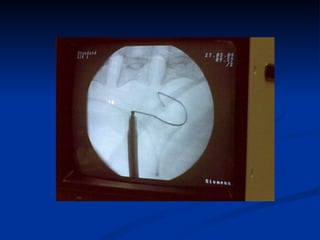
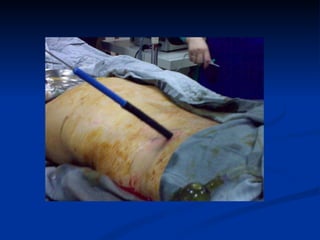
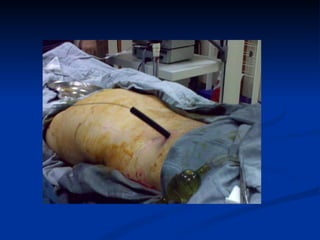
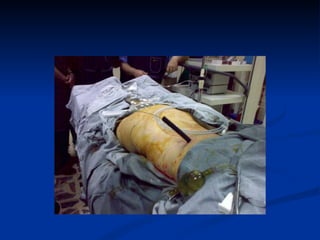
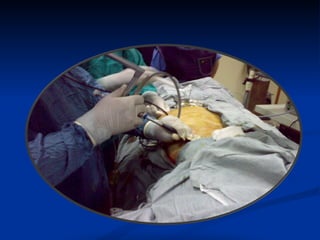
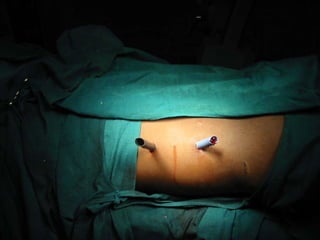
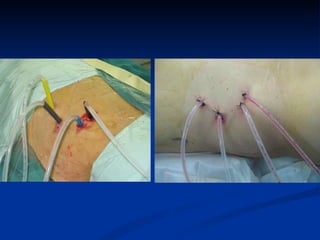
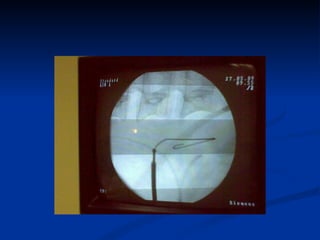
Steps for PCNL Retrograde ureteric catheterization  Fluoroscopy-guided percutaneous puncture(B-ultrasound for simple case) Tract dilation Lithotripsy Double-J stent and nephrostomy tube placement
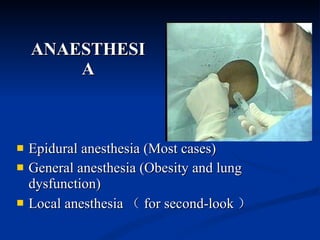
ANAESTHESIA Epidural anesthesia (Most cases) G eneral anesthesia  (Obesity and lung dysfunction) Local anesthesia ( for second-look )
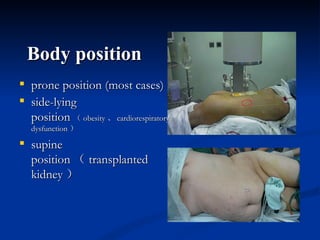
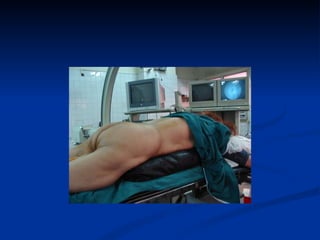
Body position prone position (most cases) side-lying position ( obesity 、 cardiorespiratory  dysfunction ) supine position ( transplanted kidney )
 
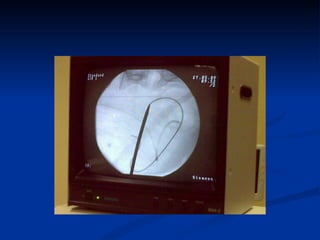
Retrograde ureteric catheterization 6Fr ureteric catheter open end  Wash out small stones Prevent small stones moving from pelvis into ureter
 
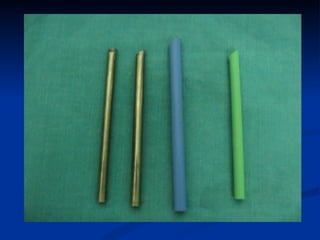
AMPLATZ SHEATH Metallic Teflon


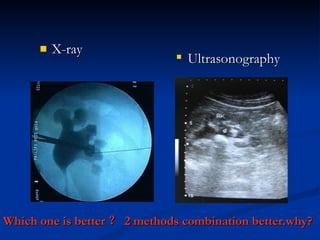
X-ray Ultrasonography Which one is better ? 2 methods combination better.why?


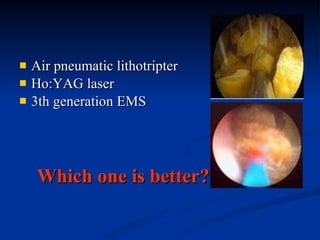
Air pneumatic lithotripter Ho:YAG laser  3th generation EMS Which one is better?
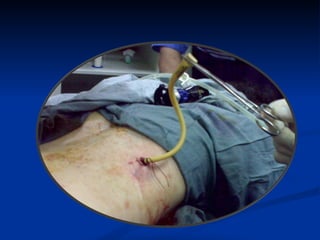
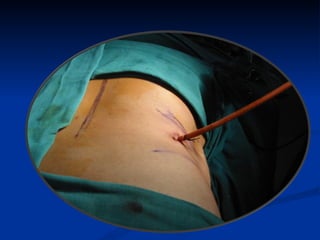
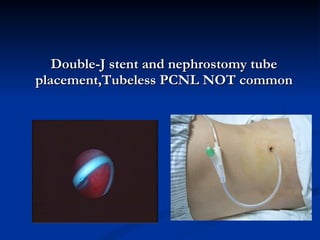
Double-J stent and nephrostomy tube placement,Tubeless PCNL NOT common
 
 
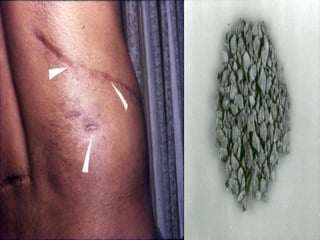
PERCUTANEOUS RENAL SURGERY COMPLICATIONS     1.                          RENAL PELVIC PERFORATION   2.                          HAEMORRHAGE   3.                          INJURY ADJACENT ORGANS   4.                          UROSEPSIS   5.                          FLUID ABSORPTION    6.                          AV  MALFORMATION    
 
Ureteric stone
INDICATIONS FOR INTERVENTION: The classical indications for intervention are well known & include the following: * Presence of infection * Presence of obstruction * Persistent colic with no advancement of the stone * A stone more than 0.5 cm in diameter The classical indications have recently been modified because of the advent of new technology & the high expectations of today's patients. THERAPEUTIC OPTIONS: These include: * Surgery * Percutaneous surgery * Ureteroscopy with Electrohydraulic lithotripsy(EHL), Ultrasound lithotripsy,  Laserlithotripsy, Electro-mechanical Impactor lithotripsy, & Lithoclast lithotripsy. * ESWL * Spontaneous passage
MANAGEMENT OF URETERIC STONES -Stones < 0.5 cm in diameter doesn’t pass  spontaneously 4 to 6 weeks and /or causing  symptoms : ESWL monotherapy   -Stones > 0.5 cm in diameter & < 1 cm in  diameter : ESWL monotherapy
MANAGEMENT OF URETERIC STONES Stones > 1 cm in diameter : trial of ESWL monotherapy Patient counselled: 1. Repeat session may be necessary 2. URS/PCNL/ureterolithotomy
RESULTS OF URETROSCOPIC LITHOTRIPSY (URS) Achieved stone free status = 85% to 90% Failures: 1. Access problems 2. Stone migration Flexible URS for upper third ureteric calculi especially in the male
URS complications:   pain ,sepsis ,damage to ureteral mucosa and wall, failure
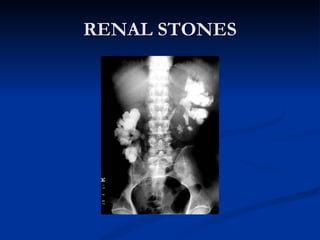
RENAL STONES
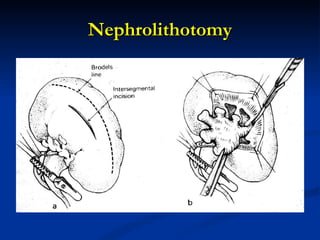
Nephrolithotomy
PREVENTION OF STONES 1. Treatment of causes 2. Dietary manipulations 3. Medications - indication duration
DIETARY ADVICE 1. Hydration 2. Avoid oxalate-rich food 3. Avoid calcium-rich food ? 4. Avoid refined carbohydrates 5. Increase crude fibres
MEDICATIONS 1. Thiazides 2. Allopurinol 3. Antibiotics 4. Sodium bicarbonate 5. Potassium citrate 6. Magnesium salts 7. Pyridoxine

Surgery 6th year, Tutorial (Dr. Sarwar Noori)

  • 1.
    Renal stones endoscopic management Dr sarwar noori mahmood F.I.C.MS(urology), F.E.B.U
  • 2.
    Indications for treatmentPresence of symptoms and /or obstruction in a functioning kidney
  • 3.
    Treatment of RenalStones Four Options 1) conservative , 2) non-invasive: ESWL 3) minimal invasive : PCNL, URS 4) open surgery New technology :  morbidity,  hospital stay,  invasiveness
  • 4.
    Natural history ofrenal stones
  • 5.
  • 6.
    Spontaneous clearance ofstones takes place ONLY WHEN— 1.There is good flow of urine/function on the affected side & 2.There is no distal obstruction
  • 7.
    MANAGEMENT OF RENALCALCULI by ESWL < 2cm in diameter and/or surface area < 500 mm 2 Treatment : ESWL mono-therapy > 2cm in diameter and/or surface area > 500 mm 2 Treatment : PCNL +/- ESWL Combination therapy
  • 8.
  • 9.
  • 10.
  • 11.
    T H E M A G I C W O R D--- LITHOTRIPSY EXTRA CORPOREAL SHOCK WAVE LITHOTRIPSY WHAT ARE SHOCK WAVES?
  • 12.
  • 13.
  • 14.
    There should bea limited amount of gravel , which is expected to be passed out spontaneously within reasonable time limit , without causing much discomfort/colics .
  • 15.
    IDEAL SITUATION FOR SUCCESSFUL E.S.W.L. Renal calculus of less than 2 cm having hetrogenous calcification/ architecture In X- ray , in a well functioning renal unit with no distal obstruction
  • 16.
  • 17.
  • 18.
  • 19.
    Percutaneous nephrolithomy PCNL The key-hole surgery
  • 20.
    Indication of PCNL: >2.5-3.0 cm failure of ESWL (matrix,cystine,ca oxalate monohydrate) cystine stone >1.5 cm lower calyx stone ≥ 2.0cm(narrow, long, acute angel infuldibulopelvic angel) caliceal diverticulum UU stone >1cm not respond to ESWL or difficult with URS.
  • 21.
    FUCTIONAL ANATOMY OFKIDNEY FOR PERCUTANEOUS TECHNIQUE   1.              VASCULAR   2.              CALYCEAL   3.              ANATOMIC RELATION  
  • 22.
  • 23.
    PERCUTANEOUS RENAL SURGERY  PRE – OP WORK UP   Urine culture Renal function test Haematological profile Caogulation profile KUB and IVU US .                               
  • 24.
    Steps for PCNLRetrograde ureteric catheterization Fluoroscopy-guided percutaneous puncture(B-ultrasound for simple case) Tract dilation Lithotripsy Double-J stent and nephrostomy tube placement
  • 25.
    ANAESTHESIA Epidural anesthesia(Most cases) G eneral anesthesia (Obesity and lung dysfunction) Local anesthesia ( for second-look )
  • 26.
    Body position proneposition (most cases) side-lying position ( obesity 、 cardiorespiratory dysfunction ) supine position ( transplanted kidney )
  • 27.
  • 28.
    Retrograde ureteric catheterization6Fr ureteric catheter open end Wash out small stones Prevent small stones moving from pelvis into ureter
  • 29.
  • 30.
  • 31.
  • 32.
  • 33.
  • 34.
  • 35.
    X-ray Ultrasonography Whichone is better ? 2 methods combination better.why?
  • 36.
  • 37.
  • 38.
  • 39.
  • 40.
  • 41.
  • 42.
  • 43.
  • 44.
  • 45.
  • 46.
  • 47.
  • 48.
  • 49.
    Air pneumatic lithotripterHo:YAG laser 3th generation EMS Which one is better?
  • 50.
    Double-J stent andnephrostomy tube placement,Tubeless PCNL NOT common
  • 51.
  • 52.
  • 53.
    PERCUTANEOUS RENAL SURGERYCOMPLICATIONS     1.                         RENAL PELVIC PERFORATION   2.                         HAEMORRHAGE   3.                         INJURY ADJACENT ORGANS   4.                         UROSEPSIS   5.                         FLUID ABSORPTION   6.                         AV MALFORMATION    
  • 54.
  • 55.
  • 56.
    INDICATIONS FOR INTERVENTION:The classical indications for intervention are well known & include the following: * Presence of infection * Presence of obstruction * Persistent colic with no advancement of the stone * A stone more than 0.5 cm in diameter The classical indications have recently been modified because of the advent of new technology & the high expectations of today's patients. THERAPEUTIC OPTIONS: These include: * Surgery * Percutaneous surgery * Ureteroscopy with Electrohydraulic lithotripsy(EHL), Ultrasound lithotripsy, Laserlithotripsy, Electro-mechanical Impactor lithotripsy, & Lithoclast lithotripsy. * ESWL * Spontaneous passage
  • 57.
    MANAGEMENT OF URETERICSTONES -Stones < 0.5 cm in diameter doesn’t pass spontaneously 4 to 6 weeks and /or causing symptoms : ESWL monotherapy -Stones > 0.5 cm in diameter & < 1 cm in diameter : ESWL monotherapy
  • 58.
    MANAGEMENT OF URETERICSTONES Stones > 1 cm in diameter : trial of ESWL monotherapy Patient counselled: 1. Repeat session may be necessary 2. URS/PCNL/ureterolithotomy
  • 59.
    RESULTS OF URETROSCOPICLITHOTRIPSY (URS) Achieved stone free status = 85% to 90% Failures: 1. Access problems 2. Stone migration Flexible URS for upper third ureteric calculi especially in the male
  • 60.
    URS complications: pain ,sepsis ,damage to ureteral mucosa and wall, failure
  • 61.
  • 62.
  • 63.
    PREVENTION OF STONES1. Treatment of causes 2. Dietary manipulations 3. Medications - indication duration
  • 64.
    DIETARY ADVICE 1.Hydration 2. Avoid oxalate-rich food 3. Avoid calcium-rich food ? 4. Avoid refined carbohydrates 5. Increase crude fibres
  • 65.
    MEDICATIONS 1. Thiazides2. Allopurinol 3. Antibiotics 4. Sodium bicarbonate 5. Potassium citrate 6. Magnesium salts 7. Pyridoxine