AO Foundation
Education
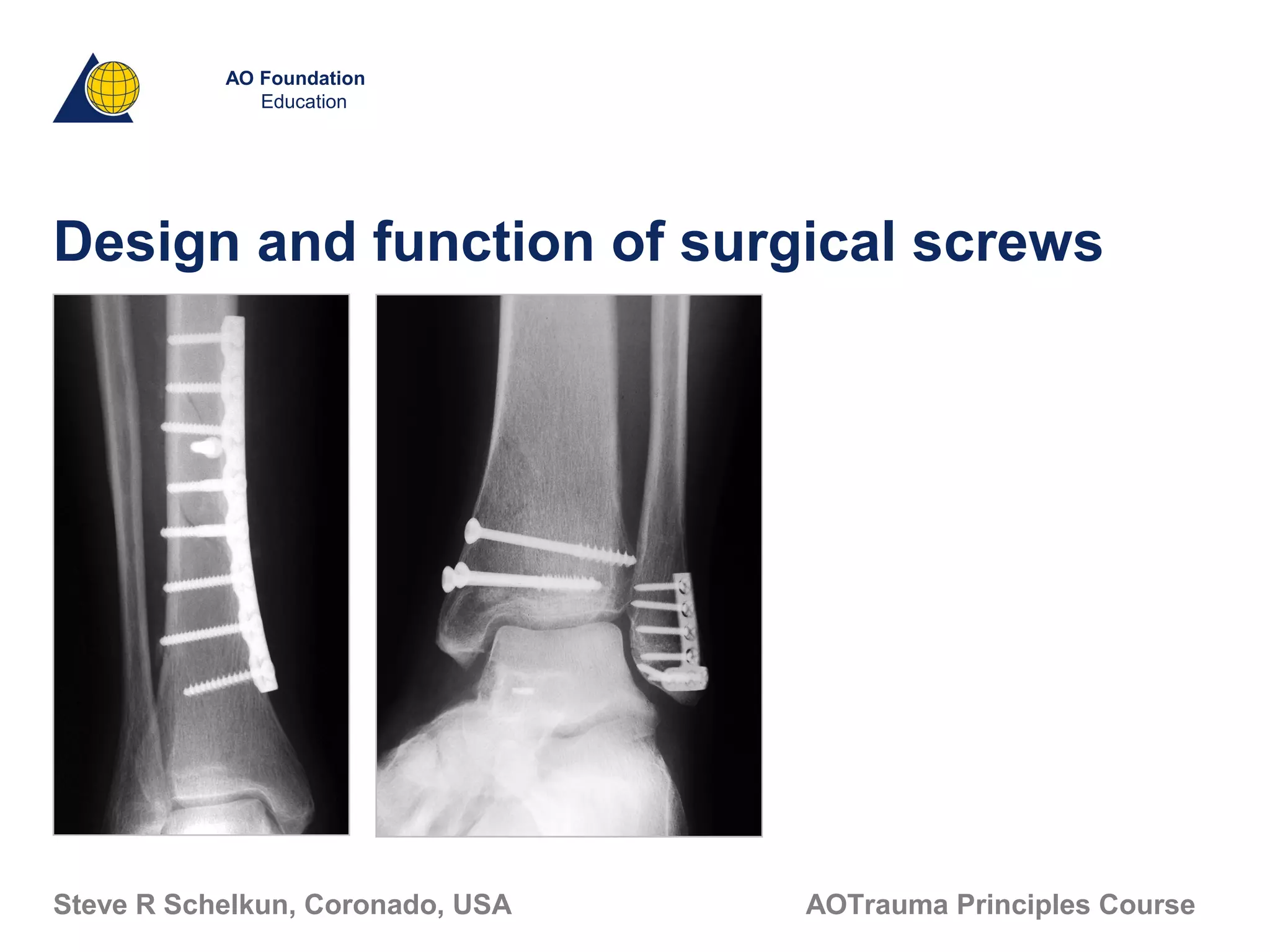
Design and function of surgical screws
AOTrauma Principles CourseSteve R Schelkun, Coronado, USA
2
Learning outcomes
• Identify what is a screw
• Define the design characteristics of a screw
• List what kind of screws are available
• Explain how a screw works
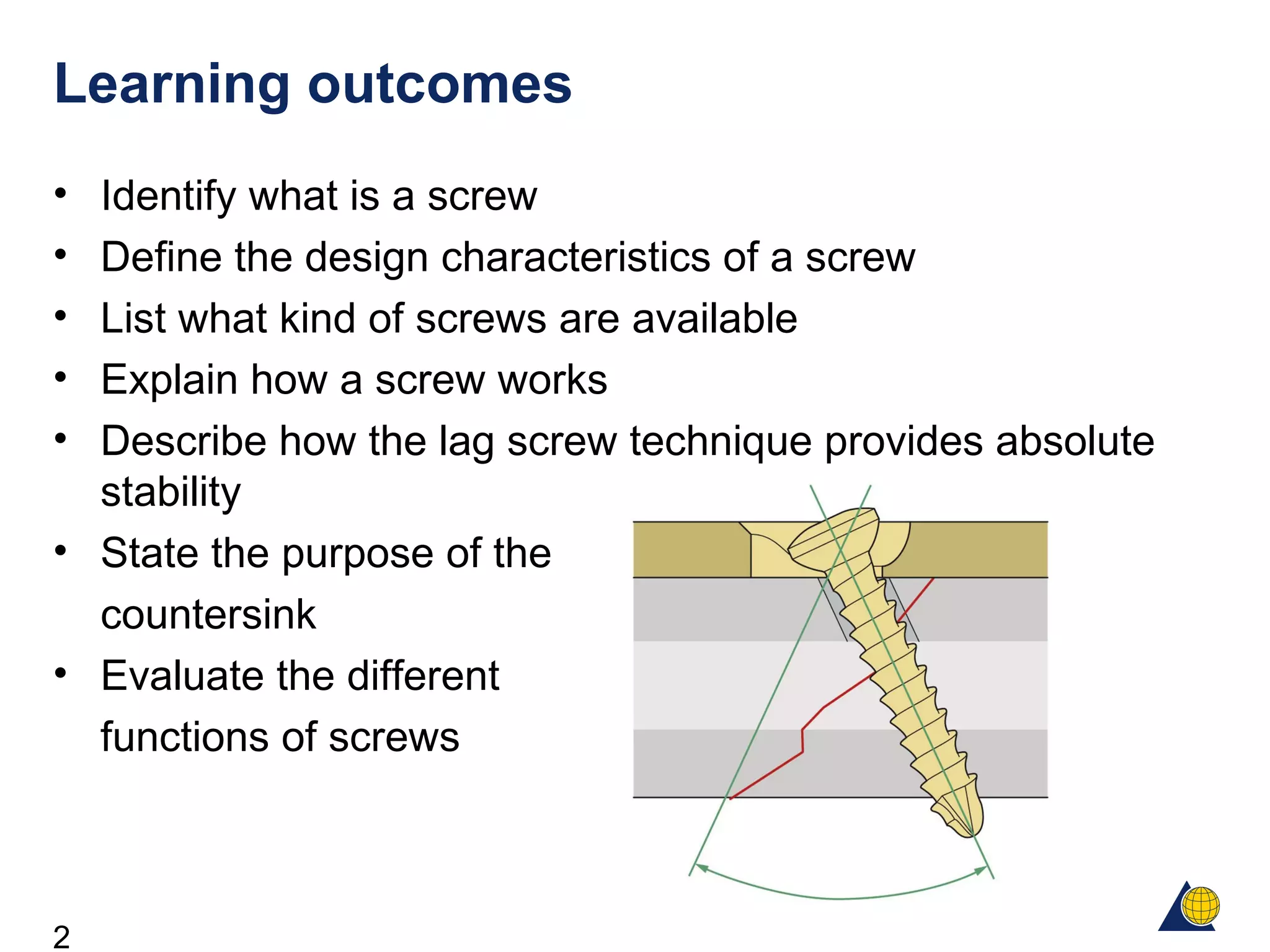
• Describe how the lag screw technique provides absolute
stability
• State the purpose of the
countersink
• Evaluate the different
functions of screws
3
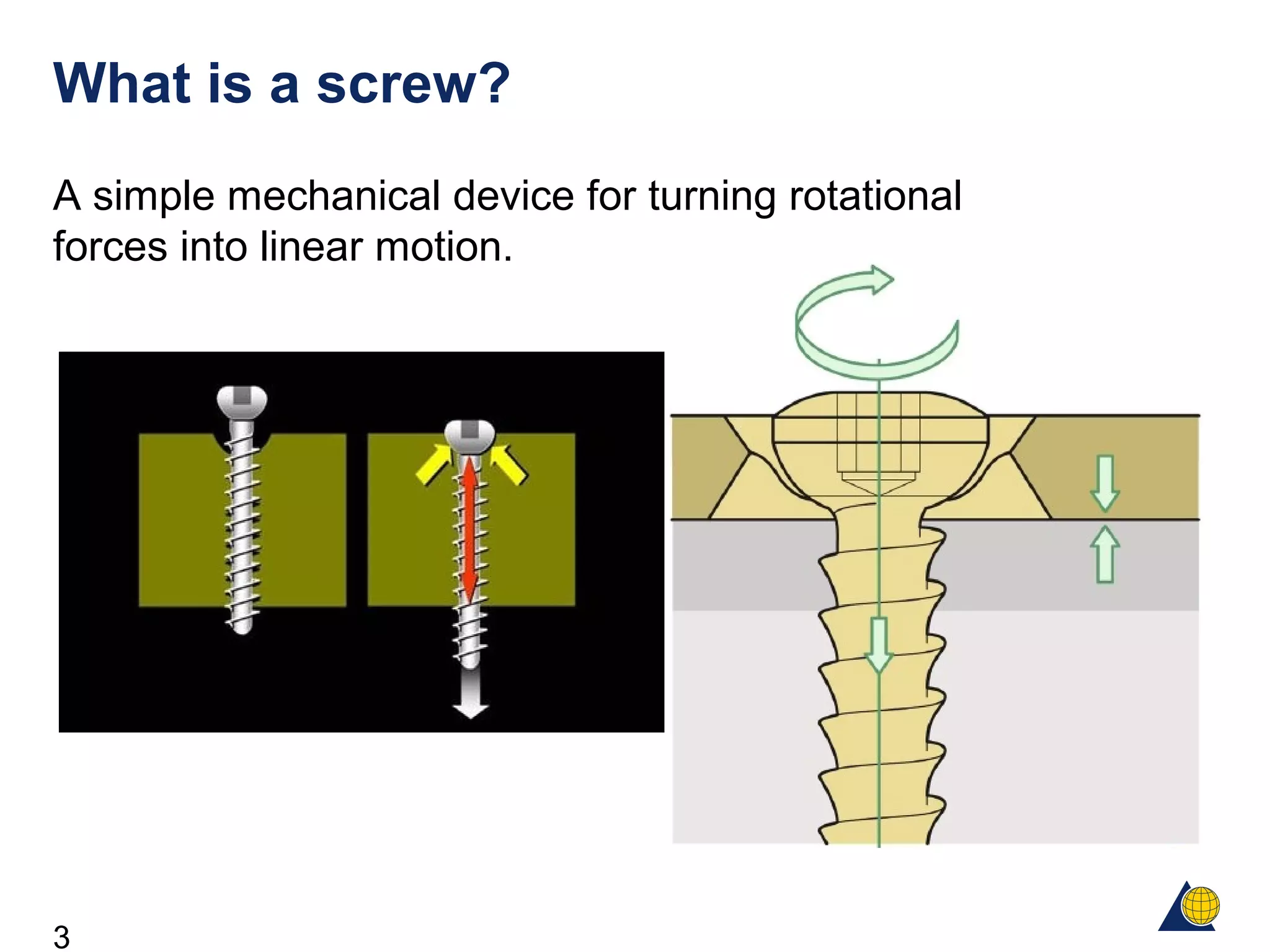
What is a screw?
A simple mechanical device for turning rotational
forces into linear motion.
4
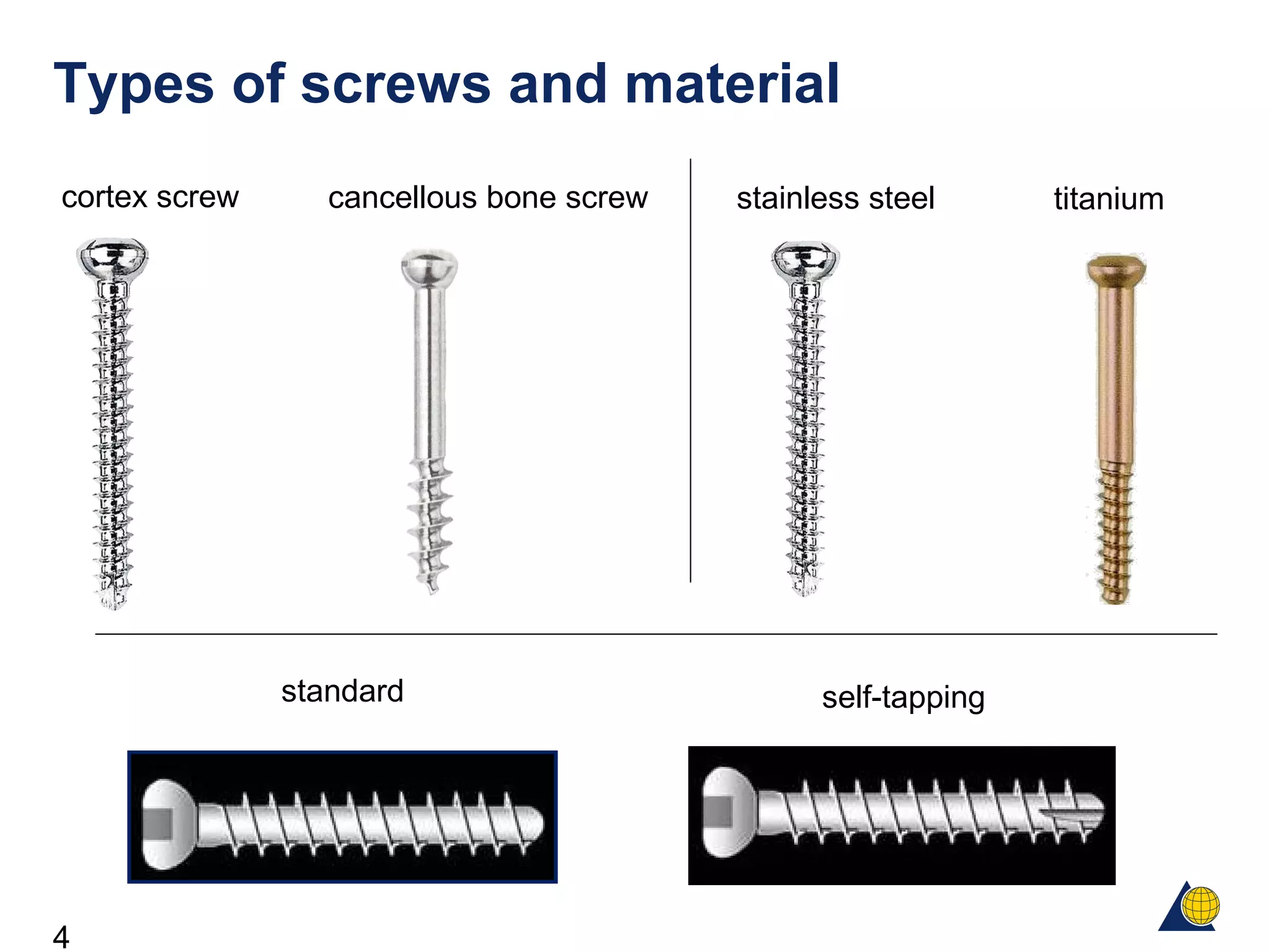
Types of screws and material
cortex screw cancellous bone screw stainless steel titanium
standard self-tapping
5
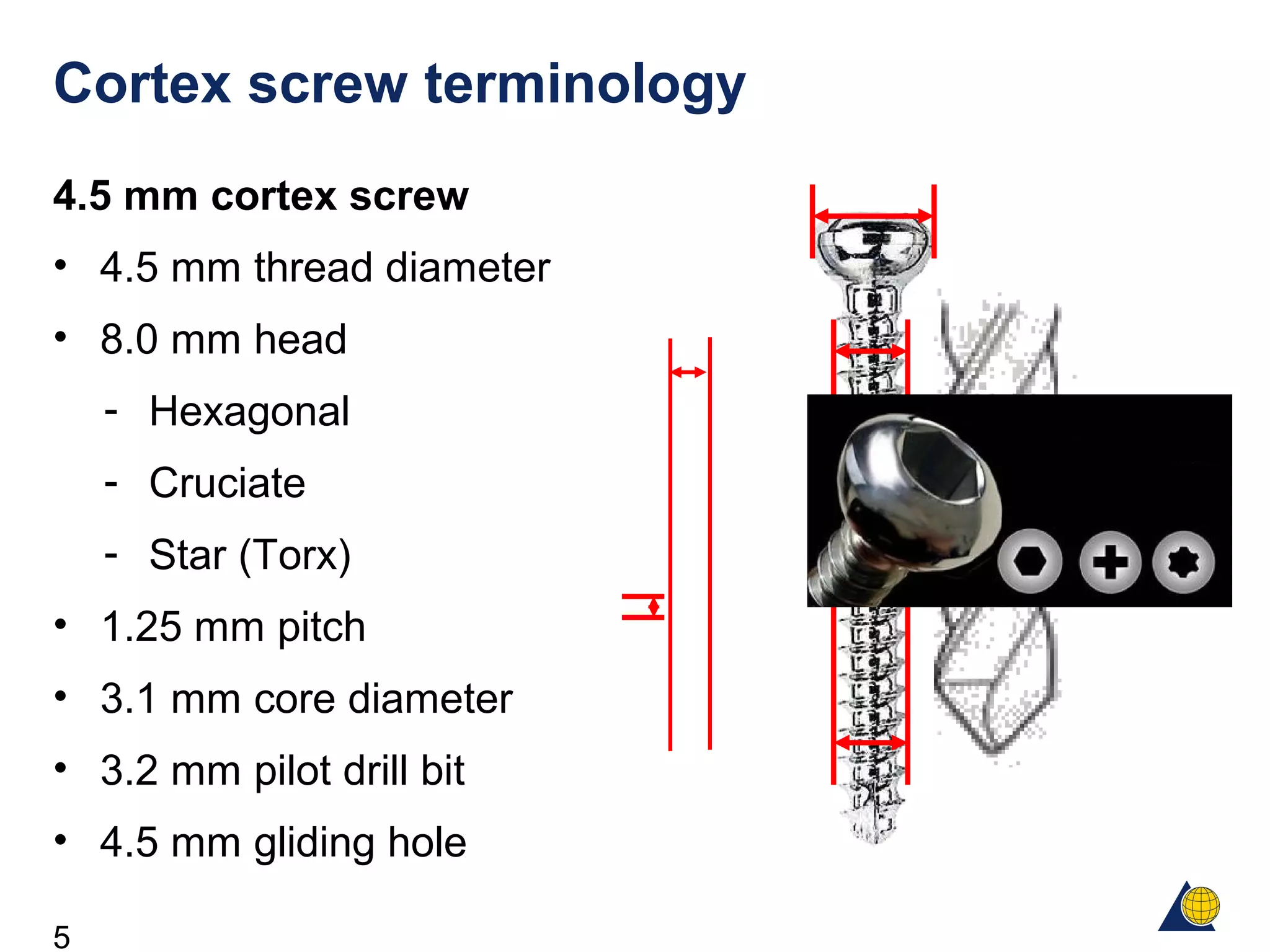
Cortex screw terminology
4.5 mm cortex screw
• 4.5 mm thread diameter
• 8.0 mm head
- Hexagonal
- Cruciate
- Star (Torx)
• 1.25 mm pitch
• 3.1 mm core diameter
• 3.2 mm pilot drill bit
• 4.5 mm gliding hole
6
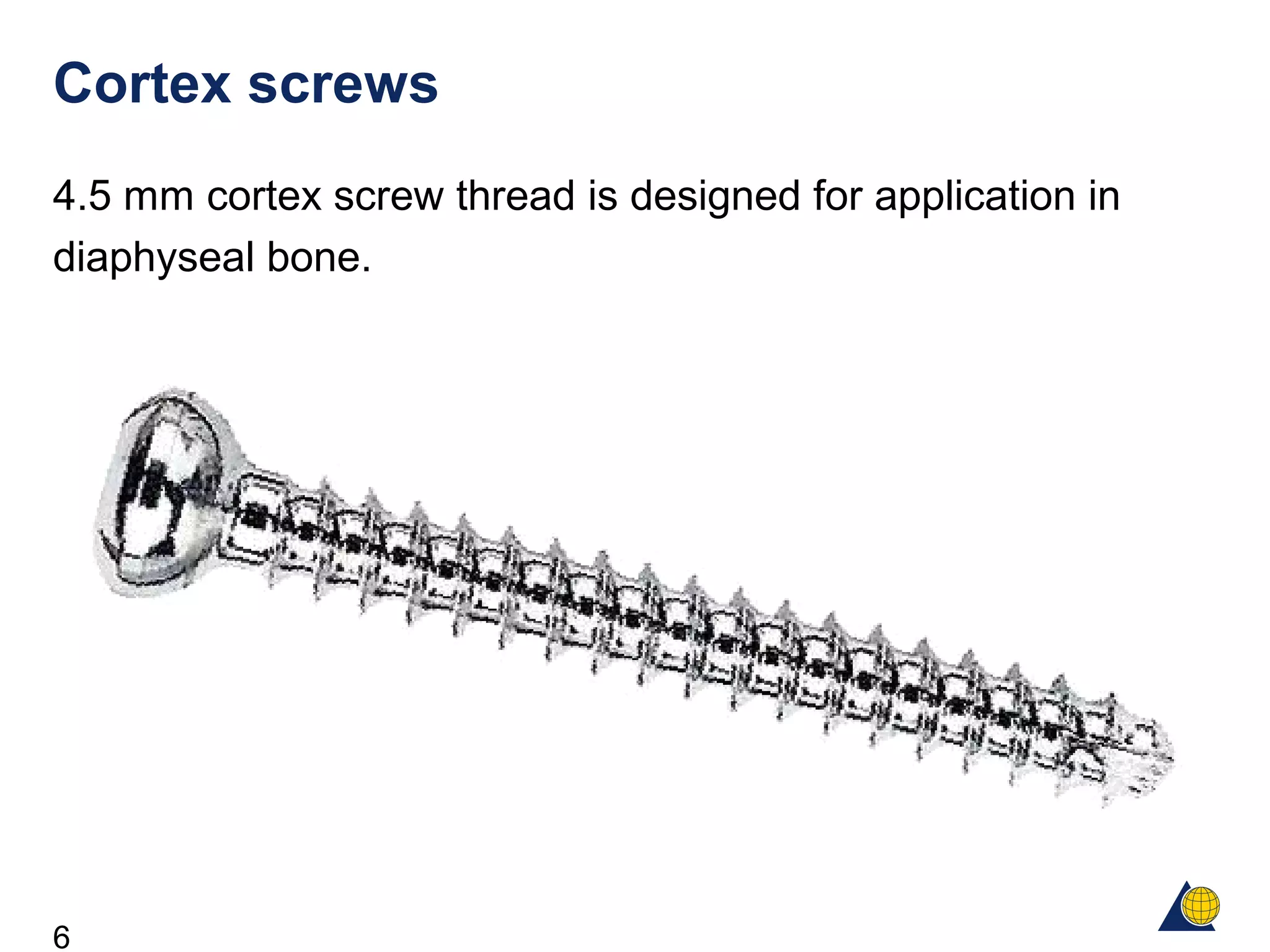
Cortex screws
4.5 mm cortex screw thread is designed for application in
diaphyseal bone.
7
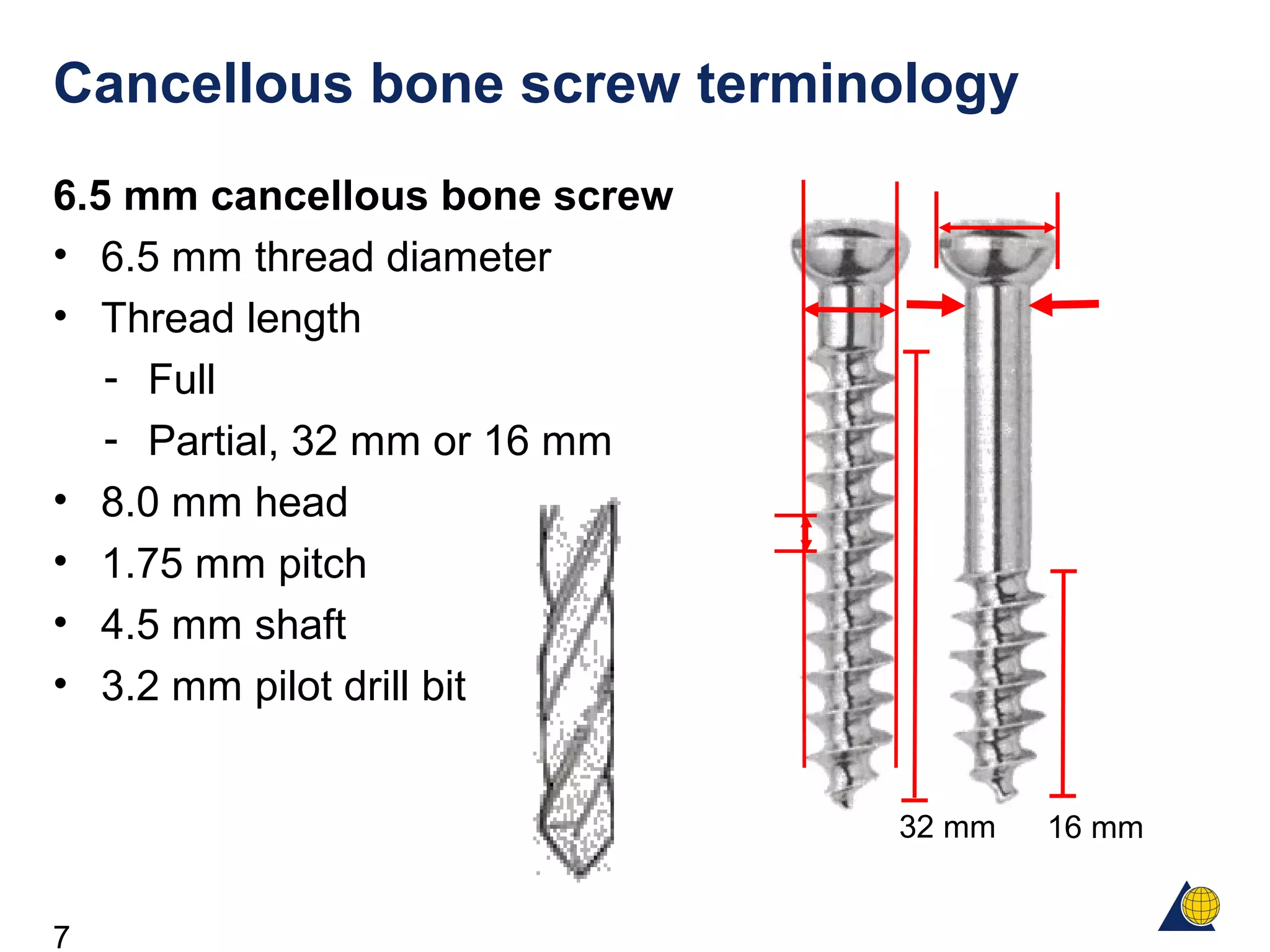
Cancellous bone screw terminology
6.5 mm cancellous bone screw
• 6.5 mm thread diameter
• Thread length
- Full
- Partial, 32 mm or 16 mm
• 8.0 mm head
• 1.75 mm pitch
• 4.5 mm shaft
• 3.2 mm pilot drill bit
32 mm 16 mm
8
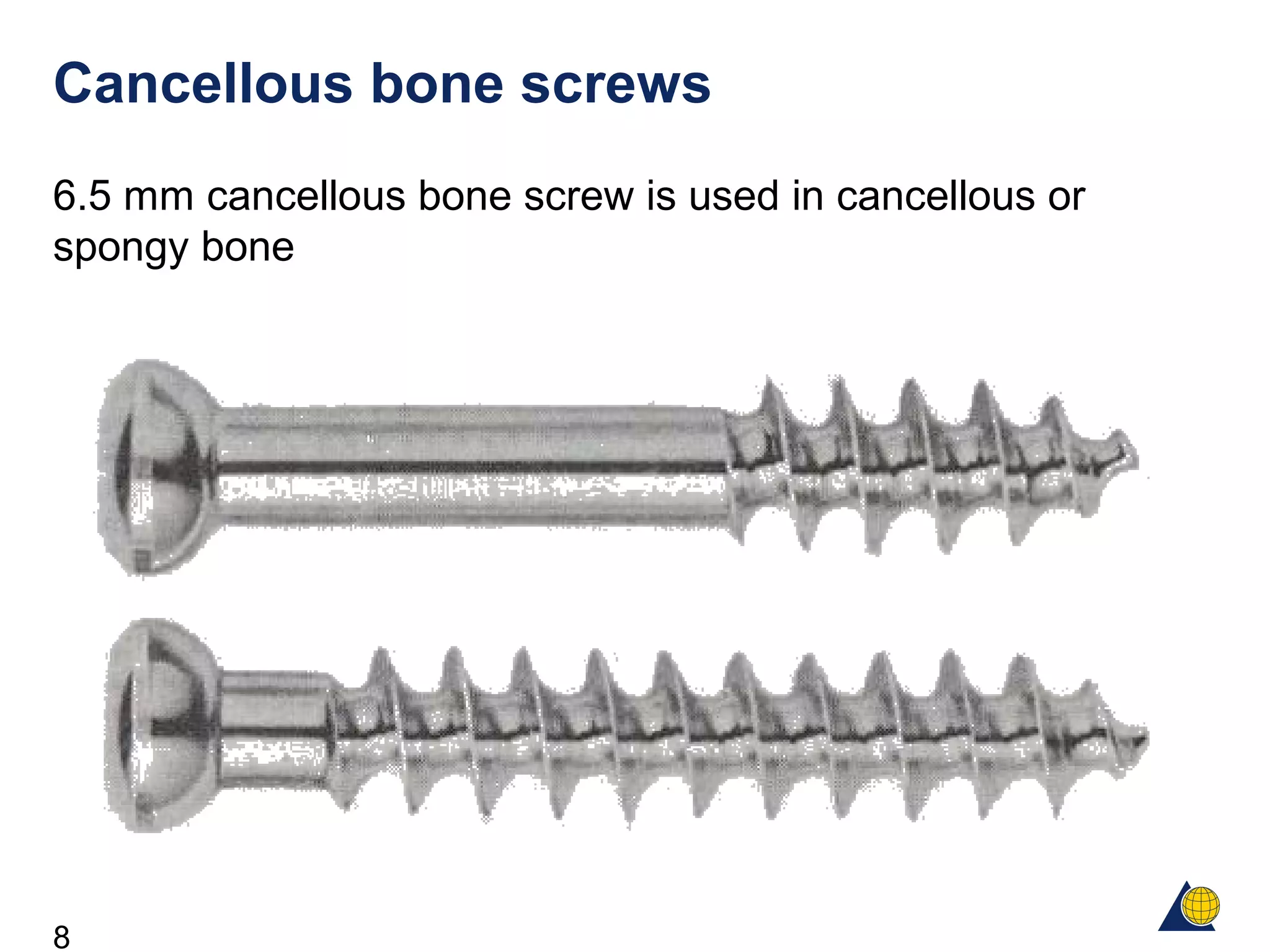
Cancellous bone screws
6.5 mm cancellous bone screw is used in cancellous or
spongy bone
9
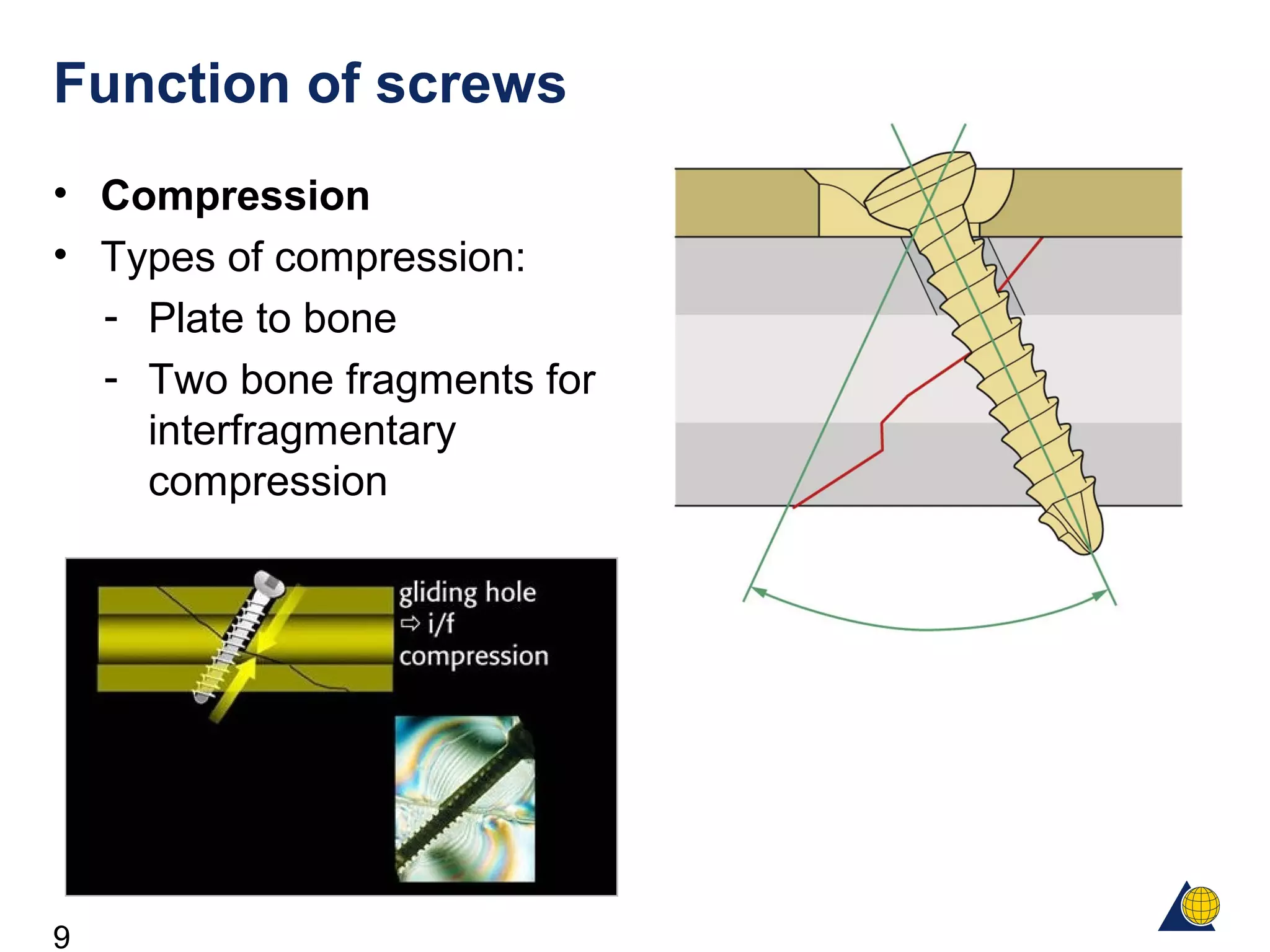
Function of screws
• Compression
• Types of compression:
- Plate to bone
- Two bone fragments for
interfragmentary
compression
10
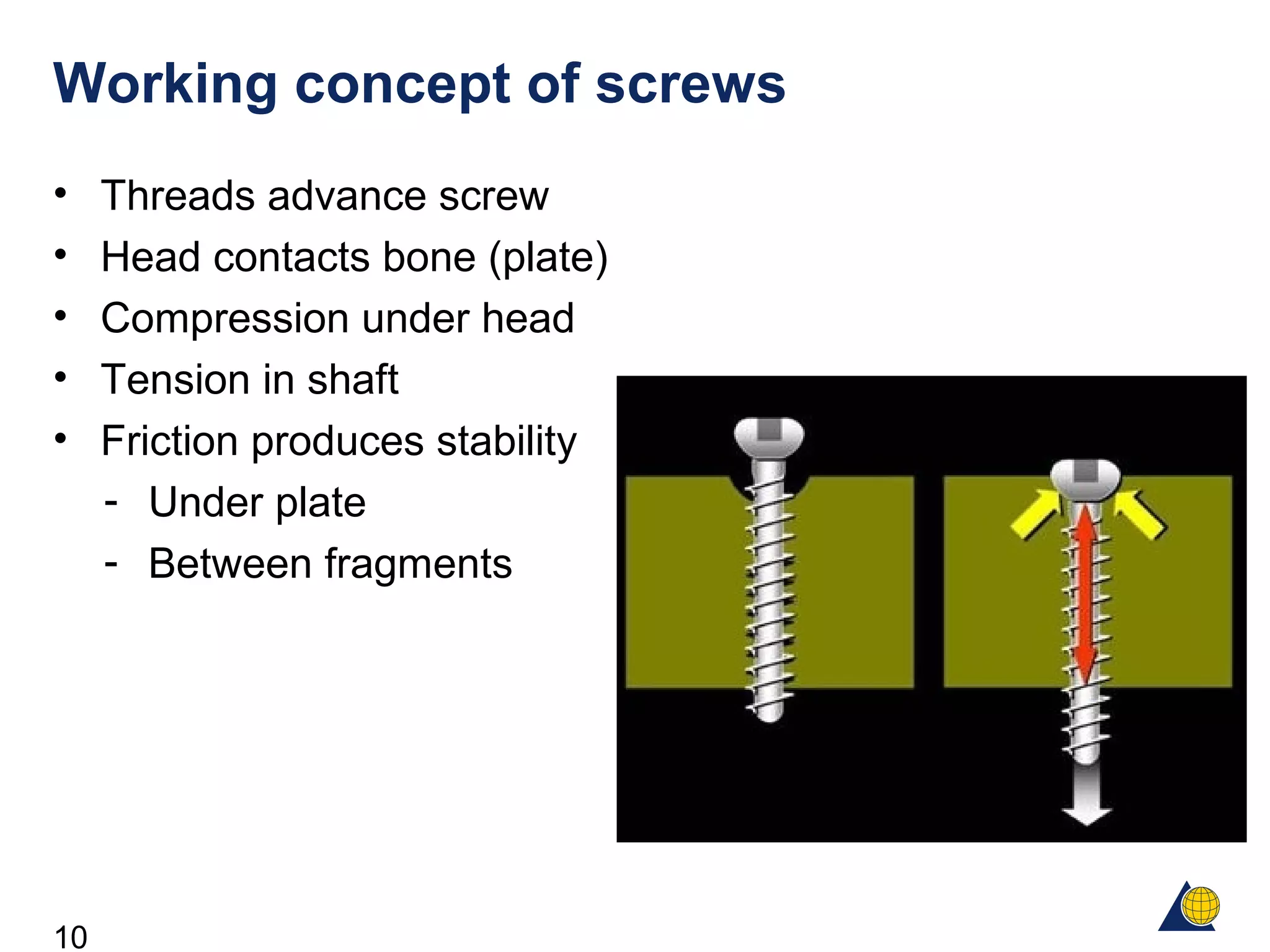
Working concept of screws
• Threads advance screw
• Head contacts bone (plate)
• Compression under head
• Tension in shaft
• Friction produces stability
- Under plate
- Between fragments
11
Principle of the lag screw technique
• It is a technique of insertion not a type of
screw
• Any screw can function as a lag screw
• Provides interfragmentary compression
• Produces 2500-3000 Newtons of force
• Results in absolute stability
12
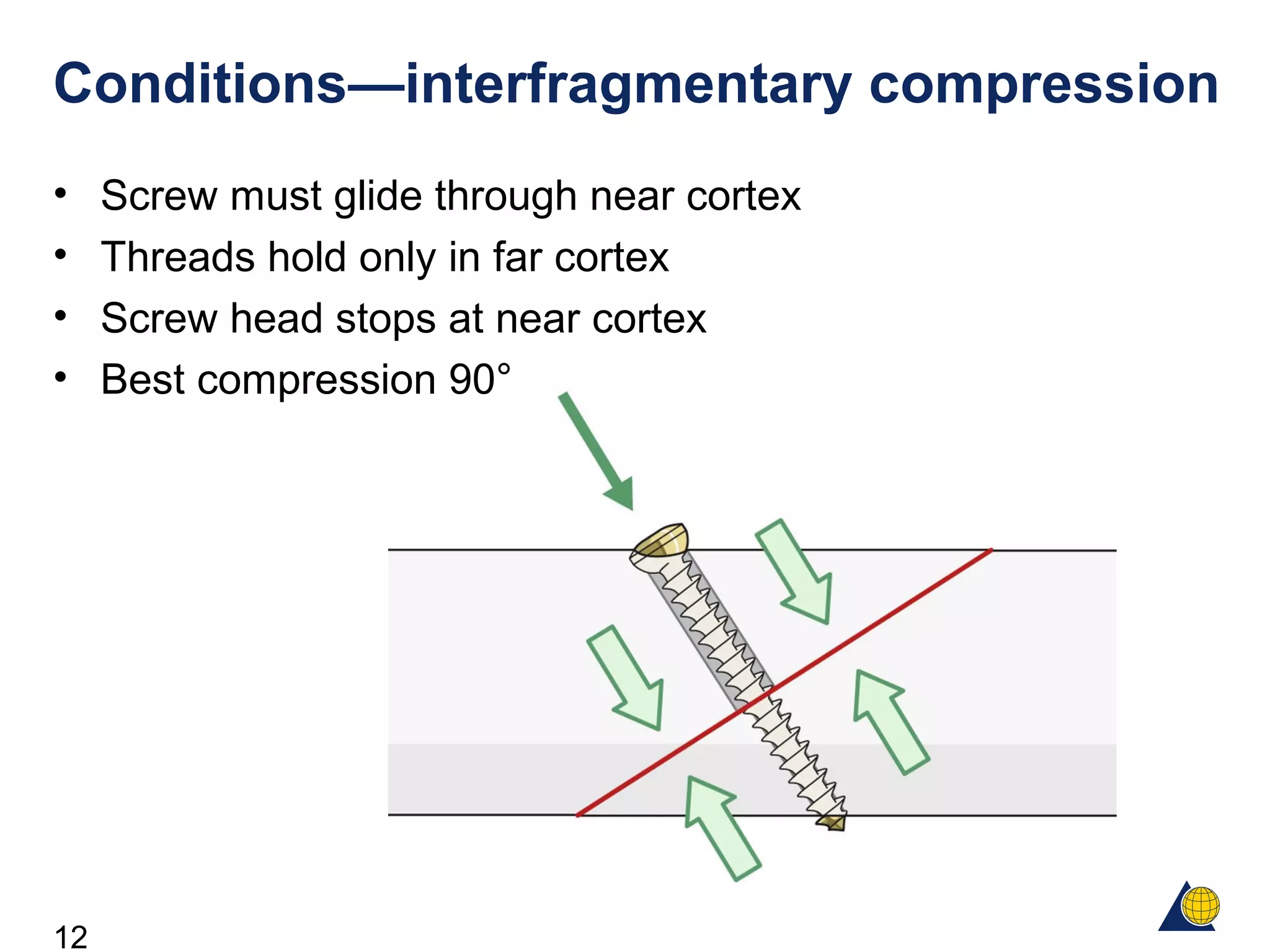
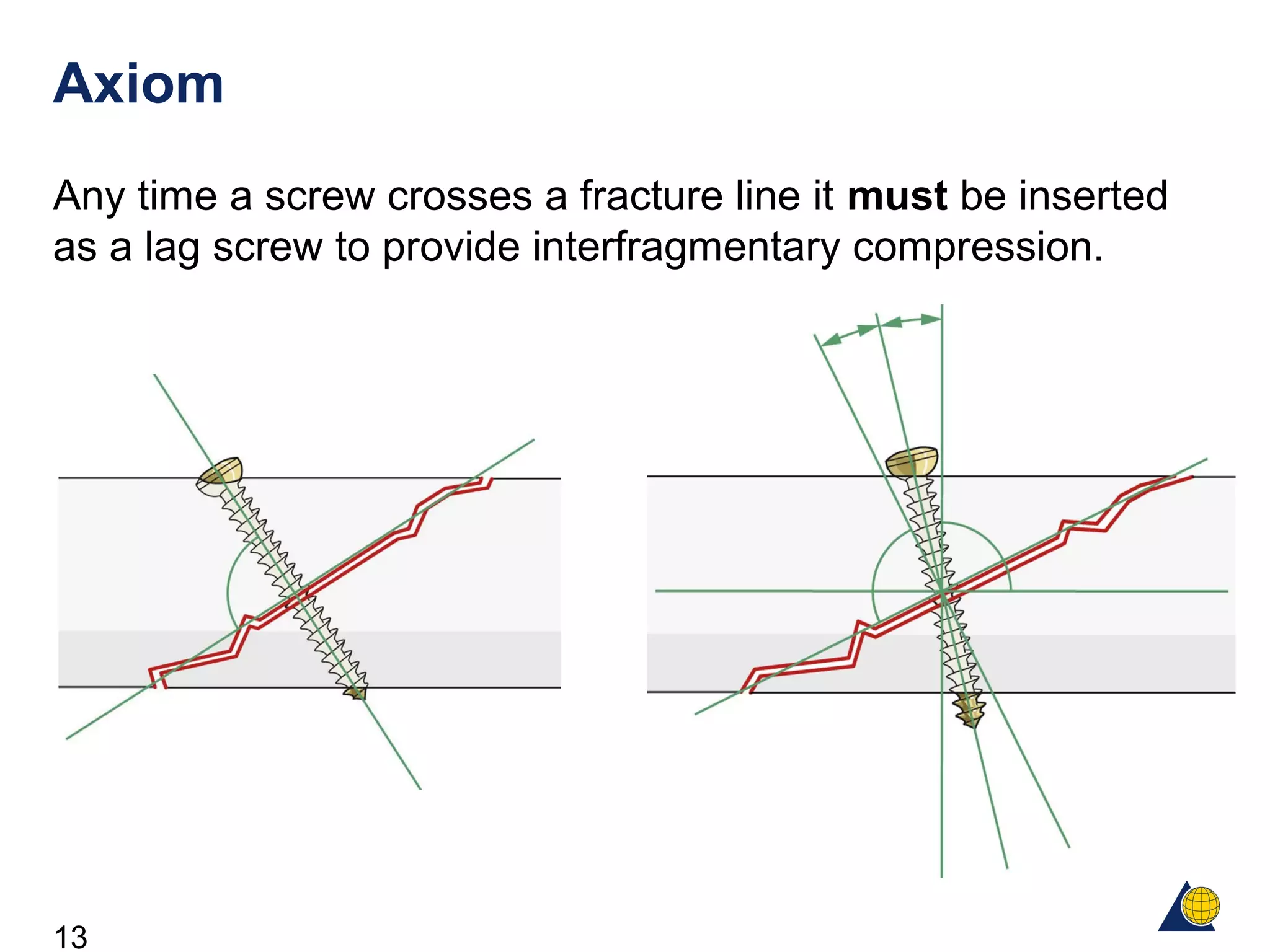
Conditions—interfragmentary compression
• Screw must glide through near cortex
• Threads hold only in far cortex
• Screw head stops at near cortex
• Best compression 90°
13
Axiom
Any time a screw crosses a fracture line it must be inserted
as a lag screw to provide interfragmentary compression.
14
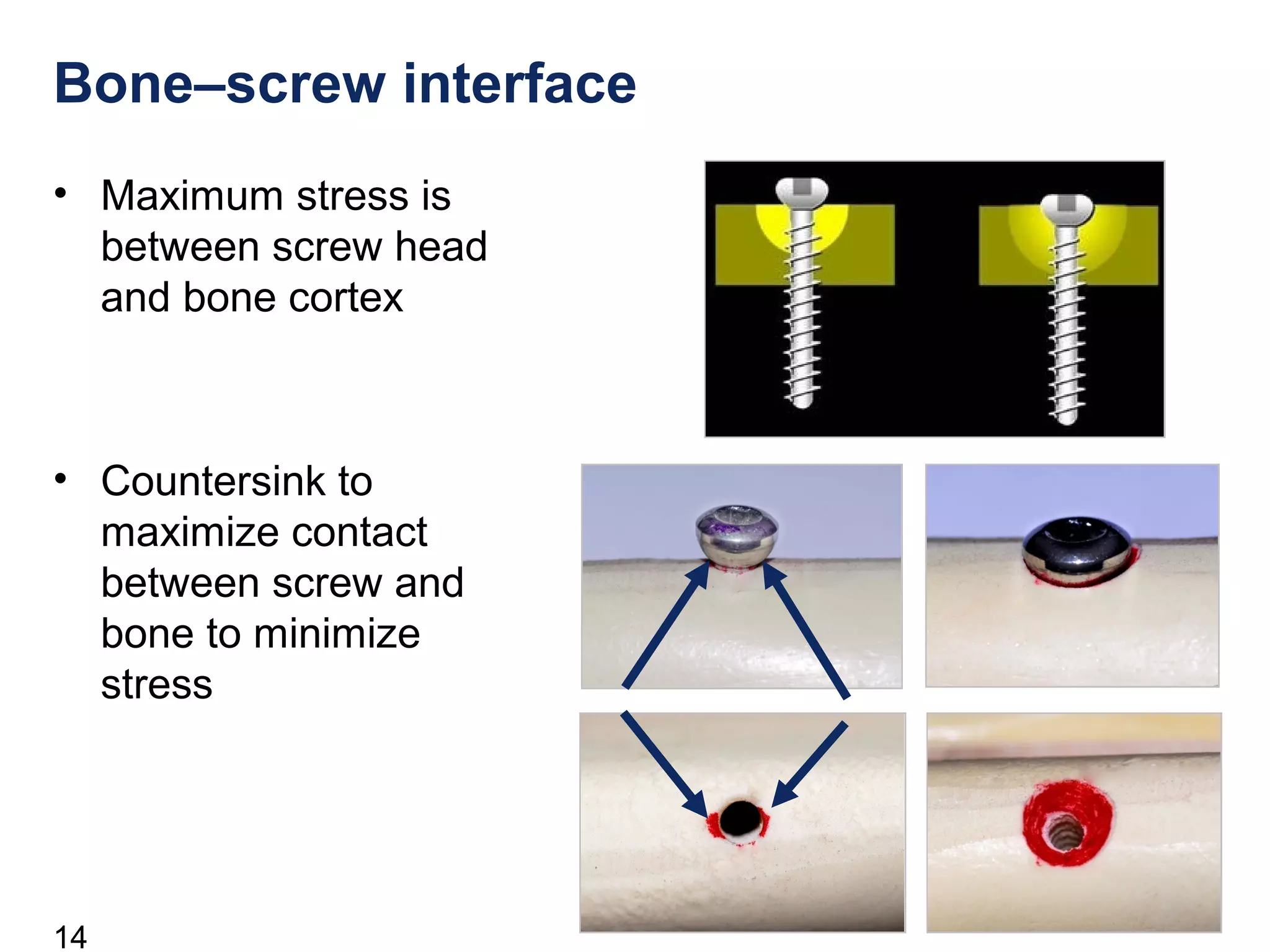
Bone–screw interface
• Maximum stress is
between screw head
and bone cortex
• Countersink to
maximize contact
between screw and
bone to minimize
stress
15
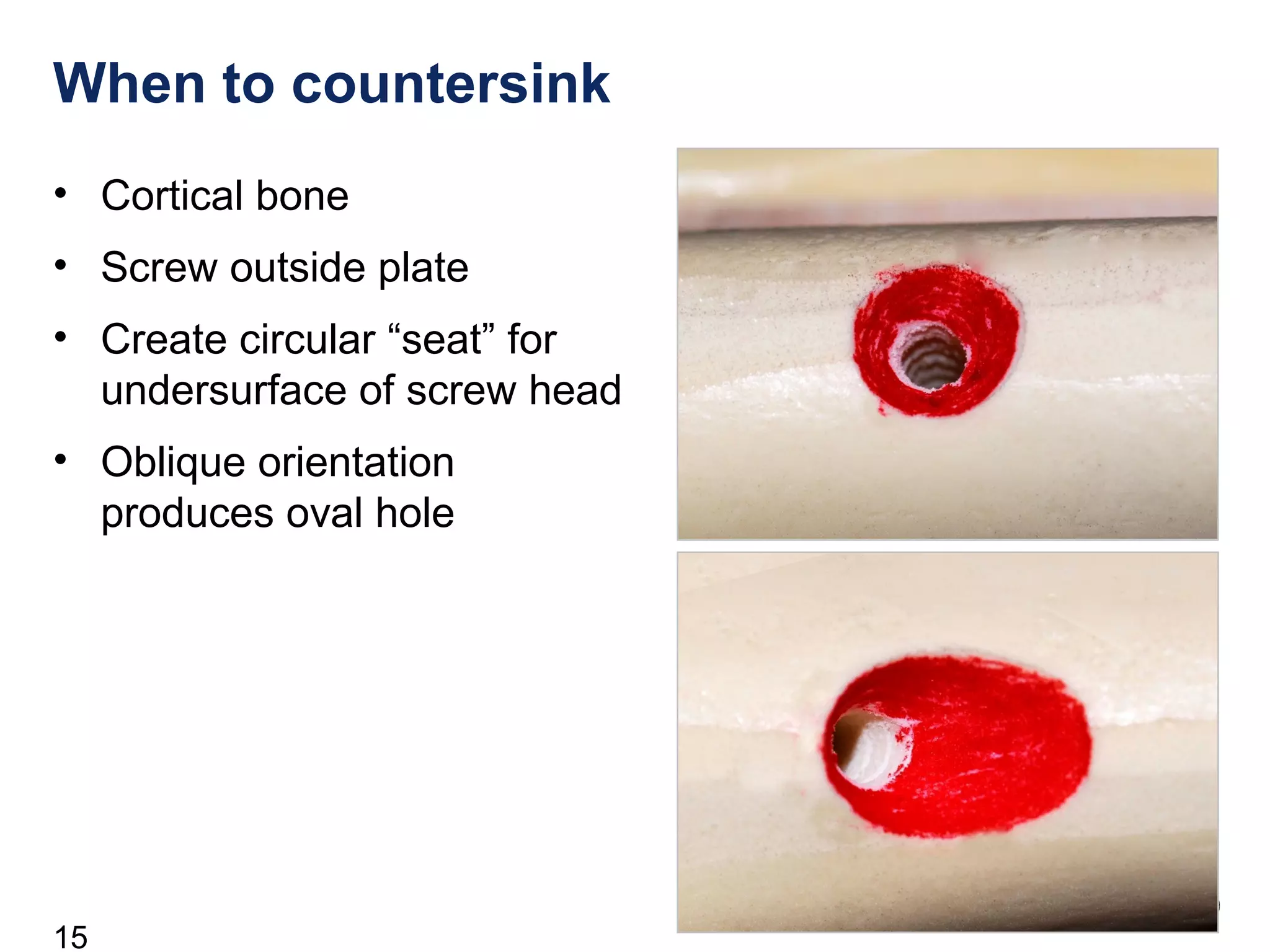
When to countersink
• Cortical bone
• Screw outside plate
• Create circular “seat” for
undersurface of screw head
• Oblique orientation
produces oval hole
16
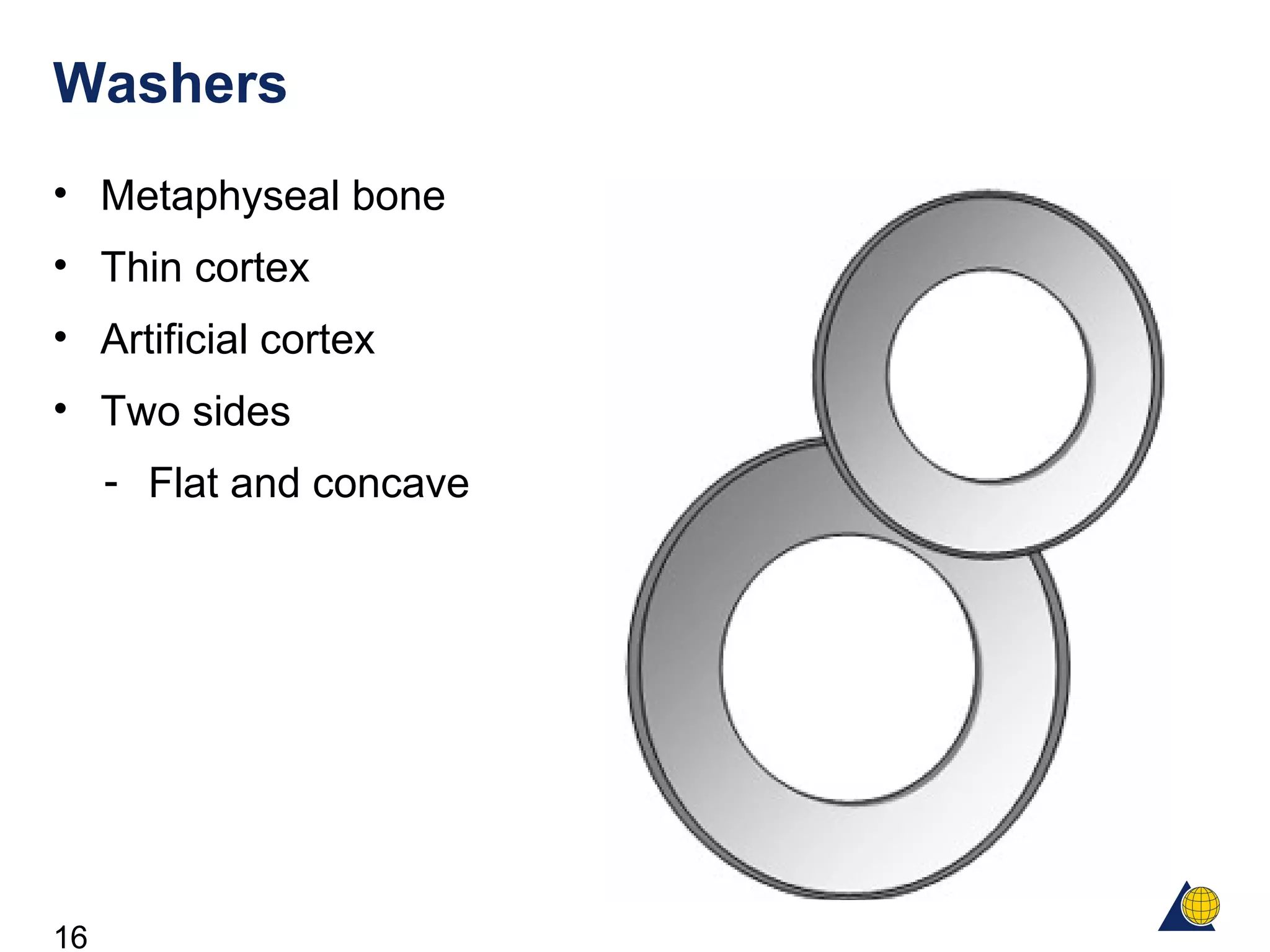
Washers
• Metaphyseal bone
• Thin cortex
• Artificial cortex
• Two sides
- Flat and concave
17
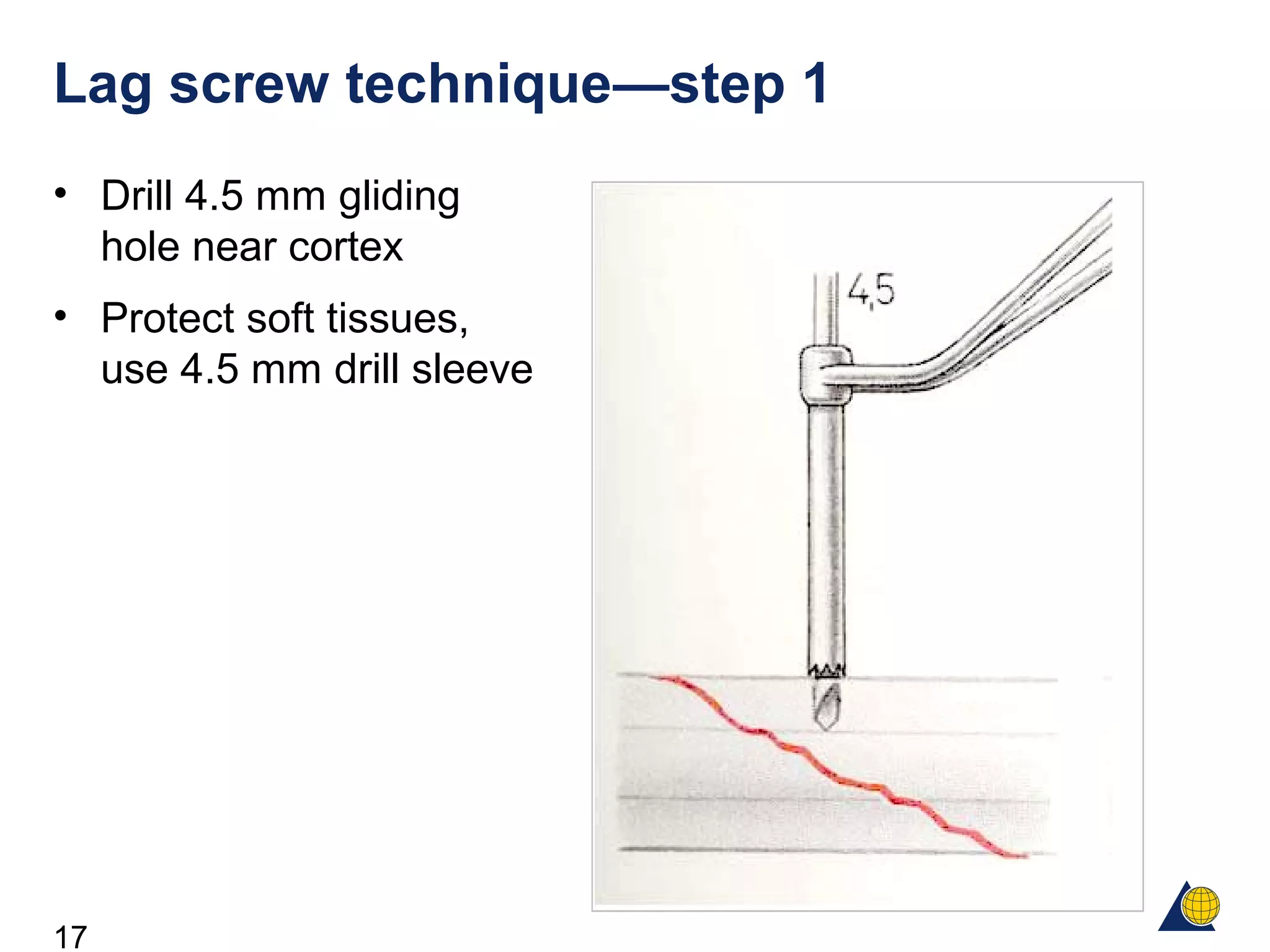
Lag screw technique—step 1
• Drill 4.5 mm gliding
hole near cortex
• Protect soft tissues,
use 4.5 mm drill sleeve
18
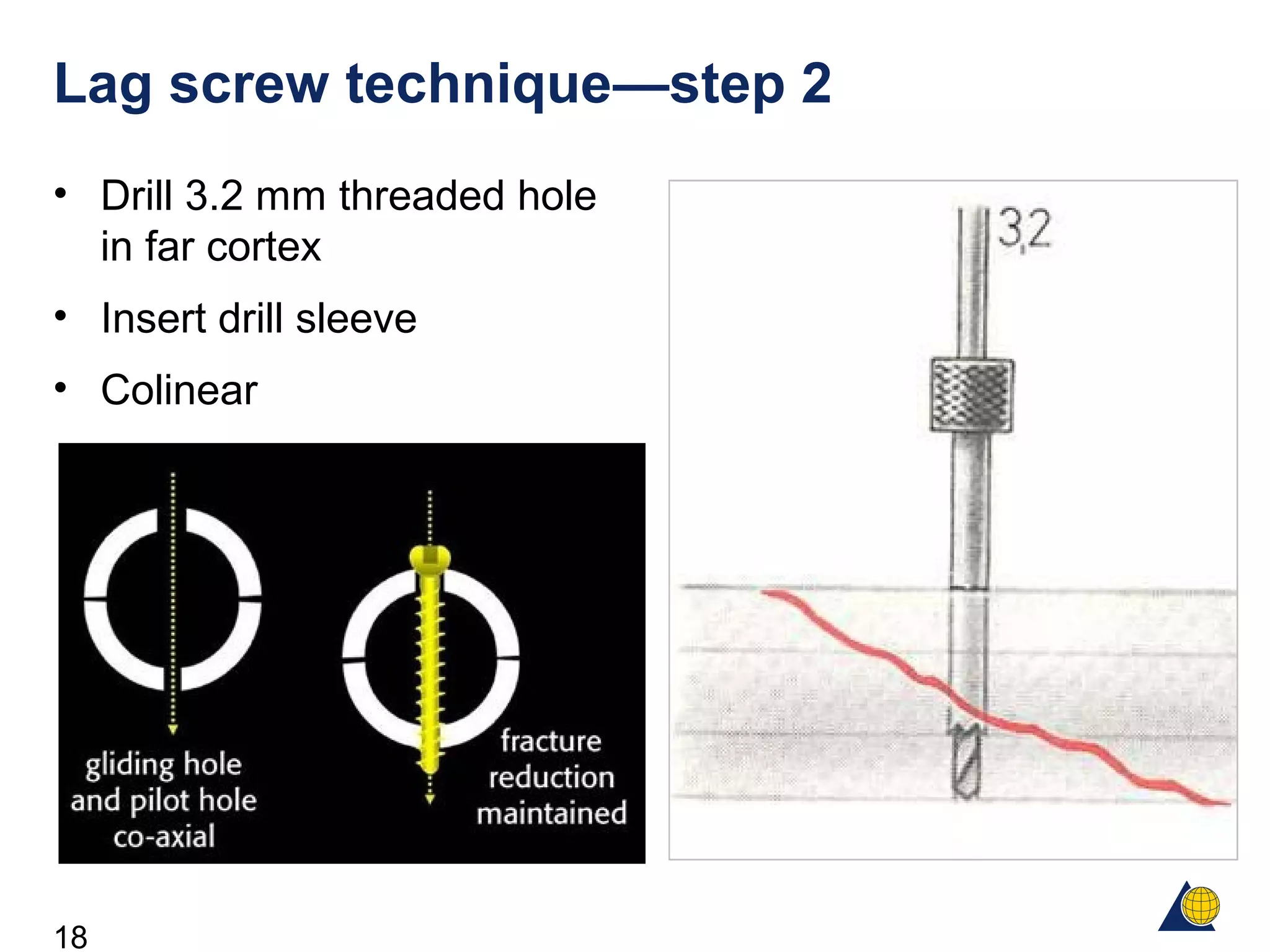
Lag screw technique—step 2
• Drill 3.2 mm threaded hole
in far cortex
• Insert drill sleeve
• Colinear
19
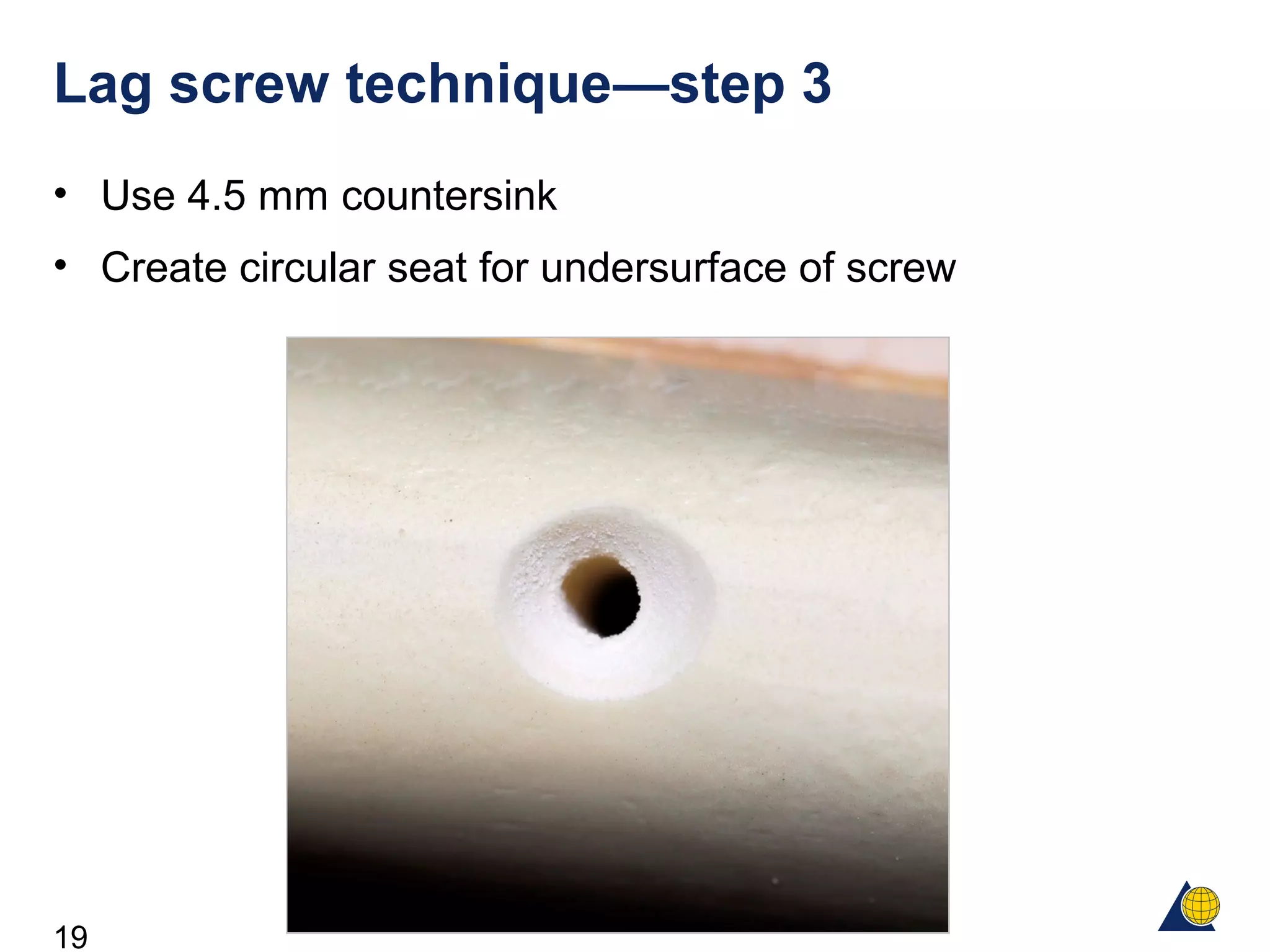
Lag screw technique—step 3
• Use 4.5 mm countersink
• Create circular seat for undersurface of screw
20
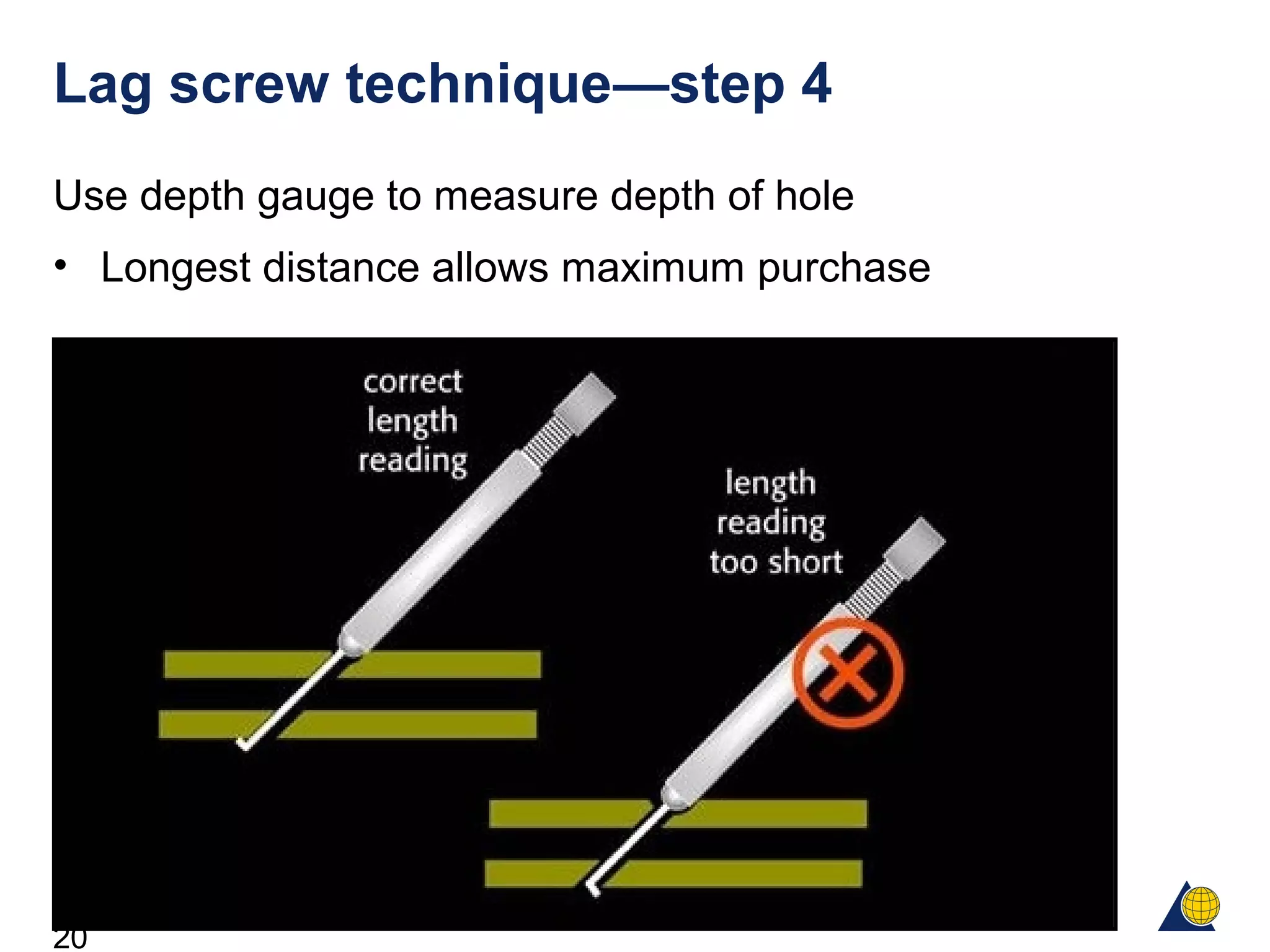
Lag screw technique—step 4
Use depth gauge to measure depth of hole
• Longest distance allows maximum purchase
21
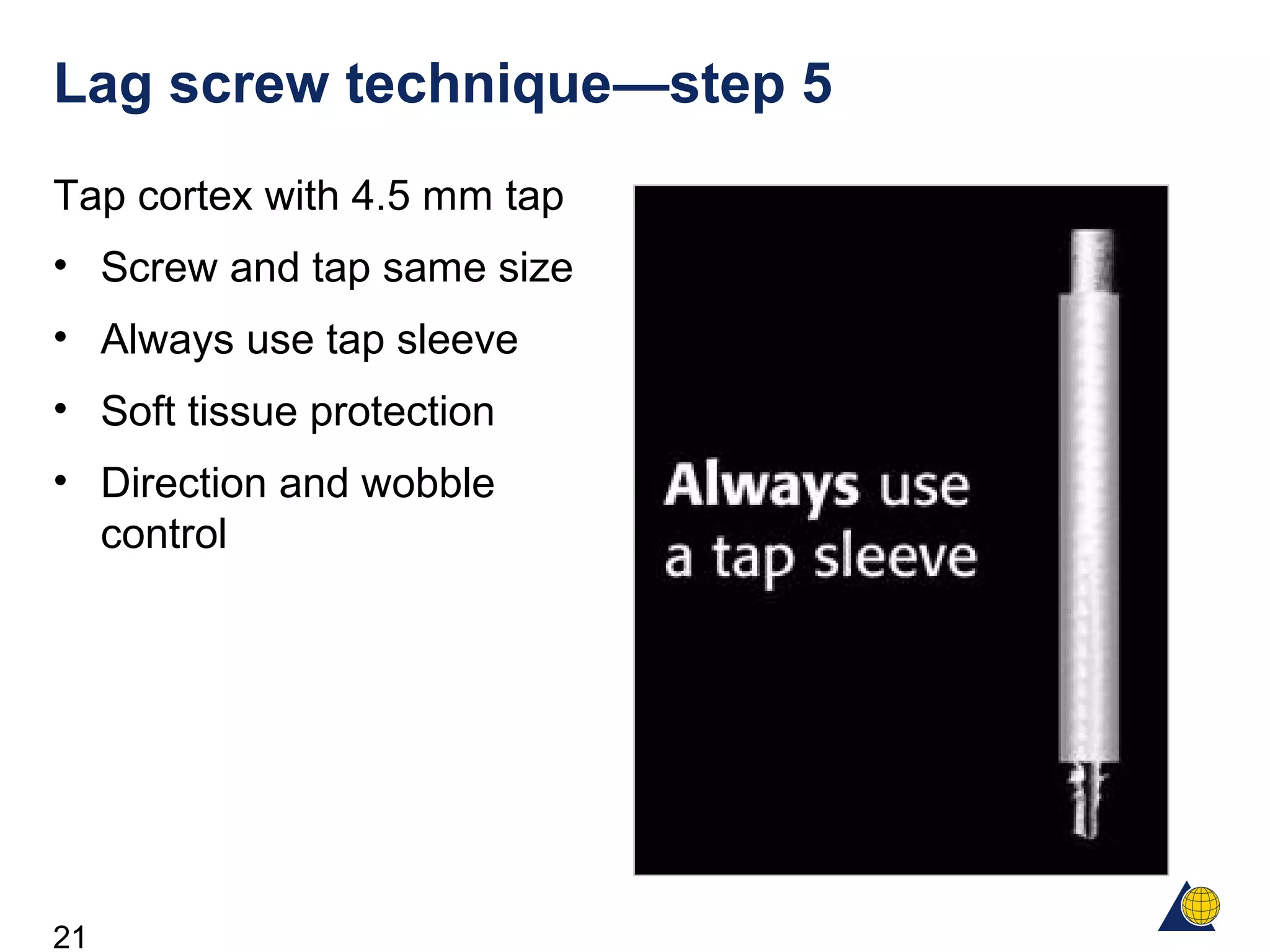
Lag screw technique—step 5
Tap cortex with 4.5 mm tap
• Screw and tap same size
• Always use tap sleeve
• Soft tissue protection
• Direction and wobble
control
22
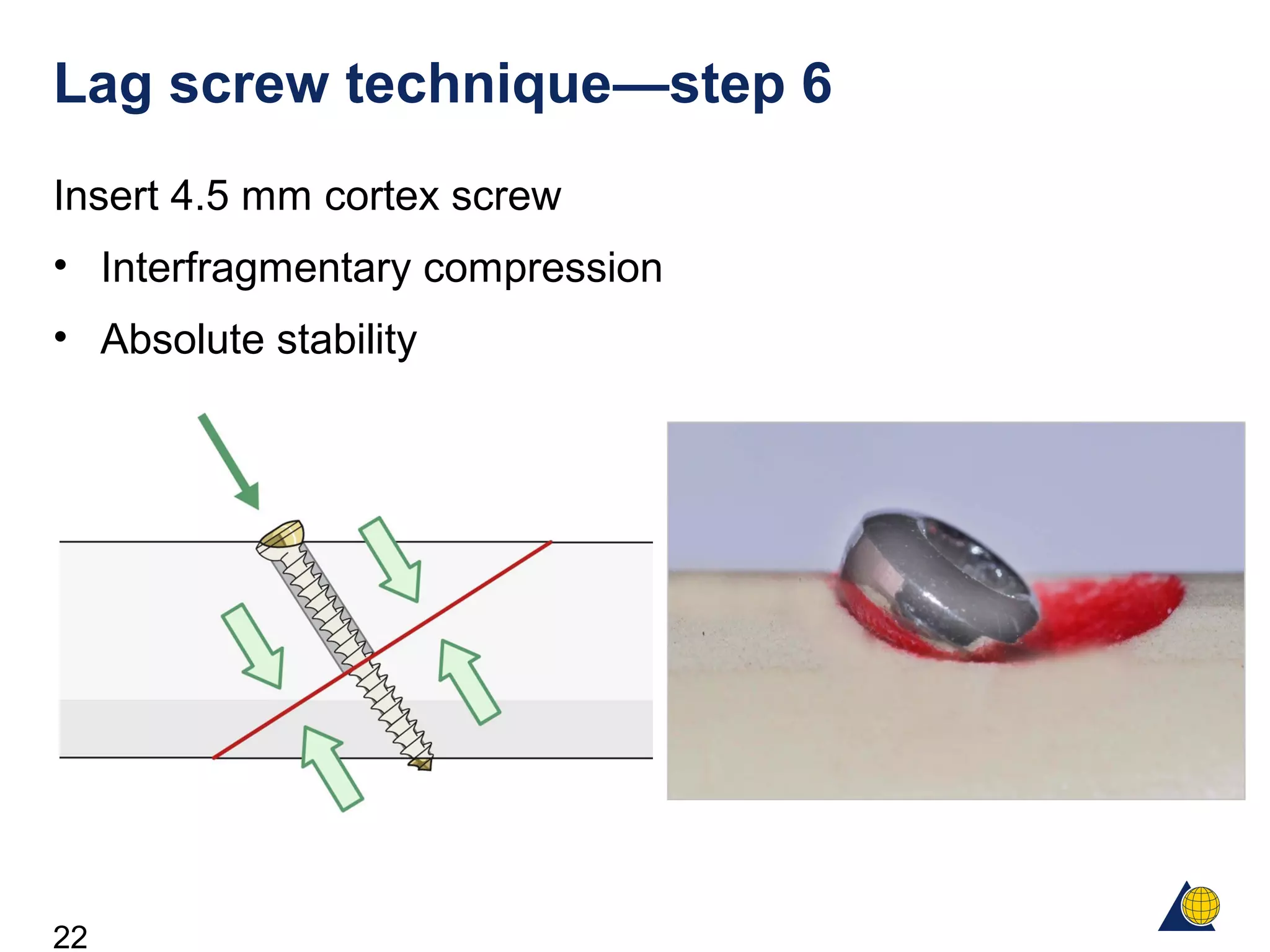
Lag screw technique—step 6
Insert 4.5 mm cortex screw
• Interfragmentary compression
• Absolute stability
23
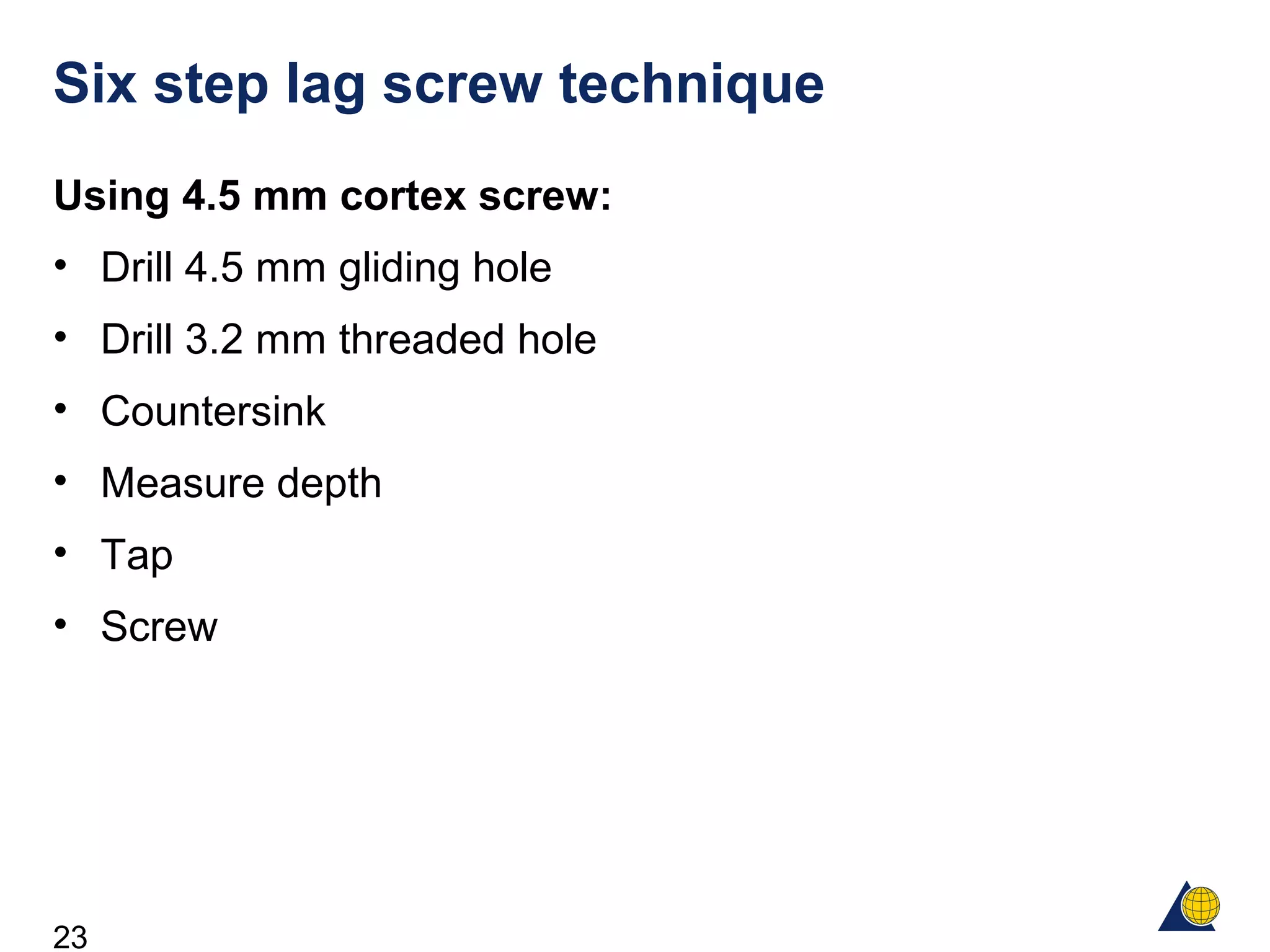
Six step lag screw technique
Using 4.5 mm cortex screw:
• Drill 4.5 mm gliding hole
• Drill 3.2 mm threaded hole
• Countersink
• Measure depth
• Tap
• Screw
24
Names of the different screw functions
• Lag/interfragmentary compression screw
• Compression screw
• Position screw
• Locking head screw
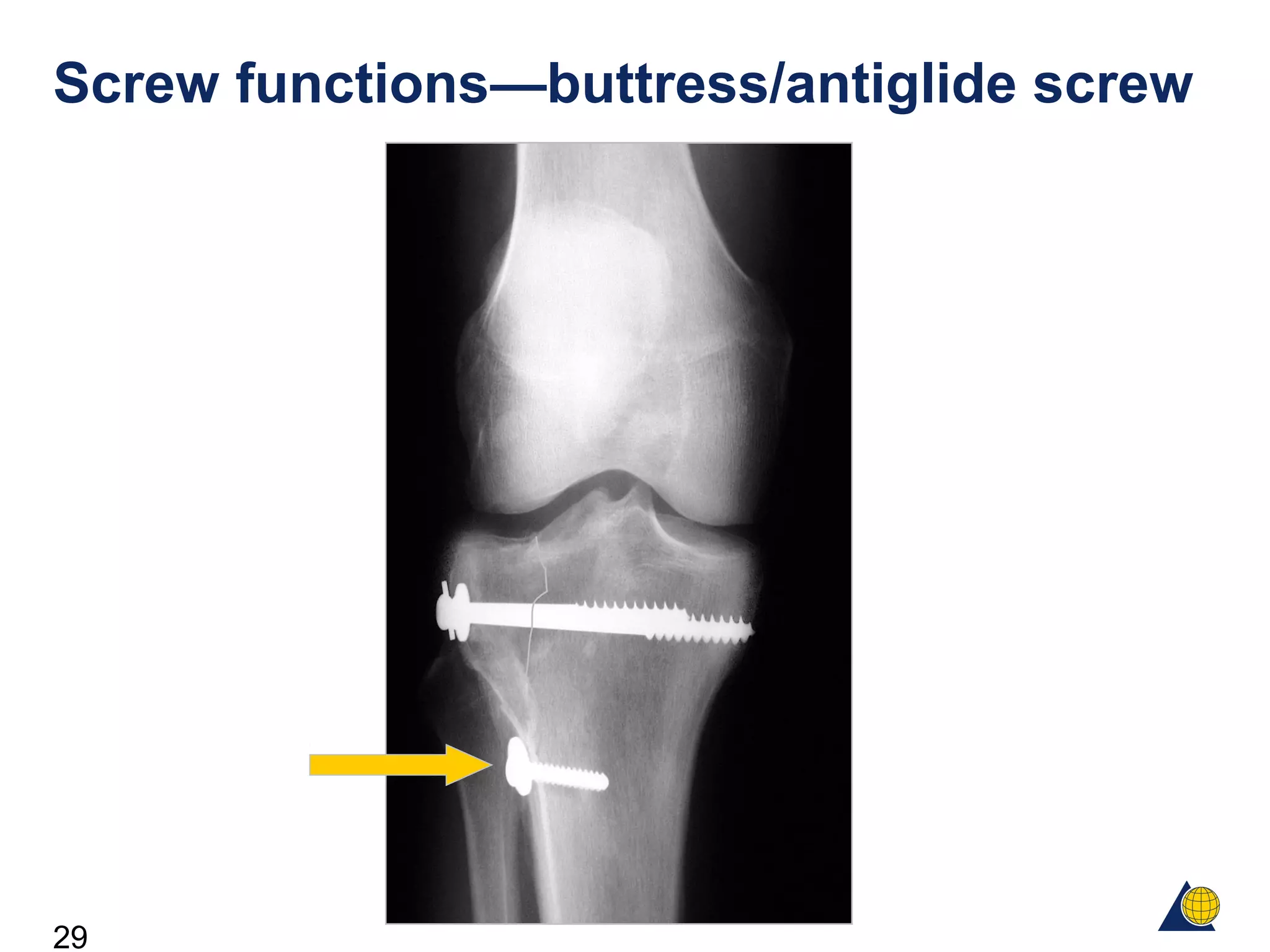
• Buttress/antiglide screw
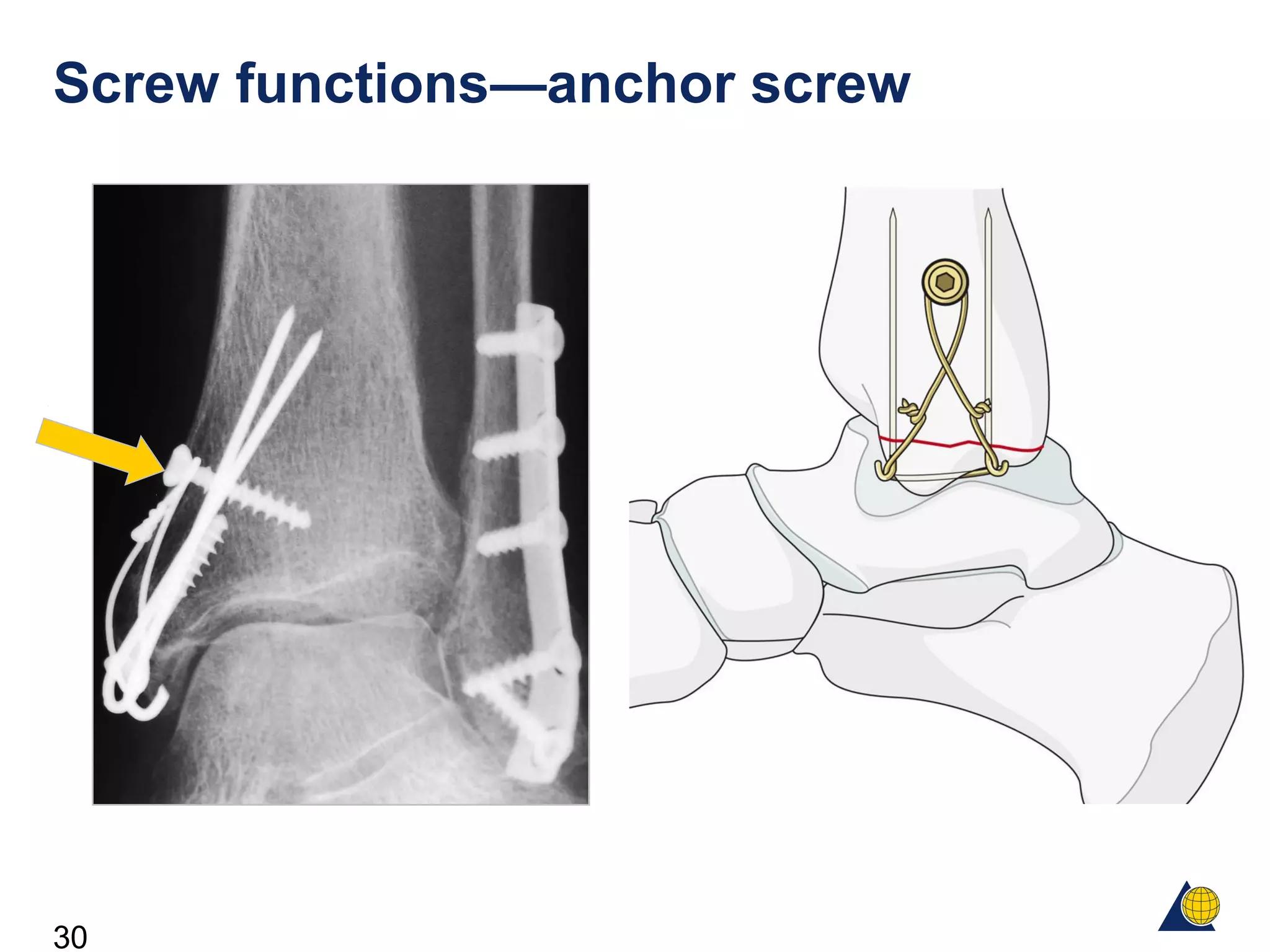
• Anchor screw
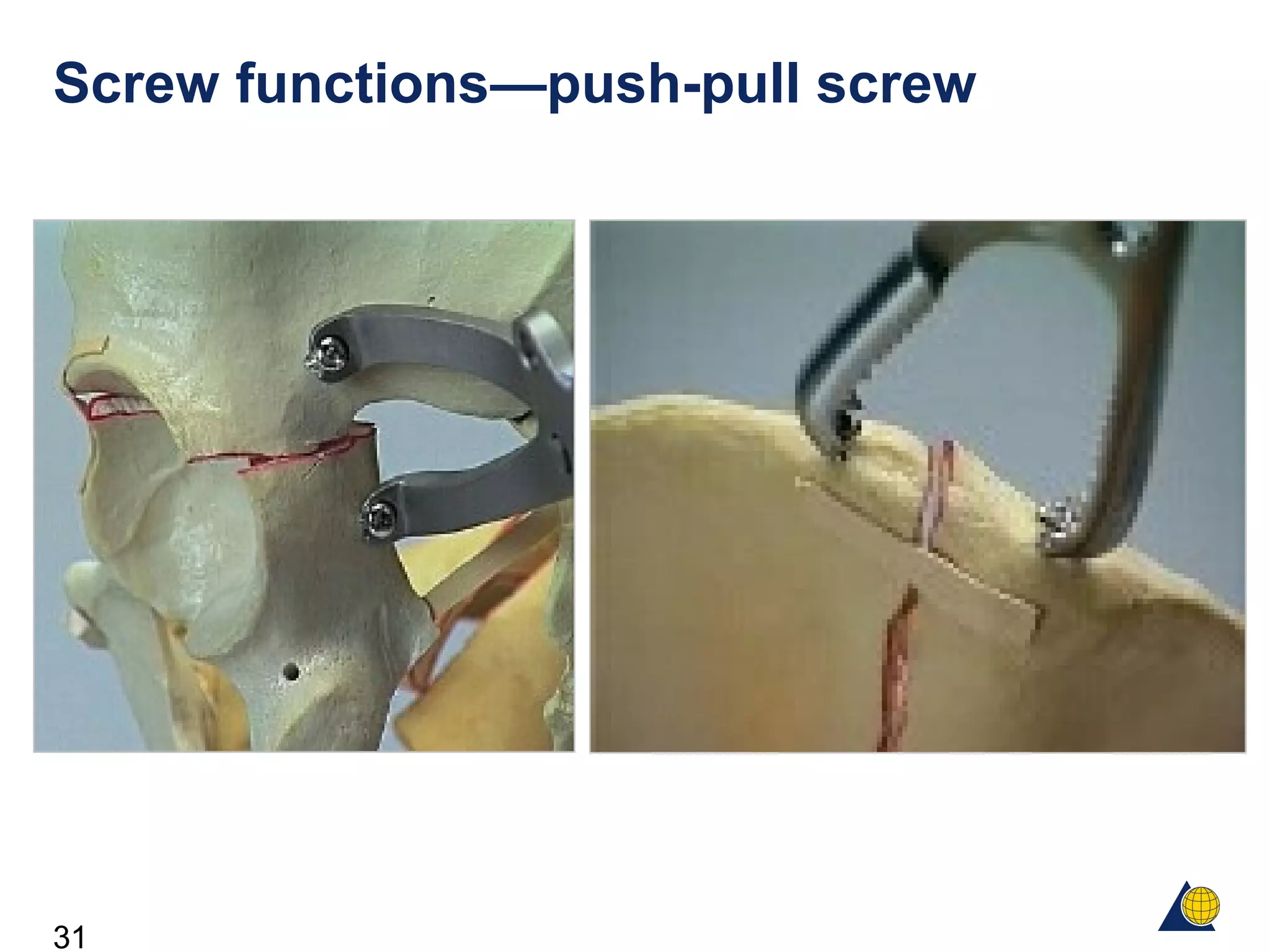
• Push-pull screw
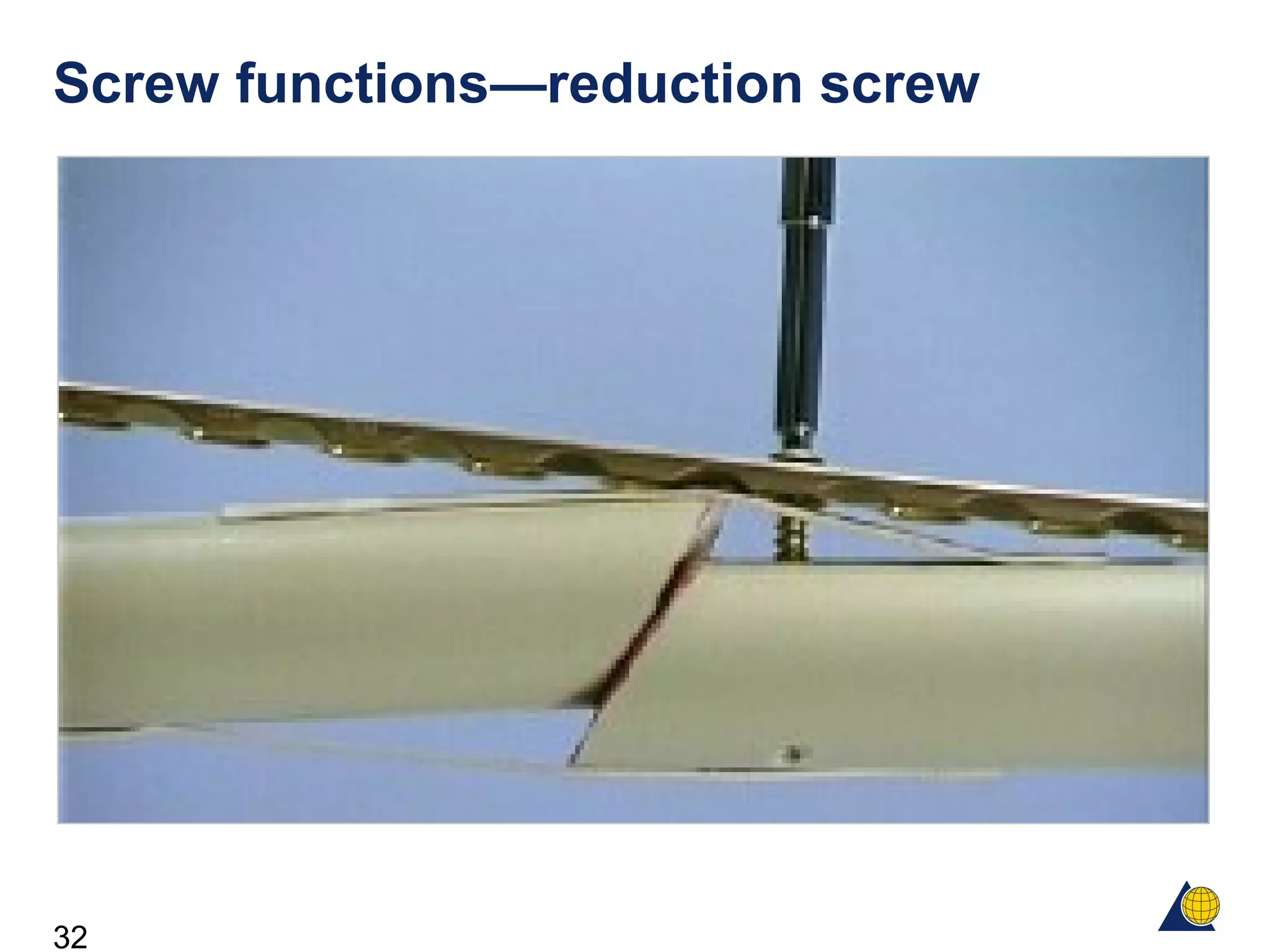
• Reduction screw
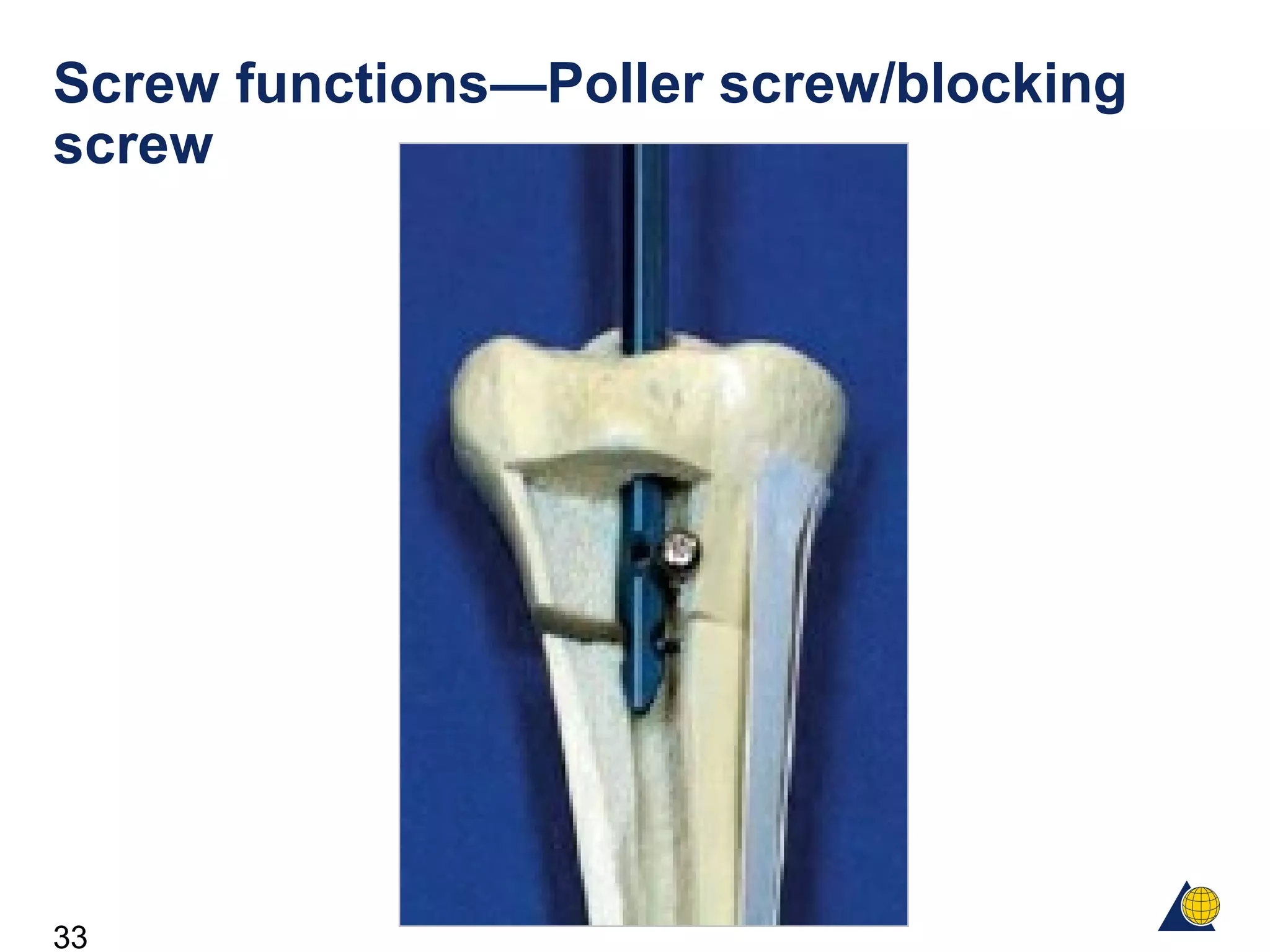
• Poller screw
25
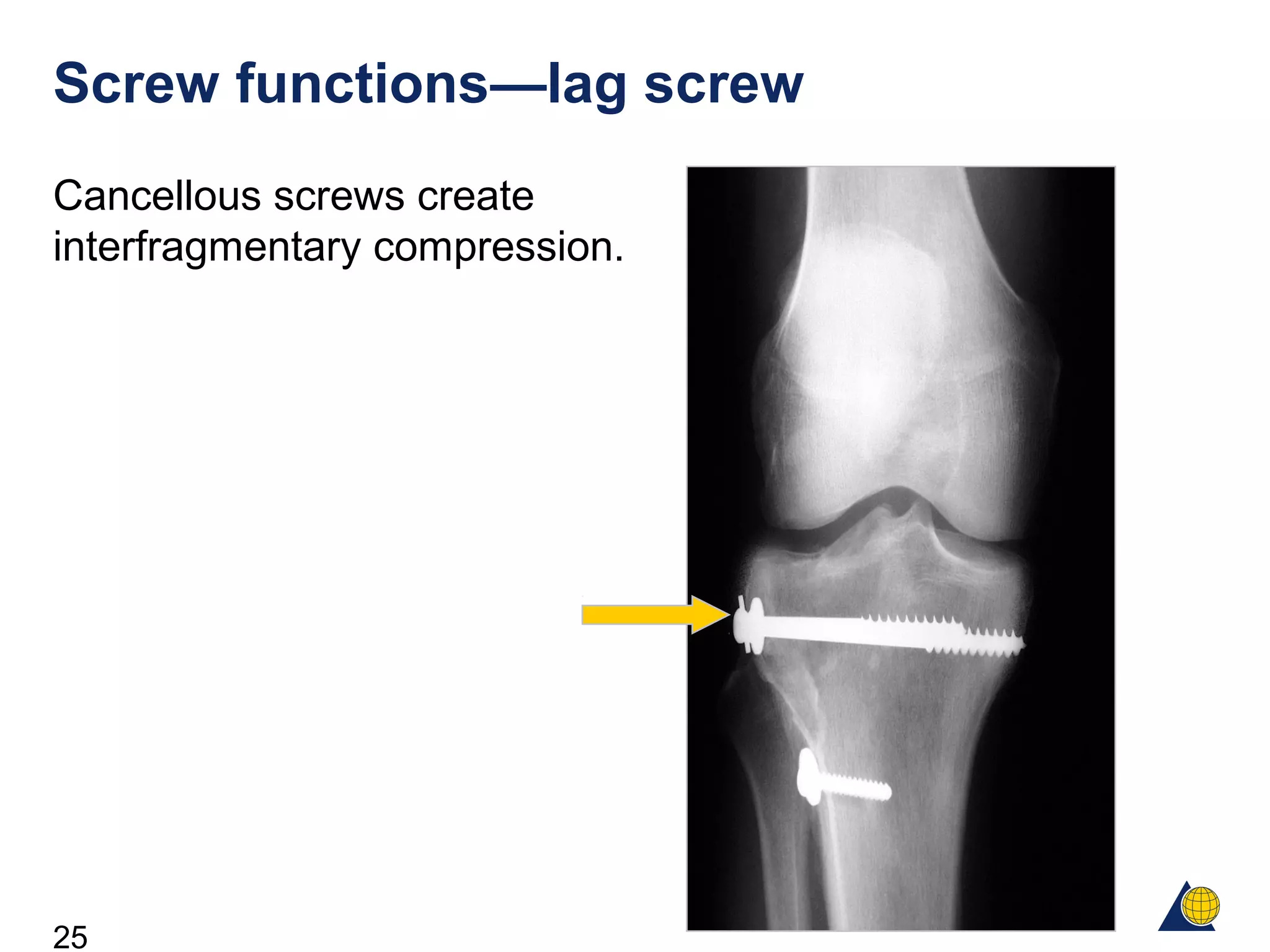
Screw functions—lag screw
Cancellous screws create
interfragmentary compression.
26
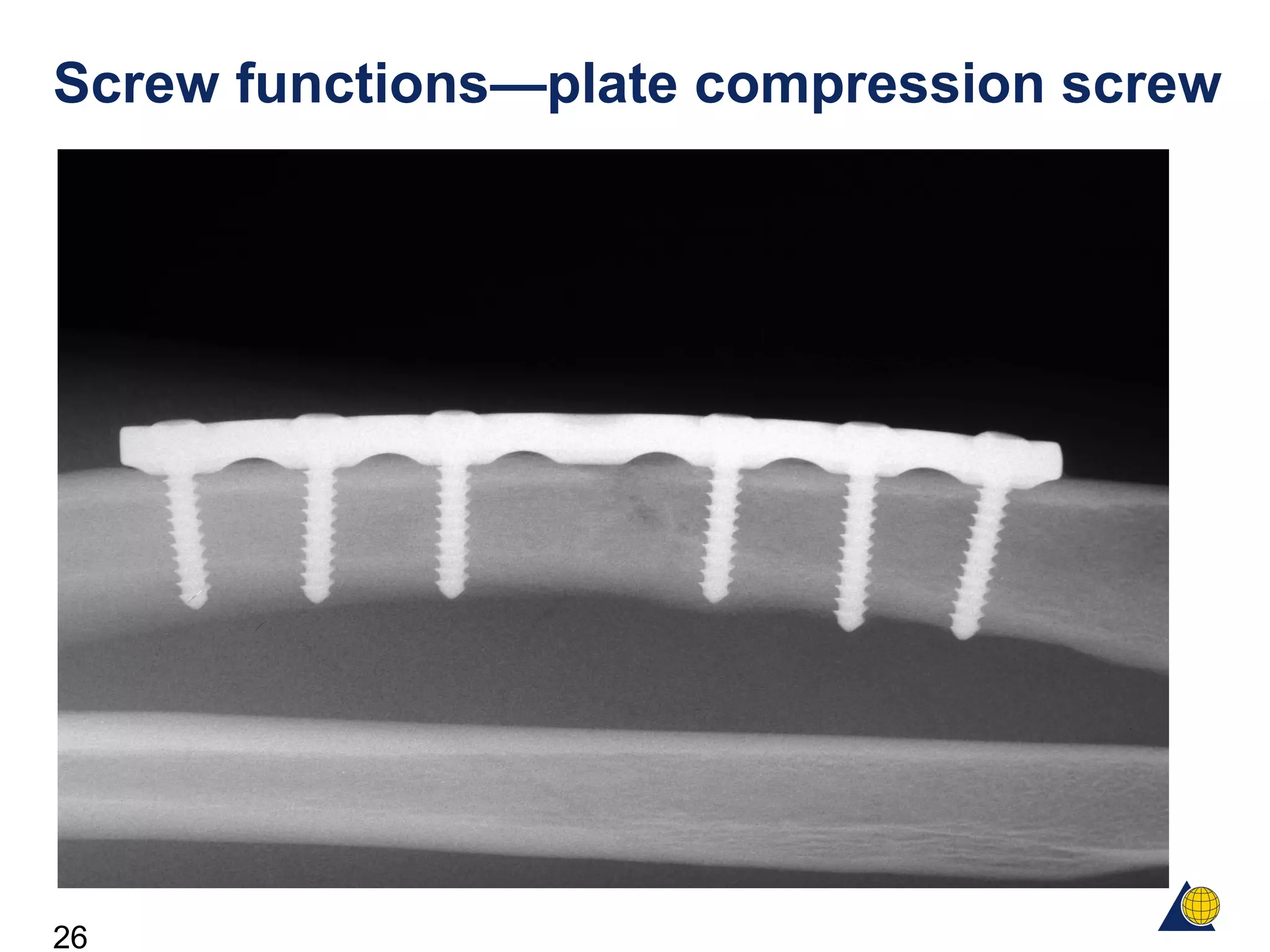
Screw functions—plate compression screw
27
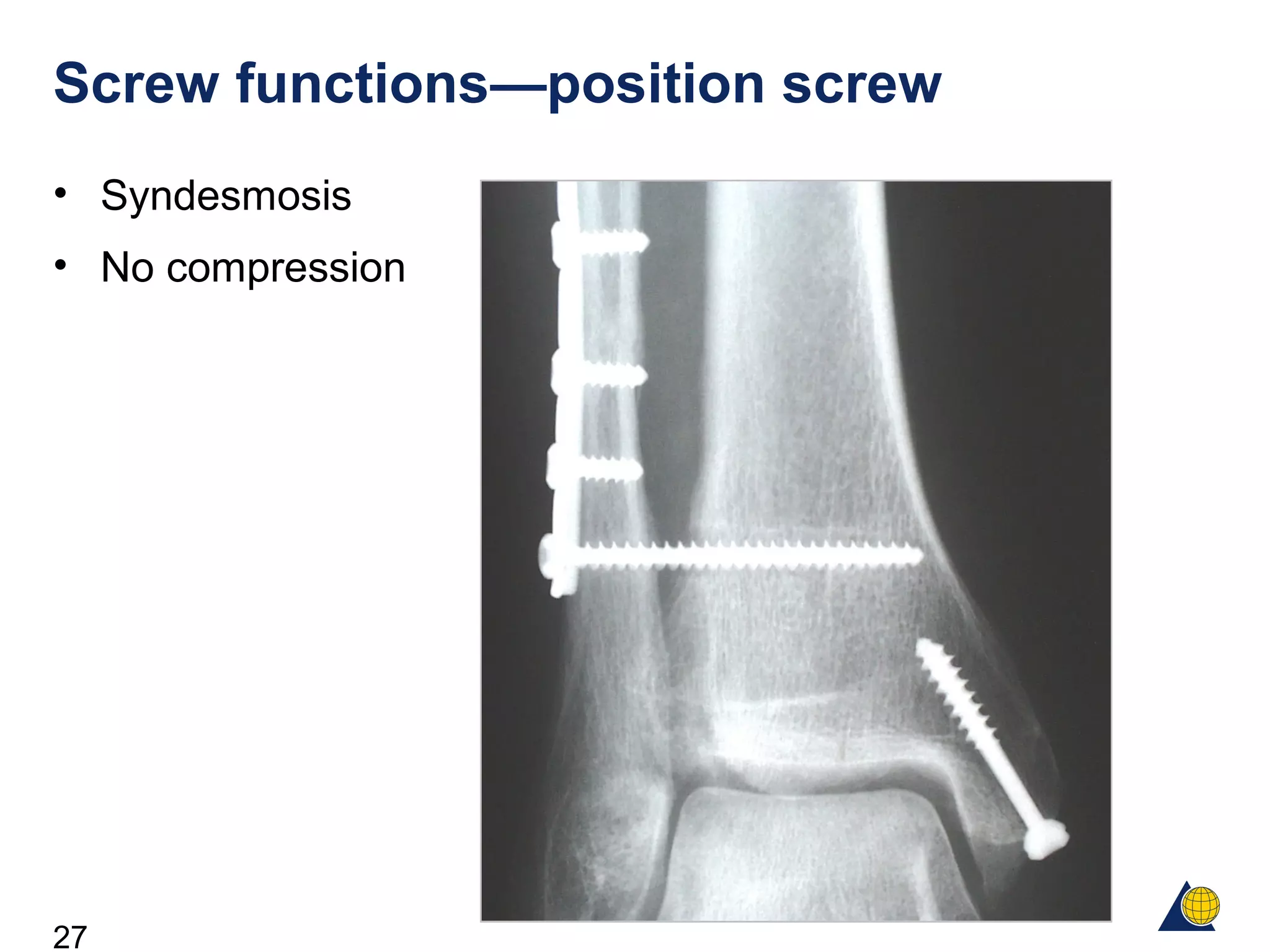
Screw functions—position screw
• Syndesmosis
• No compression
28
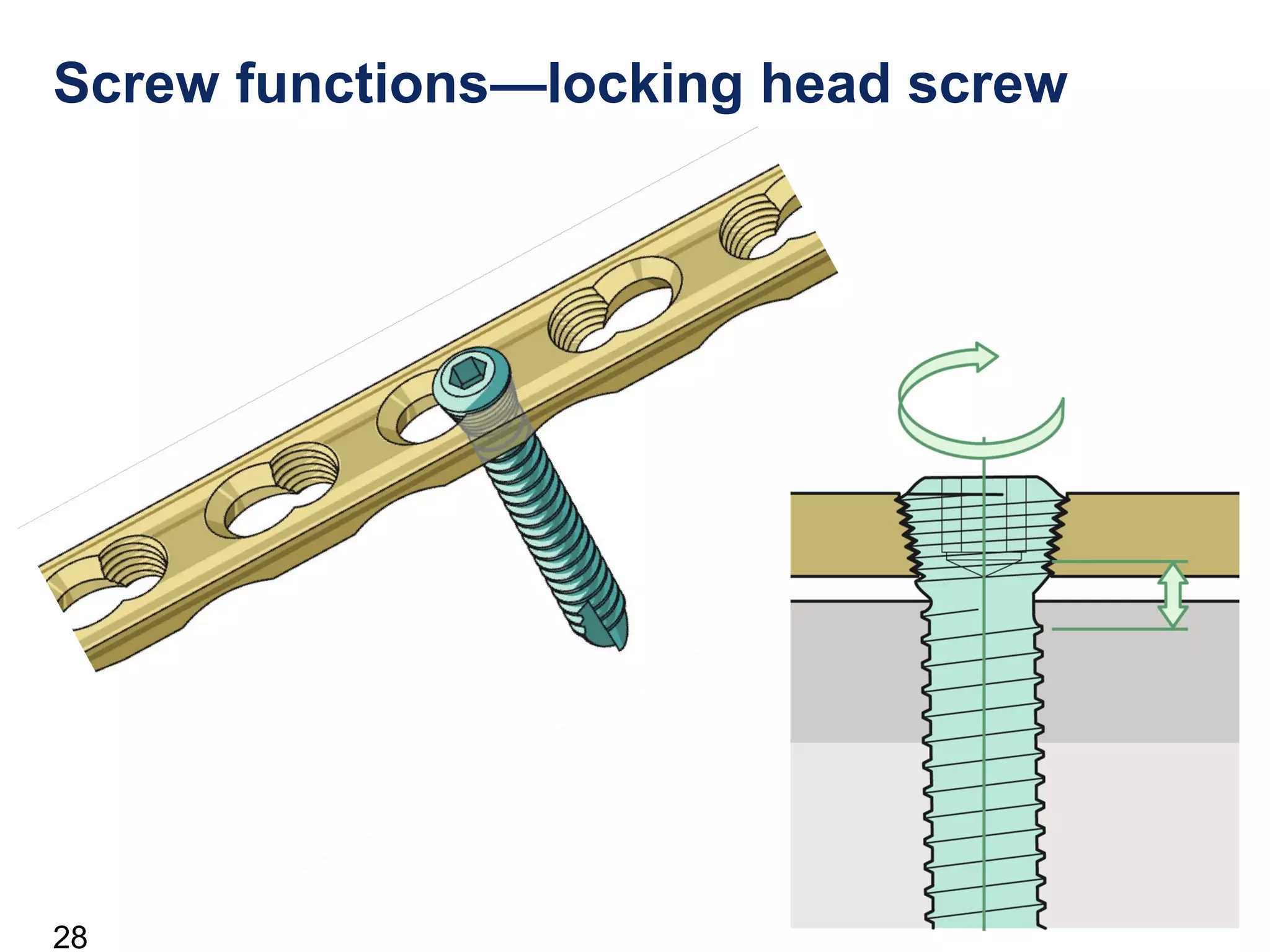
Screw functions—locking head screw
29
Screw functions—buttress/antiglide screw
30
Screw functions—anchor screw
31
Screw functions—push-pull screw
32
Screw functions—reduction screw
33
Screw functions—Poller screw/blocking
screw
34
Summary
• Every screw has two names
• Any screw can perform different functions
• Lag screw is a technique
- Building block of internal fixation
- Interfragmentary compression
- Absolute stability
• Countersink to distribute forces under the screw head
• Washer in metaphyseal regions
35
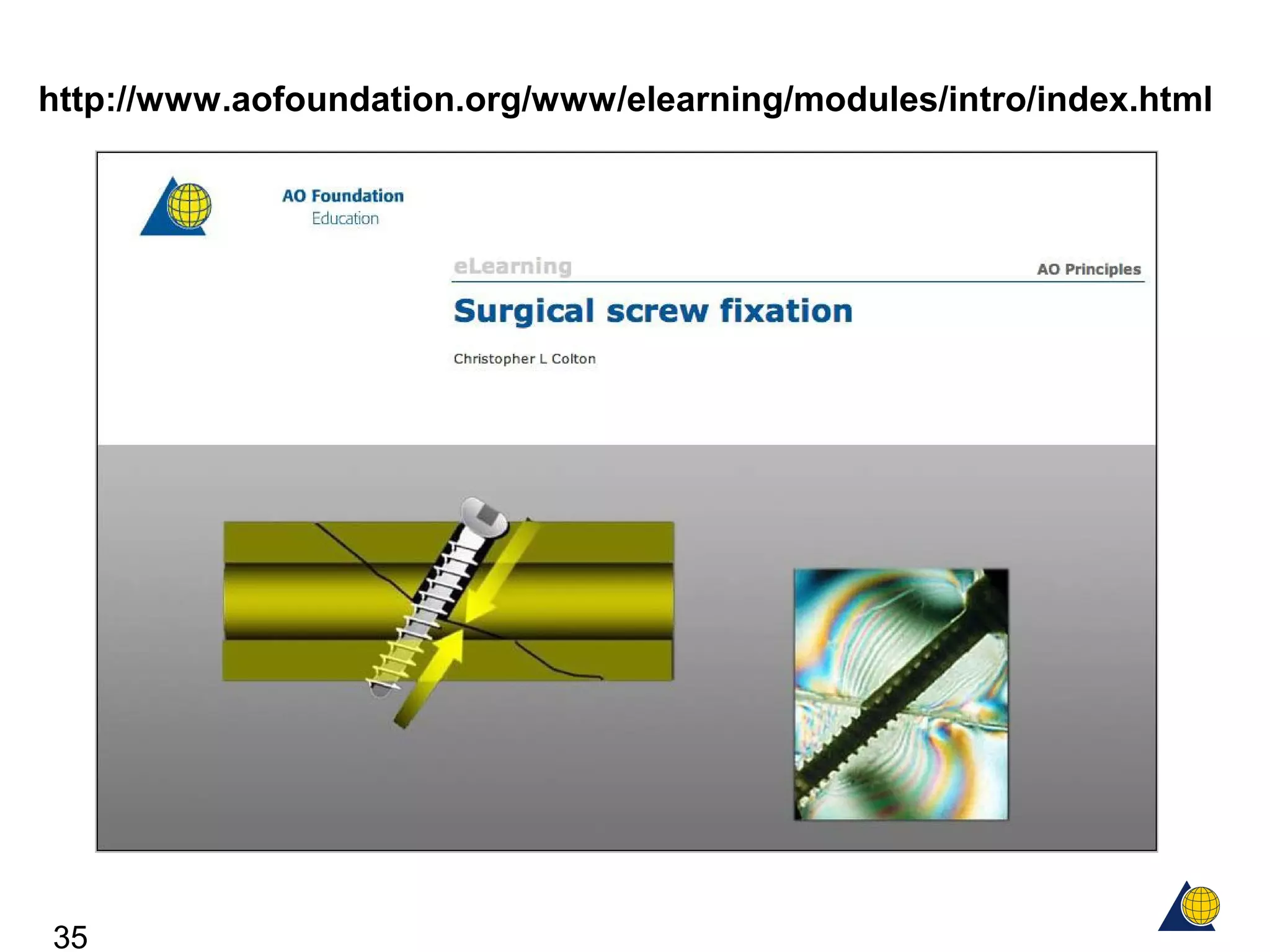
http://www.aofoundation.org/www/elearning/modules/intro/index.html
36
Next
• Function of plates
• Principles of stability
• Practical exercise 1
- Application of these principles
- Absolute stability

Design and function of surgical screws