
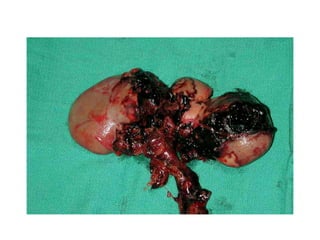
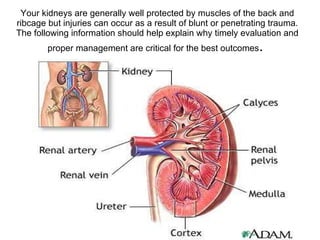


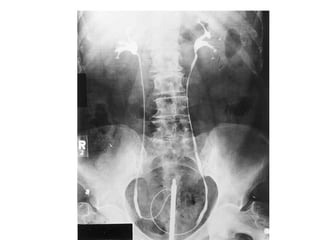
Your kidneys are generally well protected by muscles of the back and ribcage but injuries can occur as a result of blunt or penetrating trauma. The following information should help explain why timely evaluation and proper management are critical for the best outcomes .
What happens under normal conditions?   What happens under normal conditions?   The kidneys are paired, bean-shaped solid organs located deep in the abdomen, protected by strong back muscles and separated from the front of the abdomen by the organs of the  gastrointestinal tract .
What types of trauma can occur?   The kidney is the most common organ in the  urinary tract  to be injured by severe trauma. "Trauma" is injury caused by an external force that may be either blunt—such as a car accident—or
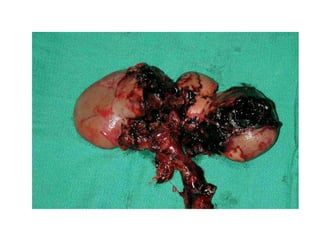
penetrating —such as a gunshot wound. Blunt trauma injuries to the kidney may show no evidence of external injury or bruises may appear over the back or abdomen where the kidney is located. Penetrating kidney injury may also be difficult to detect. For example, the external point of entry of the bullet may be small and at a distance far enough away from the location of the kidney for it not to be a consideration.
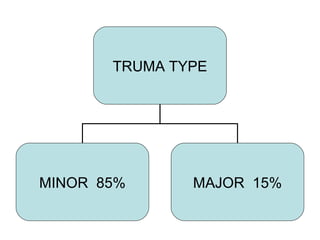
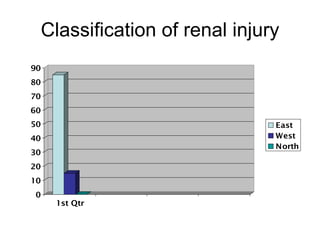
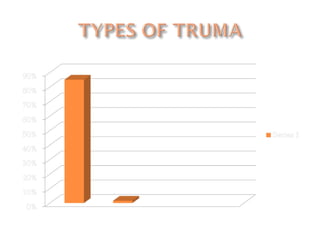
TRUMA TYPE MINOR  85% MAJOR  15%
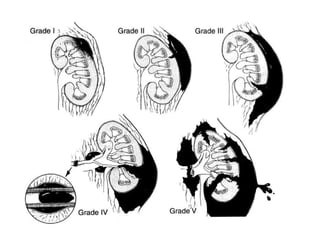
Classification of renal injury
 
 
Isolated or associated  Major or minor Grads of injury Haematuria, Delay haematuria, Meteorism Pain Swelling Wound Acute abdomen Shock
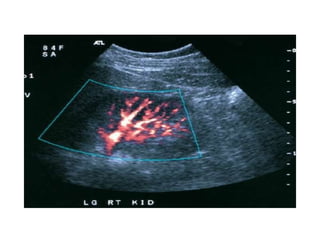
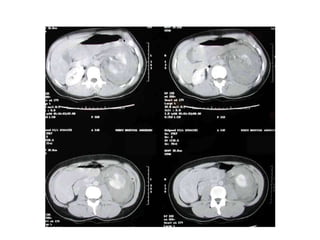
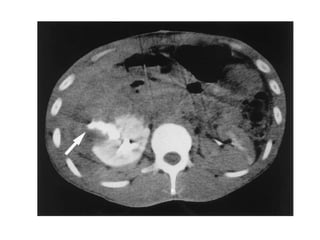
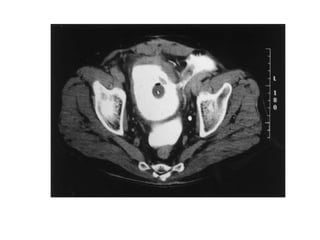
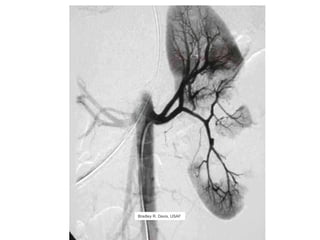
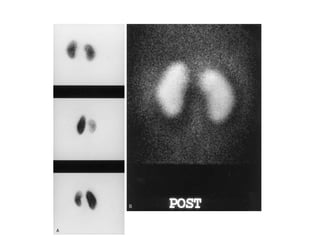
History & physical examination X-Ray- of abdomen U/S –of abdominal Excretory Urography Angiography CT MRI


Bradley R. Davis, USAF
 
 
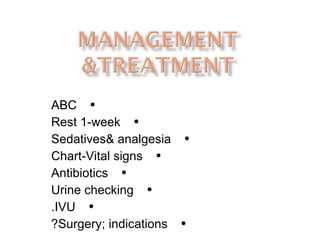
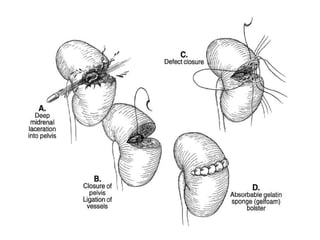
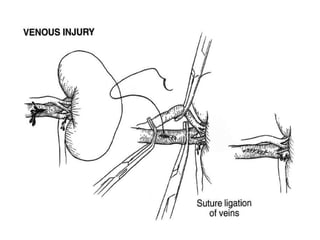
ABC Rest 1-week Sedatives& analgesia Chart-Vital signs Antibiotics Urine checking IVU. Surgery; indications?
 
 
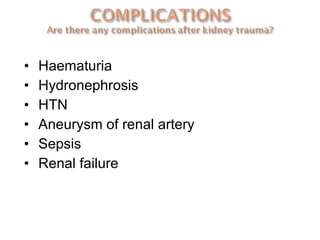
Haematuria Hydronephrosis HTN Aneurysm of renal artery Sepsis Renal failure
Recognised at the time of operation Not recognised at the time of the operation Unilateral or bilateral
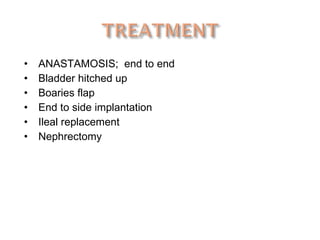
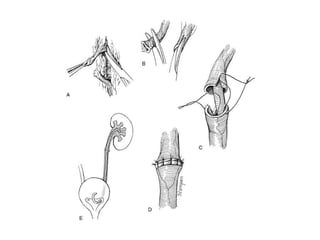
ANASTAMOSIS;  end to end Bladder hitched up Boaries flap End to side implantation Ileal replacement Nephrectomy


Surgery 6th year, Tutorial (Dr. Aso Omar)

  • 1.
  • 2.
  • 3.
    Your kidneys aregenerally well protected by muscles of the back and ribcage but injuries can occur as a result of blunt or penetrating trauma. The following information should help explain why timely evaluation and proper management are critical for the best outcomes .
  • 4.
    What happens undernormal conditions? What happens under normal conditions? The kidneys are paired, bean-shaped solid organs located deep in the abdomen, protected by strong back muscles and separated from the front of the abdomen by the organs of the gastrointestinal tract .
  • 5.
    What types oftrauma can occur? The kidney is the most common organ in the urinary tract to be injured by severe trauma. "Trauma" is injury caused by an external force that may be either blunt—such as a car accident—or
  • 6.
    penetrating —such asa gunshot wound. Blunt trauma injuries to the kidney may show no evidence of external injury or bruises may appear over the back or abdomen where the kidney is located. Penetrating kidney injury may also be difficult to detect. For example, the external point of entry of the bullet may be small and at a distance far enough away from the location of the kidney for it not to be a consideration.
  • 7.
    TRUMA TYPE MINOR 85% MAJOR 15%
  • 8.
  • 9.
  • 10.
  • 11.
    Isolated or associated Major or minor Grads of injury Haematuria, Delay haematuria, Meteorism Pain Swelling Wound Acute abdomen Shock
  • 12.
    History & physicalexamination X-Ray- of abdomen U/S –of abdominal Excretory Urography Angiography CT MRI
  • 13.
  • 14.
  • 15.
  • 16.
  • 17.
  • 18.
  • 19.
  • 20.
    ABC Rest 1-weekSedatives& analgesia Chart-Vital signs Antibiotics Urine checking IVU. Surgery; indications?
  • 21.
  • 22.
  • 23.
    Haematuria Hydronephrosis HTNAneurysm of renal artery Sepsis Renal failure
  • 24.
    Recognised at thetime of operation Not recognised at the time of the operation Unilateral or bilateral
  • 25.
    ANASTAMOSIS; endto end Bladder hitched up Boaries flap End to side implantation Ileal replacement Nephrectomy
  • 26.
  • 27.
  • 28.