


Mitochondria structure
 By
 Dr. Harinatha Reddy Aswartha
 In 1890, mitochondria was first described by German
scientist Richard Altmann.
 The mitochondria referred to as the 'power houses' of the cell.
 Mitochondria is considered as semi autonomous cell organelle.
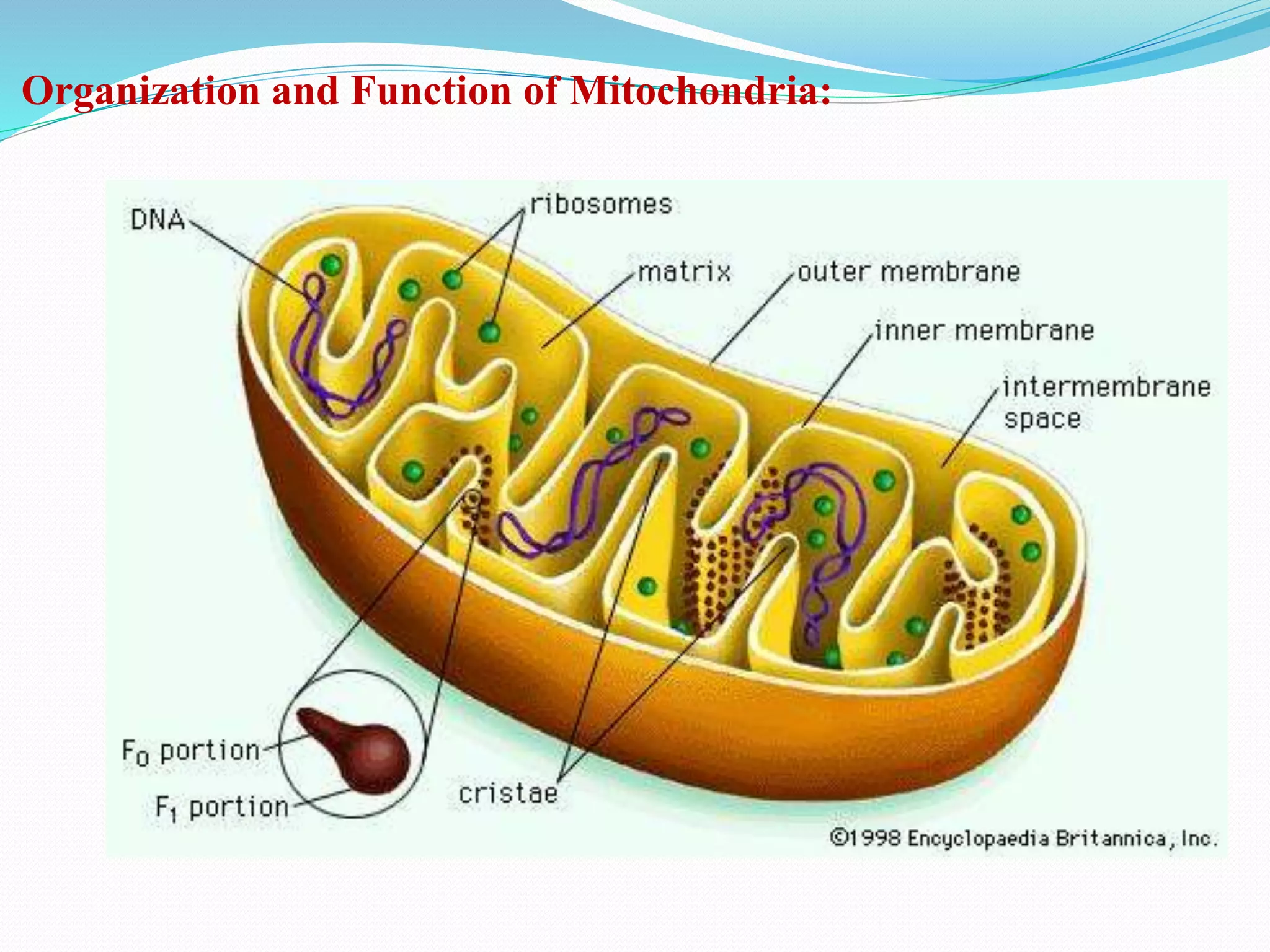
Organization and Function of Mitochondria:
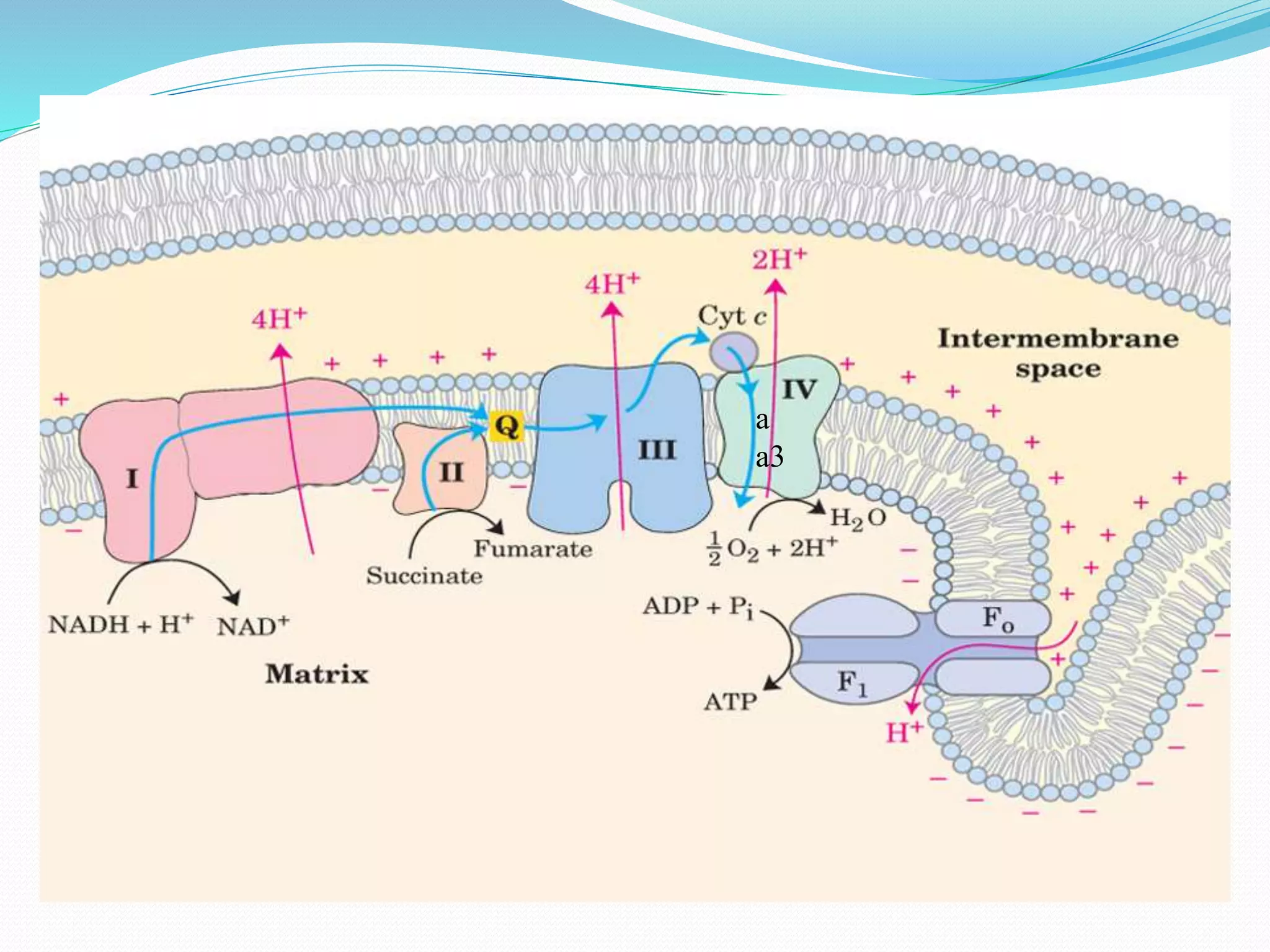
a
a3
 The mitochondria ranges from 0.5 to 1.0 micrometer in diameter.
 The mitochondria also involved in other cellular activities like
signaling, cellular differentiation, cell growth and also play
important role in the aging process (Apoptosis).
The Genetic System of Mitochondria:
 Mitochondria contain their own genetic system, which is separate
and distinct from the nuclear genome of the cell.
 Mitochondria are thought to have evolved from bacteria that
developed a symbiotic relationship with larger cells
(endosymbiosis).
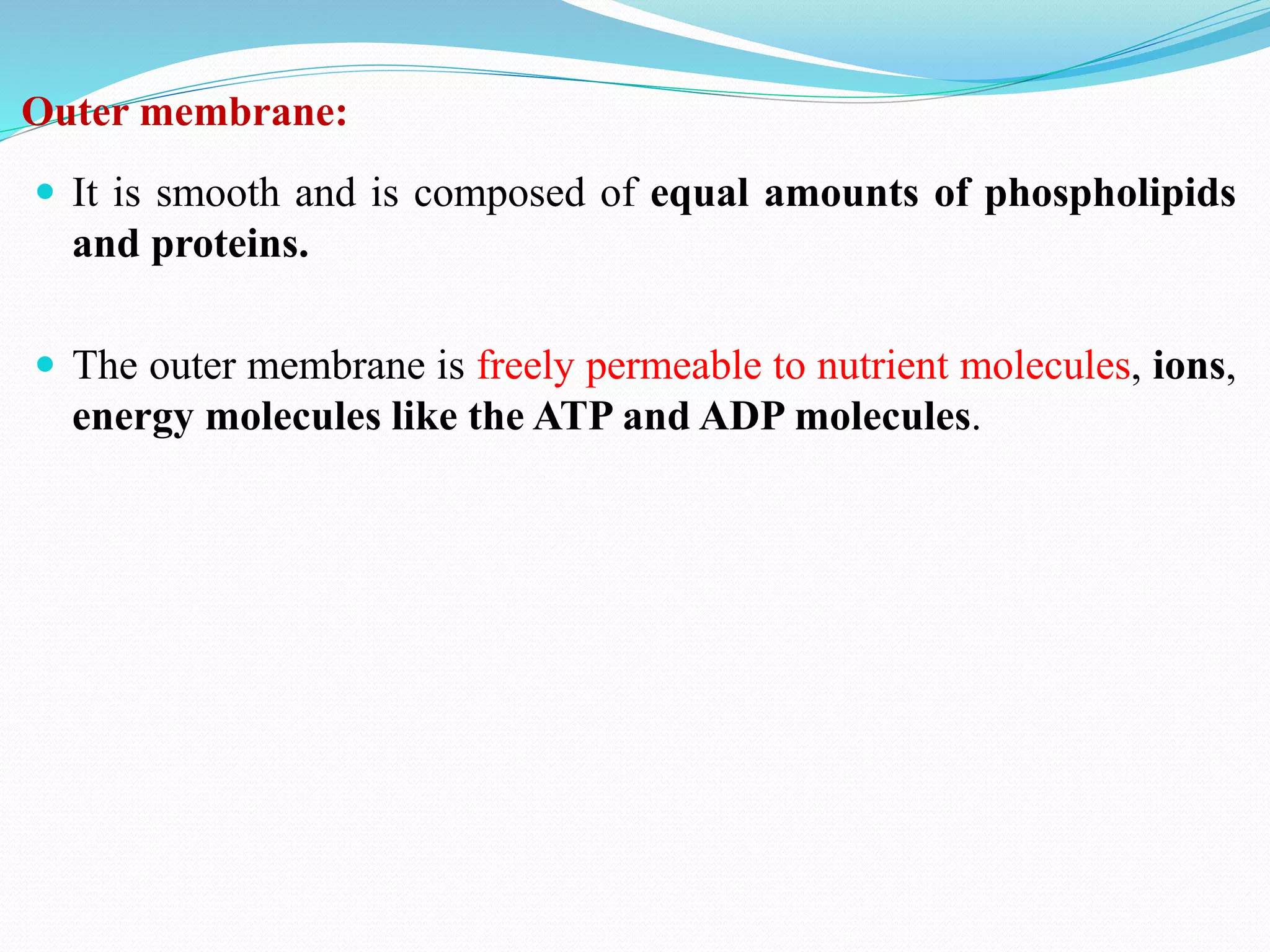
 Mitochondrial genomes are usually circular DNA molecules like
those of bacteria, which are present in multiple copies per
organelle.
 In humans and animals Mitochondrial genome about 16 kb in size.
 But substantially larger mitochondrial genomes found in yeasts
(approximately 80 kb) and plants (more than 200 kb ).

Outer membrane:
 It is smooth and is composed of equal amounts of phospholipids
and proteins.
 The outer membrane is freely permeable to nutrient molecules, ions,
energy molecules like the ATP and ADP molecules.
Inner membrane:
 The inner membrane of mitochondria is more complex in structure.
 It is folded into matrix many times and is known as the cristae.
 ATP Synthesis present in inner-membrance due to the presence of
ATP synthase
 ATP synthase made up of two subunits: F0 and F1 subunits.
Intermembrane space:
 It is the space between the outer and inner membrane of the mitochondria,
it has the same composition as that of the cell's cytoplasm.
 There is a difference in the protein content in the intermembrane space.
Matrix:
 The matrix of the mitochondria is a complex mixture of proteins and
enzymes. These enzymes are important for the synthesis of ATP
molecules, mitochondrial ribosomes, tRNAs and mitochondrial DNA
Function of Mitochondria:
 The most important function of the mitochondria is to produce
energy.
 The mitochondria also help in building certain parts of blood and
hormones like testosterone and estrogen.
 The mitochondria also play important role in the process of
apoptosis or programmed cell death.
 Abnormal death of cells due to the dysfunction of mitochondria
can affect the function of organ.
Mitochondria structure

Mitochondria structure

  • 1.
    Mitochondria structure  By Dr. Harinatha Reddy Aswartha
  • 2.
     In 1890,mitochondria was first described by German scientist Richard Altmann.  The mitochondria referred to as the 'power houses' of the cell.  Mitochondria is considered as semi autonomous cell organelle.
  • 3.
    Organization and Functionof Mitochondria:
  • 4.
  • 5.
     The mitochondriaranges from 0.5 to 1.0 micrometer in diameter.  The mitochondria also involved in other cellular activities like signaling, cellular differentiation, cell growth and also play important role in the aging process (Apoptosis).
  • 6.
    The Genetic Systemof Mitochondria:  Mitochondria contain their own genetic system, which is separate and distinct from the nuclear genome of the cell.  Mitochondria are thought to have evolved from bacteria that developed a symbiotic relationship with larger cells (endosymbiosis).
  • 7.
     Mitochondrial genomesare usually circular DNA molecules like those of bacteria, which are present in multiple copies per organelle.  In humans and animals Mitochondrial genome about 16 kb in size.  But substantially larger mitochondrial genomes found in yeasts (approximately 80 kb) and plants (more than 200 kb ). 
  • 8.
    Outer membrane:  Itis smooth and is composed of equal amounts of phospholipids and proteins.  The outer membrane is freely permeable to nutrient molecules, ions, energy molecules like the ATP and ADP molecules.
  • 9.
    Inner membrane:  Theinner membrane of mitochondria is more complex in structure.  It is folded into matrix many times and is known as the cristae.  ATP Synthesis present in inner-membrance due to the presence of ATP synthase  ATP synthase made up of two subunits: F0 and F1 subunits.
  • 11.
    Intermembrane space:  Itis the space between the outer and inner membrane of the mitochondria, it has the same composition as that of the cell's cytoplasm.  There is a difference in the protein content in the intermembrane space. Matrix:  The matrix of the mitochondria is a complex mixture of proteins and enzymes. These enzymes are important for the synthesis of ATP molecules, mitochondrial ribosomes, tRNAs and mitochondrial DNA
  • 12.
    Function of Mitochondria: The most important function of the mitochondria is to produce energy.  The mitochondria also help in building certain parts of blood and hormones like testosterone and estrogen.  The mitochondria also play important role in the process of apoptosis or programmed cell death.  Abnormal death of cells due to the dysfunction of mitochondria can affect the function of organ.