Introduction
 It is a membrane bounded organelle, found in the
cytoplasm of eukaryotic cells, which contains
digestive enzymes
 They are found in animal cells, while in plant
cell the same roles are performed by the vacuole
Cont...
 Lysosomes were discovered by the Belgium
cytologist Christian de Duve in 1955, and named as
"suicide bags" or "suicide sacs“.
 They are most abundant in cells which are related with
the enzymatic reactions such as liver cells
pancreatic cells, kidney cells, spleen cells, leucocytes,
macrophages etc.
Structure of Lysosome
 Lysosomes are surrounded by a single membrane unique in
composition.
 The membrane contains highly glycosylated lysosomal
associated membrane proteins (LAMP) and lysosomal
integral membrane proteins (LIMP).
 That constitute about 50% of all lysosomal membrane
proteins (Winchester, 2001).
Cont...
LAMPs and LIMPs form a coat on the
inner surface of the membrane, and are
thought to protect the membrane from
attack by the numerous hydrolytic
enzymes retained within lysosomes.
Cont...
 The lysosomal membrane also harbors a proton
pump that utilizes the energy from ATP
hydrolysis to pump H+ into the lumen, there by
creating the acidic pH characteristic of
lysosomes (Ohkuma and Poole, 1978)
Cont...
 The primary function of lysosomes is degradation
of extra and intra cellular material.
 For this purpose, lysosomes are filled with
hydrolases. Which may contain about 40 varieties
of enzymes. The lysosomal enzymes are
classified into six main types namely.
Cont...
 Proteases, which digest proteins.
 Lipase, which digests lipids.
 Amylase, which digest carbohydrates (e.g., sugars).
 Nucleases, which digest nucleic acids.
 phosphoric acid monoesters.
Cont...
 The lysosomal enzymes are collectively called as
hydrolases.
 The hydrolases cleavage of substrates by the addition of a
water molecules.
 Most of the lysosomal enzymes function in the acid
medium.
 Hence they are called as acid hydrolases.
Cont...
Lysosome Production
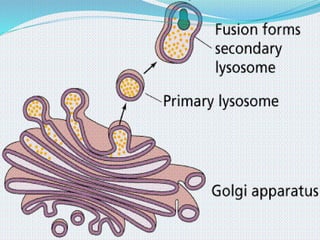
 Lysosomes are manufactured and budded into the
cytoplasm by the Golgi apparatus with enzymes inside.
 The enzymes that are within the lysosome are made in the
rough endoplasmic reticulum, which are then delivered to
the Golgi apparatus via transport vesicles.
TYPES
 Primary lysosome are small saclike structures enclosing
enzymes synthesized by the rough endoplasmic reticulum.
 Since they store enzymes, they are also said to be storage
granules.
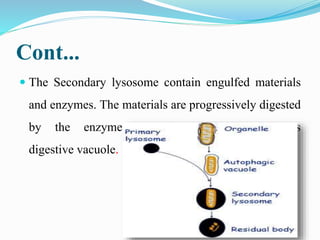
 Secondary lysosome are formed by the fusion of primary
lysosome with phagosomes.
Cont...
 The Secondary lysosome contain engulfed materials
and enzymes. The materials are progressively digested
by the enzymes. So it is also called as
digestive vacuole.
Function:
 Heterophagy.
 Program cell death.
 Autophagy.
 Autolysis.
 Fertilization.
 Chromosomal damage.
Heterophagy
 Heterophagy is the lysosomal digestion of
extracellular materials by the process of
endocytosis. Heterophagy are of two types
namely
Phagocytosis.
Pinocytosis.
Program cell death
 Given their high levels of hydrolytic enzymes, lysosomes
are potentially harmful to the cell.
 partial and selective lysosomal membrane
permeabilization (LMP) induces controlled cell death.
 LMP provokes the translocation of lysosomal contents to
the cytoplasm.
Cont...
 The proteases implicated in cell death are
cathepsins that remain active at neutral pH, such
as cathepsin B, CD, and cathepsin L
 These proteases trigger and cascade the essential
organelle of cell, which led to cell death.
Autophagy
 Autophagy is a normal physiological process
in the body that deals with destruction of cells
in the body.
 It maintains homeostasis or normal functioning
by protein degradation and turnover of the
destroyed cell organelles for new cell
formation.
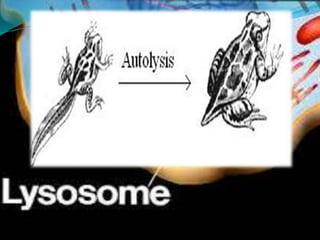
Autolysis
 Autolysis refers to the digestion of own cells by the
lysosomes.
 In autolysis, the lysosome digests its own cell
 Autolysis occurs during amphibian metamorphosis, and
insect metamorphosis etc.
Fertilization
 During fertilization process, acrosome (giant lysosome) of
sperm head ruptures and releases enzymes on the surface
of the egg.
 These enzymes digest the egg membrane and provide way
for the entry of sperm nucleus into the egg.
Chromosomal damage
 Due to the presence of DNase enzyme, lysosome had an
ability to attacks chromosome and cause chromosomal
breakages. These breakages can leads to diseases like
cancer etc.
References
 Lockshin RA, Zakeri Z (2004) Apoptosis, autophagy, and
more. Int J Biochem Cell Biol 36: 2405-19.
 http://www.jbc.org/content/early/2014/12/05/jbc.M114.608471.
full.html#ref-list-1.
 Eskelinen EL (2006) Roles of LAMP-1 and LAMP-2 in
lysosome biogenesis and autophagy. Mol Aspects Med 27:
495-502.
 De Duve C, Wattiaux R (1966) Functions of lysosomes. Annu
Rev Physiol 28: 435-92.
Lysosome

Lysosome

  • 2.
    Introduction  It isa membrane bounded organelle, found in the cytoplasm of eukaryotic cells, which contains digestive enzymes  They are found in animal cells, while in plant cell the same roles are performed by the vacuole
  • 3.
    Cont...  Lysosomes werediscovered by the Belgium cytologist Christian de Duve in 1955, and named as "suicide bags" or "suicide sacs“.  They are most abundant in cells which are related with the enzymatic reactions such as liver cells pancreatic cells, kidney cells, spleen cells, leucocytes, macrophages etc.
  • 4.
    Structure of Lysosome Lysosomes are surrounded by a single membrane unique in composition.  The membrane contains highly glycosylated lysosomal associated membrane proteins (LAMP) and lysosomal integral membrane proteins (LIMP).  That constitute about 50% of all lysosomal membrane proteins (Winchester, 2001).
  • 5.
    Cont... LAMPs and LIMPsform a coat on the inner surface of the membrane, and are thought to protect the membrane from attack by the numerous hydrolytic enzymes retained within lysosomes.
  • 6.
    Cont...  The lysosomalmembrane also harbors a proton pump that utilizes the energy from ATP hydrolysis to pump H+ into the lumen, there by creating the acidic pH characteristic of lysosomes (Ohkuma and Poole, 1978)
  • 7.
    Cont...  The primaryfunction of lysosomes is degradation of extra and intra cellular material.  For this purpose, lysosomes are filled with hydrolases. Which may contain about 40 varieties of enzymes. The lysosomal enzymes are classified into six main types namely.
  • 8.
    Cont...  Proteases, whichdigest proteins.  Lipase, which digests lipids.  Amylase, which digest carbohydrates (e.g., sugars).  Nucleases, which digest nucleic acids.  phosphoric acid monoesters.
  • 9.
    Cont...  The lysosomalenzymes are collectively called as hydrolases.  The hydrolases cleavage of substrates by the addition of a water molecules.  Most of the lysosomal enzymes function in the acid medium.  Hence they are called as acid hydrolases.
  • 10.
  • 11.
    Lysosome Production  Lysosomesare manufactured and budded into the cytoplasm by the Golgi apparatus with enzymes inside.  The enzymes that are within the lysosome are made in the rough endoplasmic reticulum, which are then delivered to the Golgi apparatus via transport vesicles.
  • 13.
    TYPES  Primary lysosomeare small saclike structures enclosing enzymes synthesized by the rough endoplasmic reticulum.  Since they store enzymes, they are also said to be storage granules.  Secondary lysosome are formed by the fusion of primary lysosome with phagosomes.
  • 14.
    Cont...  The Secondarylysosome contain engulfed materials and enzymes. The materials are progressively digested by the enzymes. So it is also called as digestive vacuole.
  • 15.
    Function:  Heterophagy.  Programcell death.  Autophagy.  Autolysis.  Fertilization.  Chromosomal damage.
  • 16.
    Heterophagy  Heterophagy isthe lysosomal digestion of extracellular materials by the process of endocytosis. Heterophagy are of two types namely Phagocytosis. Pinocytosis.
  • 17.
    Program cell death Given their high levels of hydrolytic enzymes, lysosomes are potentially harmful to the cell.  partial and selective lysosomal membrane permeabilization (LMP) induces controlled cell death.  LMP provokes the translocation of lysosomal contents to the cytoplasm.
  • 18.
    Cont...  The proteasesimplicated in cell death are cathepsins that remain active at neutral pH, such as cathepsin B, CD, and cathepsin L  These proteases trigger and cascade the essential organelle of cell, which led to cell death.
  • 19.
    Autophagy  Autophagy isa normal physiological process in the body that deals with destruction of cells in the body.  It maintains homeostasis or normal functioning by protein degradation and turnover of the destroyed cell organelles for new cell formation.
  • 20.
    Autolysis  Autolysis refersto the digestion of own cells by the lysosomes.  In autolysis, the lysosome digests its own cell  Autolysis occurs during amphibian metamorphosis, and insect metamorphosis etc.
  • 22.
    Fertilization  During fertilizationprocess, acrosome (giant lysosome) of sperm head ruptures and releases enzymes on the surface of the egg.  These enzymes digest the egg membrane and provide way for the entry of sperm nucleus into the egg.
  • 24.
    Chromosomal damage  Dueto the presence of DNase enzyme, lysosome had an ability to attacks chromosome and cause chromosomal breakages. These breakages can leads to diseases like cancer etc.
  • 25.
    References  Lockshin RA,Zakeri Z (2004) Apoptosis, autophagy, and more. Int J Biochem Cell Biol 36: 2405-19.  http://www.jbc.org/content/early/2014/12/05/jbc.M114.608471. full.html#ref-list-1.  Eskelinen EL (2006) Roles of LAMP-1 and LAMP-2 in lysosome biogenesis and autophagy. Mol Aspects Med 27: 495-502.  De Duve C, Wattiaux R (1966) Functions of lysosomes. Annu Rev Physiol 28: 435-92.