Monosaccharides and
Polysaccharides and its
Biological Functions
Presented by
Miss Pratiksha G Puranik
M.Sc.(Zoology),B.Ed., MH-SET
Contents
• Introduction
• Monosaccharide
• Biological Important
• Polysaccharide
• Biological Important
• Reference
Introduction
• Monosaccharide's are the simplest
carbohydrates they cannot be broken down
to the smaller carbohydrates.
• Polysaccharides are large molecules
containing 10 or more monosaccharide
units. Carbohydrate units are connected in
one continuous chain or the chain can be
branched.
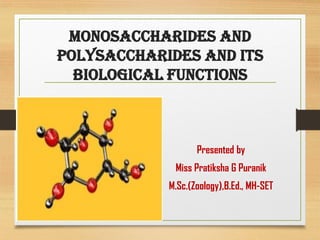
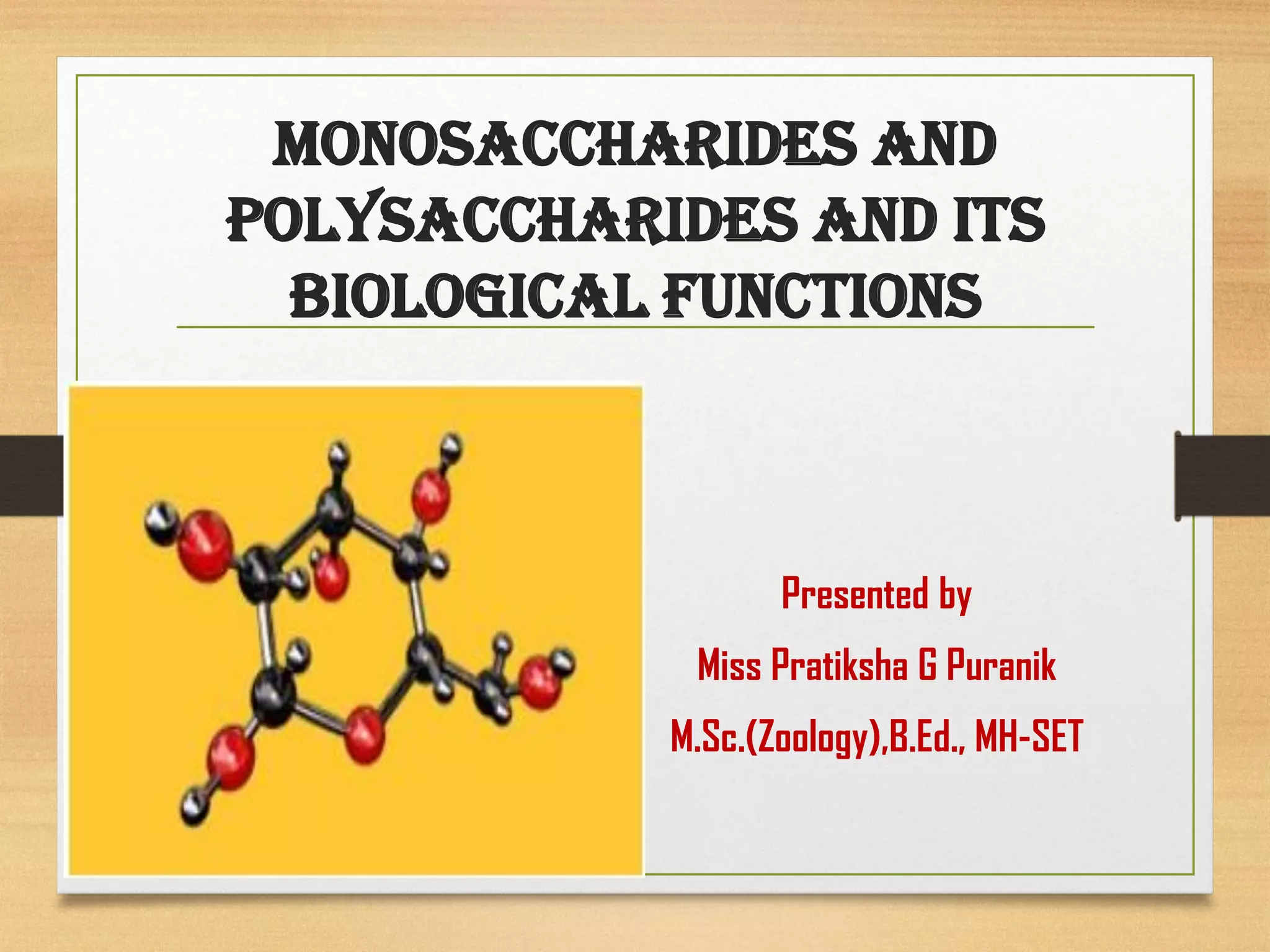
Monosaccharide
• The monosaccharide is the simplest sugar.
• The monosaccharides are either aldehyde or
ketone with two or more hydroxyl groups.
e.g., glucose, fructose
• The six carbon monosaccharide glucose and
fructose have five hydroxyl groups.
The Two Families of
Monosaccharide Are Aldoses and
Ketones
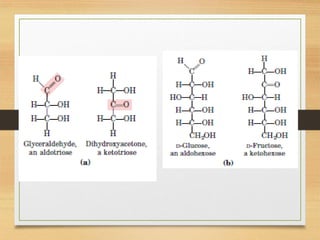
• If the carboxyl group is at an end of the carbon
chain the monosaccharide is an aldose.
• If the carbonyl group is at any other position the
monosaccharide is a ketose.
• The simplest monosaccharides are the two three-
carbon trioses, glyceraldehydes an aldotriose, and
dihydroxyacetone, a ketoriose.
Biological Important
• Monosaccharide's are colorless, crystalline
solids.
• That are soluble in water but insoluble in
nonpolar solvents.
• Glucose is the most abundant
monosaccharide found in nature.
• Glucose is broken down in cells to produce
energy.
• Most have a sweet taste.
• Mannose, a monosaccharide, is found in
some fruits and vegetables.
Cont….
• Mannose is an epimer of glucose.
• Fructose is combined with glucose to give sucrose.
• Fructose is the sweetest monosaccharide and is found in fruits,
vegetables, and honey.
Polysaccharide
• Polysaccharide also called glycans.
• Homopolysaccharides contain only a single
monomeric species.
• Heteropolysaccharides contain two or more
different kinds.
e.g., starch, glycogen,dextrans
Starch and glycogen
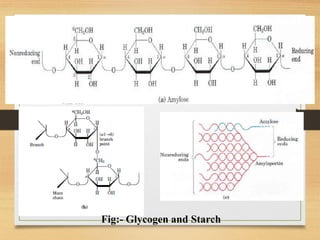
• Starch contain two types of glucose polymer,
amylose and amylopectin.
• Glycogen is the main storage polysaccharide of
animal cells.
Fig:- Glycogen and Starch
Dextrans
• Dextrans are bacterial and yeast
polysaccharides made up of (α1-6) linked
poly-D-glucose all have
(α1-3) branches and some also have (α1-2)
or (α1-4) branches.
Biological Important
• Starch and glycogen are used for storage of
carbohydrates.
- starch is found in plants and glycogen in animals.
• Glucose is stored as glycogen in animals and starch
in plants.
• Glycogen is stored in:
• Liver
• Muscle cells
Cont….
• Dental plaque, formed by bacteria growing
on the surface of teeth, is rich in dextrans.
• Two important polysaccharides are cellulose
in plants and chitin in arthropods and fungi.
References
• Principles of Biochemistry (fifth edition)
David L. Nelson
Michael M. Cox
Thank You

Monosaccharide and polysaccharide its biological functions

  • 1.
    Monosaccharides and Polysaccharides andits Biological Functions Presented by Miss Pratiksha G Puranik M.Sc.(Zoology),B.Ed., MH-SET
  • 2.
    Contents • Introduction • Monosaccharide •Biological Important • Polysaccharide • Biological Important • Reference
  • 3.
    Introduction • Monosaccharide's arethe simplest carbohydrates they cannot be broken down to the smaller carbohydrates. • Polysaccharides are large molecules containing 10 or more monosaccharide units. Carbohydrate units are connected in one continuous chain or the chain can be branched.
  • 4.
    Monosaccharide • The monosaccharideis the simplest sugar. • The monosaccharides are either aldehyde or ketone with two or more hydroxyl groups. e.g., glucose, fructose • The six carbon monosaccharide glucose and fructose have five hydroxyl groups.
  • 5.
    The Two Familiesof Monosaccharide Are Aldoses and Ketones • If the carboxyl group is at an end of the carbon chain the monosaccharide is an aldose. • If the carbonyl group is at any other position the monosaccharide is a ketose. • The simplest monosaccharides are the two three- carbon trioses, glyceraldehydes an aldotriose, and dihydroxyacetone, a ketoriose.
  • 7.
    Biological Important • Monosaccharide'sare colorless, crystalline solids. • That are soluble in water but insoluble in nonpolar solvents. • Glucose is the most abundant monosaccharide found in nature. • Glucose is broken down in cells to produce energy. • Most have a sweet taste. • Mannose, a monosaccharide, is found in some fruits and vegetables.
  • 8.
    Cont…. • Mannose isan epimer of glucose. • Fructose is combined with glucose to give sucrose. • Fructose is the sweetest monosaccharide and is found in fruits, vegetables, and honey.
  • 9.
    Polysaccharide • Polysaccharide alsocalled glycans. • Homopolysaccharides contain only a single monomeric species. • Heteropolysaccharides contain two or more different kinds. e.g., starch, glycogen,dextrans
  • 10.
    Starch and glycogen •Starch contain two types of glucose polymer, amylose and amylopectin. • Glycogen is the main storage polysaccharide of animal cells.
  • 11.
  • 12.
    Dextrans • Dextrans arebacterial and yeast polysaccharides made up of (α1-6) linked poly-D-glucose all have (α1-3) branches and some also have (α1-2) or (α1-4) branches.
  • 13.
    Biological Important • Starchand glycogen are used for storage of carbohydrates. - starch is found in plants and glycogen in animals. • Glucose is stored as glycogen in animals and starch in plants. • Glycogen is stored in: • Liver • Muscle cells
  • 14.
    Cont…. • Dental plaque,formed by bacteria growing on the surface of teeth, is rich in dextrans. • Two important polysaccharides are cellulose in plants and chitin in arthropods and fungi.
  • 15.
    References • Principles ofBiochemistry (fifth edition) David L. Nelson Michael M. Cox
  • 16.