
Allah has blessed us with chance to serve the Nation
in the Field of Metallurgy & Materials Engineering
Vacuum Metallurgy
Course Teacher:
Engr. Muhammad Ali Siddiqui
Lecturer/ Area Coordinator ISO 9000
MYD, NED UET
Qualification:
BE, Metallurgy & Materials Engineering , Mehran UET Jamshoro, 2007
ME, Materials Engineering, NED UET Karachi, 2011
Open Discussion/Students
Problems:
1. Regarding; Study/Teaching
2. Projects/Thesis …. (any information do you want)
3. Any Suggestion for Continual Improvement
4. Any other item ….
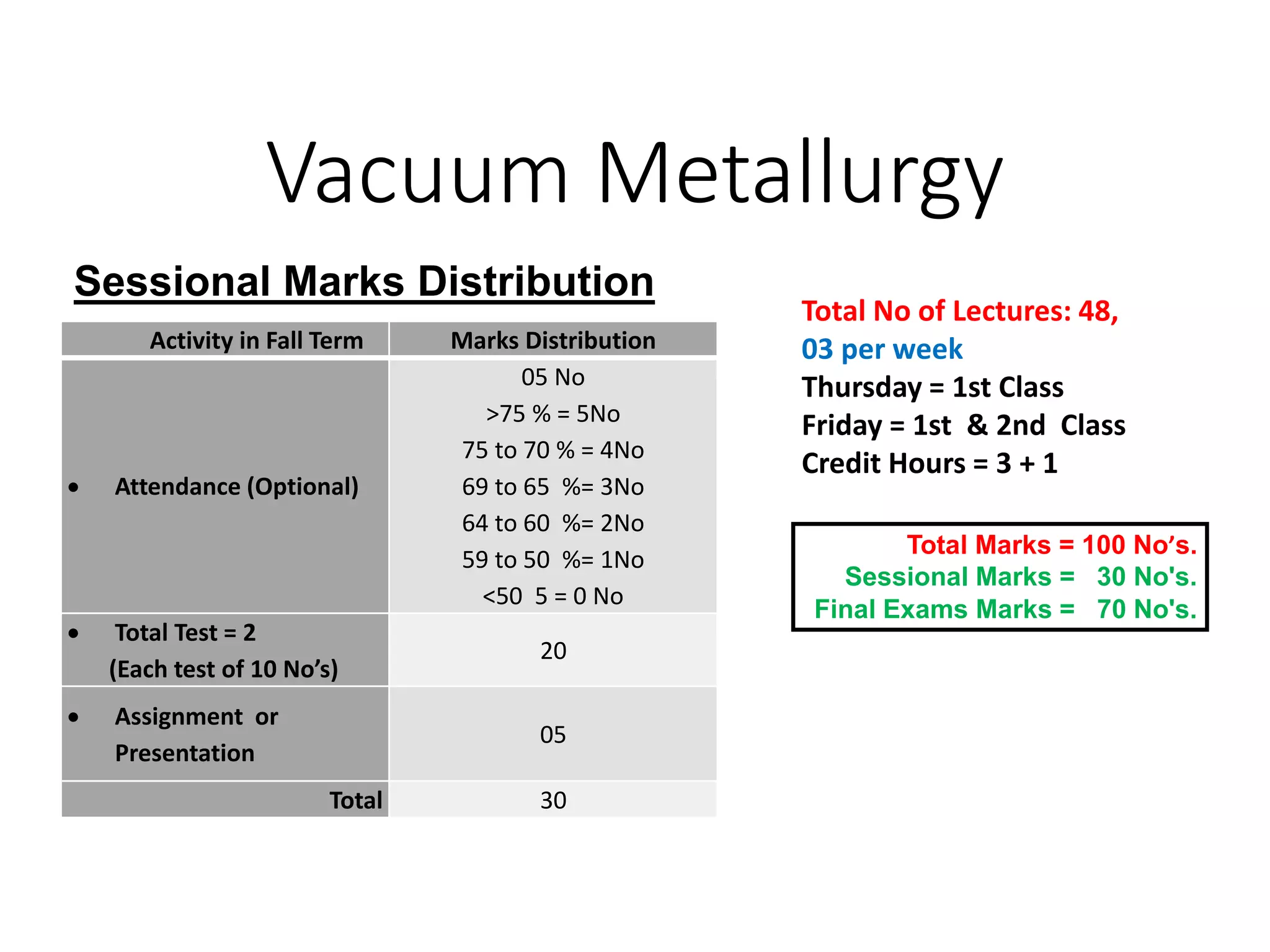
Vacuum Metallurgy
Sessional Marks Distribution
Total No of Lectures: 48,
03 per week
Thursday = 1st Class
Friday = 1st & 2nd Class
Credit Hours = 3 + 1
Activity in Fall Term Marks Distribution
 Attendance (Optional)
05 No
>75 % = 5No
75 to 70 % = 4No
69 to 65 %= 3No
64 to 60 %= 2No
59 to 50 %= 1No
<50 5 = 0 No
 Total Test = 2
(Each test of 10 No’s)
20
 Assignment or
Presentation
05
Total 30
Total Marks = 100 No’s.
Sessional Marks = 30 No's.
Final Exams Marks = 70 No's.
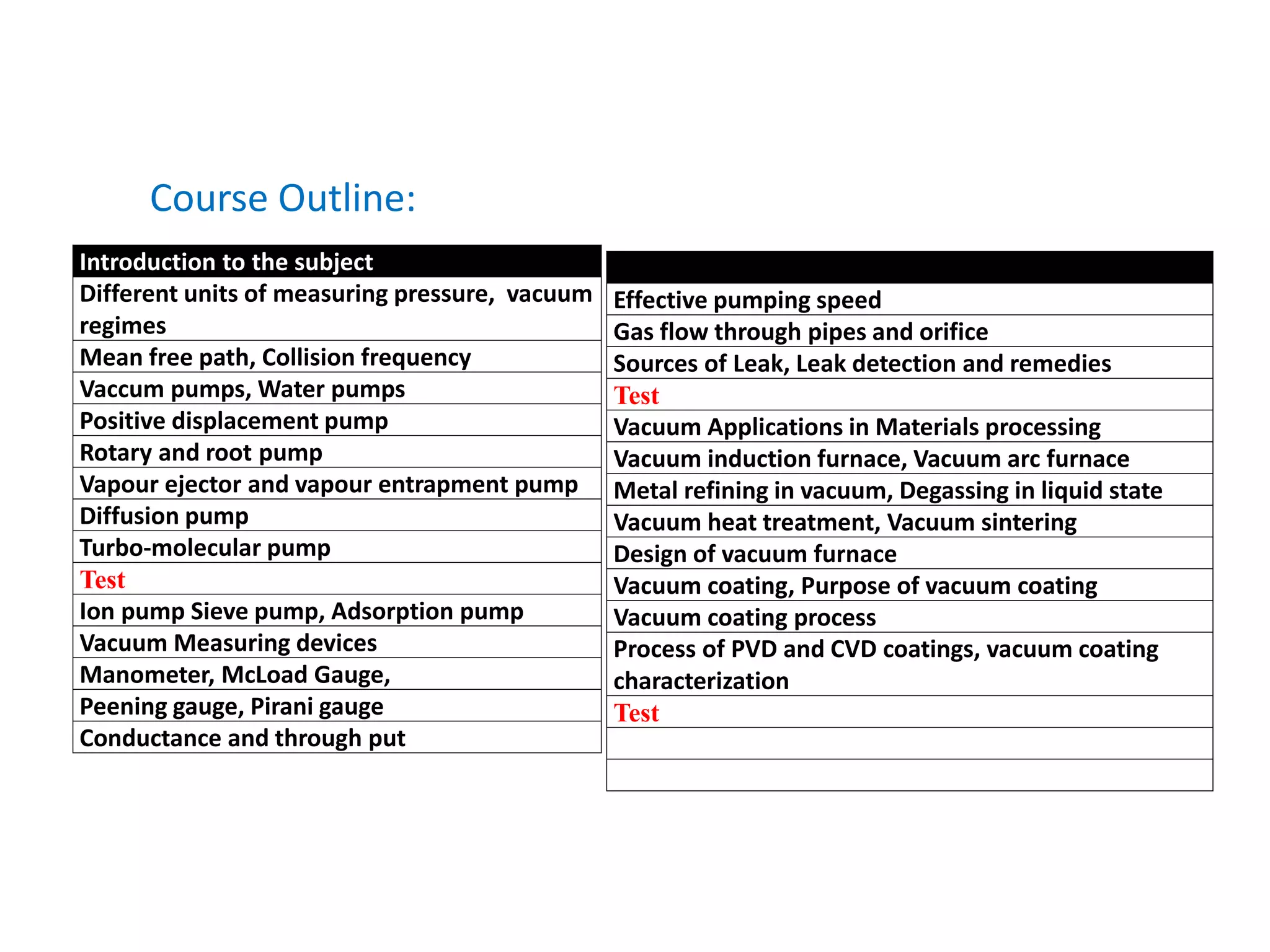
Introduction to the subject
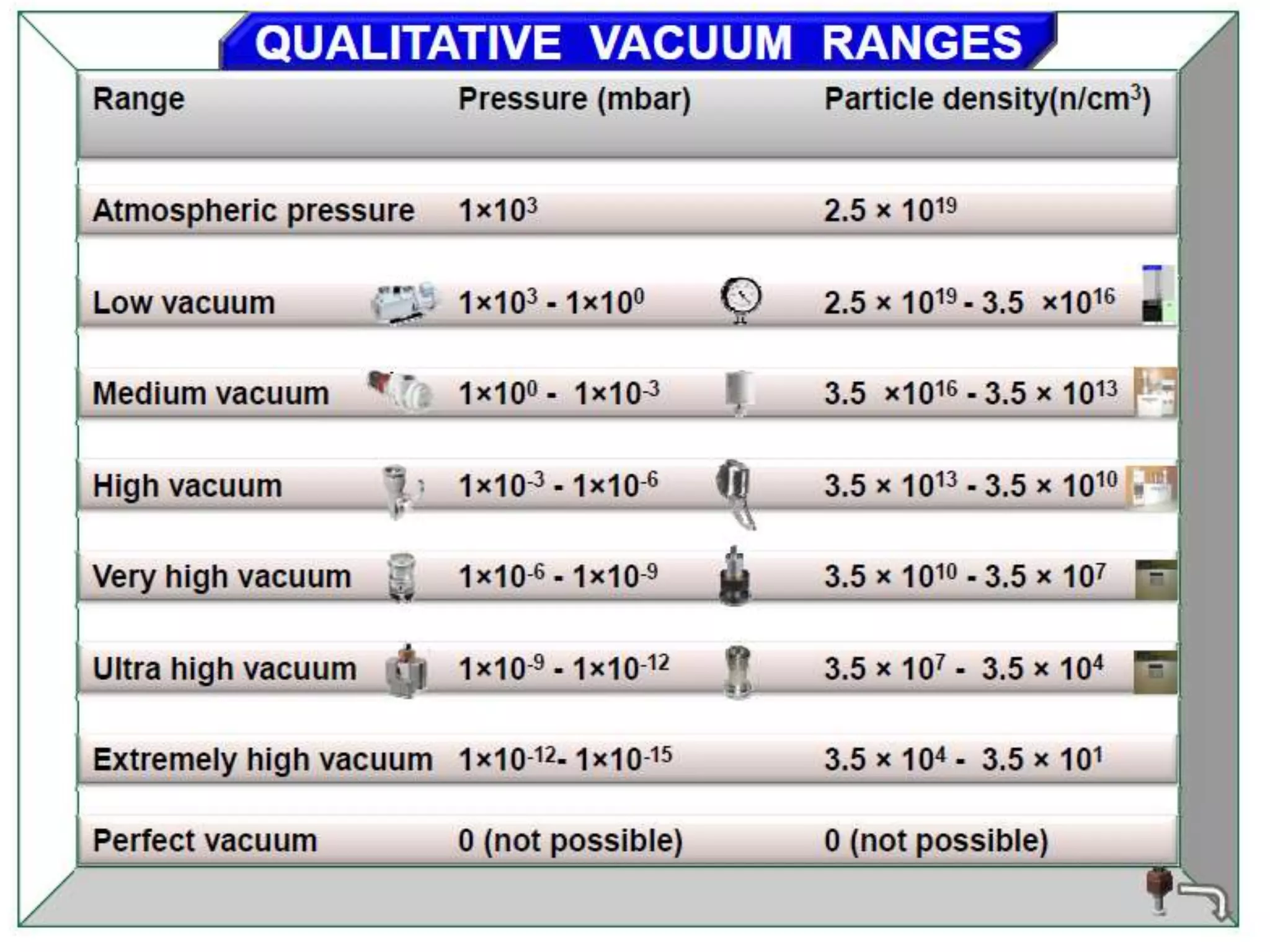
Different units of measuring pressure, vacuum
regimes
Mean free path, Collision frequency
Vaccum pumps, Water pumps
Positive displacement pump
Rotary and root pump
Vapour ejector and vapour entrapment pump
Diffusion pump
Turbo-molecular pump
Test
Ion pump Sieve pump, Adsorption pump
Vacuum Measuring devices
Manometer, McLoad Gauge,
Peening gauge, Pirani gauge
Conductance and through put
Effective pumping speed
Gas flow through pipes and orifice
Sources of Leak, Leak detection and remedies
Test
Vacuum Applications in Materials processing
Vacuum induction furnace, Vacuum arc furnace
Metal refining in vacuum, Degassing in liquid state
Vacuum heat treatment, Vacuum sintering
Design of vacuum furnace
Vacuum coating, Purpose of vacuum coating
Vacuum coating process
Process of PVD and CVD coatings, vacuum coating
characterization
Test
Course Outline:
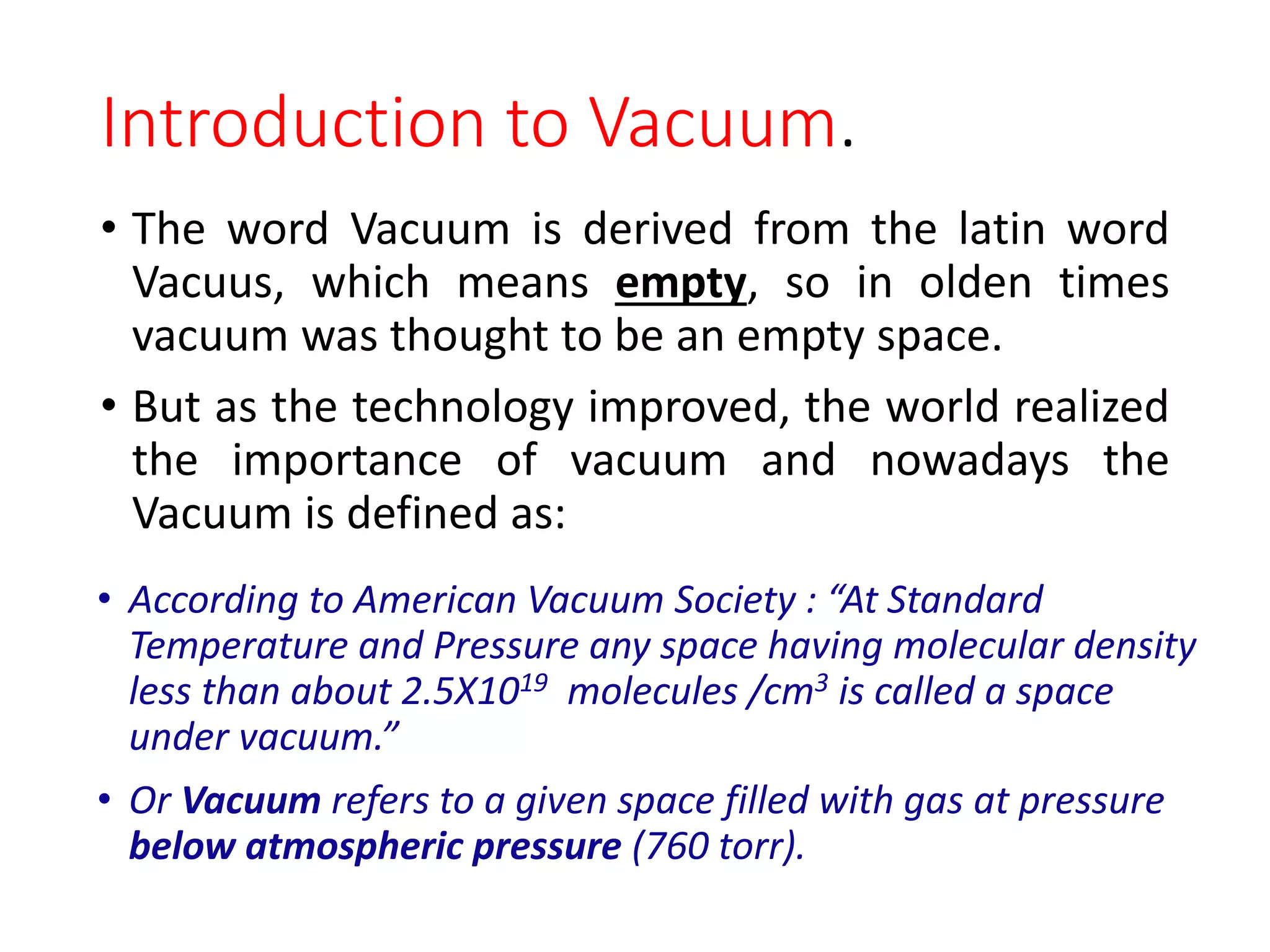
Introduction to Vacuum.
• The word Vacuum is derived from the latin word
Vacuus, which means empty, so in olden times
vacuum was thought to be an empty space.
• But as the technology improved, the world realized
the importance of vacuum and nowadays the
Vacuum is defined as:
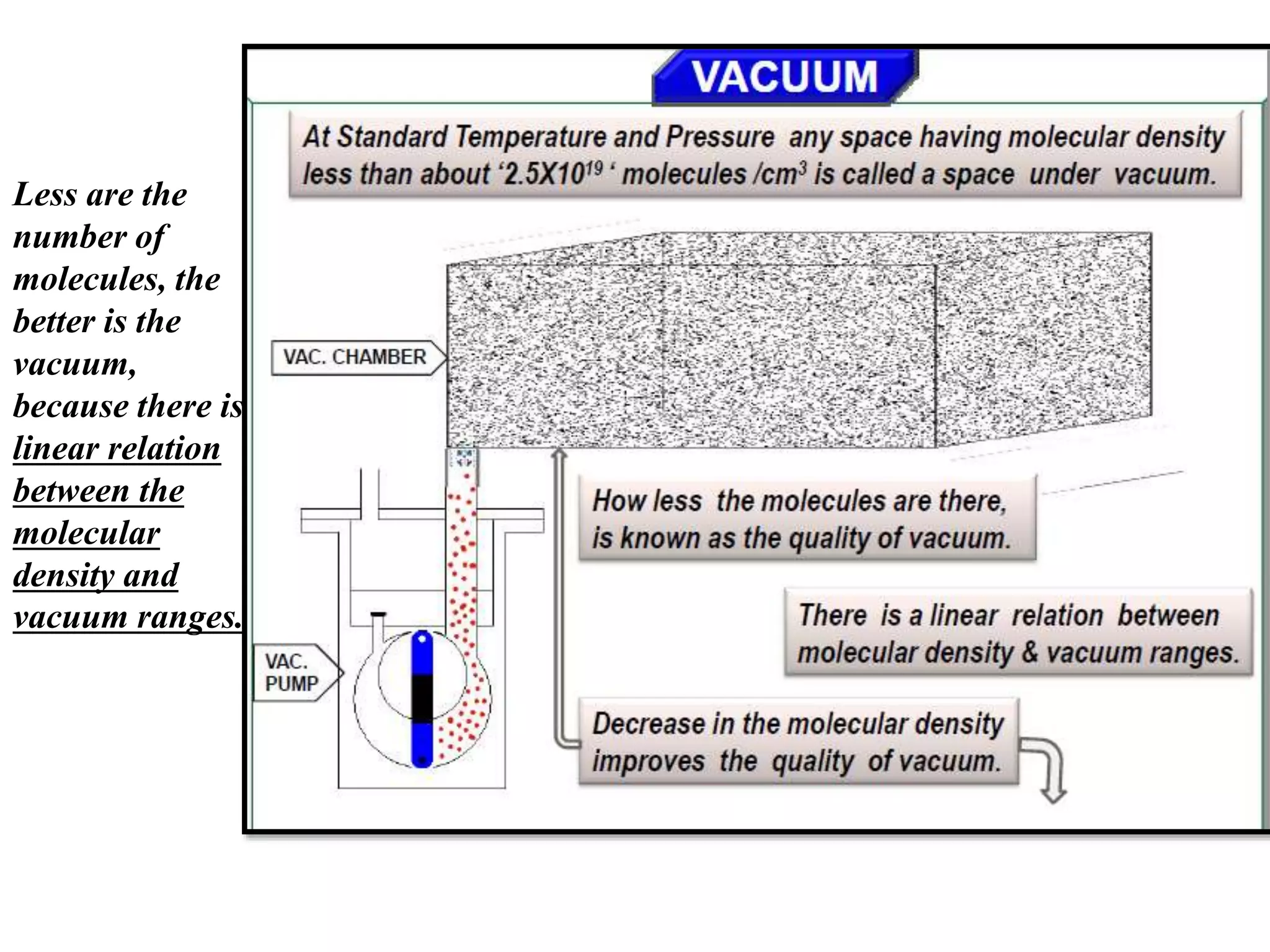
• According to American Vacuum Society : “At Standard
Temperature and Pressure any space having molecular density
less than about 2.5X10¹⁹ molecules /cm3 is called a space
under vacuum.”
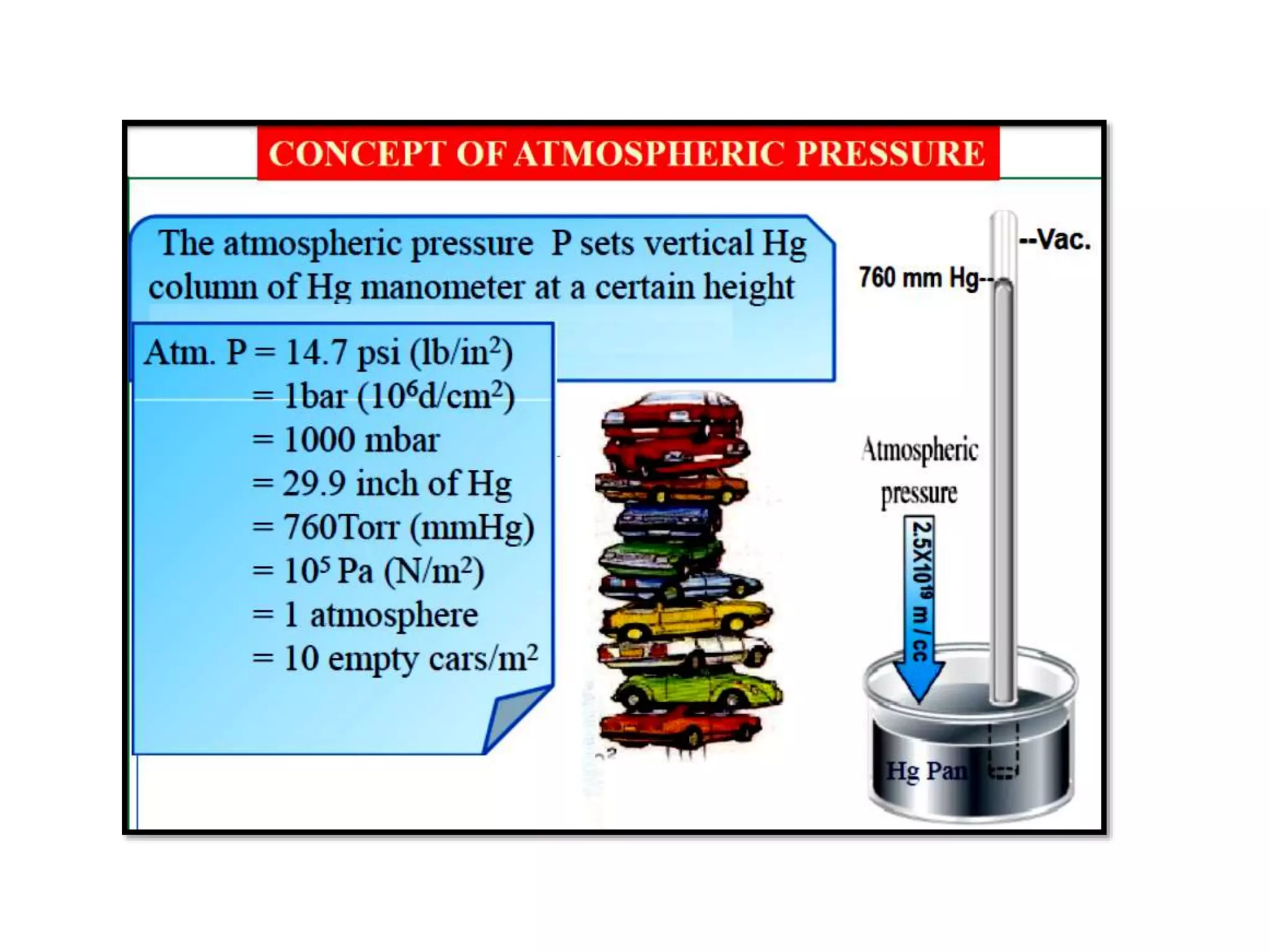
• Or Vacuum refers to a given space filled with gas at pressure
below atmospheric pressure (760 torr).
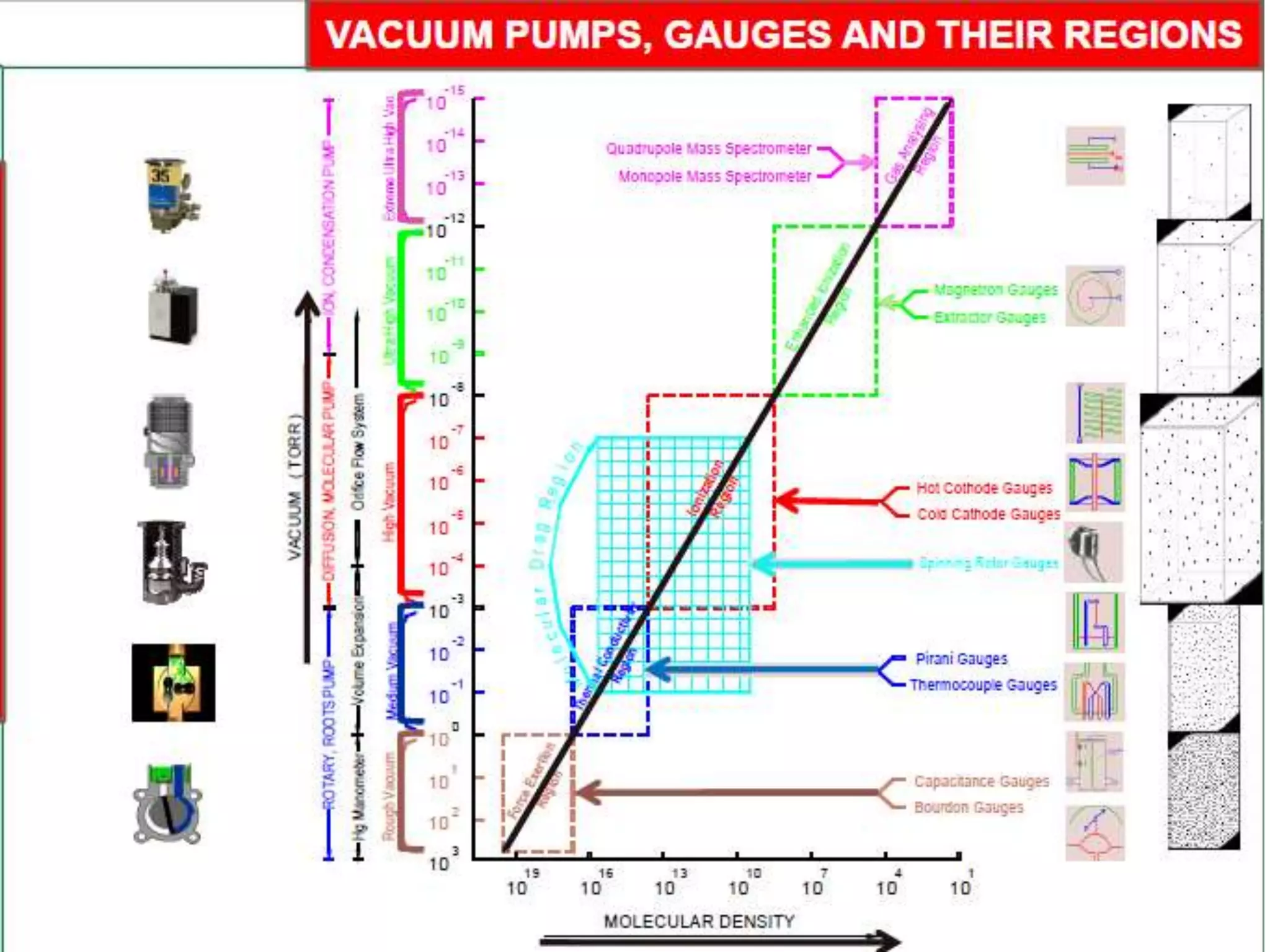
Less are the
number of
molecules, the
better is the
vacuum,
because there is
linear relation
between the
molecular
density and
vacuum ranges.
Types of Vacuum
• Natural Vacuum
• Artificial vacuum
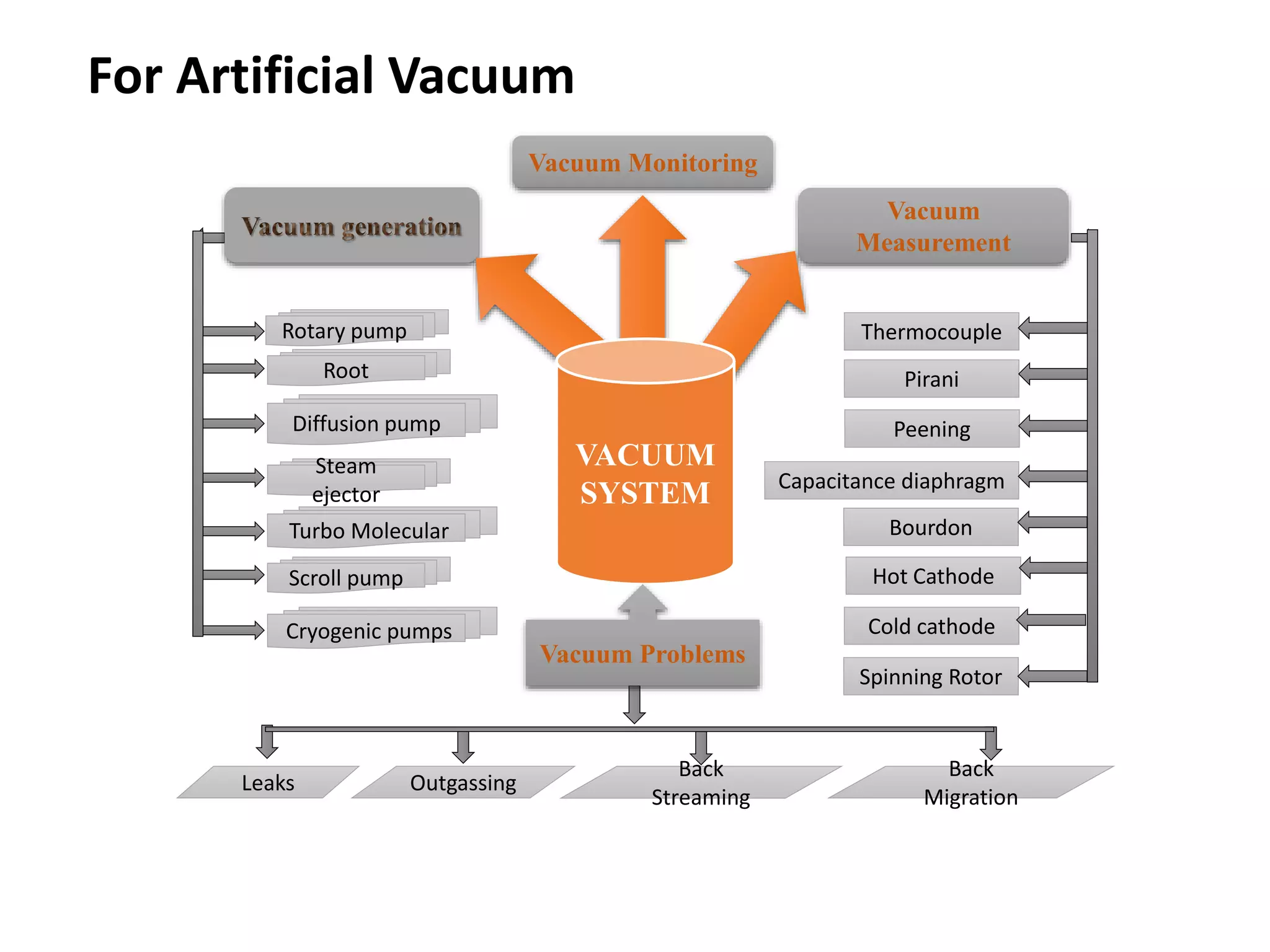
Vacuum Monitoring
Vacuum
Measurement
Rotary pump
Root
Diffusion pump
Steam
ejector
Turbo Molecular
Scroll pump
Thermocouple
Pirani
Peening
Capacitance diaphragm
Bourdon
Hot Cathode
Cryogenic pumps Cold cathode
Spinning Rotor
VACUUM
SYSTEM
Leaks Outgassing
Back
Streaming
Back
Migration
Vacuum Problems
For Artificial Vacuum
Natural Vacuum
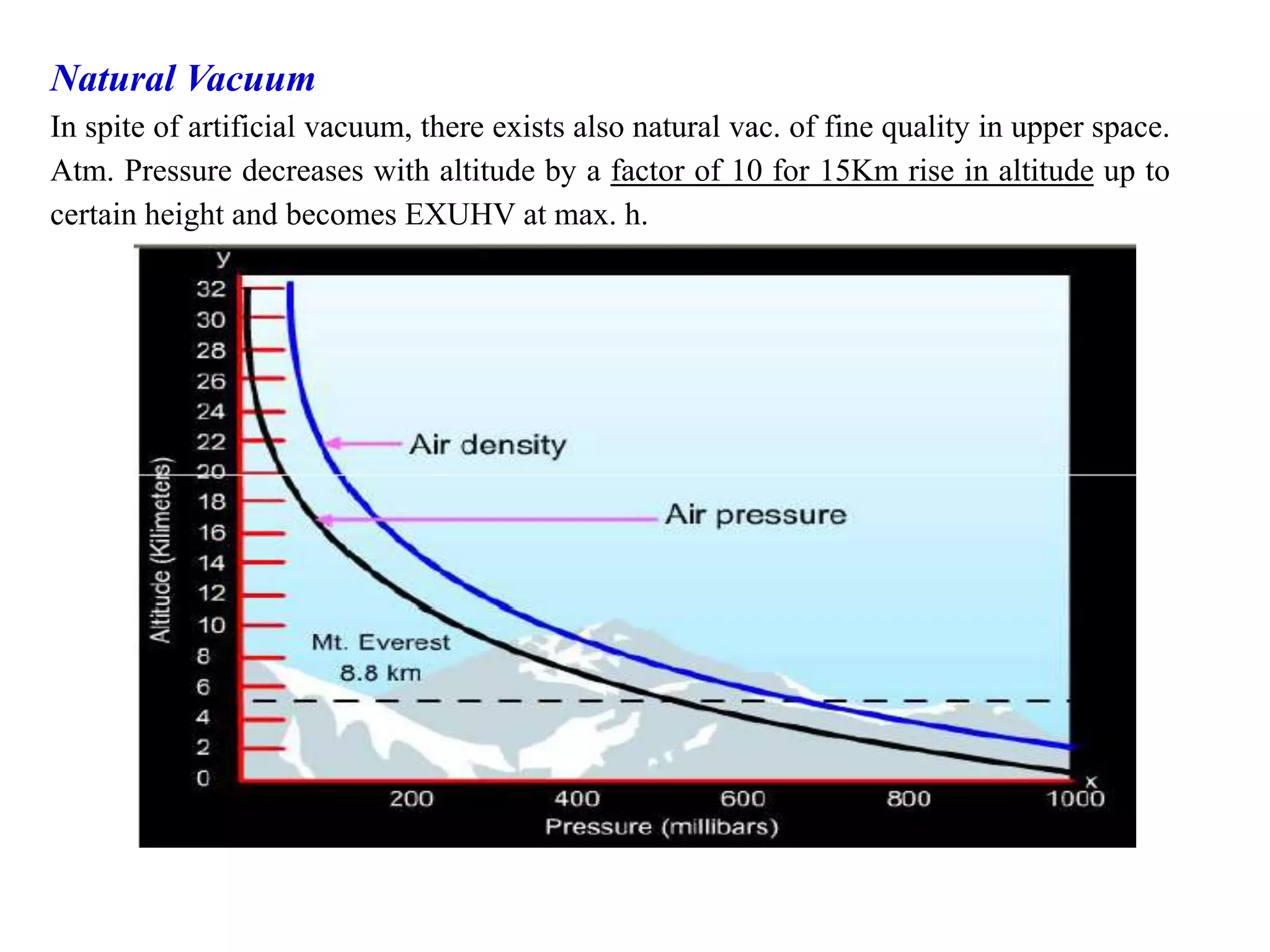
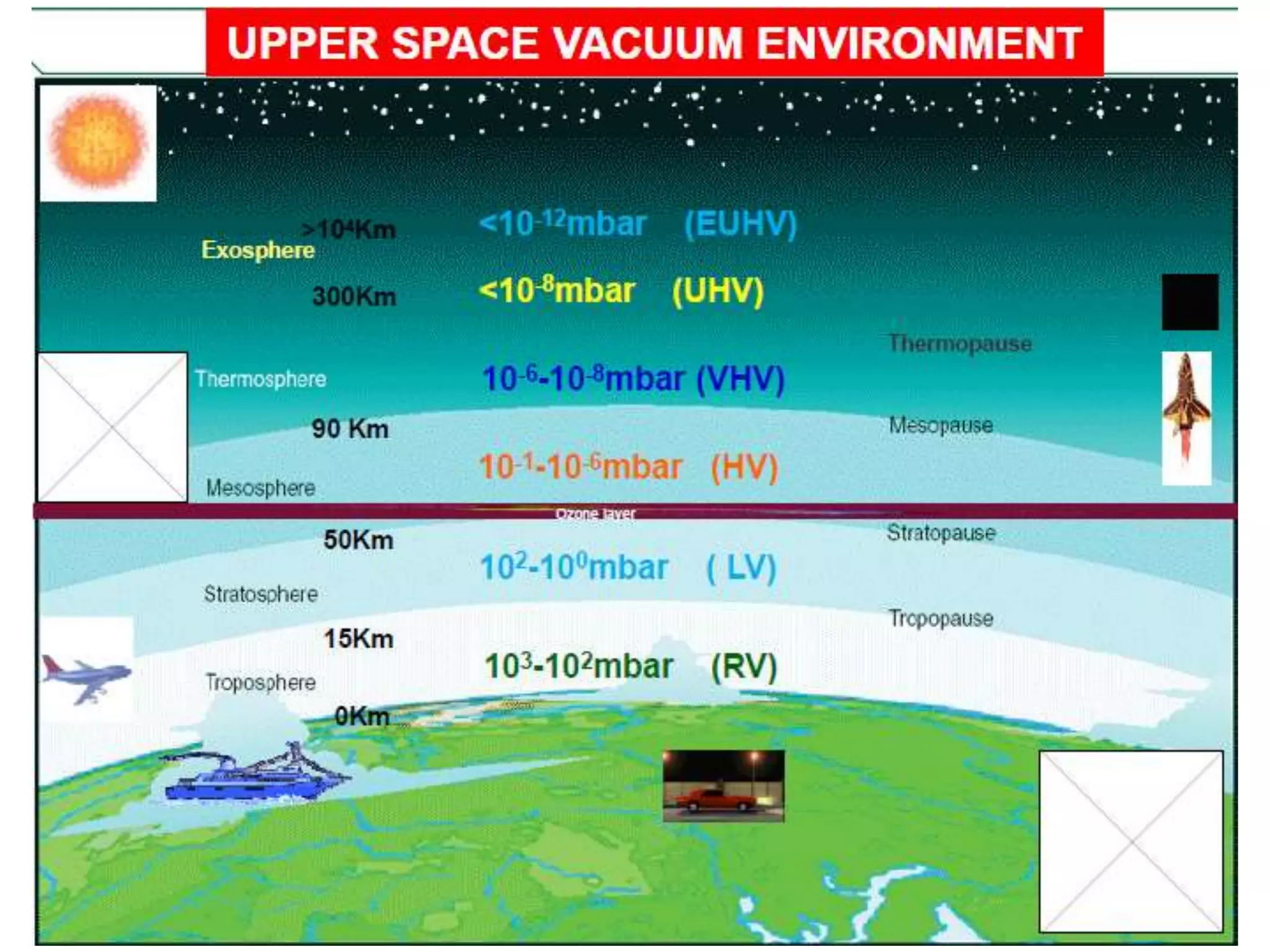
In spite of artificial vacuum, there exists also natural vac. of fine quality in upper space.
Atm. Pressure decreases with altitude by a factor of 10 for 15Km rise in altitude up to
certain height and becomes EXUHV at max. h.
What is Vacuum Metallurgy?
•According to R.F Bunshah in
“International Vacuum Metallurgy
Conference” 1967 defined Vacuum
Metallurgy as:
“the making, shaping and treating's of
metal & alloys under pressure ranging
from sub-atmospheric to ultra high
vacuum in order to improve their
properties and service life.”
•Almost all the metals in the periodic table
nowadays are produced by vacuum
methods or to those that undergo vacuum
processes at some stages in their
manufacturing.
•The aim of vacuum treatment is essentially
the removal or reduction of harmful
impurities during production or in the
various processes phases, whether for
increase the yield, improving of quality, or
creation of quite new materials.
Introduction to Vacuum Metallurgy

Introduction to Vacuum Metallurgy

  • 1.
    Allah has blessedus with chance to serve the Nation in the Field of Metallurgy & Materials Engineering
  • 2.
    Vacuum Metallurgy Course Teacher: Engr.Muhammad Ali Siddiqui Lecturer/ Area Coordinator ISO 9000 MYD, NED UET Qualification: BE, Metallurgy & Materials Engineering , Mehran UET Jamshoro, 2007 ME, Materials Engineering, NED UET Karachi, 2011
  • 3.
    Open Discussion/Students Problems: 1. Regarding;Study/Teaching 2. Projects/Thesis …. (any information do you want) 3. Any Suggestion for Continual Improvement 4. Any other item ….
  • 4.
    Vacuum Metallurgy Sessional MarksDistribution Total No of Lectures: 48, 03 per week Thursday = 1st Class Friday = 1st & 2nd Class Credit Hours = 3 + 1 Activity in Fall Term Marks Distribution  Attendance (Optional) 05 No >75 % = 5No 75 to 70 % = 4No 69 to 65 %= 3No 64 to 60 %= 2No 59 to 50 %= 1No <50 5 = 0 No  Total Test = 2 (Each test of 10 No’s) 20  Assignment or Presentation 05 Total 30 Total Marks = 100 No’s. Sessional Marks = 30 No's. Final Exams Marks = 70 No's.
  • 5.
    Introduction to thesubject Different units of measuring pressure, vacuum regimes Mean free path, Collision frequency Vaccum pumps, Water pumps Positive displacement pump Rotary and root pump Vapour ejector and vapour entrapment pump Diffusion pump Turbo-molecular pump Test Ion pump Sieve pump, Adsorption pump Vacuum Measuring devices Manometer, McLoad Gauge, Peening gauge, Pirani gauge Conductance and through put Effective pumping speed Gas flow through pipes and orifice Sources of Leak, Leak detection and remedies Test Vacuum Applications in Materials processing Vacuum induction furnace, Vacuum arc furnace Metal refining in vacuum, Degassing in liquid state Vacuum heat treatment, Vacuum sintering Design of vacuum furnace Vacuum coating, Purpose of vacuum coating Vacuum coating process Process of PVD and CVD coatings, vacuum coating characterization Test Course Outline:
  • 6.
    Introduction to Vacuum. •The word Vacuum is derived from the latin word Vacuus, which means empty, so in olden times vacuum was thought to be an empty space. • But as the technology improved, the world realized the importance of vacuum and nowadays the Vacuum is defined as: • According to American Vacuum Society : “At Standard Temperature and Pressure any space having molecular density less than about 2.5X10¹⁹ molecules /cm3 is called a space under vacuum.” • Or Vacuum refers to a given space filled with gas at pressure below atmospheric pressure (760 torr).
  • 8.
    Less are the numberof molecules, the better is the vacuum, because there is linear relation between the molecular density and vacuum ranges.
  • 11.
    Types of Vacuum •Natural Vacuum • Artificial vacuum
  • 12.
    Vacuum Monitoring Vacuum Measurement Rotary pump Root Diffusionpump Steam ejector Turbo Molecular Scroll pump Thermocouple Pirani Peening Capacitance diaphragm Bourdon Hot Cathode Cryogenic pumps Cold cathode Spinning Rotor VACUUM SYSTEM Leaks Outgassing Back Streaming Back Migration Vacuum Problems For Artificial Vacuum
  • 14.
    Natural Vacuum In spiteof artificial vacuum, there exists also natural vac. of fine quality in upper space. Atm. Pressure decreases with altitude by a factor of 10 for 15Km rise in altitude up to certain height and becomes EXUHV at max. h.
  • 21.
    What is VacuumMetallurgy? •According to R.F Bunshah in “International Vacuum Metallurgy Conference” 1967 defined Vacuum Metallurgy as: “the making, shaping and treating's of metal & alloys under pressure ranging from sub-atmospheric to ultra high vacuum in order to improve their properties and service life.”
  • 22.
    •Almost all themetals in the periodic table nowadays are produced by vacuum methods or to those that undergo vacuum processes at some stages in their manufacturing. •The aim of vacuum treatment is essentially the removal or reduction of harmful impurities during production or in the various processes phases, whether for increase the yield, improving of quality, or creation of quite new materials.