Metallic Foam
Metallic Foams

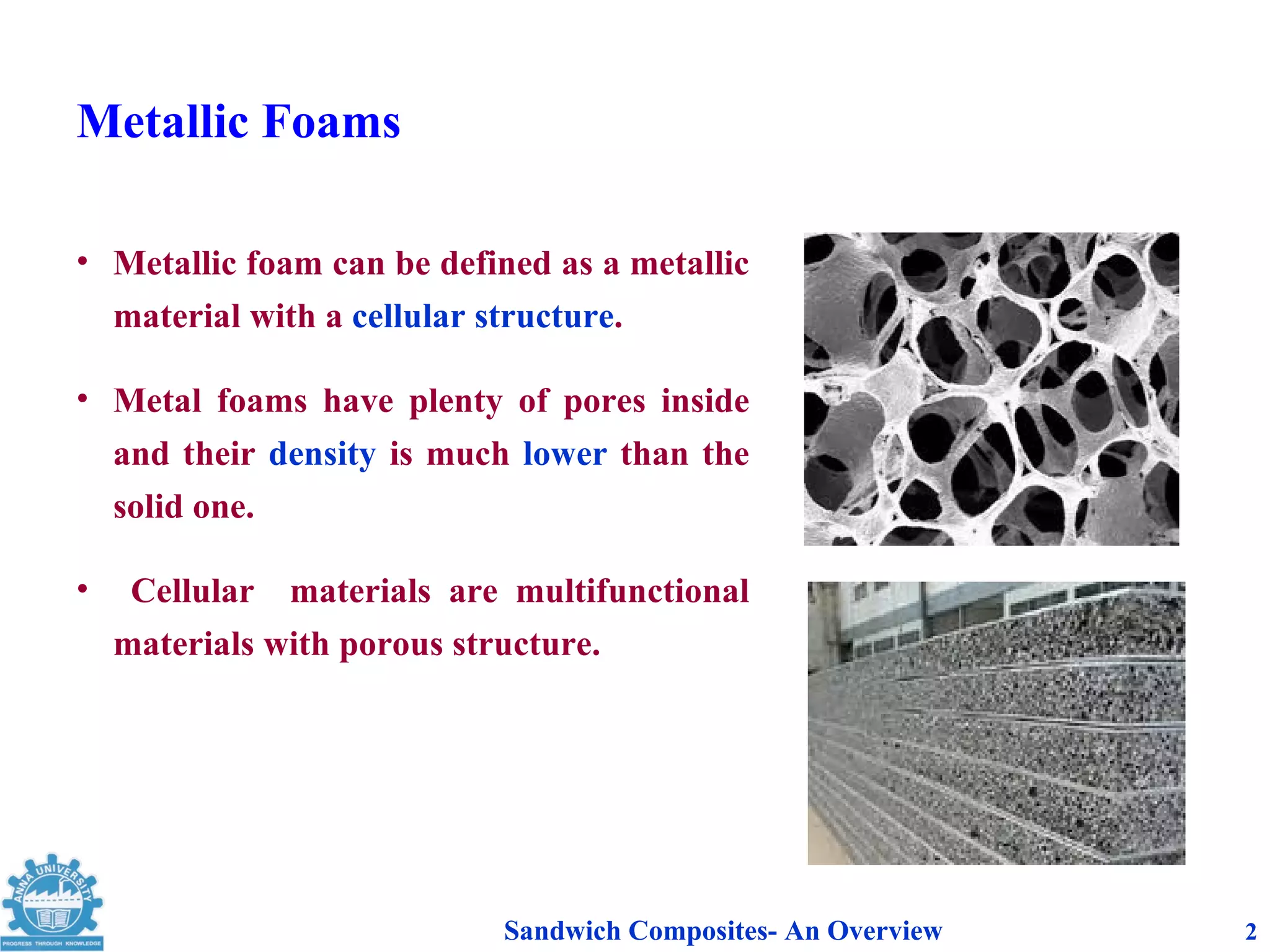
• Metallic foam can be defined as a metallic
  material with a cellular structure.

• Metal foams have plenty of pores inside
  and their density is much lower than the
  solid one.

•    Cellular materials are multifunctional
    materials with porous structure.


                           Sandwich Composites- An Overview   2
Preparation of Metal Foam

•   Liquid Metallurgy Route
   Aluminium is melt in stir casting furnace
   The foaming agent is added to Aluminium        melt
   Aluminium and foaming agent decompose and release the gases
   When trapped gases in the solidifying metal convert it into a closed-
    cell foam

•   Foaming Agent
–   Titanium hydride      -        Effective Foaming Agent
–   Zirconium hydride     -        High Cost
–   Calcium carbonate     -        Low Cost ,Easily Available
–   Sodium Carbonate      -        Low Cost , Easily available
Preparation of Metal Foam

•   First stage
•   1.1 kg of Aluminium alloy is melt in stir casting furnace
•   The melt reaches 650 ºc, the furnace is turned off
•   Start the stirrer until the temperature reaches 635 ºC
•   Add the 3.3 wt % of foaming agent to the molten metal
•   Continue stirring up to 60sec
•   When the temperature reaches 580ºC,the rotating stirrer is stopped
•   After that crucible with foam can be taken out from the furnace
•   The metallic Foam is cooled by air
•   Second Stage
     • Insert the precursor into sintering furnace
     • Bake the precursor for 15min at 650ºc
     • Precursor (Foam) can be left cool in air
                                                                         4
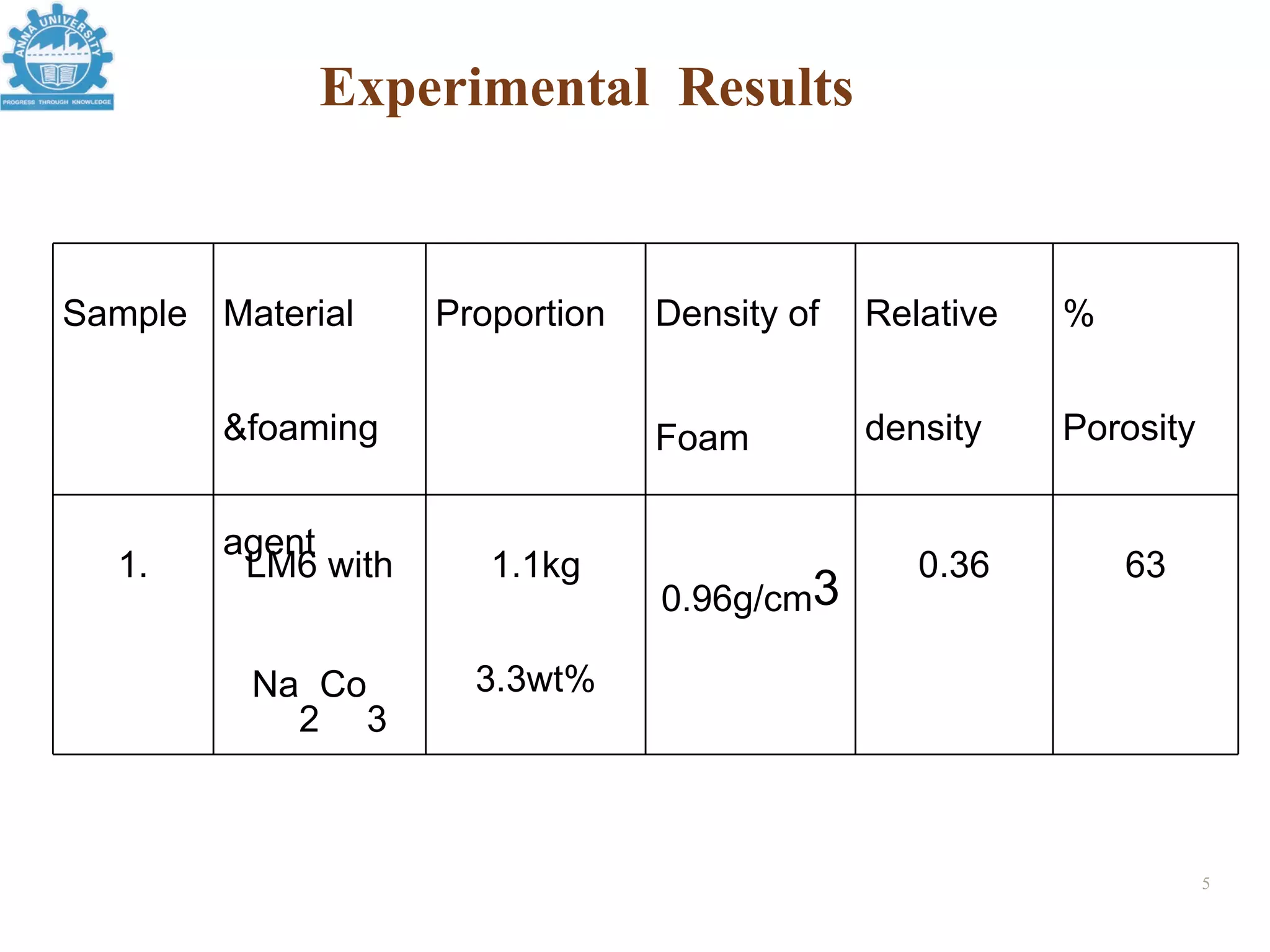
Experimental Results


Sample Material     Proportion   Density of   Relative   %


        &foaming                 Foam         density    Porosity


        agent
  1.     LM6 with      1.1kg                     0.36        63
                                 0.96g/cm3

         Na Co        3.3wt%
           2 3


                                                                    5
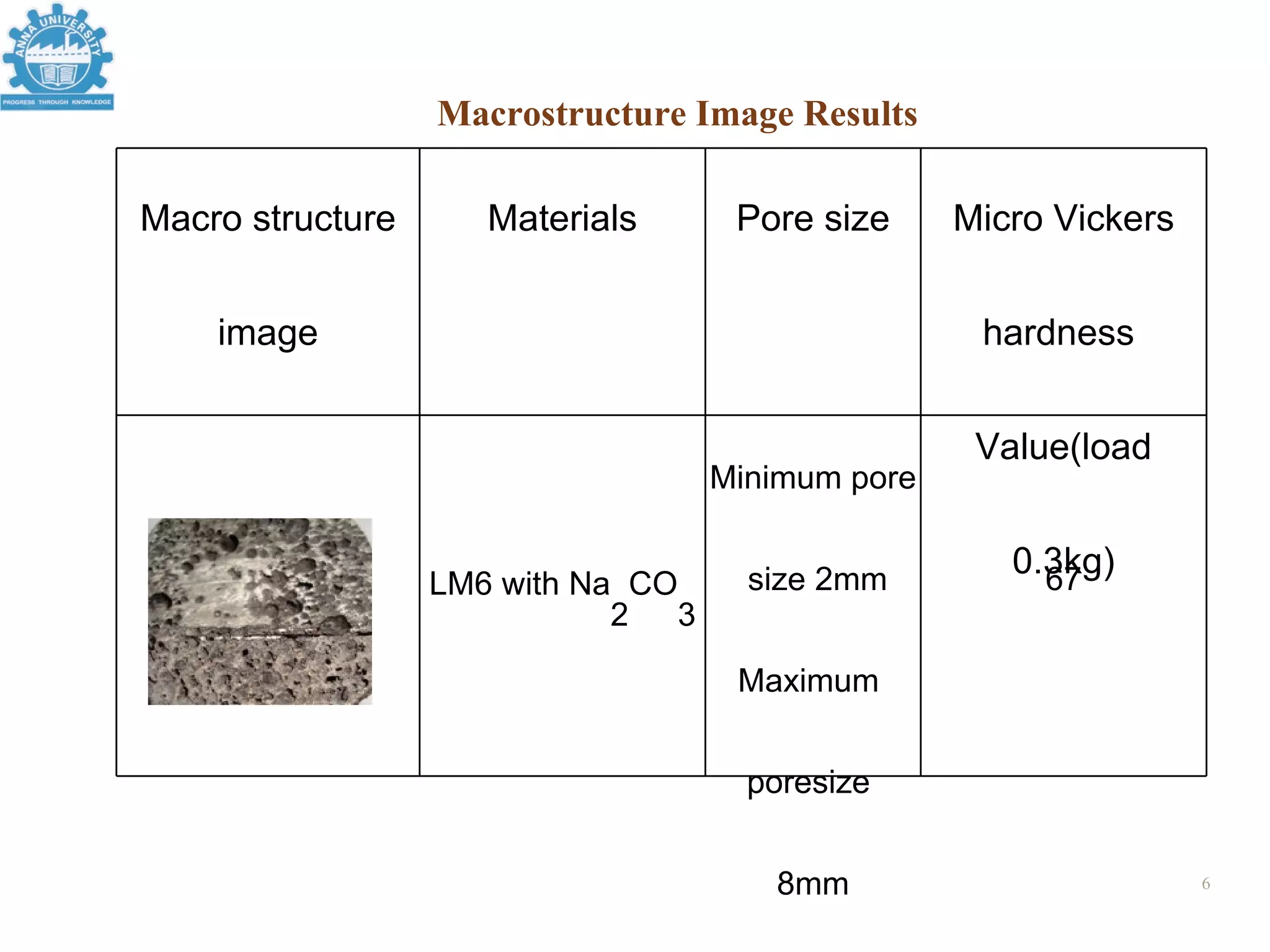
Macrostructure Image Results

Macro structure      Materials        Pore size     Micro Vickers


    image                                            hardness


                                                     Value(load
                                     Minimum pore


                                       size 2mm
                                                       0.3kg)
                                                         67
                  LM6 with Na CO
                             2   3

                                      Maximum


                                       poresize


                                        8mm                         6
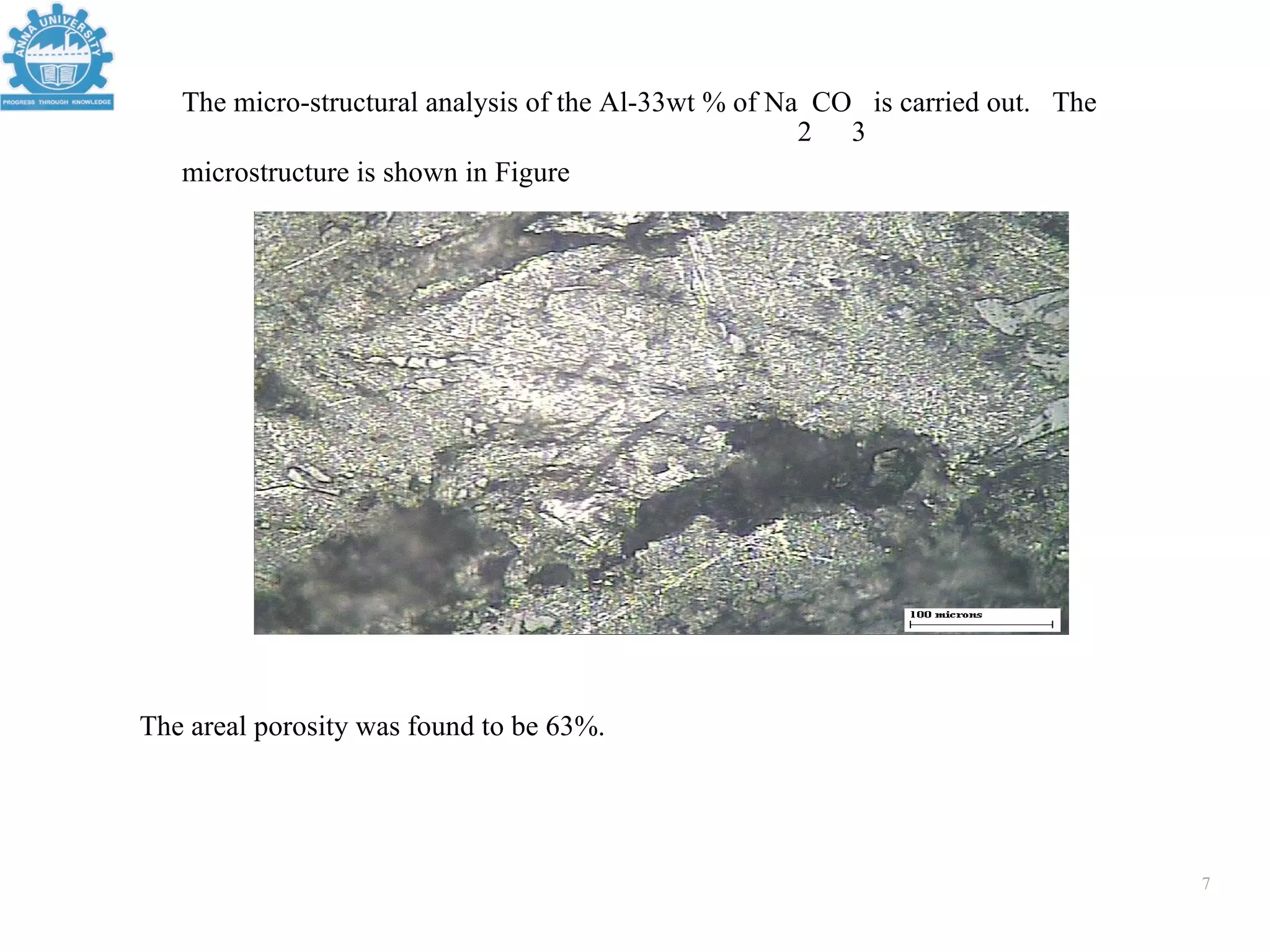
The micro-structural analysis of the Al-33wt % of Na CO is carried out. The
                                                       2 3
   microstructure is shown in Figure


The areal porosity was found to be 63%.


                                                                                 7
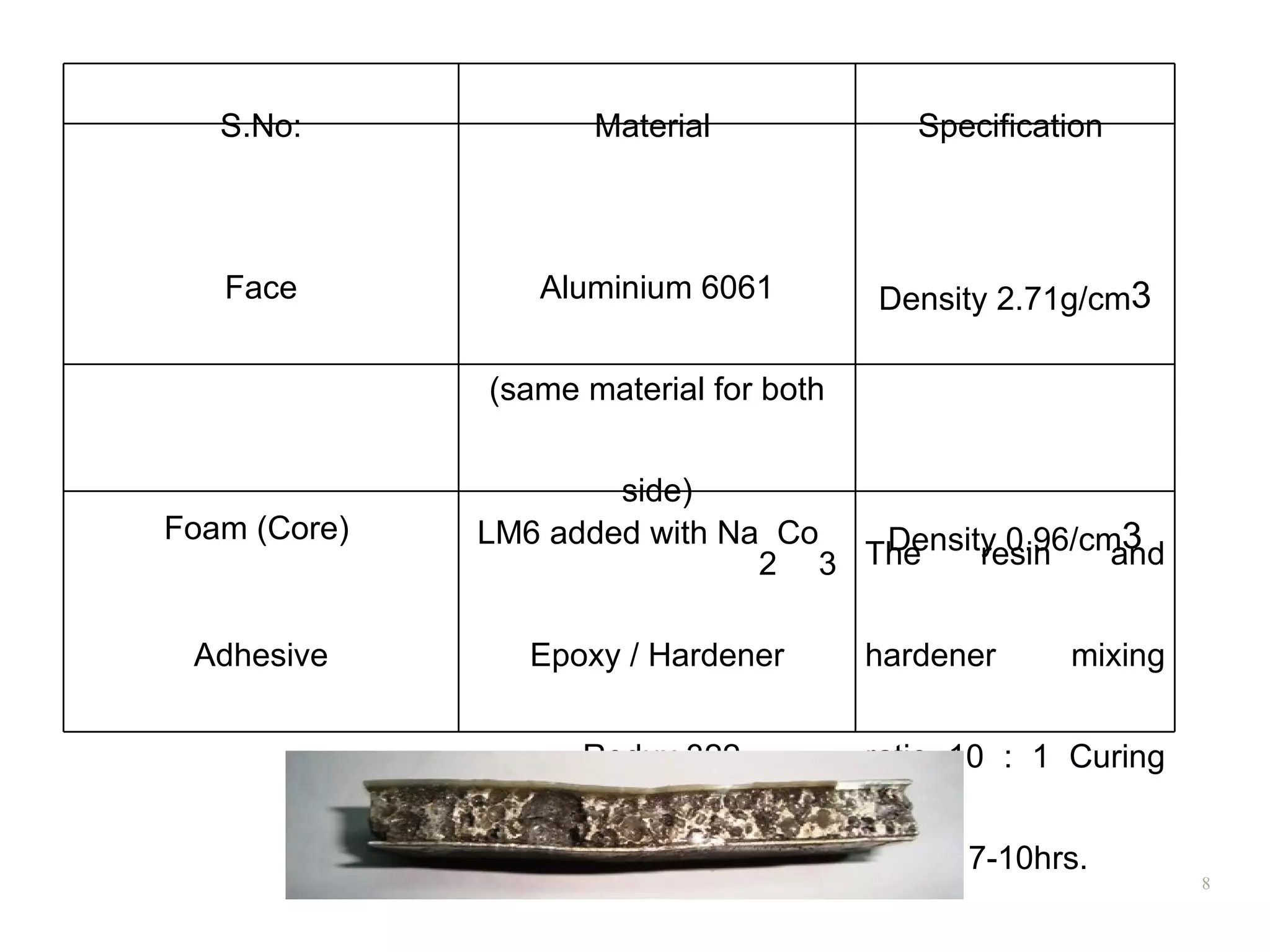
S.No:             Material              Specification


   Face          Aluminium 6061         Density 2.71g/cm3

              (same material for both


                      side)
Foam (Core)   LM6 added with Na Co  Density 0.96/cm3
                               2 3 The    resin    and


 Adhesive        Epoxy / Hardener       hardener      mixing


                    Redux 322           ratio 10 : 1 Curing


                                        time is 7-10hrs.
                                                               8
Summary of case study
1 The density of the Al alloy+CaCo3 and Al alloy+Na2Co3
  was found to be 1.65g/cc and 0.96g/cc respectively.

2. The porosity of the Al alloy+CaCo3 and Al alloy+ Na2Co3
   was found to be 36 % and 63% respectively.

3. A sandwich panel is developed with dimensions of ASTM
   standards to conduct three point loading test. The
   maximum deflection for al alloy+ Na2co3 foam at a load of
   2300N is found to be 1.61mm. The values obtained were
   compared with theoretical formula at load of 2300N is found
   to be 2.22mm.
Comparison of Foam core

•   PVC (closed cell)
    - ‘linear’ – High ductility, low properties
    - ‘cross-linked’ – High strength and stiffness but brittle
    - ~ 50% Reduction of properties at 40-60oC
    - chemical breakdown (HCl vapour) at 200oC
•   PU
    - inferior to PVC at ambient temperatures
    - better property retention (max. 100oC)
•   Phenolic

    - Poor mechanical properties
    - Good fire resistance
    - Strength retention to 150oC
                                                                 10
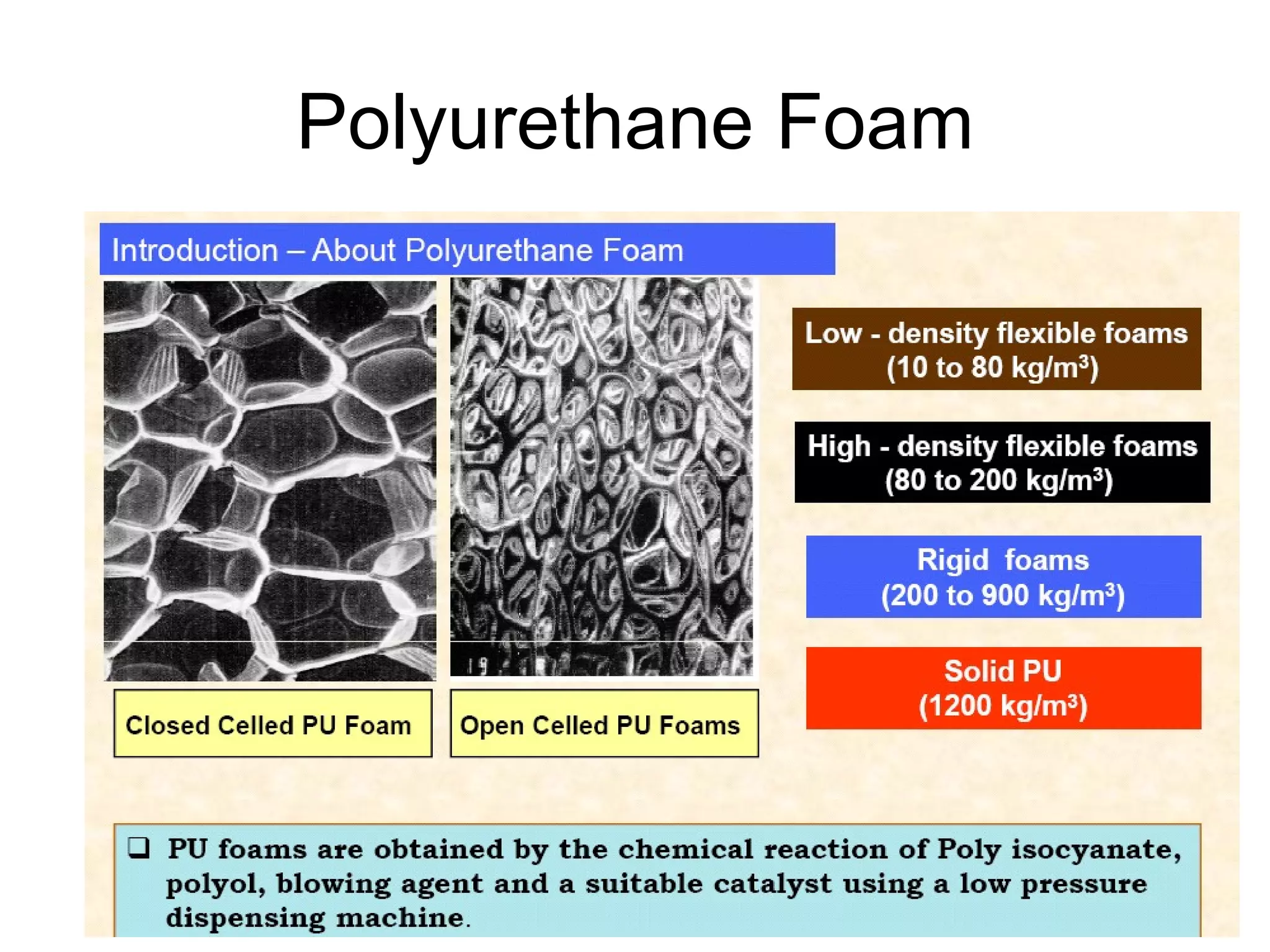
Polyurethane Foam
Comparison of Foam Core

•   Syntactic Foam
    - Glass or polymer microspheres
    - Used as sandwich core or buoyant filler
    - High compressive strength

•   Balsa
    - Efficient and low cost
    - Absorbs water (swelling and rot)
    - Not advisable for primary hull and deck structures
    - OK for internal bulkheads


                                                           12
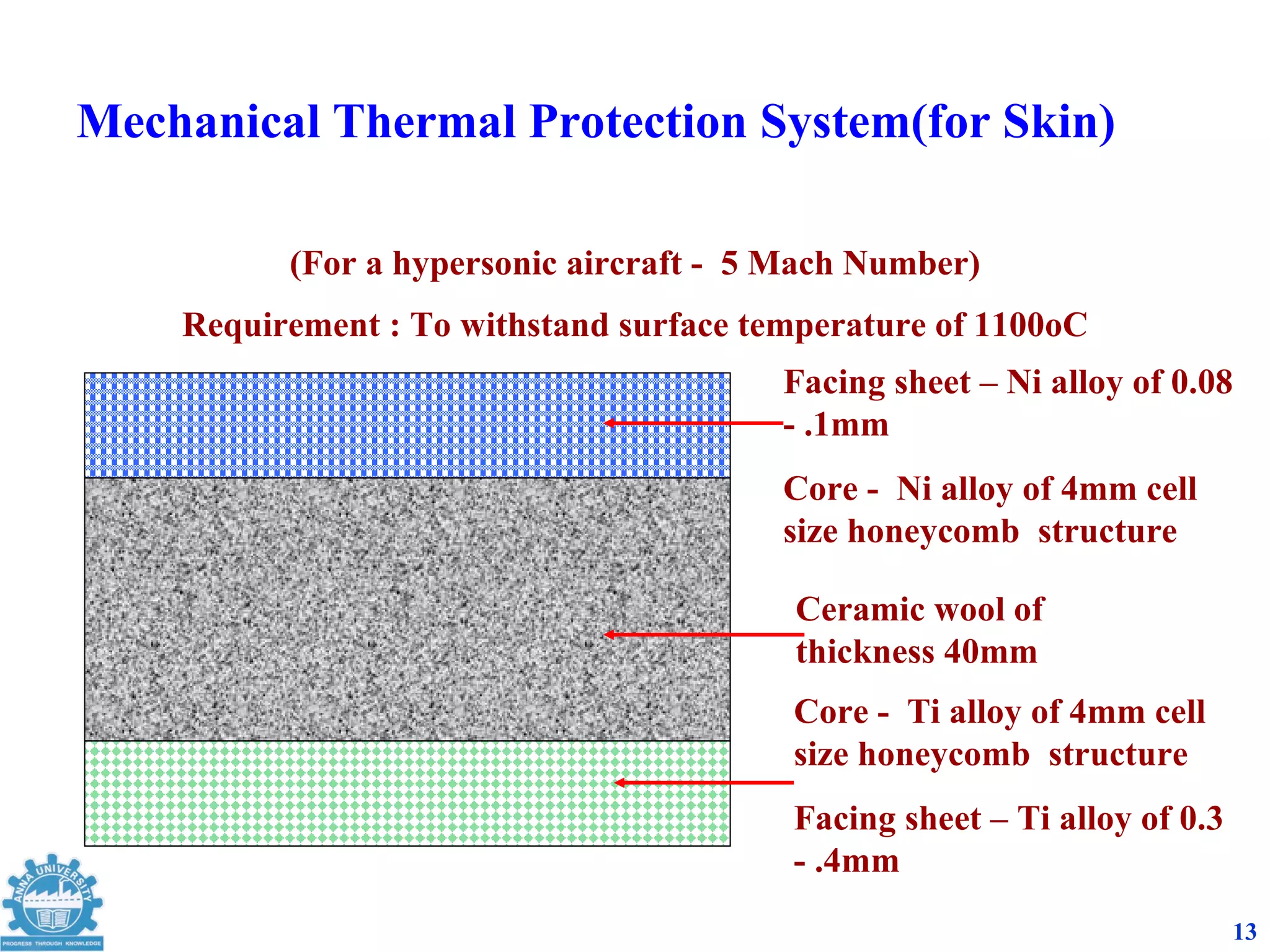
Mechanical Thermal Protection System(for Skin)

          (For a hypersonic aircraft - 5 Mach Number)
    Requirement : To withstand surface temperature of 1100oC
                                         Facing sheet – Ni alloy of 0.08
                                         - .1mm
                                         Core - Ni alloy of 4mm cell
                                         size honeycomb structure

                                         Ceramic wool of
                                         thickness 40mm
                                         Core - Ti alloy of 4mm cell
                                         size honeycomb structure
                                         Facing sheet – Ti alloy of 0.3
                                         - .4mm
                                                                          13
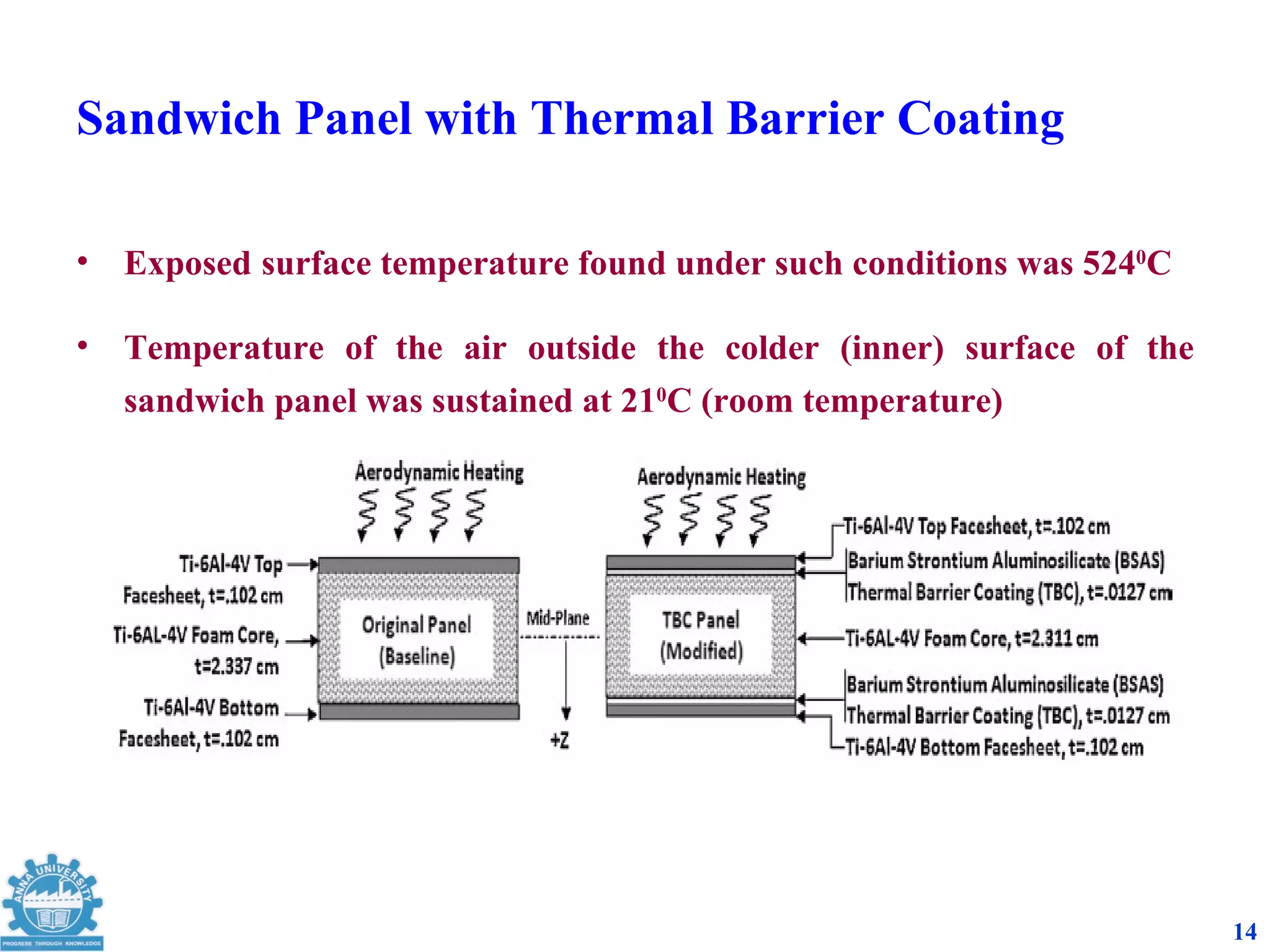
Sandwich Panel with Thermal Barrier Coating

•   Exposed surface temperature found under such conditions was 5240C

•   Temperature of the air outside the colder (inner) surface of the
    sandwich panel was sustained at 210C (room temperature)


                                                                        14
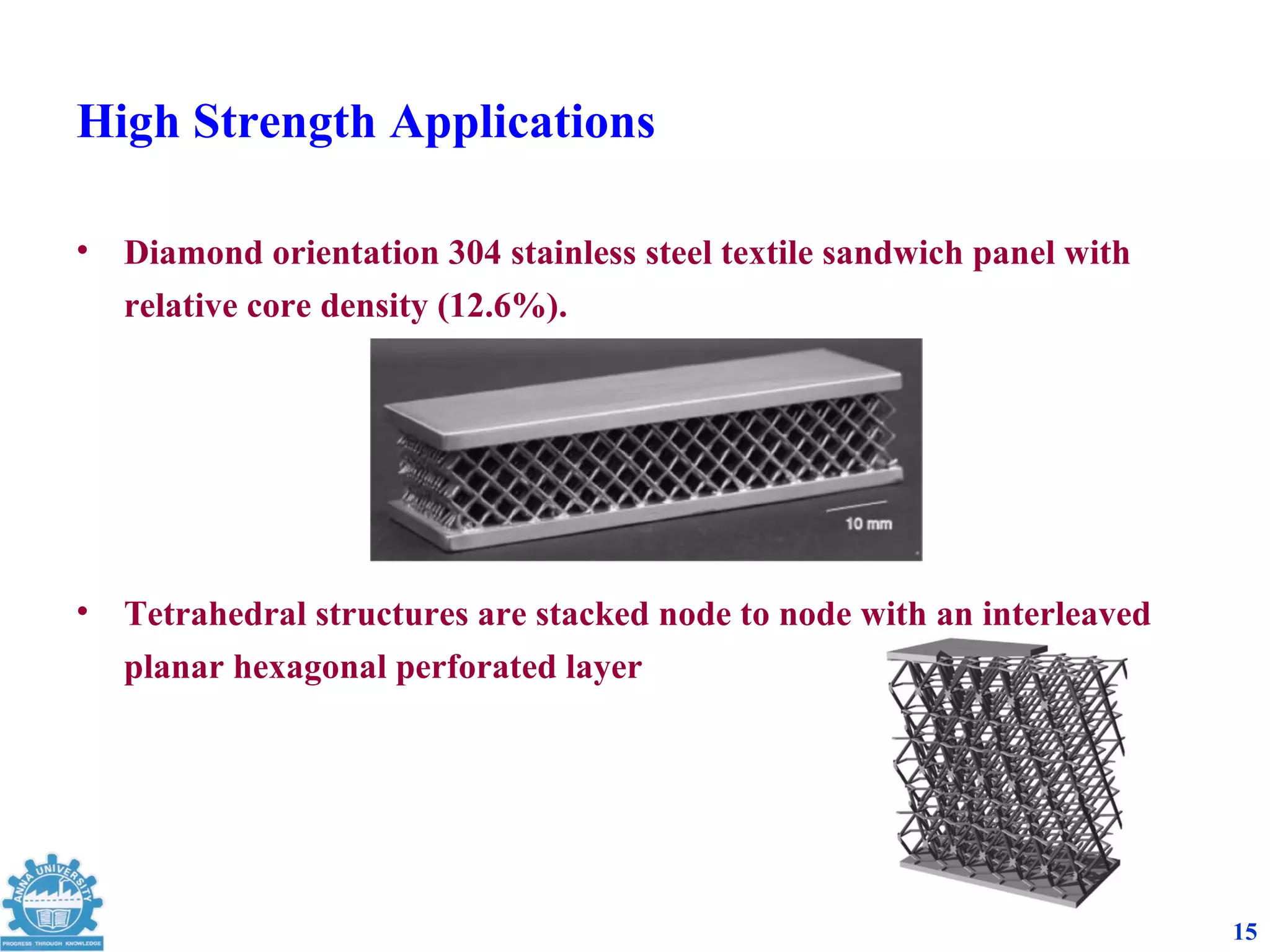
High Strength Applications

•   Diamond orientation 304 stainless steel textile sandwich panel with
    relative core density (12.6%).


•   Tetrahedral structures are stacked node to node with an interleaved
    planar hexagonal perforated layer


                                                                          15
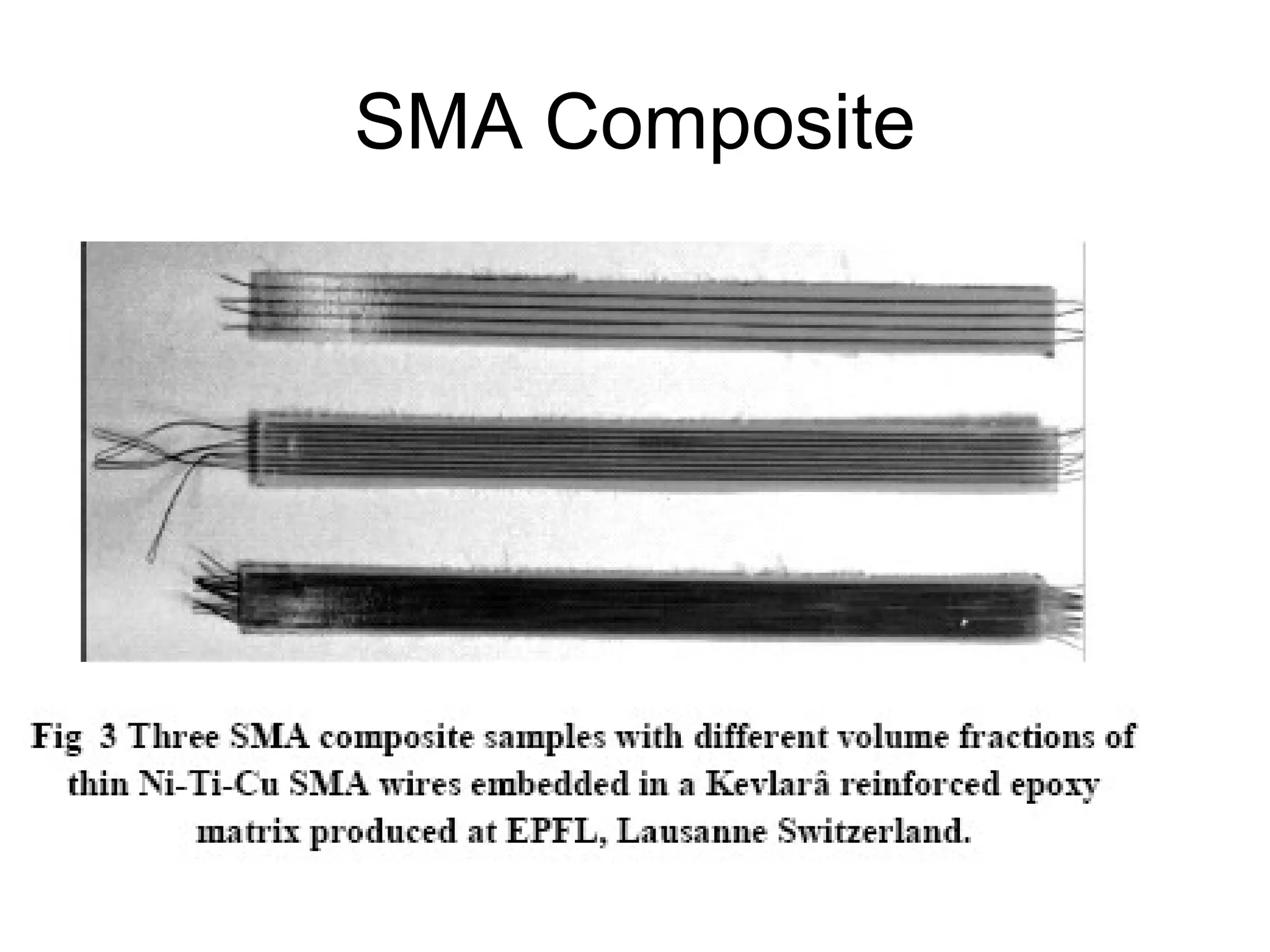
SMA Composite

Hybrid and metallic foam

  • 1.
  • 2.
    Metallic Foams • Metallicfoam can be defined as a metallic material with a cellular structure. • Metal foams have plenty of pores inside and their density is much lower than the solid one. • Cellular materials are multifunctional materials with porous structure. Sandwich Composites- An Overview 2
  • 3.
    Preparation of MetalFoam • Liquid Metallurgy Route  Aluminium is melt in stir casting furnace  The foaming agent is added to Aluminium melt  Aluminium and foaming agent decompose and release the gases  When trapped gases in the solidifying metal convert it into a closed- cell foam • Foaming Agent – Titanium hydride - Effective Foaming Agent – Zirconium hydride - High Cost – Calcium carbonate - Low Cost ,Easily Available – Sodium Carbonate - Low Cost , Easily available
  • 4.
    Preparation of MetalFoam • First stage • 1.1 kg of Aluminium alloy is melt in stir casting furnace • The melt reaches 650 ºc, the furnace is turned off • Start the stirrer until the temperature reaches 635 ºC • Add the 3.3 wt % of foaming agent to the molten metal • Continue stirring up to 60sec • When the temperature reaches 580ºC,the rotating stirrer is stopped • After that crucible with foam can be taken out from the furnace • The metallic Foam is cooled by air • Second Stage • Insert the precursor into sintering furnace • Bake the precursor for 15min at 650ºc • Precursor (Foam) can be left cool in air 4
  • 5.
    Experimental Results Sample Material Proportion Density of Relative % &foaming Foam density Porosity agent 1. LM6 with 1.1kg 0.36 63 0.96g/cm3 Na Co 3.3wt% 2 3 5
  • 6.
    Macrostructure Image Results Macrostructure Materials Pore size Micro Vickers image hardness Value(load Minimum pore size 2mm 0.3kg) 67 LM6 with Na CO 2 3 Maximum poresize 8mm 6
  • 7.
    The micro-structural analysisof the Al-33wt % of Na CO is carried out. The 2 3 microstructure is shown in Figure The areal porosity was found to be 63%. 7
  • 8.
    S.No: Material Specification Face Aluminium 6061 Density 2.71g/cm3 (same material for both side) Foam (Core) LM6 added with Na Co Density 0.96/cm3 2 3 The resin and Adhesive Epoxy / Hardener hardener mixing Redux 322 ratio 10 : 1 Curing time is 7-10hrs. 8
  • 9.
    Summary of casestudy 1 The density of the Al alloy+CaCo3 and Al alloy+Na2Co3 was found to be 1.65g/cc and 0.96g/cc respectively. 2. The porosity of the Al alloy+CaCo3 and Al alloy+ Na2Co3 was found to be 36 % and 63% respectively. 3. A sandwich panel is developed with dimensions of ASTM standards to conduct three point loading test. The maximum deflection for al alloy+ Na2co3 foam at a load of 2300N is found to be 1.61mm. The values obtained were compared with theoretical formula at load of 2300N is found to be 2.22mm.
  • 10.
    Comparison of Foamcore • PVC (closed cell) - ‘linear’ – High ductility, low properties - ‘cross-linked’ – High strength and stiffness but brittle - ~ 50% Reduction of properties at 40-60oC - chemical breakdown (HCl vapour) at 200oC • PU - inferior to PVC at ambient temperatures - better property retention (max. 100oC) • Phenolic - Poor mechanical properties - Good fire resistance - Strength retention to 150oC 10
  • 11.
  • 12.
    Comparison of FoamCore • Syntactic Foam - Glass or polymer microspheres - Used as sandwich core or buoyant filler - High compressive strength • Balsa - Efficient and low cost - Absorbs water (swelling and rot) - Not advisable for primary hull and deck structures - OK for internal bulkheads 12
  • 13.
    Mechanical Thermal ProtectionSystem(for Skin) (For a hypersonic aircraft - 5 Mach Number) Requirement : To withstand surface temperature of 1100oC Facing sheet – Ni alloy of 0.08 - .1mm Core - Ni alloy of 4mm cell size honeycomb structure Ceramic wool of thickness 40mm Core - Ti alloy of 4mm cell size honeycomb structure Facing sheet – Ti alloy of 0.3 - .4mm 13
  • 14.
    Sandwich Panel withThermal Barrier Coating • Exposed surface temperature found under such conditions was 5240C • Temperature of the air outside the colder (inner) surface of the sandwich panel was sustained at 210C (room temperature) 14
  • 15.
    High Strength Applications • Diamond orientation 304 stainless steel textile sandwich panel with relative core density (12.6%). • Tetrahedral structures are stacked node to node with an interleaved planar hexagonal perforated layer 15
  • 16.