Prepared by: Shruti Bhagwatrao Chaudhari
Introduction
 Mechanical Properties of regular engineering
materials are affected by change in
Temperature.
 Special High Temperature materials are used for
high temperature working conditions.
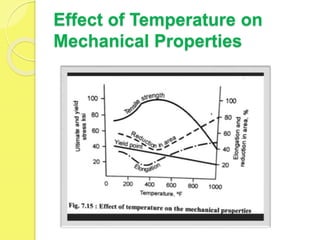
Effect of Temperature on
Mechanical Properties
Properties of High temperature
Materials
 High temperature resistance
 High oxidation and corrosion resistance
 High creep and fatigue strength
 Resistance to grain boundary
 Resistance to grain boundary weakening
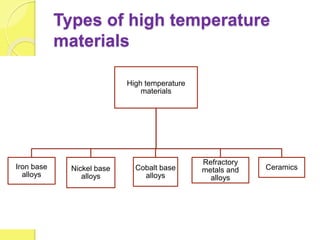
Types of high temperature
materials
High temperature
materials
Iron base
alloys
Nickel base
alloys
Cobalt base
alloys
Refractory
metals and
alloys
Ceramics
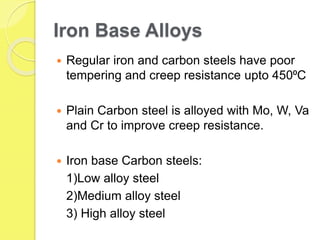
Iron Base Alloys
 Regular iron and carbon steels have poor
tempering and creep resistance upto 450⁰C
 Plain Carbon steel is alloyed with Mo, W, Va
and Cr to improve creep resistance.
 Iron base Carbon steels:
1)Low alloy steel
2)Medium alloy steel
3) High alloy steel
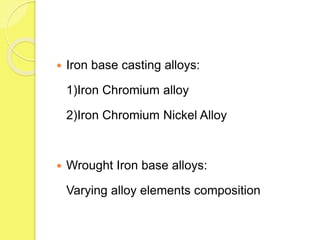
 Iron base casting alloys:
1)Iron Chromium alloy
2)Iron Chromium Nickel Alloy
 Wrought Iron base alloys:
Varying alloy elements composition
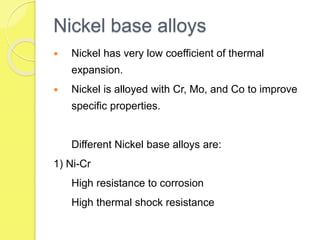
Nickel base alloys
 Nickel has very low coefficient of thermal
expansion.
 Nickel is alloyed with Cr, Mo, and Co to improve
specific properties.
Different Nickel base alloys are:
1) Ni-Cr
High resistance to corrosion
High thermal shock resistance
2)Ni-Cr-Mo
High resistance to corrosion
High strength
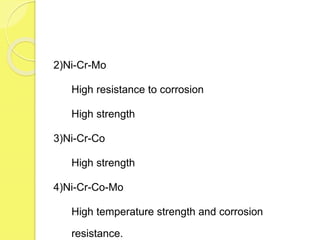
3)Ni-Cr-Co
High strength
4)Ni-Cr-Co-Mo
High temperature strength and corrosion
resistance.
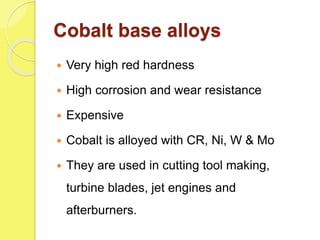
Cobalt base alloys
 Very high red hardness
 High corrosion and wear resistance
 Expensive
 Cobalt is alloyed with CR, Ni, W & Mo
 They are used in cutting tool making,
turbine blades, jet engines and
afterburners.
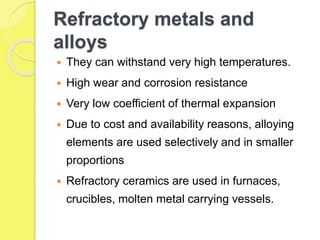
Refractory metals and
alloys
 They can withstand very high temperatures.
 High wear and corrosion resistance
 Very low coefficient of thermal expansion
 Due to cost and availability reasons, alloying
elements are used selectively and in smaller
proportions
 Refractory ceramics are used in furnaces,
crucibles, molten metal carrying vessels.
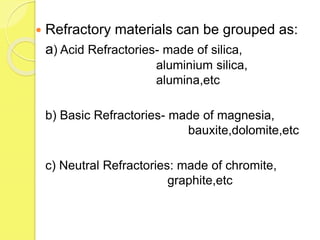
 Refractory materials can be grouped as:
a) Acid Refractories- made of silica,
aluminium silica,
alumina,etc
b) Basic Refractories- made of magnesia,
bauxite,dolomite,etc
c) Neutral Refractories: made of chromite,
graphite,etc
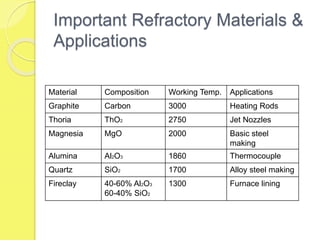
Important Refractory Materials &
Applications
Material Composition Working Temp. Applications
Graphite Carbon 3000 Heating Rods
Thoria ThO2 2750 Jet Nozzles
Magnesia MgO 2000 Basic steel
making
Alumina Al2O3 1860 Thermocouple
Quartz SiO2 1700 Alloy steel making
Fireclay 40-60% Al2O3
60-40% SiO2
1300 Furnace lining
Ceramics and metal ceramics
 Ceramic is a compound formed by
combination of inorganic and non metallic
materials.
 It is derived from Greek word Keramos
meaning burnt potter’s clay or earth.
 Ceramics are hard and brittle materials.
 They have high abrasion resistance, heat
resistance and can withstand high compressive
stresses.
 Ceramics are mostly crystalline in structure but
due to different chemical compositions their
structure becomes more complex.
 Non metal ceramics have poor thermal and
mechanical shock absorbing resistance.

High Temperature Materials

  • 1.
    Prepared by: ShrutiBhagwatrao Chaudhari
  • 2.
    Introduction  Mechanical Propertiesof regular engineering materials are affected by change in Temperature.  Special High Temperature materials are used for high temperature working conditions.
  • 3.
    Effect of Temperatureon Mechanical Properties
  • 4.
    Properties of Hightemperature Materials  High temperature resistance  High oxidation and corrosion resistance  High creep and fatigue strength  Resistance to grain boundary  Resistance to grain boundary weakening
  • 5.
    Types of hightemperature materials High temperature materials Iron base alloys Nickel base alloys Cobalt base alloys Refractory metals and alloys Ceramics
  • 6.
    Iron Base Alloys Regular iron and carbon steels have poor tempering and creep resistance upto 450⁰C  Plain Carbon steel is alloyed with Mo, W, Va and Cr to improve creep resistance.  Iron base Carbon steels: 1)Low alloy steel 2)Medium alloy steel 3) High alloy steel
  • 7.
     Iron basecasting alloys: 1)Iron Chromium alloy 2)Iron Chromium Nickel Alloy  Wrought Iron base alloys: Varying alloy elements composition
  • 8.
    Nickel base alloys Nickel has very low coefficient of thermal expansion.  Nickel is alloyed with Cr, Mo, and Co to improve specific properties. Different Nickel base alloys are: 1) Ni-Cr High resistance to corrosion High thermal shock resistance
  • 9.
    2)Ni-Cr-Mo High resistance tocorrosion High strength 3)Ni-Cr-Co High strength 4)Ni-Cr-Co-Mo High temperature strength and corrosion resistance.
  • 10.
    Cobalt base alloys Very high red hardness  High corrosion and wear resistance  Expensive  Cobalt is alloyed with CR, Ni, W & Mo  They are used in cutting tool making, turbine blades, jet engines and afterburners.
  • 11.
    Refractory metals and alloys They can withstand very high temperatures.  High wear and corrosion resistance  Very low coefficient of thermal expansion  Due to cost and availability reasons, alloying elements are used selectively and in smaller proportions  Refractory ceramics are used in furnaces, crucibles, molten metal carrying vessels.
  • 12.
     Refractory materialscan be grouped as: a) Acid Refractories- made of silica, aluminium silica, alumina,etc b) Basic Refractories- made of magnesia, bauxite,dolomite,etc c) Neutral Refractories: made of chromite, graphite,etc
  • 13.
    Important Refractory Materials& Applications Material Composition Working Temp. Applications Graphite Carbon 3000 Heating Rods Thoria ThO2 2750 Jet Nozzles Magnesia MgO 2000 Basic steel making Alumina Al2O3 1860 Thermocouple Quartz SiO2 1700 Alloy steel making Fireclay 40-60% Al2O3 60-40% SiO2 1300 Furnace lining
  • 14.
    Ceramics and metalceramics  Ceramic is a compound formed by combination of inorganic and non metallic materials.  It is derived from Greek word Keramos meaning burnt potter’s clay or earth.  Ceramics are hard and brittle materials.
  • 15.
     They havehigh abrasion resistance, heat resistance and can withstand high compressive stresses.  Ceramics are mostly crystalline in structure but due to different chemical compositions their structure becomes more complex.  Non metal ceramics have poor thermal and mechanical shock absorbing resistance.