Titrations: Introduction
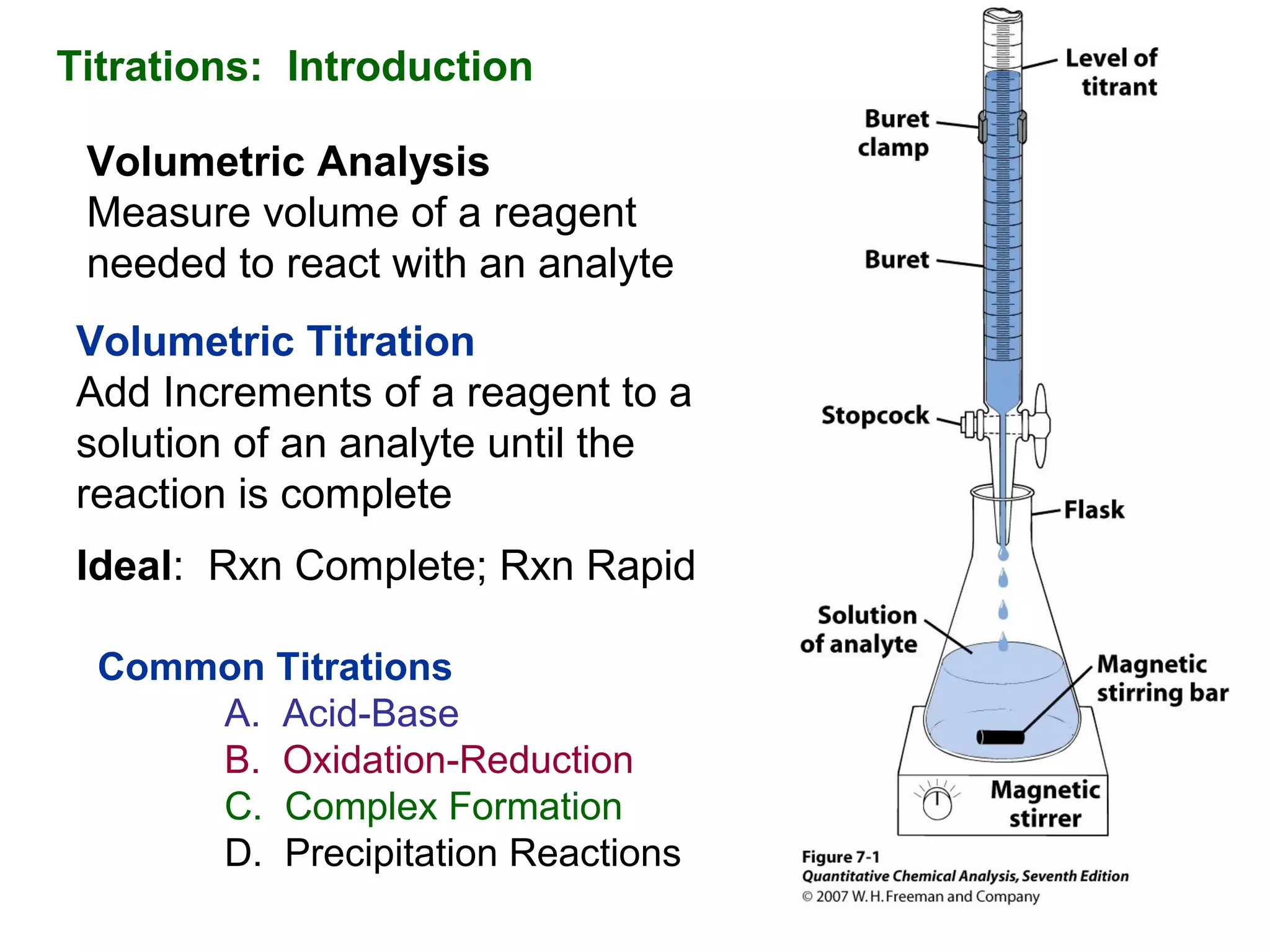
Volumetric Analysis
Measure volume of a reagent
needed to react with an analyte
Volumetric Titration
Add Increments of a reagent to a
solution of an analyte until the
reaction is complete
Ideal: Rxn Complete; Rxn Rapid
Common Titrations
A. Acid-Base
B. Oxidation-Reduction
C. Complex Formation
D. Precipitation Reactions
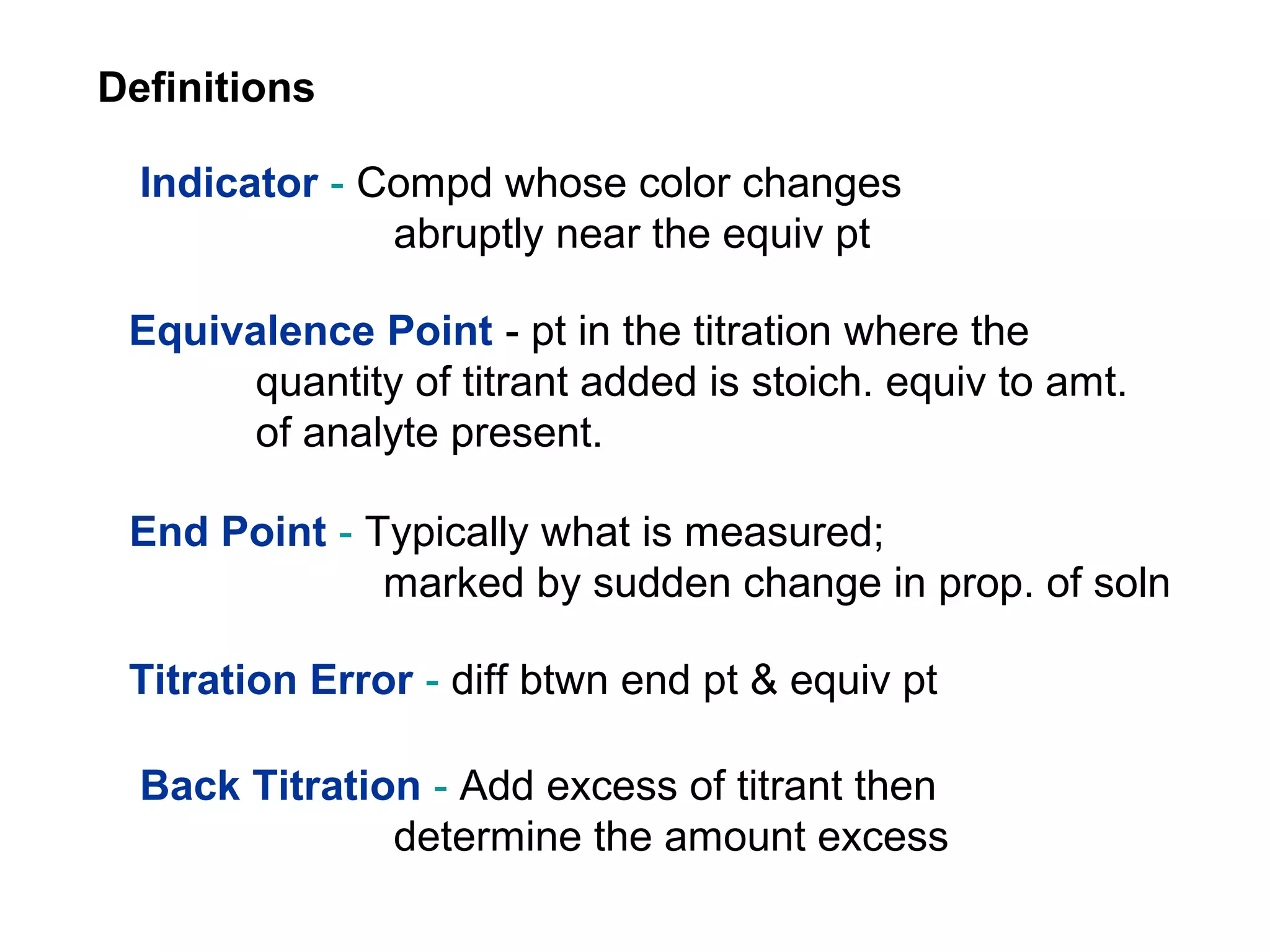
Definitions
Indicator - Compd whose color changes
abruptly near the equiv pt
Equivalence Point - pt in the titration where the
quantity of titrant added is stoich. equiv to amt.
of analyte present.
End Point - Typically what is measured;
marked by sudden change in prop. of soln
Titration Error - diff btwn end pt & equiv pt
Back Titration - Add excess of titrant then
determine the amount excess
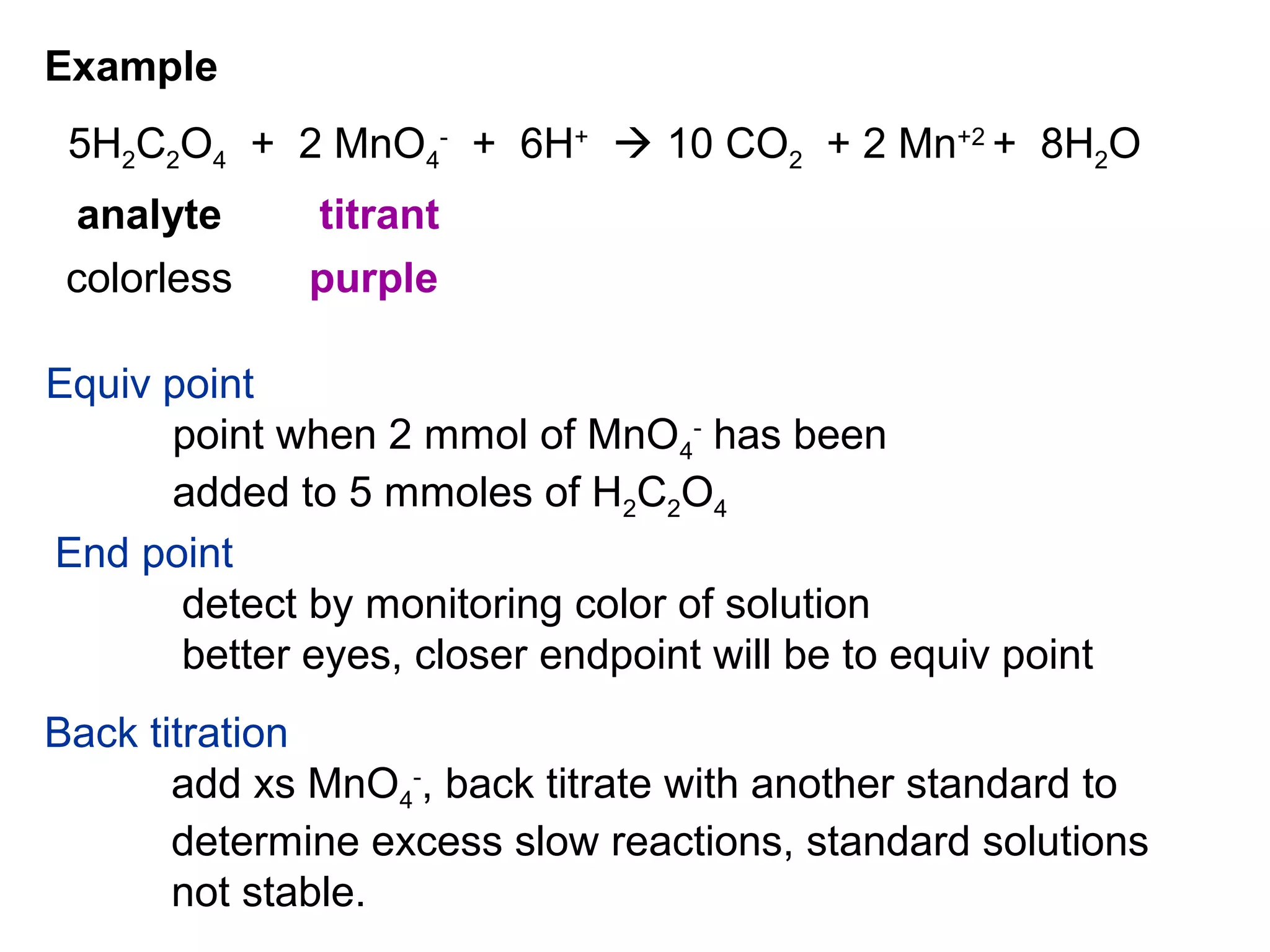
Example
5H2C2O4 + 2 MnO4
-
+ 6H+
 10 CO2 + 2 Mn+2
+ 8H2O
analyte titrant
colorless purple
Equiv point
point when 2 mmol of MnO4
-
has been
added to 5 mmoles of H2C2O4
End point
detect by monitoring color of solution
better eyes, closer endpoint will be to equiv point
Back titration
add xs MnO4
-
, back titrate with another standard to
determine excess slow reactions, standard solutions
not stable.
What’s Needed
Solution of known composition
Primary standard
Standard Solution
Analytical Balance
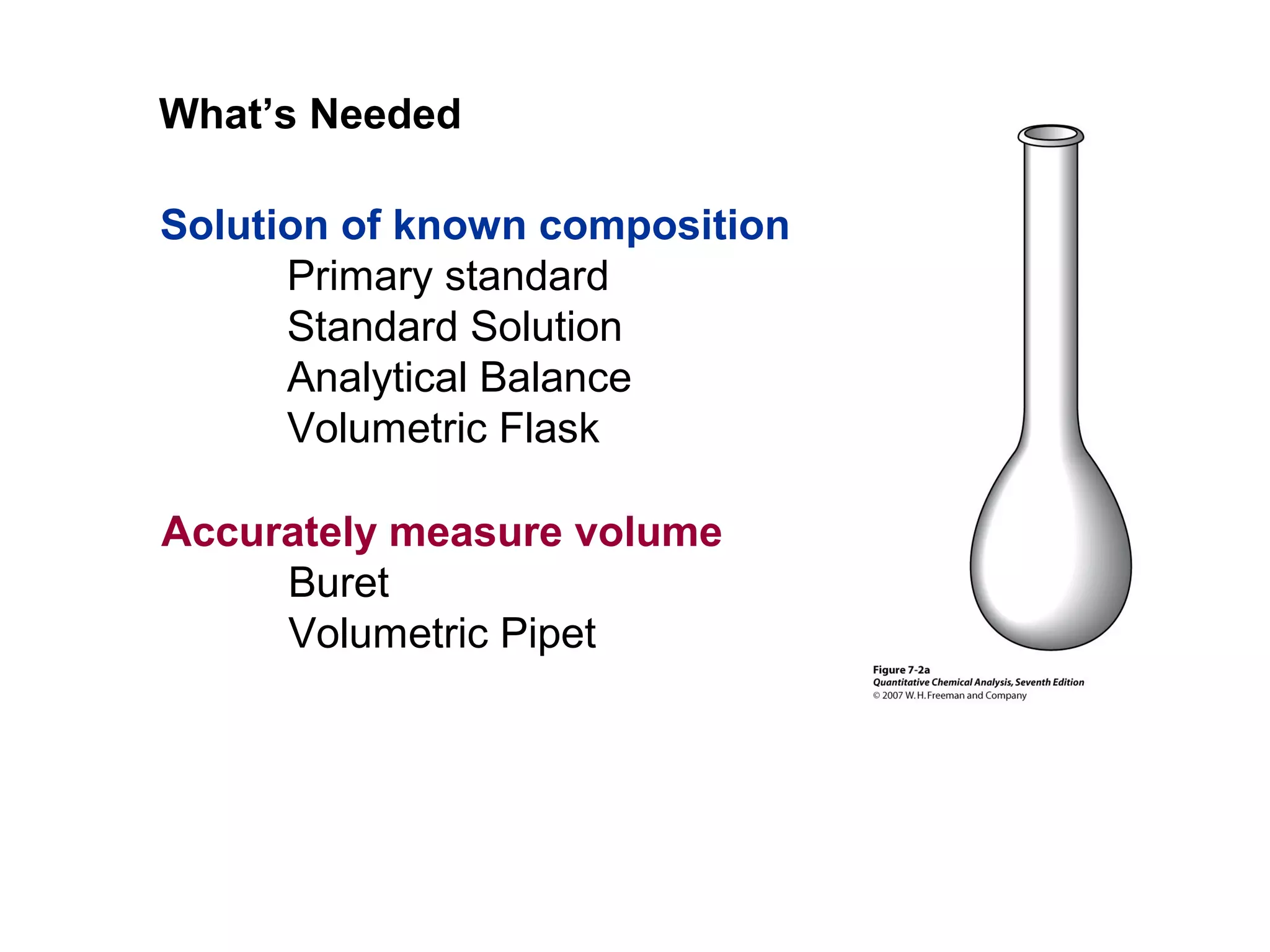
Volumetric Flask
Accurately measure volume
Buret
Volumetric Pipet
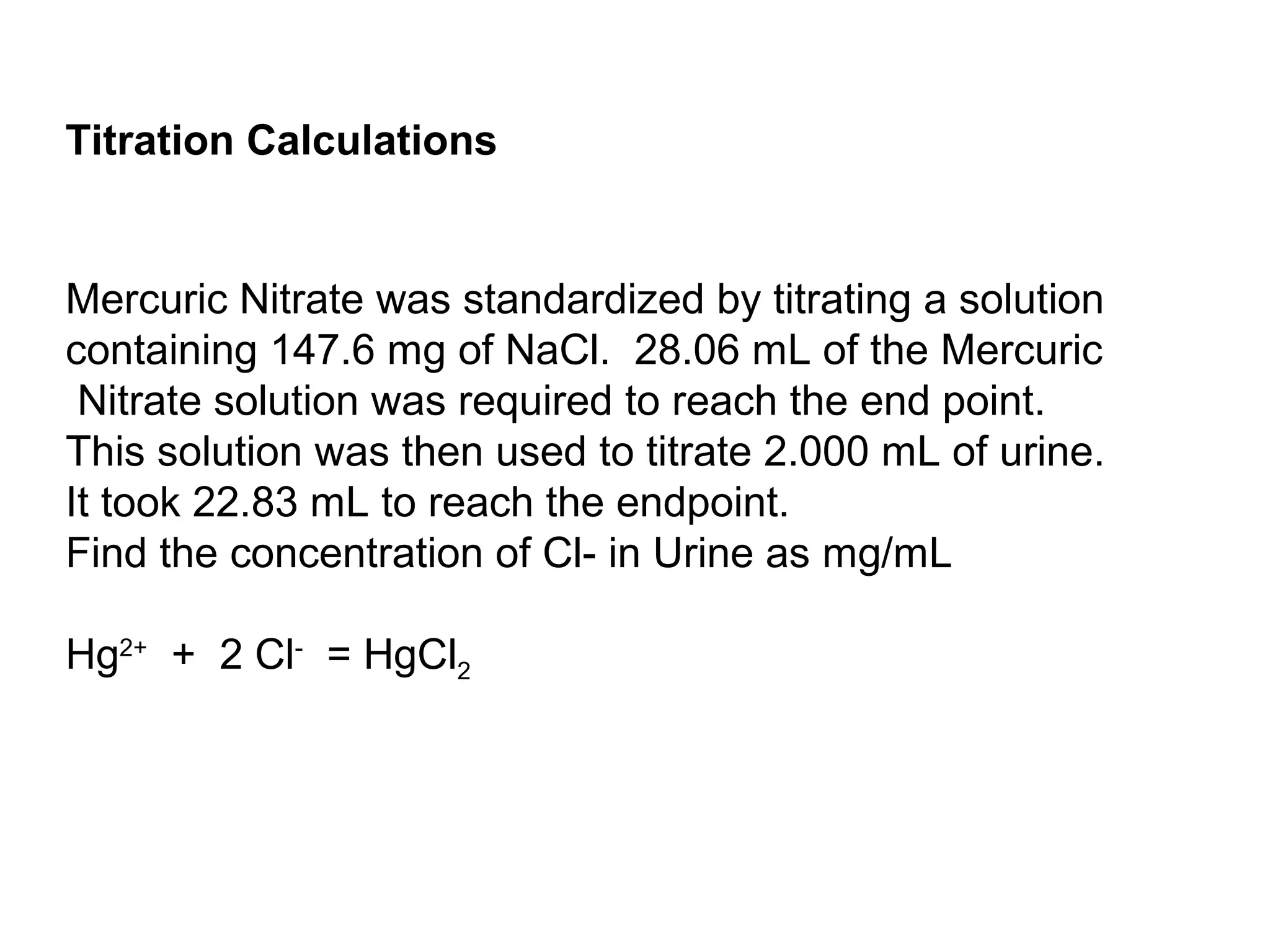
Mercuric Nitrate was standardized by titrating a solution
containing 147.6 mg of NaCl. 28.06 mL of the Mercuric
Nitrate solution was required to reach the end point.
This solution was then used to titrate 2.000 mL of urine.
It took 22.83 mL to reach the endpoint.
Find the concentration of Cl- in Urine as mg/mL
Hg2+
+ 2 Cl-
= HgCl2
Titration Calculations
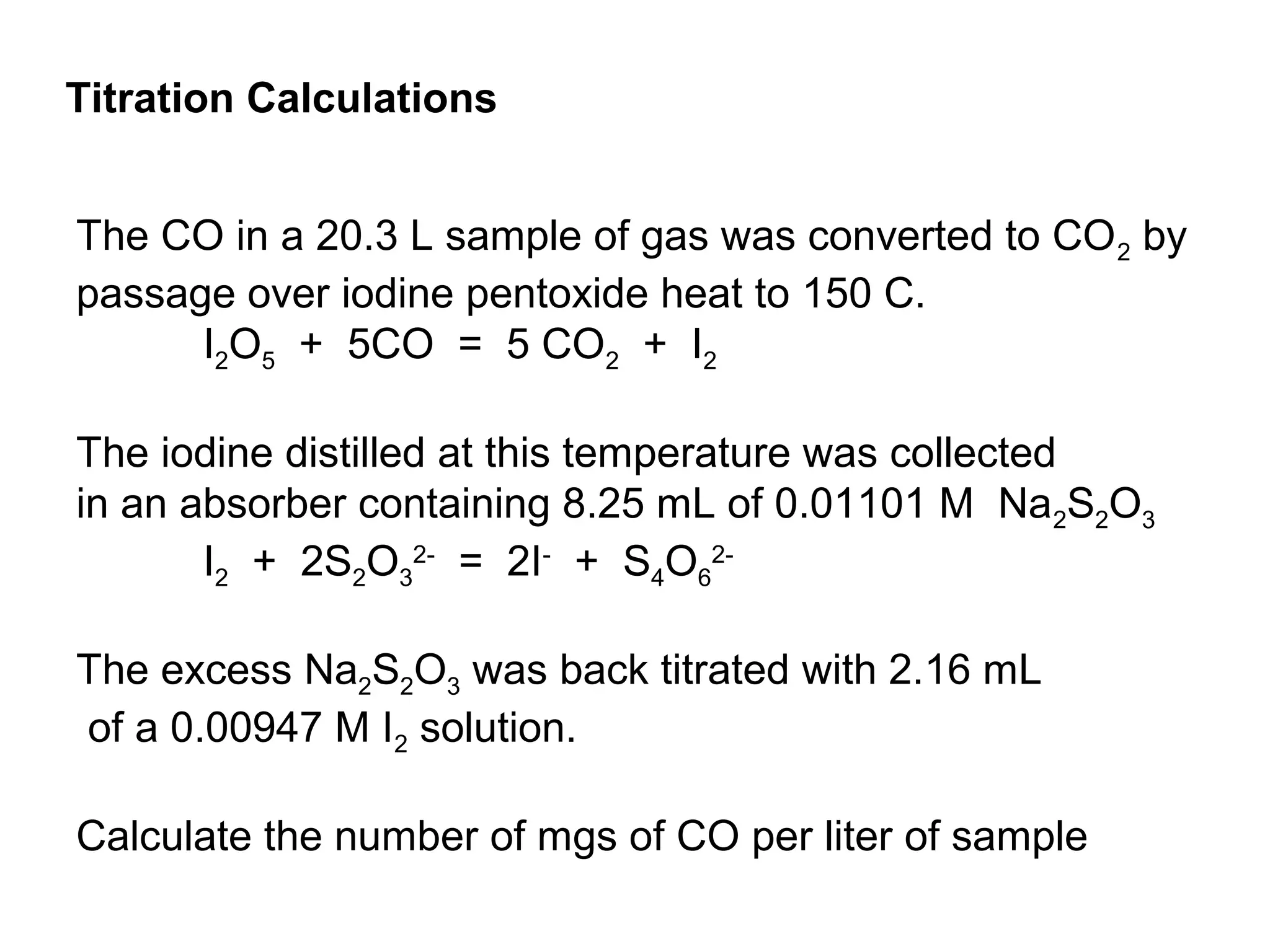
The CO in a 20.3 L sample of gas was converted to CO2 by
passage over iodine pentoxide heat to 150 C.
I2O5 + 5CO = 5 CO2 + I2
The iodine distilled at this temperature was collected
in an absorber containing 8.25 mL of 0.01101 M Na2S2O3
I2 + 2S2O3
2-
= 2I-
+ S4O6
2-
The excess Na2S2O3 was back titrated with 2.16 mL
of a 0.00947 M I2 solution.
Calculate the number of mgs of CO per liter of sample
Titration Calculations
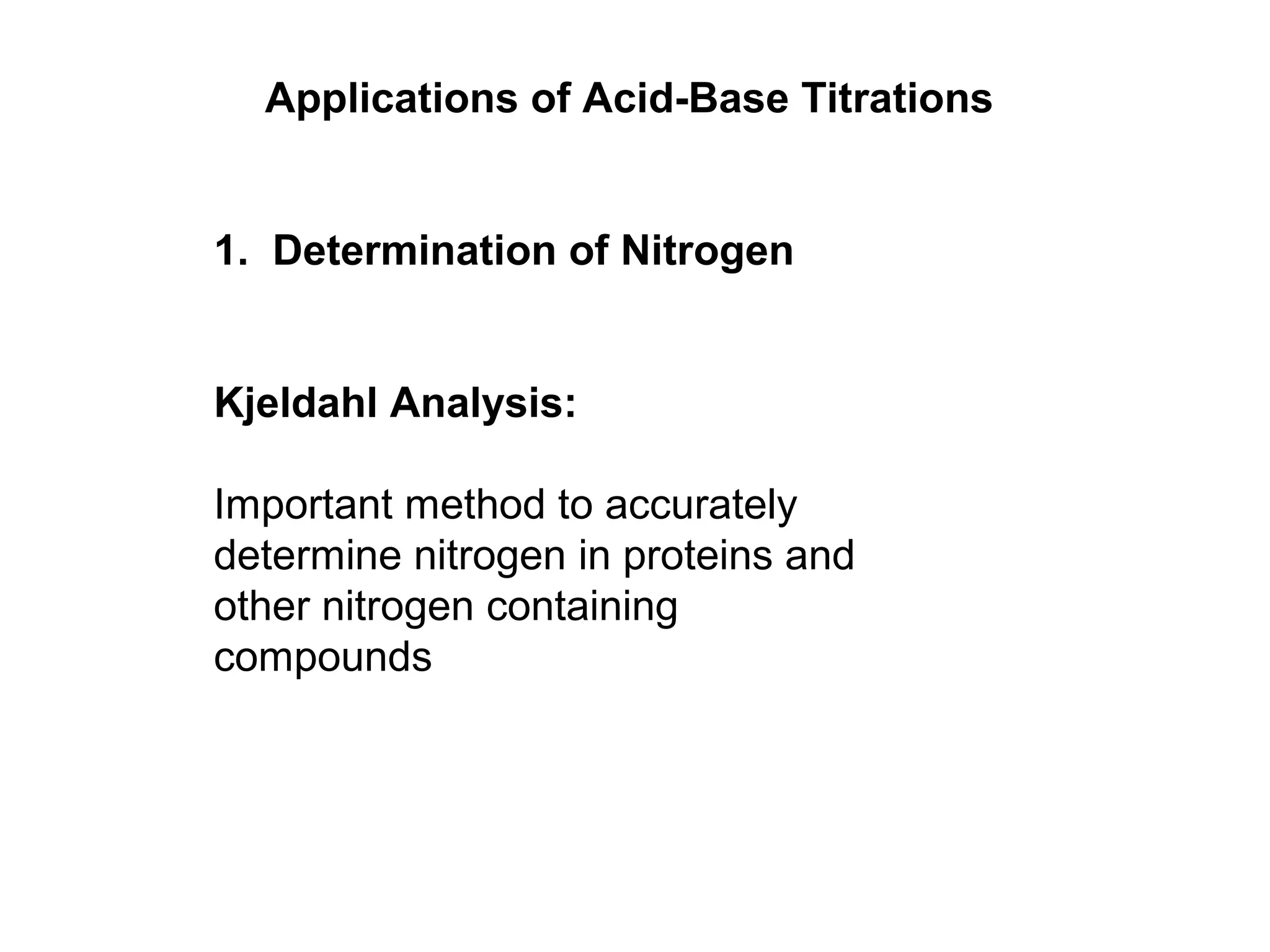
Applications of Acid-Base Titrations
1. Determination of Nitrogen
Kjeldahl Analysis:
Important method to accurately
determine nitrogen in proteins and
other nitrogen containing
compounds
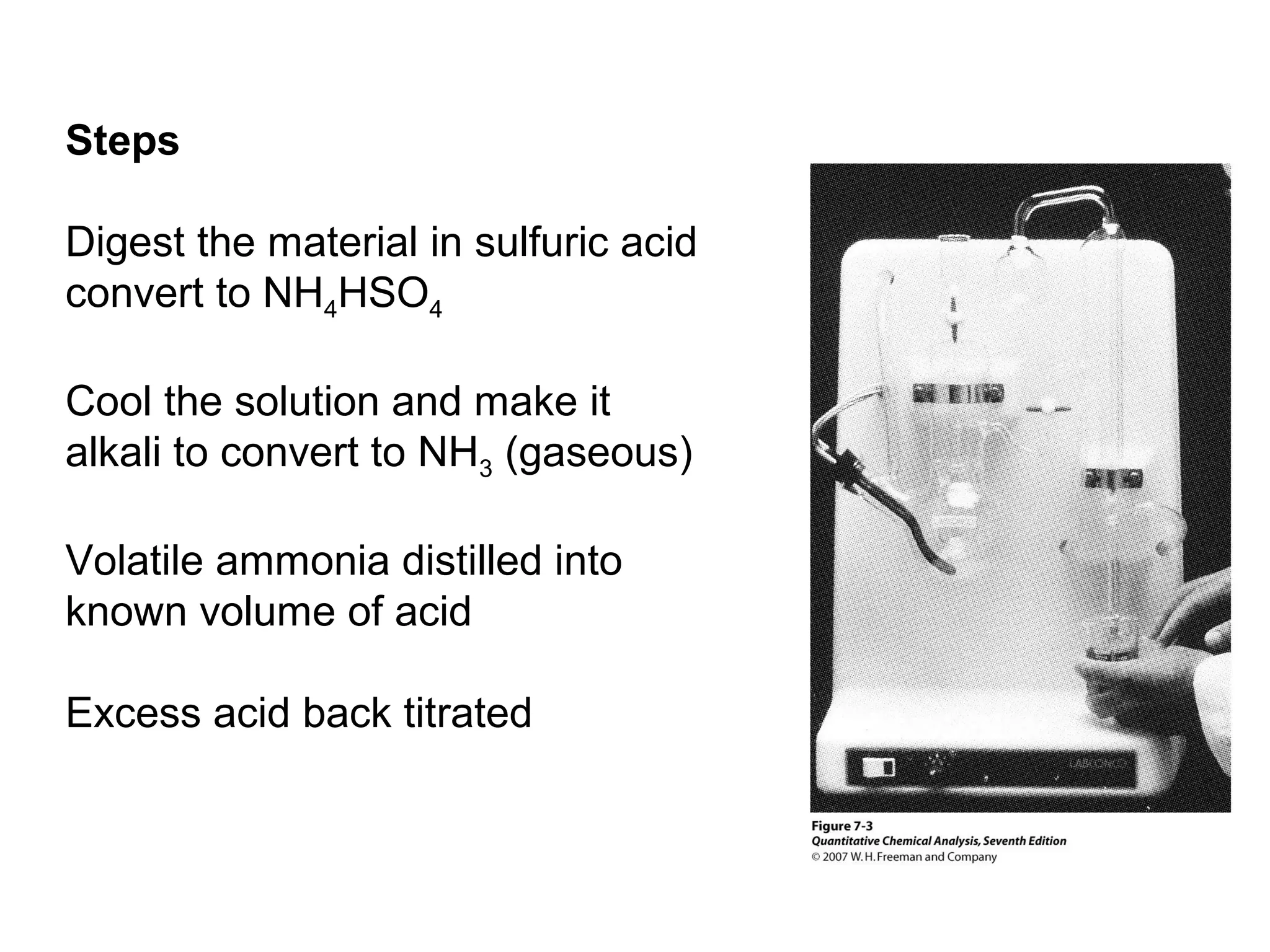
Steps
Digest the material in sulfuric acid
convert to NH4HSO4
Cool the solution and make it
alkali to convert to NH3 (gaseous)
Volatile ammonia distilled into
known volume of acid
Excess acid back titrated
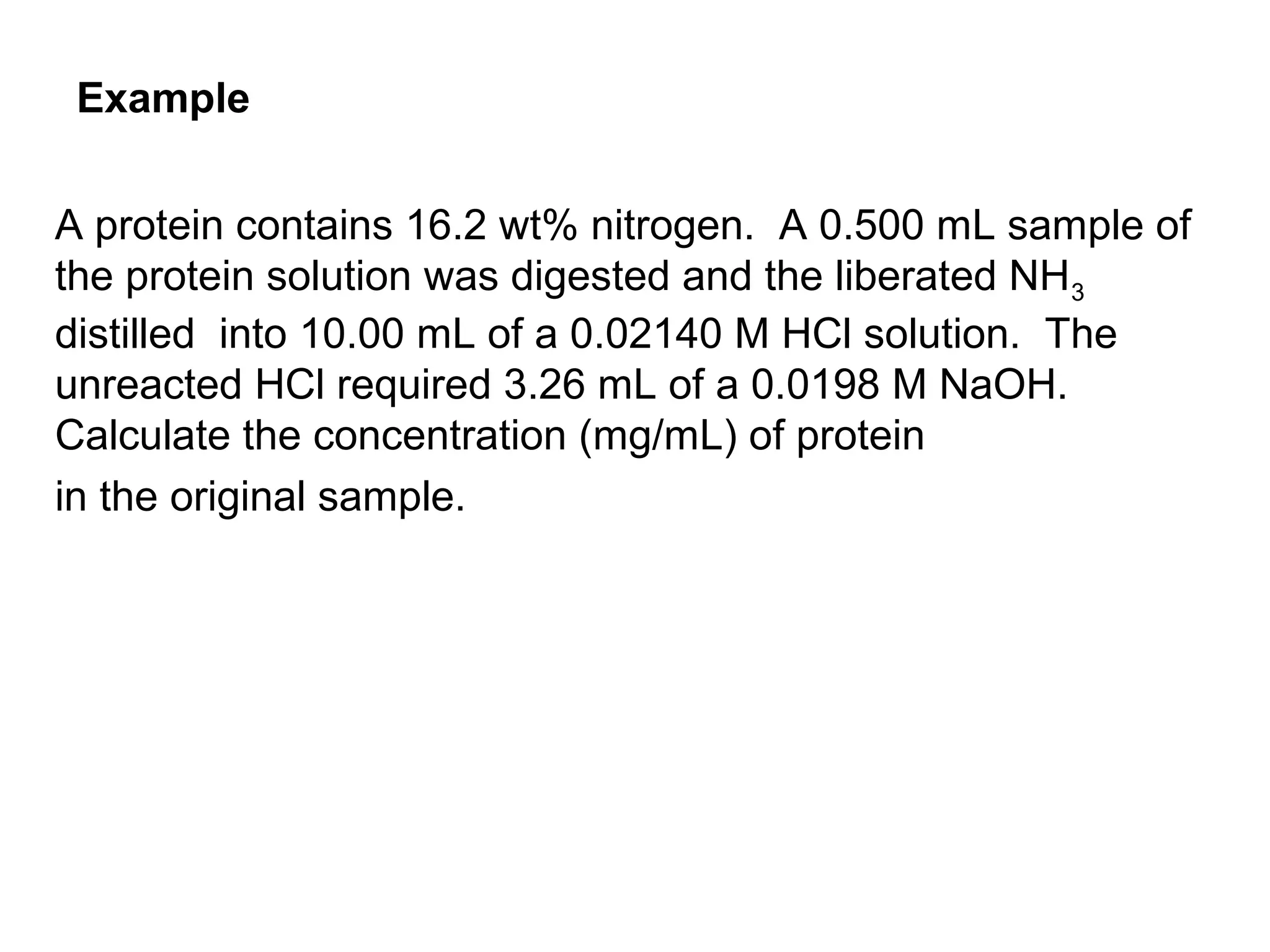
A protein contains 16.2 wt% nitrogen. A 0.500 mL sample of
the protein solution was digested and the liberated NH3
distilled into 10.00 mL of a 0.02140 M HCl solution. The
unreacted HCl required 3.26 mL of a 0.0198 M NaOH.
Calculate the concentration (mg/mL) of protein
in the original sample.
Example
Intro to titrations

Intro to titrations

  • 1.
    Titrations: Introduction Volumetric Analysis Measurevolume of a reagent needed to react with an analyte Volumetric Titration Add Increments of a reagent to a solution of an analyte until the reaction is complete Ideal: Rxn Complete; Rxn Rapid Common Titrations A. Acid-Base B. Oxidation-Reduction C. Complex Formation D. Precipitation Reactions
  • 2.
    Definitions Indicator - Compdwhose color changes abruptly near the equiv pt Equivalence Point - pt in the titration where the quantity of titrant added is stoich. equiv to amt. of analyte present. End Point - Typically what is measured; marked by sudden change in prop. of soln Titration Error - diff btwn end pt & equiv pt Back Titration - Add excess of titrant then determine the amount excess
  • 3.
    Example 5H2C2O4 + 2MnO4 - + 6H+  10 CO2 + 2 Mn+2 + 8H2O analyte titrant colorless purple Equiv point point when 2 mmol of MnO4 - has been added to 5 mmoles of H2C2O4 End point detect by monitoring color of solution better eyes, closer endpoint will be to equiv point Back titration add xs MnO4 - , back titrate with another standard to determine excess slow reactions, standard solutions not stable.
  • 4.
    What’s Needed Solution ofknown composition Primary standard Standard Solution Analytical Balance Volumetric Flask Accurately measure volume Buret Volumetric Pipet
  • 5.
    Mercuric Nitrate wasstandardized by titrating a solution containing 147.6 mg of NaCl. 28.06 mL of the Mercuric Nitrate solution was required to reach the end point. This solution was then used to titrate 2.000 mL of urine. It took 22.83 mL to reach the endpoint. Find the concentration of Cl- in Urine as mg/mL Hg2+ + 2 Cl- = HgCl2 Titration Calculations
  • 7.
    The CO ina 20.3 L sample of gas was converted to CO2 by passage over iodine pentoxide heat to 150 C. I2O5 + 5CO = 5 CO2 + I2 The iodine distilled at this temperature was collected in an absorber containing 8.25 mL of 0.01101 M Na2S2O3 I2 + 2S2O3 2- = 2I- + S4O6 2- The excess Na2S2O3 was back titrated with 2.16 mL of a 0.00947 M I2 solution. Calculate the number of mgs of CO per liter of sample Titration Calculations
  • 9.
    Applications of Acid-BaseTitrations 1. Determination of Nitrogen Kjeldahl Analysis: Important method to accurately determine nitrogen in proteins and other nitrogen containing compounds
  • 10.
    Steps Digest the materialin sulfuric acid convert to NH4HSO4 Cool the solution and make it alkali to convert to NH3 (gaseous) Volatile ammonia distilled into known volume of acid Excess acid back titrated
  • 11.
    A protein contains16.2 wt% nitrogen. A 0.500 mL sample of the protein solution was digested and the liberated NH3 distilled into 10.00 mL of a 0.02140 M HCl solution. The unreacted HCl required 3.26 mL of a 0.0198 M NaOH. Calculate the concentration (mg/mL) of protein in the original sample. Example