HYPERTHYROIDISM
DR.R.DURAI MS
ASSISTANT PROFESSOR
DEPARTMENT OF GENERAL SURGERY
MGMCRI
DEFENITION
 What is hyperthyroidism?
 Increased secretion of Thyroid hormones due to various
stimuli.
HYPERTHYROIDISM - DR.R.DURAI 23-04-16 MGMCRI
2
 What is thyrotoxicosis??
 Symptoms and signs produced by Increased secretion of
Thyroid hormones due to various stimuli.
23-04-2016
TODAY’S MENU
 Clinical types
 Symptomatology
 Diagnosis of thyrotoxicosis
 Principles of treatment of thyrotoxicosis
 Choice of therapy
 Hyperthyroidism due to other causes
 Surgery for thyrotoxicosis
HYPERTHYROIDISM - DR.R.DURAI 23-04-16 MGMCRI
3
23-04-2016
CLINICAL TYPES
CLINICAL TYPES
 Diffuse toxic goitre (Graves’ disease);
 Toxic nodular goitre;
 Toxic nodule;
 Hyperthyroidism due to rarer causes.
HYPERTHYROIDISM - DR.R.DURAI 23-04-16 MGMCRI
5
23-04-2016
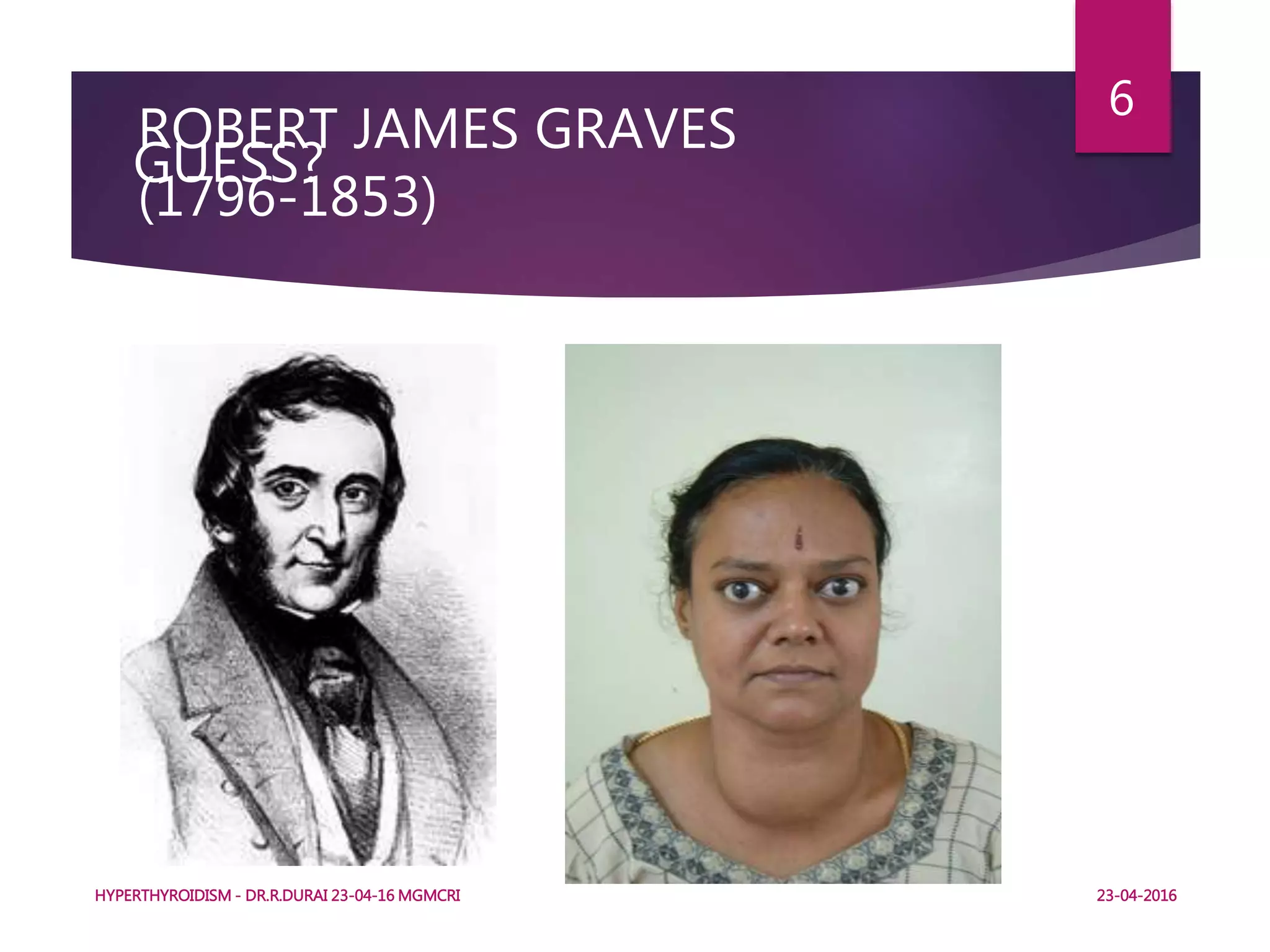
GUESS?
HYPERTHYROIDISM - DR.R.DURAI 23-04-16 MGMCRI
6
ROBERT JAMES GRAVES
(1796-1853)
23-04-2016
DIFFUSE TOXIC GOITRE
(GRAVE’S DISEASE)
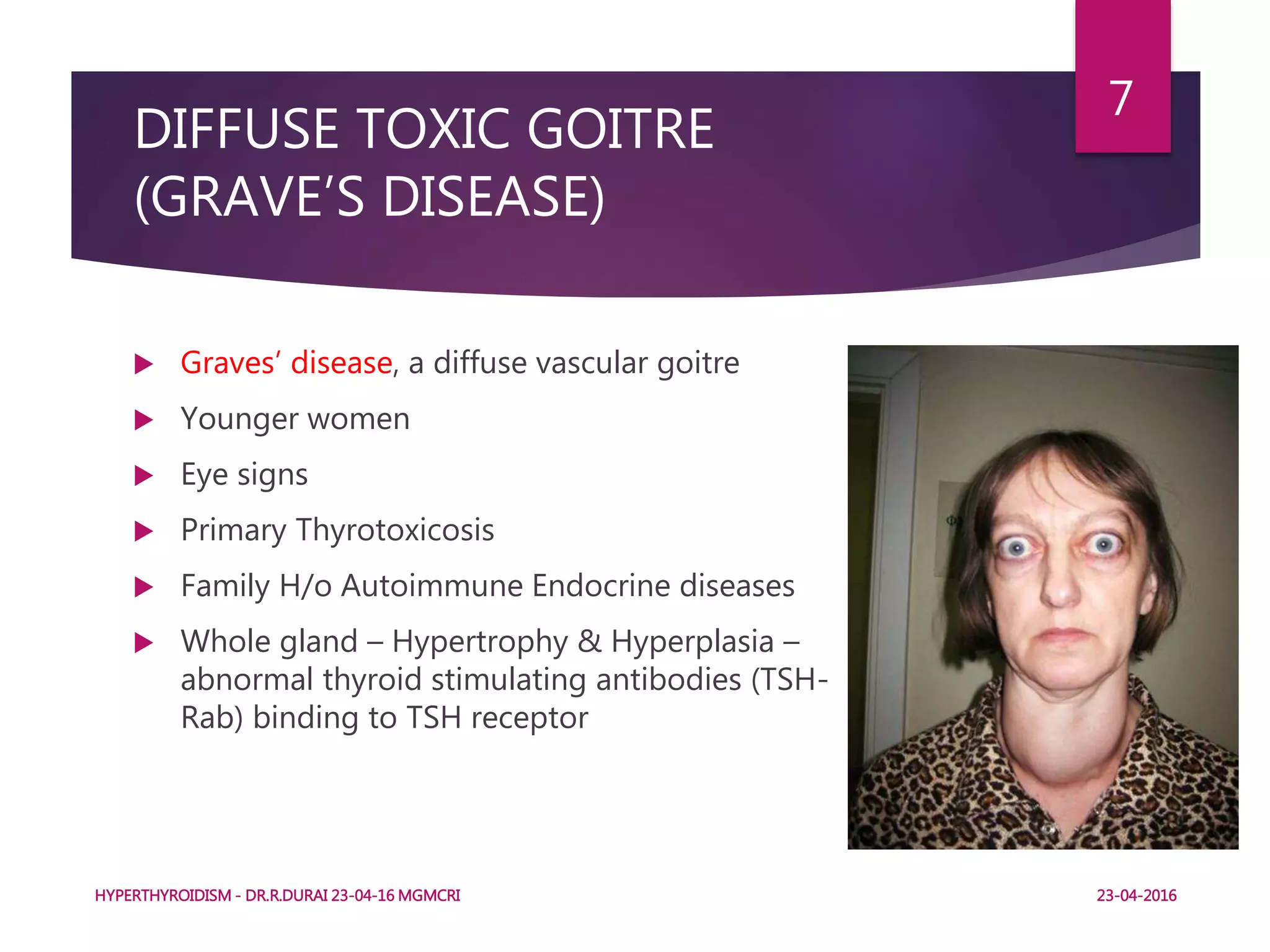
 Graves’ disease, a diffuse vascular goitre
 Younger women
 Eye signs
 Primary Thyrotoxicosis
 Family H/o Autoimmune Endocrine diseases
 Whole gland – Hypertrophy & Hyperplasia –
abnormal thyroid stimulating antibodies (TSH-
Rab) binding to TSH receptor
HYPERTHYROIDISM - DR.R.DURAI 23-04-16 MGMCRI
7
23-04-2016
TOXIC NODULAR GOITRE
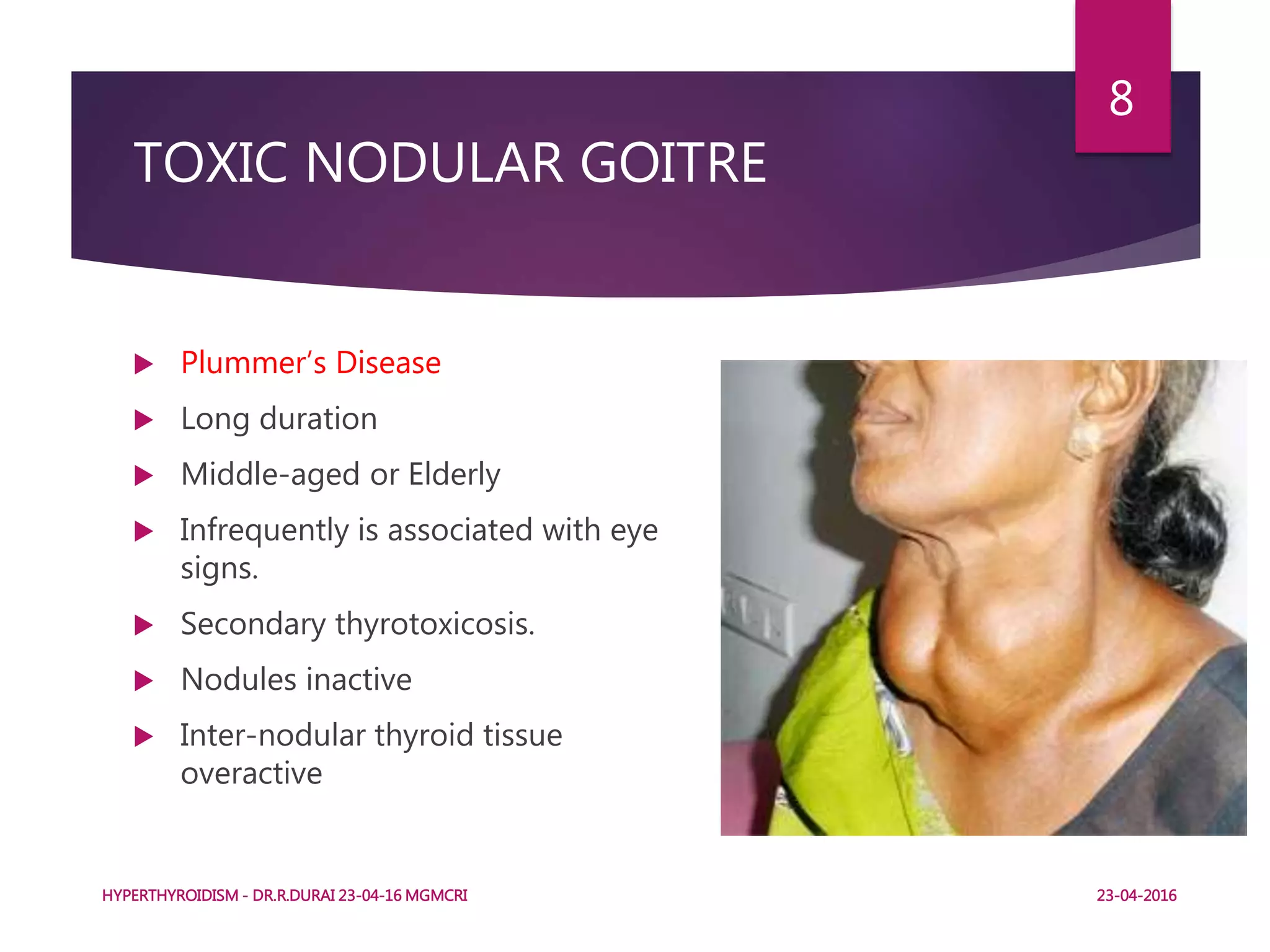
 Plummer’s Disease
 Long duration
 Middle-aged or Elderly
 Infrequently is associated with eye
signs.
 Secondary thyrotoxicosis.
 Nodules inactive
 Inter-nodular thyroid tissue
overactive
HYPERTHYROIDISM - DR.R.DURAI 23-04-16 MGMCRI
8
23-04-2016
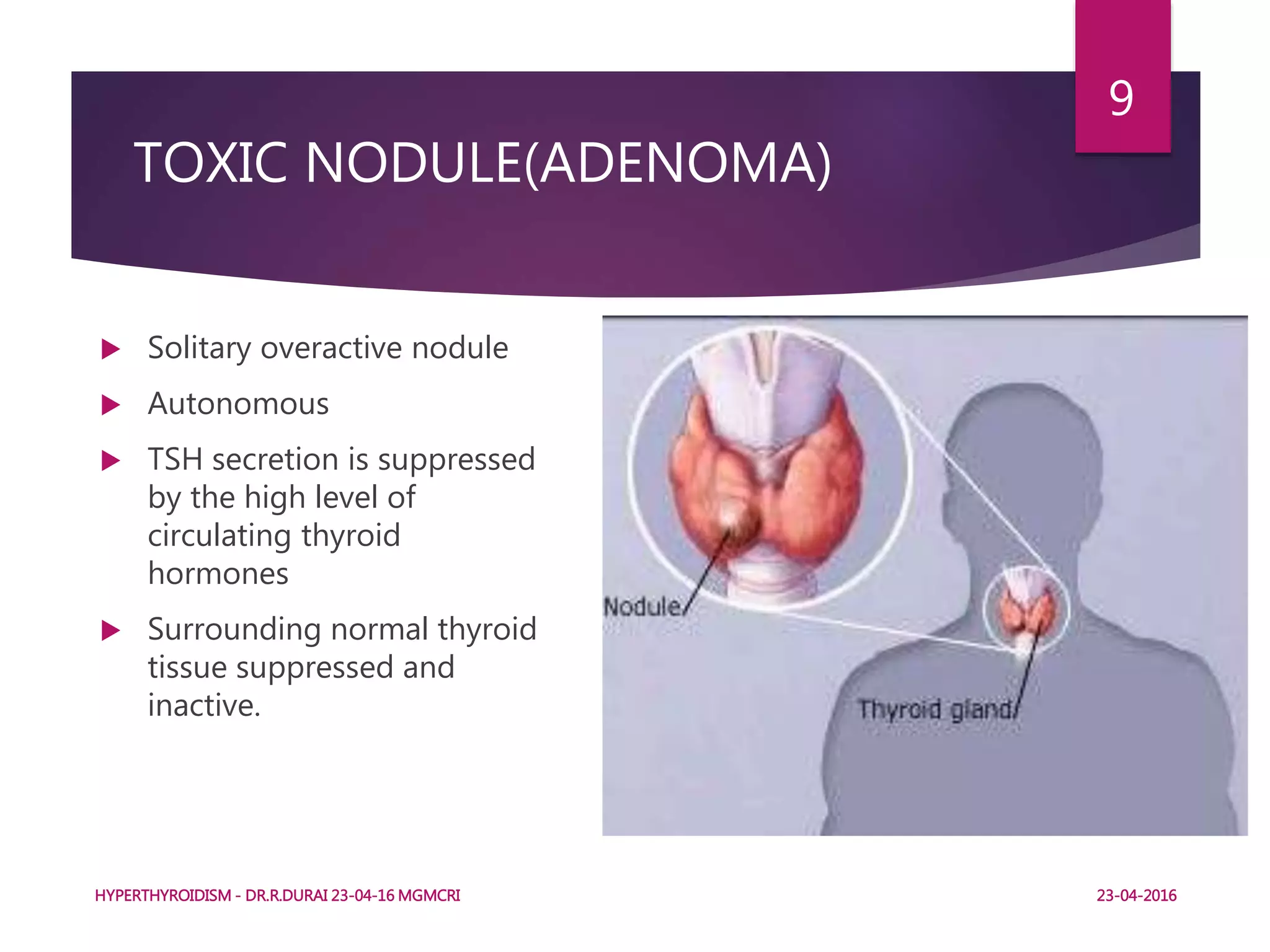
TOXIC NODULE(ADENOMA)
 Solitary overactive nodule
 Autonomous
 TSH secretion is suppressed
by the high level of
circulating thyroid
hormones
 Surrounding normal thyroid
tissue suppressed and
inactive.
HYPERTHYROIDISM - DR.R.DURAI 23-04-16 MGMCRI
9
23-04-2016
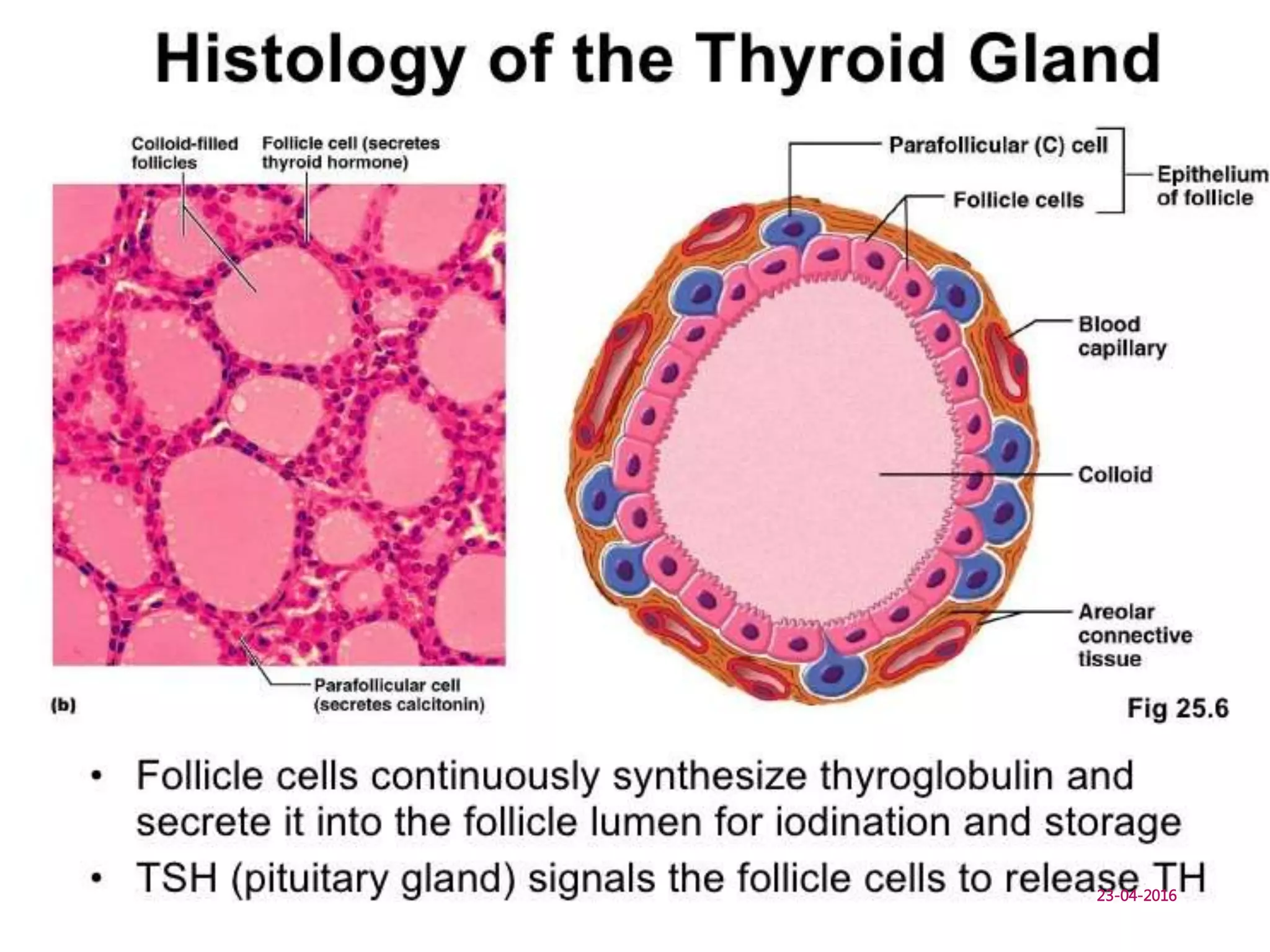
HISTOLOGY
HYPERTHYROIDISM - DR.R.DURAI 23-04-16 MGMCRI
10
23-04-2016
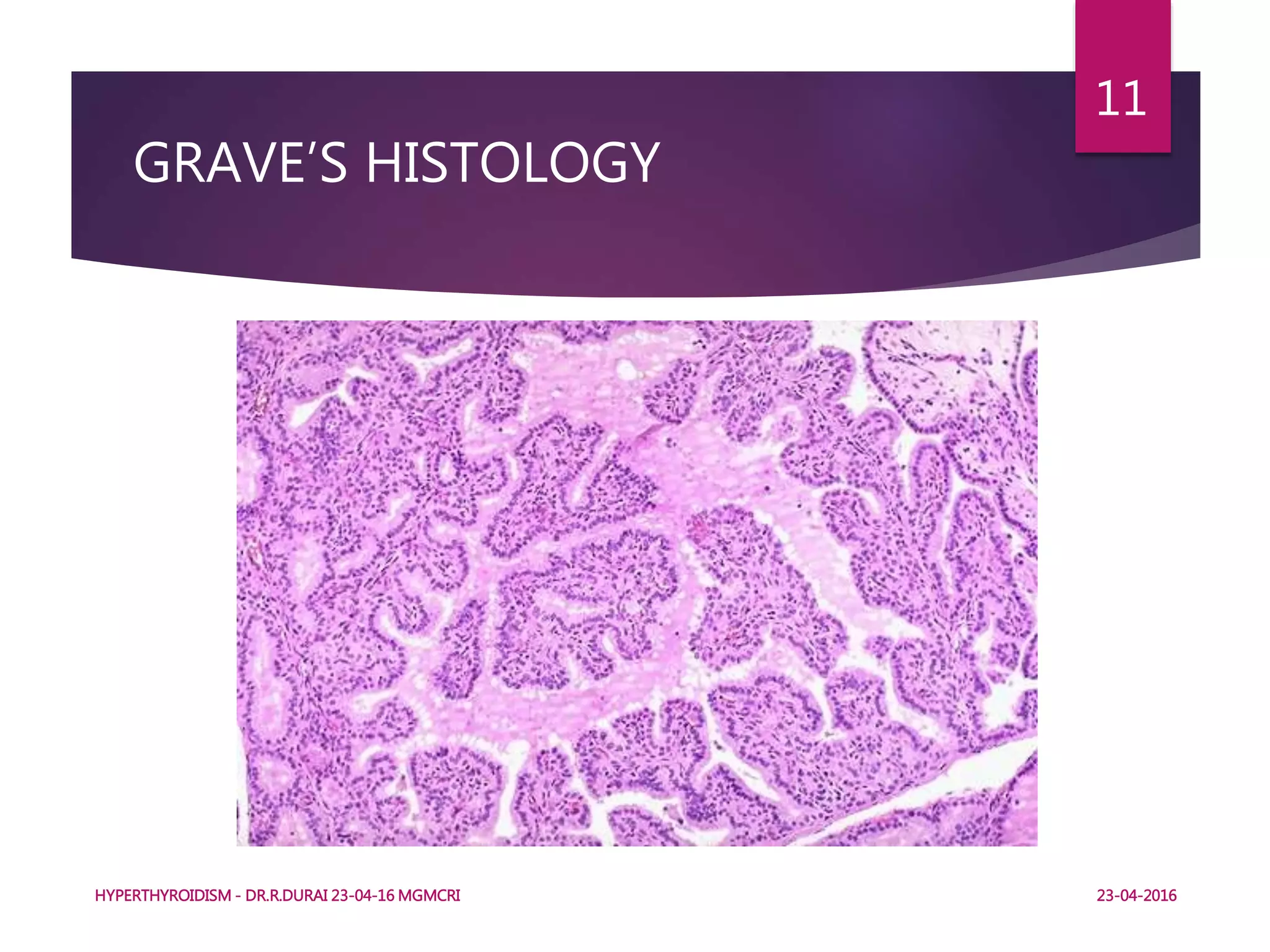
GRAVE’S HISTOLOGY
HYPERTHYROIDISM - DR.R.DURAI 23-04-16 MGMCRI
11
23-04-2016
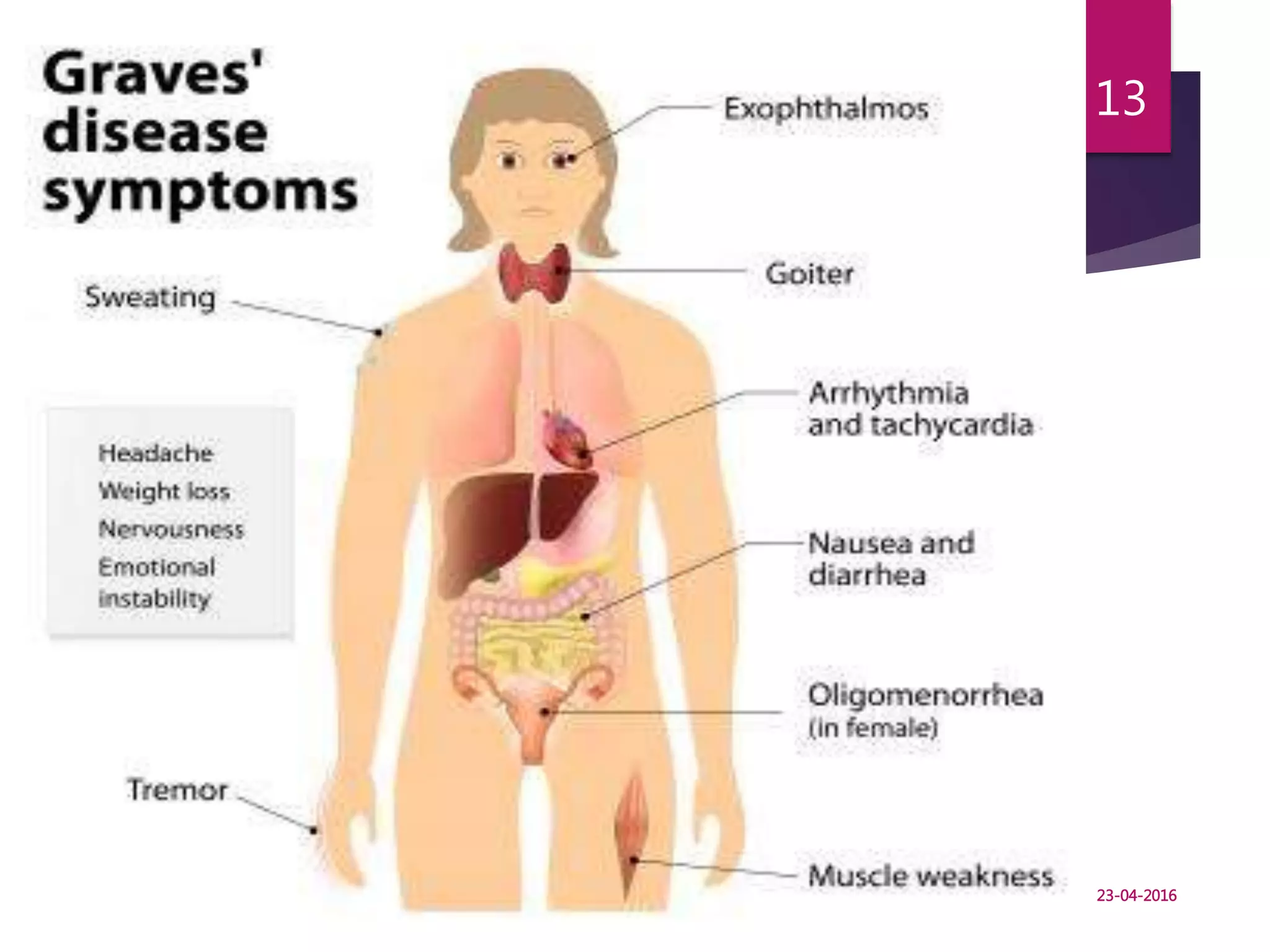
SYMPTOMATOLOGY
HYPERTHYROIDISM - DR.R.DURAI 23-04-16 MGMCRI
13
23-04-2016
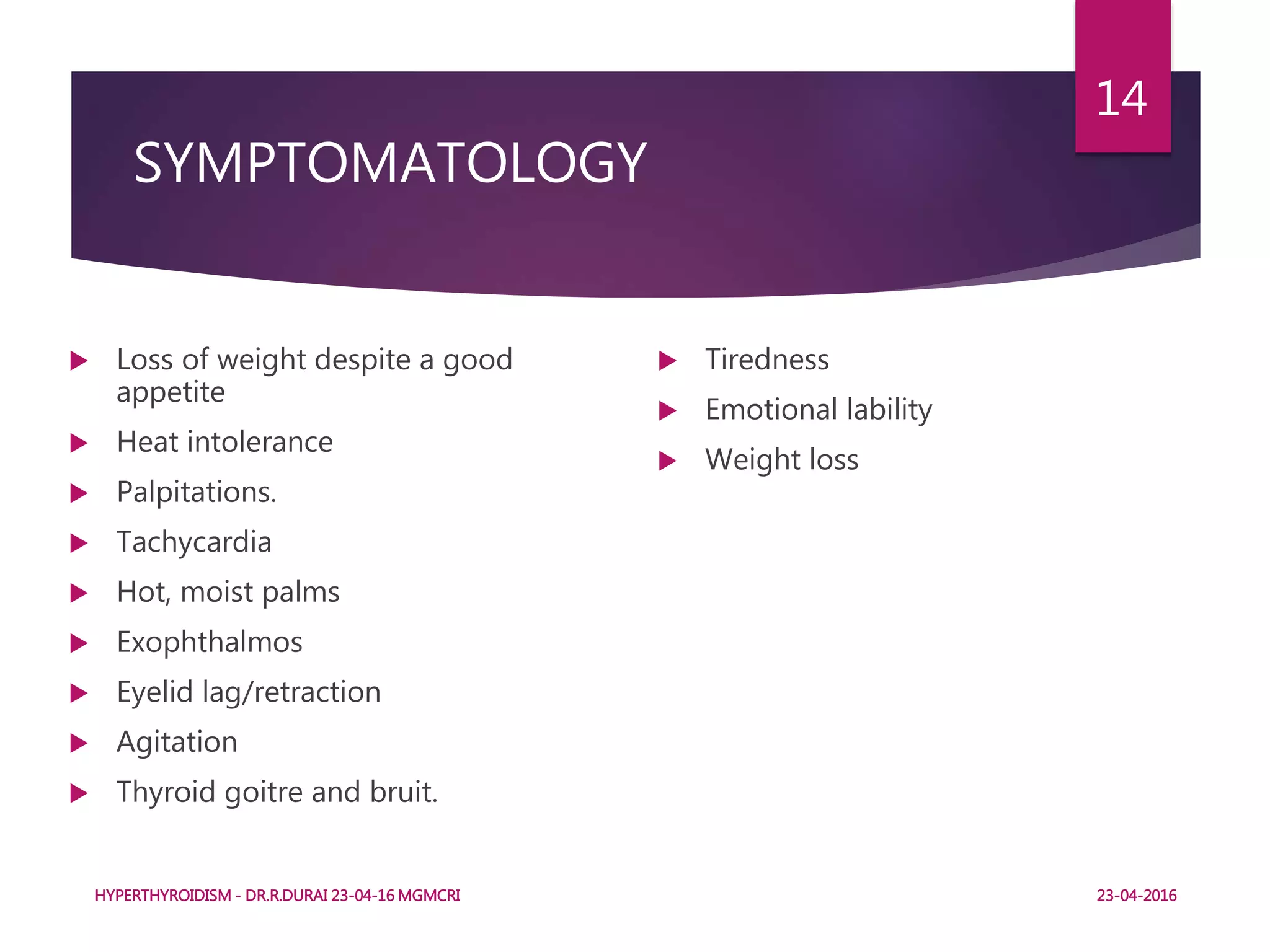
SYMPTOMATOLOGY
 Loss of weight despite a good
appetite
 Heat intolerance
 Palpitations.
 Tachycardia
 Hot, moist palms
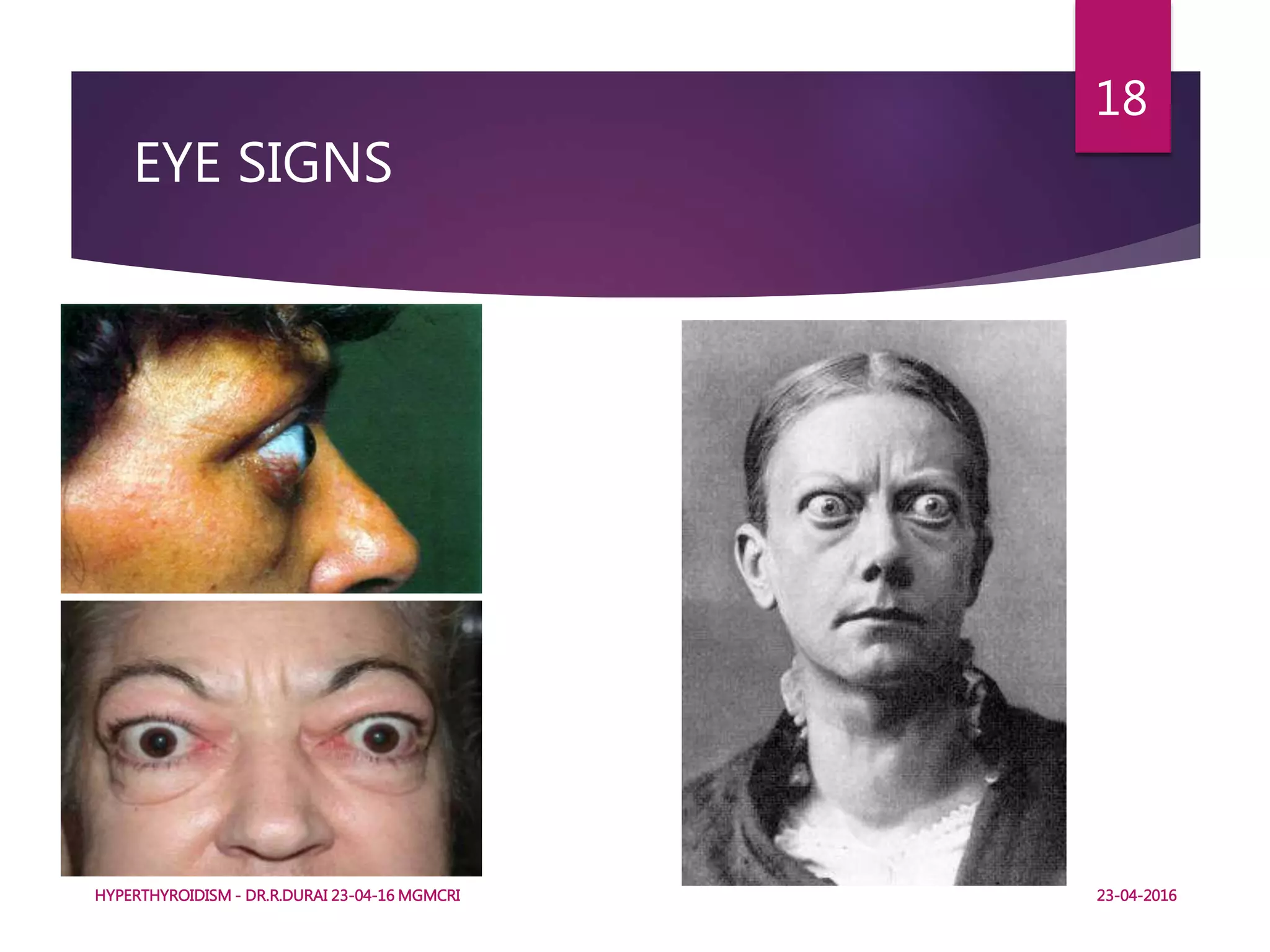
 Exophthalmos
 Eyelid lag/retraction
 Agitation
 Thyroid goitre and bruit.
 Tiredness
 Emotional lability
 Weight loss
HYPERTHYROIDISM - DR.R.DURAI 23-04-16 MGMCRI
14
23-04-2016
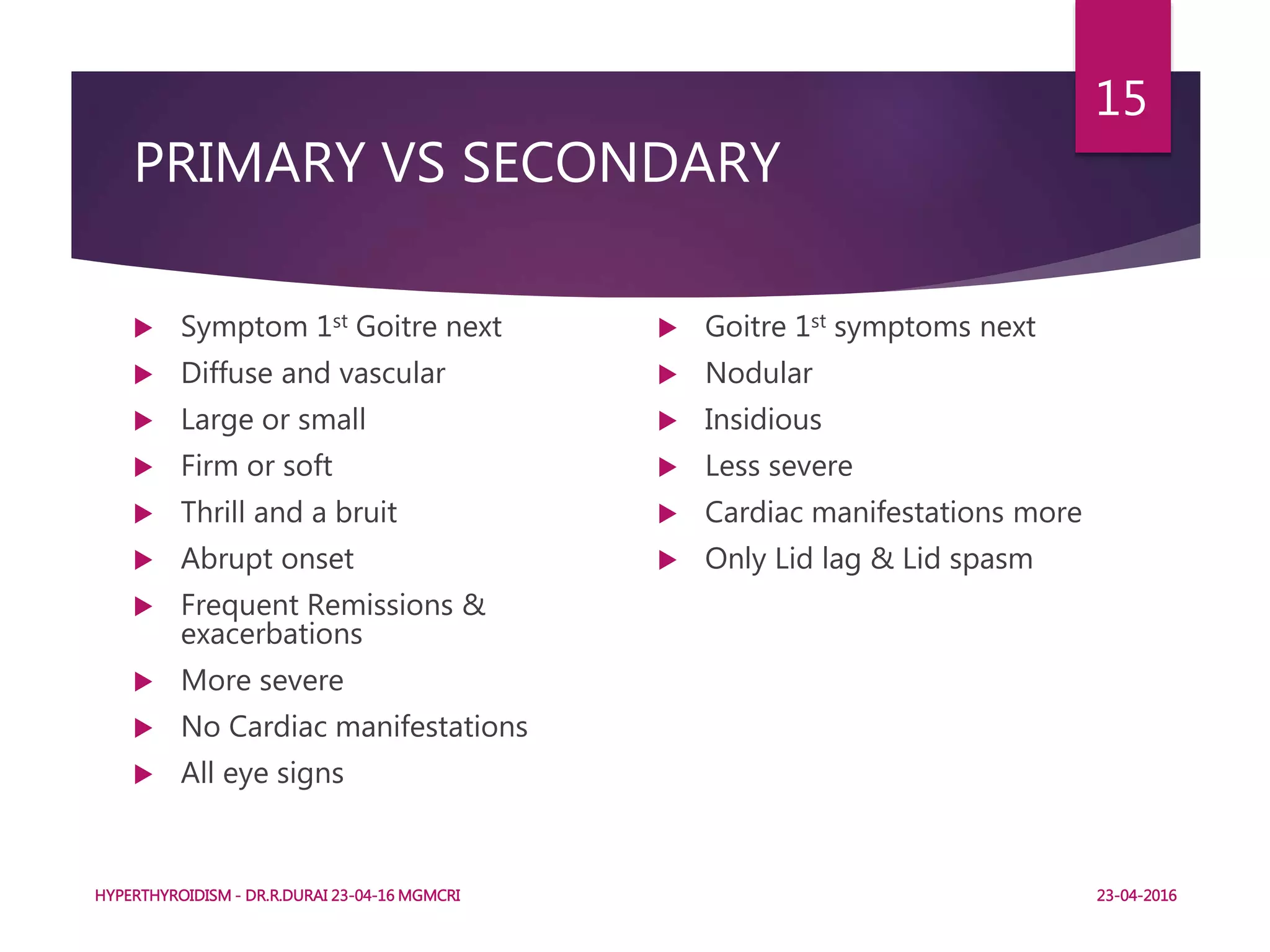
PRIMARY VS SECONDARY
 Symptom 1st Goitre next
 Diffuse and vascular
 Large or small
 Firm or soft
 Thrill and a bruit
 Abrupt onset
 Frequent Remissions &
exacerbations
 More severe
 No Cardiac manifestations
 All eye signs
 Goitre 1st symptoms next
 Nodular
 Insidious
 Less severe
 Cardiac manifestations more
 Only Lid lag & Lid spasm
HYPERTHYROIDISM - DR.R.DURAI 23-04-16 MGMCRI
15
23-04-2016
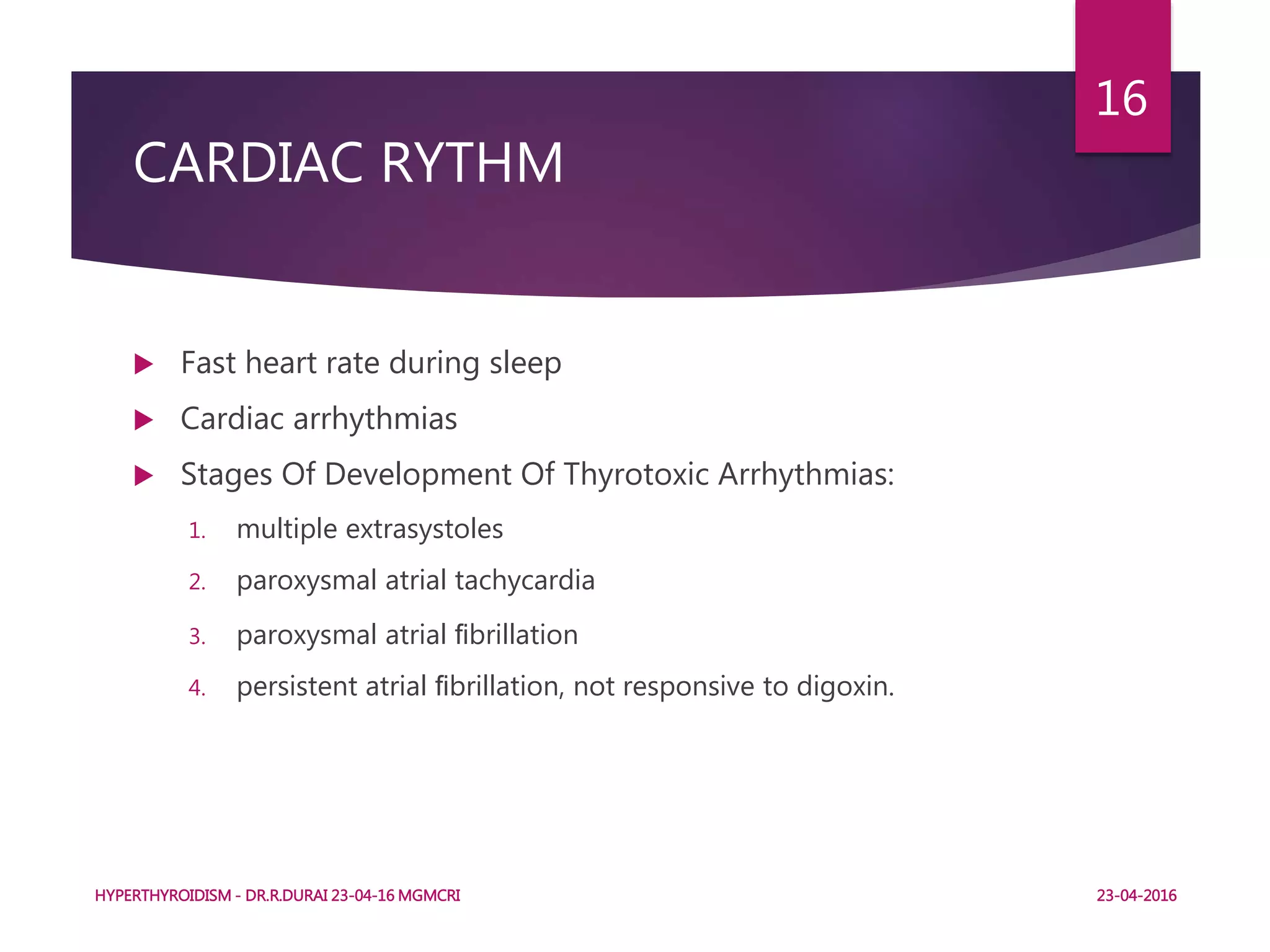
CARDIAC RYTHM
 Fast heart rate during sleep
 Cardiac arrhythmias
 Stages Of Development Of Thyrotoxic Arrhythmias:
1. multiple extrasystoles
2. paroxysmal atrial tachycardia
3. paroxysmal atrial fibrillation
4. persistent atrial fibrillation, not responsive to digoxin.
HYPERTHYROIDISM - DR.R.DURAI 23-04-16 MGMCRI
16
23-04-2016
MYOPATHY
 Weakness of the proximal limb muscles
 Thyrotoxic myopathy
 Recovery proceeds as hyperthyroidism is controlled.
HYPERTHYROIDISM - DR.R.DURAI 23-04-16 MGMCRI
17
23-04-2016
EYE SIGNS
HYPERTHYROIDISM - DR.R.DURAI 23-04-16 MGMCRI
18
23-04-2016
Specific to Graves Disease
 1. Diffuse painless and firm enlargement of thyroid gland
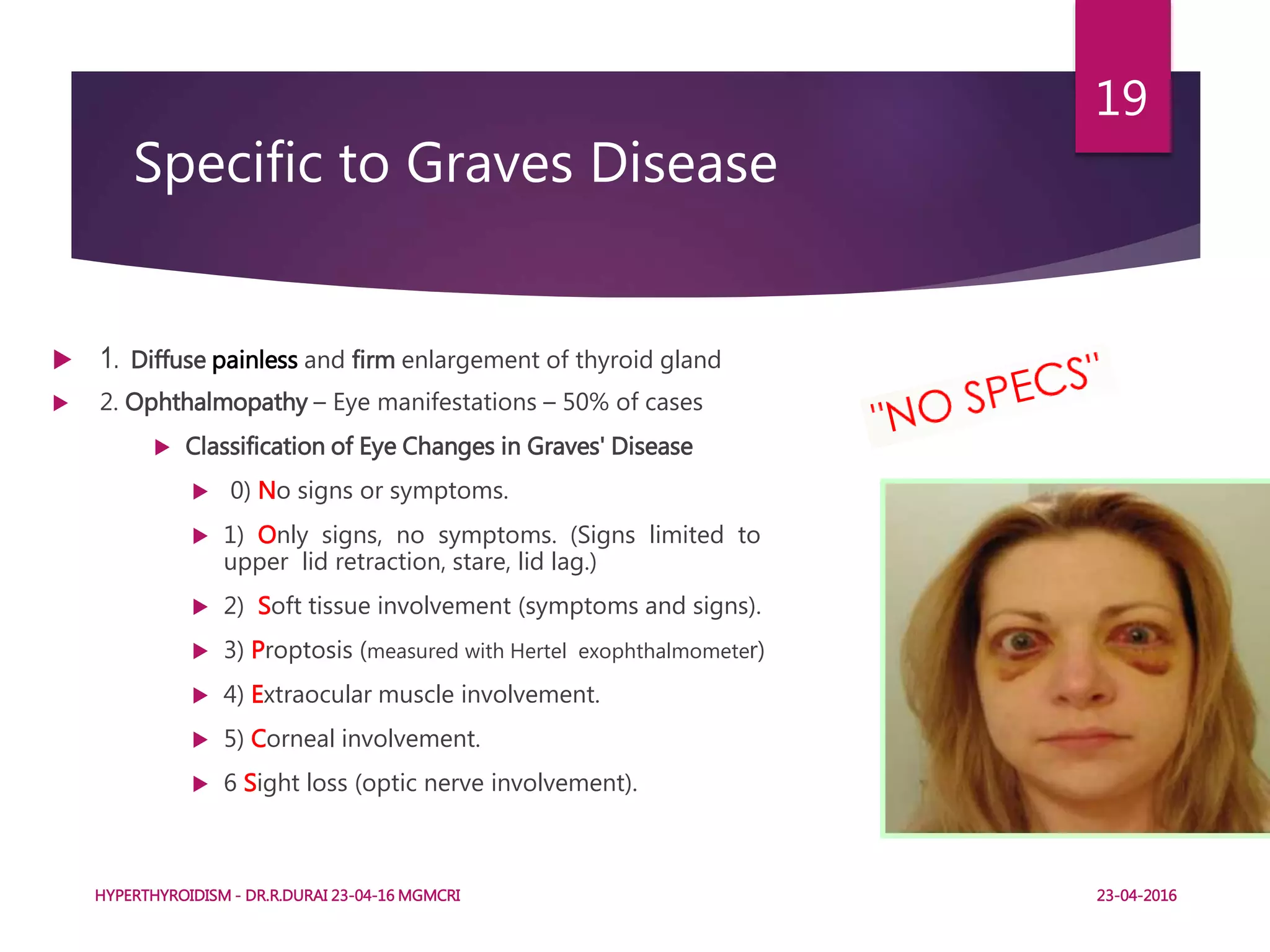
 2. Ophthalmopathy – Eye manifestations – 50% of cases
 Classification of Eye Changes in Graves' Disease
 0) No signs or symptoms.
 1) Only signs, no symptoms. (Signs limited to
upper lid retraction, stare, lid lag.)
 2) Soft tissue involvement (symptoms and signs).
 3) Proptosis (measured with Hertel exophthalmometer)
 4) Extraocular muscle involvement.
 5) Corneal involvement.
 6 Sight loss (optic nerve involvement).
HYPERTHYROIDISM - DR.R.DURAI 23-04-16 MGMCRI
19
23-04-2016
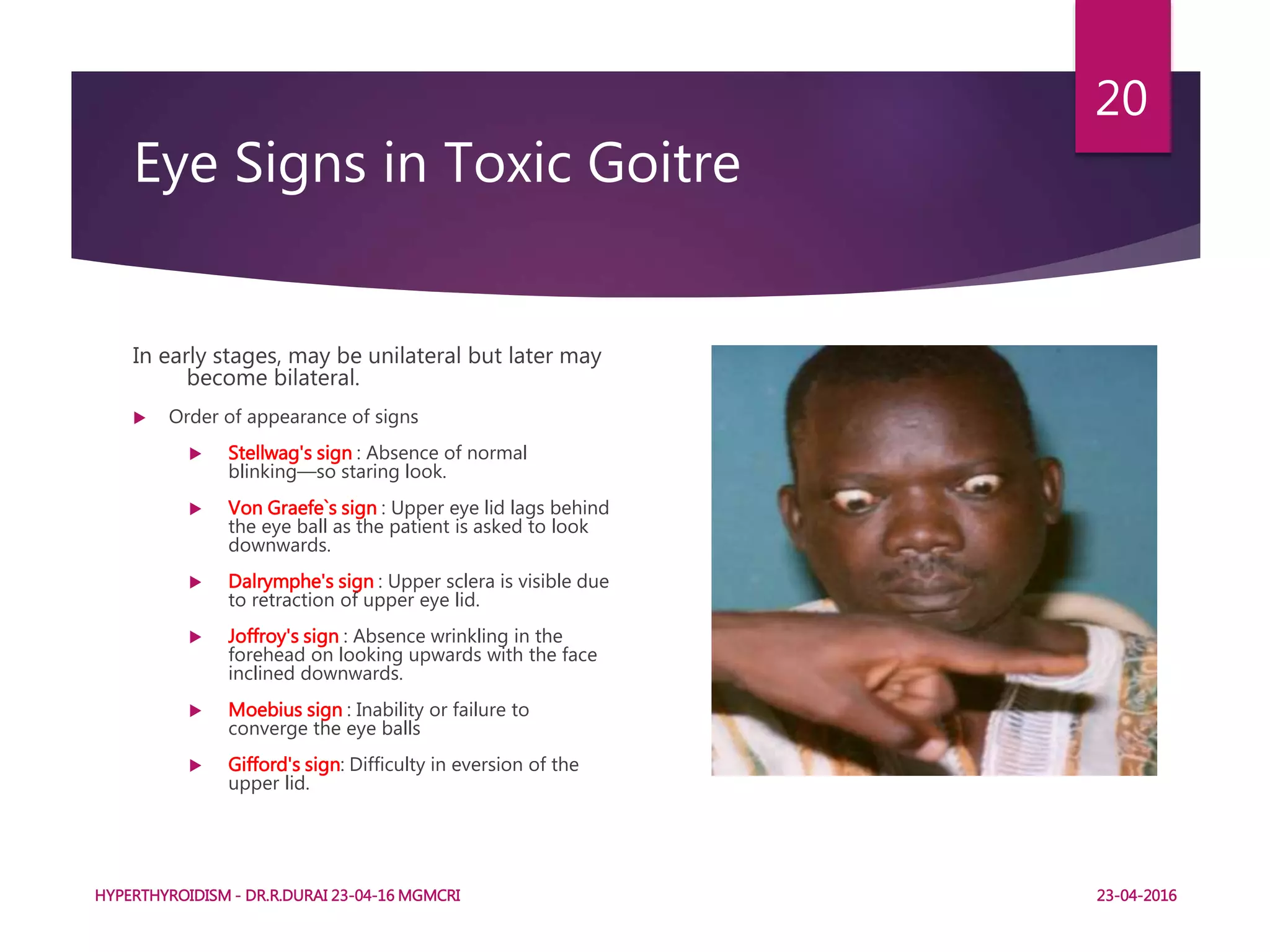
Eye Signs in Toxic Goitre
In early stages, may be unilateral but later may
become bilateral.
 Order of appearance of signs
 Stellwag's sign : Absence of normal
blinking—so staring look.
 Von Graefe`s sign : Upper eye lid lags behind
the eye ball as the patient is asked to look
downwards.
 Dalrymphe's sign : Upper sclera is visible due
to retraction of upper eye lid.
 Joffroy's sign : Absence wrinkling in the
forehead on looking upwards with the face
inclined downwards.
 Moebius sign : Inability or failure to
converge the eye balls
 Gifford's sign: Difficulty in eversion of the
upper lid.
HYPERTHYROIDISM - DR.R.DURAI 23-04-16 MGMCRI
20
23-04-2016
Specific to Graves Disease……..
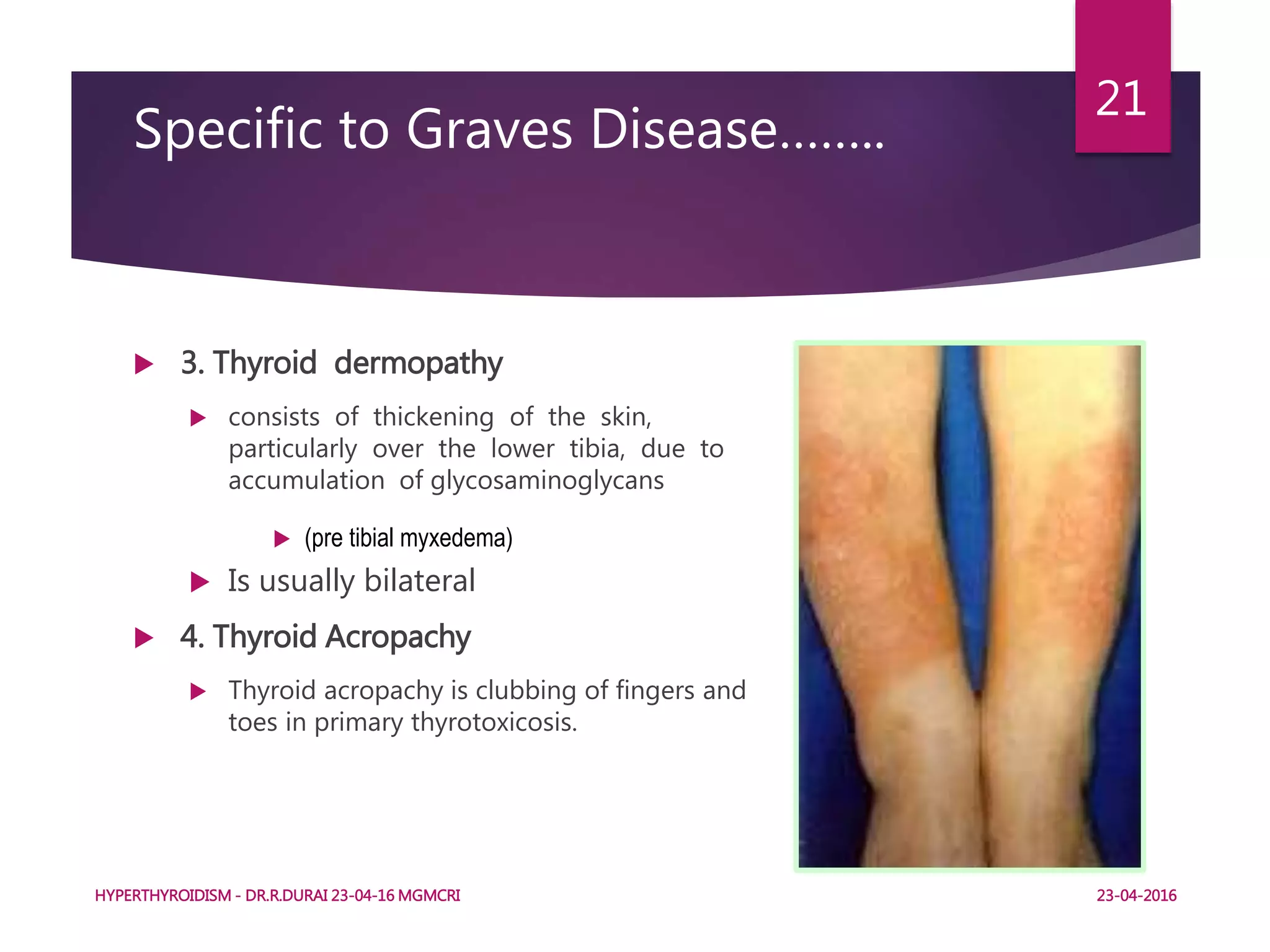
 3. Thyroid dermopathy
 consists of thickening of the skin,
particularly over the lower tibia, due to
accumulation of glycosaminoglycans
 (pre tibial myxedema)
 Is usually bilateral
 4. Thyroid Acropachy
 Thyroid acropachy is clubbing of fingers and
toes in primary thyrotoxicosis.
HYPERTHYROIDISM - DR.R.DURAI 23-04-16 MGMCRI
21
23-04-2016
DIAGNOSIS
DIAGNOSIS
 Examinations, symptoms
 Thyroid blood tests
 Thyroid function tests TSH , T4,T3
 Thyrroid antibodies TSI, ANTI TPO, ANTI Tg
 Other — nonspecific laboratory findings.
 low serum total, LDL, and (HDL) cholesterol concentrations
 normochromic, normocytic anemia
 Serum alkaline phosphatase
HYPERTHYROIDISM - DR.R.DURAI 23-04-16 MGMCRI
23
23-04-2016
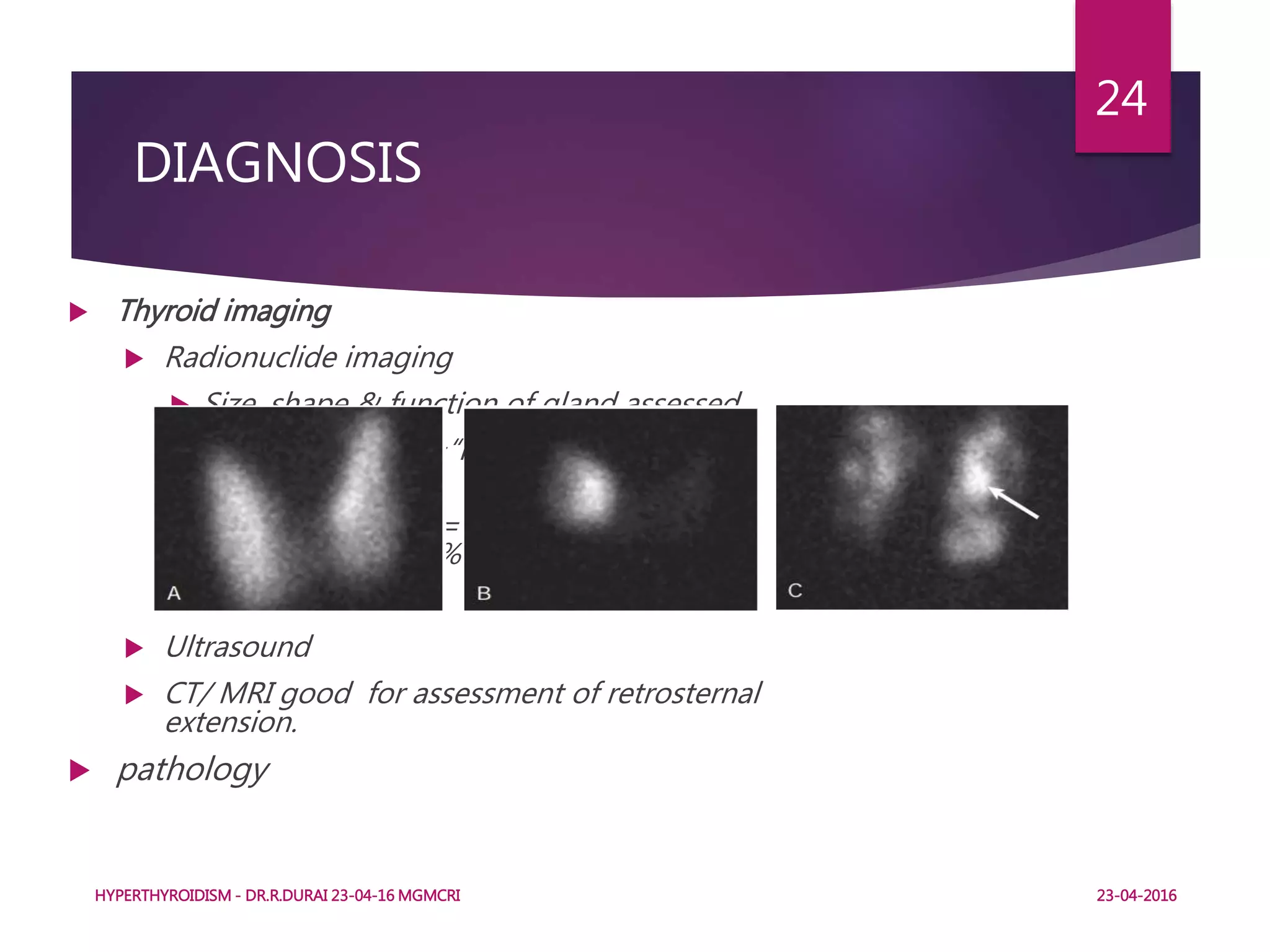
 Thyroid imaging
 Radionuclide imaging
 Size, shape & function of gland assessed
 Increased uptake=“hot", less risk of
malignancy,<5%
 Decreased uptake=“cold" higher risk of
malignancy,15-20%
 Ultrasound
 CT/ MRI good for assessment of retrosternal
extension.
 pathology
HYPERTHYROIDISM - DR.R.DURAI 23-04-16 MGMCRI
24
DIAGNOSIS
23-04-2016
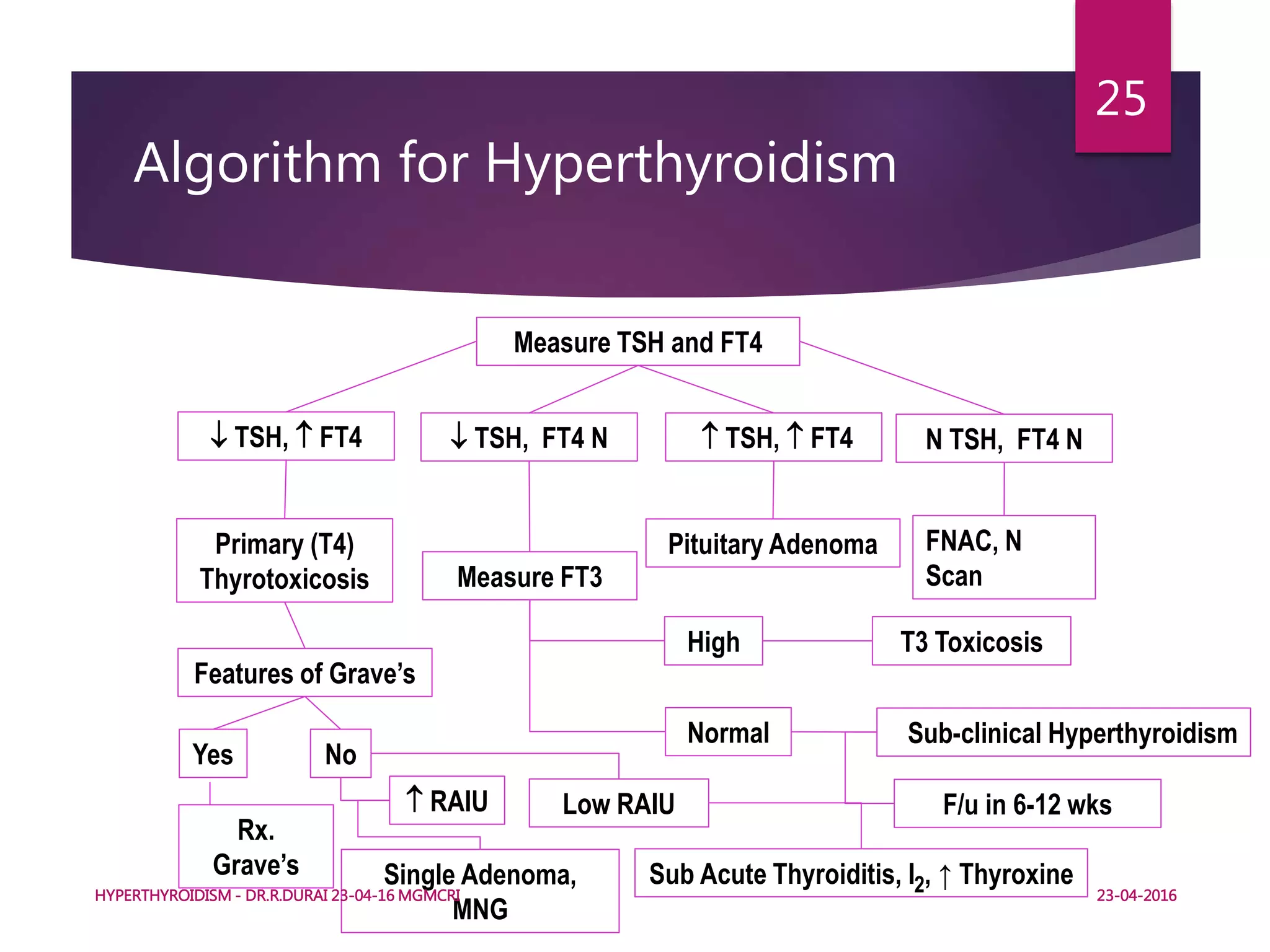
Algorithm for Hyperthyroidism
Measure TSH and FT4
 TSH,  FT4
Measure FT3
Primary (T4)
Thyrotoxicosis
High
Pituitary Adenoma FNAC, N
Scan
Normal
 TSH, FT4 N  TSH,  FT4 N TSH, FT4 N
T3 Toxicosis
Sub-clinical Hyperthyroidism
Features of Grave’s
Yes
Rx.
Grave’s
No
Single Adenoma,
MNG
Low RAIU RAIU
Sub Acute Thyroiditis, I2, ↑ Thyroxine
F/u in 6-12 wks
HYPERTHYROIDISM - DR.R.DURAI 23-04-16 MGMCRI
25
23-04-2016
PRINCIPLES
OF
TREATMENT
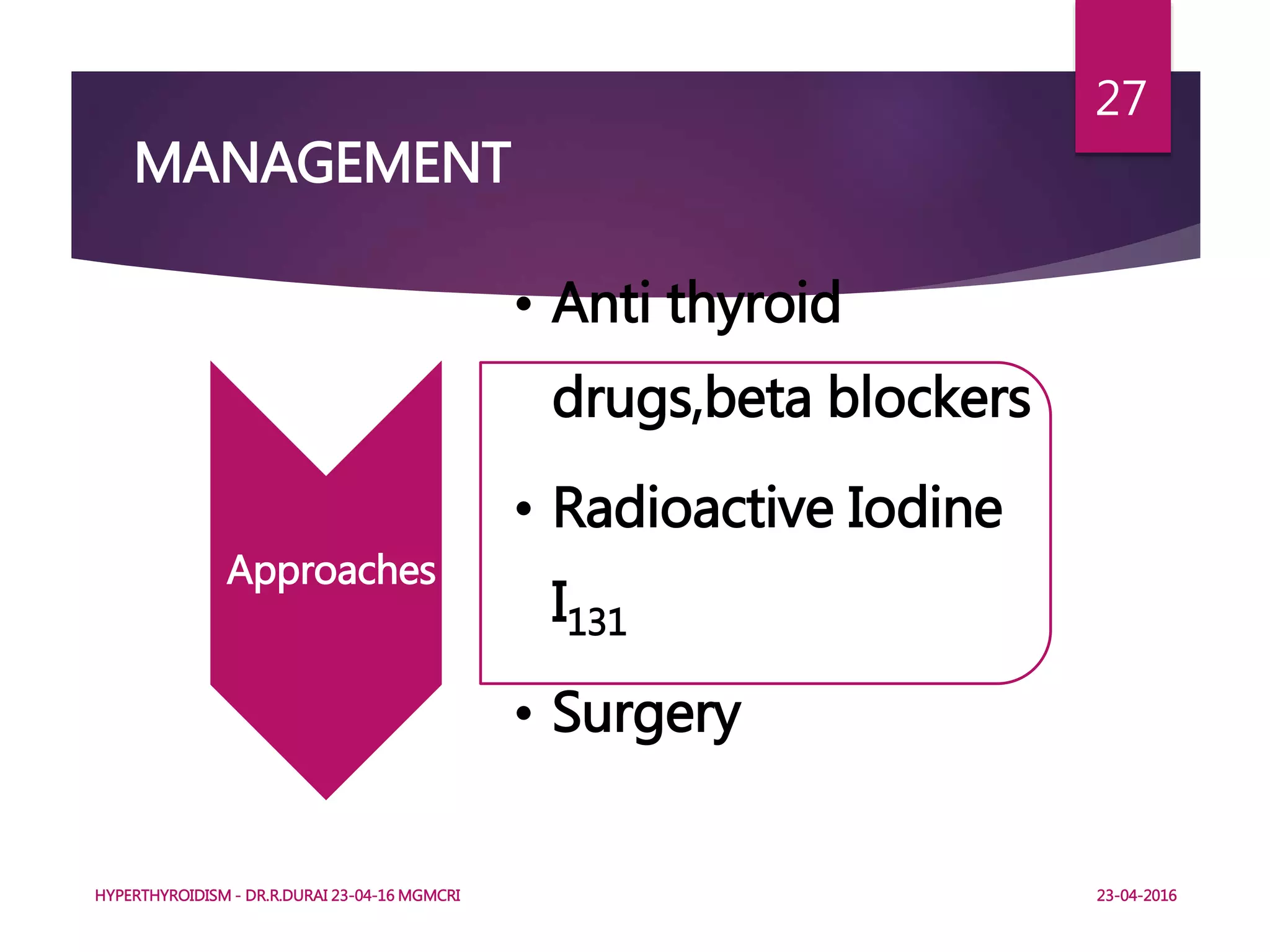
MANAGEMENT
Approaches
• Anti thyroid
drugs,beta blockers
• Radioactive Iodine
I131
• Surgery
HYPERTHYROIDISM - DR.R.DURAI 23-04-16 MGMCRI
27
23-04-2016
Choice Of Therapy
• Type of thyrotoxicosis
• Age of the patient
• Co existing medical illness
• Severity of thyrotoxicosis
• Goitre size
• Presence of ophtalmopathy
• Patient preference
Factors
influencing
HYPERTHYROIDISM - DR.R.DURAI 23-04-16 MGMCRI
28
23-04-2016
ANTITHYROID DRUGS
 Indications for antithyroid drugs:
 Patients with high likelihood of remission
 the elderly or others with comorbidities increasing
surgical risk or with limited life expectancy
 Toxicity in pregnant women
 moderate to severe active Graves’ ophthalmopathy
(GO)
 Before surgery, to make the patient euthyroid
 Soon after starting radioactive I131therapy for 6 to 12
weeks
HYPERTHYROIDISM - DR.R.DURAI 23-04-16 MGMCRI
29
23-04-2016
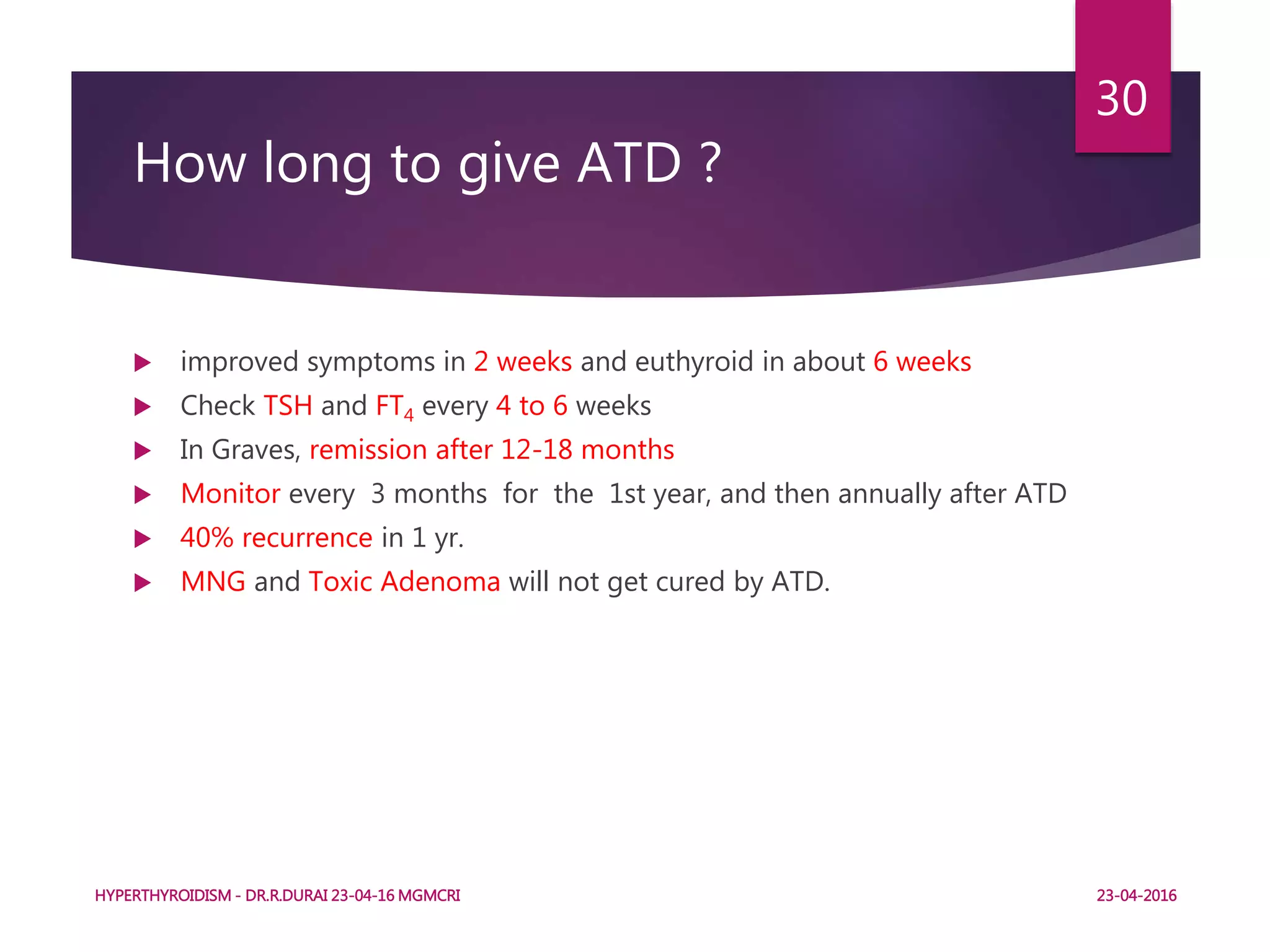
How long to give ATD ?
 improved symptoms in 2 weeks and euthyroid in about 6 weeks
 Check TSH and FT4 every 4 to 6 weeks
 In Graves, remission after 12-18 months
 Monitor every 3 months for the 1st year, and then annually after ATD
 40% recurrence in 1 yr.
 MNG and Toxic Adenoma will not get cured by ATD.
HYPERTHYROIDISM - DR.R.DURAI 23-04-16 MGMCRI
30
23-04-2016
Adjuvants
 Beta blockers
 Inhibit adrenergic effects
 Indications
 Prompt control of symptoms;
 treatment of choice for thyroiditis;
 first-line therapy before surgery, radioactive iodine, and
antithyroid drugs;
 Contraindications
 Use with caution in older patients and in patients with pre-
existing heart disease, chronic obstructive pulmonary disease,
or asthma
 Propranolol is the most commonly prescribed medication in
doses of about 20 to 40 mg four times daily
HYPERTHYROIDISM - DR.R.DURAI 23-04-16 MGMCRI
31
23-04-2016
 Iodides
 Block the conversion of T4to T3 and inhibit hormone release
 Indications
 preoperatively when other medications are ineffective or
contraindicated;
 to reduce gland vascularity before surgery for Graves’ disease
 during pregnancy when antithyroid drugs are not tolerated;
 Complications
 Paradoxical increases in hormone release with prolonged use;
 common side effects of sialadenitis, conjunctivitis, or acneform rash;
Adjuvants
HYPERTHYROIDISM - DR.R.DURAI 23-04-16 MGMCRI
32
23-04-2016
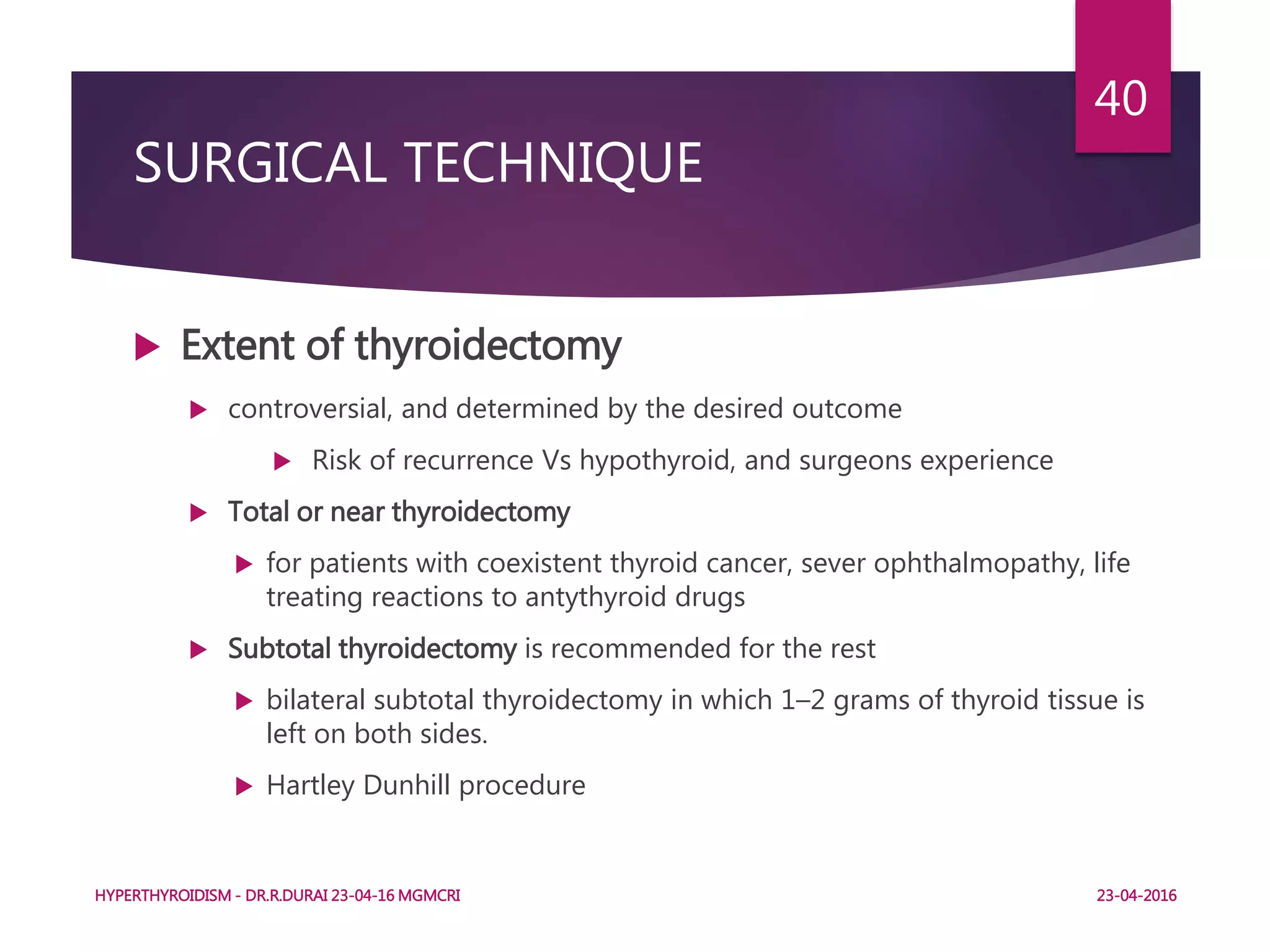
RADIOIODINE THERAPY
 Radioactive iodine
 Concentrates in the thyroid gland and destroys thyroid
tissue
 High cure rates with single-dose treatment (80 percent);
 treatment of choice for
 Graves’ disease
 Multi nodular goitre, toxic nodules in patients older
than 40 years, and
 In recurrent thyrotoxicosis
 It is effective, safe, and does not require hospitalization.
 Given orally as a single dose in a capsule or liquid form.
HYPERTHYROIDISM - DR.R.DURAI 23-04-16 MGMCRI
33
23-04-2016
RADIOIODINE THERAPY………
 Drawbacks
 Delayed control of symptoms;
 post treatment hypothyroidism
 contraindicated - pregnant or breastfeeding;
 transient neck soreness, flushing, and decreased taste;
radiation thyroiditis in 1 percent of patients;
 may exacerbate Graves’ ophthalmopathy;
 may require pre treatment with antithyroid drugs in
older or cardiac patients
HYPERTHYROIDISM - DR.R.DURAI 23-04-16 MGMCRI
34
23-04-2016
Surgical Treatment
 Surgical treatment is reserved
 patient preference
 Pregnant women who can’t tolerate ATD
 child or adolescent intolerant of ATDs
 large goiter, with or without compressive
symptoms
 severe Graves’ ophthalmopathy
 the presence of suspicious nodules
HYPERTHYROIDISM - DR.R.DURAI 23-04-16 MGMCRI
35
23-04-2016
SURGICAL………..
 GRAVES DISEASE
 Near-total or total thyroidectomy is the procedure of
choice
 TMNG
 Near- total or total thyroidectomy should be performed
 TOXIC ADENOMA
 an ipsilateral thyroid lobectomy, or
 isthmusectomy
 In patients with coexisting eye disease,
 total thyroidectomy
HYPERTHYROIDISM - DR.R.DURAI 23-04-16 MGMCRI
36
23-04-2016
Other causes of Hyperthyroidism
 Thyrotoxicosis factitia
 Jod–Basedow thyrotoxicosis
 Subacute/acute forms of autoimmune thyroiditis or of de
Quervain’s thyroiditis
 Secondary carcinoma
 Neonatal thyrotoxicosis
HYPERTHYROIDISM - DR.R.DURAI 23-04-16 MGMCRI
37
23-04-2016
SURGERICAL
PROCEDURE
Preoperative Preparation
 Standard preparation
 make the patient euthyroid/ near euthyroid using antythyroid drugs
 Alternative method
 rapid control of thyroid status can be achieved with a combination of
thionamides, SSKI, dexamethasone (1 to 2 mg twice daily), and beta
blockers
 very rapid control=> operation within a week
 Lugol’s iodide solution or saturated potassium iodide( three
drops twice daily) for 7 to 10 days
HYPERTHYROIDISM - DR.R.DURAI 23-04-16 MGMCRI
39
23-04-2016
SURGICAL TECHNIQUE
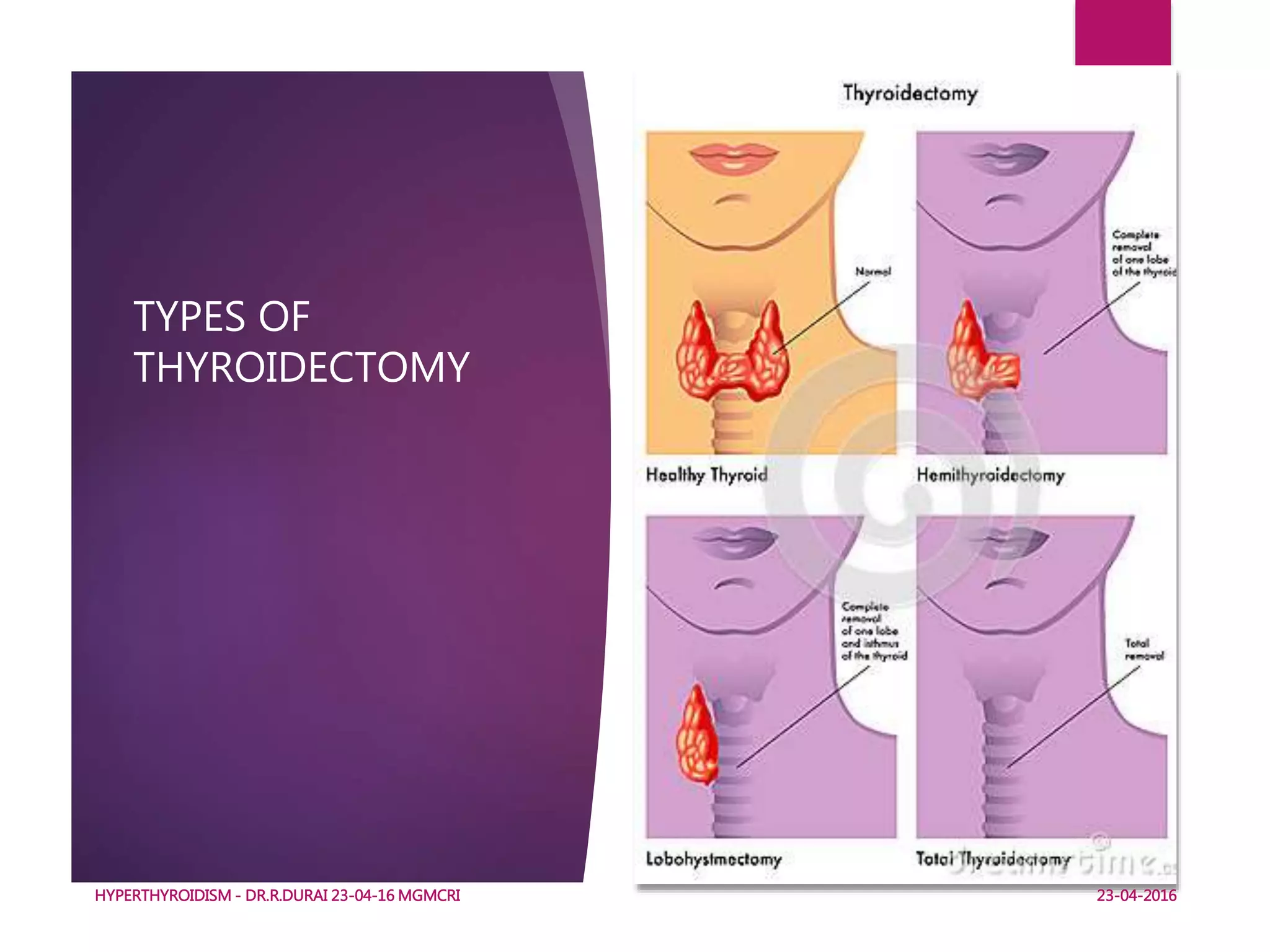
 Extent of thyroidectomy
 controversial, and determined by the desired outcome
 Risk of recurrence Vs hypothyroid, and surgeons experience
 Total or near thyroidectomy
 for patients with coexistent thyroid cancer, sever ophthalmopathy, life
treating reactions to antythyroid drugs
 Subtotal thyroidectomy is recommended for the rest
 bilateral subtotal thyroidectomy in which 1–2 grams of thyroid tissue is
left on both sides.
 Hartley Dunhill procedure
HYPERTHYROIDISM - DR.R.DURAI 23-04-16 MGMCRI
40
23-04-2016
TYPES OF
THYROIDECTOMY
HYPERTHYROIDISM - DR.R.DURAI 23-04-16 MGMCRI
41
23-04-2016
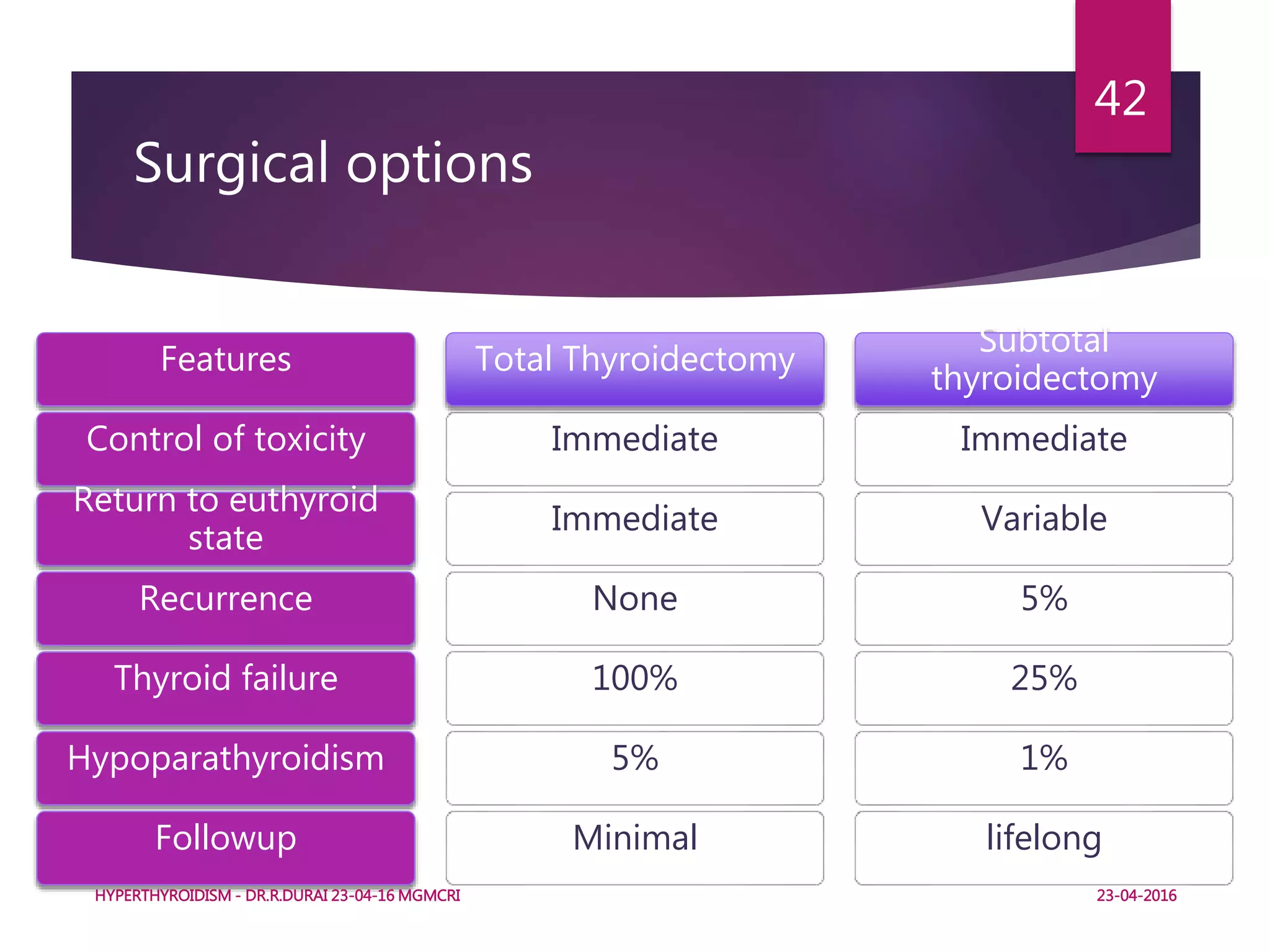
Features
Control of toxicity
Return to euthyroid
state
Recurrence
Thyroid failure
Hypoparathyroidism
Followup
Total Thyroidectomy
Immediate
Immediate
None
100%
5%
Minimal
Subtotal
thyroidectomy
Immediate
Variable
5%
25%
1%
lifelong
Surgical options
HYPERTHYROIDISM - DR.R.DURAI 23-04-16 MGMCRI
42
23-04-2016
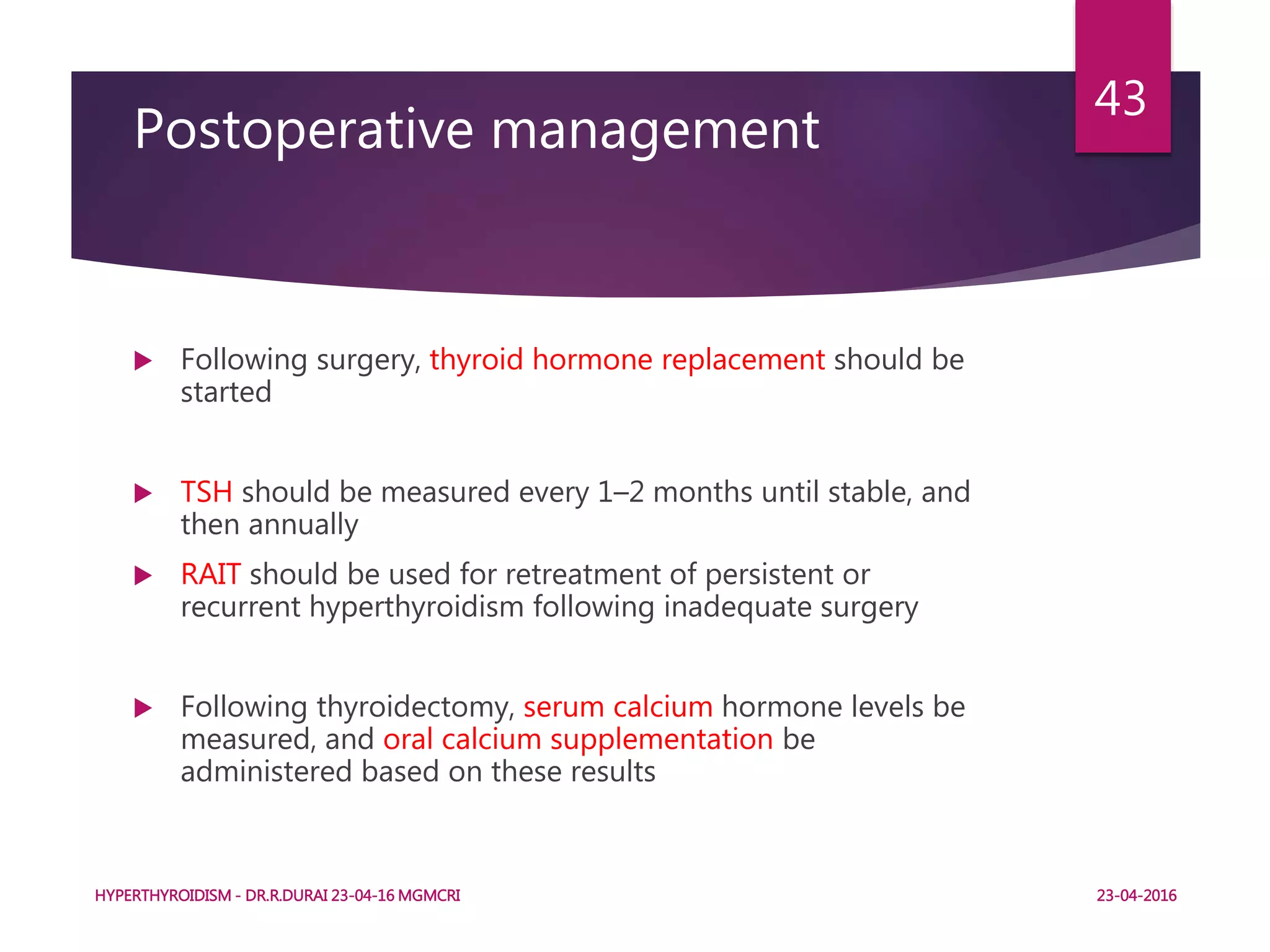
Postoperative management
 Following surgery, thyroid hormone replacement should be
started
 TSH should be measured every 1–2 months until stable, and
then annually
 RAIT should be used for retreatment of persistent or
recurrent hyperthyroidism following inadequate surgery
 Following thyroidectomy, serum calcium hormone levels be
measured, and oral calcium supplementation be
administered based on these results
HYPERTHYROIDISM - DR.R.DURAI 23-04-16 MGMCRI
43
23-04-2016
NOVEL MINIMALLY INVASIVE
THERAPIES
 Percutaneous Ethanol Injection (PEI) for Nodules
 Injections of ethanol can be administered directly to toxic thyroid
nodules, cysts and large nontoxic thyroid nodules
 Ultrasound-Guided Laser Thermal Ablation (LTA) for
Nodules
 Percutaneous laser thermal ablation is used to reduce both
hyperfunctioning and compressive nodule
HYPERTHYROIDISM - DR.R.DURAI 23-04-16 MGMCRI
44
23-04-2016
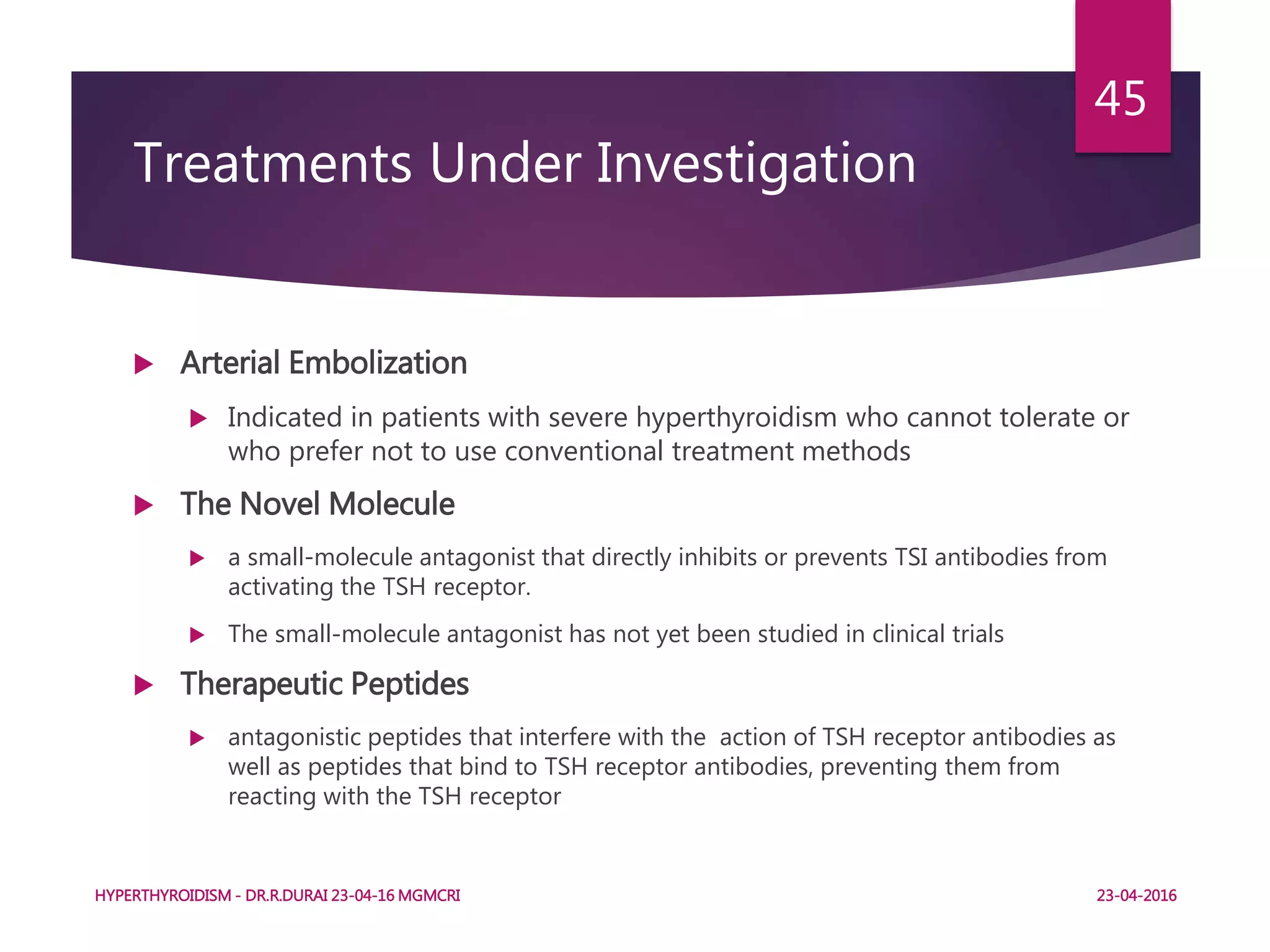
Treatments Under Investigation
 Arterial Embolization
 Indicated in patients with severe hyperthyroidism who cannot tolerate or
who prefer not to use conventional treatment methods
 The Novel Molecule
 a small-molecule antagonist that directly inhibits or prevents TSI antibodies from
activating the TSH receptor.
 The small-molecule antagonist has not yet been studied in clinical trials
 Therapeutic Peptides
 antagonistic peptides that interfere with the action of TSH receptor antibodies as
well as peptides that bind to TSH receptor antibodies, preventing them from
reacting with the TSH receptor
HYPERTHYROIDISM - DR.R.DURAI 23-04-16 MGMCRI
45
23-04-2016
CHOICE OF THERAPY
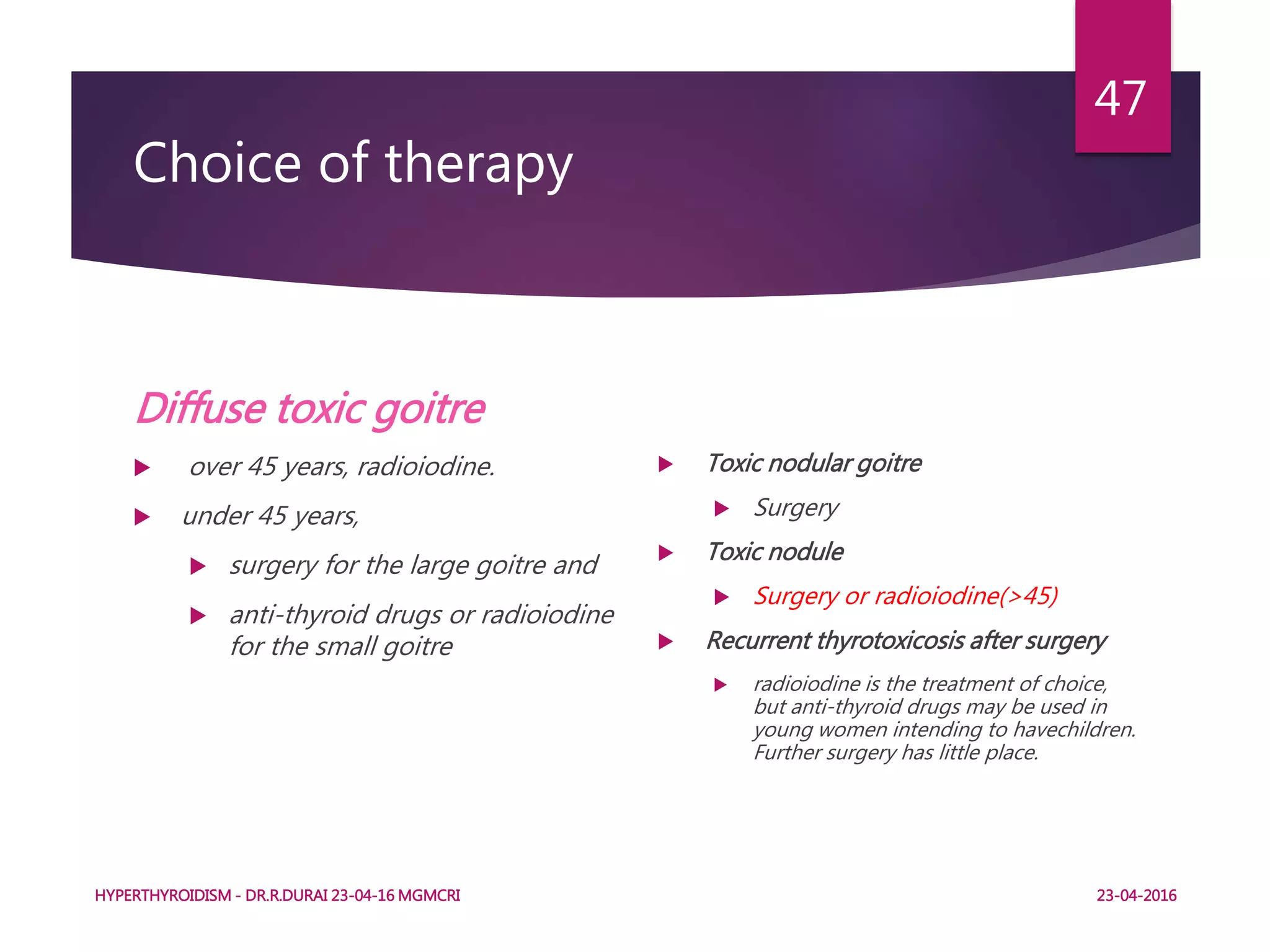
Choice of therapy
Diffuse toxic goitre
 over 45 years, radioiodine.
 under 45 years,
 surgery for the large goitre and
 anti-thyroid drugs or radioiodine
for the small goitre
 Toxic nodular goitre
 Surgery
 Toxic nodule
 Surgery or radioiodine(>45)
 Recurrent thyrotoxicosis after surgery
 radioiodine is the treatment of choice,
but anti-thyroid drugs may be used in
young women intending to havechildren.
Further surgery has little place.
HYPERTHYROIDISM - DR.R.DURAI 23-04-16 MGMCRI
47
23-04-2016
COMPLICTIONS OF
THYROID SURGERY
IMMEDIATE COMPLICATIONS
 HEMORRHAGE
 INFECTION
 RECURRENT LARYNGEAL NERVE PALSY
 THYROID CRISES OR STORM
 RESPIRATORY OBSTRUCTION
 PARATHYROID INSUFFICIENCY OR TETANY
HYPERTHYROIDISM - DR.R.DURAI 23-04-16 MGMCRI
49
23-04-2016
LATE COMPLICATIONS
 THYROID INSUFFIENCY
 RECURRENT THROTOXICOSIS
 PROGRESSIVE EXOPHTHALMOS
 HYPERTROPHIC SCAR OR KELOID.
HYPERTHYROIDISM - DR.R.DURAI 23-04-16 MGMCRI
50
23-04-2016
HEMORRHAGE
 Incidence – 0.3-1%
 Two types -
 Deep to deep fascia
 Subcutaneous
 May be primary or reactionary
 A deep bleeding produces tension hematoma. Usually due to slipping of
the ligature of the superior thyroid artery, though it can also be from a
thyroid remnant or a thyroid vein. This compresses on the airway &
potentially life threatening unlike the subcutaneous bleeding.
HYPERTHYROIDISM - DR.R.DURAI 23-04-16 MGMCRI
51
23-04-2016
HEMORRHAGE
 GOOD INTRAOPERATIVE HEMOSTASIS
 Don’t traumatize the thyroid
 Avoid too much neck dressings
 Suction drain ??
 Do not waste time on imaging
 A tension hematoma requires opening of the
wound, evacuation of hematoma & ligature of the
bleeding vessels
 A subcutaneous hematoma can be aspirated.
HYPERTHYROIDISM - DR.R.DURAI 23-04-16 MGMCRI
52
23-04-2016
INFECTION
 Cellulitis – erythema, warmth & tenderness
around the wound
 Abscess – superficial / deep
 Deep abscess associated with fever,
leucocytosis, tachycardia
HYPERTHYROIDISM - DR.R.DURAI 23-04-16 MGMCRI
53
23-04-2016
INFECTION
 Pus for Gram’s stain & culture
 CT for deep neck abscess
 Can be prevented by proper hemostasis at the time
of surgery & using suction drain.
 Per-operative antibiotics not recommended.
 Once established
 Antibiotics
 Drainage of abscess.
HYPERTHYROIDISM - DR.R.DURAI 23-04-16 MGMCRI
54
23-04-2016
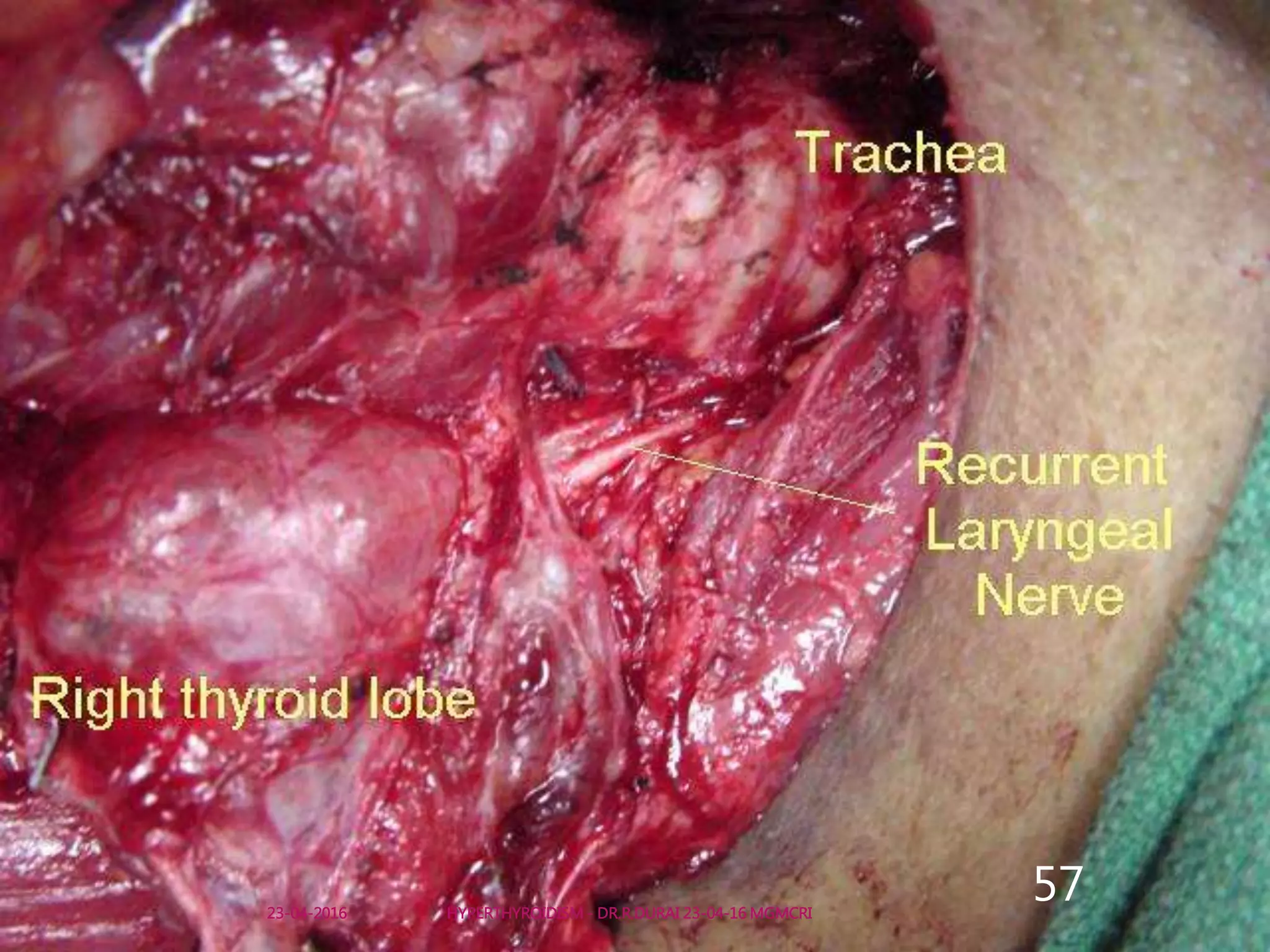
RECURRENT LARYNGEAL
NERVE PARALYSIS
 Temporary paralysis is due to pressure of hematoma on
the nerve. Recovers in 3 weeks to 3 month.
 Permanent paralysis is rare (<2%) and is due to undue
stretching or its inclusion in a ligature.
 Unilateral –
 1/3 rd are asymptomatic
 Change in voice
 Improves due to compensation by the healthy cord.
 Bilateral- dyspnea & biphasic stridor
HYPERTHYROIDISM - DR.R.DURAI 23-04-16 MGMCRI
55
23-04-2016
RECURRENT LARYNGEAL
NERVE PARALYSIS
 Prevent injury to the nerve by
 Identify
 ITA ligated far from lobe
 Posterior layer of pretracheal fascia kept intact.
 Laryngoscopy, laryngeal EMG
 For unilateral paralysis no treatment is required.
 For bilateral paralysis
 Tracheostomy (with speaking valve.
 Lateralization of cord
 Arytenoidectomy
 Through endoscope
 Thyroplasty type 2
 Cordectomy
 Nerve muscle implant
HYPERTHYROIDISM - DR.R.DURAI 23-04-16 MGMCRI
56
23-04-2016
HYPERTHYROIDISM - DR.R.DURAI 23-04-16 MGMCRI
5723-04-2016
COMBINED PARALYSIS
 Unilateral
 Vocal cord lies in cadaveric position
 Hoarseness of voice & aspiration of liquids.
 Ineffective cough
 Bilateral
 Aphonia
 Aspiration
 Ineffective cough
 Bronchopneumonia
 ONLY superior laryngeal nerve palsy also occurs rarely & presents with
hoarseness & loss of voice stamina.
HYPERTHYROIDISM - DR.R.DURAI 23-04-16 MGMCRI
58
23-04-2016
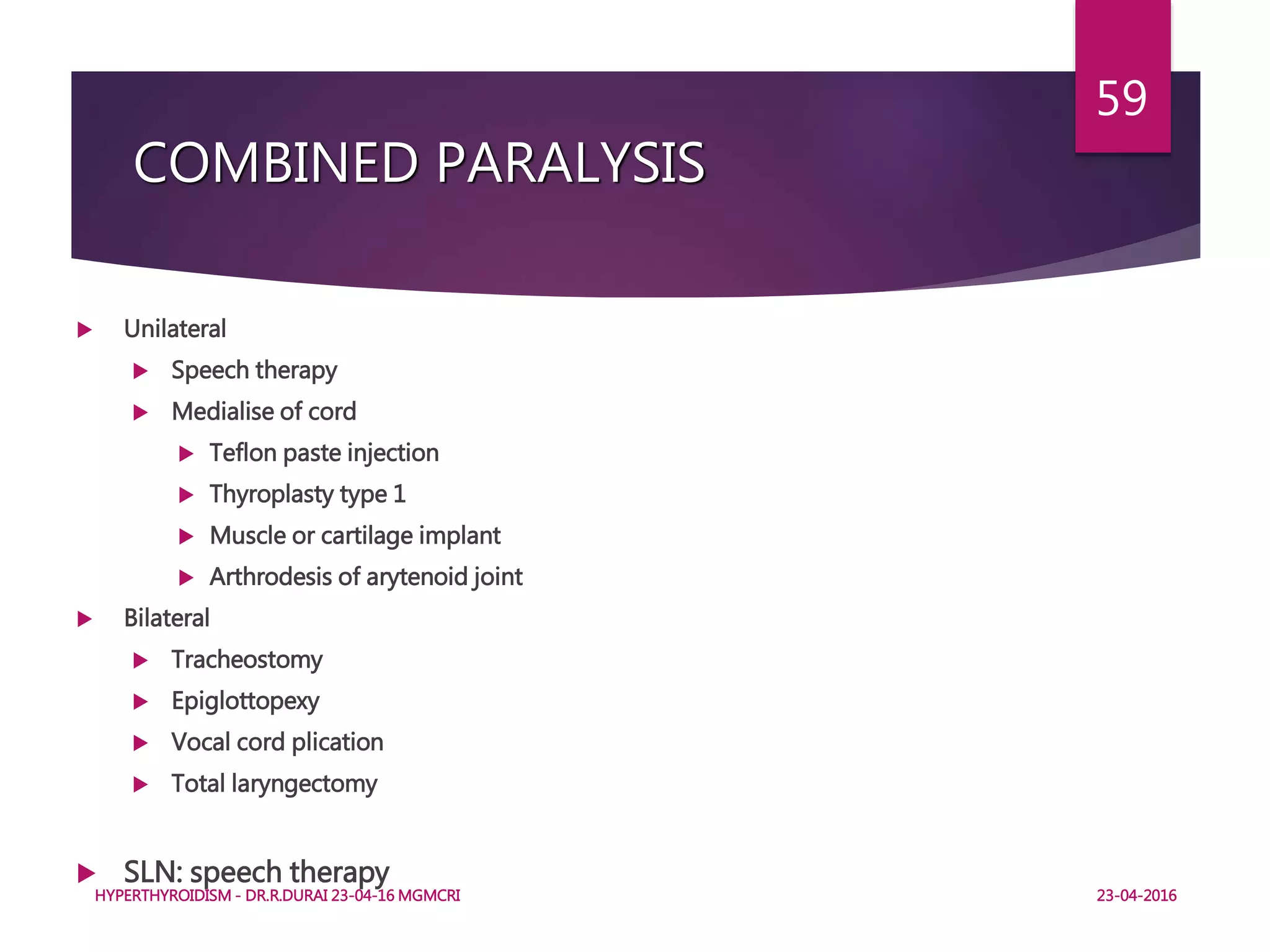
COMBINED PARALYSIS
 Unilateral
 Speech therapy
 Medialise of cord
 Teflon paste injection
 Thyroplasty type 1
 Muscle or cartilage implant
 Arthrodesis of arytenoid joint
 Bilateral
 Tracheostomy
 Epiglottopexy
 Vocal cord plication
 Total laryngectomy
 SLN: speech therapy
HYPERTHYROIDISM - DR.R.DURAI 23-04-16 MGMCRI
59
23-04-2016
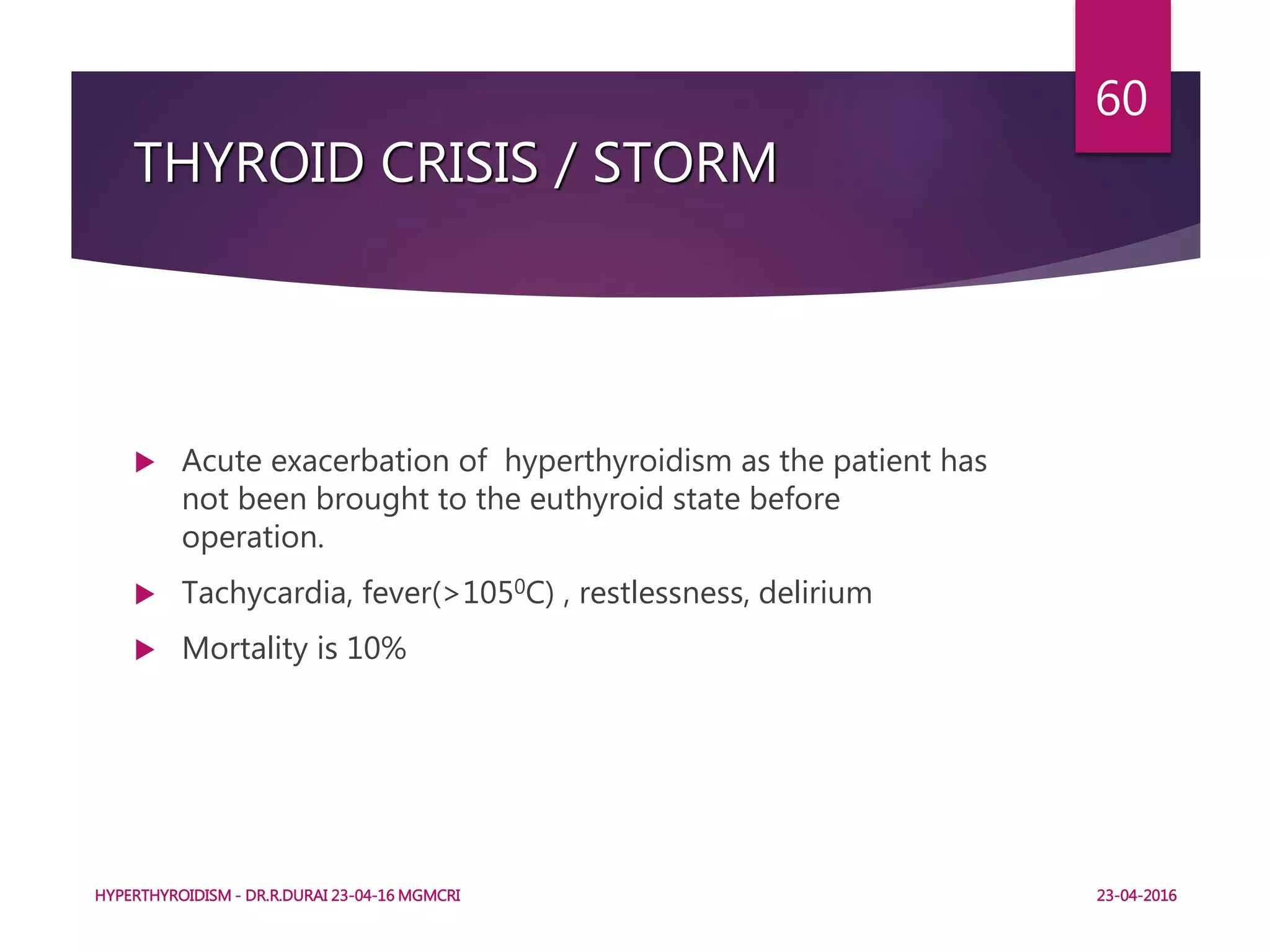
THYROID CRISIS / STORM
 Acute exacerbation of hyperthyroidism as the patient has
not been brought to the euthyroid state before
operation.
 Tachycardia, fever(>1050C) , restlessness, delirium
 Mortality is 10%
HYPERTHYROIDISM - DR.R.DURAI 23-04-16 MGMCRI
60
23-04-2016
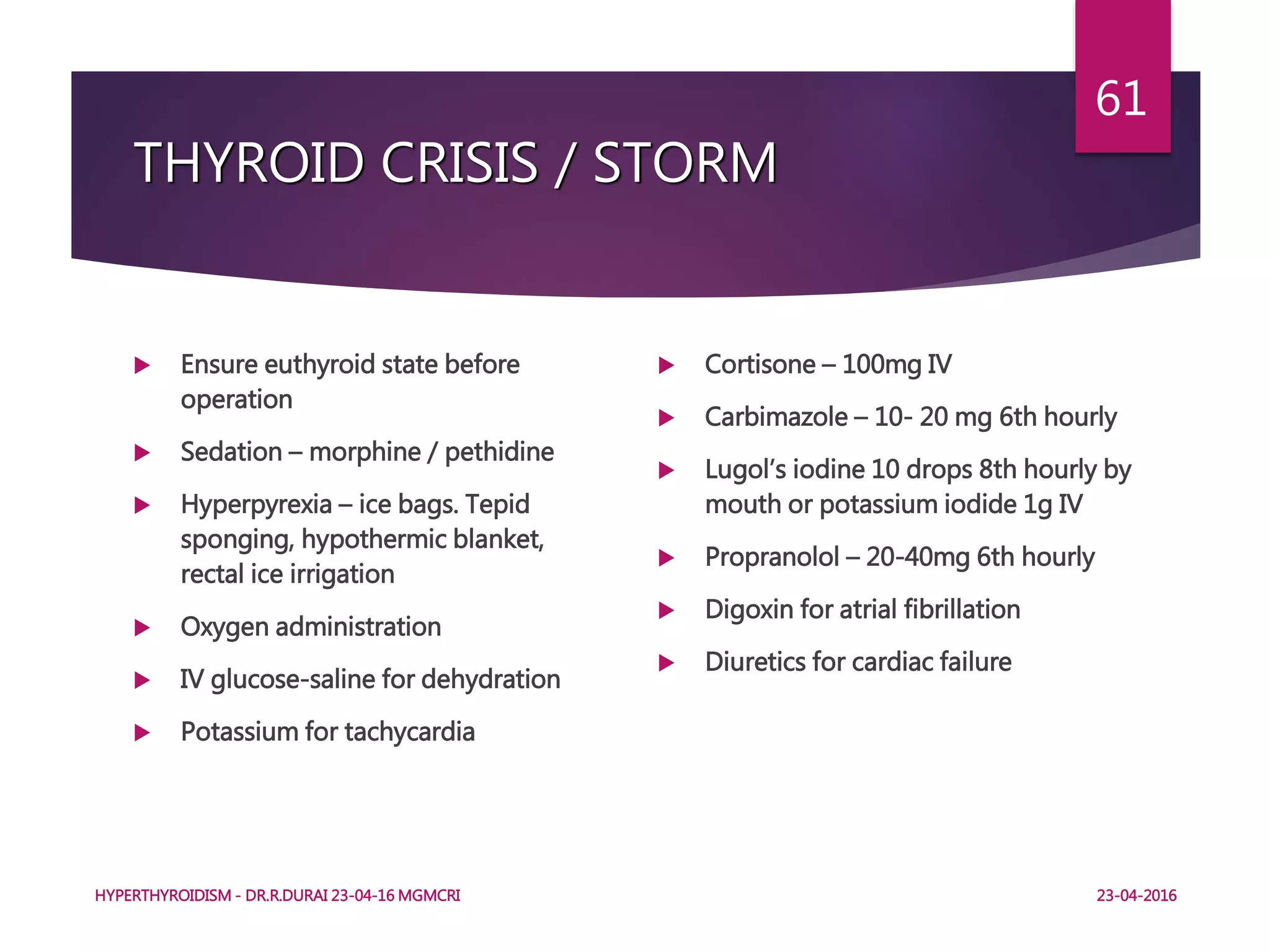
THYROID CRISIS / STORM
 Ensure euthyroid state before
operation
 Sedation – morphine / pethidine
 Hyperpyrexia – ice bags. Tepid
sponging, hypothermic blanket,
rectal ice irrigation
 Oxygen administration
 IV glucose-saline for dehydration
 Potassium for tachycardia
 Cortisone – 100mg IV
 Carbimazole – 10- 20 mg 6th hourly
 Lugol’s iodine 10 drops 8th hourly by
mouth or potassium iodide 1g IV
 Propranolol – 20-40mg 6th hourly
 Digoxin for atrial fibrillation
 Diuretics for cardiac failure
HYPERTHYROIDISM - DR.R.DURAI 23-04-16 MGMCRI
61
23-04-2016
RESPIRATORY
OBSTRUCTION
 Laryngeal edema due to
 Tension hematoma
 Endotracheal intubation & surgical handling
 More chance in vascular goiters.
 Collapse / kinking of the trachea
 Bilateral recurrent nerve paralysis can aggravate
obstruction if edema is present.
HYPERTHYROIDISM - DR.R.DURAI 23-04-16 MGMCRI
62
23-04-2016
RESPIRATORY
OBSTRUCTION
 Open the wound & release the tension hematoma
 Endotracheal tube if no improvement. INTUBATION TO
BE DONE BY AN EXPERIENCED ANESTHETIST as repeated
attempts cause more edema leading to cerebral anoxia.
 The tube is left in place for several days & steroids given
to reduce the edema.
HYPERTHYROIDISM - DR.R.DURAI 23-04-16 MGMCRI
63
23-04-2016
PARATHYROID
INSUFFICIENCY
 Due to removal of parathyroids or the parathyroid end artery.
 Incidence – 1-3%
 Occurs 2 – 5% after operation. Can be delayed for 2-3 weeks or hypocalcemia may be
asymptomatic.
 Classic triad –
 Carpopedal spasm
 Stridor
 Convulsions
 Latent tetany
 Trousseau’s sign
 Chvostek’s sign
 Persistant – grand mal epilepsy, cataracts, psychosis, calcification of basal ganglia,
papilledema.
HYPERTHYROIDISM - DR.R.DURAI 23-04-16 MGMCRI
64
23-04-2016
PARATHYROID
INSUFFICIENCY
 Correct identification of the gland
 Ligate vessels distal to the parathyroids.
 Recognition of the parathyroid glands, which appear in a variety of shapes
and have a caramel-like color, is critical. When they lose their blood supply,
they turn black. The devascularized gland should be removed, cut into 1 to
2mm pieces, and reimplanted in the sternomastoid muscle or the forearm.
 Monitor serum Ca for 72 hrs post-operatively.
 20 ml 10% solution of calcium gluconate IV
 10 ml injected IM
 2.5-5 G calcium carbonate / day
 PTH is unsatisfactory.
 AlfacalcidolHYPERTHYROIDISM - DR.R.DURAI 23-04-16 MGMCRI
65
23-04-2016
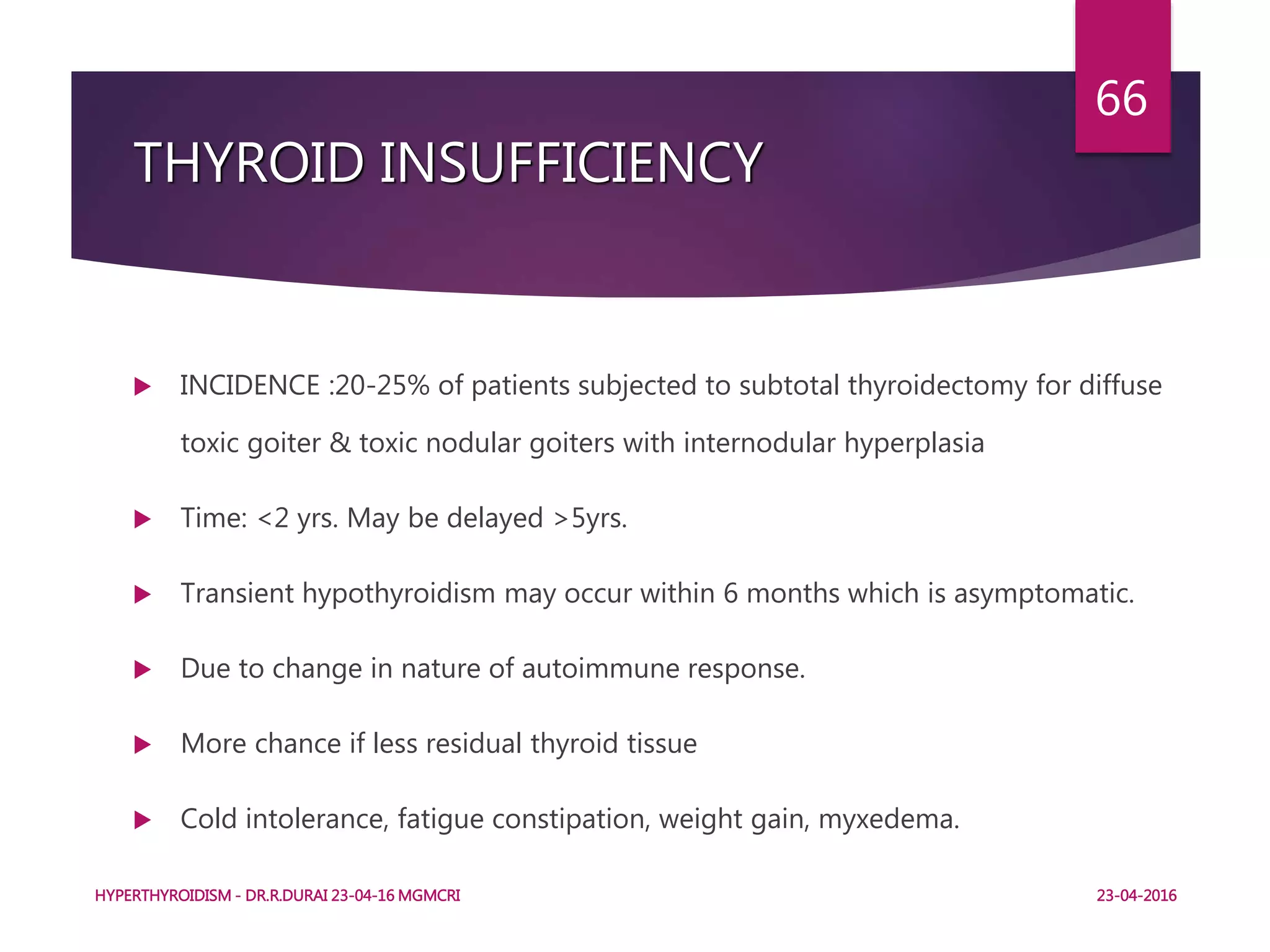
THYROID INSUFFICIENCY
 INCIDENCE :20-25% of patients subjected to subtotal thyroidectomy for diffuse
toxic goiter & toxic nodular goiters with internodular hyperplasia
 Time: <2 yrs. May be delayed >5yrs.
 Transient hypothyroidism may occur within 6 months which is asymptomatic.
 Due to change in nature of autoimmune response.
 More chance if less residual thyroid tissue
 Cold intolerance, fatigue constipation, weight gain, myxedema.
HYPERTHYROIDISM - DR.R.DURAI 23-04-16 MGMCRI
66
23-04-2016
THYROID INSUFFICIENCY
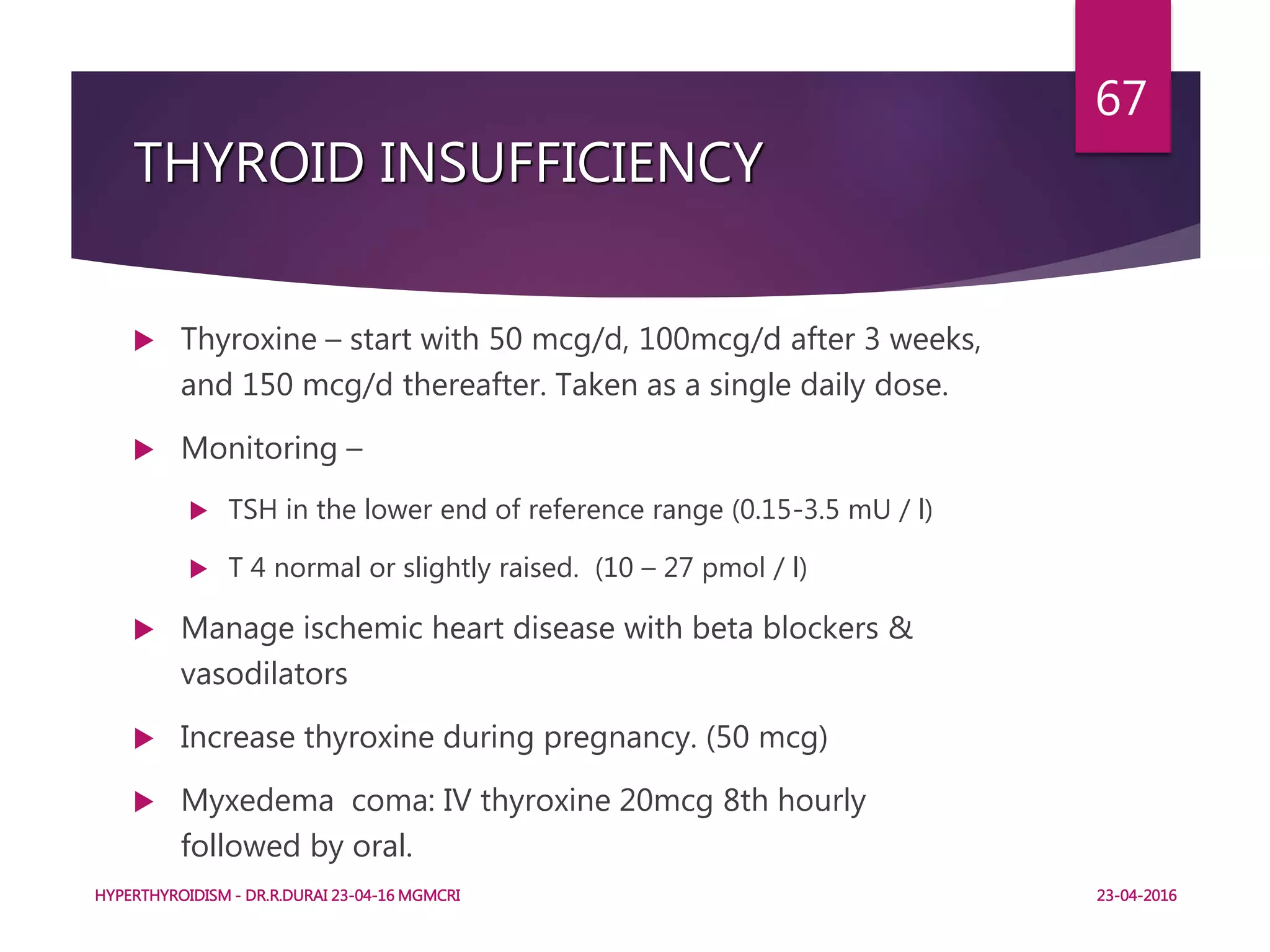
 Thyroxine – start with 50 mcg/d, 100mcg/d after 3 weeks,
and 150 mcg/d thereafter. Taken as a single daily dose.
 Monitoring –
 TSH in the lower end of reference range (0.15-3.5 mU / l)
 T 4 normal or slightly raised. (10 – 27 pmol / l)
 Manage ischemic heart disease with beta blockers &
vasodilators
 Increase thyroxine during pregnancy. (50 mcg)
 Myxedema coma: IV thyroxine 20mcg 8th hourly
followed by oral.
HYPERTHYROIDISM - DR.R.DURAI 23-04-16 MGMCRI
67
23-04-2016
RECURRENT
THYROTOXICOSIS
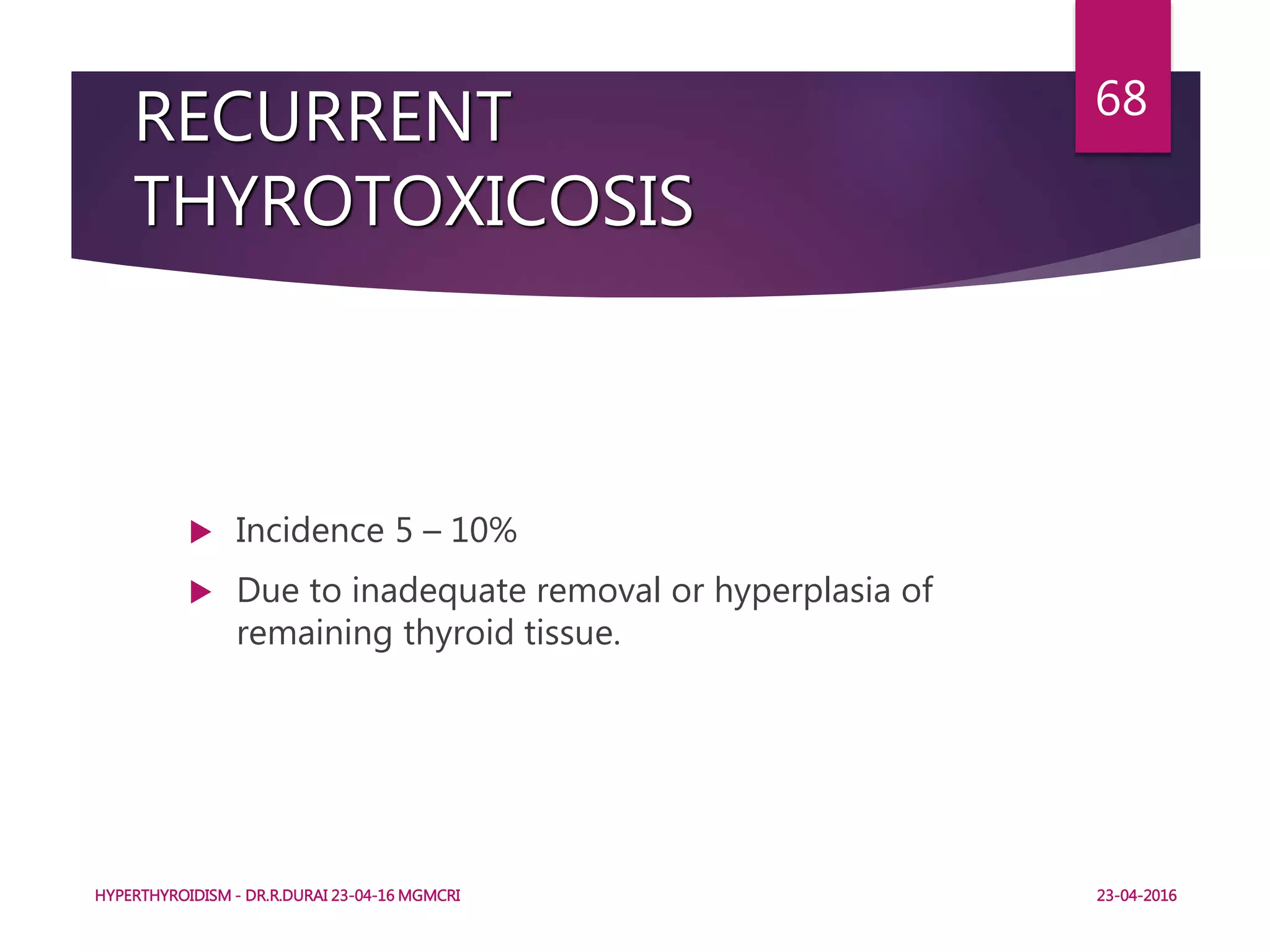
 Incidence 5 – 10%
 Due to inadequate removal or hyperplasia of
remaining thyroid tissue.
HYPERTHYROIDISM - DR.R.DURAI 23-04-16 MGMCRI
68
23-04-2016
RECURRENT
THYROTOXICOSIS
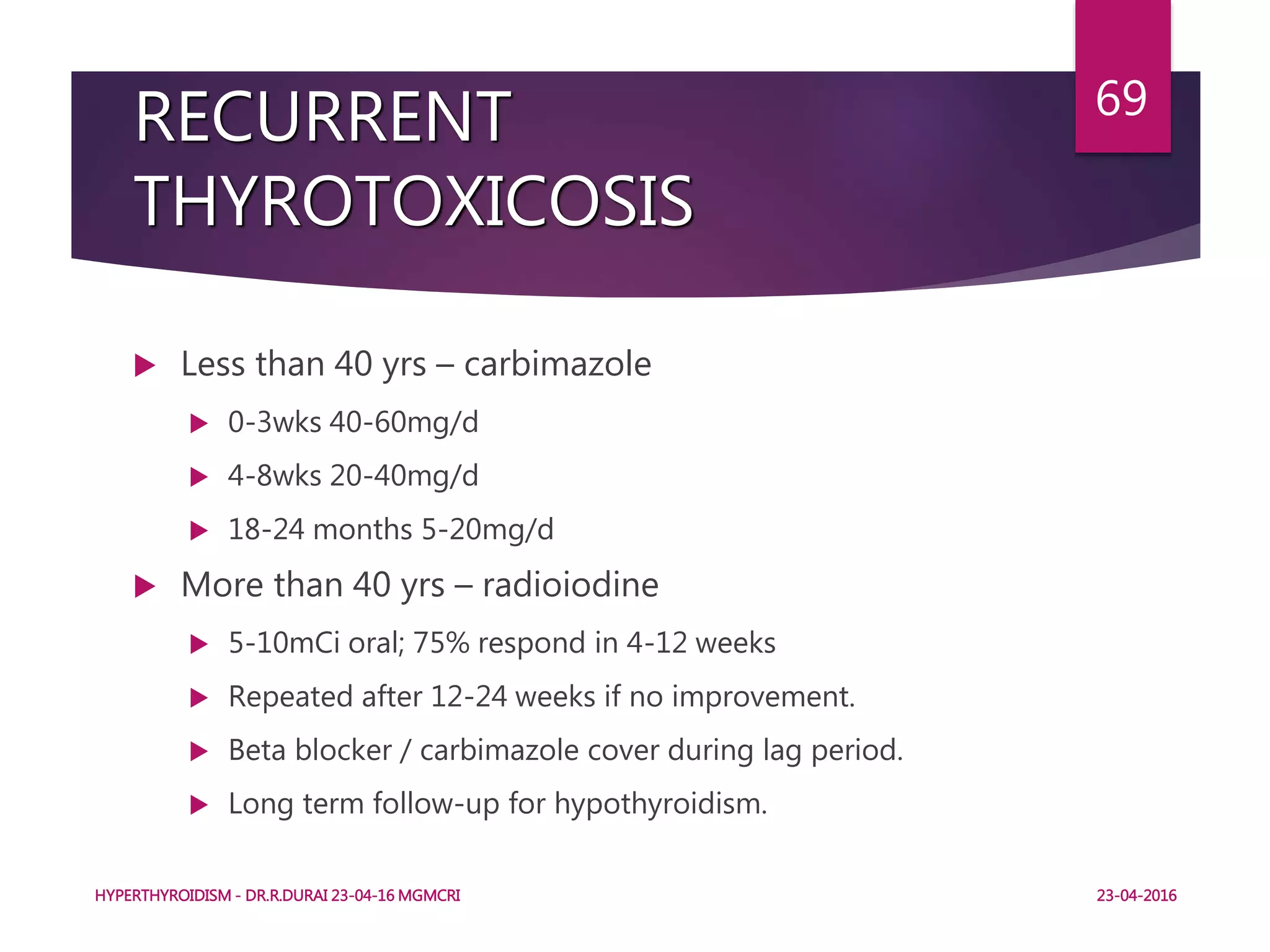
 Less than 40 yrs – carbimazole
 0-3wks 40-60mg/d
 4-8wks 20-40mg/d
 18-24 months 5-20mg/d
 More than 40 yrs – radioiodine
 5-10mCi oral; 75% respond in 4-12 weeks
 Repeated after 12-24 weeks if no improvement.
 Beta blocker / carbimazole cover during lag period.
 Long term follow-up for hypothyroidism.
HYPERTHYROIDISM - DR.R.DURAI 23-04-16 MGMCRI
69
23-04-2016
PROGRESSIVE / MALIGNANT
EXOPHTHALMOS
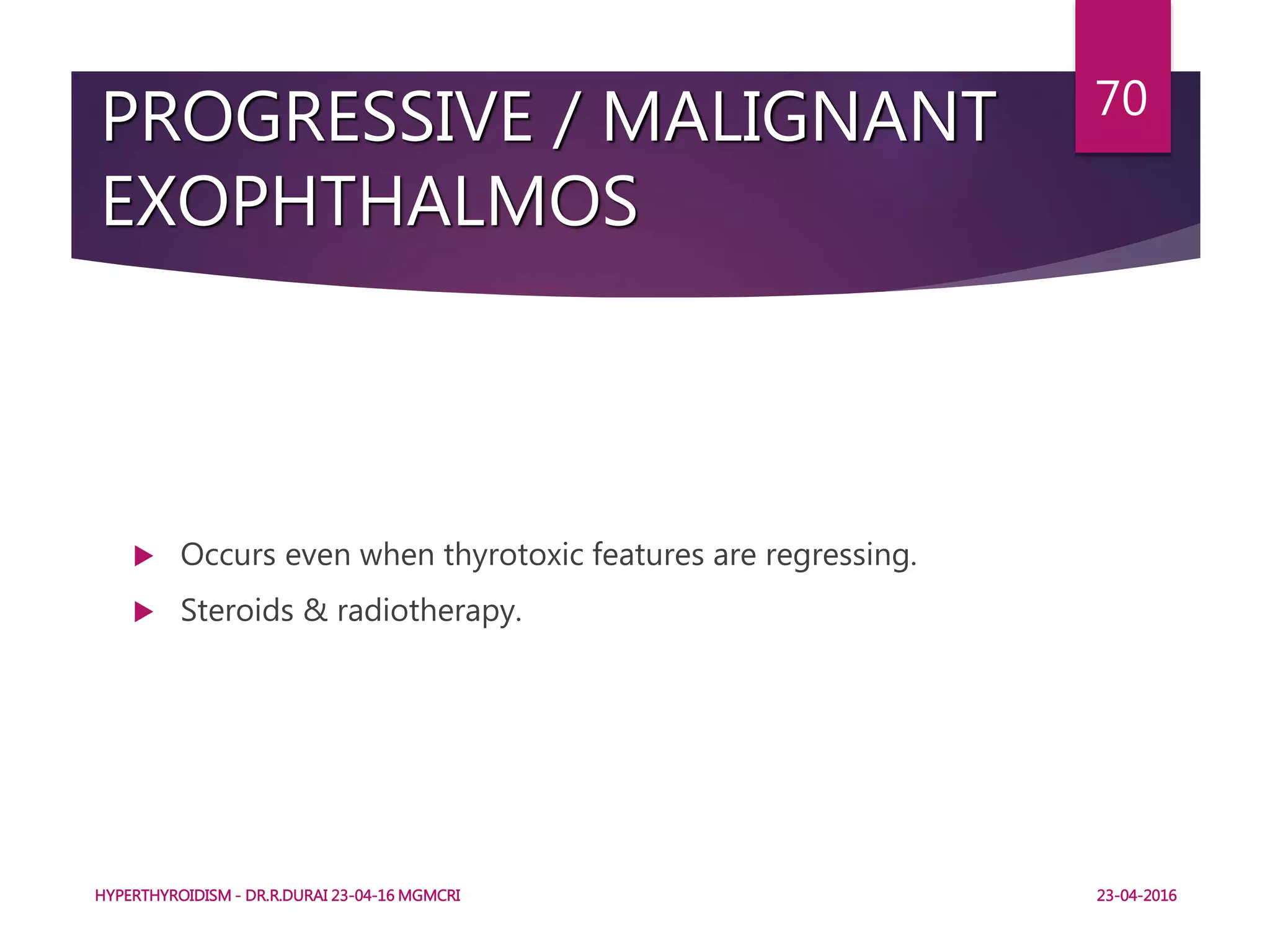
 Occurs even when thyrotoxic features are regressing.
 Steroids & radiotherapy.
HYPERTHYROIDISM - DR.R.DURAI 23-04-16 MGMCRI
70
23-04-2016
HYPERTROPHIC SCAR /
KELOID
 Platysma to be divided at a higher level
 Occurs if scar overlies the sternum
 Some persons are more susceptible.
 May follow wound infection.
 Intradermal steroids, repeated monthly.
HYPERTHYROIDISM - DR.R.DURAI 23-04-16 MGMCRI
71
23-04-2016
References
 HYPERTHYROIDISM AND OTHER CAUSES OF THYROTOXICOSIS: MANAGEMENT
GUIDELINES OF THE ATA AND AACE Baskin HJ, Cobin RH, Duick DS, et al
(American Association of Clinical Endocrinologists) 2011
 Klein I, Becker D, Levey GS.Treatment of hyperthyroid disease. Ann Int
Med.1994;121:281-288.
 Schwartz’s Principles of Surgery, 9th ed.
 William’s Text Book Of Endocrinology, 11th ed.
 Bailey & Loves’ Short Practice of Surgery, 25th ed.
 Greenspan’s Basic & Clinical Endocrinology, 8th ed.
 Uptodate
HYPERTHYROIDISM - DR.R.DURAI 23-04-16 MGMCRI
72
23-04-2016
Thank u !!!

Hyperthyroidism

  • 1.
  • 2.
    DEFENITION  What ishyperthyroidism?  Increased secretion of Thyroid hormones due to various stimuli. HYPERTHYROIDISM - DR.R.DURAI 23-04-16 MGMCRI 2  What is thyrotoxicosis??  Symptoms and signs produced by Increased secretion of Thyroid hormones due to various stimuli. 23-04-2016
  • 3.
    TODAY’S MENU  Clinicaltypes  Symptomatology  Diagnosis of thyrotoxicosis  Principles of treatment of thyrotoxicosis  Choice of therapy  Hyperthyroidism due to other causes  Surgery for thyrotoxicosis HYPERTHYROIDISM - DR.R.DURAI 23-04-16 MGMCRI 3 23-04-2016
  • 4.
  • 5.
    CLINICAL TYPES  Diffusetoxic goitre (Graves’ disease);  Toxic nodular goitre;  Toxic nodule;  Hyperthyroidism due to rarer causes. HYPERTHYROIDISM - DR.R.DURAI 23-04-16 MGMCRI 5 23-04-2016
  • 6.
    GUESS? HYPERTHYROIDISM - DR.R.DURAI23-04-16 MGMCRI 6 ROBERT JAMES GRAVES (1796-1853) 23-04-2016
  • 7.
    DIFFUSE TOXIC GOITRE (GRAVE’SDISEASE)  Graves’ disease, a diffuse vascular goitre  Younger women  Eye signs  Primary Thyrotoxicosis  Family H/o Autoimmune Endocrine diseases  Whole gland – Hypertrophy & Hyperplasia – abnormal thyroid stimulating antibodies (TSH- Rab) binding to TSH receptor HYPERTHYROIDISM - DR.R.DURAI 23-04-16 MGMCRI 7 23-04-2016
  • 8.
    TOXIC NODULAR GOITRE Plummer’s Disease  Long duration  Middle-aged or Elderly  Infrequently is associated with eye signs.  Secondary thyrotoxicosis.  Nodules inactive  Inter-nodular thyroid tissue overactive HYPERTHYROIDISM - DR.R.DURAI 23-04-16 MGMCRI 8 23-04-2016
  • 9.
    TOXIC NODULE(ADENOMA)  Solitaryoveractive nodule  Autonomous  TSH secretion is suppressed by the high level of circulating thyroid hormones  Surrounding normal thyroid tissue suppressed and inactive. HYPERTHYROIDISM - DR.R.DURAI 23-04-16 MGMCRI 9 23-04-2016
  • 10.
    HISTOLOGY HYPERTHYROIDISM - DR.R.DURAI23-04-16 MGMCRI 10 23-04-2016
  • 11.
    GRAVE’S HISTOLOGY HYPERTHYROIDISM -DR.R.DURAI 23-04-16 MGMCRI 11 23-04-2016
  • 12.
  • 13.
    HYPERTHYROIDISM - DR.R.DURAI23-04-16 MGMCRI 13 23-04-2016
  • 14.
    SYMPTOMATOLOGY  Loss ofweight despite a good appetite  Heat intolerance  Palpitations.  Tachycardia  Hot, moist palms  Exophthalmos  Eyelid lag/retraction  Agitation  Thyroid goitre and bruit.  Tiredness  Emotional lability  Weight loss HYPERTHYROIDISM - DR.R.DURAI 23-04-16 MGMCRI 14 23-04-2016
  • 15.
    PRIMARY VS SECONDARY Symptom 1st Goitre next  Diffuse and vascular  Large or small  Firm or soft  Thrill and a bruit  Abrupt onset  Frequent Remissions & exacerbations  More severe  No Cardiac manifestations  All eye signs  Goitre 1st symptoms next  Nodular  Insidious  Less severe  Cardiac manifestations more  Only Lid lag & Lid spasm HYPERTHYROIDISM - DR.R.DURAI 23-04-16 MGMCRI 15 23-04-2016
  • 16.
    CARDIAC RYTHM  Fastheart rate during sleep  Cardiac arrhythmias  Stages Of Development Of Thyrotoxic Arrhythmias: 1. multiple extrasystoles 2. paroxysmal atrial tachycardia 3. paroxysmal atrial fibrillation 4. persistent atrial fibrillation, not responsive to digoxin. HYPERTHYROIDISM - DR.R.DURAI 23-04-16 MGMCRI 16 23-04-2016
  • 17.
    MYOPATHY  Weakness ofthe proximal limb muscles  Thyrotoxic myopathy  Recovery proceeds as hyperthyroidism is controlled. HYPERTHYROIDISM - DR.R.DURAI 23-04-16 MGMCRI 17 23-04-2016
  • 18.
    EYE SIGNS HYPERTHYROIDISM -DR.R.DURAI 23-04-16 MGMCRI 18 23-04-2016
  • 19.
    Specific to GravesDisease  1. Diffuse painless and firm enlargement of thyroid gland  2. Ophthalmopathy – Eye manifestations – 50% of cases  Classification of Eye Changes in Graves' Disease  0) No signs or symptoms.  1) Only signs, no symptoms. (Signs limited to upper lid retraction, stare, lid lag.)  2) Soft tissue involvement (symptoms and signs).  3) Proptosis (measured with Hertel exophthalmometer)  4) Extraocular muscle involvement.  5) Corneal involvement.  6 Sight loss (optic nerve involvement). HYPERTHYROIDISM - DR.R.DURAI 23-04-16 MGMCRI 19 23-04-2016
  • 20.
    Eye Signs inToxic Goitre In early stages, may be unilateral but later may become bilateral.  Order of appearance of signs  Stellwag's sign : Absence of normal blinking—so staring look.  Von Graefe`s sign : Upper eye lid lags behind the eye ball as the patient is asked to look downwards.  Dalrymphe's sign : Upper sclera is visible due to retraction of upper eye lid.  Joffroy's sign : Absence wrinkling in the forehead on looking upwards with the face inclined downwards.  Moebius sign : Inability or failure to converge the eye balls  Gifford's sign: Difficulty in eversion of the upper lid. HYPERTHYROIDISM - DR.R.DURAI 23-04-16 MGMCRI 20 23-04-2016
  • 21.
    Specific to GravesDisease……..  3. Thyroid dermopathy  consists of thickening of the skin, particularly over the lower tibia, due to accumulation of glycosaminoglycans  (pre tibial myxedema)  Is usually bilateral  4. Thyroid Acropachy  Thyroid acropachy is clubbing of fingers and toes in primary thyrotoxicosis. HYPERTHYROIDISM - DR.R.DURAI 23-04-16 MGMCRI 21 23-04-2016
  • 22.
  • 23.
    DIAGNOSIS  Examinations, symptoms Thyroid blood tests  Thyroid function tests TSH , T4,T3  Thyrroid antibodies TSI, ANTI TPO, ANTI Tg  Other — nonspecific laboratory findings.  low serum total, LDL, and (HDL) cholesterol concentrations  normochromic, normocytic anemia  Serum alkaline phosphatase HYPERTHYROIDISM - DR.R.DURAI 23-04-16 MGMCRI 23 23-04-2016
  • 24.
     Thyroid imaging Radionuclide imaging  Size, shape & function of gland assessed  Increased uptake=“hot", less risk of malignancy,<5%  Decreased uptake=“cold" higher risk of malignancy,15-20%  Ultrasound  CT/ MRI good for assessment of retrosternal extension.  pathology HYPERTHYROIDISM - DR.R.DURAI 23-04-16 MGMCRI 24 DIAGNOSIS 23-04-2016
  • 25.
    Algorithm for Hyperthyroidism MeasureTSH and FT4  TSH,  FT4 Measure FT3 Primary (T4) Thyrotoxicosis High Pituitary Adenoma FNAC, N Scan Normal  TSH, FT4 N  TSH,  FT4 N TSH, FT4 N T3 Toxicosis Sub-clinical Hyperthyroidism Features of Grave’s Yes Rx. Grave’s No Single Adenoma, MNG Low RAIU RAIU Sub Acute Thyroiditis, I2, ↑ Thyroxine F/u in 6-12 wks HYPERTHYROIDISM - DR.R.DURAI 23-04-16 MGMCRI 25 23-04-2016
  • 26.
  • 27.
    MANAGEMENT Approaches • Anti thyroid drugs,betablockers • Radioactive Iodine I131 • Surgery HYPERTHYROIDISM - DR.R.DURAI 23-04-16 MGMCRI 27 23-04-2016
  • 28.
    Choice Of Therapy •Type of thyrotoxicosis • Age of the patient • Co existing medical illness • Severity of thyrotoxicosis • Goitre size • Presence of ophtalmopathy • Patient preference Factors influencing HYPERTHYROIDISM - DR.R.DURAI 23-04-16 MGMCRI 28 23-04-2016
  • 29.
    ANTITHYROID DRUGS  Indicationsfor antithyroid drugs:  Patients with high likelihood of remission  the elderly or others with comorbidities increasing surgical risk or with limited life expectancy  Toxicity in pregnant women  moderate to severe active Graves’ ophthalmopathy (GO)  Before surgery, to make the patient euthyroid  Soon after starting radioactive I131therapy for 6 to 12 weeks HYPERTHYROIDISM - DR.R.DURAI 23-04-16 MGMCRI 29 23-04-2016
  • 30.
    How long togive ATD ?  improved symptoms in 2 weeks and euthyroid in about 6 weeks  Check TSH and FT4 every 4 to 6 weeks  In Graves, remission after 12-18 months  Monitor every 3 months for the 1st year, and then annually after ATD  40% recurrence in 1 yr.  MNG and Toxic Adenoma will not get cured by ATD. HYPERTHYROIDISM - DR.R.DURAI 23-04-16 MGMCRI 30 23-04-2016
  • 31.
    Adjuvants  Beta blockers Inhibit adrenergic effects  Indications  Prompt control of symptoms;  treatment of choice for thyroiditis;  first-line therapy before surgery, radioactive iodine, and antithyroid drugs;  Contraindications  Use with caution in older patients and in patients with pre- existing heart disease, chronic obstructive pulmonary disease, or asthma  Propranolol is the most commonly prescribed medication in doses of about 20 to 40 mg four times daily HYPERTHYROIDISM - DR.R.DURAI 23-04-16 MGMCRI 31 23-04-2016
  • 32.
     Iodides  Blockthe conversion of T4to T3 and inhibit hormone release  Indications  preoperatively when other medications are ineffective or contraindicated;  to reduce gland vascularity before surgery for Graves’ disease  during pregnancy when antithyroid drugs are not tolerated;  Complications  Paradoxical increases in hormone release with prolonged use;  common side effects of sialadenitis, conjunctivitis, or acneform rash; Adjuvants HYPERTHYROIDISM - DR.R.DURAI 23-04-16 MGMCRI 32 23-04-2016
  • 33.
    RADIOIODINE THERAPY  Radioactiveiodine  Concentrates in the thyroid gland and destroys thyroid tissue  High cure rates with single-dose treatment (80 percent);  treatment of choice for  Graves’ disease  Multi nodular goitre, toxic nodules in patients older than 40 years, and  In recurrent thyrotoxicosis  It is effective, safe, and does not require hospitalization.  Given orally as a single dose in a capsule or liquid form. HYPERTHYROIDISM - DR.R.DURAI 23-04-16 MGMCRI 33 23-04-2016
  • 34.
    RADIOIODINE THERAPY………  Drawbacks Delayed control of symptoms;  post treatment hypothyroidism  contraindicated - pregnant or breastfeeding;  transient neck soreness, flushing, and decreased taste; radiation thyroiditis in 1 percent of patients;  may exacerbate Graves’ ophthalmopathy;  may require pre treatment with antithyroid drugs in older or cardiac patients HYPERTHYROIDISM - DR.R.DURAI 23-04-16 MGMCRI 34 23-04-2016
  • 35.
    Surgical Treatment  Surgicaltreatment is reserved  patient preference  Pregnant women who can’t tolerate ATD  child or adolescent intolerant of ATDs  large goiter, with or without compressive symptoms  severe Graves’ ophthalmopathy  the presence of suspicious nodules HYPERTHYROIDISM - DR.R.DURAI 23-04-16 MGMCRI 35 23-04-2016
  • 36.
    SURGICAL………..  GRAVES DISEASE Near-total or total thyroidectomy is the procedure of choice  TMNG  Near- total or total thyroidectomy should be performed  TOXIC ADENOMA  an ipsilateral thyroid lobectomy, or  isthmusectomy  In patients with coexisting eye disease,  total thyroidectomy HYPERTHYROIDISM - DR.R.DURAI 23-04-16 MGMCRI 36 23-04-2016
  • 37.
    Other causes ofHyperthyroidism  Thyrotoxicosis factitia  Jod–Basedow thyrotoxicosis  Subacute/acute forms of autoimmune thyroiditis or of de Quervain’s thyroiditis  Secondary carcinoma  Neonatal thyrotoxicosis HYPERTHYROIDISM - DR.R.DURAI 23-04-16 MGMCRI 37 23-04-2016
  • 38.
  • 39.
    Preoperative Preparation  Standardpreparation  make the patient euthyroid/ near euthyroid using antythyroid drugs  Alternative method  rapid control of thyroid status can be achieved with a combination of thionamides, SSKI, dexamethasone (1 to 2 mg twice daily), and beta blockers  very rapid control=> operation within a week  Lugol’s iodide solution or saturated potassium iodide( three drops twice daily) for 7 to 10 days HYPERTHYROIDISM - DR.R.DURAI 23-04-16 MGMCRI 39 23-04-2016
  • 40.
    SURGICAL TECHNIQUE  Extentof thyroidectomy  controversial, and determined by the desired outcome  Risk of recurrence Vs hypothyroid, and surgeons experience  Total or near thyroidectomy  for patients with coexistent thyroid cancer, sever ophthalmopathy, life treating reactions to antythyroid drugs  Subtotal thyroidectomy is recommended for the rest  bilateral subtotal thyroidectomy in which 1–2 grams of thyroid tissue is left on both sides.  Hartley Dunhill procedure HYPERTHYROIDISM - DR.R.DURAI 23-04-16 MGMCRI 40 23-04-2016
  • 41.
    TYPES OF THYROIDECTOMY HYPERTHYROIDISM -DR.R.DURAI 23-04-16 MGMCRI 41 23-04-2016
  • 42.
    Features Control of toxicity Returnto euthyroid state Recurrence Thyroid failure Hypoparathyroidism Followup Total Thyroidectomy Immediate Immediate None 100% 5% Minimal Subtotal thyroidectomy Immediate Variable 5% 25% 1% lifelong Surgical options HYPERTHYROIDISM - DR.R.DURAI 23-04-16 MGMCRI 42 23-04-2016
  • 43.
    Postoperative management  Followingsurgery, thyroid hormone replacement should be started  TSH should be measured every 1–2 months until stable, and then annually  RAIT should be used for retreatment of persistent or recurrent hyperthyroidism following inadequate surgery  Following thyroidectomy, serum calcium hormone levels be measured, and oral calcium supplementation be administered based on these results HYPERTHYROIDISM - DR.R.DURAI 23-04-16 MGMCRI 43 23-04-2016
  • 44.
    NOVEL MINIMALLY INVASIVE THERAPIES Percutaneous Ethanol Injection (PEI) for Nodules  Injections of ethanol can be administered directly to toxic thyroid nodules, cysts and large nontoxic thyroid nodules  Ultrasound-Guided Laser Thermal Ablation (LTA) for Nodules  Percutaneous laser thermal ablation is used to reduce both hyperfunctioning and compressive nodule HYPERTHYROIDISM - DR.R.DURAI 23-04-16 MGMCRI 44 23-04-2016
  • 45.
    Treatments Under Investigation Arterial Embolization  Indicated in patients with severe hyperthyroidism who cannot tolerate or who prefer not to use conventional treatment methods  The Novel Molecule  a small-molecule antagonist that directly inhibits or prevents TSI antibodies from activating the TSH receptor.  The small-molecule antagonist has not yet been studied in clinical trials  Therapeutic Peptides  antagonistic peptides that interfere with the action of TSH receptor antibodies as well as peptides that bind to TSH receptor antibodies, preventing them from reacting with the TSH receptor HYPERTHYROIDISM - DR.R.DURAI 23-04-16 MGMCRI 45 23-04-2016
  • 46.
  • 47.
    Choice of therapy Diffusetoxic goitre  over 45 years, radioiodine.  under 45 years,  surgery for the large goitre and  anti-thyroid drugs or radioiodine for the small goitre  Toxic nodular goitre  Surgery  Toxic nodule  Surgery or radioiodine(>45)  Recurrent thyrotoxicosis after surgery  radioiodine is the treatment of choice, but anti-thyroid drugs may be used in young women intending to havechildren. Further surgery has little place. HYPERTHYROIDISM - DR.R.DURAI 23-04-16 MGMCRI 47 23-04-2016
  • 48.
  • 49.
    IMMEDIATE COMPLICATIONS  HEMORRHAGE INFECTION  RECURRENT LARYNGEAL NERVE PALSY  THYROID CRISES OR STORM  RESPIRATORY OBSTRUCTION  PARATHYROID INSUFFICIENCY OR TETANY HYPERTHYROIDISM - DR.R.DURAI 23-04-16 MGMCRI 49 23-04-2016
  • 50.
    LATE COMPLICATIONS  THYROIDINSUFFIENCY  RECURRENT THROTOXICOSIS  PROGRESSIVE EXOPHTHALMOS  HYPERTROPHIC SCAR OR KELOID. HYPERTHYROIDISM - DR.R.DURAI 23-04-16 MGMCRI 50 23-04-2016
  • 51.
    HEMORRHAGE  Incidence –0.3-1%  Two types -  Deep to deep fascia  Subcutaneous  May be primary or reactionary  A deep bleeding produces tension hematoma. Usually due to slipping of the ligature of the superior thyroid artery, though it can also be from a thyroid remnant or a thyroid vein. This compresses on the airway & potentially life threatening unlike the subcutaneous bleeding. HYPERTHYROIDISM - DR.R.DURAI 23-04-16 MGMCRI 51 23-04-2016
  • 52.
    HEMORRHAGE  GOOD INTRAOPERATIVEHEMOSTASIS  Don’t traumatize the thyroid  Avoid too much neck dressings  Suction drain ??  Do not waste time on imaging  A tension hematoma requires opening of the wound, evacuation of hematoma & ligature of the bleeding vessels  A subcutaneous hematoma can be aspirated. HYPERTHYROIDISM - DR.R.DURAI 23-04-16 MGMCRI 52 23-04-2016
  • 53.
    INFECTION  Cellulitis –erythema, warmth & tenderness around the wound  Abscess – superficial / deep  Deep abscess associated with fever, leucocytosis, tachycardia HYPERTHYROIDISM - DR.R.DURAI 23-04-16 MGMCRI 53 23-04-2016
  • 54.
    INFECTION  Pus forGram’s stain & culture  CT for deep neck abscess  Can be prevented by proper hemostasis at the time of surgery & using suction drain.  Per-operative antibiotics not recommended.  Once established  Antibiotics  Drainage of abscess. HYPERTHYROIDISM - DR.R.DURAI 23-04-16 MGMCRI 54 23-04-2016
  • 55.
    RECURRENT LARYNGEAL NERVE PARALYSIS Temporary paralysis is due to pressure of hematoma on the nerve. Recovers in 3 weeks to 3 month.  Permanent paralysis is rare (<2%) and is due to undue stretching or its inclusion in a ligature.  Unilateral –  1/3 rd are asymptomatic  Change in voice  Improves due to compensation by the healthy cord.  Bilateral- dyspnea & biphasic stridor HYPERTHYROIDISM - DR.R.DURAI 23-04-16 MGMCRI 55 23-04-2016
  • 56.
    RECURRENT LARYNGEAL NERVE PARALYSIS Prevent injury to the nerve by  Identify  ITA ligated far from lobe  Posterior layer of pretracheal fascia kept intact.  Laryngoscopy, laryngeal EMG  For unilateral paralysis no treatment is required.  For bilateral paralysis  Tracheostomy (with speaking valve.  Lateralization of cord  Arytenoidectomy  Through endoscope  Thyroplasty type 2  Cordectomy  Nerve muscle implant HYPERTHYROIDISM - DR.R.DURAI 23-04-16 MGMCRI 56 23-04-2016
  • 57.
    HYPERTHYROIDISM - DR.R.DURAI23-04-16 MGMCRI 5723-04-2016
  • 58.
    COMBINED PARALYSIS  Unilateral Vocal cord lies in cadaveric position  Hoarseness of voice & aspiration of liquids.  Ineffective cough  Bilateral  Aphonia  Aspiration  Ineffective cough  Bronchopneumonia  ONLY superior laryngeal nerve palsy also occurs rarely & presents with hoarseness & loss of voice stamina. HYPERTHYROIDISM - DR.R.DURAI 23-04-16 MGMCRI 58 23-04-2016
  • 59.
    COMBINED PARALYSIS  Unilateral Speech therapy  Medialise of cord  Teflon paste injection  Thyroplasty type 1  Muscle or cartilage implant  Arthrodesis of arytenoid joint  Bilateral  Tracheostomy  Epiglottopexy  Vocal cord plication  Total laryngectomy  SLN: speech therapy HYPERTHYROIDISM - DR.R.DURAI 23-04-16 MGMCRI 59 23-04-2016
  • 60.
    THYROID CRISIS /STORM  Acute exacerbation of hyperthyroidism as the patient has not been brought to the euthyroid state before operation.  Tachycardia, fever(>1050C) , restlessness, delirium  Mortality is 10% HYPERTHYROIDISM - DR.R.DURAI 23-04-16 MGMCRI 60 23-04-2016
  • 61.
    THYROID CRISIS /STORM  Ensure euthyroid state before operation  Sedation – morphine / pethidine  Hyperpyrexia – ice bags. Tepid sponging, hypothermic blanket, rectal ice irrigation  Oxygen administration  IV glucose-saline for dehydration  Potassium for tachycardia  Cortisone – 100mg IV  Carbimazole – 10- 20 mg 6th hourly  Lugol’s iodine 10 drops 8th hourly by mouth or potassium iodide 1g IV  Propranolol – 20-40mg 6th hourly  Digoxin for atrial fibrillation  Diuretics for cardiac failure HYPERTHYROIDISM - DR.R.DURAI 23-04-16 MGMCRI 61 23-04-2016
  • 62.
    RESPIRATORY OBSTRUCTION  Laryngeal edemadue to  Tension hematoma  Endotracheal intubation & surgical handling  More chance in vascular goiters.  Collapse / kinking of the trachea  Bilateral recurrent nerve paralysis can aggravate obstruction if edema is present. HYPERTHYROIDISM - DR.R.DURAI 23-04-16 MGMCRI 62 23-04-2016
  • 63.
    RESPIRATORY OBSTRUCTION  Open thewound & release the tension hematoma  Endotracheal tube if no improvement. INTUBATION TO BE DONE BY AN EXPERIENCED ANESTHETIST as repeated attempts cause more edema leading to cerebral anoxia.  The tube is left in place for several days & steroids given to reduce the edema. HYPERTHYROIDISM - DR.R.DURAI 23-04-16 MGMCRI 63 23-04-2016
  • 64.
    PARATHYROID INSUFFICIENCY  Due toremoval of parathyroids or the parathyroid end artery.  Incidence – 1-3%  Occurs 2 – 5% after operation. Can be delayed for 2-3 weeks or hypocalcemia may be asymptomatic.  Classic triad –  Carpopedal spasm  Stridor  Convulsions  Latent tetany  Trousseau’s sign  Chvostek’s sign  Persistant – grand mal epilepsy, cataracts, psychosis, calcification of basal ganglia, papilledema. HYPERTHYROIDISM - DR.R.DURAI 23-04-16 MGMCRI 64 23-04-2016
  • 65.
    PARATHYROID INSUFFICIENCY  Correct identificationof the gland  Ligate vessels distal to the parathyroids.  Recognition of the parathyroid glands, which appear in a variety of shapes and have a caramel-like color, is critical. When they lose their blood supply, they turn black. The devascularized gland should be removed, cut into 1 to 2mm pieces, and reimplanted in the sternomastoid muscle or the forearm.  Monitor serum Ca for 72 hrs post-operatively.  20 ml 10% solution of calcium gluconate IV  10 ml injected IM  2.5-5 G calcium carbonate / day  PTH is unsatisfactory.  AlfacalcidolHYPERTHYROIDISM - DR.R.DURAI 23-04-16 MGMCRI 65 23-04-2016
  • 66.
    THYROID INSUFFICIENCY  INCIDENCE:20-25% of patients subjected to subtotal thyroidectomy for diffuse toxic goiter & toxic nodular goiters with internodular hyperplasia  Time: <2 yrs. May be delayed >5yrs.  Transient hypothyroidism may occur within 6 months which is asymptomatic.  Due to change in nature of autoimmune response.  More chance if less residual thyroid tissue  Cold intolerance, fatigue constipation, weight gain, myxedema. HYPERTHYROIDISM - DR.R.DURAI 23-04-16 MGMCRI 66 23-04-2016
  • 67.
    THYROID INSUFFICIENCY  Thyroxine– start with 50 mcg/d, 100mcg/d after 3 weeks, and 150 mcg/d thereafter. Taken as a single daily dose.  Monitoring –  TSH in the lower end of reference range (0.15-3.5 mU / l)  T 4 normal or slightly raised. (10 – 27 pmol / l)  Manage ischemic heart disease with beta blockers & vasodilators  Increase thyroxine during pregnancy. (50 mcg)  Myxedema coma: IV thyroxine 20mcg 8th hourly followed by oral. HYPERTHYROIDISM - DR.R.DURAI 23-04-16 MGMCRI 67 23-04-2016
  • 68.
    RECURRENT THYROTOXICOSIS  Incidence 5– 10%  Due to inadequate removal or hyperplasia of remaining thyroid tissue. HYPERTHYROIDISM - DR.R.DURAI 23-04-16 MGMCRI 68 23-04-2016
  • 69.
    RECURRENT THYROTOXICOSIS  Less than40 yrs – carbimazole  0-3wks 40-60mg/d  4-8wks 20-40mg/d  18-24 months 5-20mg/d  More than 40 yrs – radioiodine  5-10mCi oral; 75% respond in 4-12 weeks  Repeated after 12-24 weeks if no improvement.  Beta blocker / carbimazole cover during lag period.  Long term follow-up for hypothyroidism. HYPERTHYROIDISM - DR.R.DURAI 23-04-16 MGMCRI 69 23-04-2016
  • 70.
    PROGRESSIVE / MALIGNANT EXOPHTHALMOS Occurs even when thyrotoxic features are regressing.  Steroids & radiotherapy. HYPERTHYROIDISM - DR.R.DURAI 23-04-16 MGMCRI 70 23-04-2016
  • 71.
    HYPERTROPHIC SCAR / KELOID Platysma to be divided at a higher level  Occurs if scar overlies the sternum  Some persons are more susceptible.  May follow wound infection.  Intradermal steroids, repeated monthly. HYPERTHYROIDISM - DR.R.DURAI 23-04-16 MGMCRI 71 23-04-2016
  • 72.
    References  HYPERTHYROIDISM ANDOTHER CAUSES OF THYROTOXICOSIS: MANAGEMENT GUIDELINES OF THE ATA AND AACE Baskin HJ, Cobin RH, Duick DS, et al (American Association of Clinical Endocrinologists) 2011  Klein I, Becker D, Levey GS.Treatment of hyperthyroid disease. Ann Int Med.1994;121:281-288.  Schwartz’s Principles of Surgery, 9th ed.  William’s Text Book Of Endocrinology, 11th ed.  Bailey & Loves’ Short Practice of Surgery, 25th ed.  Greenspan’s Basic & Clinical Endocrinology, 8th ed.  Uptodate HYPERTHYROIDISM - DR.R.DURAI 23-04-16 MGMCRI 72 23-04-2016
  • 73.

Editor's Notes