SURGERY IN THE TROPICS
Dr Tridip Dutta Baruah
Asst Prof, Dept Of Surgery
MGMCRI
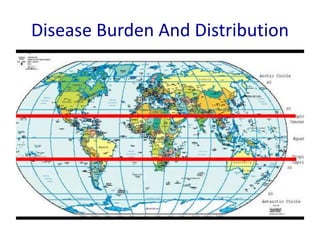
Disease Burden And Distribution
“In surgery physiology is the king, anatomy the
queen: you can be the prince, but only
provided you have the judgement”
(Mosche Schein, Professor of Surgery, Cornell
University).
Learning Objectives
1. To be aware of common surgical problems in
tropics.
2. To appreciate patients do not seek medical
help until late in disease.
3. Emergency presentations of various common
conditions.
Common conditions
1. Typhoid.
2. Tuberculosis of Small Intestine.
3. Amoebiasis.
4. Ascaris Lumbricoides.
5. Hydatid Disease.
6. Filariasis.
7. Poliomyelitis.
8. Leprosy.
9. Asiatic Cholangiohepatitis.
10.Tropical Chronic Pancreatitis.
TYPHOID
 Caused by Salmonella Typhi.
 It gains entry to Human GIT via poor hygiene
and sanitation.
 Normally managed by medicines.
 Surgeon role only in emergency- Perforation in
typhoid ulcer
Pathology
 Ingestion of contaminated food and water
 Colonization of peyer patches
 Hypertrophy of lymphoid follicles followed by
necrosis and ulceration
 Bowel may perforate at several sites
Diagnosis
 The patient preents in or recently visited
endemic area.
 Patients presents with persistent high temp
and is toxic.
 Positve blood and stool culture and patient
and the patient already on treatment.
 After second week signs of peritonitis
indicates perforation, confirmed with free gas
in xray.
Treatment Of Bowel Perforation
 Resuscitation intensive care.
 Commonest site of perforation is terminal
ileum, and can be multiple.
 Laparaotomy- choice of various procedure.
 In very sick patient- consider exterorisation.
 Close peritoneum and leave the wound open
for secondary closure.
ASCARIS LUMBRICOIDES
 Ascaris Lumbricoides commonly known as
round worm affects quarter of the population.
 Commonest intestinal nematode
 Feco oral transmission.
 Infection more common in children.
Pathology And Clinical Features
 Fertilised eggs present in soil- reach intestine with
contaminated food- release larva- travel to liver via
portal circulation and then through systemic circulation
to lungs.
 Larval stage in lungs- dry cough, chest pain, dyspnoea
and fever known as Loeffler’s syndrome.
 Small bowel obstruction- by bolus of adult worms in
terminal ileum leading to pressure necrosis and
perforation.
 Worms can migrate to CBD causing ascending
cholangitis and jaundice.
Investigations
 Increase in eosinophil count.
 Stool examination may show ova and cyst.
 Sputum and bronchospic washing may show
charcot leyden crystals or larvae.
 Chest xray may show fluffy exudates.
 USG may show worms in SI, CBD or pancreatic
duct.
 Barium meal follow through may show scattered
worms in SI.
Treatment
 Conservative line of management with
antihelmintics is the first line of treatment.
 Surgery is a last resort.
Obstruction not resolved by conservative M.
Perforation following obstruction
AMOEBIASIS
 Amoebiasis caused by Entamoeba Histolytica.
 About half of the population in tropical
countries infected.
 Mode of transmission is Feco-Oral.
 Amoebic liver abscess is most common
extraintestinal menifestation, Occurs in less
than 10% of infected population.
Clinical Presentation
A. Asymptomatic infection
B. Symptomatic infection
C. Intestinal disease
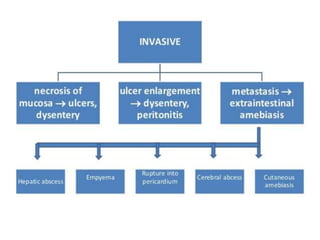
D. Extra intestinal disease
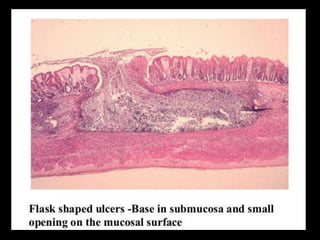
Gross pathology of intestinal
amebiasis showing extensive
ulceration
AMOEBOMA
 Chronic granuloma in large bowel, most
commonly seen in caecum.
 Seen in patients with long standing chronic
infection not properly treated with drugs
 Can be mistaken for carcinoma
AMOEBIC LIVER ABSCESS
 Most Common Extra-Intestinal Menifestation
 Adults affected more than children (10:1)
 Male more than female
 20% have history of dysentery
Pathogenesis
Journey of E.Histolytica to the liver
1. Direct Extension from gut to liver
2. Via portal circulation
3. Via lymphatics
Infraction: Enzymatic Dissolution
Shaggy appearance of the walls of
the abscesses
Abscess surrounded by a distinct
area of severe congestion
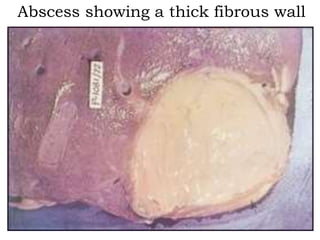
Abscess showing a thick fibrous wall
Clinical Features
Symptoms
Pain
Diarrhoea and / or Dysentery
Weight Loss
Cough
Dyspnoea
Physical findings
Localized tenderness
Enlarged Liver
Fever
Rales,rhonchi
Localized intercostal tenderness
Epigatric Tenderness
Jaundice
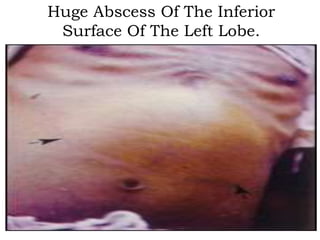
Huge Abscess Of The Inferior
Surface Of The Left Lobe.
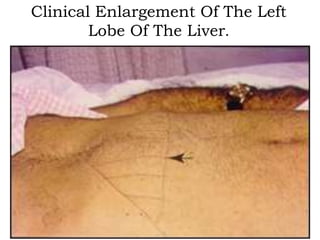
Clinical Enlargement Of The Left
Lobe Of The Liver.
Point Tenderness
COMPLICATIONS
1. Rupture- Pleura/ Peritoneum/Pericardium
2. Amoebic Brain Abscess
3. Hemobilia
4. Portal Hypertension
Treatment
 Medical treatment effective and should be first
choice
 In large abscess- Repeated aspiration with drug
treatment
 Surgical treatment reserved for complications
only such as ruptures.
 Acute toxic megacolon and severe haemorrhage
treated with intensive supportive therapy
followed by resection and exteriorization.

Tropical disease

  • 1.
    SURGERY IN THETROPICS Dr Tridip Dutta Baruah Asst Prof, Dept Of Surgery MGMCRI
  • 2.
    Disease Burden AndDistribution
  • 3.
    “In surgery physiologyis the king, anatomy the queen: you can be the prince, but only provided you have the judgement” (Mosche Schein, Professor of Surgery, Cornell University).
  • 4.
    Learning Objectives 1. Tobe aware of common surgical problems in tropics. 2. To appreciate patients do not seek medical help until late in disease. 3. Emergency presentations of various common conditions.
  • 5.
    Common conditions 1. Typhoid. 2.Tuberculosis of Small Intestine. 3. Amoebiasis. 4. Ascaris Lumbricoides. 5. Hydatid Disease. 6. Filariasis. 7. Poliomyelitis. 8. Leprosy. 9. Asiatic Cholangiohepatitis. 10.Tropical Chronic Pancreatitis.
  • 6.
    TYPHOID  Caused bySalmonella Typhi.  It gains entry to Human GIT via poor hygiene and sanitation.  Normally managed by medicines.  Surgeon role only in emergency- Perforation in typhoid ulcer
  • 7.
    Pathology  Ingestion ofcontaminated food and water  Colonization of peyer patches  Hypertrophy of lymphoid follicles followed by necrosis and ulceration  Bowel may perforate at several sites
  • 8.
    Diagnosis  The patientpreents in or recently visited endemic area.  Patients presents with persistent high temp and is toxic.  Positve blood and stool culture and patient and the patient already on treatment.  After second week signs of peritonitis indicates perforation, confirmed with free gas in xray.
  • 9.
    Treatment Of BowelPerforation  Resuscitation intensive care.  Commonest site of perforation is terminal ileum, and can be multiple.  Laparaotomy- choice of various procedure.  In very sick patient- consider exterorisation.  Close peritoneum and leave the wound open for secondary closure.
  • 10.
    ASCARIS LUMBRICOIDES  AscarisLumbricoides commonly known as round worm affects quarter of the population.  Commonest intestinal nematode  Feco oral transmission.  Infection more common in children.
  • 11.
    Pathology And ClinicalFeatures  Fertilised eggs present in soil- reach intestine with contaminated food- release larva- travel to liver via portal circulation and then through systemic circulation to lungs.  Larval stage in lungs- dry cough, chest pain, dyspnoea and fever known as Loeffler’s syndrome.  Small bowel obstruction- by bolus of adult worms in terminal ileum leading to pressure necrosis and perforation.  Worms can migrate to CBD causing ascending cholangitis and jaundice.
  • 12.
    Investigations  Increase ineosinophil count.  Stool examination may show ova and cyst.  Sputum and bronchospic washing may show charcot leyden crystals or larvae.  Chest xray may show fluffy exudates.  USG may show worms in SI, CBD or pancreatic duct.  Barium meal follow through may show scattered worms in SI.
  • 13.
    Treatment  Conservative lineof management with antihelmintics is the first line of treatment.  Surgery is a last resort. Obstruction not resolved by conservative M. Perforation following obstruction
  • 14.
    AMOEBIASIS  Amoebiasis causedby Entamoeba Histolytica.  About half of the population in tropical countries infected.  Mode of transmission is Feco-Oral.  Amoebic liver abscess is most common extraintestinal menifestation, Occurs in less than 10% of infected population.
  • 15.
    Clinical Presentation A. Asymptomaticinfection B. Symptomatic infection C. Intestinal disease D. Extra intestinal disease
  • 18.
    Gross pathology ofintestinal amebiasis showing extensive ulceration
  • 23.
    AMOEBOMA  Chronic granulomain large bowel, most commonly seen in caecum.  Seen in patients with long standing chronic infection not properly treated with drugs  Can be mistaken for carcinoma
  • 24.
    AMOEBIC LIVER ABSCESS Most Common Extra-Intestinal Menifestation  Adults affected more than children (10:1)  Male more than female  20% have history of dysentery
  • 25.
    Pathogenesis Journey of E.Histolyticato the liver 1. Direct Extension from gut to liver 2. Via portal circulation 3. Via lymphatics Infraction: Enzymatic Dissolution
  • 26.
    Shaggy appearance ofthe walls of the abscesses
  • 27.
    Abscess surrounded bya distinct area of severe congestion
  • 28.
    Abscess showing athick fibrous wall
  • 29.
    Clinical Features Symptoms Pain Diarrhoea and/ or Dysentery Weight Loss Cough Dyspnoea Physical findings Localized tenderness Enlarged Liver Fever Rales,rhonchi Localized intercostal tenderness Epigatric Tenderness Jaundice
  • 30.
    Huge Abscess OfThe Inferior Surface Of The Left Lobe.
  • 31.
    Clinical Enlargement OfThe Left Lobe Of The Liver.
  • 32.
  • 33.
    COMPLICATIONS 1. Rupture- Pleura/Peritoneum/Pericardium 2. Amoebic Brain Abscess 3. Hemobilia 4. Portal Hypertension
  • 34.
    Treatment  Medical treatmenteffective and should be first choice  In large abscess- Repeated aspiration with drug treatment  Surgical treatment reserved for complications only such as ruptures.  Acute toxic megacolon and severe haemorrhage treated with intensive supportive therapy followed by resection and exteriorization.