HYPERTHYROIDISM
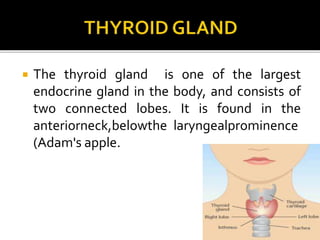
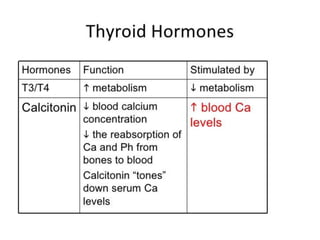
 The thyroid gland is one of the largest
endocrine gland in the body, and consists of
two connected lobes. It is found in the
anteriorneck,belowthe laryngealprominence
(Adam's apple.
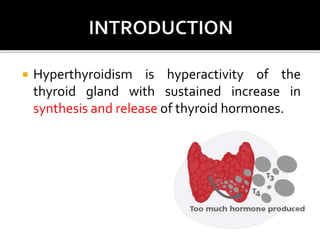
 Hyperthyroidism is hyperactivity of the
thyroid gland with sustained increase in
synthesis and release of thyroid hormones.
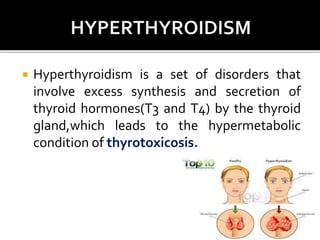
 Hyperthyroidism is a set of disorders that
involve excess synthesis and secretion of
thyroid hormones(T3 and T4) by the thyroid
gland,which leads to the hypermetabolic
condition of thyrotoxicosis.
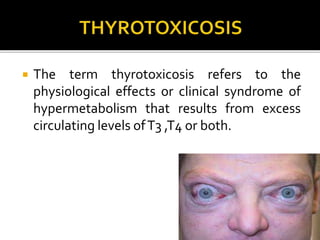
 The term thyrotoxicosis refers to the
physiological effects or clinical syndrome of
hypermetabolism that results from excess
circulating levels ofT3 ,T4 or both.
Incidence
 Occurs in women more than men with
highest frequency in persons 20 to 40 years
old.
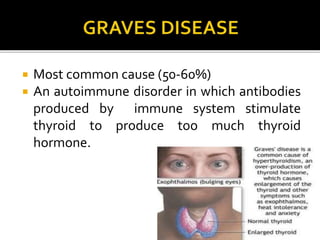
 Most common cause (50-60%)
 An autoimmune disorder in which antibodies
produced by immune system stimulate
thyroid to produce too much thyroid
hormone.
 15-20% cases
 A destructive release of preformed thyroid
hormone.
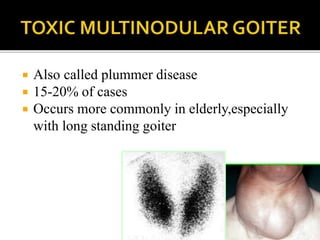
 Also called plummer disease
 15-20% of cases
 Occurs more commonly in elderly,especially
with long standing goiter
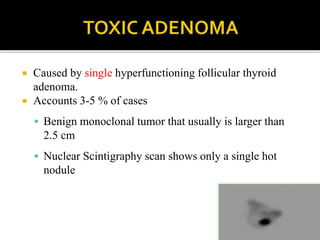
 Caused by single hyperfunctioning follicular thyroid
adenoma.
 Accounts 3-5 % of cases
 Benign monoclonal tumor that usually is larger than
2.5 cm
 Nuclear Scintigraphy scan shows only a single hot
nodule
 History and physical examination
 Ophthalmologic examination-
 ECG-atrial tachycardia
 Laboratory tests
 TFT(thyroid function test)
 T3
 T4
 TRH(thyroid releasing hormone) stimulation
test
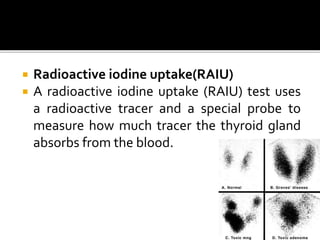
 Radioactive iodine uptake(RAIU)
 A radioactive iodine uptake (RAIU) test uses
a radioactive tracer and a special probe to
measure how much tracer the thyroid gland
absorbs from the blood.
 The overall goal in the treatment of
hyperthyroidism is to block the adverse
effects of thyroid hormones and stop their
oversecretion
 Drug therapy
 Antithyroid drugs
 eg. Propylthiouracil,methimazole
 -inhibits the synthesis of thyroid hormones.
 Blocks conversion of t4 to t3
 Indications for antithyroid drugs:
▪ Patients with high likelihood of remission
▪ the elderly or others with comorbidities increasing
surgical risk or with limited life expectancy
▪ moderate to severe active Graves’ ophthalmopathy (GO)
▪ Soon after starting radioactive I131therapy for 6 to 12
weeks
 B adrenergic blockers
 e.g propanolo
 Inhibit adrenergic effects
 Indications
▪ Prompt control of symptoms
▪ treatment of choice for thyroiditis
▪ first-line therapy before surgery, radioactive iodine, and
antithyroid drug
 Radioactive iodine therapy
 Concentrates in the thyroid gland and destroys
thyroid tissue
 High cure rates with single-dose treatment (80
percent);
 treatment of choice for
▪ Graves’ disease
▪ Multi nodular goitre, toxic nodules in patients older
than 40 years, and
 In recurrent thyrotoxicosis
 Surgical therapy
 Surgical treatment is reserved
▪ patient preference
▪ Pregnant women who can’t tolerate ATD
 child or adolescent intolerant
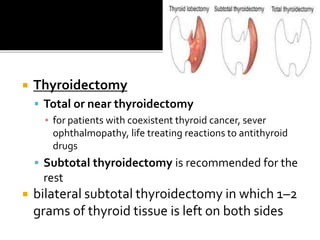
 Thyroidectomy
 Total or near thyroidectomy
▪ for patients with coexistent thyroid cancer, sever
ophthalmopathy, life treating reactions to antithyroid
drugs
 Subtotal thyroidectomy is recommended for the
rest
 bilateral subtotal thyroidectomy in which 1–2
grams of thyroid tissue is left on both sides
 Fatigue related to hypermetabolic state with
increased energy requirements.
 Imbalanced Nutrition: Less Than Body
Requirements related to Increased
metabolism (increased appetite/intake with
loss of weight),Nausea/vomiting, diarrhea
 Risk for ImpairedTissue Integrity related to
alterations of protective mechanisms of eye:
impaired closure of eyelid/exophthalmos
 Topic :Consequences of hyperthyroidism in
male and female fertility: pathophysiology
and current management.
 Authors :Mintziori G, Kita M, Duntas
L, Goulis DG.
 Journal : J Endocrinol Invest.
 Published on :2016 Mar 8
 Abstract
 Thyroid hormone acts on the oocytes, sperm and
embryo during fertilization, implantation and
placentation. Both hypothyroidism and
hyperthyroidism may influence fertility. However,
evidence of the association of hyperthyroidism with
infertility is scarce and sometimes conflicting. Thyroid
hormone influences human reproduction via a variety
of mechanisms at both the central and the peripheral
level. Infertility may occur in hyperthyroid men and
women, but it is usually reversible upon restoration of
euthyroidism..
 Topic :Endocrine disorders and osteoporosis
 Journal name: Nihon Rinsho
 Author name : KinoshitaY
 Year : 2015 Oct
 Abstract
 Secondary osteoporosis is a bone disease
characterized by decreased bone mass that
predisposes fractures due to underlying disorders or
medication. Disorders of the endocrine system, such
as primary hyperparathyroidism, hyperthyroidism,
hypogonadism, growth hormone deficiency,
Cushing's syndrome, and anorexia nervosa frequently
cause secondary osteoporosis. In those diseases,
hormone excess or deficiency affects functions of
osteoblasts, osteocyte, and osteoclasts, leading to
aberrant bone remodeling.
 Anatomy and physiology of thyroid gland
 Definition
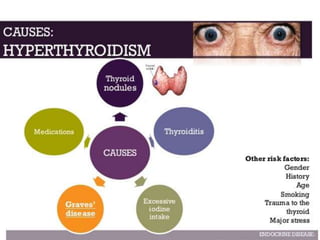
 Causes
 Sign and symptoms
 Diagnosis
 Management
 Hyperthyroidism is the production of too
much thyroxine hormone which can increase
metabolism.
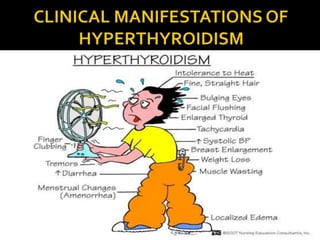
 Symptoms include unexpected weight loss,
rapid or irregular heartbeat, sweating and
irritability.
THANKYOU

Hyperthyroidism

  • 1.
  • 2.
     The thyroidgland is one of the largest endocrine gland in the body, and consists of two connected lobes. It is found in the anteriorneck,belowthe laryngealprominence (Adam's apple.
  • 5.
     Hyperthyroidism ishyperactivity of the thyroid gland with sustained increase in synthesis and release of thyroid hormones.
  • 6.
     Hyperthyroidism isa set of disorders that involve excess synthesis and secretion of thyroid hormones(T3 and T4) by the thyroid gland,which leads to the hypermetabolic condition of thyrotoxicosis.
  • 7.
     The termthyrotoxicosis refers to the physiological effects or clinical syndrome of hypermetabolism that results from excess circulating levels ofT3 ,T4 or both.
  • 8.
    Incidence  Occurs inwomen more than men with highest frequency in persons 20 to 40 years old.
  • 10.
     Most commoncause (50-60%)  An autoimmune disorder in which antibodies produced by immune system stimulate thyroid to produce too much thyroid hormone.
  • 11.
     15-20% cases A destructive release of preformed thyroid hormone.
  • 12.
     Also calledplummer disease  15-20% of cases  Occurs more commonly in elderly,especially with long standing goiter
  • 13.
     Caused bysingle hyperfunctioning follicular thyroid adenoma.  Accounts 3-5 % of cases  Benign monoclonal tumor that usually is larger than 2.5 cm  Nuclear Scintigraphy scan shows only a single hot nodule
  • 15.
     History andphysical examination  Ophthalmologic examination-  ECG-atrial tachycardia  Laboratory tests  TFT(thyroid function test)  T3  T4  TRH(thyroid releasing hormone) stimulation test
  • 16.
     Radioactive iodineuptake(RAIU)  A radioactive iodine uptake (RAIU) test uses a radioactive tracer and a special probe to measure how much tracer the thyroid gland absorbs from the blood.
  • 17.
     The overallgoal in the treatment of hyperthyroidism is to block the adverse effects of thyroid hormones and stop their oversecretion  Drug therapy  Antithyroid drugs  eg. Propylthiouracil,methimazole  -inhibits the synthesis of thyroid hormones.  Blocks conversion of t4 to t3
  • 18.
     Indications forantithyroid drugs: ▪ Patients with high likelihood of remission ▪ the elderly or others with comorbidities increasing surgical risk or with limited life expectancy ▪ moderate to severe active Graves’ ophthalmopathy (GO) ▪ Soon after starting radioactive I131therapy for 6 to 12 weeks
  • 19.
     B adrenergicblockers  e.g propanolo  Inhibit adrenergic effects  Indications ▪ Prompt control of symptoms ▪ treatment of choice for thyroiditis ▪ first-line therapy before surgery, radioactive iodine, and antithyroid drug
  • 20.
     Radioactive iodinetherapy  Concentrates in the thyroid gland and destroys thyroid tissue  High cure rates with single-dose treatment (80 percent);  treatment of choice for ▪ Graves’ disease ▪ Multi nodular goitre, toxic nodules in patients older than 40 years, and  In recurrent thyrotoxicosis
  • 21.
     Surgical therapy Surgical treatment is reserved ▪ patient preference ▪ Pregnant women who can’t tolerate ATD  child or adolescent intolerant
  • 22.
     Thyroidectomy  Totalor near thyroidectomy ▪ for patients with coexistent thyroid cancer, sever ophthalmopathy, life treating reactions to antithyroid drugs  Subtotal thyroidectomy is recommended for the rest  bilateral subtotal thyroidectomy in which 1–2 grams of thyroid tissue is left on both sides
  • 23.
     Fatigue relatedto hypermetabolic state with increased energy requirements.  Imbalanced Nutrition: Less Than Body Requirements related to Increased metabolism (increased appetite/intake with loss of weight),Nausea/vomiting, diarrhea
  • 24.
     Risk forImpairedTissue Integrity related to alterations of protective mechanisms of eye: impaired closure of eyelid/exophthalmos
  • 25.
     Topic :Consequencesof hyperthyroidism in male and female fertility: pathophysiology and current management.  Authors :Mintziori G, Kita M, Duntas L, Goulis DG.  Journal : J Endocrinol Invest.  Published on :2016 Mar 8
  • 26.
     Abstract  Thyroidhormone acts on the oocytes, sperm and embryo during fertilization, implantation and placentation. Both hypothyroidism and hyperthyroidism may influence fertility. However, evidence of the association of hyperthyroidism with infertility is scarce and sometimes conflicting. Thyroid hormone influences human reproduction via a variety of mechanisms at both the central and the peripheral level. Infertility may occur in hyperthyroid men and women, but it is usually reversible upon restoration of euthyroidism..
  • 27.
     Topic :Endocrinedisorders and osteoporosis  Journal name: Nihon Rinsho  Author name : KinoshitaY  Year : 2015 Oct
  • 28.
     Abstract  Secondaryosteoporosis is a bone disease characterized by decreased bone mass that predisposes fractures due to underlying disorders or medication. Disorders of the endocrine system, such as primary hyperparathyroidism, hyperthyroidism, hypogonadism, growth hormone deficiency, Cushing's syndrome, and anorexia nervosa frequently cause secondary osteoporosis. In those diseases, hormone excess or deficiency affects functions of osteoblasts, osteocyte, and osteoclasts, leading to aberrant bone remodeling.
  • 29.
     Anatomy andphysiology of thyroid gland  Definition  Causes  Sign and symptoms  Diagnosis  Management
  • 30.
     Hyperthyroidism isthe production of too much thyroxine hormone which can increase metabolism.  Symptoms include unexpected weight loss, rapid or irregular heartbeat, sweating and irritability.
  • 32.