 Renal tubules
     Increases reabsorption of calcium
     Increases phosphate excretion by restricting
  its reabsorption
 Bone

      Promotes osteoclastic resorption and release of
  calcium and phosphate into blood
   Intestine
     Stimulates calcium absorption by promoting the
     conversion of vitamin D to its active metabolite in the
     kidney
 Primary – Adenoma, Hyperplasia or carcinoma
 Secondary – In renal diseae

 Tertiary – When secondary hyperplasia leads to

  autonomous overactivity
 Pathology
 Hypercalcemia

 Hypercalciuria

 Hyperphosphoturia

 Kidney:Calcinosis,stone formation,recurrent

  infection and impaired function
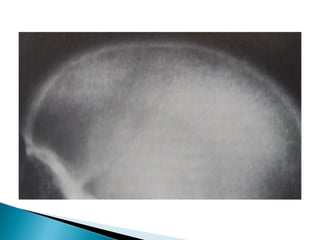
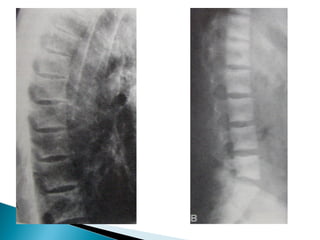
 General loss of bone substance
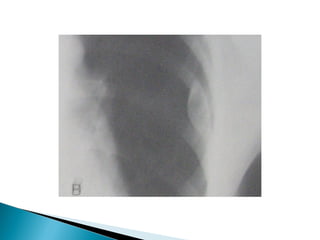
 Subperiosteal erosion

 Endosteal cavitation

 Osteitis fibrosa cystica :Replacement of

  marrow spaces by vascular granulations and
  fibrous tissue
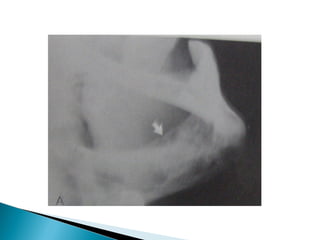
 Brown tumor:Haemorrhage and giant cell

  reaction within fibrous stroma gives rise to
  brownish tumor like masses, whose liquefaction
  leads to fluid filled cysts
 Middle aged(40-65 years)
 Women are affected twice as often as men
 Many remain asymptomatic
 Stones,Bones,Groans
 Anorexia,nausea,abdominal

  pain,depression,fatigue and muscle
  weakness
 Polyuria,kidney stones
 Joint symptoms due to chondrocalcinosis
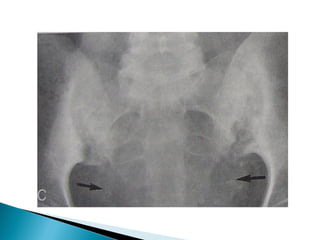
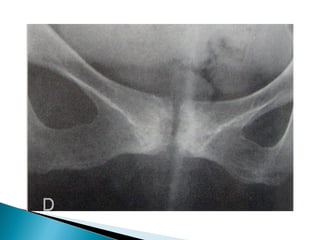
•   Osteoporosis
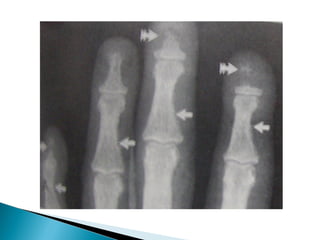
•   Subperiosteal cortical resorption of middle phalanges
•   Vertebral collapse
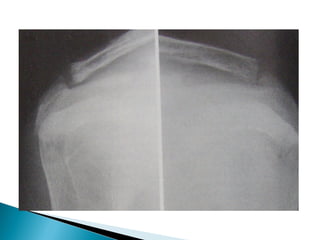
•   Brown tumors
•   Renal calculi,Nephrocalcinosis
•   Chondrocalcinosis
 Hypercalcemia
 Hypophosphataemia

 Raised PTH

 Raised serum alkaline phosphatase
 Phosphate excretion test
 Phosphorous loading

 Dietary Phosphorous and Calcium deprivation

 Urinary hydroxyproline

 Cortisone suppression

 Radioisotpe subtraction scanning
 Exclusion of other causes of hypercalcemia like
  multiple myeloma,metastatic
  disease,sarcoidosis in which PTH levels are
  usually are depressed
 All types of osteoporosis and osteomalacia
 Adequate hydration
 Phosphate ingestion
 Decreased calcium intake
 Parathyroidectomy: Indications

    ◦   Marked and unremitting hypercalcemia
    ◦   Recurrent renal calculi
    ◦   Progressive nephrocalcinosis
    ◦   Severe osteoporosis
Postoperative severe hypocalcemia due to brisk formation
 of new bone
Must be treated promptly with fast acting vit D
 metabolites
 Seen in Renal rickets and Reanl osteomalacia
 Treatment is directed at primary condition
 < 10 %
 Fracture neck of femur is common
 Fracture line is usually vertical at the base of the

  neck with preexistent coxa vara
 Young patients-Valgus osteotomy
 Elderly patients-Primary arthroplasty
 Accidental removal of parathyroids during
  thyroidectomy
 Low serum Calcium and high serum phosphorous
 Signs of neuromuscular excitation
 PTH/Dihydrotachysterol
 Diet high in calcium

   Milk is contraindicated due to its high phosphrous
 Infusions of Magnesium sulfate restore the serum
  calcium levels to normal
 Congenital lack of adenyl cyclase
 Production of PTH is adequate

 Target organs do not respond to the hormone

 Urinary excretion of cyclic AMP reduced

 Dehydrotachysterol/Vit D2

Hyperparathyroidism

  • 2.
     Renal tubules Increases reabsorption of calcium Increases phosphate excretion by restricting its reabsorption  Bone Promotes osteoclastic resorption and release of calcium and phosphate into blood
  • 3.
    Intestine Stimulates calcium absorption by promoting the conversion of vitamin D to its active metabolite in the kidney
  • 4.
     Primary –Adenoma, Hyperplasia or carcinoma  Secondary – In renal diseae  Tertiary – When secondary hyperplasia leads to autonomous overactivity
  • 5.
     Pathology  Hypercalcemia Hypercalciuria  Hyperphosphoturia  Kidney:Calcinosis,stone formation,recurrent infection and impaired function
  • 6.
     General lossof bone substance  Subperiosteal erosion  Endosteal cavitation  Osteitis fibrosa cystica :Replacement of marrow spaces by vascular granulations and fibrous tissue  Brown tumor:Haemorrhage and giant cell reaction within fibrous stroma gives rise to brownish tumor like masses, whose liquefaction leads to fluid filled cysts
  • 7.
     Middle aged(40-65years)  Women are affected twice as often as men  Many remain asymptomatic  Stones,Bones,Groans  Anorexia,nausea,abdominal pain,depression,fatigue and muscle weakness  Polyuria,kidney stones  Joint symptoms due to chondrocalcinosis
  • 8.
    Osteoporosis • Subperiosteal cortical resorption of middle phalanges • Vertebral collapse • Brown tumors • Renal calculi,Nephrocalcinosis • Chondrocalcinosis
  • 17.
     Hypercalcemia  Hypophosphataemia Raised PTH  Raised serum alkaline phosphatase
  • 18.
     Phosphate excretiontest  Phosphorous loading  Dietary Phosphorous and Calcium deprivation  Urinary hydroxyproline  Cortisone suppression  Radioisotpe subtraction scanning
  • 19.
     Exclusion ofother causes of hypercalcemia like multiple myeloma,metastatic disease,sarcoidosis in which PTH levels are usually are depressed  All types of osteoporosis and osteomalacia
  • 20.
     Adequate hydration Phosphate ingestion  Decreased calcium intake  Parathyroidectomy: Indications ◦ Marked and unremitting hypercalcemia ◦ Recurrent renal calculi ◦ Progressive nephrocalcinosis ◦ Severe osteoporosis
  • 21.
    Postoperative severe hypocalcemiadue to brisk formation of new bone Must be treated promptly with fast acting vit D metabolites
  • 22.
     Seen inRenal rickets and Reanl osteomalacia  Treatment is directed at primary condition
  • 23.
     < 10%  Fracture neck of femur is common  Fracture line is usually vertical at the base of the neck with preexistent coxa vara  Young patients-Valgus osteotomy  Elderly patients-Primary arthroplasty
  • 24.
     Accidental removalof parathyroids during thyroidectomy  Low serum Calcium and high serum phosphorous  Signs of neuromuscular excitation  PTH/Dihydrotachysterol  Diet high in calcium Milk is contraindicated due to its high phosphrous  Infusions of Magnesium sulfate restore the serum calcium levels to normal
  • 25.
     Congenital lackof adenyl cyclase  Production of PTH is adequate  Target organs do not respond to the hormone  Urinary excretion of cyclic AMP reduced  Dehydrotachysterol/Vit D2