
Ahmed Adel Fouad Abdelhakeem
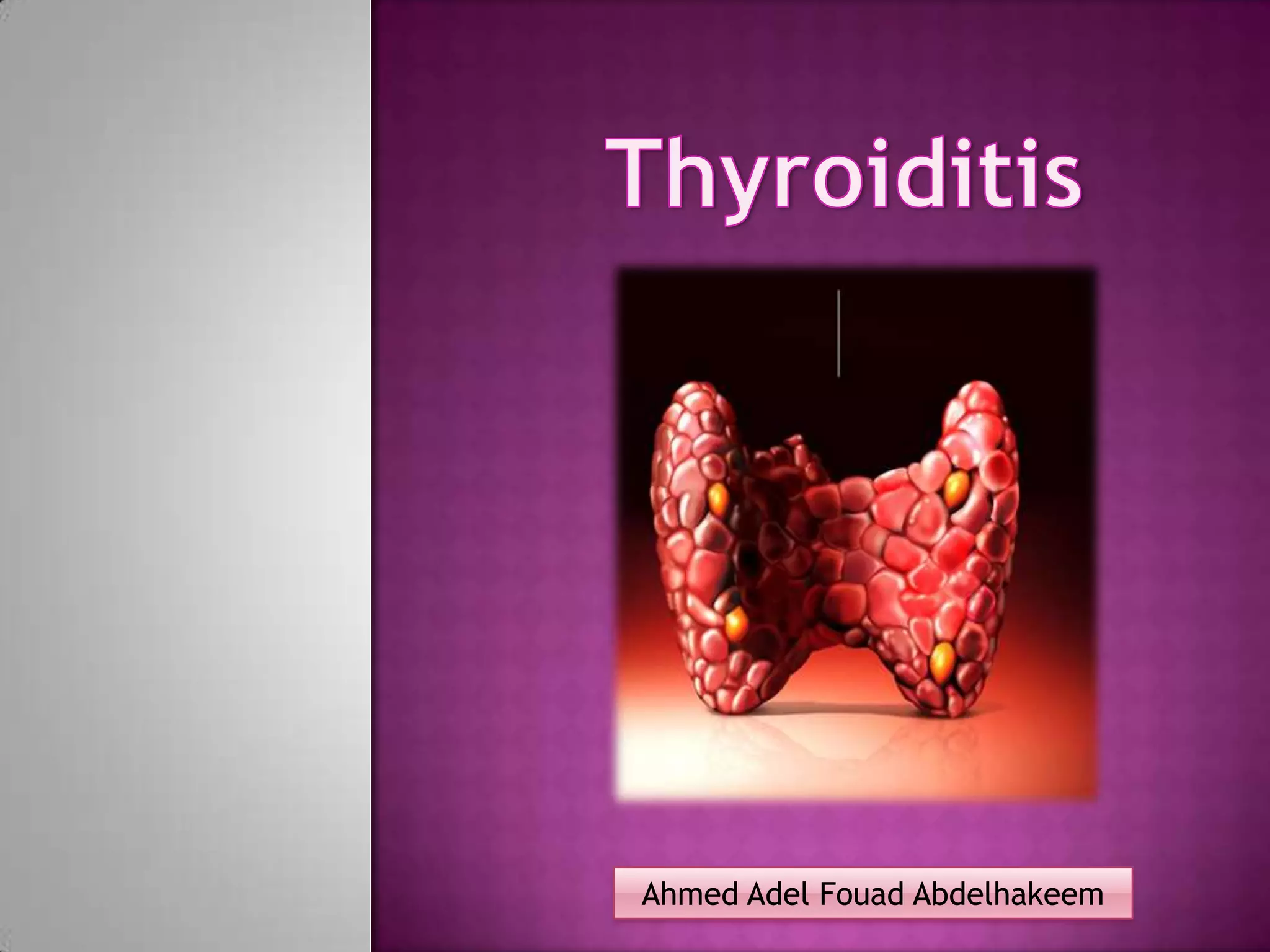
 Thyroiditis

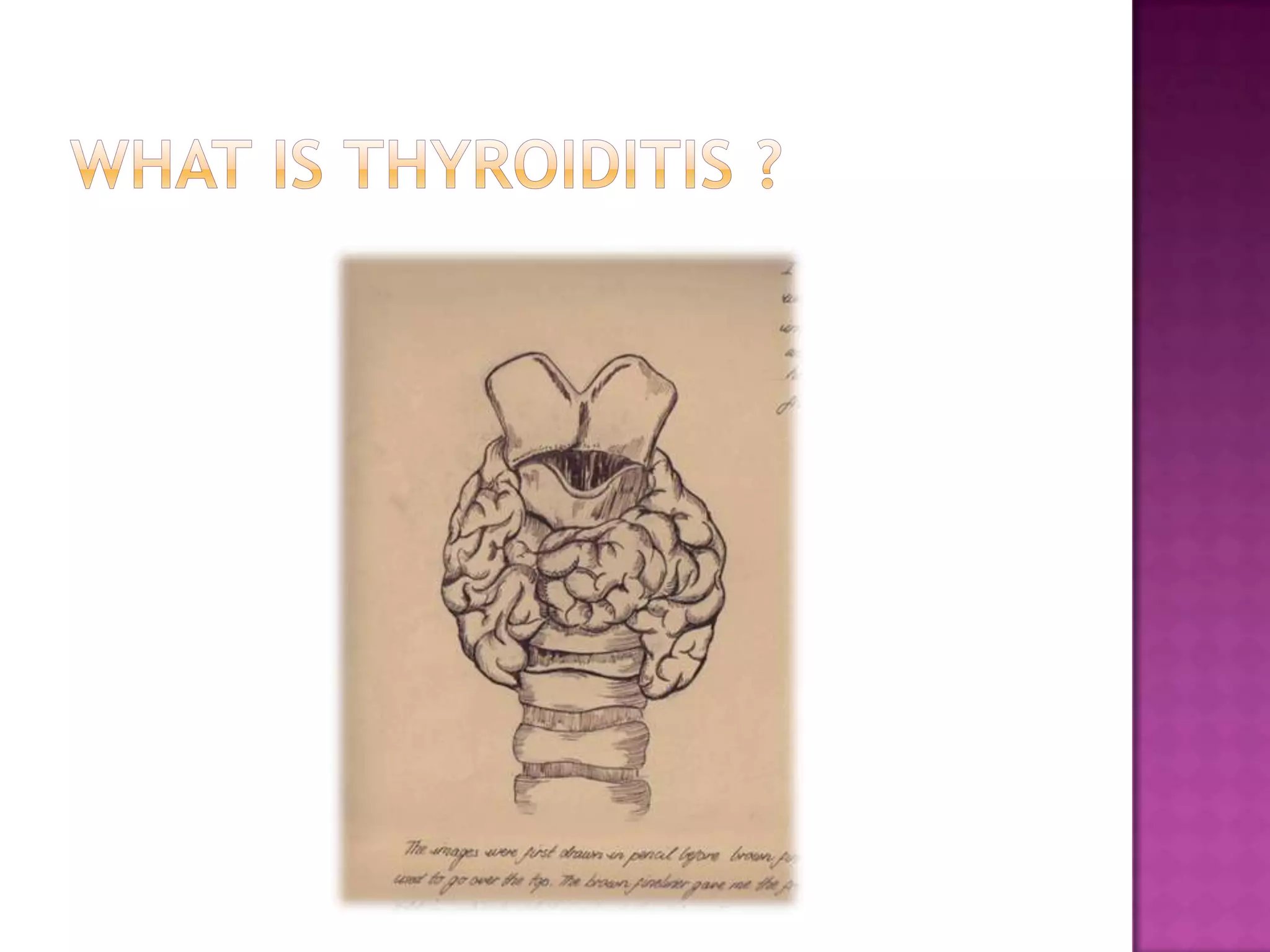
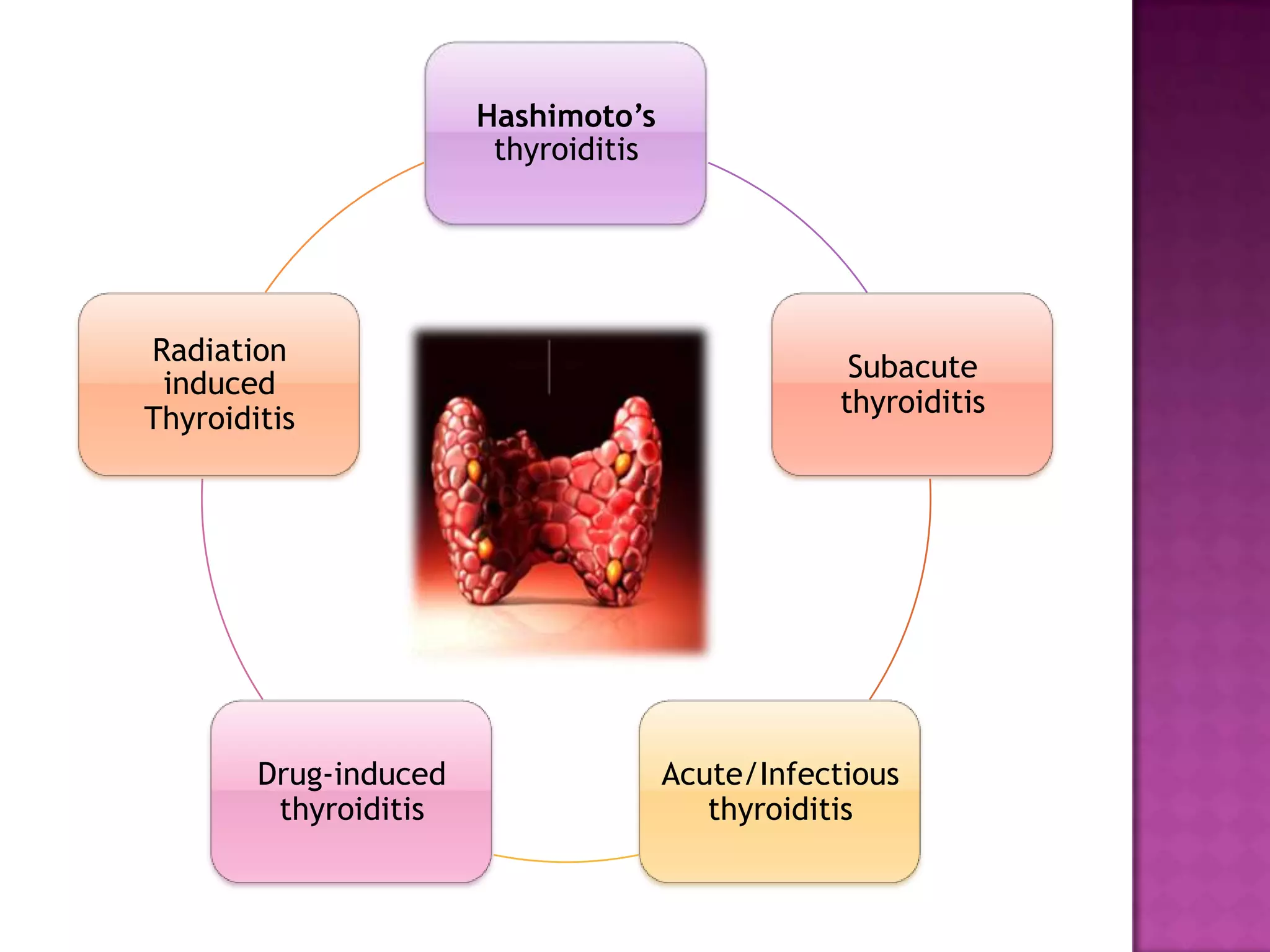
is a general term that refers to
“inflammation of the thyroid gland”.



Thyroiditis includes a group of individual
disorders that all cause thyroidal
inflammation and, as a result, causes many
different clinical presentations.
Hashimoto’s
thyroiditis

Radiation
induced
Thyroiditis

Drug-induced
thyroiditis

Subacute
thyroiditis

Acute/Infectious
thyroiditis
 The
 This

most common cause of thyroiditis.

form of thyroid disease may also be
referred to as chronic lymphocytic
thyroiditis.
 It

is characterized by:

Gradual thyroid failure because of autoimmune
destruction of the thyroid gland.
 The

name Hashimoto thyroiditis is derived
from the 1912 report by Hashimoto describing
patients with goiter and intense lymphocytic
infiltration of the thyroid (struma
lymphomatosa)
 it

is primarily a disease of older women.

 can

occur in children “ nonendemic goiter”

 The

concordance rate in monozygotic twins
is 30% to 60%.

 Several

chromosomal abnormalities have
been associated with thyroid autoimmunity.
 There

are reports that polymorphisms in the
HLA locus, specifically the HLA-DR3 and HLADR5 alleles, are linked to Hashimoto
thyroiditis, but the association is weak.

 genome

wide linkage analyses in families
with Hashimoto thyroiditis have provided
evidence for several susceptibility loci, such
as on chromosomes 6p and 12q, that may
harbor genes predisposing to this disorder.
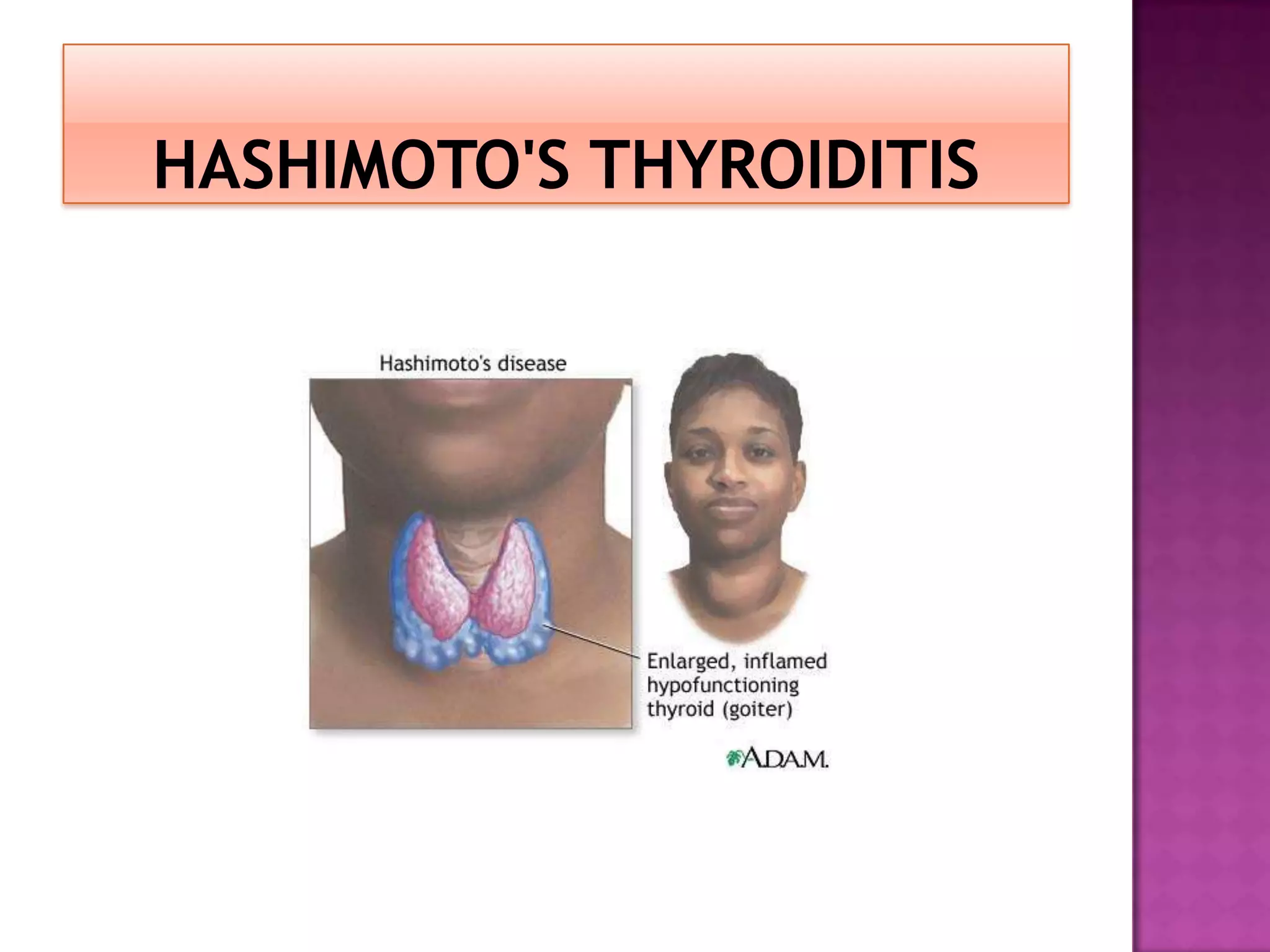
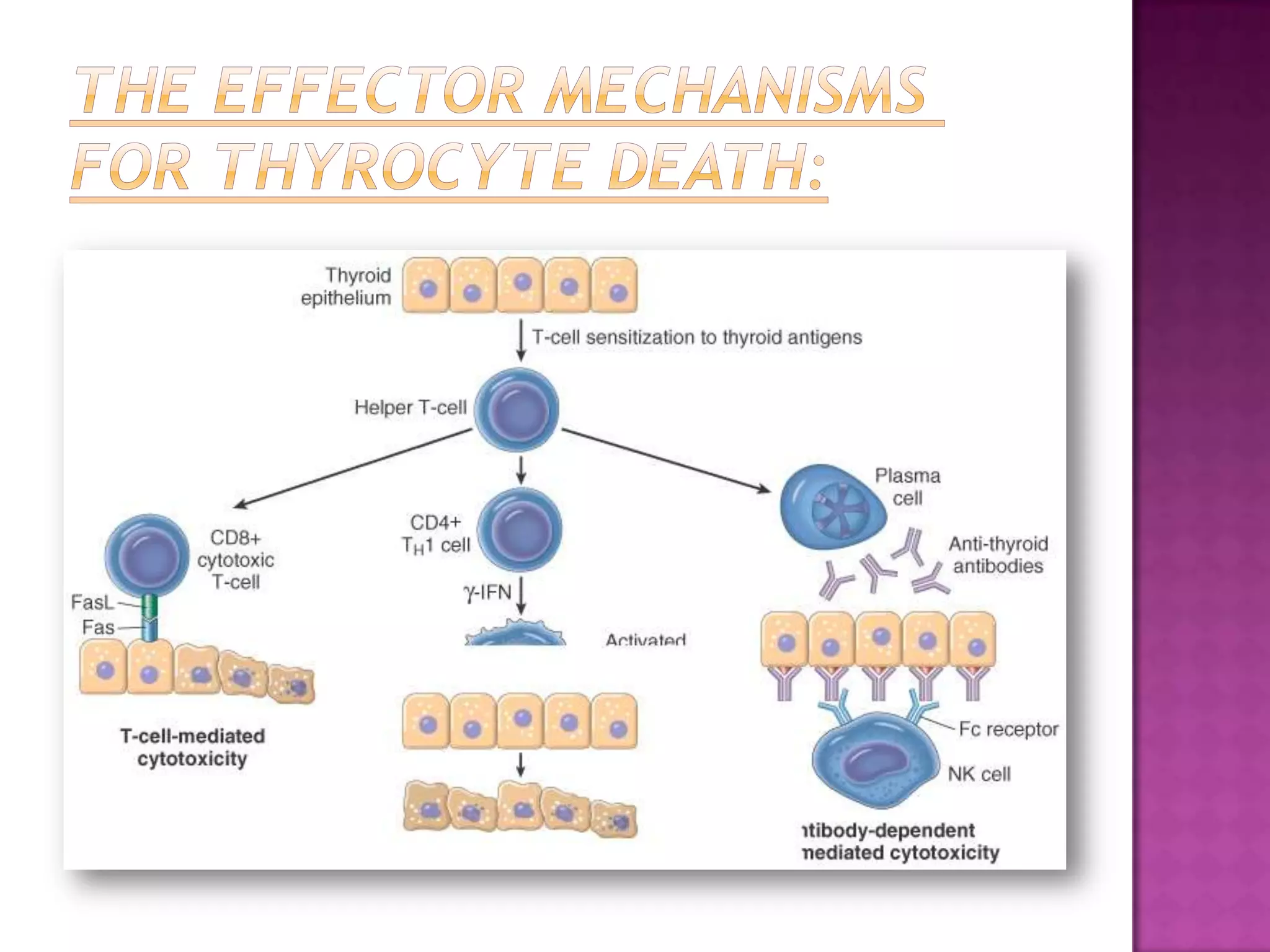
 Hashimoto

thyroiditis is an autoimmune
disease in which the immune system reacts
against a variety of thyroid antigens.

 There

is progressive depletion of thyroid
epithelial cells (thyrocytes), which are
gradually replaced by mononuclear cell
infiltration and fibrosis.
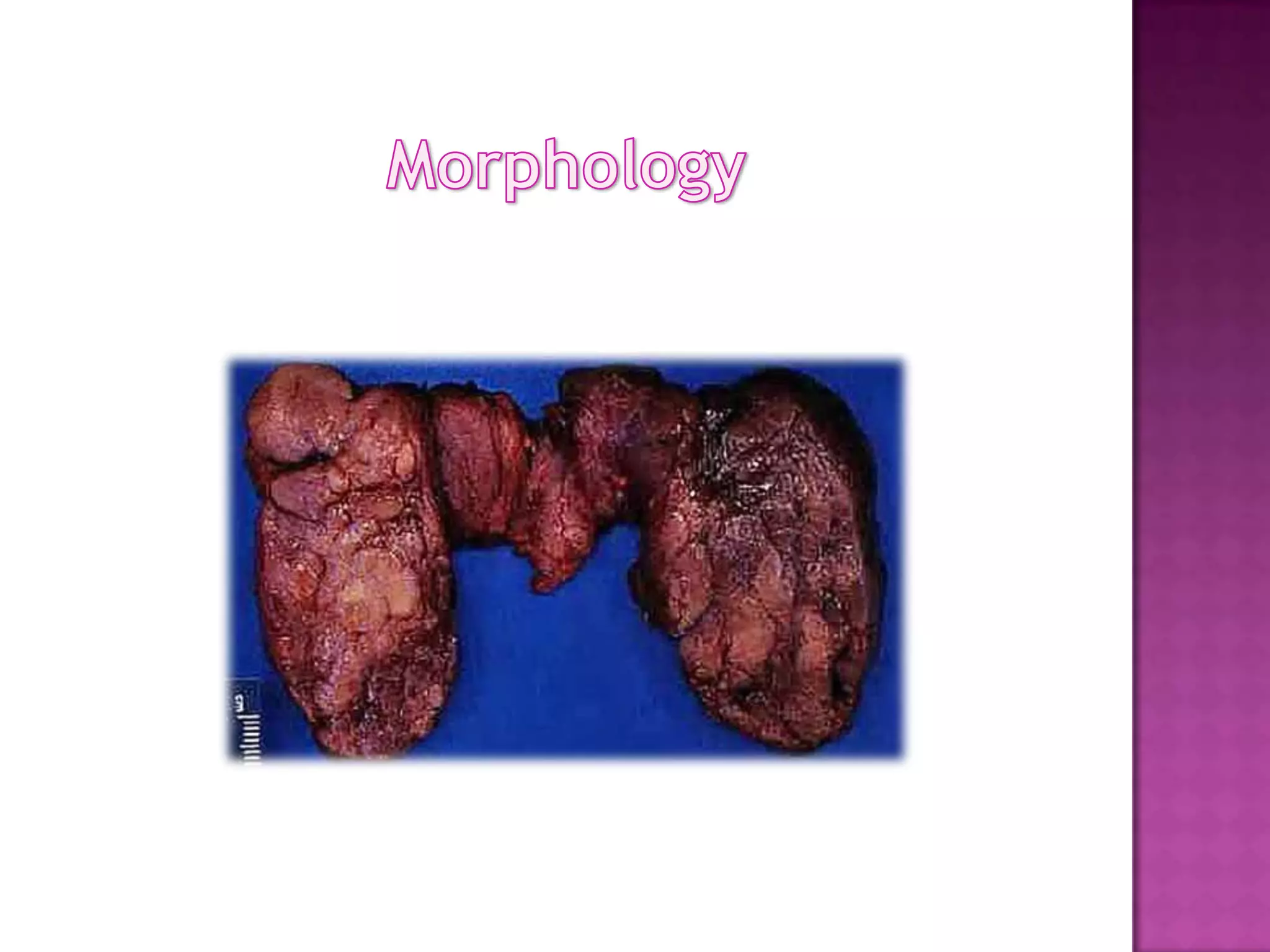
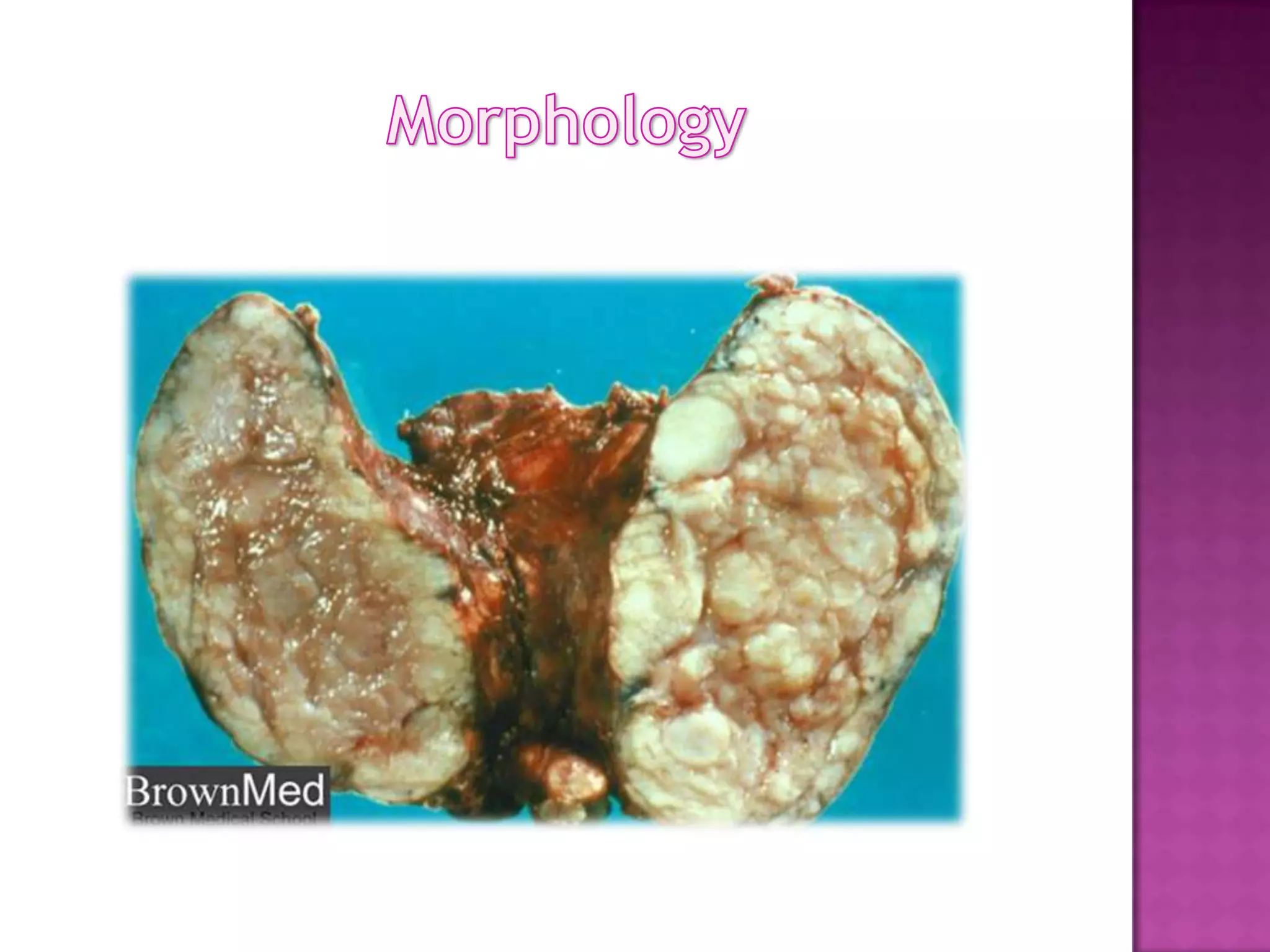
 The

thyroid is often diffusely enlarged.

 The

capsule is intact.

 the

gland is well demarcated from adjacent
structures.

 The

cut surface is pale, yellow-tan, firm, and
somewhat nodular.
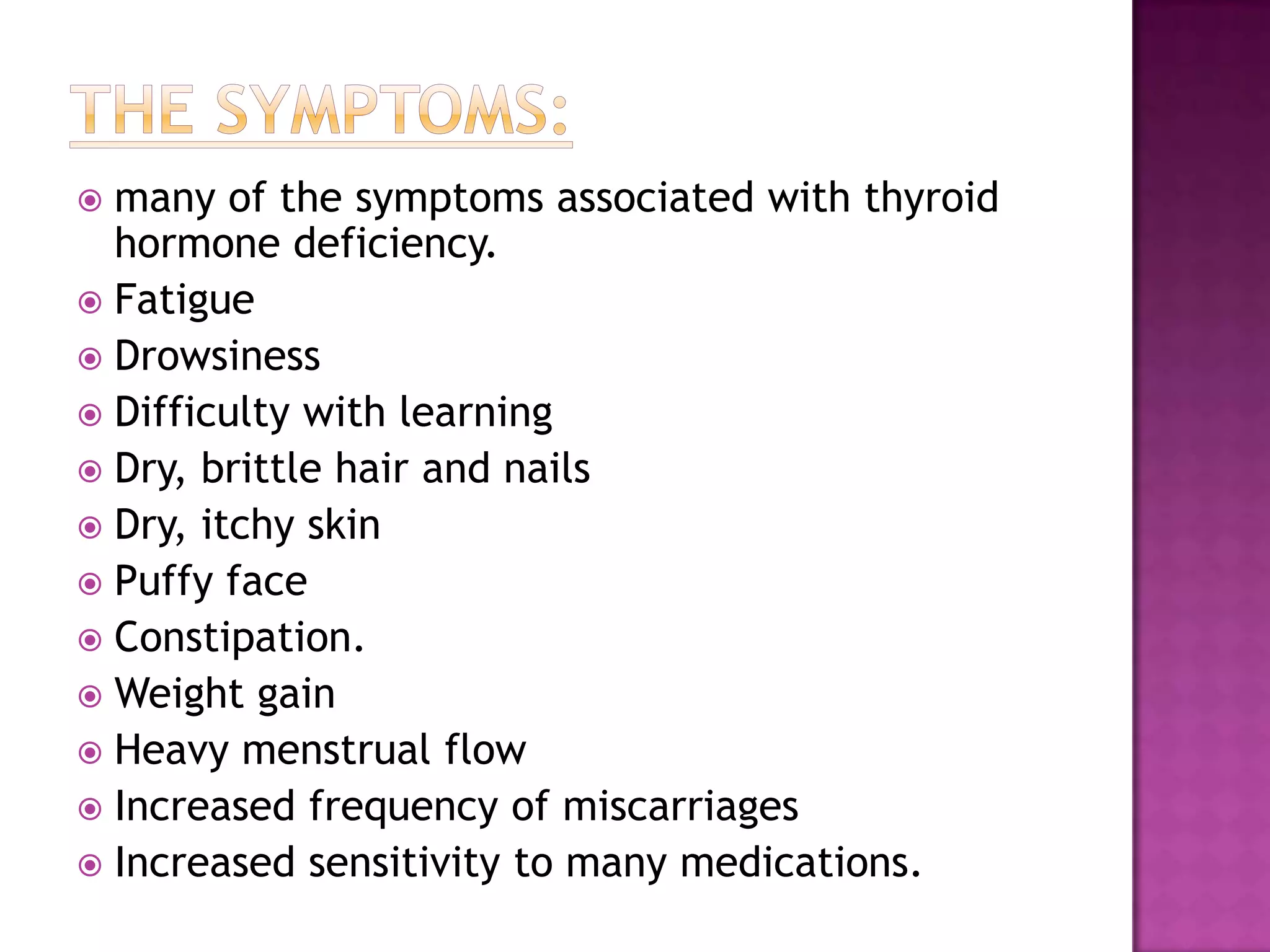
many of the symptoms associated with thyroid
hormone deficiency.
 Fatigue
 Drowsiness
 Difficulty with learning
 Dry, brittle hair and nails
 Dry, itchy skin
 Puffy face
 Constipation.
 Weight gain
 Heavy menstrual flow
 Increased frequency of miscarriages
 Increased sensitivity to many medications.

 is

a self-limited thyroid condition.

 associated

with a triphasic clinical course of
hyperthyroidism, hypothyroidism, and return
to normal thyroid function.

 responsible

for 15-20% of patients presenting
with thyrotoxicosis.

 and

10% of patients presenting with
hypothyroidism.
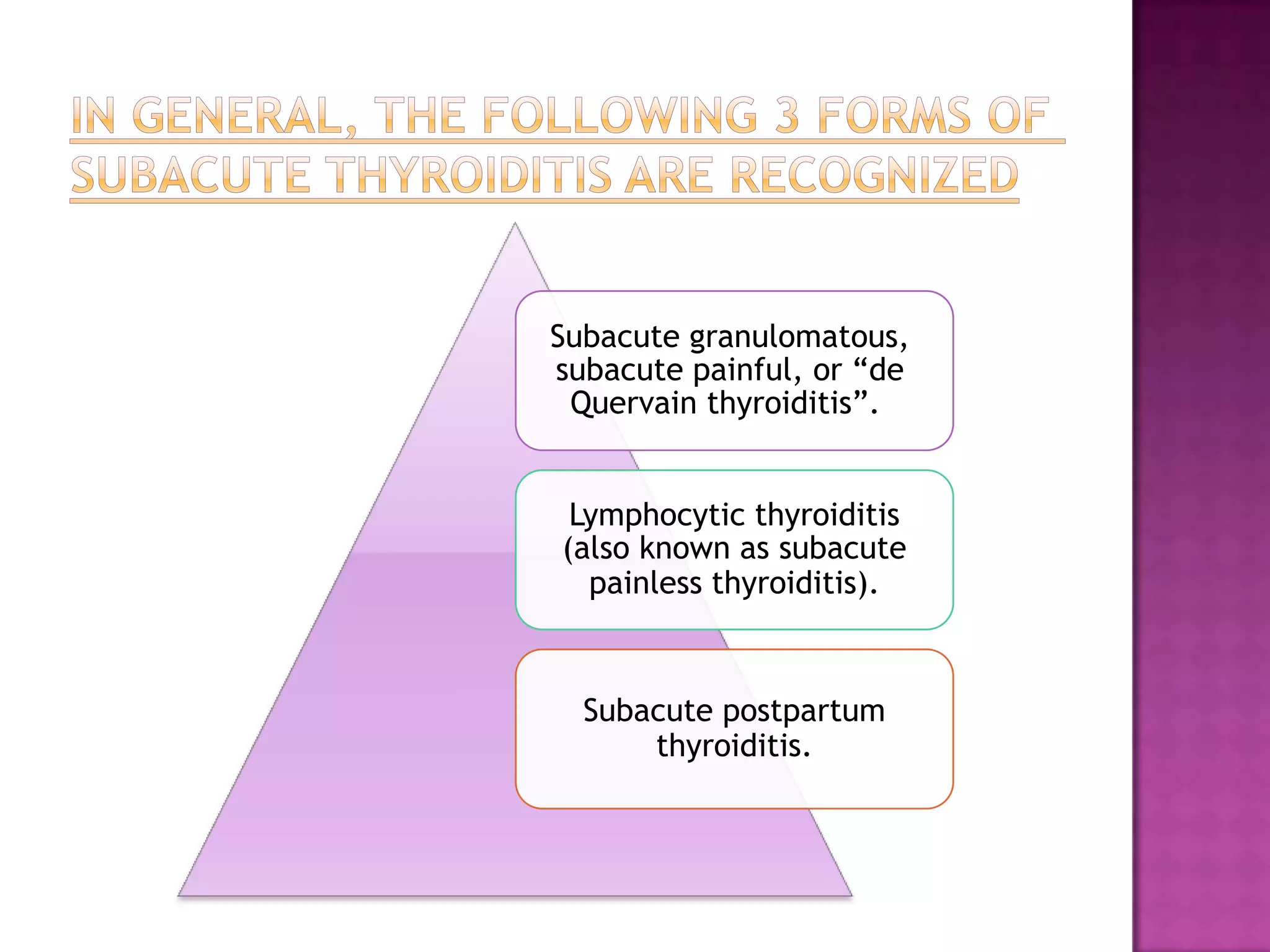
Subacute granulomatous,
subacute painful, or “de
Quervain thyroiditis”.
Lymphocytic thyroiditis
(also known as subacute
painless thyroiditis).

Subacute postpartum
thyroiditis.
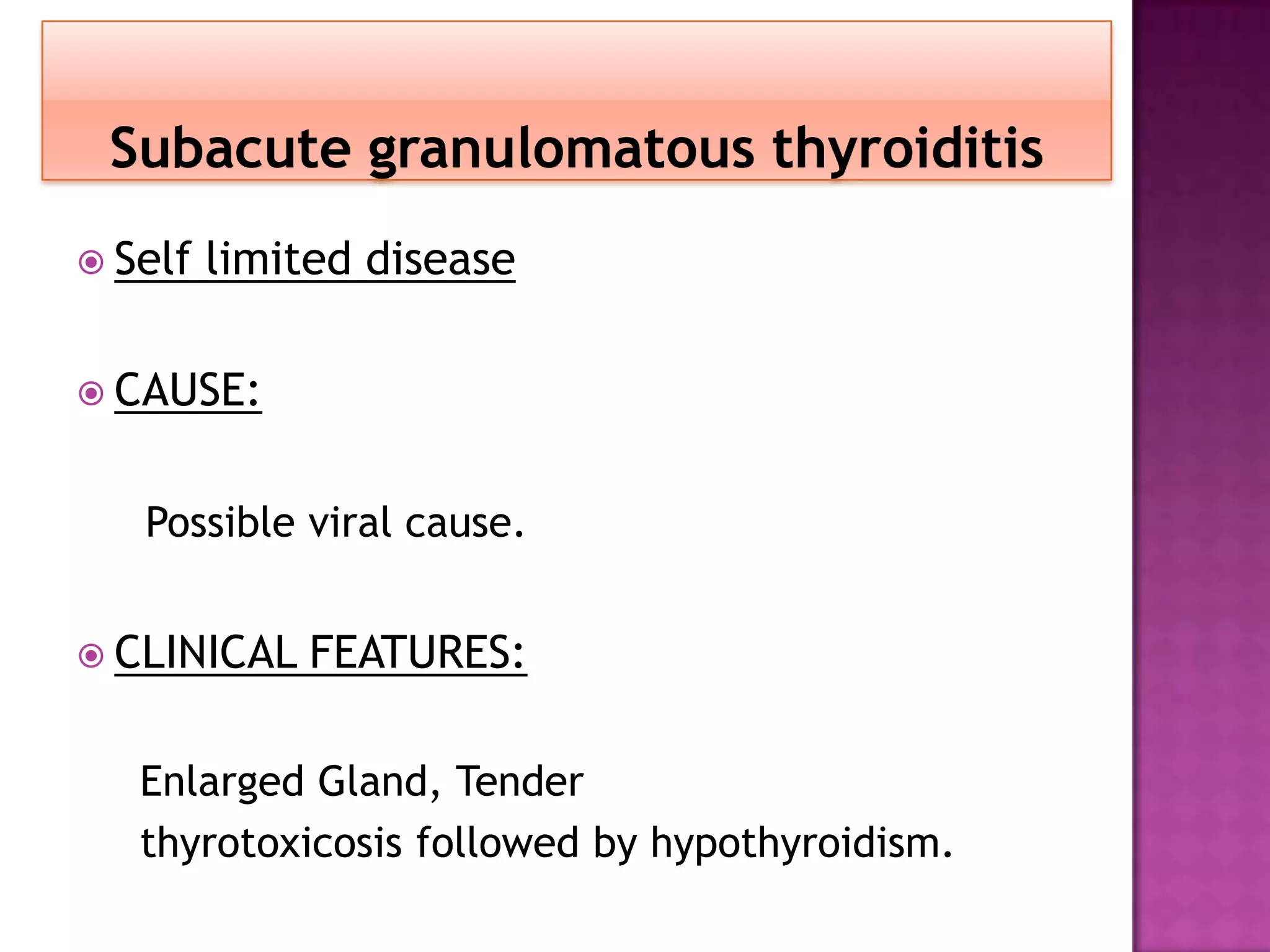
Subacute granulomatous thyroiditis
 Self

limited disease

 CAUSE:

Possible viral cause.
 CLINICAL

FEATURES:

Enlarged Gland, Tender
thyrotoxicosis followed by hypothyroidism.



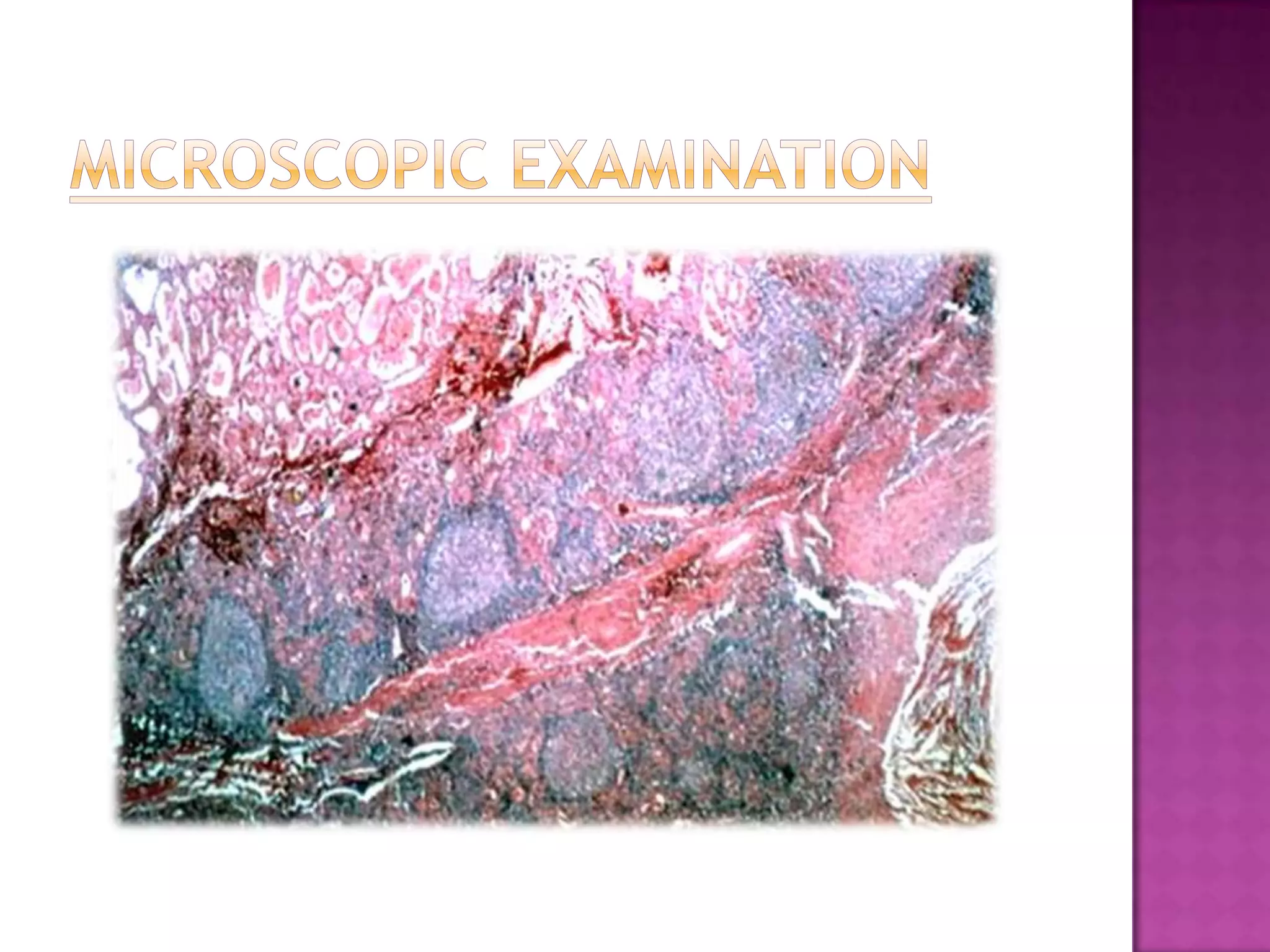
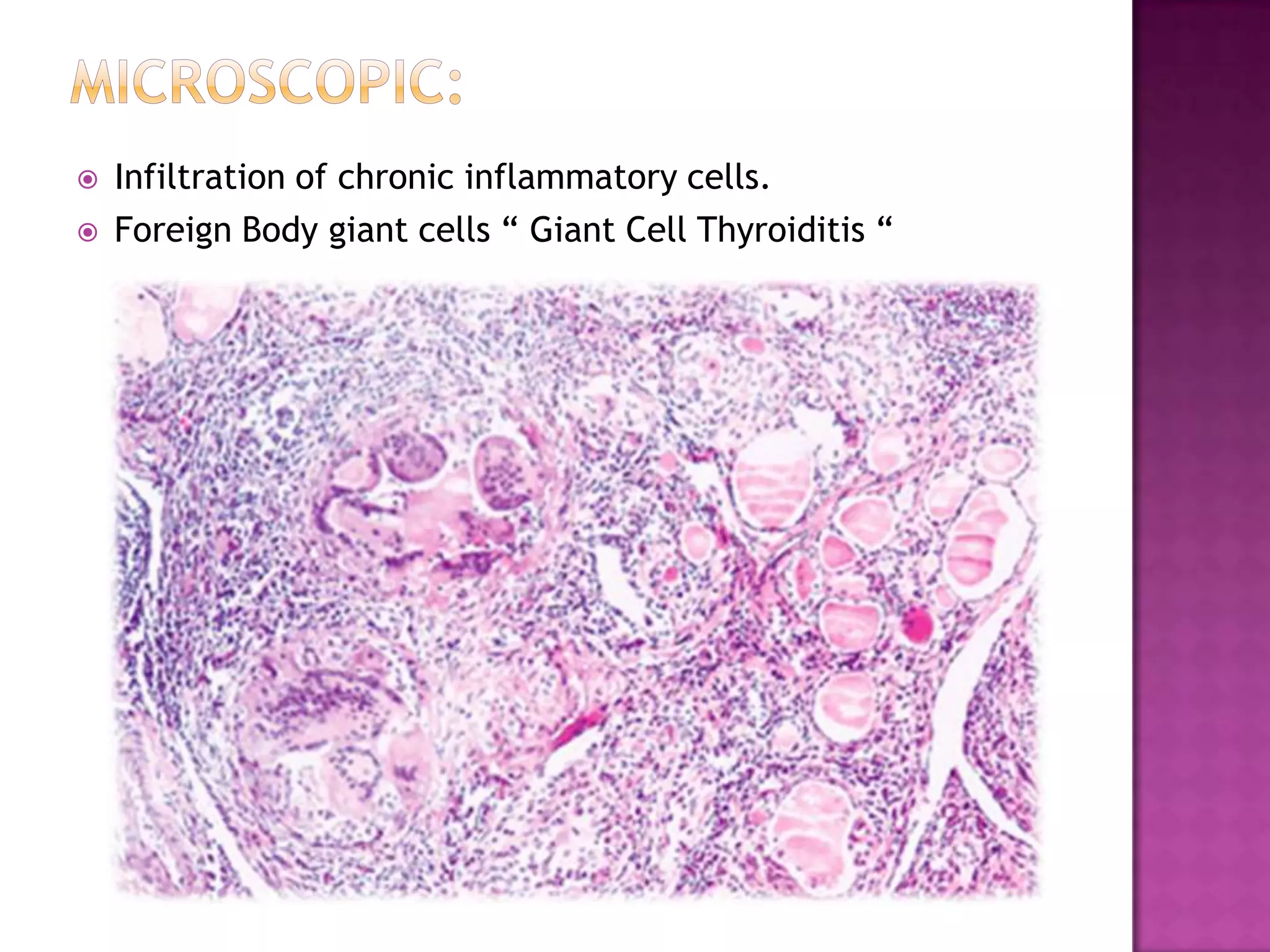
Infiltration of chronic inflammatory cells.
Foreign Body giant cells “ Giant Cell Thyroiditis “
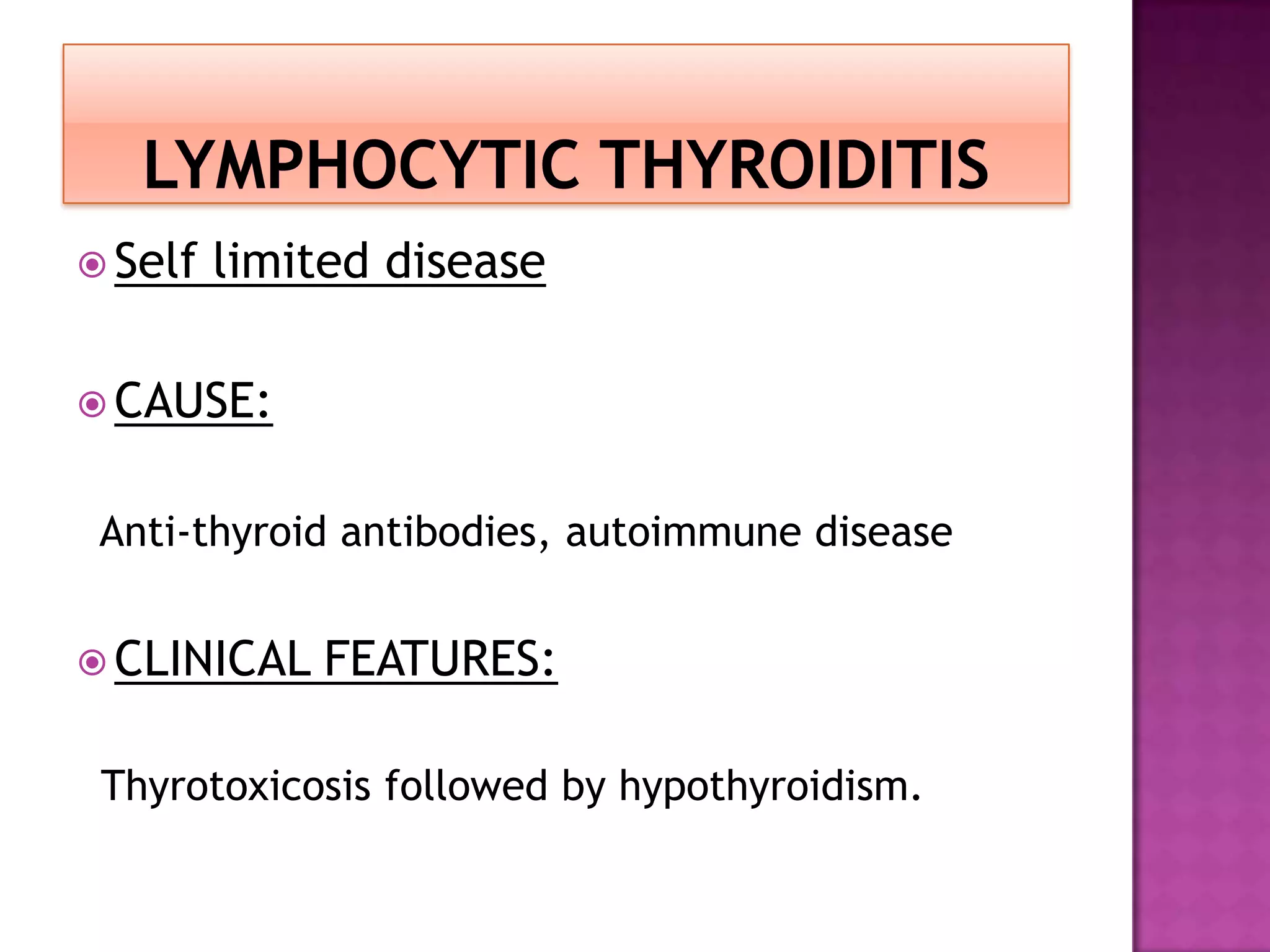
 Self

limited disease

 CAUSE:

Anti-thyroid antibodies, autoimmune disease
 CLINICAL

FEATURES:

Thyrotoxicosis followed by hypothyroidism.


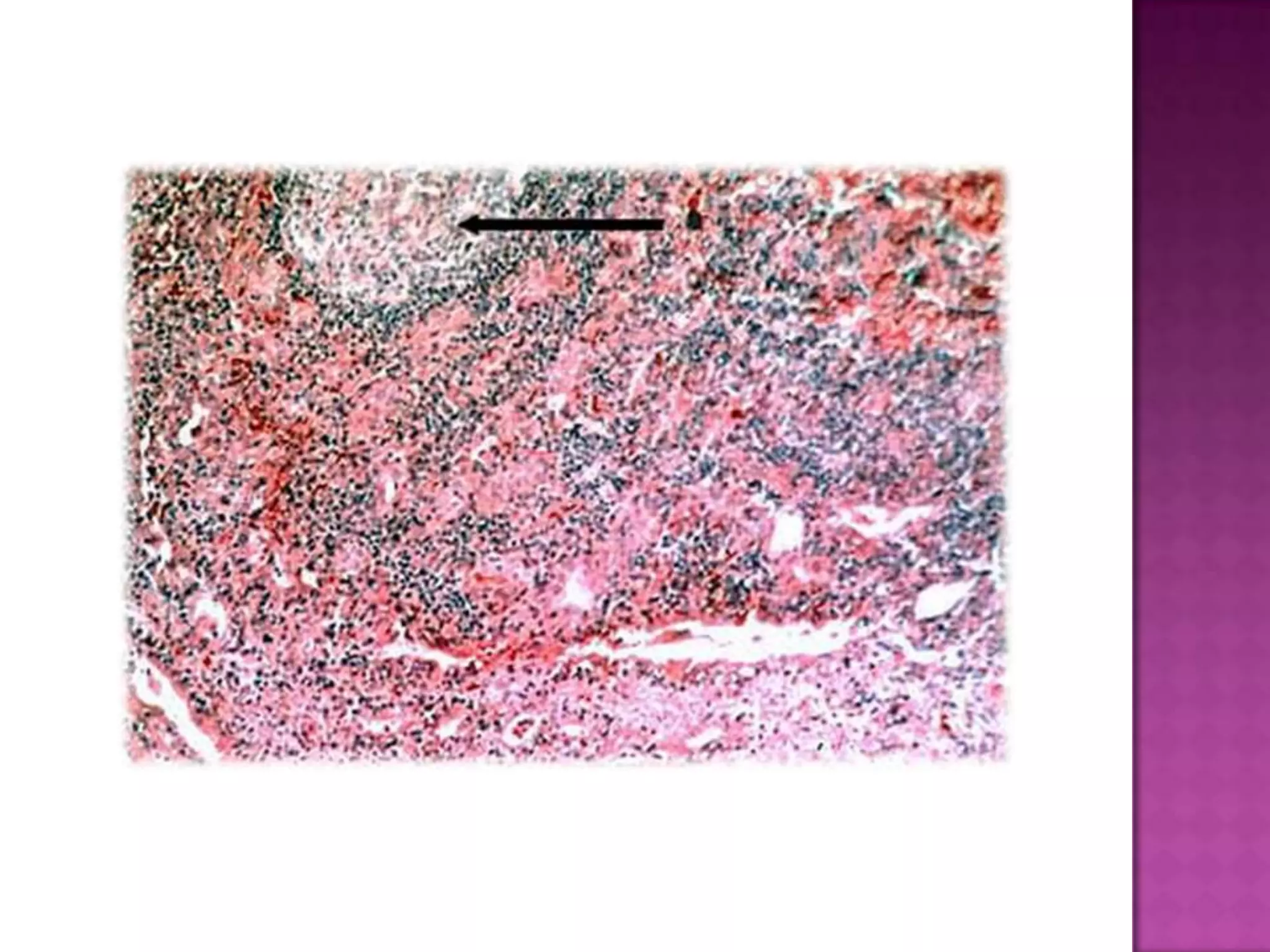
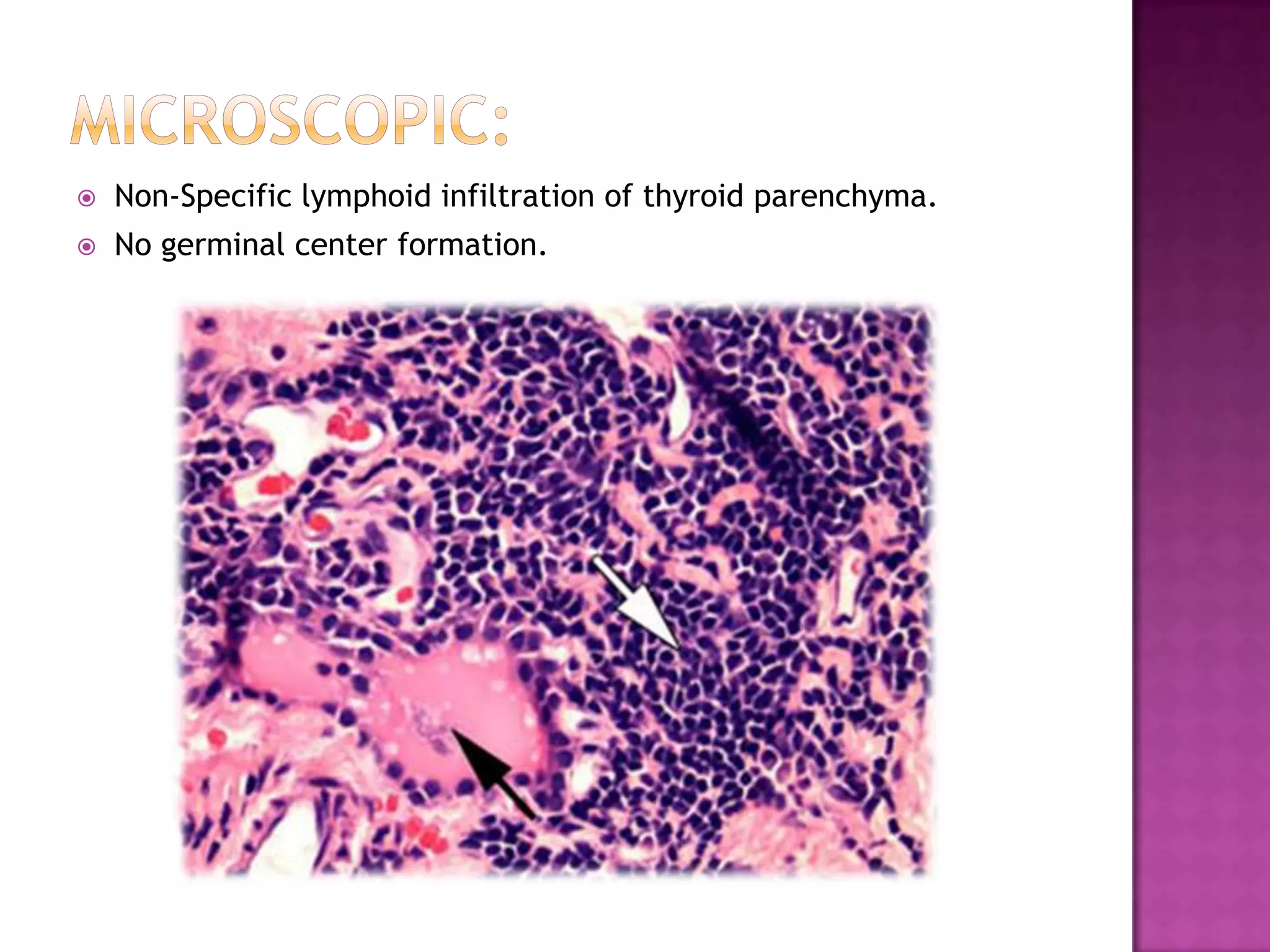
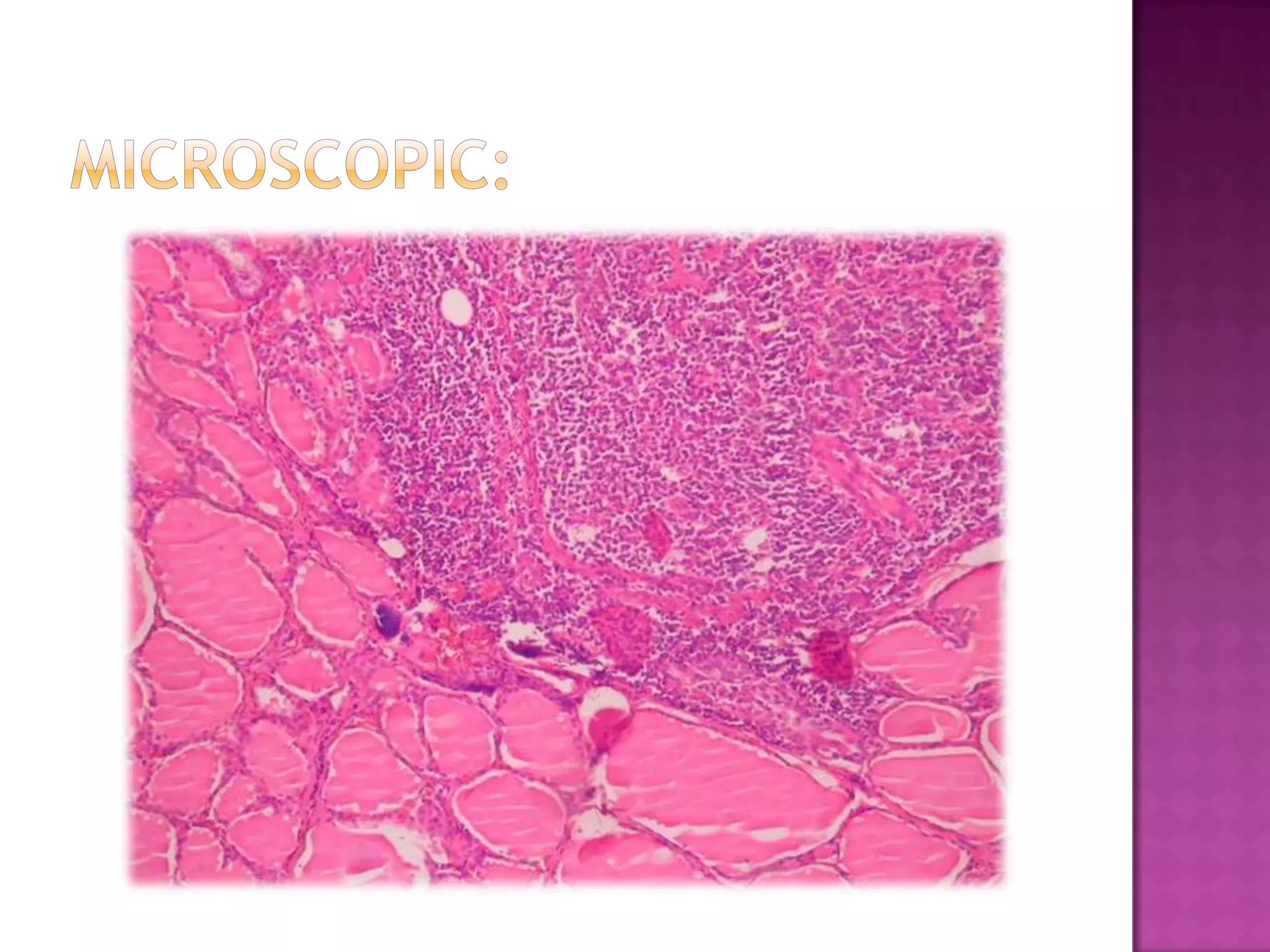
Non-Specific lymphoid infiltration of thyroid parenchyma.



No germinal center formation.
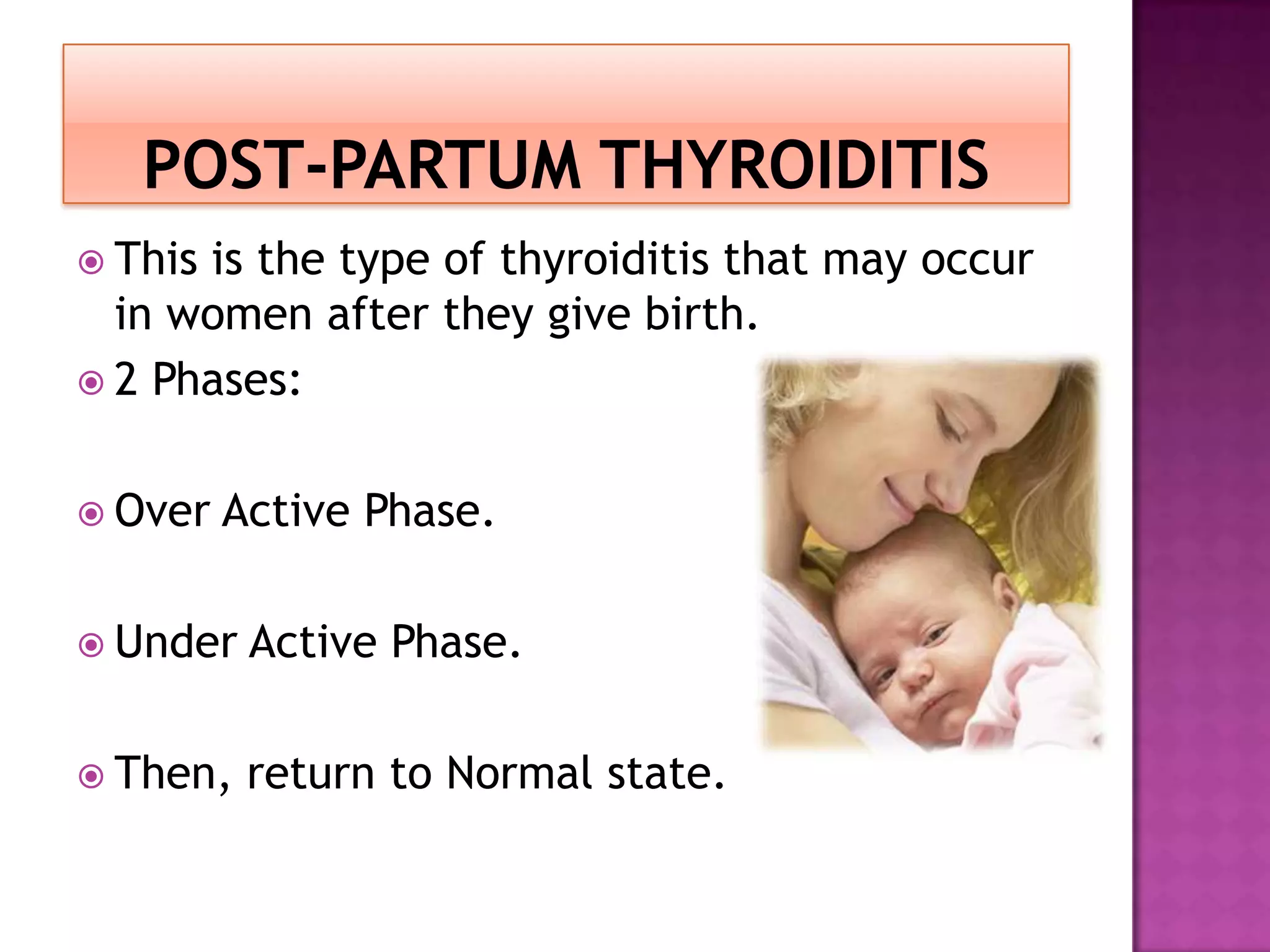
 This

is the type of thyroiditis that may occur
in women after they give birth.
 2 Phases:
 Over

Active Phase.

 Under

Active Phase.

 Then,

return to Normal state.
 Within

the first one to four months after
delivery.
 This phase can be characterized by :
1.
2.
3.
4.
5.
6.

slight enlargement of the thyroid .
Anxiety.
Restlessness.
Insomnia.
weight loss.
difficulty concentrating.
 blood

tests to measure :
 increased levels of thyroid hormone in the
bloodstream .
 the abnormal antibodies, anti-microsomal
and antithyroglobulin antibodies.
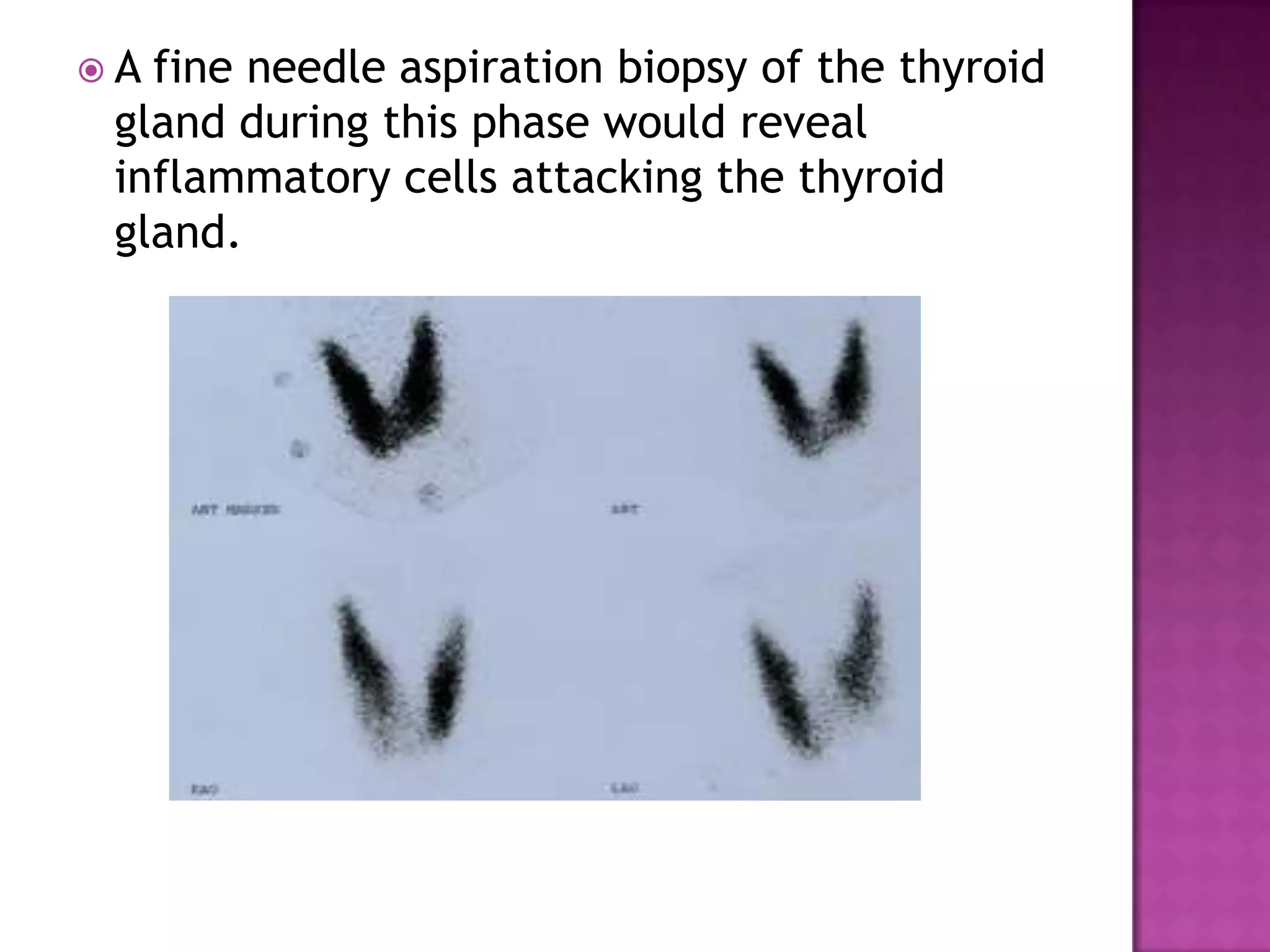
A

fine needle aspiration biopsy of the thyroid
gland during this phase would reveal
inflammatory cells attacking the thyroid
gland.
 During

this hyperthyroid phase, treatment is
usually not recommended because this phase
usually lasts for a short period of time, about
2 to 4 months.

 However,

if the symptoms are extreme, beta
blockers may be used to slow the heart rate
and decrease nervousness.
 occurs

3 to 8 months postpartum.
 This phase can be characterized by:
1.

2.
3.
4.

5.

slight enlargement of the thyroid gland.
weight gain.
Fatigue.
lack of energy .
depression.
 thyroid

hormone medication for about six
months.
 After this time, the medication is stopped to
determine whether or not the thyroid has
recovered its normal function.
 If so, the medication may be stopped
permanently, otherwise the medication must
be resumed because of permanent injury to
the thyroid gland.
 cute

suppurative thyroiditis is quite rare in
modern times.
 Cause:
It is caused by a bacterial infection in the
thyroid which causes pus to collect and form
an abscess within the thyroid gland.
The bacterial infection may be carried in the
bloodstream from anywhere in the body or it
may come from the throat itself.
 thyroidal

pain.
 systemic illness.
 painless enlargement of the thyroid.
 hypothyroidism.
 The symptoms usually resolve once the
infection resolves.
 In the few instances where it still
occurs, antibiotics and surgery to drain the
pus can result in complete cure.
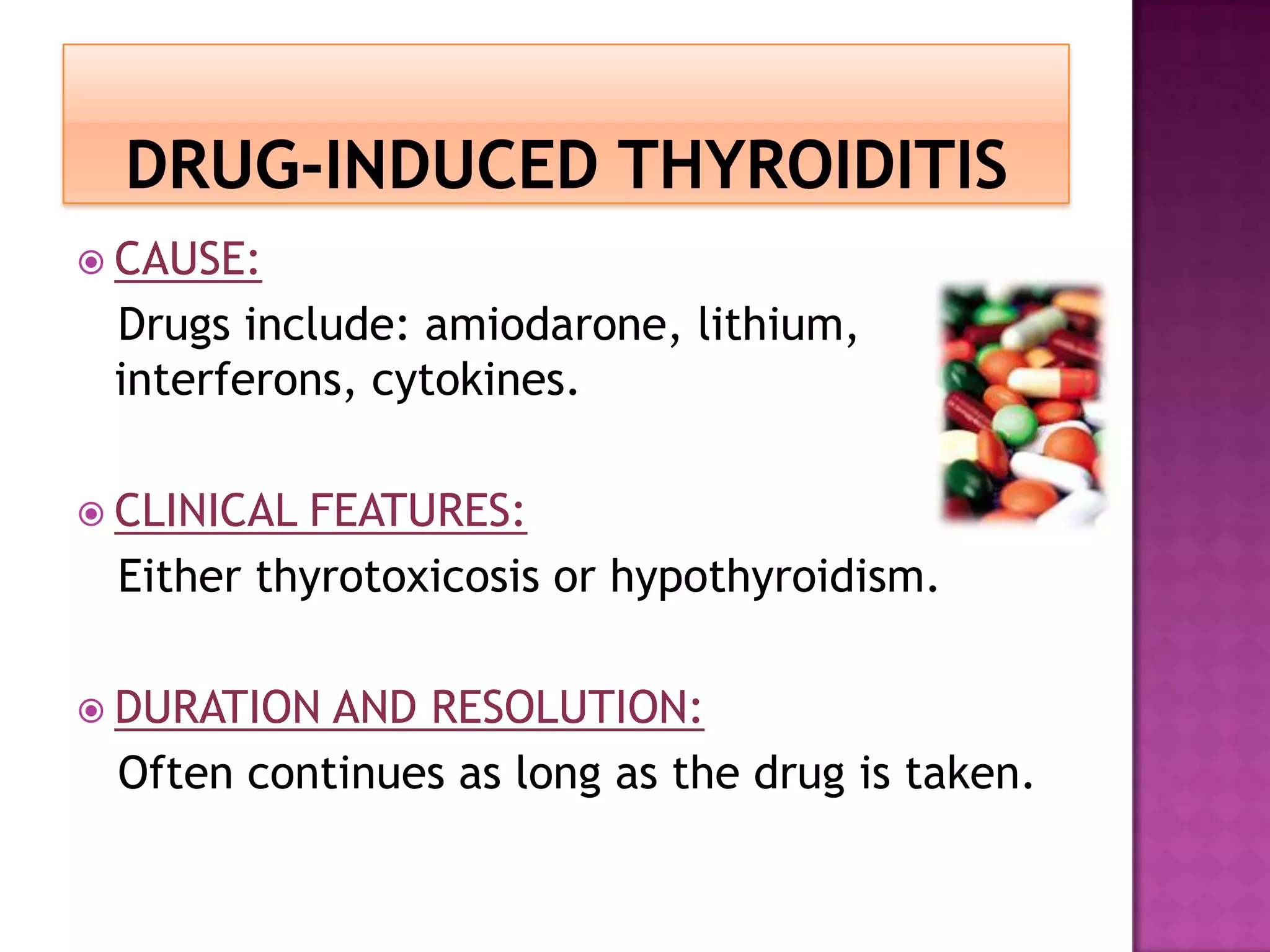
 CAUSE:

Drugs include: amiodarone, lithium,
interferons, cytokines.
 CLINICAL

FEATURES:
Either thyrotoxicosis or hypothyroidism.

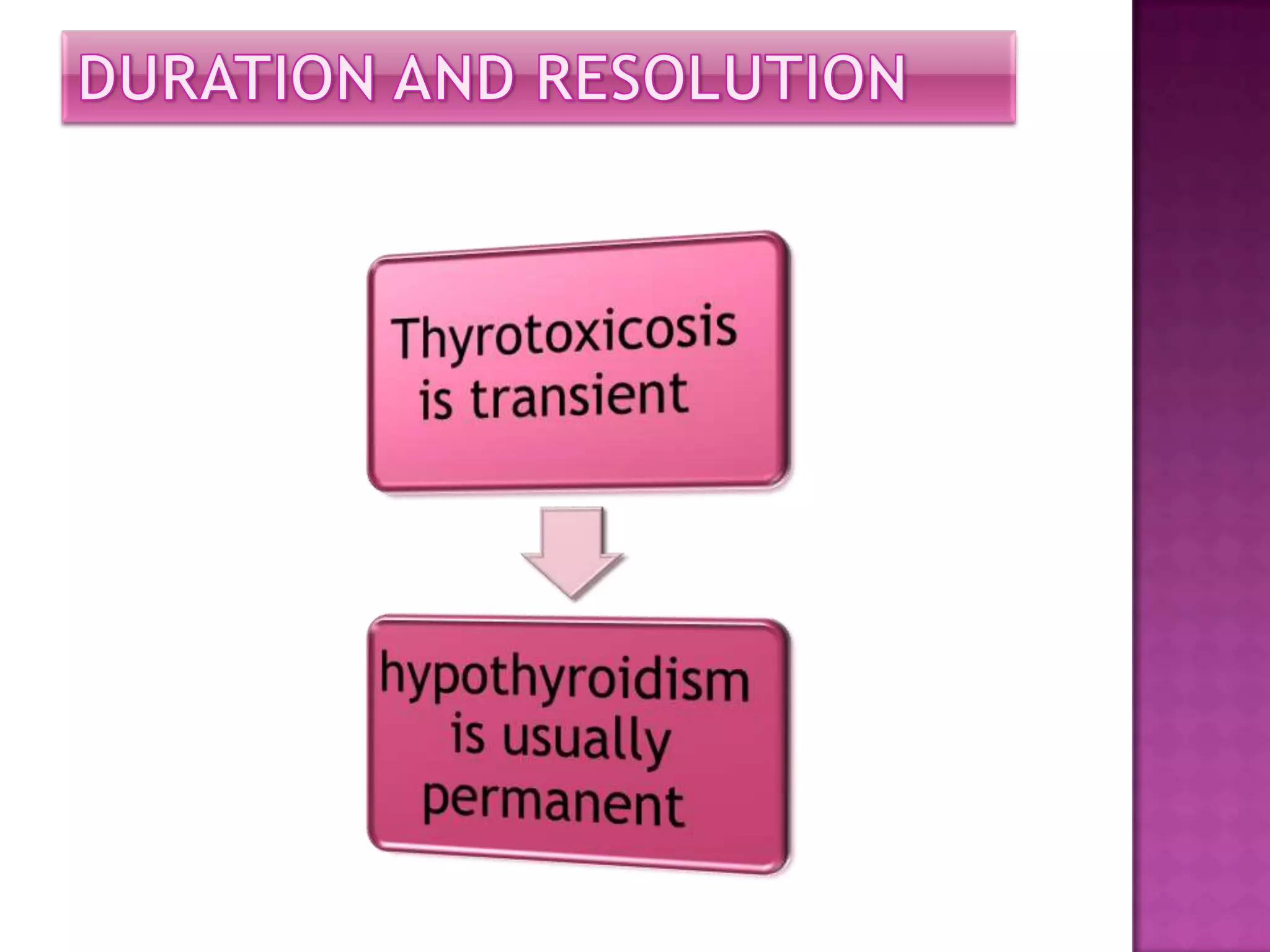
 DURATION

AND RESOLUTION:
Often continues as long as the drug is taken.
 CAUSE:
1.
2.

Follows treatment with radioactive iodine for
hyperthyroidism
external beam radiation therapy for certain
cancers.

CLINICAL FEATURES:
1. Occasionally thyrotoxicosis
2. more frequently hypothyroidism.
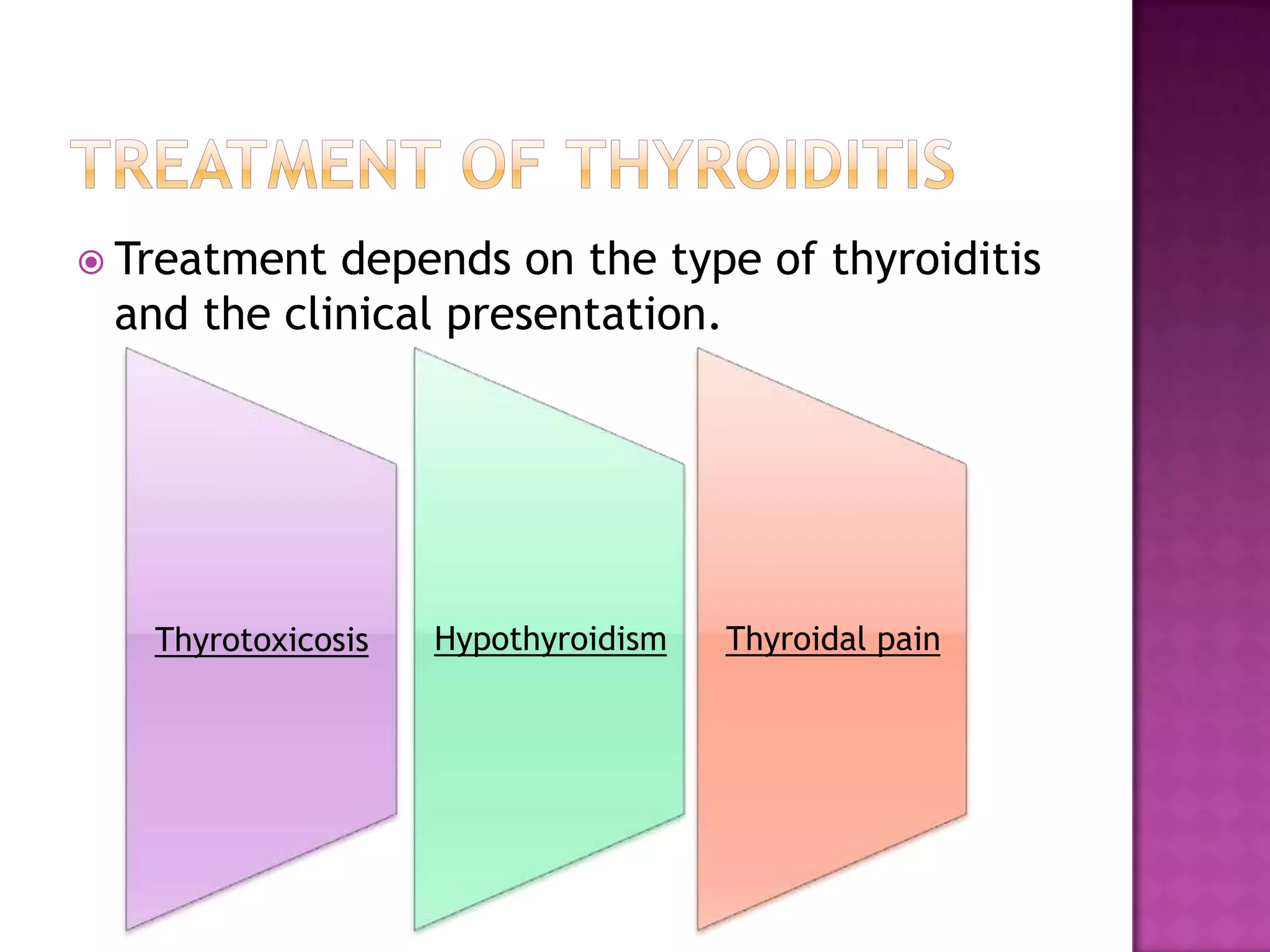
 Treatment

depends on the type of thyroiditis
and the clinical presentation.

Thyrotoxicosis

Hypothyroidism

Thyroidal pain
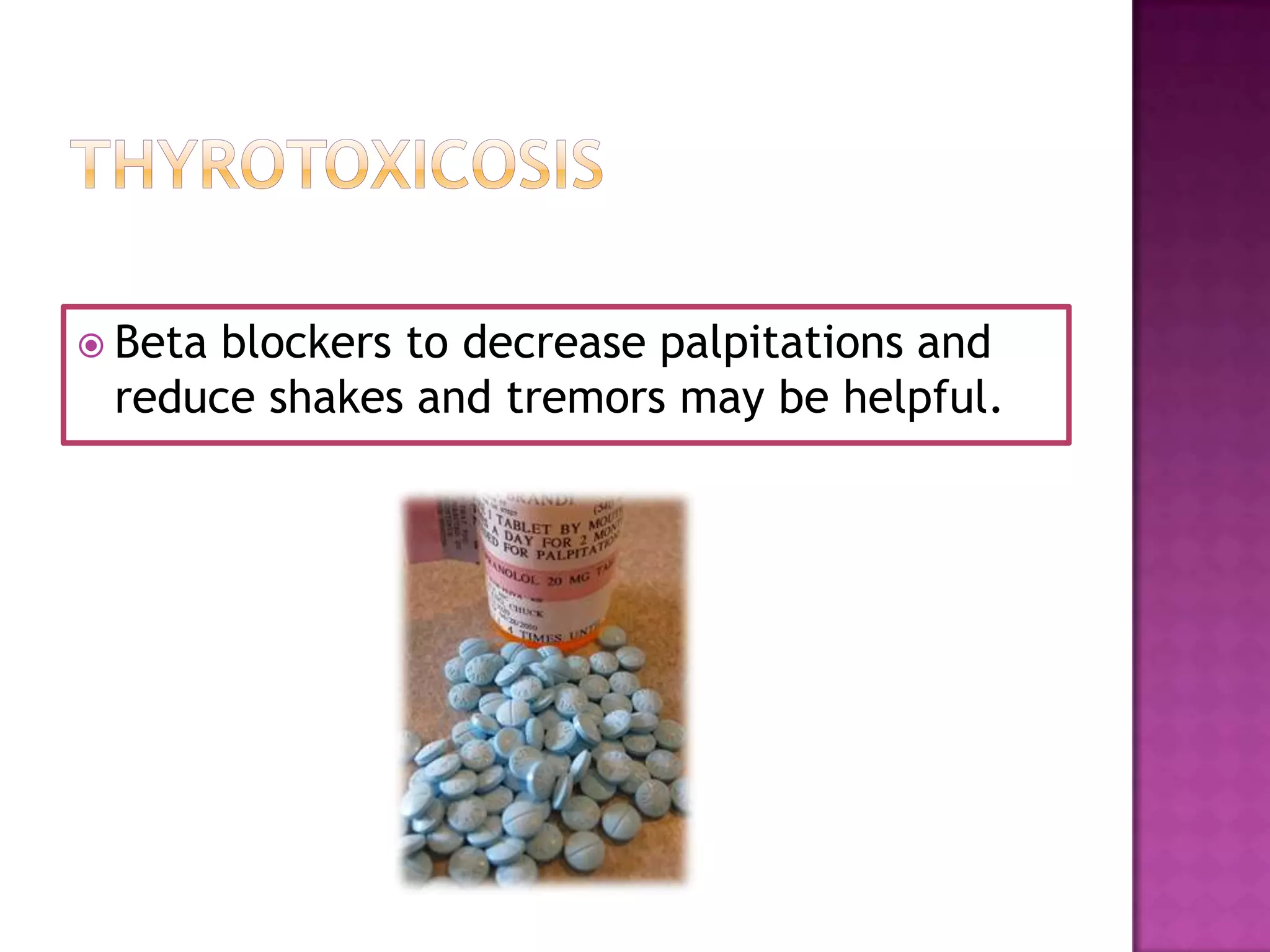
 Beta

blockers to decrease palpitations and
reduce shakes and tremors may be helpful.
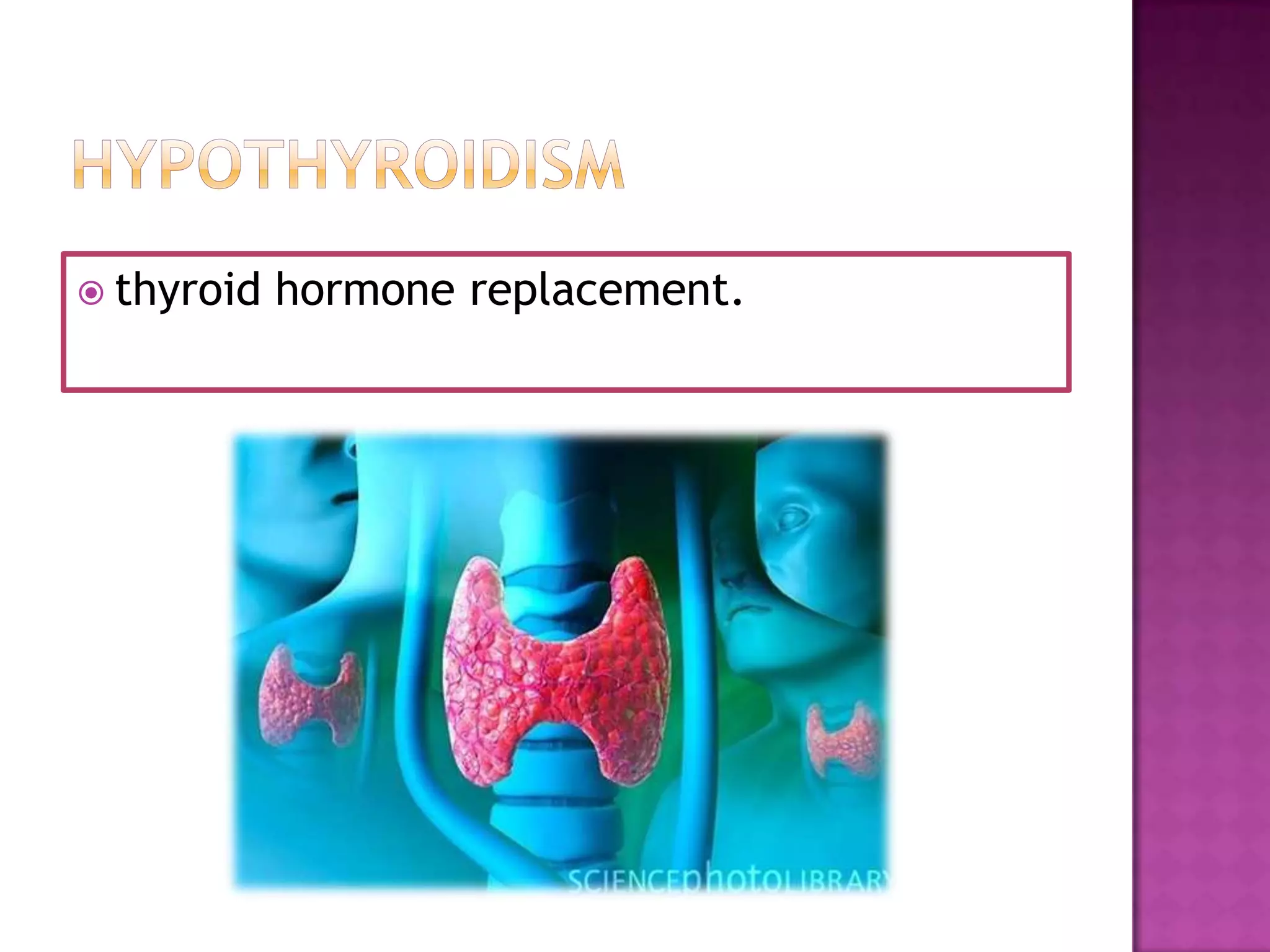
 thyroid

hormone replacement.
 anti-inflamatory

medications such as aspirin .
 steroid therapy with prednisone.
Thyroiditis

Thyroiditis

  • 1.
    Ahmed Adel FouadAbdelhakeem
  • 3.
     Thyroiditis is ageneral term that refers to “inflammation of the thyroid gland”.  Thyroiditis includes a group of individual disorders that all cause thyroidal inflammation and, as a result, causes many different clinical presentations.
  • 5.
  • 7.
     The  This mostcommon cause of thyroiditis. form of thyroid disease may also be referred to as chronic lymphocytic thyroiditis.
  • 8.
     It is characterizedby: Gradual thyroid failure because of autoimmune destruction of the thyroid gland.  The name Hashimoto thyroiditis is derived from the 1912 report by Hashimoto describing patients with goiter and intense lymphocytic infiltration of the thyroid (struma lymphomatosa)
  • 9.
     it is primarilya disease of older women.  can occur in children “ nonendemic goiter”  The concordance rate in monozygotic twins is 30% to 60%.  Several chromosomal abnormalities have been associated with thyroid autoimmunity.
  • 10.
     There are reportsthat polymorphisms in the HLA locus, specifically the HLA-DR3 and HLADR5 alleles, are linked to Hashimoto thyroiditis, but the association is weak.  genome wide linkage analyses in families with Hashimoto thyroiditis have provided evidence for several susceptibility loci, such as on chromosomes 6p and 12q, that may harbor genes predisposing to this disorder.
  • 12.
     Hashimoto thyroiditis isan autoimmune disease in which the immune system reacts against a variety of thyroid antigens.  There is progressive depletion of thyroid epithelial cells (thyrocytes), which are gradually replaced by mononuclear cell infiltration and fibrosis.
  • 15.
     The thyroid isoften diffusely enlarged.  The capsule is intact.  the gland is well demarcated from adjacent structures.  The cut surface is pale, yellow-tan, firm, and somewhat nodular.
  • 19.
    many of thesymptoms associated with thyroid hormone deficiency.  Fatigue  Drowsiness  Difficulty with learning  Dry, brittle hair and nails  Dry, itchy skin  Puffy face  Constipation.  Weight gain  Heavy menstrual flow  Increased frequency of miscarriages  Increased sensitivity to many medications. 
  • 20.
     is a self-limitedthyroid condition.  associated with a triphasic clinical course of hyperthyroidism, hypothyroidism, and return to normal thyroid function.  responsible for 15-20% of patients presenting with thyrotoxicosis.  and 10% of patients presenting with hypothyroidism.
  • 21.
    Subacute granulomatous, subacute painful,or “de Quervain thyroiditis”. Lymphocytic thyroiditis (also known as subacute painless thyroiditis). Subacute postpartum thyroiditis.
  • 22.
    Subacute granulomatous thyroiditis Self limited disease  CAUSE: Possible viral cause.  CLINICAL FEATURES: Enlarged Gland, Tender thyrotoxicosis followed by hypothyroidism.
  • 23.
      Infiltration of chronicinflammatory cells. Foreign Body giant cells “ Giant Cell Thyroiditis “
  • 24.
     Self limited disease CAUSE: Anti-thyroid antibodies, autoimmune disease  CLINICAL FEATURES: Thyrotoxicosis followed by hypothyroidism.
  • 25.
     Non-Specific lymphoid infiltrationof thyroid parenchyma.  No germinal center formation.
  • 27.
     This is thetype of thyroiditis that may occur in women after they give birth.  2 Phases:  Over Active Phase.  Under Active Phase.  Then, return to Normal state.
  • 28.
     Within the firstone to four months after delivery.  This phase can be characterized by : 1. 2. 3. 4. 5. 6. slight enlargement of the thyroid . Anxiety. Restlessness. Insomnia. weight loss. difficulty concentrating.
  • 29.
     blood tests tomeasure :  increased levels of thyroid hormone in the bloodstream .  the abnormal antibodies, anti-microsomal and antithyroglobulin antibodies.
  • 30.
    A fine needle aspirationbiopsy of the thyroid gland during this phase would reveal inflammatory cells attacking the thyroid gland.
  • 31.
     During this hyperthyroidphase, treatment is usually not recommended because this phase usually lasts for a short period of time, about 2 to 4 months.  However, if the symptoms are extreme, beta blockers may be used to slow the heart rate and decrease nervousness.
  • 32.
     occurs 3 to8 months postpartum.  This phase can be characterized by: 1. 2. 3. 4. 5. slight enlargement of the thyroid gland. weight gain. Fatigue. lack of energy . depression.
  • 33.
     thyroid hormone medicationfor about six months.  After this time, the medication is stopped to determine whether or not the thyroid has recovered its normal function.  If so, the medication may be stopped permanently, otherwise the medication must be resumed because of permanent injury to the thyroid gland.
  • 34.
     cute suppurative thyroiditisis quite rare in modern times.  Cause: It is caused by a bacterial infection in the thyroid which causes pus to collect and form an abscess within the thyroid gland. The bacterial infection may be carried in the bloodstream from anywhere in the body or it may come from the throat itself.
  • 35.
     thyroidal pain.  systemicillness.  painless enlargement of the thyroid.  hypothyroidism.  The symptoms usually resolve once the infection resolves.  In the few instances where it still occurs, antibiotics and surgery to drain the pus can result in complete cure.
  • 36.
     CAUSE: Drugs include:amiodarone, lithium, interferons, cytokines.  CLINICAL FEATURES: Either thyrotoxicosis or hypothyroidism.  DURATION AND RESOLUTION: Often continues as long as the drug is taken.
  • 37.
     CAUSE: 1. 2. Follows treatmentwith radioactive iodine for hyperthyroidism external beam radiation therapy for certain cancers. CLINICAL FEATURES: 1. Occasionally thyrotoxicosis 2. more frequently hypothyroidism.
  • 39.
     Treatment depends onthe type of thyroiditis and the clinical presentation. Thyrotoxicosis Hypothyroidism Thyroidal pain
  • 40.
     Beta blockers todecrease palpitations and reduce shakes and tremors may be helpful.
  • 41.
  • 42.
     anti-inflamatory medications suchas aspirin .  steroid therapy with prednisone.

Editor's Notes

  • #24 Subacute thyroiditis. The release of colloid into the interstitial tissue has elicited a prominent granulomatous reaction, with numerous foreign body giant cells.
  • #26 thyroid gland with lymphocytic thyroiditis. A follicle (black arrow) is surrounded by a densely cellular infiltrate of lymphocytes and plasma cells (white arrow).