In the Name of God, Most Gracious, Most Merciful
The history of man…
… is plagued by disease
Today …


     We discuss …
THYROID
DISORDERS
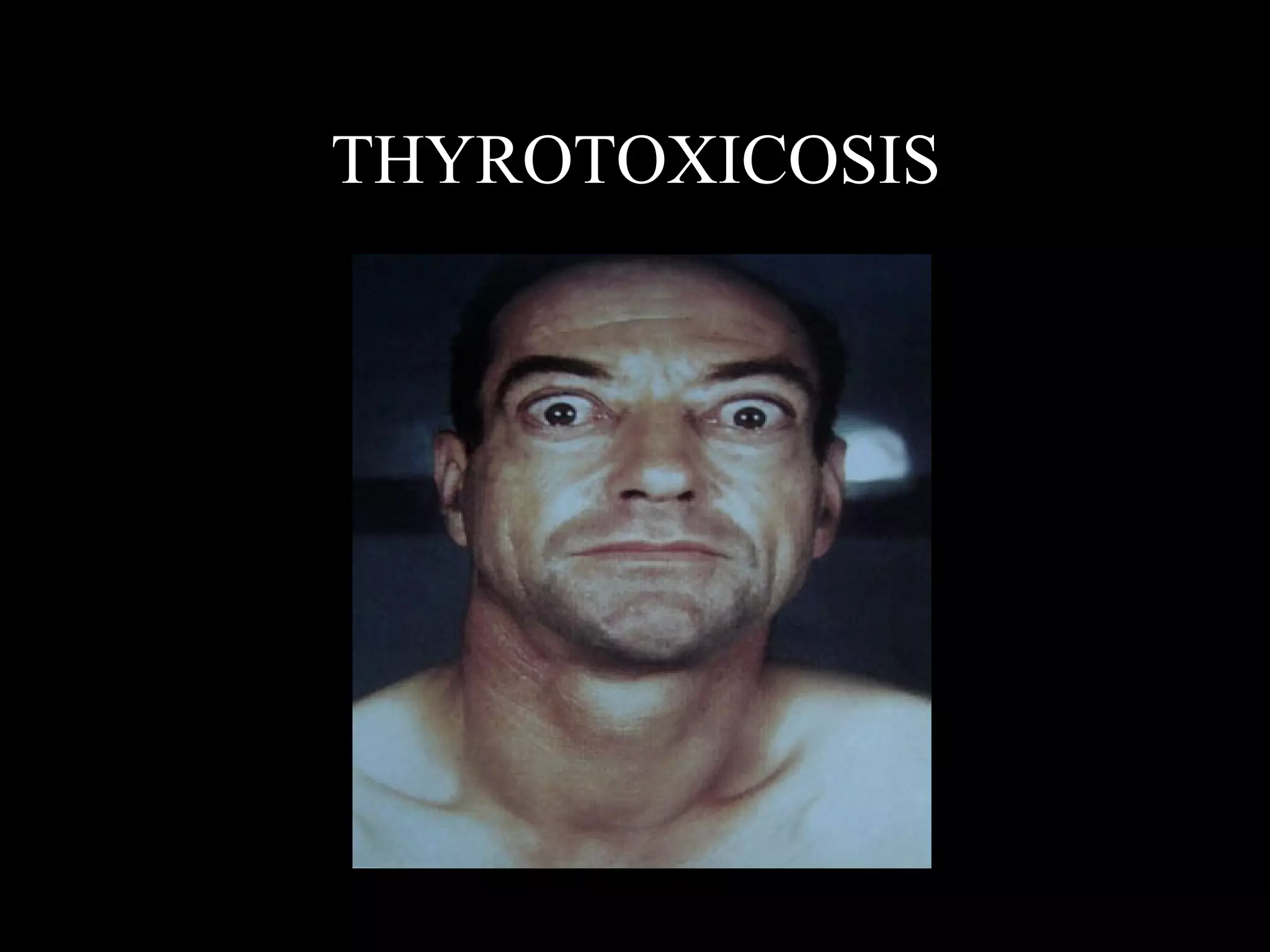
THYROTOXICOSIS
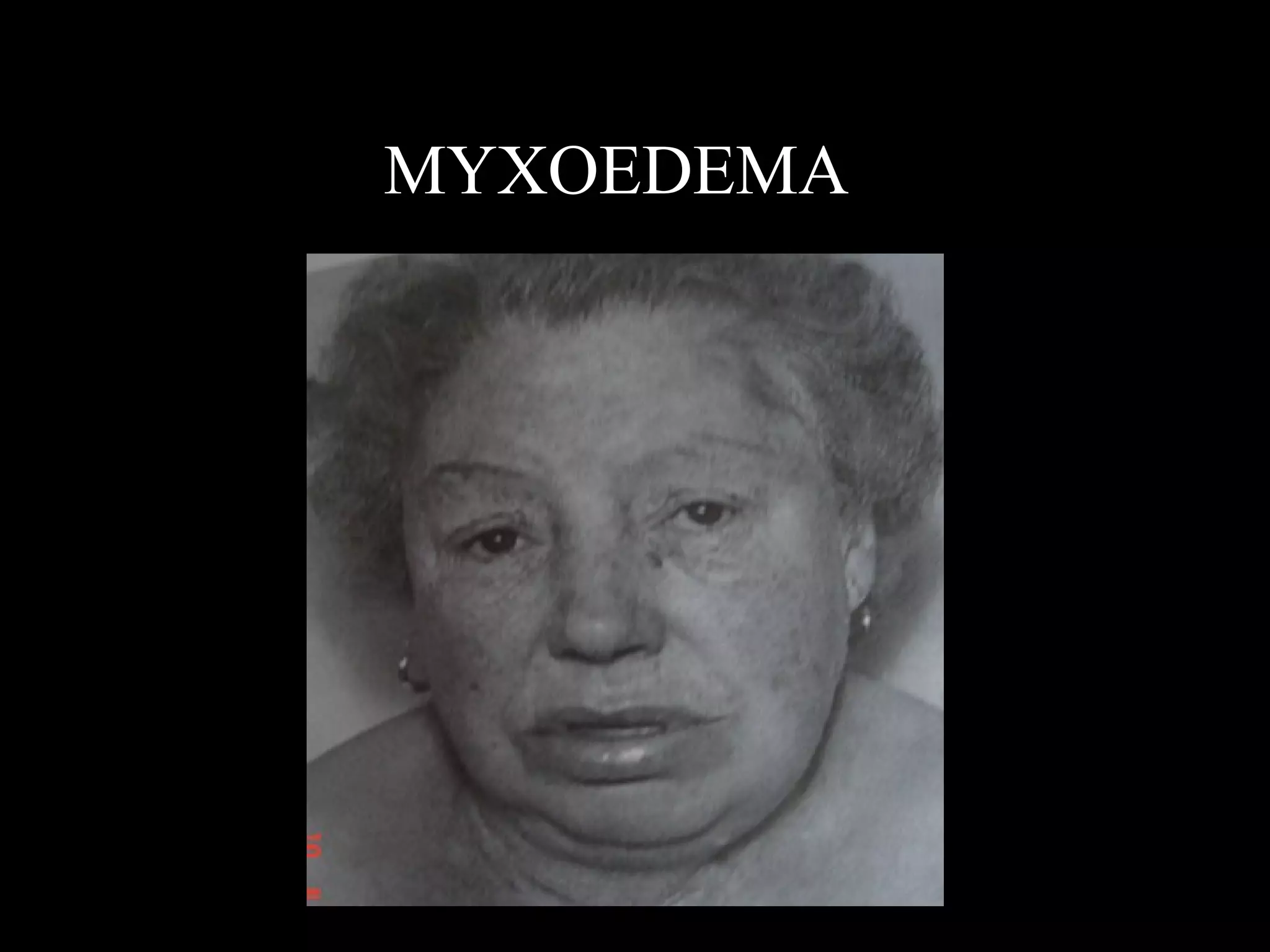
MYXOEDEMA
CRETINISM
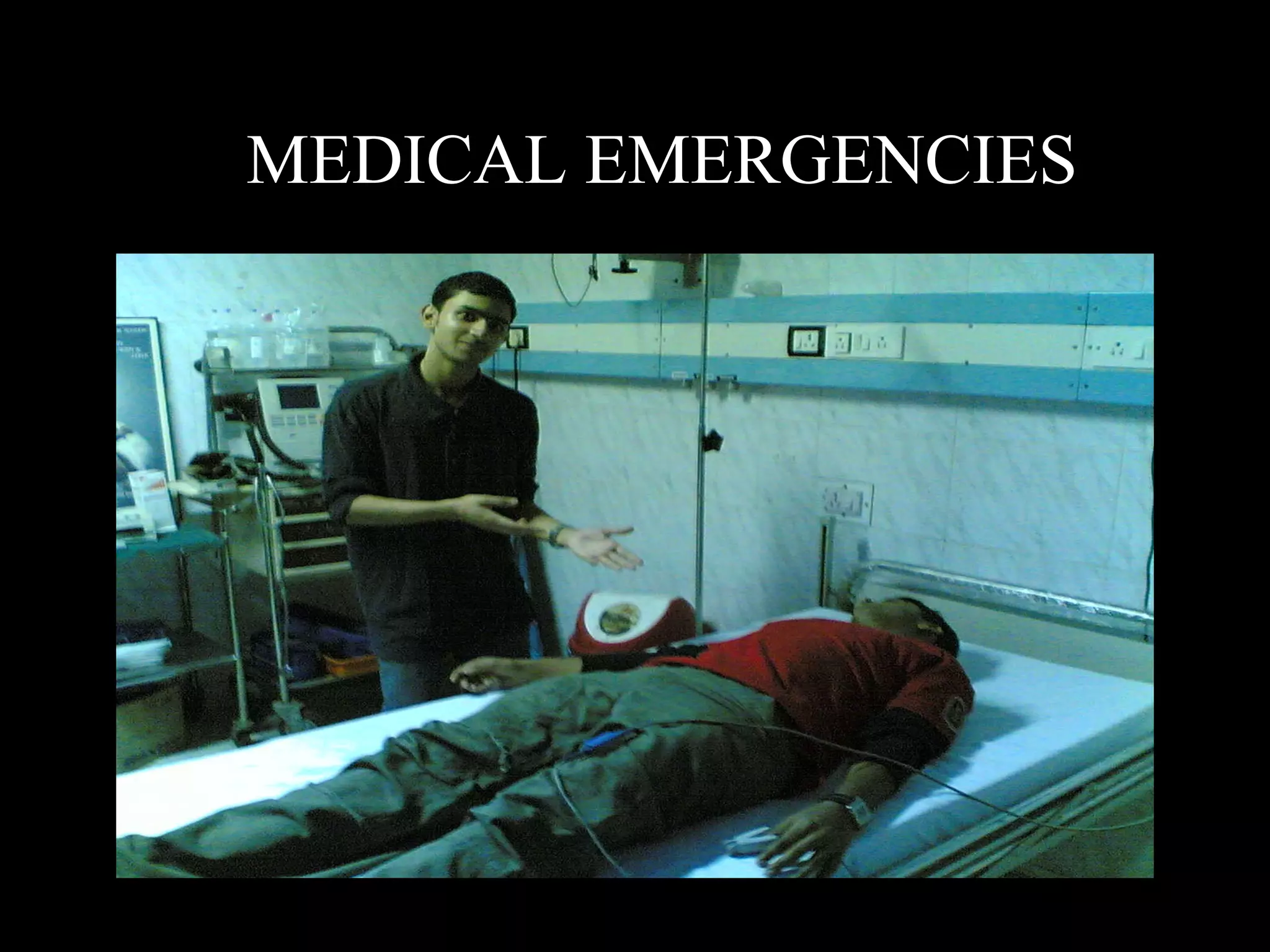
MEDICAL EMERGENCIES
THYROID DISEASE
COMPLICATING PREGNANCY
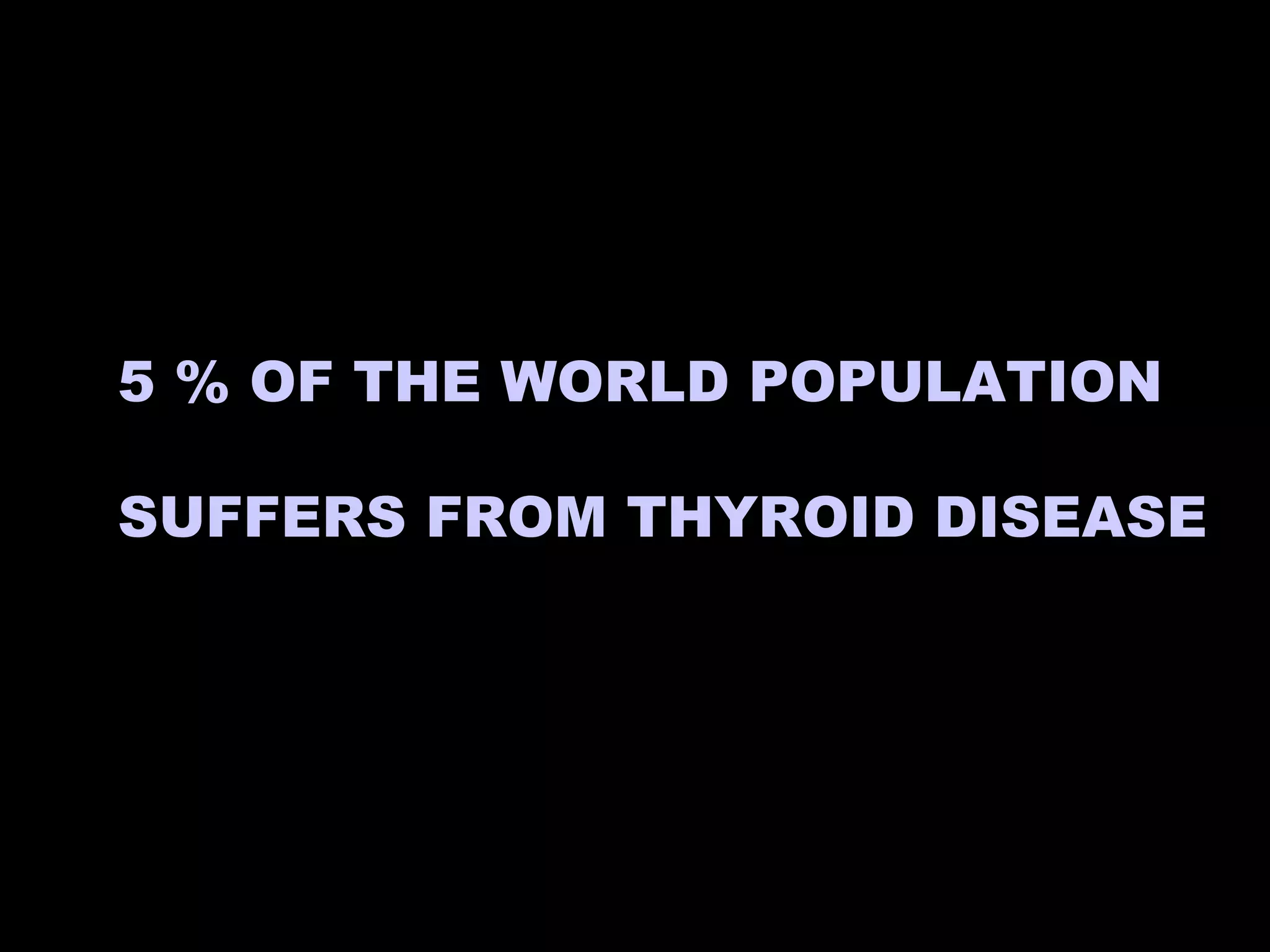
5 % OF THE WORLD POPULATION

SUFFERS FROM THYROID DISEASE
CONGENITAL HYPOTHYRIODISM IS ONE OF

THE MOST COMMON CAUSES OF PREVENTABLE

   MENTAL RETARDATION WORLD-WIDE
20 MILLION PEOPLE IN THE WORLD HAVE

 VARIOUS DEGREES OF BRAIN DAMAGE

CAUSED BY IODINE DEFICIENCY IN UTERO
MEDICAL
   MANAGEMENT
OF THYROID DISEASE

        By-
              MOHAMMAD SADIQ
                 III YR. M.B.B.S.
                      M.M.C.R.I.
THYROID DISORDERS
The conditions we will deal with here are:
     1. Thyrotoxicosis

     3. Hypothyroidism

     5. Medical Emergencies
              > Myxoedema coma
              > Thyrotoxic crisis

     •   Congenital Hypothyroidism (Cretinism)

     •   Thyroid Disease complicating pregnancy
THYROID DISORDERS
      MEDICAL MANAGEMENT

Proper management is based upon:

        1. Proper Clinical Diagnosis

        3. Laboratory Evaluation

        5. Treatment

        7. Monitoring of patient
THYROTOXICOSIS
                INTRODUCTION

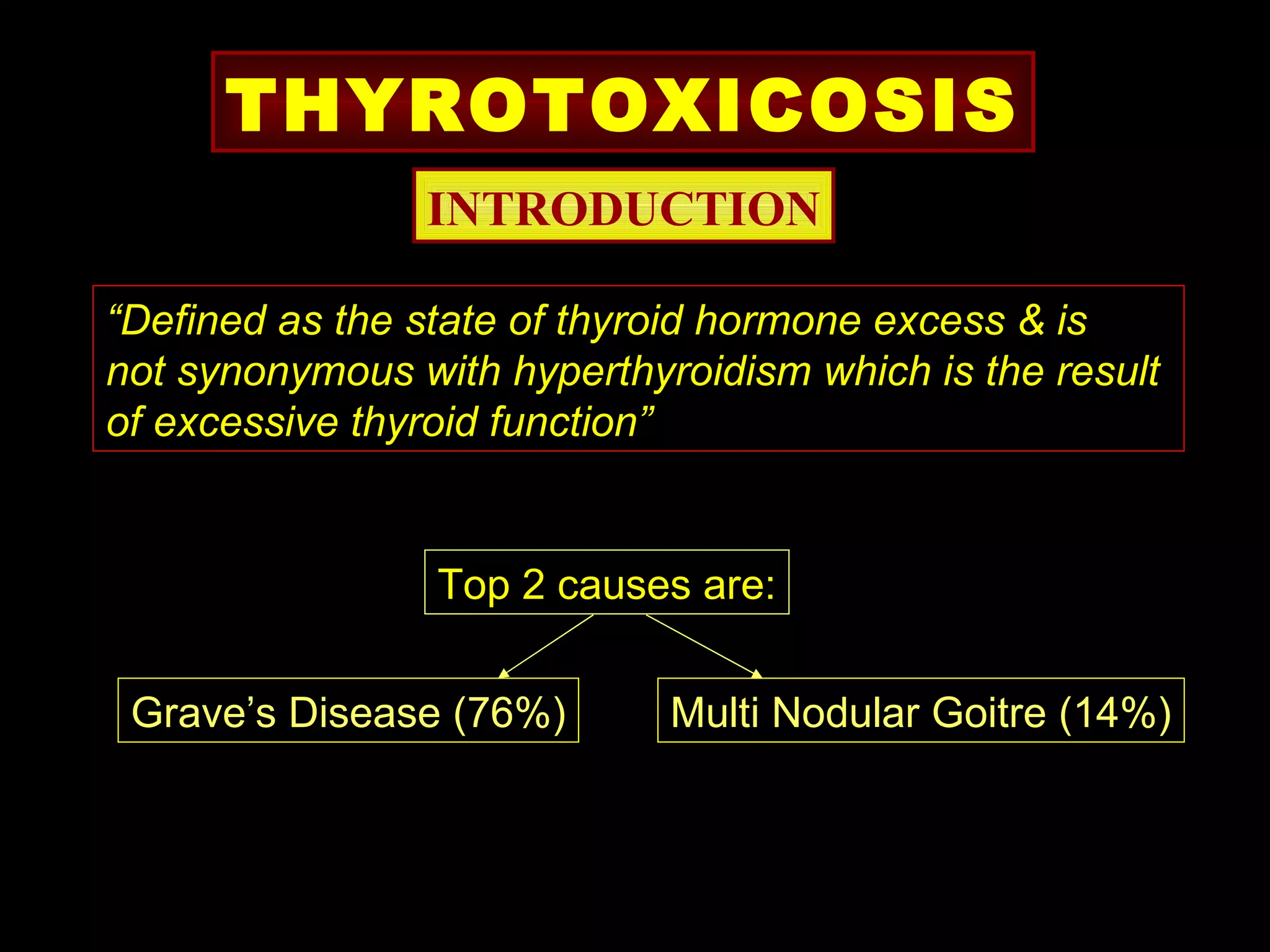
“Defined as the state of thyroid hormone excess & is
not synonymous with hyperthyroidism which is the result
of excessive thyroid function”


                 Top 2 causes are:


 Grave’s Disease (76%)       Multi Nodular Goitre (14%)
HYPOTHYROIDISM
              ETIOPATHOGENESIS

Iodine deficiency remains the leading cause World-wide.


   In areas of iodine sufficiency the causes are:

   • Hashimoto’s thyroiditis
   • Spontaneous Atrophic thyroiditis
   • Iatrogenic causes
HYPOTHYROIDISM

            PRESENTING COMPLAINT


HASHIMOTO’S              ATROPHIC
THYROIDITIS:             THYROIDITIS:
• Symptoms of Goitre     • Symptoms of
more than that of        Hypothyroidism more
Hypothyroidism.          than that of Goitre
HYPOTHYROIDISM
QUEEN ANNE’S SIGN   MYXOEDEMA FACIES
THYROID DISEASE
          CLINICAL PRESENTATION

                     Cardinal Features


HYPERTHYROIDISM:                   HYPOTHYROIDISM:

• Presents with warm,              • Presents with
moist skin                         tiredness, weakness
                                   • Myxoedema
• ↑ sweating, Heat
intolerance                        • Dry coarse skin, Cool
                                   peripheral extremities
• Von Muller’s Paradox
                                   • Cold intolerance
THYROID DISEASE
          CLINICAL PRESENTATION

             Dept. of General Medicine

HYPERTHYROIDISM:           HYPOTHYROIDISM:
• Diabetes Mellitus        • Pleural Effusion
• Palpitations             • Pericardial Effusion
• Diarrhoea                • Constipation
• Eyes:                    • Carpal Tunnel Syndrome
  Stellwag’s sign          • Bradycardia
• Fatigue & wt. loss       • Peripheral edema
  (Elderly patients)       • Hoarse voice (phone diag)
THYROID DISEASE
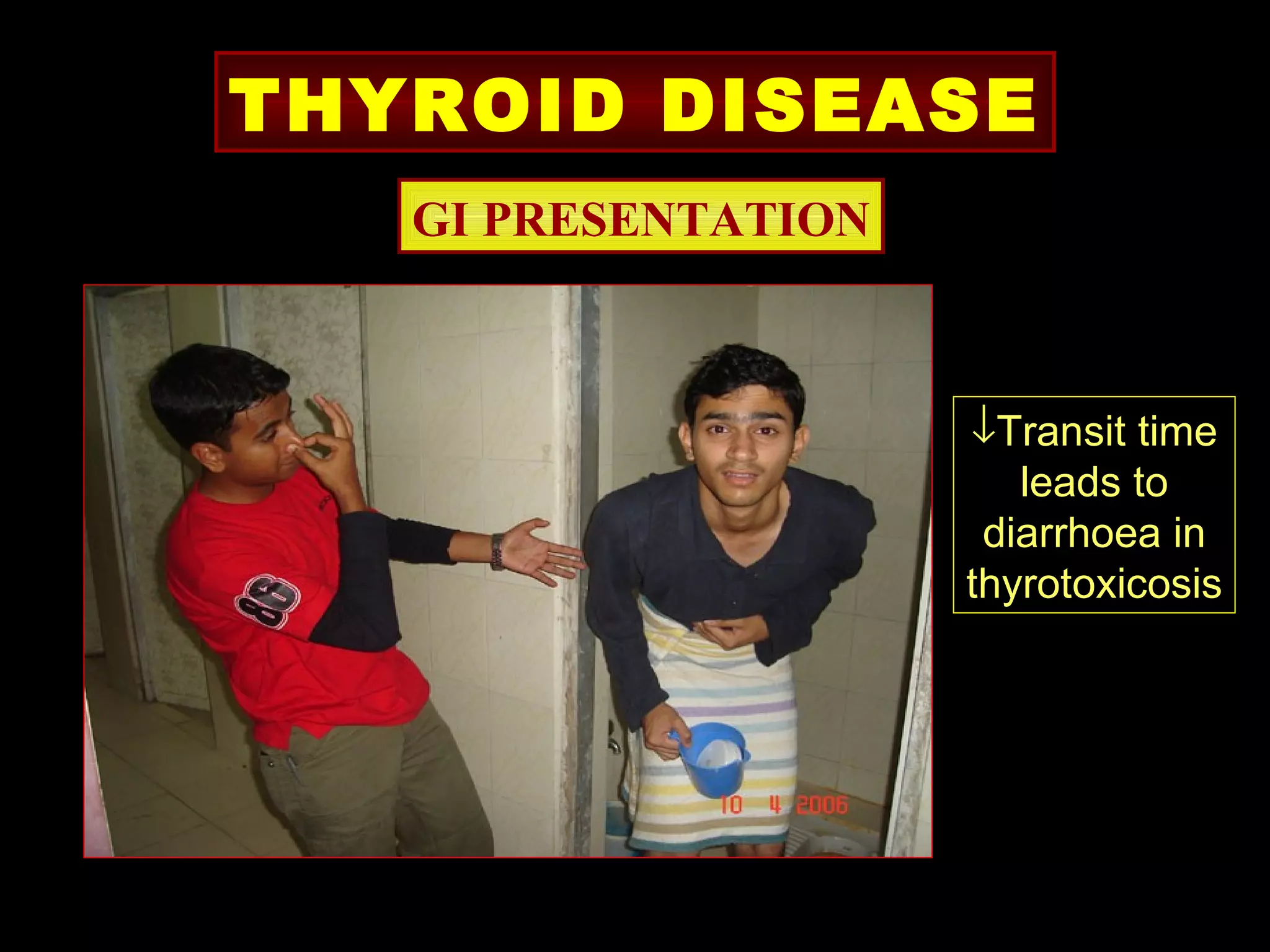
   GI PRESENTATION


                     ↓Transit time
                        leads to
                      diarrhoea in
                     thyrotoxicosis
THYROID DISEASE
                      Dept. of Dermatology
HYPERTHYROIDISM:                     HYPOTHYROIDISM:
• Pretibial myxoedema                • Diffuse alopaecia
• Thyroid acropachy


                                 Pretibial
                                Myxoedema


       Acropachy
THYROID DISEASE
           CLINICAL PRESENTATION

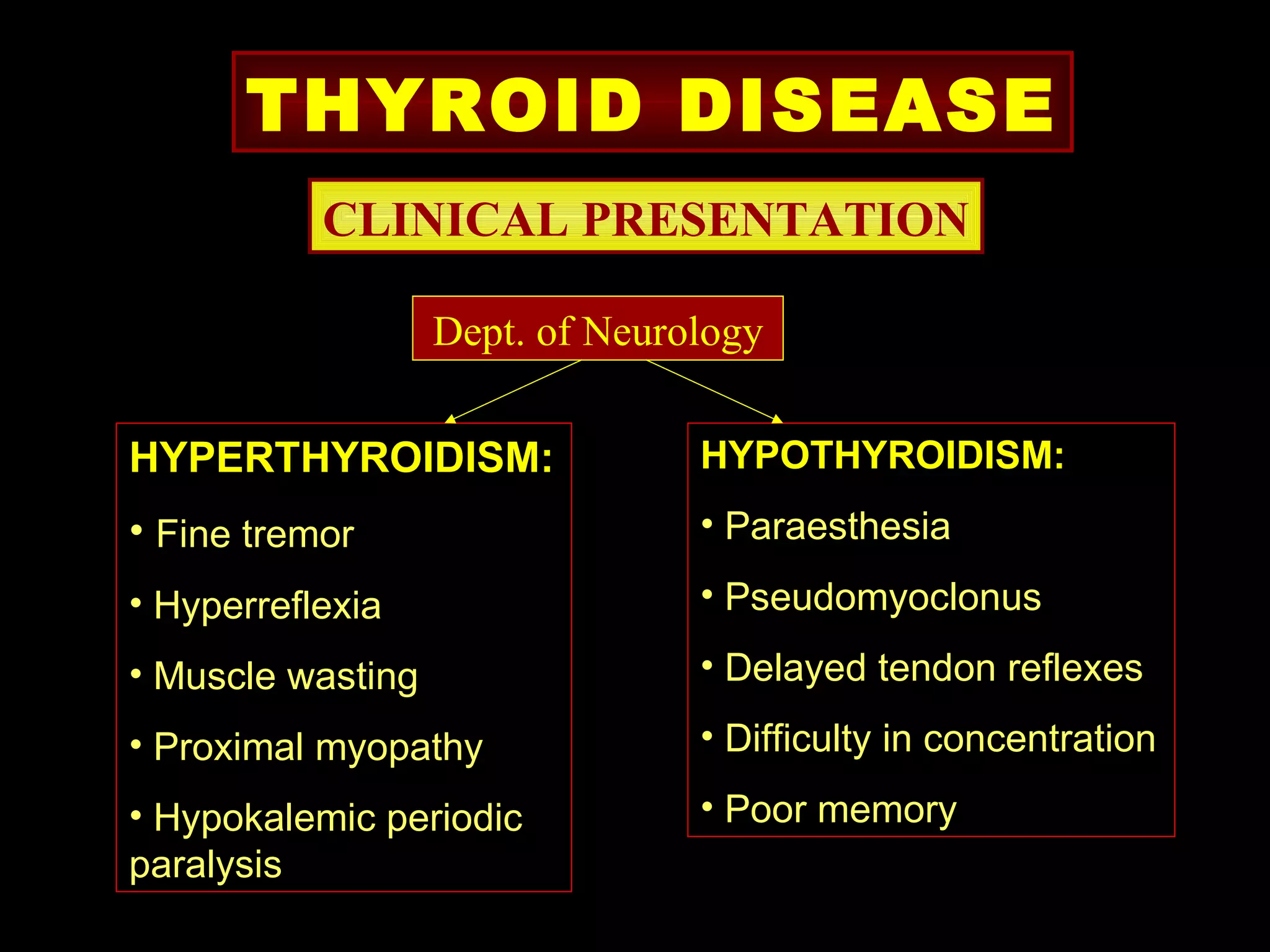
                   Dept. of Neurology


HYPERTHYROIDISM:                 HYPOTHYROIDISM:
• Fine tremor                    • Paraesthesia

• Hyperreflexia                  • Pseudomyoclonus

• Muscle wasting                 • Delayed tendon reflexes

• Proximal myopathy              • Difficulty in concentration

• Hypokalemic periodic           • Poor memory
paralysis
THYROID DISEASE
                    Dept. of OBG


HYPERTHYROIDISM:
• Oligomenorrhoea


HYPOTHYROIDISM:
• Menorrhagia
THYROID DISEASE
                      Dept. of Psychiatry

HYPERTHYROIDISM:                      HYPOTHYROIDISM:
• Anxiety neurosis                    • Bipolar Disorder
• Severe Depression                   • Depression
THYROTOXICOSIS
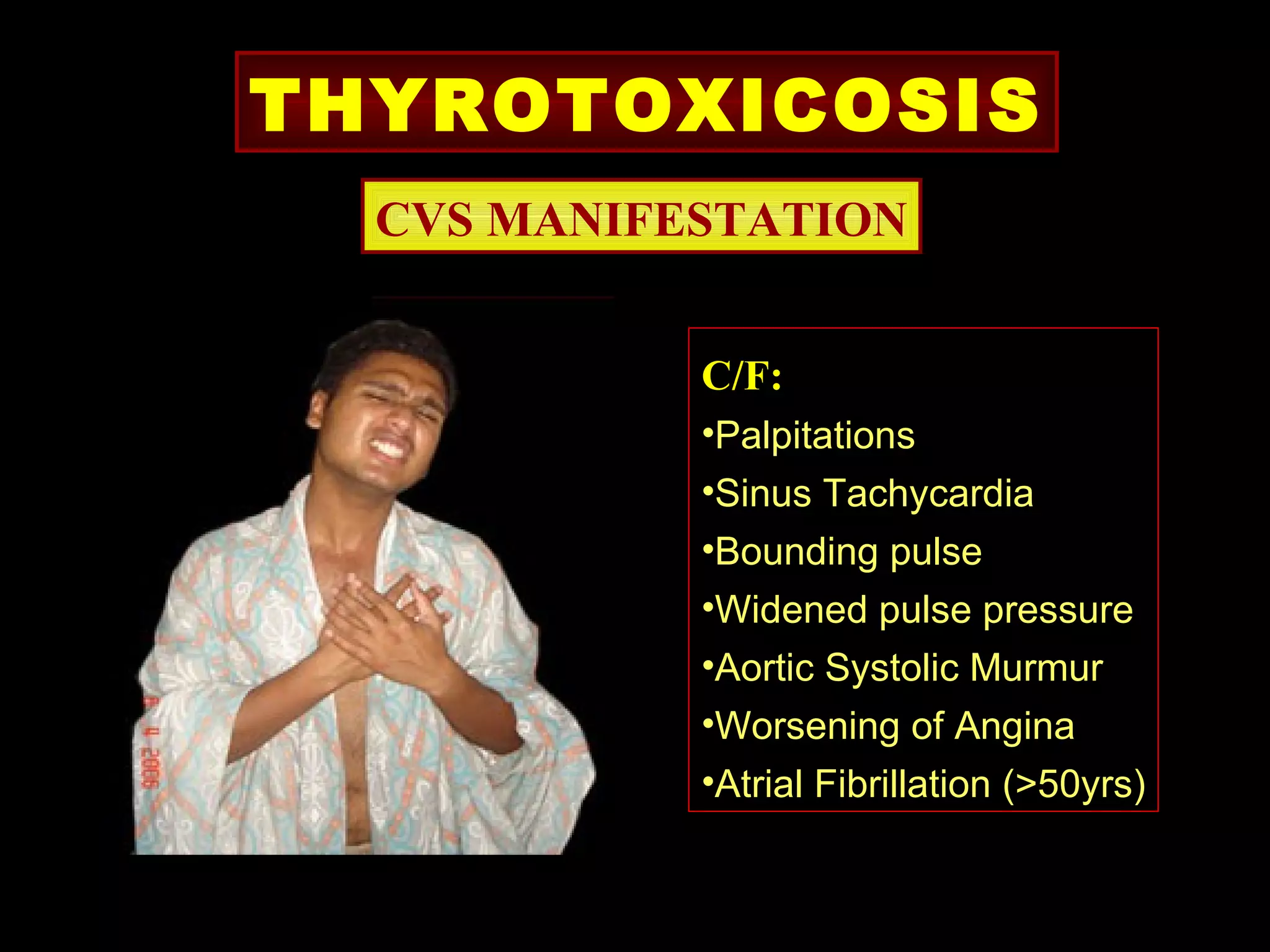
  CVS MANIFESTATION


            C/F:
            •Palpitations
            •Sinus Tachycardia
            •Bounding pulse
            •Widened pulse pressure
            •Aortic Systolic Murmur
            •Worsening of Angina
            •Atrial Fibrillation (>50yrs)
THYROTOXICOSIS
  MANAGEMENT OF ATRIAL FIBRILLATION

• Generally control of serum T4 causes a return to sinus rhythm.
• Drugs provide symptomatic relief.

        • VR responds little to Digoxin.
        • Good response to addition of β - blockers.
        • CARDIOVERSION to revert to sinus rhythm.
                              (Only after TSH/T4 ↔ )
        • Anti coagulation with Warfarin / Aspirin.
THYROTOXICOSIS
      GRAVES’ OPTHALMOPATHY


• Gritty sensation, Discomfort, ↑ lacrymation
• Exopthalmous
• Periorbital oedema, Chemosis, Scleral injection
THYROTOXICOSIS
MANAGEMENT - GRAVES’ OPTHALMOPATHY
 1. Reassurance
 2.    Methyl cellulose drops → ↓ grittiness, discomfort
 3. Tinted glasses / Side shields → ↓ excess lacrymation


      Complications:
      2. Corneal Ulcer: Lid lengthening Sx
      3. Papilloedema/Loss of acuity/Field defects:
          URGENT trt. with PREDNISOLONE 60mg/d
GRAVES’ OPTHALMOPATHY
       EFFECT OF THERAPY


    BEFORE             AFTER
THYROTOXICOSIS
          MANAGEMENT


3 approaches   1. Antithyroid drugs

               •   Radioactive Iodine I131

               5. Subtotal thyroidectomy
THYROTOXICOSIS
            MEDICAL MANAGEMENT
1. ANTITHYROID DRUGS: > Carbimazole

                         > Propyl thiouracil

Dosage of Carbimazole:
          0-3 weeks → 40-60 mg daily
          4-8 weeks → 20-40 mg daily

       Maintainence → 5-20 mg daily for 18-24 months

ADR: Rash, Agranulocytosis

C/I: Lactating Mothers
THYROTOXICOSIS
              MEDICAL MANAGEMENT

2. RADIOACTIVE I131 :

MOA: > Destroys functioning thyroid cells
        > Inhibits their ability to replicate
Dose:
     180-370 MBq (5-10mCi) orally (Dep. on goitre size)

•   4-6 weeks to be effective (long lag period)
∀ β-blockers control symptoms in lag period.
•   Severe cases: Carbimazole within 48 hrs of I131
THYROTOXICOSIS
          MEDICAL MANAGEMENT

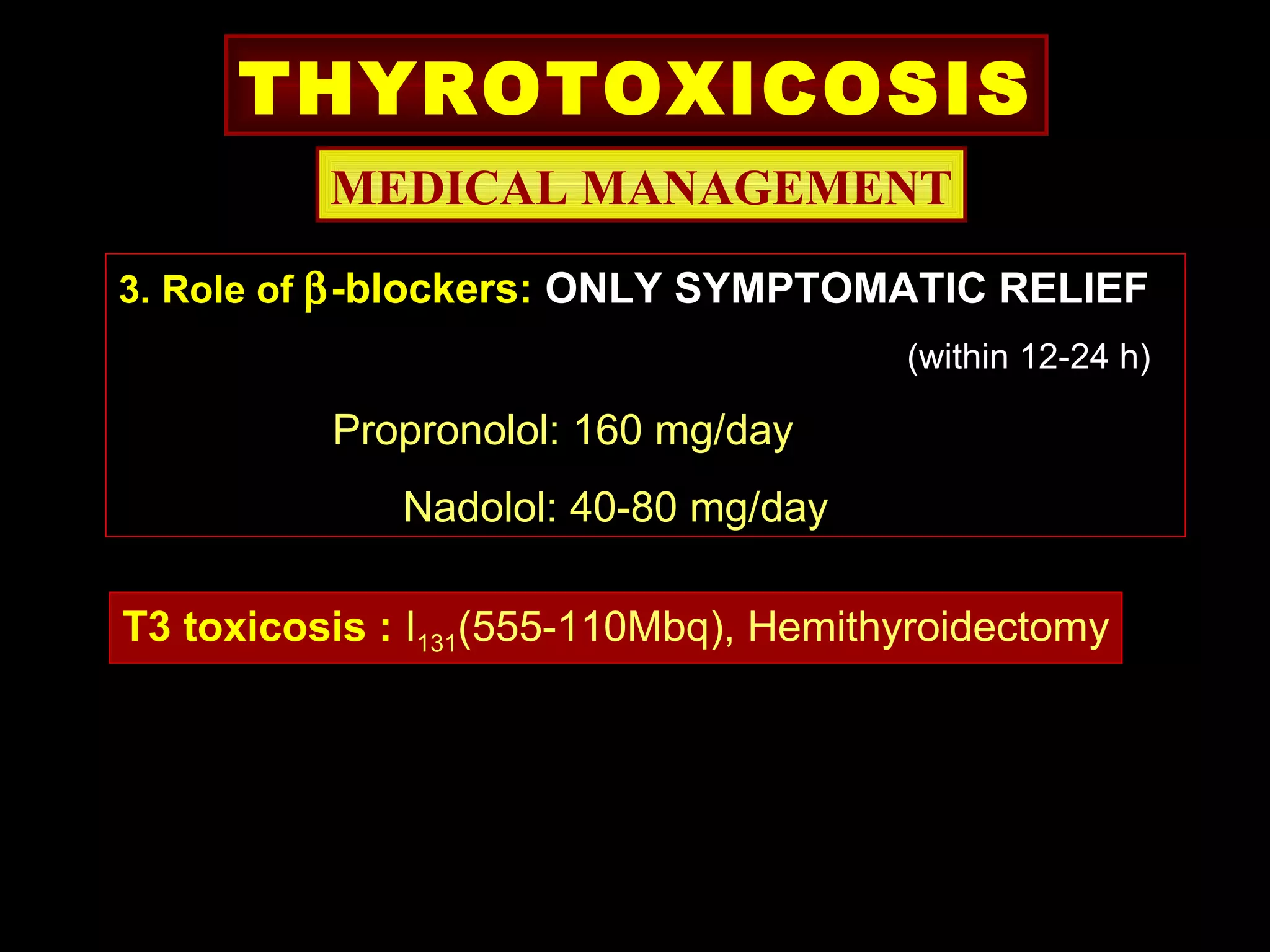
3. Role of β-blockers: ONLY SYMPTOMATIC RELIEF
                                       (within 12-24 h)

          Propronolol: 160 mg/day
              Nadolol: 40-80 mg/day

T3 toxicosis : I131(555-110Mbq), Hemithyroidectomy
THYROTOXICOSIS
 EFFECT OF TREATMENT


BEFORE           AFTER
THYROTOXICOSIS
   EFFECT OF TREATMENT


BEFORE             AFTER
THYROTOXICOSIS
                 SPECIAL CASES

1. PENDRED’S SYNDROME:
   Dyshormonogenesis (↓T4) + Deafness


2. HAMBURGER THYROTOXICOSIS
HYPOTHYROIDISM
               MEDICAL MANAGEMENT

   Life long therapy with Levothyroxine (T4) is the sheet anchor

          Start slowly with 50µg/day OD – 3 weeks
                Then ↑ to 100µg/day OD – 3 weeks
                          Finally ↑ to 150µg/day OD

Hypothyroidism following Grave’s Disease → 75-125µg/day OD

                  Improvement takes 2-3 weeks
HYPOTHYROIDISM
       MEDICAL MANAGEMENT

RATIONALE IN USING T4 IN HASHIMOTO’S:
2. Treatment of Hypothyroidism
3. Goitre shrinkage

              T4 vs. T3 – Why T4?

            T3 in high doses causes:
            • Angina
            • Arrythmias
            • Heart Failure
HYPOTHYROIDISM
              MONITORING THERAPY

•   Correct dose of drug: Restores serum TSH to lower
    part of reference range when T4 is ↔ / slightly ↑.
•   Advise & reinforce need for regular medication.
•   TFT screening every 1-2 years.

                    ↑ T4 & ↑ TSH - ?
HYPOTHYROIDISM
  EFFECT OF TREATMENT


 BEFORE           AFTER
HYPOTHYROIDISM
   EFFECT OF TREATMENT


BEFORE              AFTER
THYROID DISORDERS
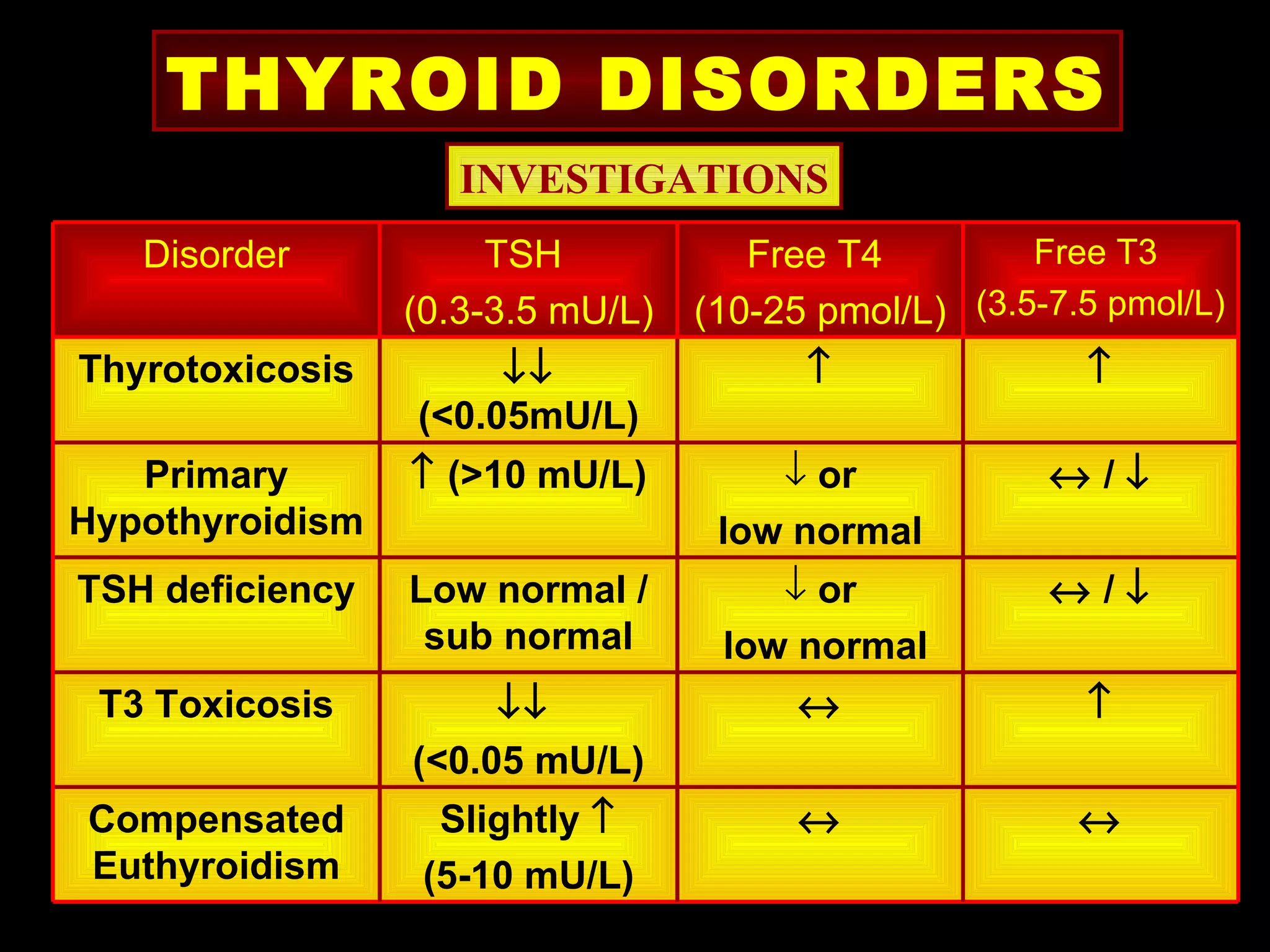
                    INVESTIGATIONS
   Disorder           TSH            Free T4         Free T3
                 (0.3-3.5 mU/L)   (10-25 pmol/L) (3.5-7.5 pmol/L)
Thyrotoxicosis        ↓↓                ↑               ↑
                 (<0.05mU/L)
   Primary       ↑ (>10 mU/L)          ↓ or           ↔/↓
Hypothyroidism                     low normal
TSH deficiency   Low normal /         ↓ or            ↔/↓
                  sub normal       low normal
 T3 Toxicosis         ↓↓                ↔               ↑
                 (<0.05 mU/L)
Compensated        Slightly ↑           ↔               ↔
Euthyroidism      (5-10 mU/L)
MEDICAL EMERGENCIES

 2 Situations :

   1. HYPERTHYROID CRISIS
      (= Thyrotoxic crisis / Thyroid storm)

   4. MYXOEDEMA COMA
HYPERTHYROID CRISIS
HYPERTHYROID CRISIS
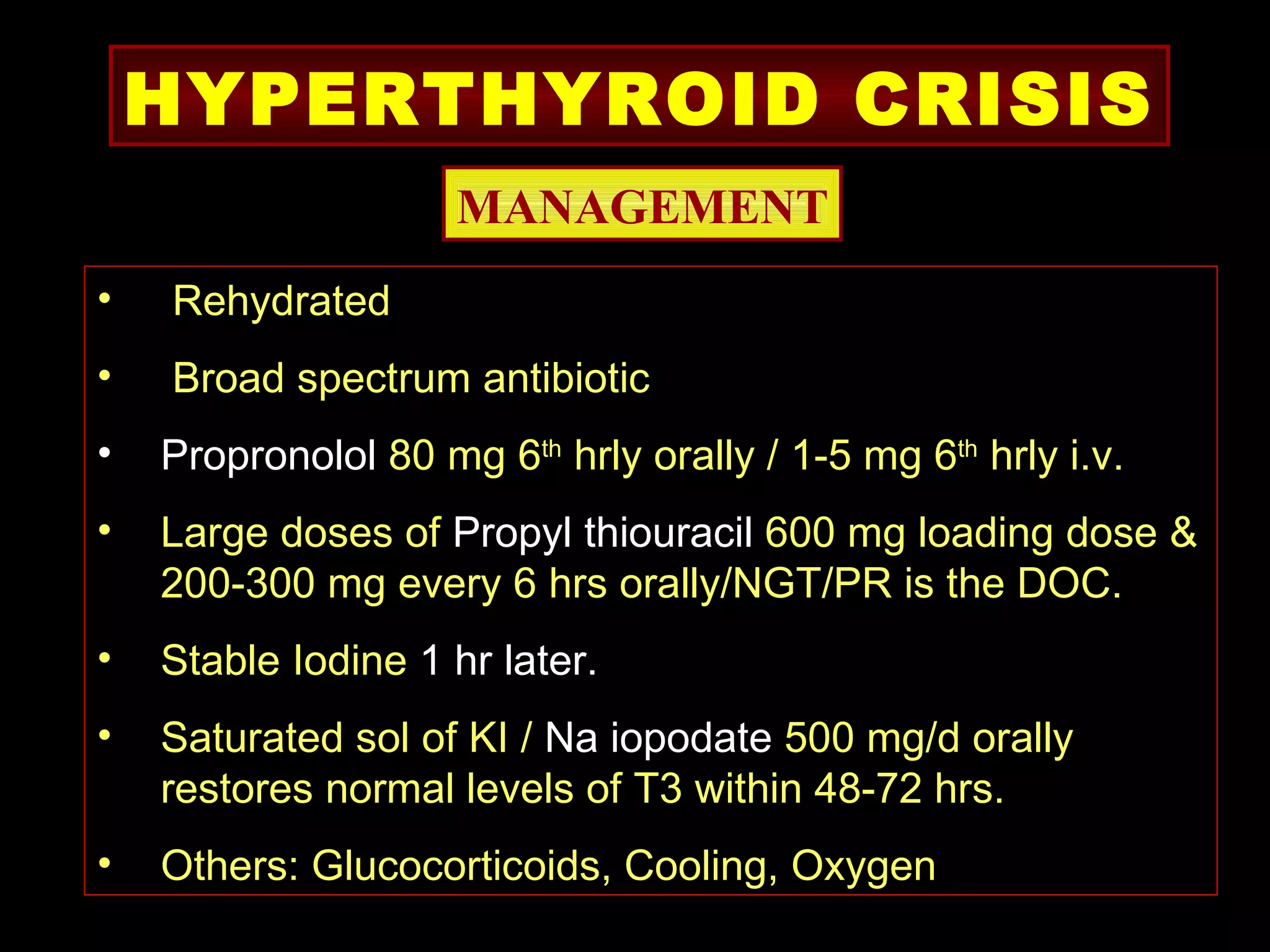
                     MANAGEMENT
•   Rehydrated
•   Broad spectrum antibiotic
•   Propronolol 80 mg 6th hrly orally / 1-5 mg 6th hrly i.v.
•   Large doses of Propyl thiouracil 600 mg loading dose &
    200-300 mg every 6 hrs orally/NGT/PR is the DOC.
•   Stable Iodine 1 hr later.
•   Saturated sol of KI / Na iopodate 500 mg/d orally
    restores normal levels of T3 within 48-72 hrs.
•   Others: Glucocorticoids, Cooling, Oxygen
MYXOEDEMA COMA
                  CLINICAL PICTURE

∀ ↓ level of consciousness usually in an elderly patient
  who appears myxoematous
•   Body temperature as low as 25oC
•   Convulsions
•   CSF pressure & proteins ↑
•   Mortality rate around 50%
    (EARLY DETECTION is essential)
MYXOEDEMA COMA
                       MANAGEMENT
          TREATMENT must begin IMMEDIATELY

•   Triiodothyronine i.v. bolus 20µg followed by 20µg
    8th hourly till there is sustained clinical improvement.
•   Liothyronine (T3) i.v. / NGT 10-25 µg 8-12th hourly (v. rapid)
•   T3 (25µg) + T4 (200µg) as a single initial i.v. bolus followed
    by daily trt. with Levothyroxine 50-100 µg 8th hrly.

    Others: Slow rewarming (if <30oC), Cautious use of i.v. fluids,
            Broad Spectrum antibiotics, High flow oxygen,
           Assisted ventilation
CRETINISM
      “Children who are hypothyroid from birth / before
      are called cretins.”


             WHO IS A CRETIN?


“What should have been an angel of God
has been a pariah of nature just for the want
of a little iodine in mother’s blood.”
CRETINISM
GUESS MY AGE?


        22 yr. old female
        Pot belly
        Umbilical hernia
        Coarse facial features
        Supra clavicular pad of fat
CRETINISM
GUESS MY AGE?


       17 yr. old female
       Congenital hypothyroidism
       Large ears
       Enlarged protruded tongue
       Wide set eyes
       Depressed nasal bridge
       Short limbs
       Estim. bone age : 9 months
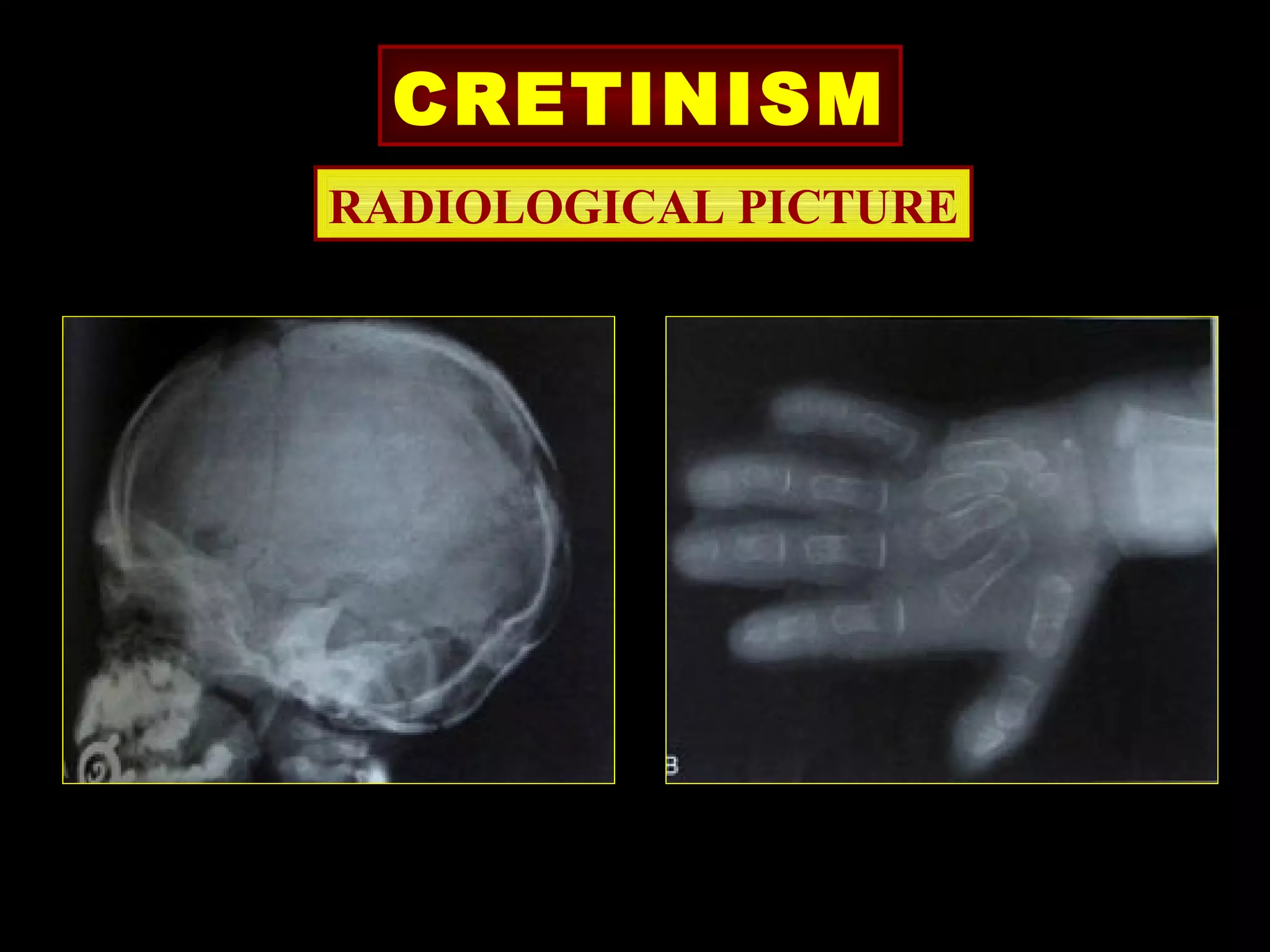
CRETINISM
RADIOLOGICAL PICTURE
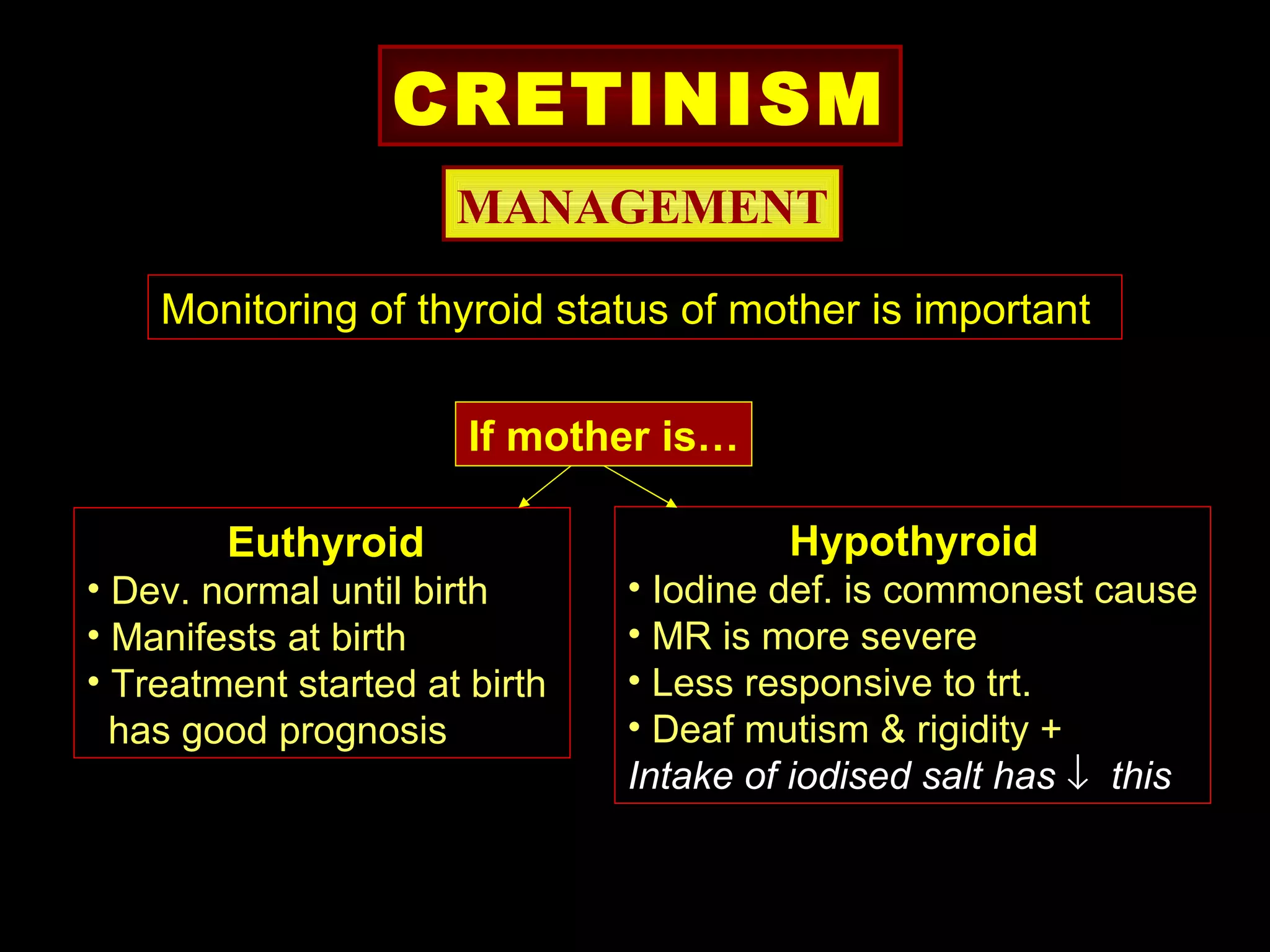
CRETINISM
                      MANAGEMENT

    Monitoring of thyroid status of mother is important


                       If mother is…

        Euthyroid                       Hypothyroid
• Dev. normal until birth      • Iodine def. is commonest cause
• Manifests at birth           • MR is more severe
• Treatment started at birth   • Less responsive to trt.
  has good prognosis           • Deaf mutism & rigidity +
                               Intake of iodised salt has ↓ this
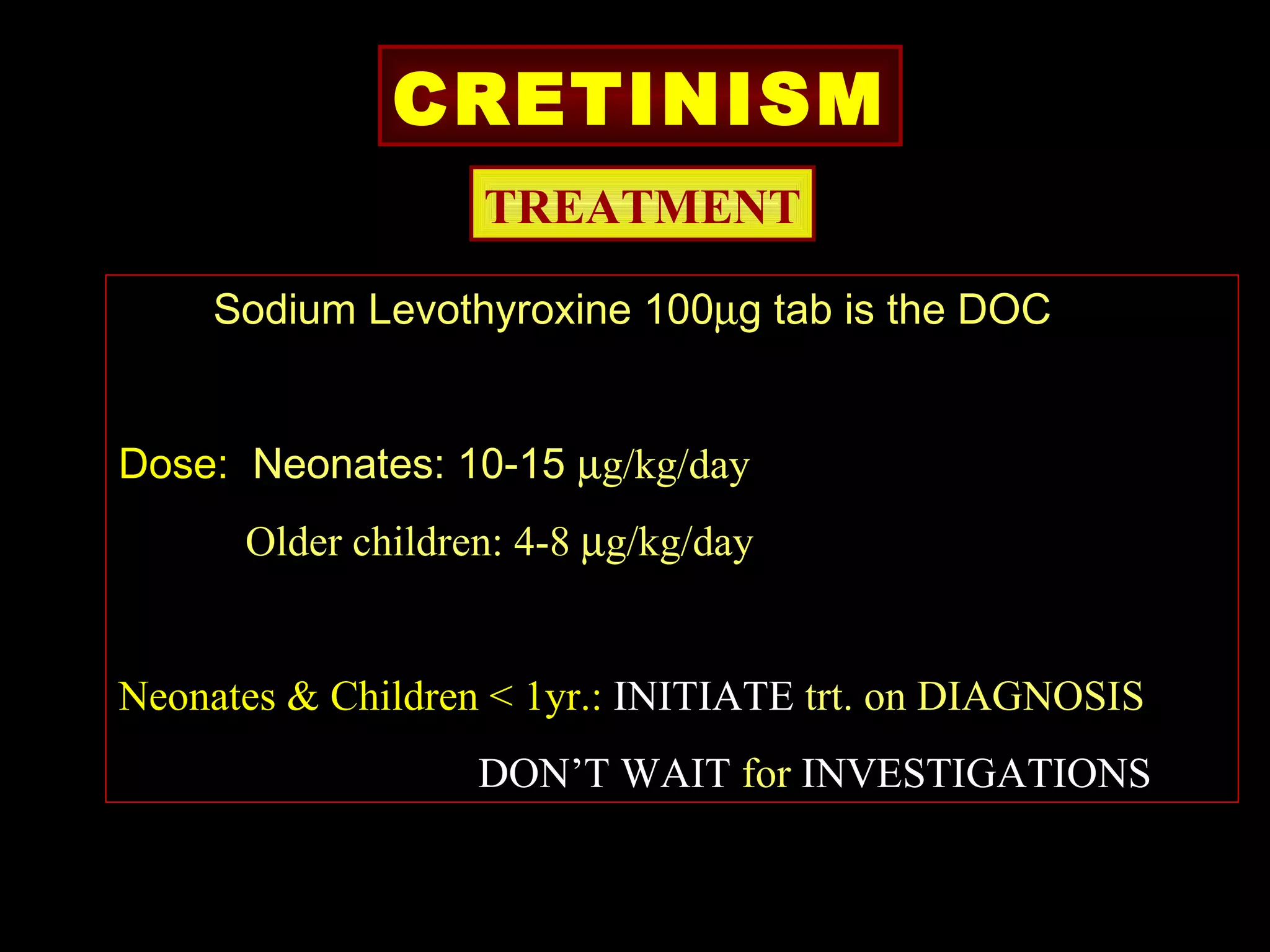
CRETINISM
                   TREATMENT

    Sodium Levothyroxine 100µg tab is the DOC


Dose: Neonates: 10-15 µg/kg/day
      Older children: 4-8 µg/kg/day


Neonates & Children < 1yr.: INITIATE trt. on DIAGNOSIS
                   DON’T WAIT for INVESTIGATIONS
CRETINISM
                  MONITORING

1. Assess Clinical Milestones
2. Periodic TFT
3. Radiological estimation of bone age annually

           Antenatal screening:
              > Regular TFT – mother
              > Foetus USG
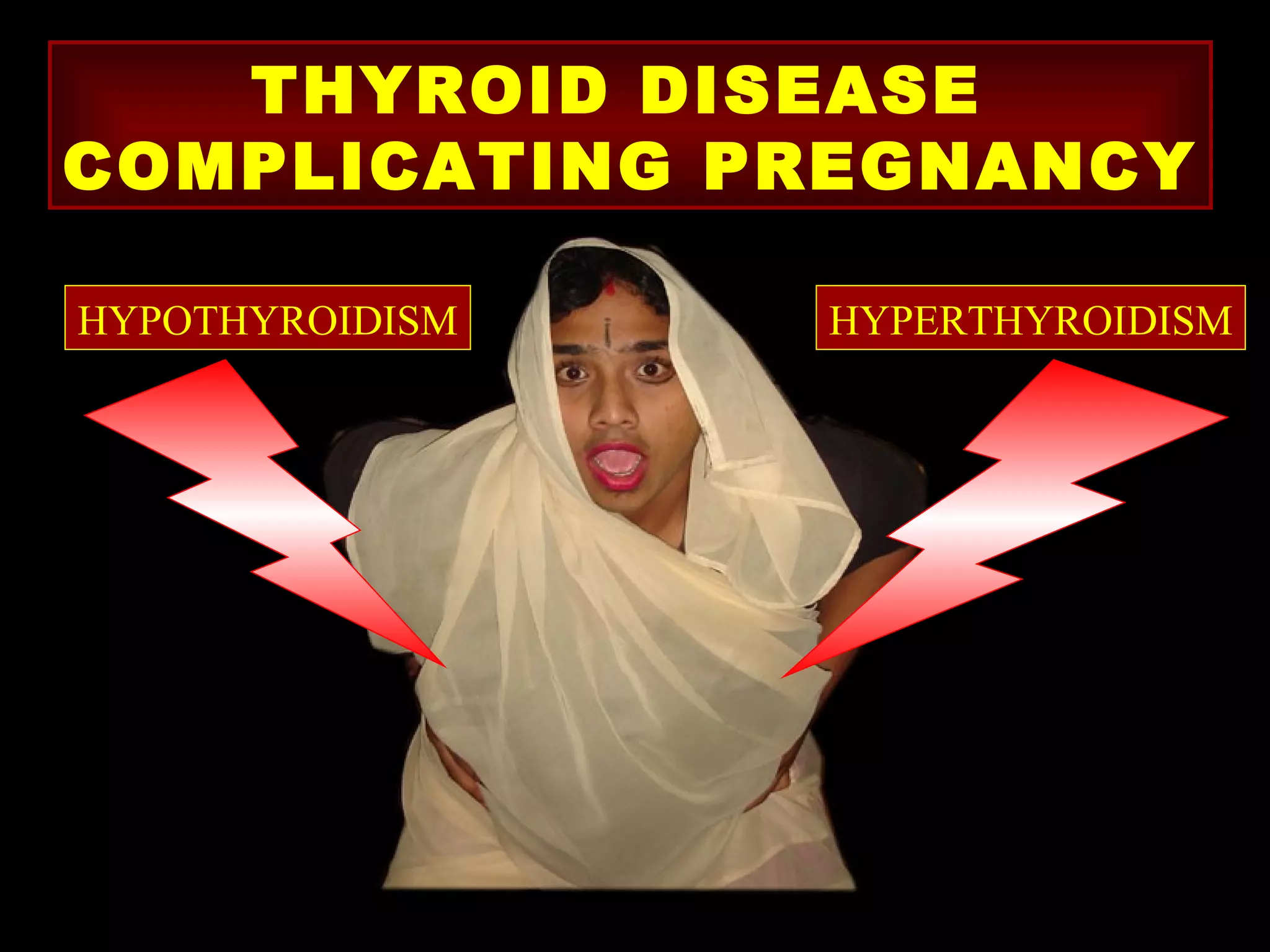
THYROID DISEASE
COMPLICATING PREGNANCY

HYPOTHYROIDISM   HYPERTHYROIDISM
THYROID DISEASE
COMPLICATING PREGNANCY
  HYPERTHYROIDISM - MANAGEMENT
         Carbimazole is the drug used

   • Crosses placenta and also treats foetus
   • Imp to use the smallest dose possible
   • Review every 4 weeks
   • Discontinue Carbimazole 4 weeks before EDD
   Radioactive Iodine is C/I

   If Hyperthyroid mother wants to feed?
THYROID DISEASE
COMPLICATING PREGNANCY
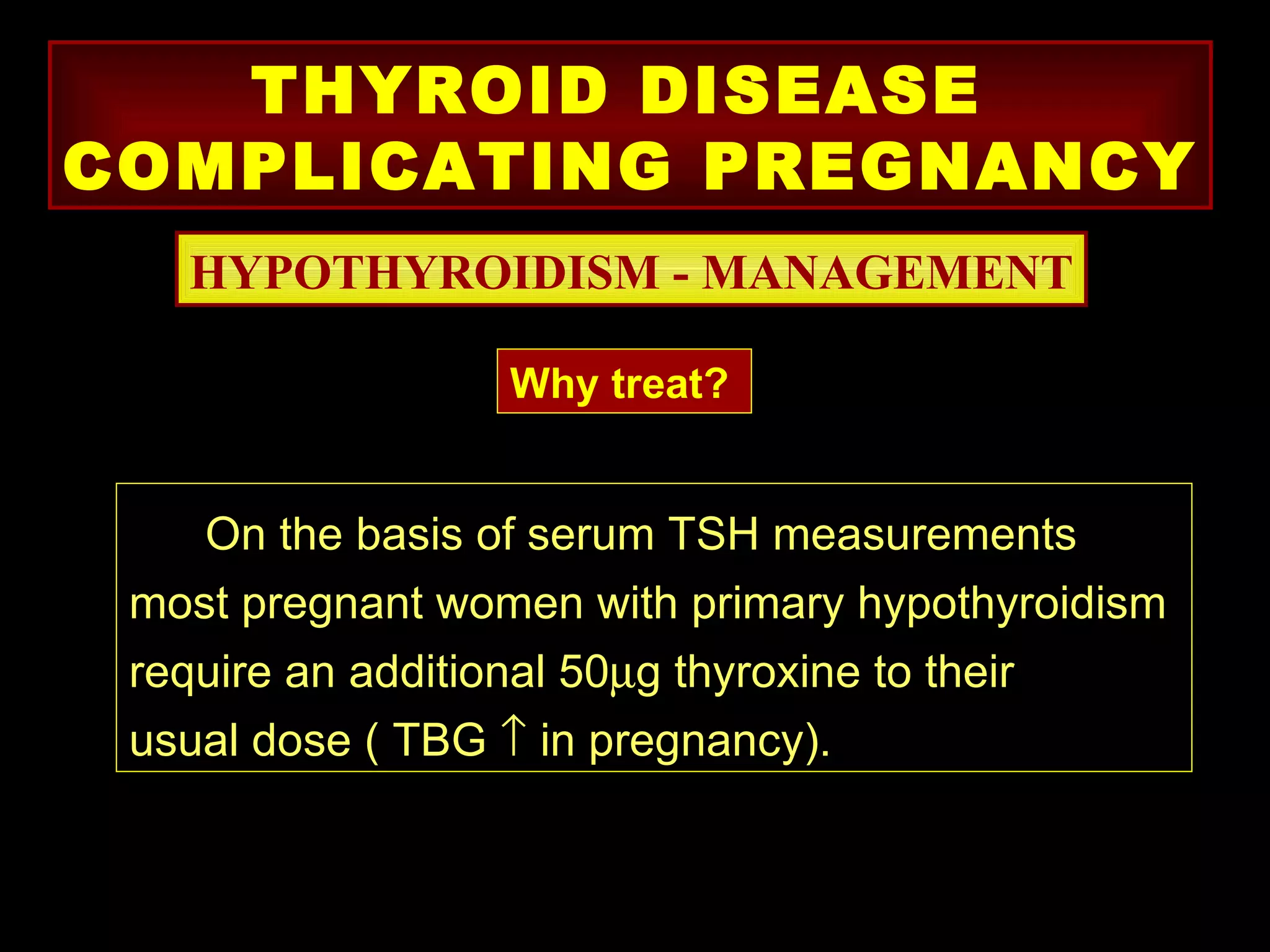
   HYPOTHYROIDISM - MANAGEMENT

                  Why treat?


    On the basis of serum TSH measurements
 most pregnant women with primary hypothyroidism
 require an additional 50µg thyroxine to their
 usual dose ( TBG ↑ in pregnancy).
MEDICAL MANAGEMENT
     OF THYROID DISORDERS
                        CONCLUSION
1. Thyroid disease may have a variable clinical presentation.
Hence, it is very essential to have a high degree of caution before
declaring a patient euthyroid. It is better to do a TFT in all
suspected cases. The cost of the TFT is noting compared to the
dire consequences of a missed diagnosis.

7. Treatment must be started immediately in all suspected cases
of thyroid storm/myxoedema coma/cretinism as a delay in treatment
might be fatal to the patient or may land the child in permanent
mental retardation.
Medical management of Thyroid disease

Medical management of Thyroid disease

  • 1.
    In the Nameof God, Most Gracious, Most Merciful
  • 4.
  • 5.
    … is plaguedby disease
  • 6.
    Today … We discuss …
  • 7.
  • 8.
  • 9.
  • 10.
  • 11.
  • 12.
  • 13.
    5 % OFTHE WORLD POPULATION SUFFERS FROM THYROID DISEASE
  • 14.
    CONGENITAL HYPOTHYRIODISM ISONE OF THE MOST COMMON CAUSES OF PREVENTABLE MENTAL RETARDATION WORLD-WIDE
  • 15.
    20 MILLION PEOPLEIN THE WORLD HAVE VARIOUS DEGREES OF BRAIN DAMAGE CAUSED BY IODINE DEFICIENCY IN UTERO
  • 16.
    MEDICAL MANAGEMENT OF THYROID DISEASE By- MOHAMMAD SADIQ III YR. M.B.B.S. M.M.C.R.I.
  • 17.
    THYROID DISORDERS The conditionswe will deal with here are: 1. Thyrotoxicosis 3. Hypothyroidism 5. Medical Emergencies > Myxoedema coma > Thyrotoxic crisis • Congenital Hypothyroidism (Cretinism) • Thyroid Disease complicating pregnancy
  • 18.
    THYROID DISORDERS MEDICAL MANAGEMENT Proper management is based upon: 1. Proper Clinical Diagnosis 3. Laboratory Evaluation 5. Treatment 7. Monitoring of patient
  • 19.
    THYROTOXICOSIS INTRODUCTION “Defined as the state of thyroid hormone excess & is not synonymous with hyperthyroidism which is the result of excessive thyroid function” Top 2 causes are: Grave’s Disease (76%) Multi Nodular Goitre (14%)
  • 20.
    HYPOTHYROIDISM ETIOPATHOGENESIS Iodine deficiency remains the leading cause World-wide. In areas of iodine sufficiency the causes are: • Hashimoto’s thyroiditis • Spontaneous Atrophic thyroiditis • Iatrogenic causes
  • 21.
    HYPOTHYROIDISM PRESENTING COMPLAINT HASHIMOTO’S ATROPHIC THYROIDITIS: THYROIDITIS: • Symptoms of Goitre • Symptoms of more than that of Hypothyroidism more Hypothyroidism. than that of Goitre
  • 22.
  • 23.
    THYROID DISEASE CLINICAL PRESENTATION Cardinal Features HYPERTHYROIDISM: HYPOTHYROIDISM: • Presents with warm, • Presents with moist skin tiredness, weakness • Myxoedema • ↑ sweating, Heat intolerance • Dry coarse skin, Cool peripheral extremities • Von Muller’s Paradox • Cold intolerance
  • 24.
    THYROID DISEASE CLINICAL PRESENTATION Dept. of General Medicine HYPERTHYROIDISM: HYPOTHYROIDISM: • Diabetes Mellitus • Pleural Effusion • Palpitations • Pericardial Effusion • Diarrhoea • Constipation • Eyes: • Carpal Tunnel Syndrome Stellwag’s sign • Bradycardia • Fatigue & wt. loss • Peripheral edema (Elderly patients) • Hoarse voice (phone diag)
  • 25.
    THYROID DISEASE GI PRESENTATION ↓Transit time leads to diarrhoea in thyrotoxicosis
  • 26.
    THYROID DISEASE Dept. of Dermatology HYPERTHYROIDISM: HYPOTHYROIDISM: • Pretibial myxoedema • Diffuse alopaecia • Thyroid acropachy Pretibial Myxoedema Acropachy
  • 27.
    THYROID DISEASE CLINICAL PRESENTATION Dept. of Neurology HYPERTHYROIDISM: HYPOTHYROIDISM: • Fine tremor • Paraesthesia • Hyperreflexia • Pseudomyoclonus • Muscle wasting • Delayed tendon reflexes • Proximal myopathy • Difficulty in concentration • Hypokalemic periodic • Poor memory paralysis
  • 28.
    THYROID DISEASE Dept. of OBG HYPERTHYROIDISM: • Oligomenorrhoea HYPOTHYROIDISM: • Menorrhagia
  • 29.
    THYROID DISEASE Dept. of Psychiatry HYPERTHYROIDISM: HYPOTHYROIDISM: • Anxiety neurosis • Bipolar Disorder • Severe Depression • Depression
  • 30.
    THYROTOXICOSIS CVSMANIFESTATION C/F: •Palpitations •Sinus Tachycardia •Bounding pulse •Widened pulse pressure •Aortic Systolic Murmur •Worsening of Angina •Atrial Fibrillation (>50yrs)
  • 31.
    THYROTOXICOSIS MANAGEMENTOF ATRIAL FIBRILLATION • Generally control of serum T4 causes a return to sinus rhythm. • Drugs provide symptomatic relief. • VR responds little to Digoxin. • Good response to addition of β - blockers. • CARDIOVERSION to revert to sinus rhythm. (Only after TSH/T4 ↔ ) • Anti coagulation with Warfarin / Aspirin.
  • 32.
    THYROTOXICOSIS GRAVES’ OPTHALMOPATHY • Gritty sensation, Discomfort, ↑ lacrymation • Exopthalmous • Periorbital oedema, Chemosis, Scleral injection
  • 33.
    THYROTOXICOSIS MANAGEMENT - GRAVES’OPTHALMOPATHY 1. Reassurance 2. Methyl cellulose drops → ↓ grittiness, discomfort 3. Tinted glasses / Side shields → ↓ excess lacrymation Complications: 2. Corneal Ulcer: Lid lengthening Sx 3. Papilloedema/Loss of acuity/Field defects: URGENT trt. with PREDNISOLONE 60mg/d
  • 34.
    GRAVES’ OPTHALMOPATHY EFFECT OF THERAPY BEFORE AFTER
  • 35.
    THYROTOXICOSIS MANAGEMENT 3 approaches 1. Antithyroid drugs • Radioactive Iodine I131 5. Subtotal thyroidectomy
  • 36.
    THYROTOXICOSIS MEDICAL MANAGEMENT 1. ANTITHYROID DRUGS: > Carbimazole > Propyl thiouracil Dosage of Carbimazole: 0-3 weeks → 40-60 mg daily 4-8 weeks → 20-40 mg daily Maintainence → 5-20 mg daily for 18-24 months ADR: Rash, Agranulocytosis C/I: Lactating Mothers
  • 37.
    THYROTOXICOSIS MEDICAL MANAGEMENT 2. RADIOACTIVE I131 : MOA: > Destroys functioning thyroid cells > Inhibits their ability to replicate Dose: 180-370 MBq (5-10mCi) orally (Dep. on goitre size) • 4-6 weeks to be effective (long lag period) ∀ β-blockers control symptoms in lag period. • Severe cases: Carbimazole within 48 hrs of I131
  • 38.
    THYROTOXICOSIS MEDICAL MANAGEMENT 3. Role of β-blockers: ONLY SYMPTOMATIC RELIEF (within 12-24 h) Propronolol: 160 mg/day Nadolol: 40-80 mg/day T3 toxicosis : I131(555-110Mbq), Hemithyroidectomy
  • 39.
    THYROTOXICOSIS EFFECT OFTREATMENT BEFORE AFTER
  • 40.
    THYROTOXICOSIS EFFECT OF TREATMENT BEFORE AFTER
  • 41.
    THYROTOXICOSIS SPECIAL CASES 1. PENDRED’S SYNDROME: Dyshormonogenesis (↓T4) + Deafness 2. HAMBURGER THYROTOXICOSIS
  • 42.
    HYPOTHYROIDISM MEDICAL MANAGEMENT Life long therapy with Levothyroxine (T4) is the sheet anchor Start slowly with 50µg/day OD – 3 weeks Then ↑ to 100µg/day OD – 3 weeks Finally ↑ to 150µg/day OD Hypothyroidism following Grave’s Disease → 75-125µg/day OD Improvement takes 2-3 weeks
  • 43.
    HYPOTHYROIDISM MEDICAL MANAGEMENT RATIONALE IN USING T4 IN HASHIMOTO’S: 2. Treatment of Hypothyroidism 3. Goitre shrinkage T4 vs. T3 – Why T4? T3 in high doses causes: • Angina • Arrythmias • Heart Failure
  • 44.
    HYPOTHYROIDISM MONITORING THERAPY • Correct dose of drug: Restores serum TSH to lower part of reference range when T4 is ↔ / slightly ↑. • Advise & reinforce need for regular medication. • TFT screening every 1-2 years. ↑ T4 & ↑ TSH - ?
  • 45.
    HYPOTHYROIDISM EFFECTOF TREATMENT BEFORE AFTER
  • 46.
    HYPOTHYROIDISM EFFECT OF TREATMENT BEFORE AFTER
  • 47.
    THYROID DISORDERS INVESTIGATIONS Disorder TSH Free T4 Free T3 (0.3-3.5 mU/L) (10-25 pmol/L) (3.5-7.5 pmol/L) Thyrotoxicosis ↓↓ ↑ ↑ (<0.05mU/L) Primary ↑ (>10 mU/L) ↓ or ↔/↓ Hypothyroidism low normal TSH deficiency Low normal / ↓ or ↔/↓ sub normal low normal T3 Toxicosis ↓↓ ↔ ↑ (<0.05 mU/L) Compensated Slightly ↑ ↔ ↔ Euthyroidism (5-10 mU/L)
  • 48.
    MEDICAL EMERGENCIES 2Situations : 1. HYPERTHYROID CRISIS (= Thyrotoxic crisis / Thyroid storm) 4. MYXOEDEMA COMA
  • 49.
  • 50.
    HYPERTHYROID CRISIS MANAGEMENT • Rehydrated • Broad spectrum antibiotic • Propronolol 80 mg 6th hrly orally / 1-5 mg 6th hrly i.v. • Large doses of Propyl thiouracil 600 mg loading dose & 200-300 mg every 6 hrs orally/NGT/PR is the DOC. • Stable Iodine 1 hr later. • Saturated sol of KI / Na iopodate 500 mg/d orally restores normal levels of T3 within 48-72 hrs. • Others: Glucocorticoids, Cooling, Oxygen
  • 51.
    MYXOEDEMA COMA CLINICAL PICTURE ∀ ↓ level of consciousness usually in an elderly patient who appears myxoematous • Body temperature as low as 25oC • Convulsions • CSF pressure & proteins ↑ • Mortality rate around 50% (EARLY DETECTION is essential)
  • 52.
    MYXOEDEMA COMA MANAGEMENT TREATMENT must begin IMMEDIATELY • Triiodothyronine i.v. bolus 20µg followed by 20µg 8th hourly till there is sustained clinical improvement. • Liothyronine (T3) i.v. / NGT 10-25 µg 8-12th hourly (v. rapid) • T3 (25µg) + T4 (200µg) as a single initial i.v. bolus followed by daily trt. with Levothyroxine 50-100 µg 8th hrly. Others: Slow rewarming (if <30oC), Cautious use of i.v. fluids, Broad Spectrum antibiotics, High flow oxygen, Assisted ventilation
  • 53.
    CRETINISM “Children who are hypothyroid from birth / before are called cretins.” WHO IS A CRETIN? “What should have been an angel of God has been a pariah of nature just for the want of a little iodine in mother’s blood.”
  • 54.
    CRETINISM GUESS MY AGE? 22 yr. old female Pot belly Umbilical hernia Coarse facial features Supra clavicular pad of fat
  • 55.
    CRETINISM GUESS MY AGE? 17 yr. old female Congenital hypothyroidism Large ears Enlarged protruded tongue Wide set eyes Depressed nasal bridge Short limbs Estim. bone age : 9 months
  • 56.
  • 57.
    CRETINISM MANAGEMENT Monitoring of thyroid status of mother is important If mother is… Euthyroid Hypothyroid • Dev. normal until birth • Iodine def. is commonest cause • Manifests at birth • MR is more severe • Treatment started at birth • Less responsive to trt. has good prognosis • Deaf mutism & rigidity + Intake of iodised salt has ↓ this
  • 58.
    CRETINISM TREATMENT Sodium Levothyroxine 100µg tab is the DOC Dose: Neonates: 10-15 µg/kg/day Older children: 4-8 µg/kg/day Neonates & Children < 1yr.: INITIATE trt. on DIAGNOSIS DON’T WAIT for INVESTIGATIONS
  • 59.
    CRETINISM MONITORING 1. Assess Clinical Milestones 2. Periodic TFT 3. Radiological estimation of bone age annually Antenatal screening: > Regular TFT – mother > Foetus USG
  • 60.
  • 61.
    THYROID DISEASE COMPLICATING PREGNANCY HYPERTHYROIDISM - MANAGEMENT Carbimazole is the drug used • Crosses placenta and also treats foetus • Imp to use the smallest dose possible • Review every 4 weeks • Discontinue Carbimazole 4 weeks before EDD Radioactive Iodine is C/I If Hyperthyroid mother wants to feed?
  • 62.
    THYROID DISEASE COMPLICATING PREGNANCY HYPOTHYROIDISM - MANAGEMENT Why treat? On the basis of serum TSH measurements most pregnant women with primary hypothyroidism require an additional 50µg thyroxine to their usual dose ( TBG ↑ in pregnancy).
  • 63.
    MEDICAL MANAGEMENT OF THYROID DISORDERS CONCLUSION 1. Thyroid disease may have a variable clinical presentation. Hence, it is very essential to have a high degree of caution before declaring a patient euthyroid. It is better to do a TFT in all suspected cases. The cost of the TFT is noting compared to the dire consequences of a missed diagnosis. 7. Treatment must be started immediately in all suspected cases of thyroid storm/myxoedema coma/cretinism as a delay in treatment might be fatal to the patient or may land the child in permanent mental retardation.