FATS
&LIPIDS
Mrs.Nagamani.T, MSc (N)
Quality Health Care College of Nursing
Introduction
• The word lipid is derived from a Greek word
“lipos” which means Fat.
• A lipidis a macro biomolecule that is soluble
in non polar solvents.
• L i p i d s a r e a group of water-insoluble,
energy yielding organic Compounds
composed of carbon, Hydrogen, and oxygen
atoms.
• A lipid is a fat-like molecule and is a major
building block of the cells of animals.
• Lipids are organic, meaning that they
contain carbon atoms.
• Lipids do not dissolve in water.
• Lipids are the esters formed from fatty acids
and alcohol
• They are the chief storage form of energy.
• Each gram of fats gives 9 calories.
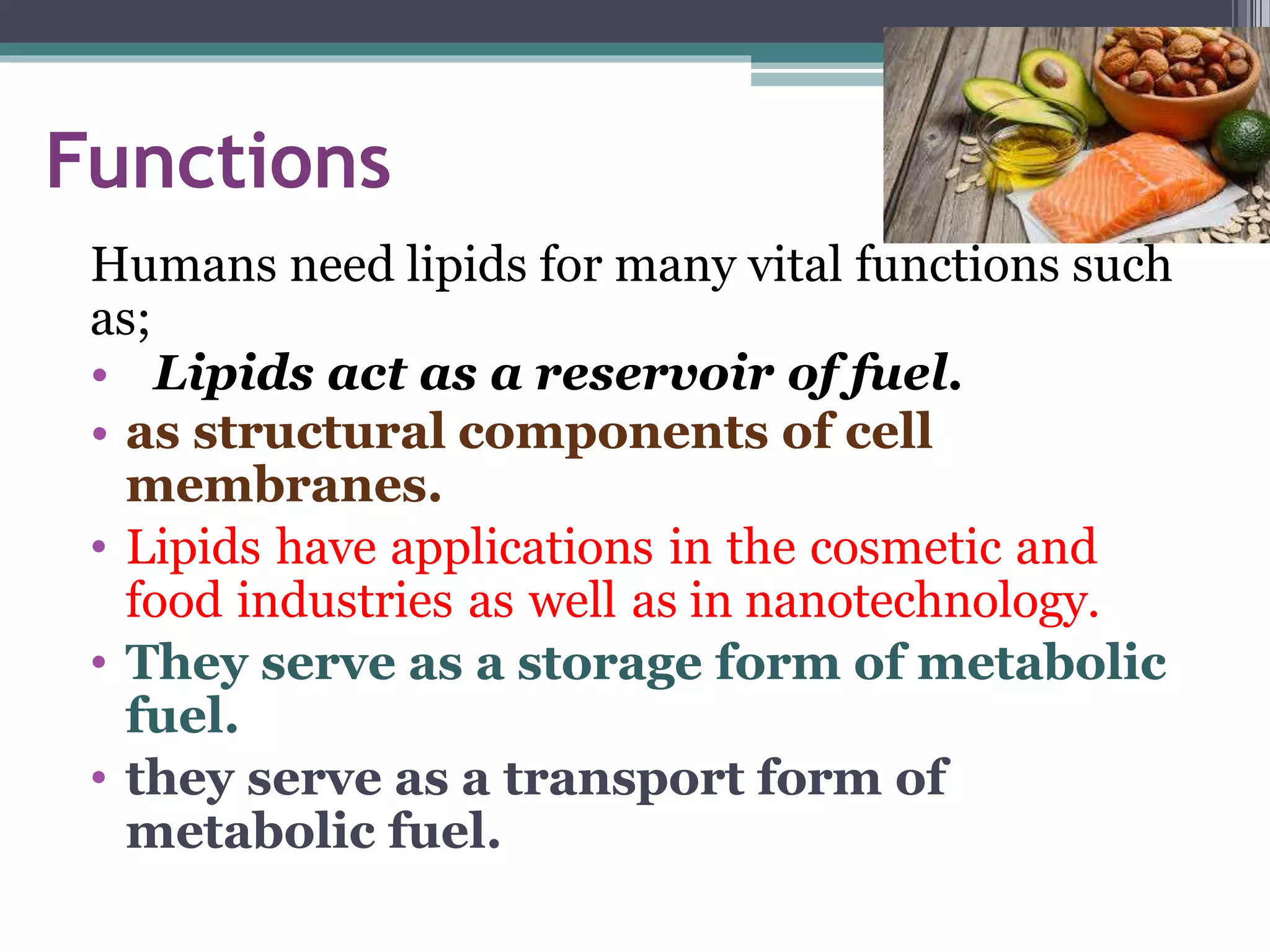
Functions
Humans need lipids for many vital functions such
as;
• Lipids act as a reservoir of fuel.
• as structural components of cell
membranes.
• Lipids have applications in the cosmetic and
food industries as well as in nanotechnology.
• They serve as a storage form of metabolic
fuel.
• they serve as a transport form of
metabolic fuel.
• They provide the structural components of
membranes (phospholipids, glycolipids,
galactolipids , sphingolipids)
• They have protective functions in bacteria, plants,
insects, and vertebrates, serving as a part of the
outer coating between the body of the organism
and the environment.
• They protect the internal organs ,serve as
insulating materials and give shape and
smooth appearance to the body.
Classification of Lipids
• Lipids may consist of fatty acids alone, or they
may contain other molecules as well.
• They are classified into Four types
1. Simple : Fatty acids and Alcohols
2. Compound (complex): Fatty
acids, Alcohols & other groups.
3. Derived: derived from simple and complex
both.
4. Miscellaneous:possesses characteristics
of lipids.
Classification
SIMPLE LIPIDS:-
They are esters of fatty acids with alcohols. They are
mainly of two types
(a)Fats and oils:-These are esters of fatty acids with
glycerol. The difference between fat and oil is only
physical. The oil is a liquid while fat is solid at room
temperature.
(b)Waxes:-Esters of fatty acids with alcohols other
than glycerol. These alcohols may be aliphatic or
alicyclic. Cetyl alcohol is most commonly found in
waxes.
COMPLEX LIPIDS:-
These are esters of fatty acids with
alcohols containing additional groups such as
phosphate ,nitrogenous bases ,carbohydrate etc.
They are further divided as follows-
(a)PHOSPHOLIPIDS:-They contain phosphoric
acid and frequently a nitrogenous base. This is in
addition to alcohol and fatty acids.
(i)GLYCEROPHOSPHOLIPIDS: contain glycerol as
alcohol
(ii)SPHINGOPHOSPHOLIPIDS: contain
sphingosine as alcohol.
(b)GLYCOLIPIDS:-These lipids contain a fatty acid,
carbohydrate and nitrogenous base.
The alcohol is sphingosine ,hence are also called as
glycosphingolipids.
Glycerol and phosphate are absent.
Eg:-cerebrosides,gangliosides.
(c)LIPOPROTTEINS:-Macromolecular complexes of lipids
with proteins. LDL, HDL, IDL, VLDL.
(d)OTHER COMPLEX LIPIDS:-Sulfolipids ,amino-
lipids and lipopolysaccharides are among the other
complex lipids.
Functions of Phospholipids
 Phospholipids provide barriers in
cellular membranes to protect the cell,
 they make barriers for the organelles within those
cells.
 Phospholipids work to provide pathways for
various substances across membranes.
• SPHINGOPHOSPHOLIPIDS
 Found in large quantities in brain and nerve Tissue.
 The combination of sphingosine plus fatty acid
is known as ceramide – found in
glycosphingolipids
Derived/precursor lipids
DERIVED LIPIDS:-These are the derivatives obtained on
the hydrolysis of simple lipids and complex lipids which
possess the characteristics of lipids.
 It contains a hydrocarbon ring along with long fatty
acid chain side chain.
 It Includes
 Fatty acid,
 Glycerol,
 mono acyl glycerol
 Steroids,
 Cholesterol,
 Ketone body,
 Vit A,D, E, K
Steroids
• Steroids compound containing cyclic steroid nucleus.
• Several steroids in biological systems.
▫ Cholestrol
▫ Bile acids
▫ Vitamin D
▫ Sex Hormone
▫ Adrenocortical hormones
▫ Cardiac glycosides
▫ Alkaloids
Derived/precursor lipids
CHOLESTEROL
• It is a precursor of a large number of equally important
steroids
 Bile acids,
 Adrenocortical hormones,
 Sex hormones,
 D vitamins – Ergosterol
 Cardiac glycosides
• Function
 Present in nervous tissues – insulating cover
 Biochemical function – precursor for many biochemical
substances and component of cell membrane.
Bile acids:
• It synthesized from cholesterol in the liver.
• Bile acids keep bile cholesterol in a soluble state
asmicelles to promote the digestion of lipids in
the intestine.
• Primary bile acids : Cholic acid and
chenodeoxycholic acid
• Secondary bile acids : lithocholic acid and
deoxycholic acid.
MISCELLANEOUS LIPIDS:-
• These are the lipids having characteristics of
lipids but having different characteristic group.
 Carotenoids
 Squalene
 Terpenes
 Pentacepore
NEUTRAL LIPIDS:-The lipids which are uncharged
are referred to as neutral lipids.These are mono,
di,triglycerols, cholesterol and cholesteryl esters.
Fatty Acids
It is Simplest form of lipids
It Usuallycontains an even number of carbon atoms
(14C-20C)
Biosynthesis of fatty acid occurs with sequential
addition of 2 carbon atom.
Chain may be saturated (containing no double
bonds) or unsaturated (containing one or more double
bonds)
It is found in esterified form.
Fats of animal origin are more simple than that of
plant origin.
Examples are Palmitic acid and stearic acid
Fatty Acids
There are two types of fatty acids:
• saturated fatty acids and
• unsaturated fatty acids.
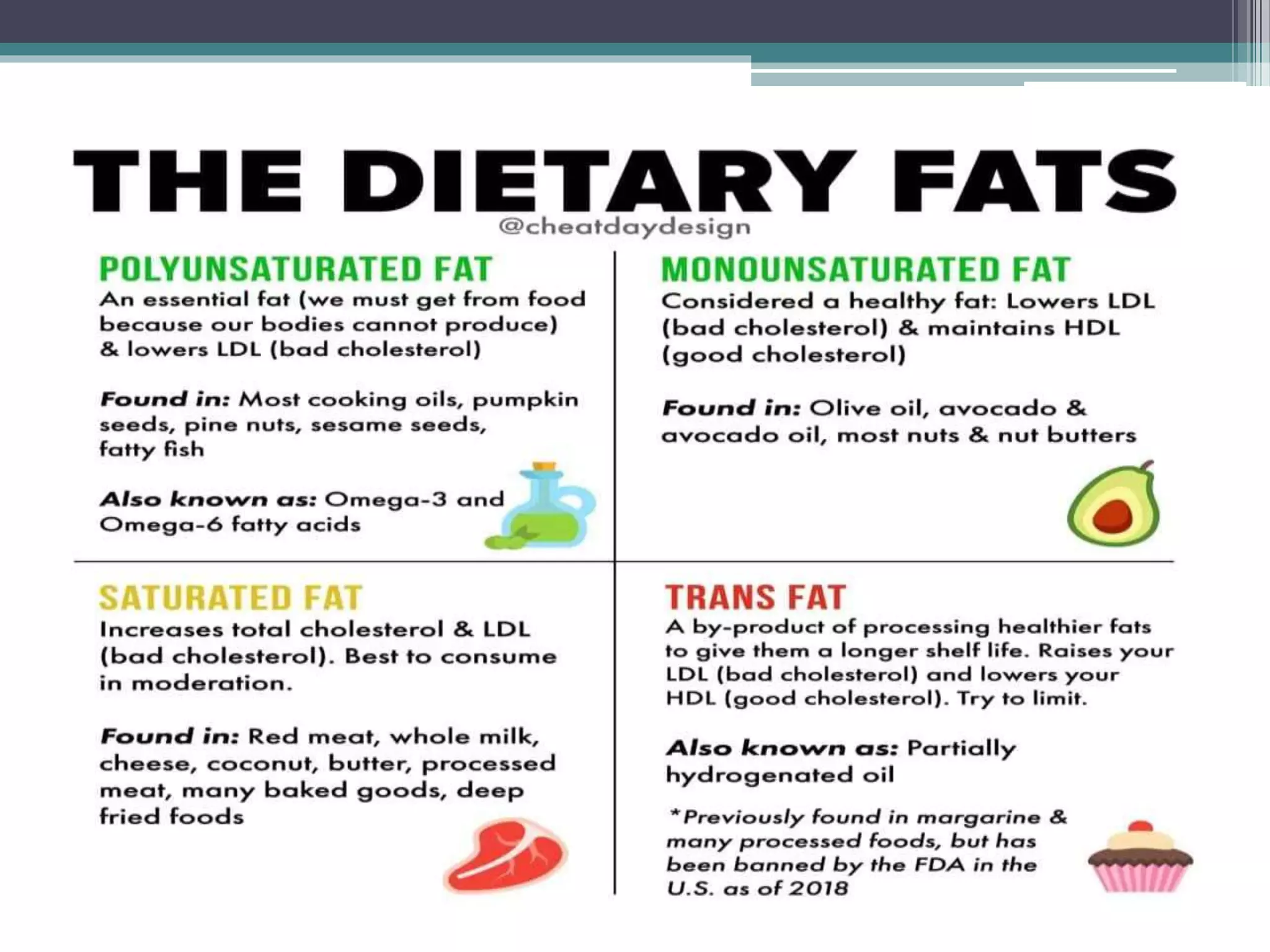
Saturated Fats
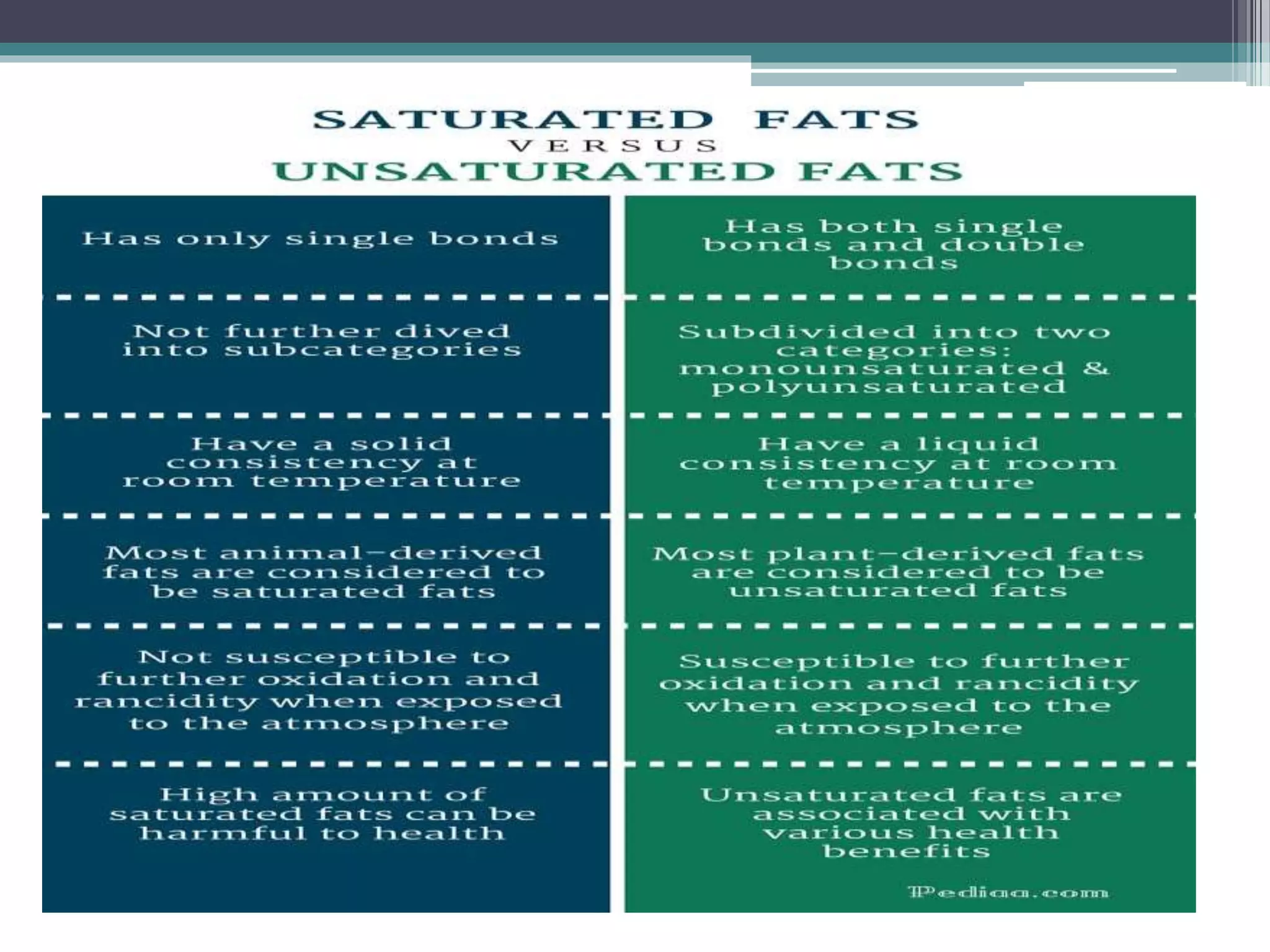
• Saturated fats have no double bonds in their
chemical structure.
• They are “saturated” with hydrogen atoms.
• In saturated fatty acids, carbon atoms are bonded to as
many hydrogen atoms as possible. This causes the
molecules to form straight chains.
• Because of their chemical structure, the straight chains
can be packed together very tightly, allowing them to
store energy in a compact form.
• They have a solid consistency at room temperature.
Saturated Fatty Acids
• Animals use saturated fatty acids to store energy.
• Saturated fats can be found in a variety of foods, including:
 Animal meat including beef, poultry, pork.
 Certain plant oils such as palm kernel or coconut oil.
 Dairy products including cheese, butter, and milk.
Milk, cheese, meat, and other animal foods contain
saturated fat.
Palm oil, cocoa butter, coconut oil, and other tropical oils also
contain saturated fats, and these types of oils can be found
in snacks, whipped toppings, and coffee creamers.
Butter, margarine, and shortening also contain a great deal
of saturated fat.
Unsaturated Fatty Acids
• In unsaturated fatty acids, some carbon
atoms are not bonded to as many hydrogen
atoms as possible. Instead, they are bonded to
other groups of atoms. Wherever carbon binds
with these other groups of atoms, it causes
chains to bend.
• The bent chains cannot be packed together very
tightly, so unsaturated fatty acids are liquids at
room temperature. Plants use unsaturated fatty
acids to store energy.
Unsaturated Fats
• Unsaturated fats are typically liquid at room
temperature.
• They differ from saturated fats in that their chemical
structure contains one or more double bonds.
• Oils from plants contain unsaturated fat.
• They can be further categorized as:
 Monounsaturated Fats: It contains only one double bond in its
structure and liquid at room temperature. e.g. canola oil and olive oil.
 Polyunsaturated Fats: It contains two or more double bonds in
their structure and liquid at room temperature.
• e.g. safflower oil, sunflower oil, and corn oil.
2 Types of Polyunsaturated Fats
 Omega-3 fatty acids
• may help prevent and even treat heart disease
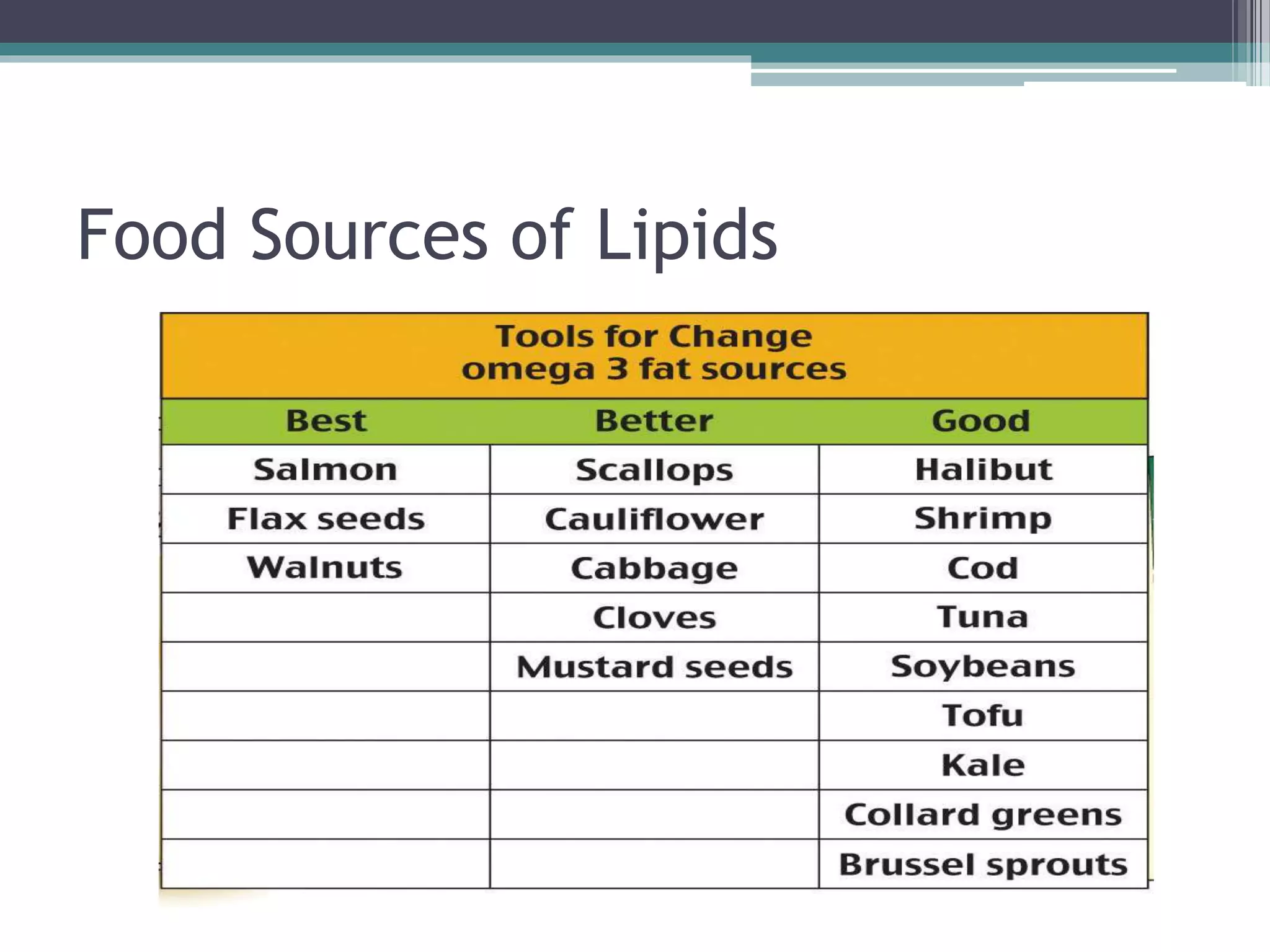
• and stroke
• Good sources of omega-3 fatty acids include
fatty fish such as salmon, mackerel, and
sardines, flaxseeds, walnuts, canola oil,
and unhydrogenated soybean oil.
 Omega-6 fatty acids
• Foods rich in linoleic acid and other omega 6
• fatty acids include vegetable oils such as
safflower, soybean, sunflower, walnut, and corn
oils.
Essential fatty acids
Essential fatty acids, or EFAs, are fatty acids that
humans and other animals must ingest because the body
requires them for good health but cannot synthesize
them.
The term "essential fatty acid" refers to fatty acids
required for biological processes but does not include the
fats that only act as fuel.
Poly unsaturated fatty acids are essential fatty acids.
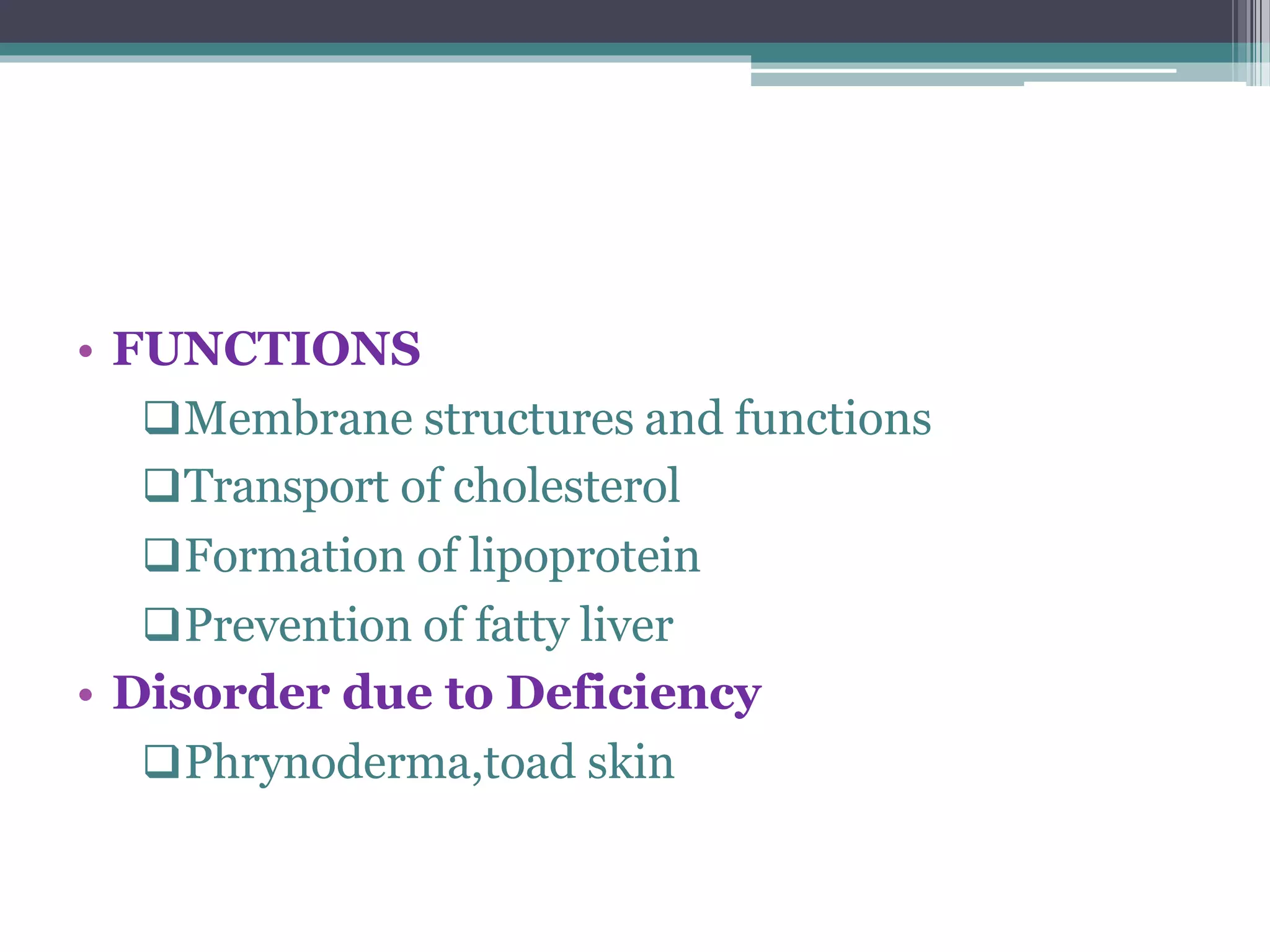
• FUNCTIONS
Membrane structures and functions
Transport of cholesterol
Formation of lipoprotein
Prevention of fatty liver
• Disorder due to Deficiency
Phrynoderma,toad skin
• Trans fat is a lipid that has undergone a process
called hydrogenation. Hydrogenation causes the fat
to harden more, which can then be used to make
crispy foods such as potato chips, crackers, and
cookies, as well as some types of salad dressings,
margarines, and other processed foods.
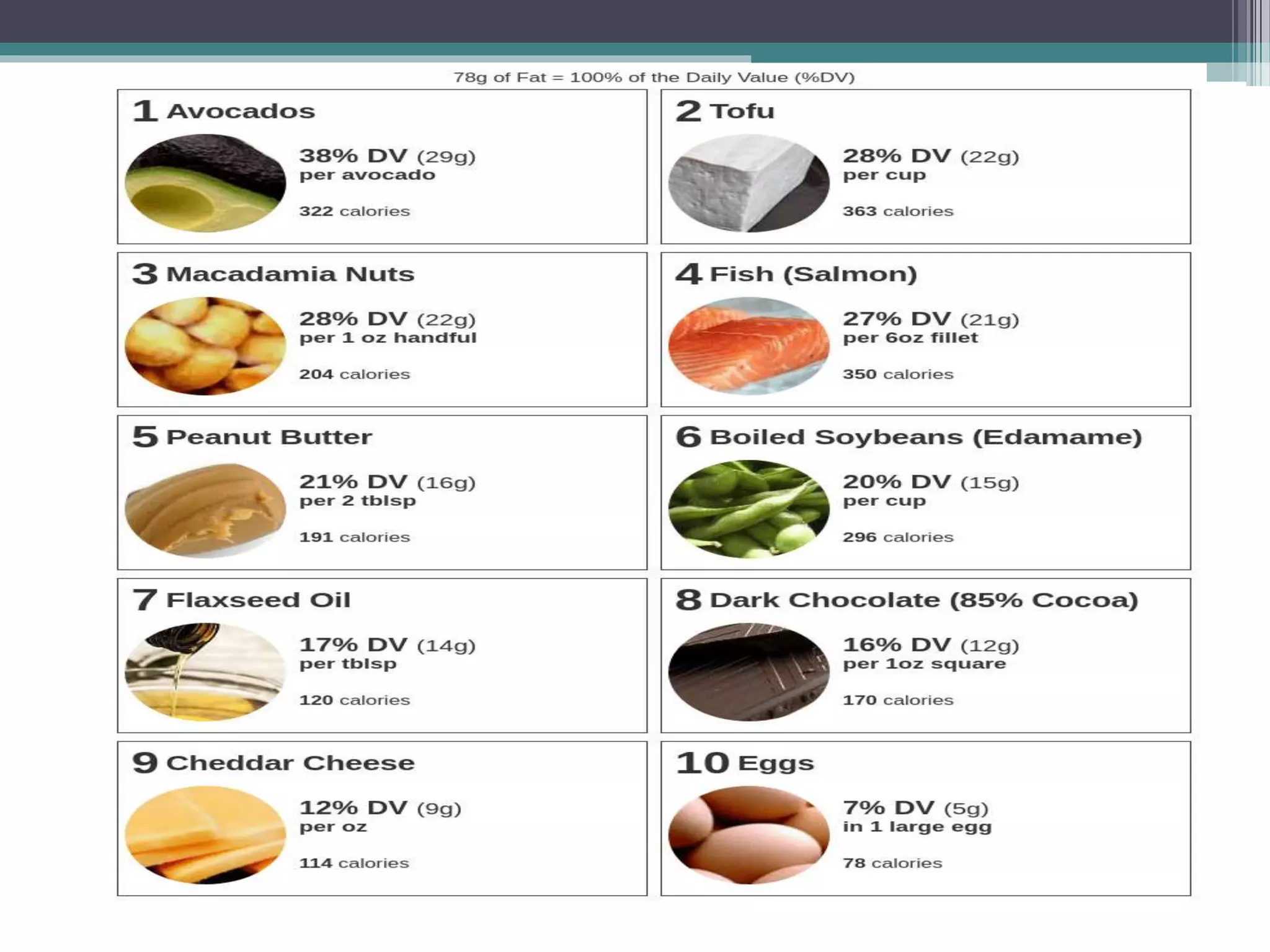
Food Sources of Lipids
Digestion and Absorption of
Lipids
Lipids are large molecules and generally are not
water-soluble. Like carbohydrates and protein, lipids
are broken into small components for absorption.
From the Mouth to the Stomach
• The first step in the digestion of triglycerides
and phospholipids begins in the mouth as lipids
encounter saliva.
• Next, the physical action of chewing coupled with the
action of emulsifiers enables the digestive enzymes to do
their tasks.
• The enzyme lingual lipase, along with a small amount of
phospholipid as an emulsifier, initiates the process of
digestion.
• These actions cause the fats to become more accessible
to the digestive enzymes. As a result, the fats become
tiny droplets and separate from the watery components.
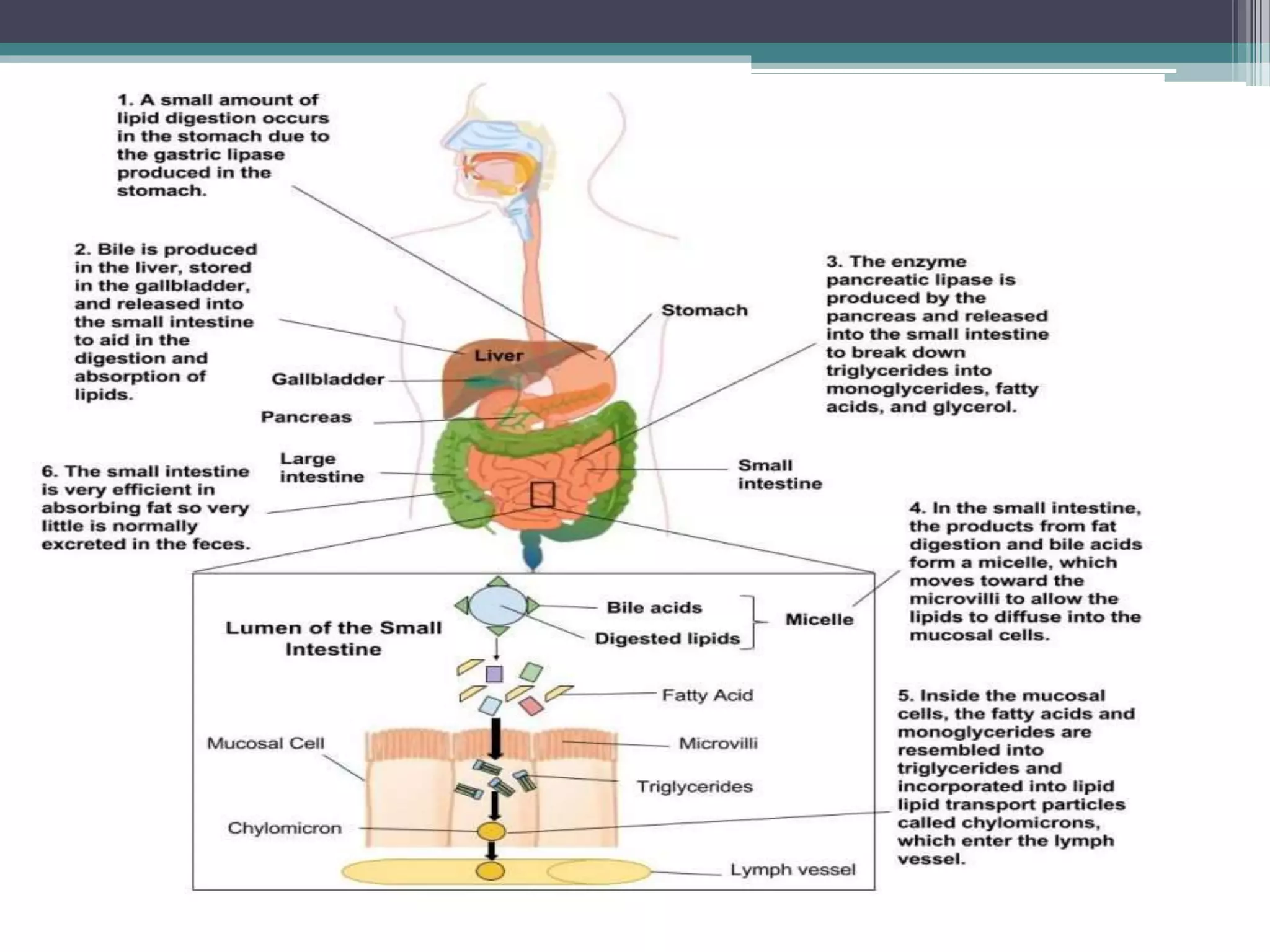
• In the stomach, gastric lipase starts to break down
triglycerides into diglycerides and fatty acids.
• Within two to four hours after eating a meal,
roughly 30 percent of the triglycerides are
converted to diglycerides and fatty acids .
• The stomach’s churning and contractions help to
disperse the fat molecules, while the diglycerides
derived in this process act as further emulsifiers.
However, even after all of this activity, very little
fat digestion occurs in the stomach.
Going to the Bloodstream
• As stomach contents enter the small intestine, the
digestive system sets out to manage a small hurdle,
namely, to combine the separated fats with its own
watery fluids. The solution to this hurdle is bile.
• Bile contains bile salts, lecithin, and substances
derived from cholesterol so it acts as an
emulsifier.
• It attracts and holds onto fat while it is
simultaneously attracted to and held on to by water.
• Emulsification increases the surface area of lipids
over a thousand-fold, making them more accessible
to the digestive enzymes.
• Once the stomach contents have been
emulsified, fat-breaking enzymes work on the
triglycerides and diglycerides to sever fatty acids
from their glycerol foundations.
• As pancreatic lipase enters the small intestine, it
breaks down the fats into free fatty acids
and monoglycerides.
• Bile salts envelop the fatty
acids and monoglycerides to form micelles.
• Micelles have a fatty acid core with a water-
soluble exterior.
• This allows efficient transportation to the
intestinal microvillus. Here, the fat components
are released and disseminated into the cells of
the digestive tract lining.
• Inside the intestinal cells, the monoglycerides
• and fatty acids reassemble themselves into
triglycerides. Triglycerides, cholesterol,
and phospholipids form lipoproteins when
joined with a protein carrier.
• Lipoproteins have an inner core that is primarily
made up of triglycerides and cholesterol esters (a
cholesterol ester is a cholesterol linked to a fatty
acid).
• The outer envelope is made of phospholipids
interspersed with proteins and cholesterol.
Together they form a chylomicron, which is a
large lipoprotein that now enters the lymphatic
system and will soon be released into the
bloodstream via the jugular vein in the neck.
• Chylomicrons transport food fats perfectly
through the body’s water-based environment to
specific destinations such as the liver and other
body tissues.
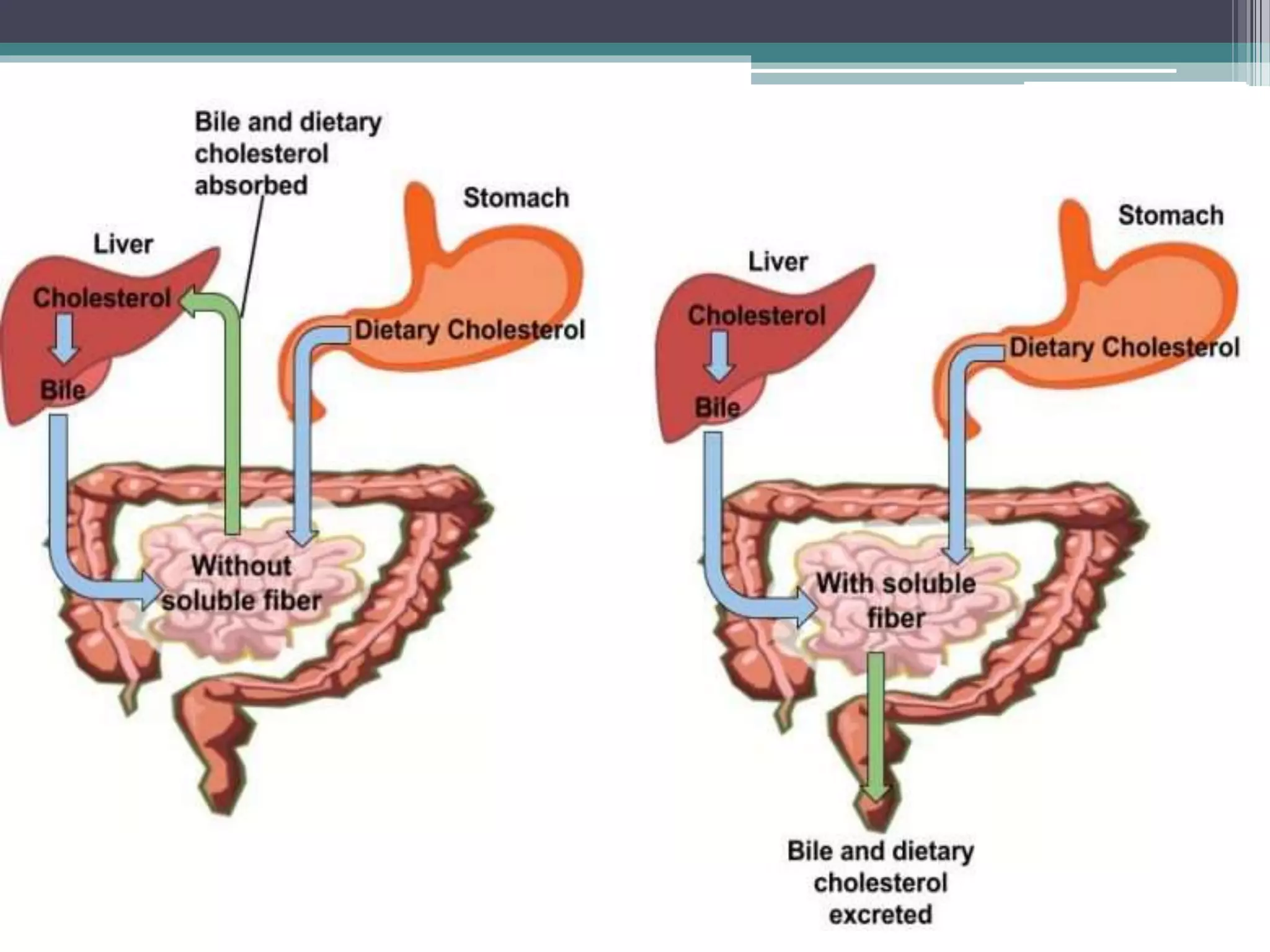
• Cholesterols are poorly absorbed when compared
to phospholipids and triglycerides.
• Cholesterol absorption is aided by an increase in
dietary fat components and is hindered by high fiber
content.
• This is the reason that a high intake of fiber is
recommended to decrease blood cholesterol. Foods
high in fiber such as fresh fruits, vegetables, and
oats can bind bile salts and cholesterol, preventing
their absorption and carrying them out of the colon.
• If fats are not absorbed properly as is seen in
some medical conditions, a person’s stool will
contain high amounts of fat.
• If fat malabsorption persists the condition is
known as steatorrhea.
• Steatorrhea can result from diseases that affect
absorption, such as Crohn’s disease and cystic
fibrosis.
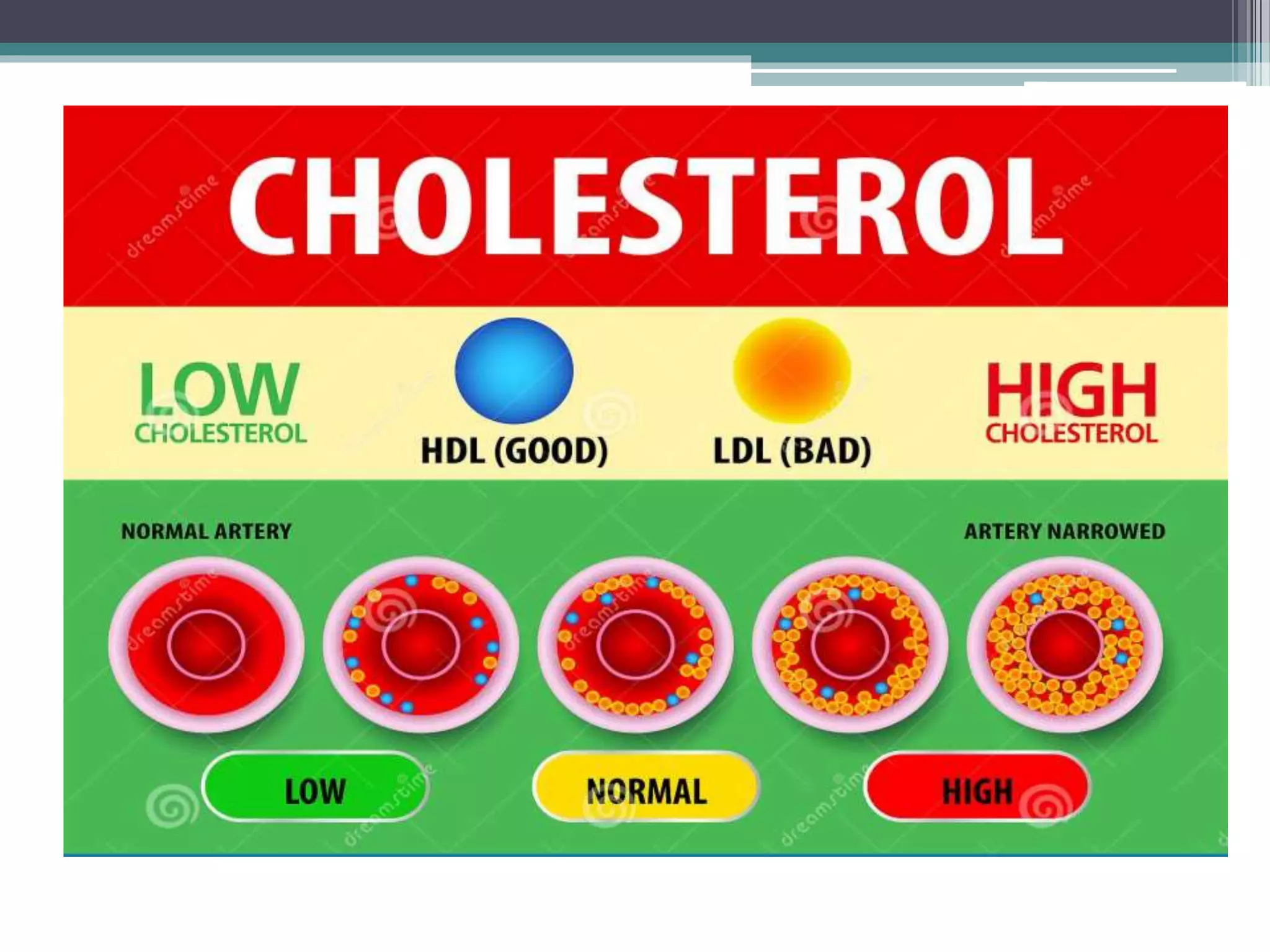
Understanding Blood Cholesterol
• Cholesterol is a fat used by the body that is
produced by the body and that also comes from
animal-based foods. Important numbers to
know are total cholesterol, HDL or good
cholesterol, LDL or bad cholesterol, and
triglycerides.
Importance of Cholesterol
• Every cell in the body needs cholesterol, which
helps the cell membranes form the layers. These
layers protect the contents of the cell by acting as
the gatekeeper to what things can enter or leave
the cell. It is made by the liver and is also used
by the liver to make bile, which helps you digest
foods. Cholesterol is also needed to make certain
hormones and to produce vitamin D
Types of cholesterol
Cholesterol moves throughout the body carried by
lipoproteins in the blood. These lipoproteins
include:
• Low-density lipoprotein (LDL) is one of the
two main lipoproteins. LDL is often called “the
bad cholesterol.”
• High-density lipoprotein (HDL) is the other
main lipoprotein. HDL is often called “the good
cholesterol.”
• Very-low-density lipoproteins (VLDL) are
particles in the blood that carry triglycerides.
THANK YOU

Fats and lipids nagamani

  • 1.
    FATS &LIPIDS Mrs.Nagamani.T, MSc (N) QualityHealth Care College of Nursing
  • 2.
    Introduction • The wordlipid is derived from a Greek word “lipos” which means Fat. • A lipidis a macro biomolecule that is soluble in non polar solvents. • L i p i d s a r e a group of water-insoluble, energy yielding organic Compounds composed of carbon, Hydrogen, and oxygen atoms.
  • 3.
    • A lipidis a fat-like molecule and is a major building block of the cells of animals. • Lipids are organic, meaning that they contain carbon atoms. • Lipids do not dissolve in water. • Lipids are the esters formed from fatty acids and alcohol • They are the chief storage form of energy. • Each gram of fats gives 9 calories.
  • 4.
    Functions Humans need lipidsfor many vital functions such as; • Lipids act as a reservoir of fuel. • as structural components of cell membranes. • Lipids have applications in the cosmetic and food industries as well as in nanotechnology. • They serve as a storage form of metabolic fuel. • they serve as a transport form of metabolic fuel.
  • 5.
    • They providethe structural components of membranes (phospholipids, glycolipids, galactolipids , sphingolipids) • They have protective functions in bacteria, plants, insects, and vertebrates, serving as a part of the outer coating between the body of the organism and the environment. • They protect the internal organs ,serve as insulating materials and give shape and smooth appearance to the body.
  • 6.
    Classification of Lipids •Lipids may consist of fatty acids alone, or they may contain other molecules as well. • They are classified into Four types 1. Simple : Fatty acids and Alcohols 2. Compound (complex): Fatty acids, Alcohols & other groups. 3. Derived: derived from simple and complex both. 4. Miscellaneous:possesses characteristics of lipids.
  • 7.
  • 8.
    SIMPLE LIPIDS:- They areesters of fatty acids with alcohols. They are mainly of two types (a)Fats and oils:-These are esters of fatty acids with glycerol. The difference between fat and oil is only physical. The oil is a liquid while fat is solid at room temperature. (b)Waxes:-Esters of fatty acids with alcohols other than glycerol. These alcohols may be aliphatic or alicyclic. Cetyl alcohol is most commonly found in waxes.
  • 9.
    COMPLEX LIPIDS:- These areesters of fatty acids with alcohols containing additional groups such as phosphate ,nitrogenous bases ,carbohydrate etc. They are further divided as follows- (a)PHOSPHOLIPIDS:-They contain phosphoric acid and frequently a nitrogenous base. This is in addition to alcohol and fatty acids. (i)GLYCEROPHOSPHOLIPIDS: contain glycerol as alcohol (ii)SPHINGOPHOSPHOLIPIDS: contain sphingosine as alcohol.
  • 10.
    (b)GLYCOLIPIDS:-These lipids containa fatty acid, carbohydrate and nitrogenous base. The alcohol is sphingosine ,hence are also called as glycosphingolipids. Glycerol and phosphate are absent. Eg:-cerebrosides,gangliosides. (c)LIPOPROTTEINS:-Macromolecular complexes of lipids with proteins. LDL, HDL, IDL, VLDL. (d)OTHER COMPLEX LIPIDS:-Sulfolipids ,amino- lipids and lipopolysaccharides are among the other complex lipids.
  • 11.
    Functions of Phospholipids Phospholipids provide barriers in cellular membranes to protect the cell,  they make barriers for the organelles within those cells.  Phospholipids work to provide pathways for various substances across membranes. • SPHINGOPHOSPHOLIPIDS  Found in large quantities in brain and nerve Tissue.  The combination of sphingosine plus fatty acid is known as ceramide – found in glycosphingolipids
  • 12.
    Derived/precursor lipids DERIVED LIPIDS:-Theseare the derivatives obtained on the hydrolysis of simple lipids and complex lipids which possess the characteristics of lipids.  It contains a hydrocarbon ring along with long fatty acid chain side chain.  It Includes  Fatty acid,  Glycerol,  mono acyl glycerol  Steroids,  Cholesterol,  Ketone body,  Vit A,D, E, K
  • 13.
    Steroids • Steroids compoundcontaining cyclic steroid nucleus. • Several steroids in biological systems. ▫ Cholestrol ▫ Bile acids ▫ Vitamin D ▫ Sex Hormone ▫ Adrenocortical hormones ▫ Cardiac glycosides ▫ Alkaloids
  • 14.
    Derived/precursor lipids CHOLESTEROL • Itis a precursor of a large number of equally important steroids  Bile acids,  Adrenocortical hormones,  Sex hormones,  D vitamins – Ergosterol  Cardiac glycosides • Function  Present in nervous tissues – insulating cover  Biochemical function – precursor for many biochemical substances and component of cell membrane.
  • 15.
    Bile acids: • Itsynthesized from cholesterol in the liver. • Bile acids keep bile cholesterol in a soluble state asmicelles to promote the digestion of lipids in the intestine. • Primary bile acids : Cholic acid and chenodeoxycholic acid • Secondary bile acids : lithocholic acid and deoxycholic acid.
  • 16.
    MISCELLANEOUS LIPIDS:- • Theseare the lipids having characteristics of lipids but having different characteristic group.  Carotenoids  Squalene  Terpenes  Pentacepore NEUTRAL LIPIDS:-The lipids which are uncharged are referred to as neutral lipids.These are mono, di,triglycerols, cholesterol and cholesteryl esters.
  • 17.
    Fatty Acids It isSimplest form of lipids It Usuallycontains an even number of carbon atoms (14C-20C) Biosynthesis of fatty acid occurs with sequential addition of 2 carbon atom. Chain may be saturated (containing no double bonds) or unsaturated (containing one or more double bonds) It is found in esterified form. Fats of animal origin are more simple than that of plant origin. Examples are Palmitic acid and stearic acid
  • 18.
    Fatty Acids There aretwo types of fatty acids: • saturated fatty acids and • unsaturated fatty acids.
  • 20.
    Saturated Fats • Saturatedfats have no double bonds in their chemical structure. • They are “saturated” with hydrogen atoms. • In saturated fatty acids, carbon atoms are bonded to as many hydrogen atoms as possible. This causes the molecules to form straight chains. • Because of their chemical structure, the straight chains can be packed together very tightly, allowing them to store energy in a compact form. • They have a solid consistency at room temperature.
  • 21.
    Saturated Fatty Acids •Animals use saturated fatty acids to store energy. • Saturated fats can be found in a variety of foods, including:  Animal meat including beef, poultry, pork.  Certain plant oils such as palm kernel or coconut oil.  Dairy products including cheese, butter, and milk. Milk, cheese, meat, and other animal foods contain saturated fat. Palm oil, cocoa butter, coconut oil, and other tropical oils also contain saturated fats, and these types of oils can be found in snacks, whipped toppings, and coffee creamers. Butter, margarine, and shortening also contain a great deal of saturated fat.
  • 22.
    Unsaturated Fatty Acids •In unsaturated fatty acids, some carbon atoms are not bonded to as many hydrogen atoms as possible. Instead, they are bonded to other groups of atoms. Wherever carbon binds with these other groups of atoms, it causes chains to bend. • The bent chains cannot be packed together very tightly, so unsaturated fatty acids are liquids at room temperature. Plants use unsaturated fatty acids to store energy.
  • 23.
    Unsaturated Fats • Unsaturatedfats are typically liquid at room temperature. • They differ from saturated fats in that their chemical structure contains one or more double bonds. • Oils from plants contain unsaturated fat. • They can be further categorized as:  Monounsaturated Fats: It contains only one double bond in its structure and liquid at room temperature. e.g. canola oil and olive oil.  Polyunsaturated Fats: It contains two or more double bonds in their structure and liquid at room temperature. • e.g. safflower oil, sunflower oil, and corn oil.
  • 24.
    2 Types ofPolyunsaturated Fats  Omega-3 fatty acids • may help prevent and even treat heart disease • and stroke • Good sources of omega-3 fatty acids include fatty fish such as salmon, mackerel, and sardines, flaxseeds, walnuts, canola oil, and unhydrogenated soybean oil.  Omega-6 fatty acids • Foods rich in linoleic acid and other omega 6 • fatty acids include vegetable oils such as safflower, soybean, sunflower, walnut, and corn oils.
  • 28.
    Essential fatty acids Essentialfatty acids, or EFAs, are fatty acids that humans and other animals must ingest because the body requires them for good health but cannot synthesize them. The term "essential fatty acid" refers to fatty acids required for biological processes but does not include the fats that only act as fuel. Poly unsaturated fatty acids are essential fatty acids.
  • 29.
    • FUNCTIONS Membrane structuresand functions Transport of cholesterol Formation of lipoprotein Prevention of fatty liver • Disorder due to Deficiency Phrynoderma,toad skin
  • 30.
    • Trans fatis a lipid that has undergone a process called hydrogenation. Hydrogenation causes the fat to harden more, which can then be used to make crispy foods such as potato chips, crackers, and cookies, as well as some types of salad dressings, margarines, and other processed foods.
  • 31.
  • 37.
    Digestion and Absorptionof Lipids Lipids are large molecules and generally are not water-soluble. Like carbohydrates and protein, lipids are broken into small components for absorption.
  • 39.
    From the Mouthto the Stomach • The first step in the digestion of triglycerides and phospholipids begins in the mouth as lipids encounter saliva. • Next, the physical action of chewing coupled with the action of emulsifiers enables the digestive enzymes to do their tasks. • The enzyme lingual lipase, along with a small amount of phospholipid as an emulsifier, initiates the process of digestion. • These actions cause the fats to become more accessible to the digestive enzymes. As a result, the fats become tiny droplets and separate from the watery components.
  • 40.
    • In thestomach, gastric lipase starts to break down triglycerides into diglycerides and fatty acids. • Within two to four hours after eating a meal, roughly 30 percent of the triglycerides are converted to diglycerides and fatty acids . • The stomach’s churning and contractions help to disperse the fat molecules, while the diglycerides derived in this process act as further emulsifiers. However, even after all of this activity, very little fat digestion occurs in the stomach.
  • 41.
    Going to theBloodstream • As stomach contents enter the small intestine, the digestive system sets out to manage a small hurdle, namely, to combine the separated fats with its own watery fluids. The solution to this hurdle is bile. • Bile contains bile salts, lecithin, and substances derived from cholesterol so it acts as an emulsifier. • It attracts and holds onto fat while it is simultaneously attracted to and held on to by water. • Emulsification increases the surface area of lipids over a thousand-fold, making them more accessible to the digestive enzymes.
  • 42.
    • Once thestomach contents have been emulsified, fat-breaking enzymes work on the triglycerides and diglycerides to sever fatty acids from their glycerol foundations. • As pancreatic lipase enters the small intestine, it breaks down the fats into free fatty acids and monoglycerides.
  • 43.
    • Bile saltsenvelop the fatty acids and monoglycerides to form micelles. • Micelles have a fatty acid core with a water- soluble exterior. • This allows efficient transportation to the intestinal microvillus. Here, the fat components are released and disseminated into the cells of the digestive tract lining.
  • 44.
    • Inside theintestinal cells, the monoglycerides • and fatty acids reassemble themselves into triglycerides. Triglycerides, cholesterol, and phospholipids form lipoproteins when joined with a protein carrier. • Lipoproteins have an inner core that is primarily made up of triglycerides and cholesterol esters (a cholesterol ester is a cholesterol linked to a fatty acid).
  • 45.
    • The outerenvelope is made of phospholipids interspersed with proteins and cholesterol. Together they form a chylomicron, which is a large lipoprotein that now enters the lymphatic system and will soon be released into the bloodstream via the jugular vein in the neck. • Chylomicrons transport food fats perfectly through the body’s water-based environment to specific destinations such as the liver and other body tissues.
  • 46.
    • Cholesterols arepoorly absorbed when compared to phospholipids and triglycerides. • Cholesterol absorption is aided by an increase in dietary fat components and is hindered by high fiber content. • This is the reason that a high intake of fiber is recommended to decrease blood cholesterol. Foods high in fiber such as fresh fruits, vegetables, and oats can bind bile salts and cholesterol, preventing their absorption and carrying them out of the colon.
  • 47.
    • If fatsare not absorbed properly as is seen in some medical conditions, a person’s stool will contain high amounts of fat. • If fat malabsorption persists the condition is known as steatorrhea. • Steatorrhea can result from diseases that affect absorption, such as Crohn’s disease and cystic fibrosis.
  • 50.
    Understanding Blood Cholesterol •Cholesterol is a fat used by the body that is produced by the body and that also comes from animal-based foods. Important numbers to know are total cholesterol, HDL or good cholesterol, LDL or bad cholesterol, and triglycerides.
  • 51.
    Importance of Cholesterol •Every cell in the body needs cholesterol, which helps the cell membranes form the layers. These layers protect the contents of the cell by acting as the gatekeeper to what things can enter or leave the cell. It is made by the liver and is also used by the liver to make bile, which helps you digest foods. Cholesterol is also needed to make certain hormones and to produce vitamin D
  • 52.
    Types of cholesterol Cholesterolmoves throughout the body carried by lipoproteins in the blood. These lipoproteins include: • Low-density lipoprotein (LDL) is one of the two main lipoproteins. LDL is often called “the bad cholesterol.” • High-density lipoprotein (HDL) is the other main lipoprotein. HDL is often called “the good cholesterol.” • Very-low-density lipoproteins (VLDL) are particles in the blood that carry triglycerides.
  • 55.