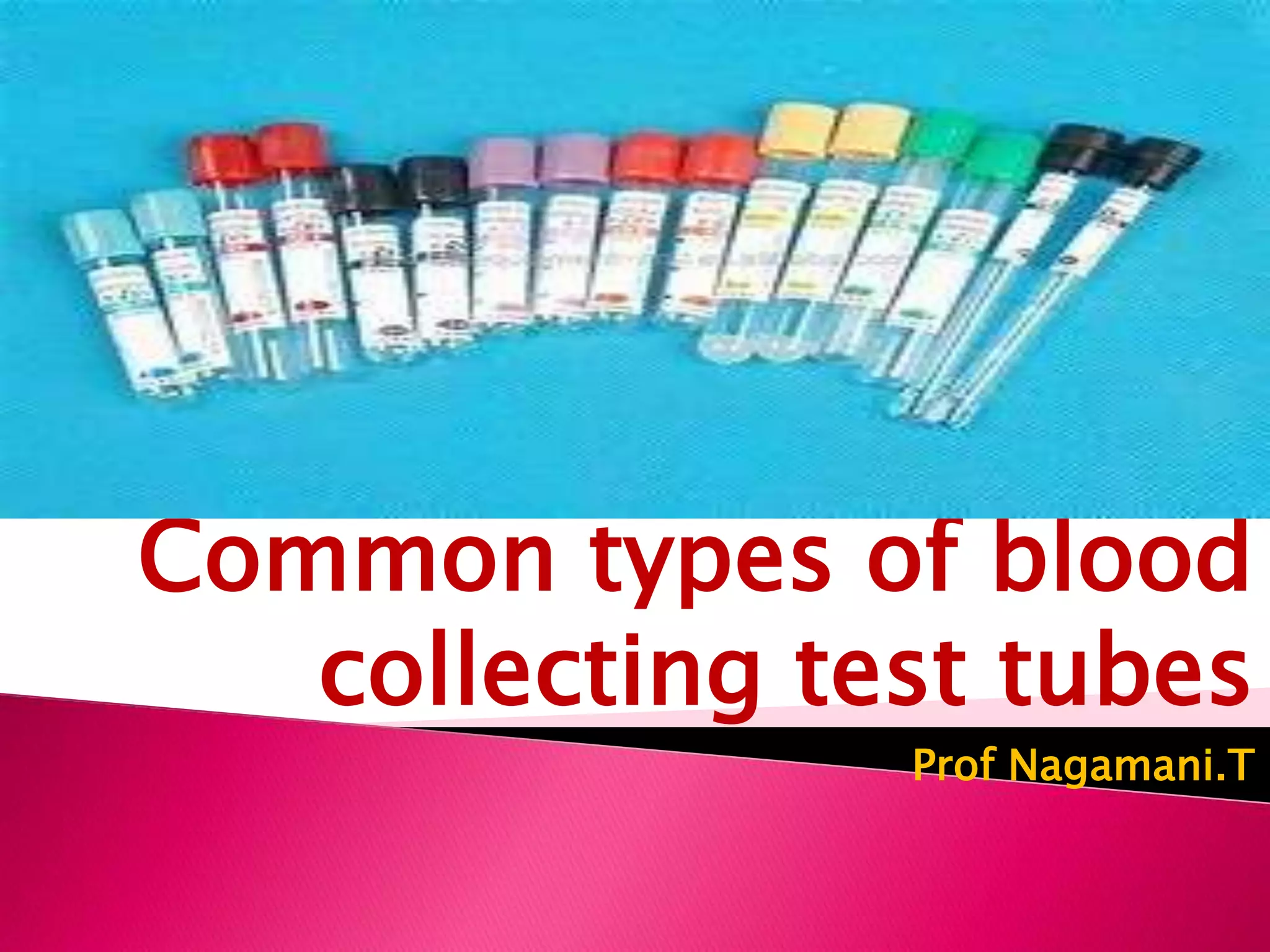
Common types of blood
collecting test tubes
Prof Nagamani.T
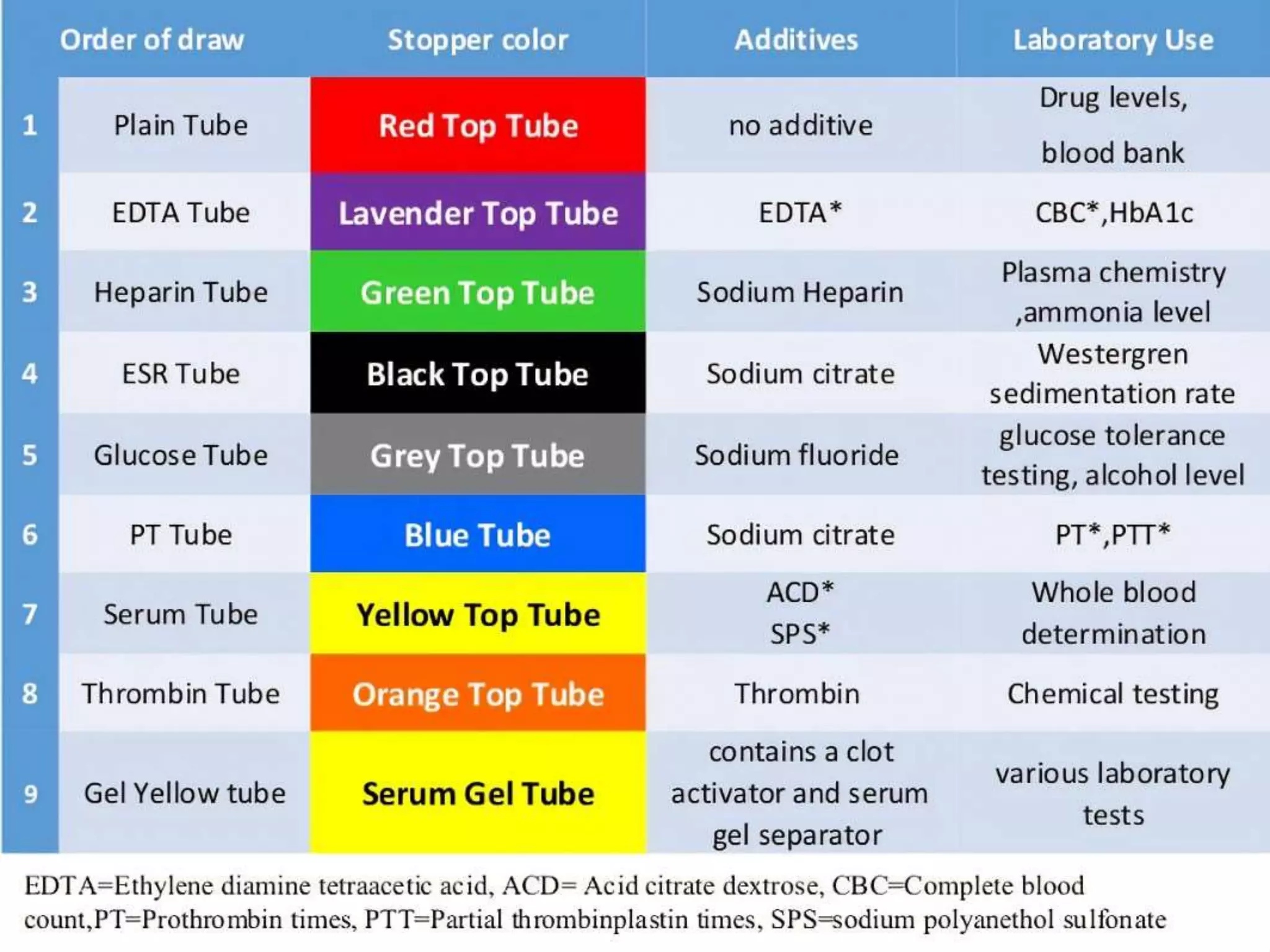
 There are different types of blood collection
tubes used in hospital for various diagnostic
tests.
 Each tube has different functions and must
be used accordingly in collecting blood
samples.
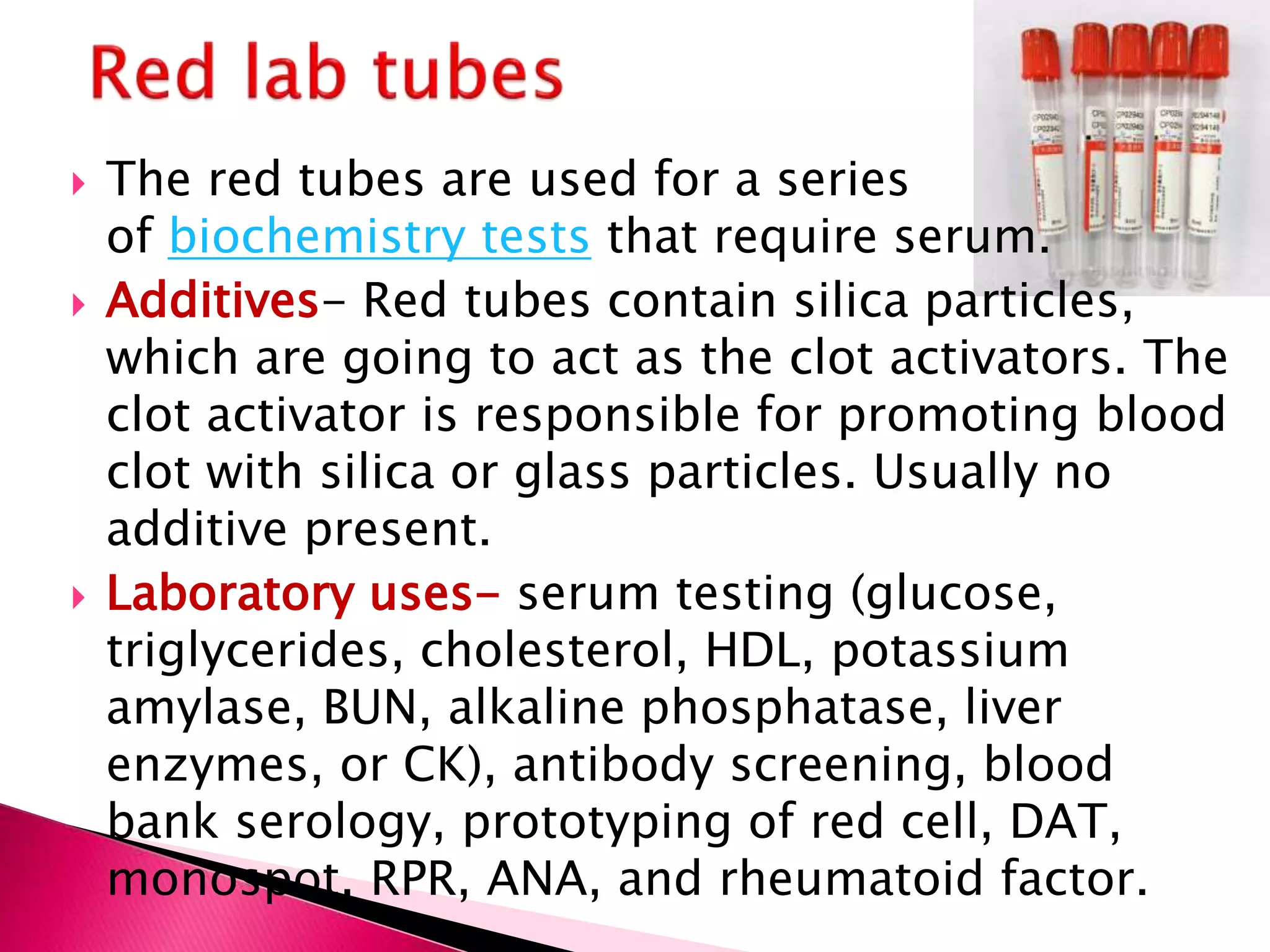
 The red tubes are used for a series
of biochemistry tests that require serum.
 Additives- Red tubes contain silica particles,
which are going to act as the clot activators. The
clot activator is responsible for promoting blood
clot with silica or glass particles. Usually no
additive present.
 Laboratory uses- serum testing (glucose,
triglycerides, cholesterol, HDL, potassium
amylase, BUN, alkaline phosphatase, liver
enzymes, or CK), antibody screening, blood
bank serology, prototyping of red cell, DAT,
monospot, RPR, ANA, and rheumatoid factor.
 These tubes are used for blood as well as bodily
fluid cultures
 Additive- Anticoagulant SPS (Sodium Polyanethol
Sulfonate) & ACD (acid citrate dextrose). The
additive prevents the clotting of the blood and
stabilizes the growth of bacteria.
 Laboratory uses- bodily fluid cultures (Paternity,
HLA, and DNA). Tubes that have ACD are used for
cellular studies, paternity testing, and HLA typing.
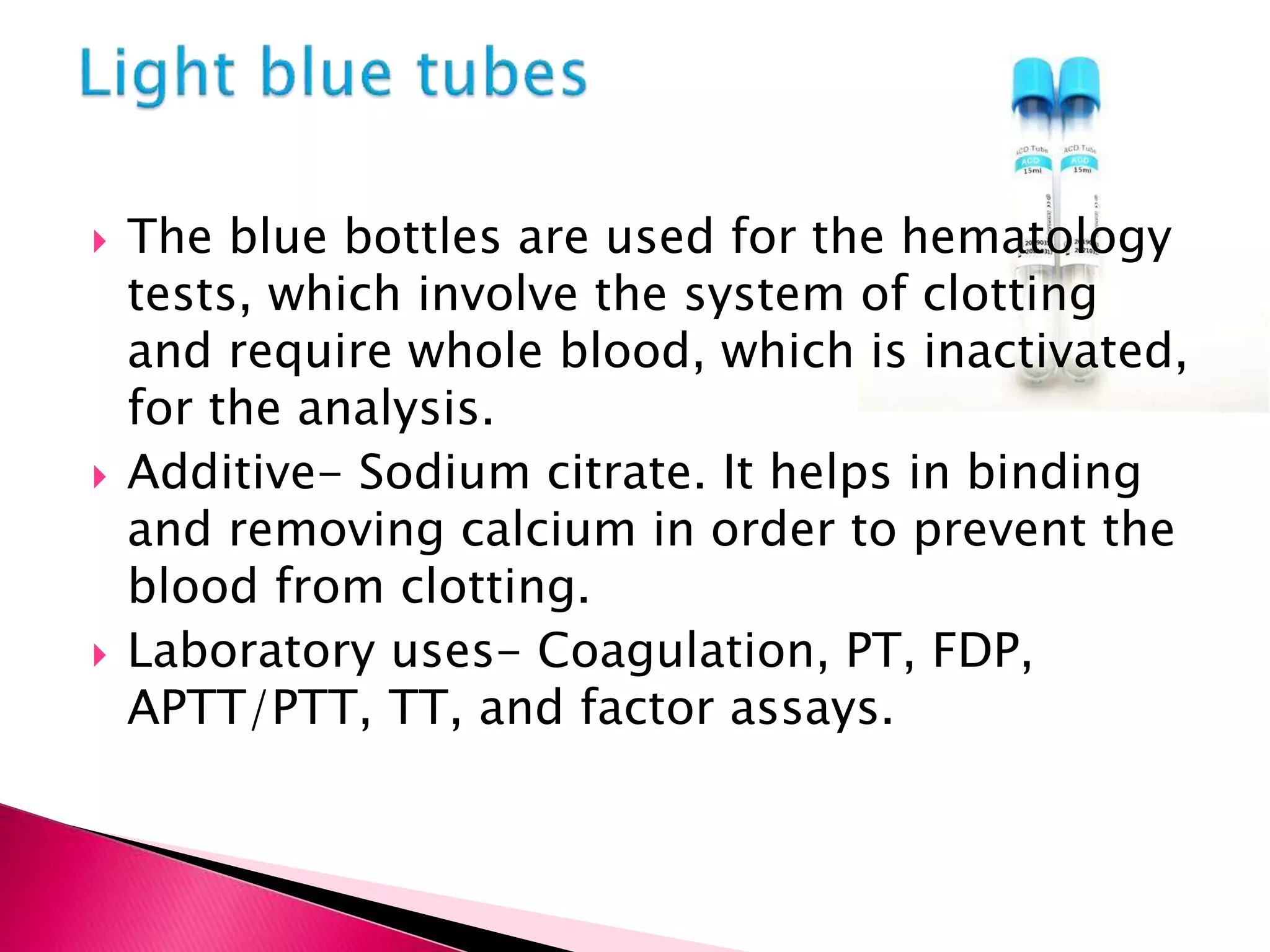
 The blue bottles are used for the hematology
tests, which involve the system of clotting
and require whole blood, which is inactivated,
for the analysis.
 Additive- Sodium citrate. It helps in binding
and removing calcium in order to prevent the
blood from clotting.
 Laboratory uses- Coagulation, PT, FDP,
APTT/PTT, TT, and factor assays.
 The green tubes are the most common
bottles, used primarily for the biochemistry
tests, which are known to require whole
blood or heparinized plasma.
 Additive- Heparin
(Sodium/lithium/ammonium). It inhibits the
formation of thrombin in order to prevent
blood clotting.
 Laboratory uses- Chemistry testing,
ammonia, insulin, chromosome screening,
aldosterone, renin, and insulin.
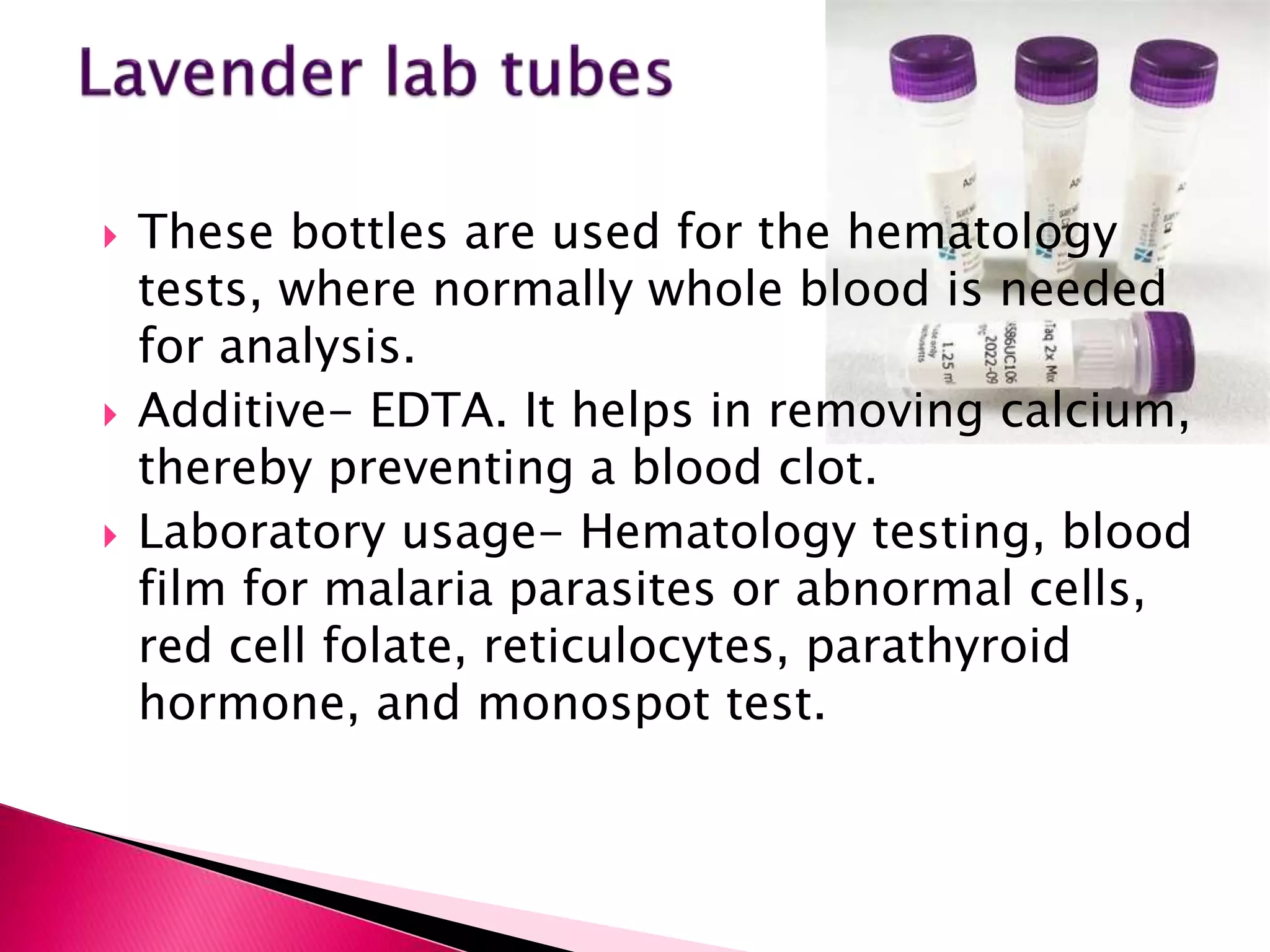
 These bottles are used for the hematology
tests, where normally whole blood is needed
for analysis.
 Additive- EDTA. It helps in removing calcium,
thereby preventing a blood clot.
 Laboratory usage- Hematology testing, blood
film for malaria parasites or abnormal cells,
red cell folate, reticulocytes, parathyroid
hormone, and monospot test.
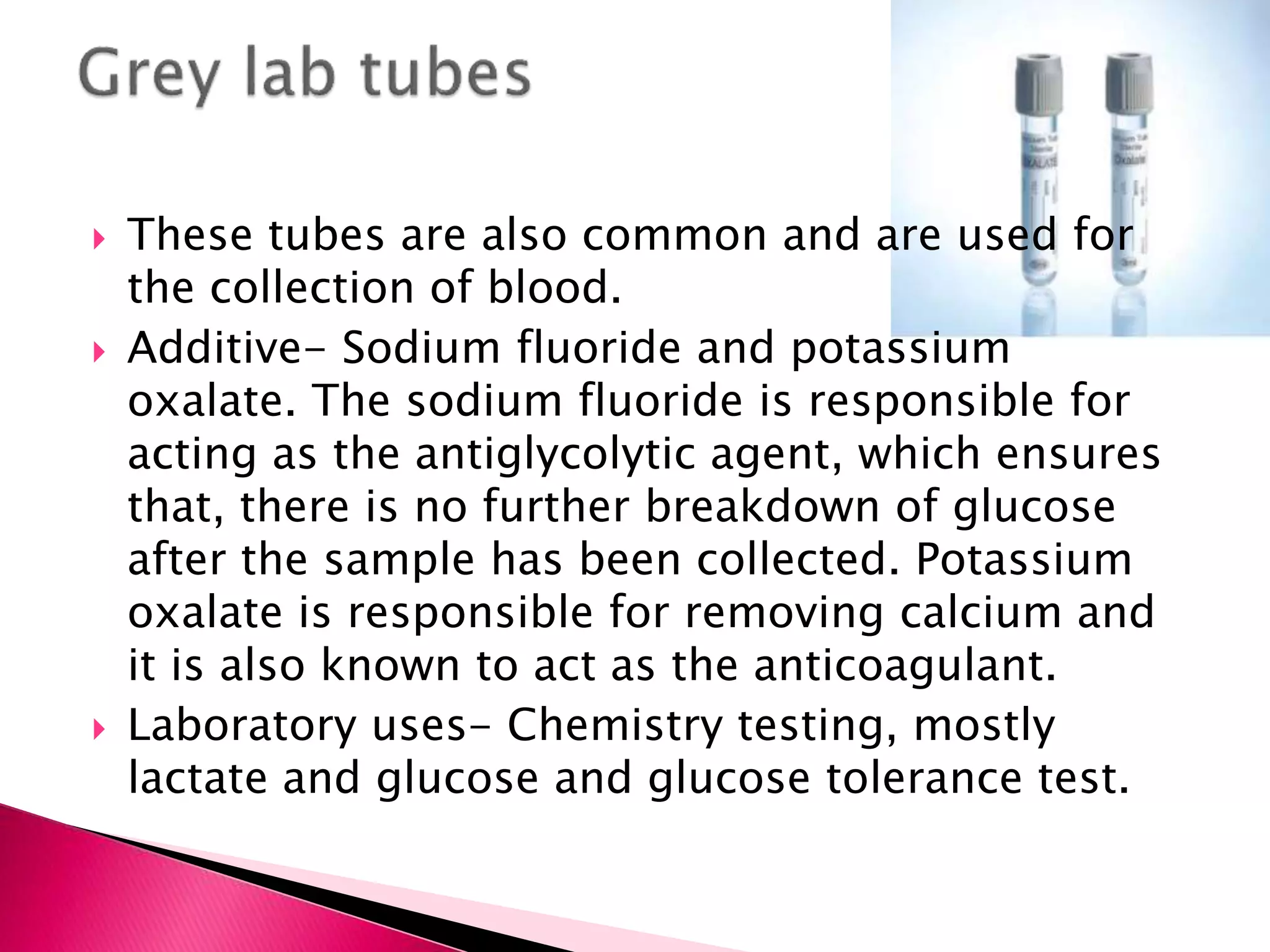
 These tubes are also common and are used for
the collection of blood.
 Additive- Sodium fluoride and potassium
oxalate. The sodium fluoride is responsible for
acting as the antiglycolytic agent, which ensures
that, there is no further breakdown of glucose
after the sample has been collected. Potassium
oxalate is responsible for removing calcium and
it is also known to act as the anticoagulant.
 Laboratory uses- Chemistry testing, mostly
lactate and glucose and glucose tolerance test.
 Test tubes must be chosen according to the
diagnostic test prescribed by the physician.
Thank you

Blood Collection tubes.pptx

  • 1.
    Common types ofblood collecting test tubes Prof Nagamani.T
  • 2.
     There aredifferent types of blood collection tubes used in hospital for various diagnostic tests.  Each tube has different functions and must be used accordingly in collecting blood samples.
  • 4.
     The redtubes are used for a series of biochemistry tests that require serum.  Additives- Red tubes contain silica particles, which are going to act as the clot activators. The clot activator is responsible for promoting blood clot with silica or glass particles. Usually no additive present.  Laboratory uses- serum testing (glucose, triglycerides, cholesterol, HDL, potassium amylase, BUN, alkaline phosphatase, liver enzymes, or CK), antibody screening, blood bank serology, prototyping of red cell, DAT, monospot, RPR, ANA, and rheumatoid factor.
  • 5.
     These tubesare used for blood as well as bodily fluid cultures  Additive- Anticoagulant SPS (Sodium Polyanethol Sulfonate) & ACD (acid citrate dextrose). The additive prevents the clotting of the blood and stabilizes the growth of bacteria.  Laboratory uses- bodily fluid cultures (Paternity, HLA, and DNA). Tubes that have ACD are used for cellular studies, paternity testing, and HLA typing.
  • 6.
     The bluebottles are used for the hematology tests, which involve the system of clotting and require whole blood, which is inactivated, for the analysis.  Additive- Sodium citrate. It helps in binding and removing calcium in order to prevent the blood from clotting.  Laboratory uses- Coagulation, PT, FDP, APTT/PTT, TT, and factor assays.
  • 7.
     The greentubes are the most common bottles, used primarily for the biochemistry tests, which are known to require whole blood or heparinized plasma.  Additive- Heparin (Sodium/lithium/ammonium). It inhibits the formation of thrombin in order to prevent blood clotting.  Laboratory uses- Chemistry testing, ammonia, insulin, chromosome screening, aldosterone, renin, and insulin.
  • 8.
     These bottlesare used for the hematology tests, where normally whole blood is needed for analysis.  Additive- EDTA. It helps in removing calcium, thereby preventing a blood clot.  Laboratory usage- Hematology testing, blood film for malaria parasites or abnormal cells, red cell folate, reticulocytes, parathyroid hormone, and monospot test.
  • 9.
     These tubesare also common and are used for the collection of blood.  Additive- Sodium fluoride and potassium oxalate. The sodium fluoride is responsible for acting as the antiglycolytic agent, which ensures that, there is no further breakdown of glucose after the sample has been collected. Potassium oxalate is responsible for removing calcium and it is also known to act as the anticoagulant.  Laboratory uses- Chemistry testing, mostly lactate and glucose and glucose tolerance test.
  • 11.
     Test tubesmust be chosen according to the diagnostic test prescribed by the physician.
  • 12.