LIPIDS and their
classification
DEFINITION
The lipids are a heterogeneous group of compounds, including
fats, oils, steroids, waxes, and related compounds.
They have the common property of being
(1) relatively insoluble in water.
(2) soluble in nonpolar solvents such as ether and
chloroform.
(3)related more by their physical than by their chemical
properties.
SOURCES
ANIMAL
Animal fat ,meat ,butter ,milk ,cream ,ghee ,egg yolk ,liver
PLANT
Vegetable oil
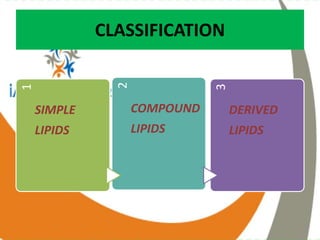
CLASSIFICATION1
SIMPLE
LIPIDS
2
COMPOUND
LIPIDS
3
DERIVED
LIPIDS
SIMPLE LIPIDS
Esters of fatty acids with various alcohols.
FATS
Esters of fatty acids with glycerol.
Oils are fats in liquid state.
WAXES
Esters of fatty acids with higher molecular weight
monohydric alcohols.
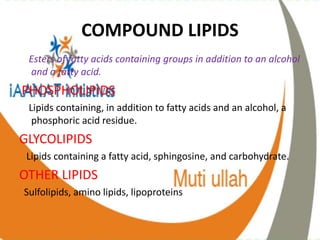
COMPOUND LIPIDS
Esters of fatty acids containing groups in addition to an alcohol
and a fatty acid.
PHOSPHOLIPIDS
Lipids containing, in addition to fatty acids and an alcohol, a
phosphoric acid residue.
GLYCOLIPIDS
Lipids containing a fatty acid, sphingosine, and carbohydrate.
OTHER LIPIDS
Sulfolipids, amino lipids, lipoproteins
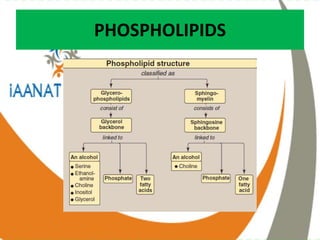
PHOSPHOLIPIDS
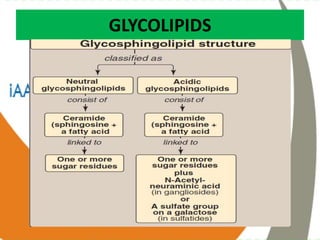
GLYCOLIPIDS
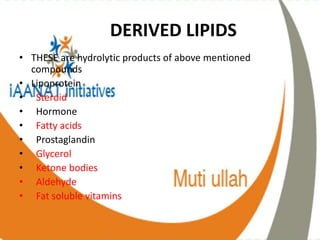
DERIVED LIPIDS
• THESE are hydrolytic products of above mentioned
compounds
• Lipoprotein
• Steroid
• Hormone
• Fatty acids
• Prostaglandin
• Glycerol
• Ketone bodies
• Aldehyde
• Fat soluble vitamins
FUNCTIONS OF LIPIDS
 Storage form of energy(9kcal/g)
 Important dietary constituents
 Components of fat-soluble vitamins
 Stored in adipose tissue , serves as a thermal insulator
 LIPOPROTEINS transport lipids in the blood.
 Role in pathophysiology of diseases e.g. obesity, diabetes
mellitus, atherosclerosis
 Role in nutrition and health.
 Structural components of biomembranes.
FUNCTIONS OF LIPIDS
 Metabolic regulator.
 Improve taste and palatability of food.
 Give shape and contour to body.
 Act as surfactant, detergents, emulsifying agents.
 Cushioning effect to internal organs.

Fat and their classification

  • 1.
  • 2.
    DEFINITION The lipids area heterogeneous group of compounds, including fats, oils, steroids, waxes, and related compounds. They have the common property of being (1) relatively insoluble in water. (2) soluble in nonpolar solvents such as ether and chloroform. (3)related more by their physical than by their chemical properties.
  • 3.
    SOURCES ANIMAL Animal fat ,meat,butter ,milk ,cream ,ghee ,egg yolk ,liver PLANT Vegetable oil
  • 4.
  • 5.
    SIMPLE LIPIDS Esters offatty acids with various alcohols. FATS Esters of fatty acids with glycerol. Oils are fats in liquid state. WAXES Esters of fatty acids with higher molecular weight monohydric alcohols.
  • 6.
    COMPOUND LIPIDS Esters offatty acids containing groups in addition to an alcohol and a fatty acid. PHOSPHOLIPIDS Lipids containing, in addition to fatty acids and an alcohol, a phosphoric acid residue. GLYCOLIPIDS Lipids containing a fatty acid, sphingosine, and carbohydrate. OTHER LIPIDS Sulfolipids, amino lipids, lipoproteins
  • 7.
  • 8.
  • 9.
    DERIVED LIPIDS • THESEare hydrolytic products of above mentioned compounds • Lipoprotein • Steroid • Hormone • Fatty acids • Prostaglandin • Glycerol • Ketone bodies • Aldehyde • Fat soluble vitamins
  • 10.
    FUNCTIONS OF LIPIDS Storage form of energy(9kcal/g)  Important dietary constituents  Components of fat-soluble vitamins  Stored in adipose tissue , serves as a thermal insulator  LIPOPROTEINS transport lipids in the blood.  Role in pathophysiology of diseases e.g. obesity, diabetes mellitus, atherosclerosis  Role in nutrition and health.  Structural components of biomembranes.
  • 11.
    FUNCTIONS OF LIPIDS Metabolic regulator.  Improve taste and palatability of food.  Give shape and contour to body.  Act as surfactant, detergents, emulsifying agents.  Cushioning effect to internal organs.