Pharma Knowledge
1
Lipids
• The word lipid is derived from a Greek word
“lipos” which means Fat.
• A lipid is a macrobiomolecule that is soluble
in non polar solvents.
• Non-polar solvents are
typically hydrocarbons used to dissolve.
• Do not (or do not easily) dissolve in water.
Functions
• The functions of lipids include storing energy, signaling, and acting
as structural components of cell membranes.
• Lipids have applications in the cosmetic and food industries as well
as in nanotechnology.
• They serve as a storage form of metabolic fuel.
• they serve as a transport form of metabolic fuel.
• They provide the structural components of membranes
(phospholipids, glycolipids, galactolipids, sphingolipids)
• They have protective functions in bacteria, plants, insects, and
vertebrates, serving as a part of the outer coating between the
body of the organism and the environment.
Classifications
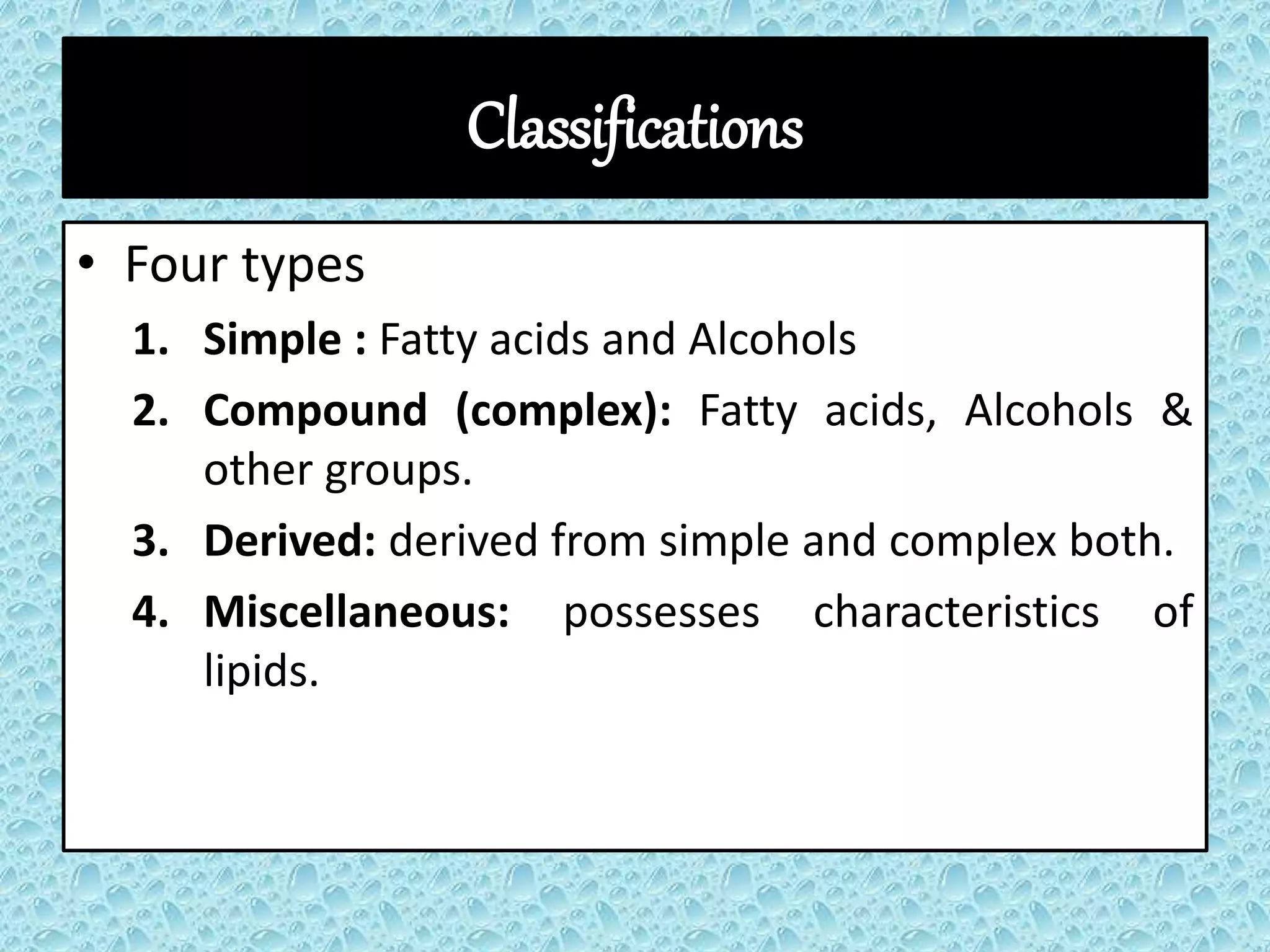
• Four types
1. Simple : Fatty acids and Alcohols
2. Compound (complex): Fatty acids, Alcohols &
other groups.
3. Derived: derived from simple and complex both.
4. Miscellaneous: possesses characteristics of
lipids.
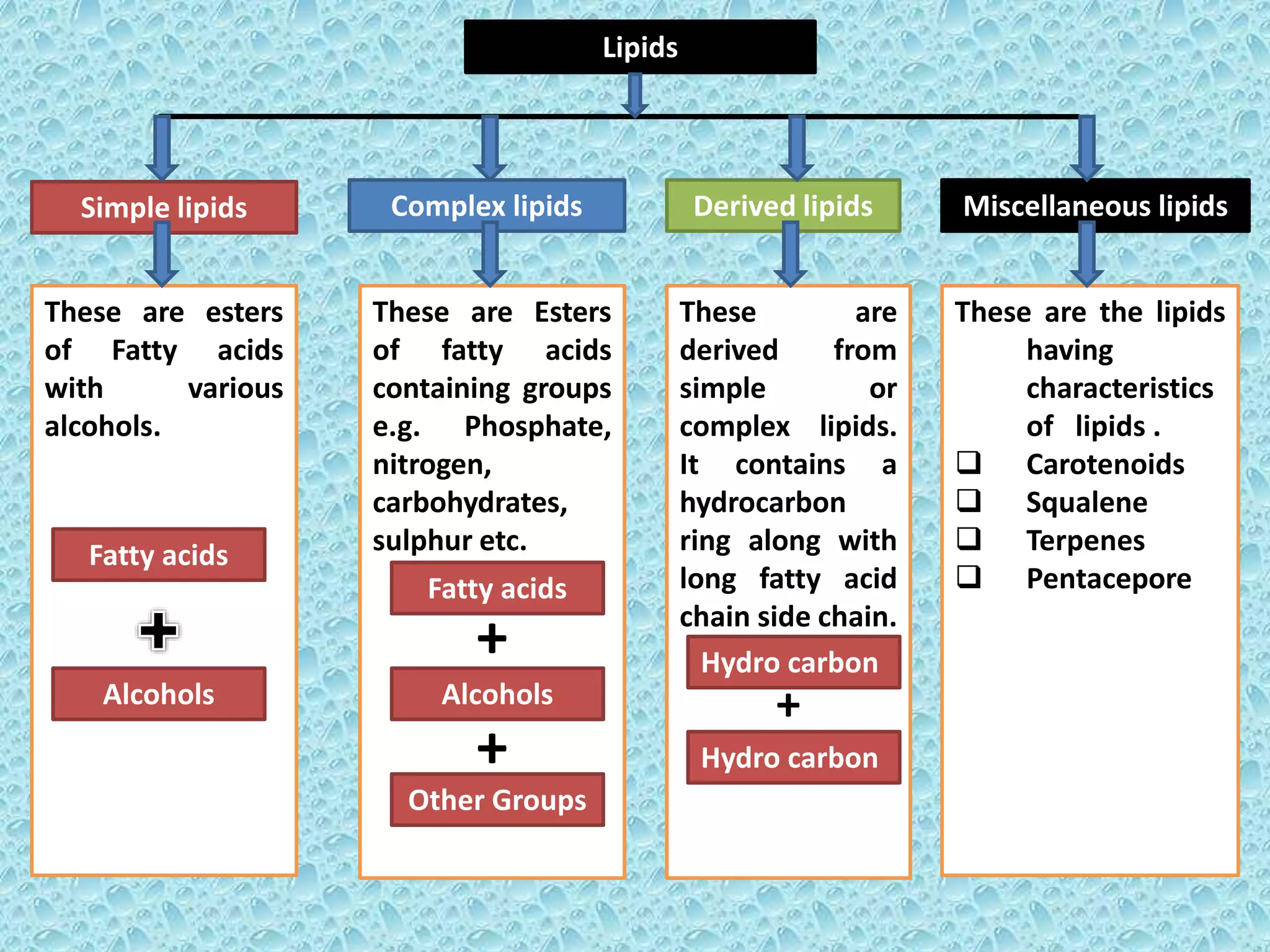
Lipids
Simple lipids
These are esters
of Fatty acids
with various
alcohols.
Complex lipids
These are Esters
of fatty acids
containing groups
e.g. Phosphate,
nitrogen,
carbohydrates,
sulphur etc.
+
+
Derived lipids
These are
derived from
simple or
complex lipids.
It contains a
hydrocarbon
ring along with
long fatty acid
chain side chain.
+
Miscellaneous lipids
These are the lipids
having
characteristics
of lipids .
 Carotenoids
 Squalene
 Terpenes
 Pentacepore
Fatty acids
Alcohols
Fatty acids
Alcohols
Other Groups
Hydro carbon
Hydro carbon
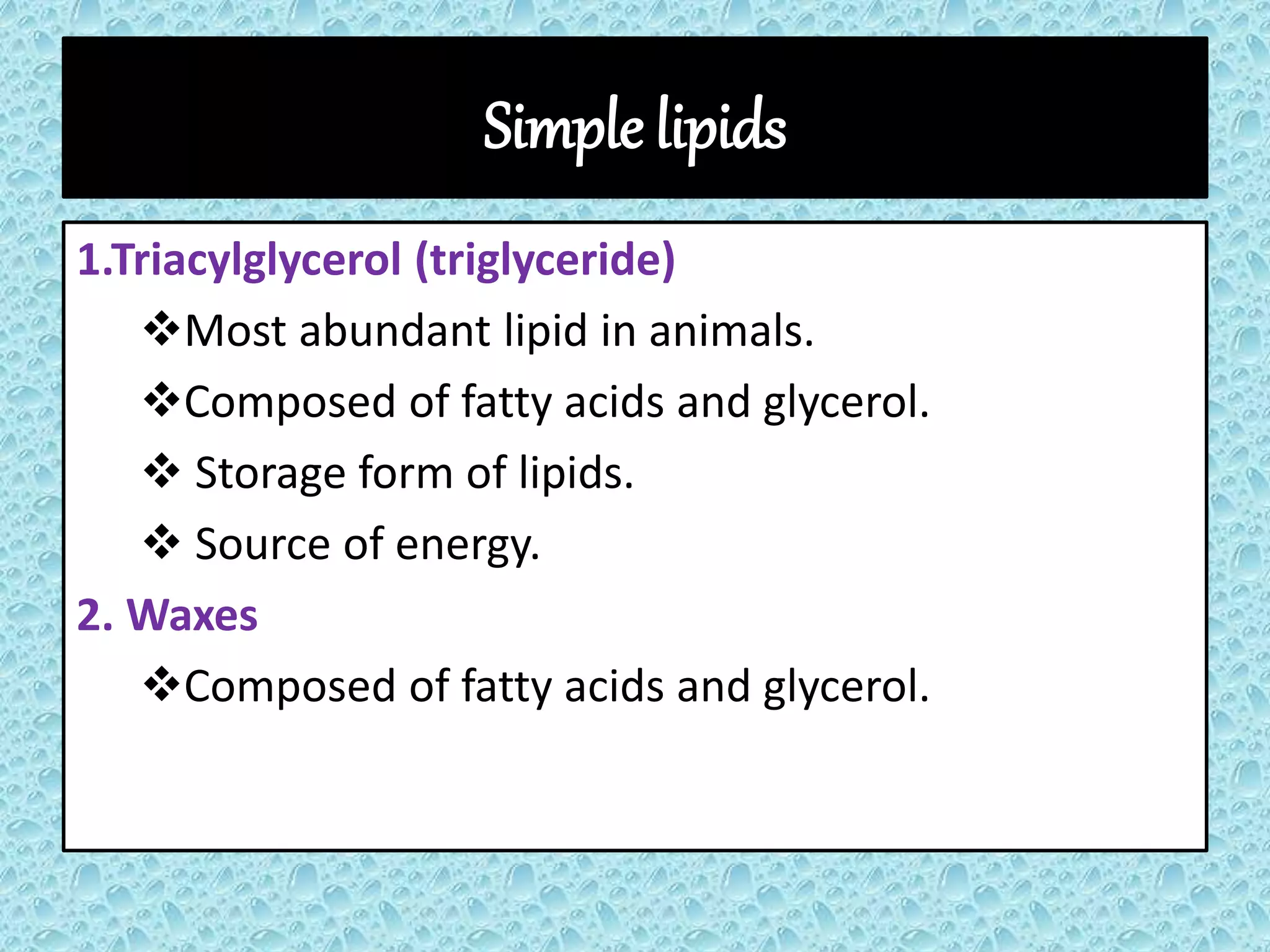
Simple lipids
1.Triacylglycerol (triglyceride)
Most abundant lipid in animals.
Composed of fatty acids and glycerol.
 Storage form of lipids.
 Source of energy.
2. Waxes
Composed of fatty acids and glycerol.
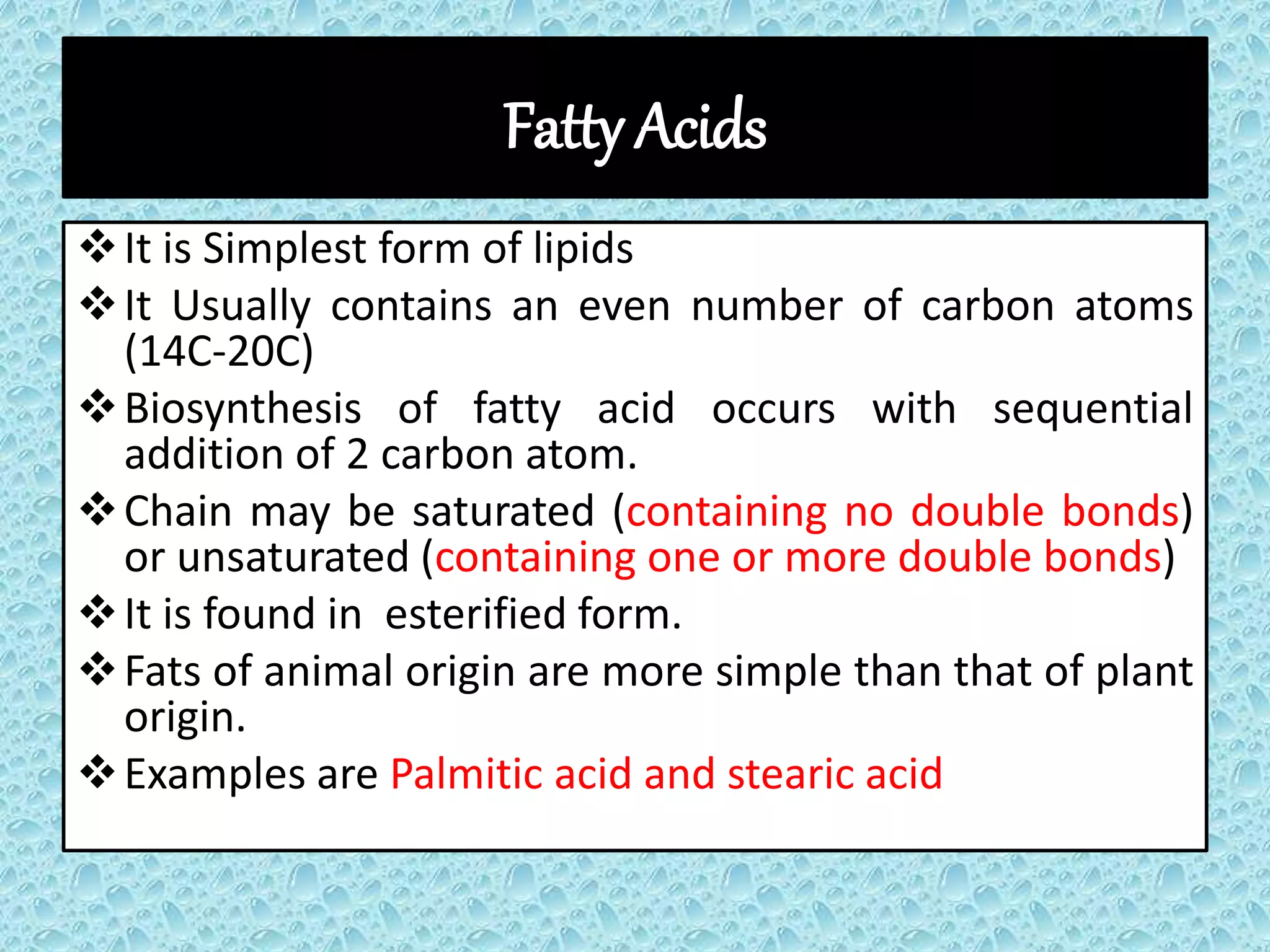
Fatty Acids
It is Simplest form of lipids
It Usually contains an even number of carbon atoms
(14C-20C)
Biosynthesis of fatty acid occurs with sequential
addition of 2 carbon atom.
Chain may be saturated (containing no double bonds)
or unsaturated (containing one or more double bonds)
It is found in esterified form.
Fats of animal origin are more simple than that of plant
origin.
Examples are Palmitic acid and stearic acid
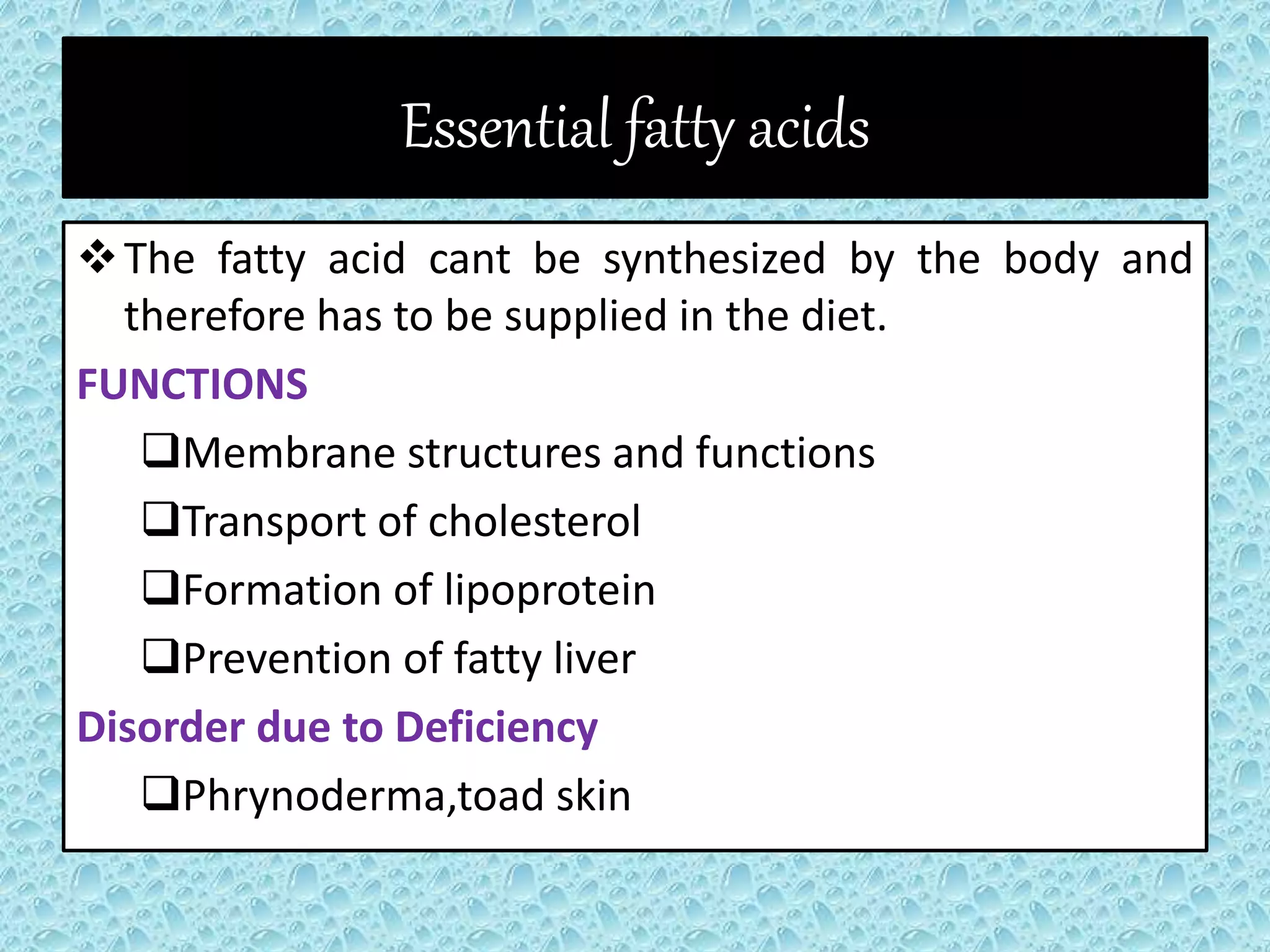
Essential fatty acids
The fatty acid cant be synthesized by the body and
therefore has to be supplied in the diet.
FUNCTIONS
Membrane structures and functions
Transport of cholesterol
Formation of lipoprotein
Prevention of fatty liver
Disorder due to Deficiency
Phrynoderma,toad skin
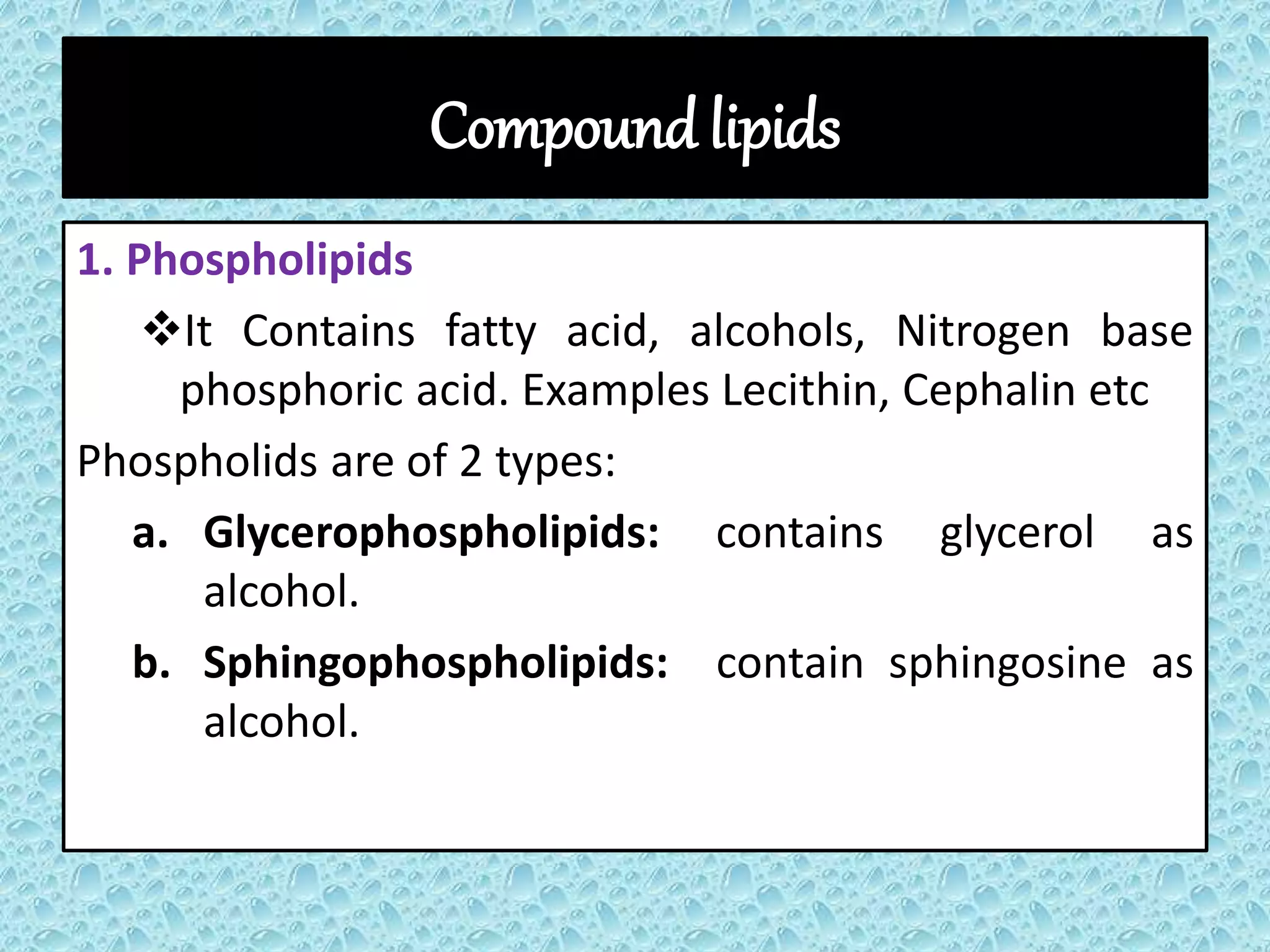
Compound lipids
1. Phospholipids
It Contains fatty acid, alcohols, Nitrogen base
phosphoric acid. Examples Lecithin, Cephalin etc
Phospholids are of 2 types:
a. Glycerophospholipids: contains glycerol as
alcohol.
b. Sphingophospholipids: contain sphingosine as
alcohol.
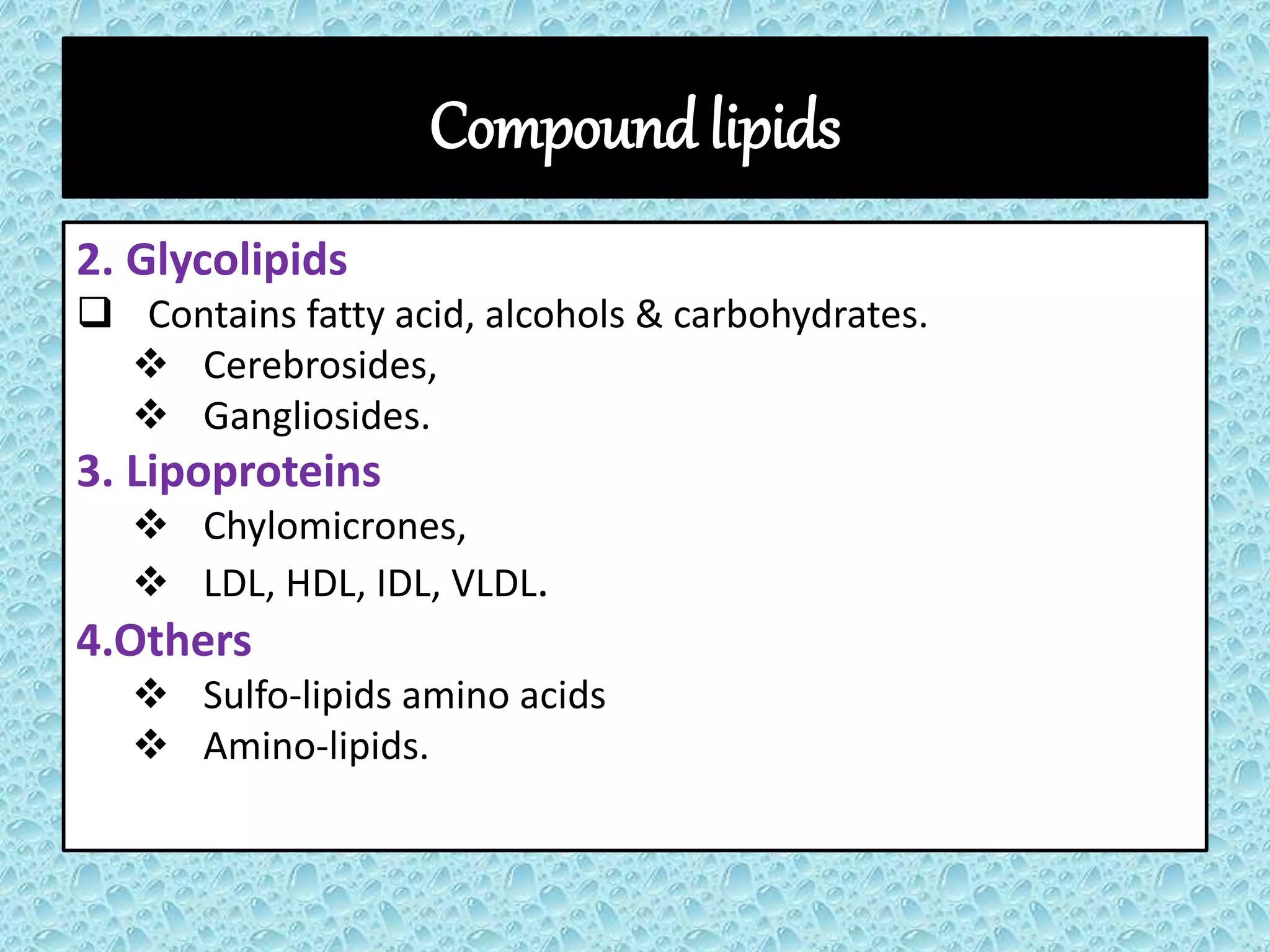
Compound lipids
2. Glycolipids
 Contains fatty acid, alcohols & carbohydrates.
 Cerebrosides,
 Gangliosides.
3. Lipoproteins
 Chylomicrones,
 LDL, HDL, IDL, VLDL.
4.Others
 Sulfo-lipids amino acids
 Amino-lipids.
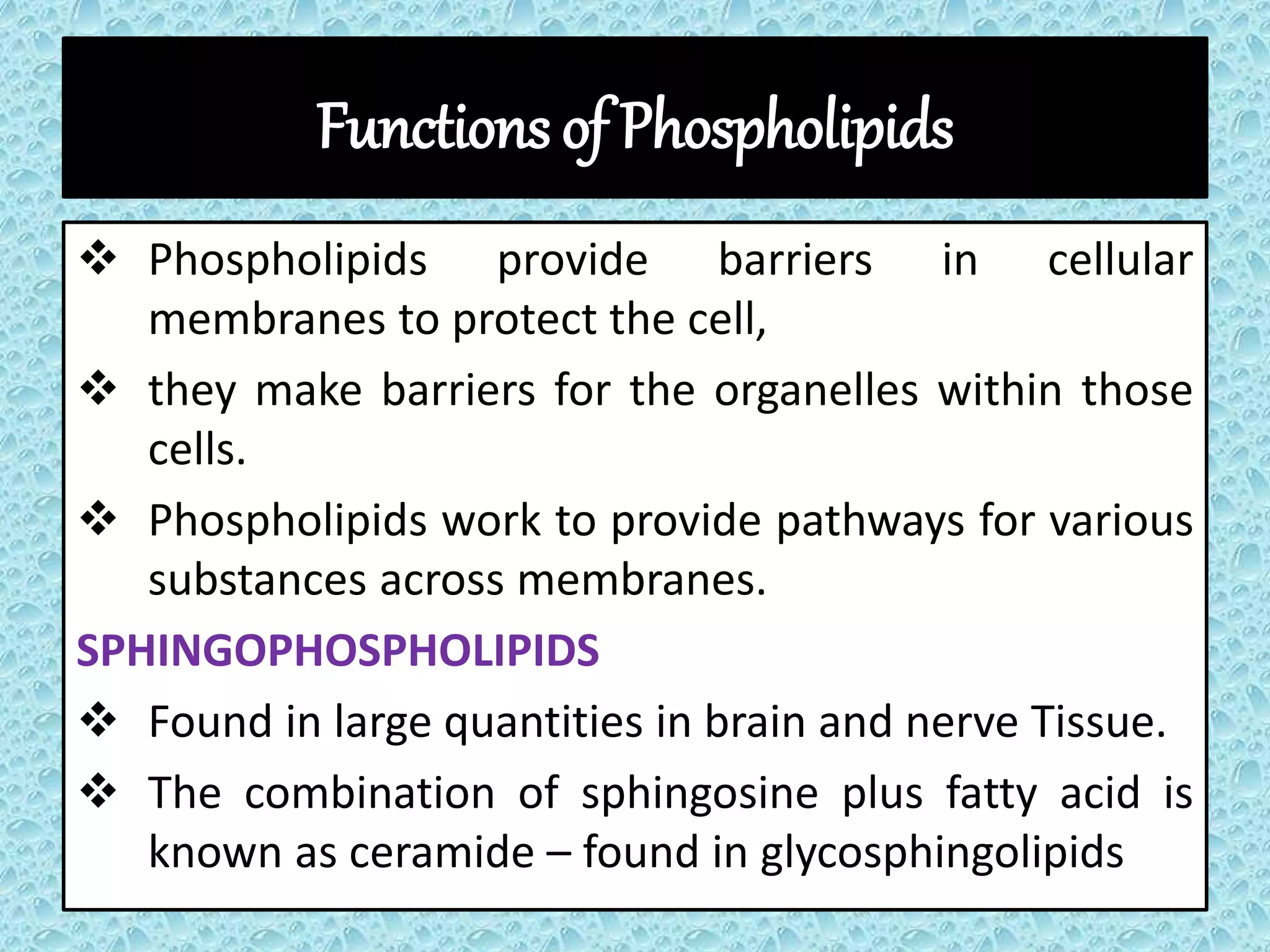
Functions of Phospholipids
 Phospholipids provide barriers in cellular
membranes to protect the cell,
 they make barriers for the organelles within those
cells.
 Phospholipids work to provide pathways for various
substances across membranes.
SPHINGOPHOSPHOLIPIDS
 Found in large quantities in brain and nerve Tissue.
 The combination of sphingosine plus fatty acid is
known as ceramide – found in glycosphingolipids
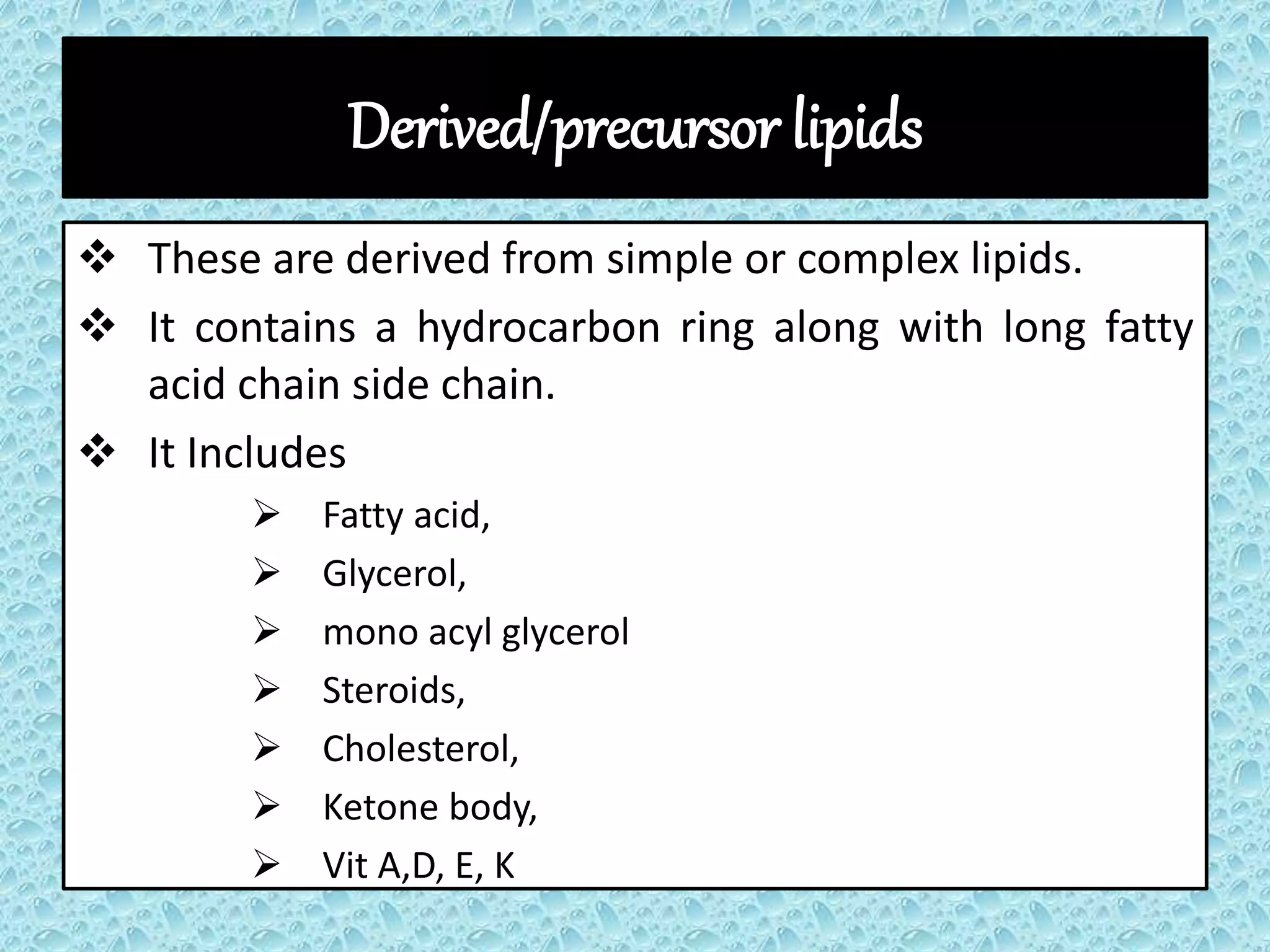
Derived/precursor lipids
 These are derived from simple or complex lipids.
 It contains a hydrocarbon ring along with long fatty
acid chain side chain.
 It Includes
 Fatty acid,
 Glycerol,
 mono acyl glycerol
 Steroids,
 Cholesterol,
 Ketone body,
 Vit A,D, E, K
Steroids
• Steroids compound containing cyclic steroid nucleus.
• Several steroids in biological systems.
– Cholestrol
– Bile acids
– Vitamin D
– Sex Hormone
– Adrenocortical hormones
– Cardiac glycosides
– Alkaloids
Derived/precursor lipids
CHOLESTEROL
It is a precursor of a large number of equally important
steroids
 Bile acids,
 Adrenocortical hormones,
 Sex hormones,
 D vitamins – Ergosterol
 Cardiac glycosides
Function
 Present in nervous tissues – insulating cover
 Biochemical function – precursor for many biochemical
substances and component of cell membrane.
Bile acids
• It synthesized from cholesterol in the liver.
• Bile acids keep bile cholesterol in a soluble state
asmicelles to promote the digestion of lipids in the
intestine.
Primary bile acids : Cholic acid and chenodeoxycholic
acid
Secondary bile acids : lithocholic acid and deoxycholic
acid.
Miscellaneous lipids
These are the lipids having characteristics of lipids but having
different characteristic group.
 Carotenoids
 Squalene
 Terpenes
 Pentacepore
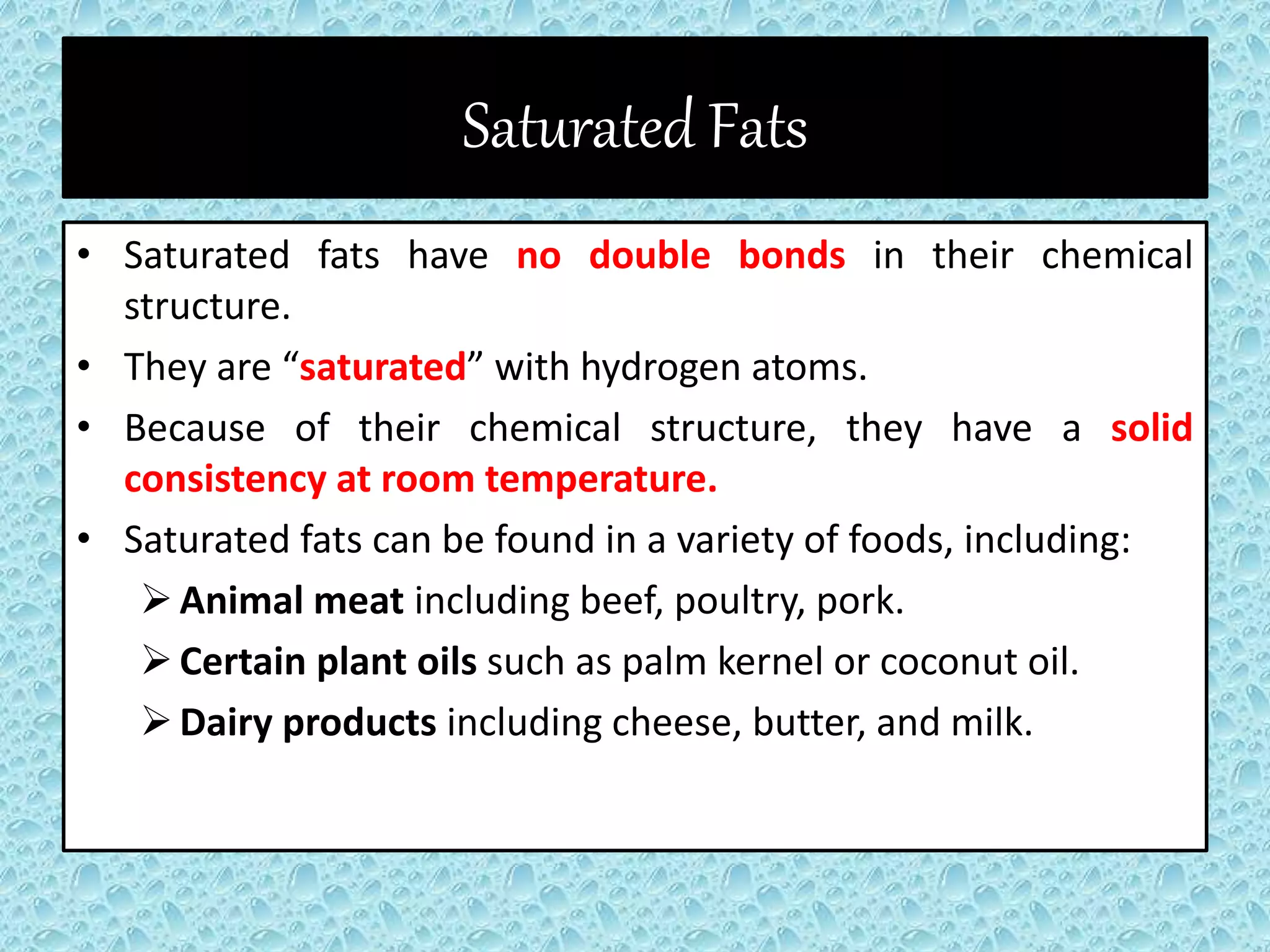
Saturated Fats
• Saturated fats have no double bonds in their chemical
structure.
• They are “saturated” with hydrogen atoms.
• Because of their chemical structure, they have a solid
consistency at room temperature.
• Saturated fats can be found in a variety of foods, including:
Animal meat including beef, poultry, pork.
Certain plant oils such as palm kernel or coconut oil.
Dairy products including cheese, butter, and milk.
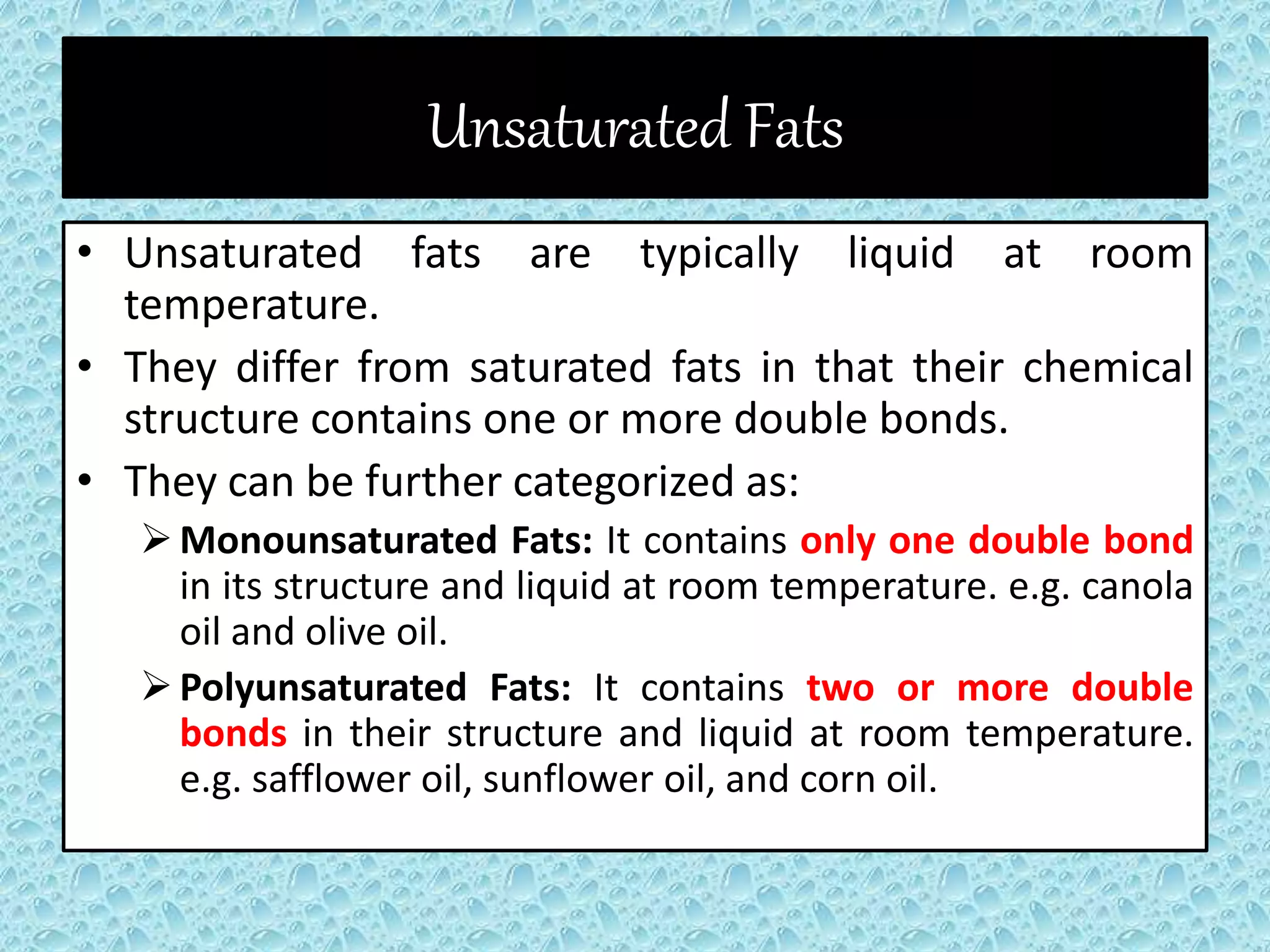
Unsaturated Fats
• Unsaturated fats are typically liquid at room
temperature.
• They differ from saturated fats in that their chemical
structure contains one or more double bonds.
• They can be further categorized as:
Monounsaturated Fats: It contains only one double bond
in its structure and liquid at room temperature. e.g. canola
oil and olive oil.
Polyunsaturated Fats: It contains two or more double
bonds in their structure and liquid at room temperature.
e.g. safflower oil, sunflower oil, and corn oil.
References
• Wikepedia
• U.Satyanarayan, U. Chakerpeni. Biochemistry
• Harpers, Biochemistry, 26th edition.
Thank you all
20
Subscribe and share

Lipids and its classification

  • 1.
  • 2.
    Lipids • The wordlipid is derived from a Greek word “lipos” which means Fat. • A lipid is a macrobiomolecule that is soluble in non polar solvents. • Non-polar solvents are typically hydrocarbons used to dissolve. • Do not (or do not easily) dissolve in water.
  • 3.
    Functions • The functionsof lipids include storing energy, signaling, and acting as structural components of cell membranes. • Lipids have applications in the cosmetic and food industries as well as in nanotechnology. • They serve as a storage form of metabolic fuel. • they serve as a transport form of metabolic fuel. • They provide the structural components of membranes (phospholipids, glycolipids, galactolipids, sphingolipids) • They have protective functions in bacteria, plants, insects, and vertebrates, serving as a part of the outer coating between the body of the organism and the environment.
  • 4.
    Classifications • Four types 1.Simple : Fatty acids and Alcohols 2. Compound (complex): Fatty acids, Alcohols & other groups. 3. Derived: derived from simple and complex both. 4. Miscellaneous: possesses characteristics of lipids.
  • 5.
    Lipids Simple lipids These areesters of Fatty acids with various alcohols. Complex lipids These are Esters of fatty acids containing groups e.g. Phosphate, nitrogen, carbohydrates, sulphur etc. + + Derived lipids These are derived from simple or complex lipids. It contains a hydrocarbon ring along with long fatty acid chain side chain. + Miscellaneous lipids These are the lipids having characteristics of lipids .  Carotenoids  Squalene  Terpenes  Pentacepore Fatty acids Alcohols Fatty acids Alcohols Other Groups Hydro carbon Hydro carbon
  • 6.
    Simple lipids 1.Triacylglycerol (triglyceride) Mostabundant lipid in animals. Composed of fatty acids and glycerol.  Storage form of lipids.  Source of energy. 2. Waxes Composed of fatty acids and glycerol.
  • 7.
    Fatty Acids It isSimplest form of lipids It Usually contains an even number of carbon atoms (14C-20C) Biosynthesis of fatty acid occurs with sequential addition of 2 carbon atom. Chain may be saturated (containing no double bonds) or unsaturated (containing one or more double bonds) It is found in esterified form. Fats of animal origin are more simple than that of plant origin. Examples are Palmitic acid and stearic acid
  • 8.
    Essential fatty acids Thefatty acid cant be synthesized by the body and therefore has to be supplied in the diet. FUNCTIONS Membrane structures and functions Transport of cholesterol Formation of lipoprotein Prevention of fatty liver Disorder due to Deficiency Phrynoderma,toad skin
  • 9.
    Compound lipids 1. Phospholipids ItContains fatty acid, alcohols, Nitrogen base phosphoric acid. Examples Lecithin, Cephalin etc Phospholids are of 2 types: a. Glycerophospholipids: contains glycerol as alcohol. b. Sphingophospholipids: contain sphingosine as alcohol.
  • 10.
    Compound lipids 2. Glycolipids Contains fatty acid, alcohols & carbohydrates.  Cerebrosides,  Gangliosides. 3. Lipoproteins  Chylomicrones,  LDL, HDL, IDL, VLDL. 4.Others  Sulfo-lipids amino acids  Amino-lipids.
  • 11.
    Functions of Phospholipids Phospholipids provide barriers in cellular membranes to protect the cell,  they make barriers for the organelles within those cells.  Phospholipids work to provide pathways for various substances across membranes. SPHINGOPHOSPHOLIPIDS  Found in large quantities in brain and nerve Tissue.  The combination of sphingosine plus fatty acid is known as ceramide – found in glycosphingolipids
  • 12.
    Derived/precursor lipids  Theseare derived from simple or complex lipids.  It contains a hydrocarbon ring along with long fatty acid chain side chain.  It Includes  Fatty acid,  Glycerol,  mono acyl glycerol  Steroids,  Cholesterol,  Ketone body,  Vit A,D, E, K
  • 13.
    Steroids • Steroids compoundcontaining cyclic steroid nucleus. • Several steroids in biological systems. – Cholestrol – Bile acids – Vitamin D – Sex Hormone – Adrenocortical hormones – Cardiac glycosides – Alkaloids
  • 14.
    Derived/precursor lipids CHOLESTEROL It isa precursor of a large number of equally important steroids  Bile acids,  Adrenocortical hormones,  Sex hormones,  D vitamins – Ergosterol  Cardiac glycosides Function  Present in nervous tissues – insulating cover  Biochemical function – precursor for many biochemical substances and component of cell membrane.
  • 15.
    Bile acids • Itsynthesized from cholesterol in the liver. • Bile acids keep bile cholesterol in a soluble state asmicelles to promote the digestion of lipids in the intestine. Primary bile acids : Cholic acid and chenodeoxycholic acid Secondary bile acids : lithocholic acid and deoxycholic acid.
  • 16.
    Miscellaneous lipids These arethe lipids having characteristics of lipids but having different characteristic group.  Carotenoids  Squalene  Terpenes  Pentacepore
  • 17.
    Saturated Fats • Saturatedfats have no double bonds in their chemical structure. • They are “saturated” with hydrogen atoms. • Because of their chemical structure, they have a solid consistency at room temperature. • Saturated fats can be found in a variety of foods, including: Animal meat including beef, poultry, pork. Certain plant oils such as palm kernel or coconut oil. Dairy products including cheese, butter, and milk.
  • 18.
    Unsaturated Fats • Unsaturatedfats are typically liquid at room temperature. • They differ from saturated fats in that their chemical structure contains one or more double bonds. • They can be further categorized as: Monounsaturated Fats: It contains only one double bond in its structure and liquid at room temperature. e.g. canola oil and olive oil. Polyunsaturated Fats: It contains two or more double bonds in their structure and liquid at room temperature. e.g. safflower oil, sunflower oil, and corn oil.
  • 19.
    References • Wikepedia • U.Satyanarayan,U. Chakerpeni. Biochemistry • Harpers, Biochemistry, 26th edition.
  • 20.