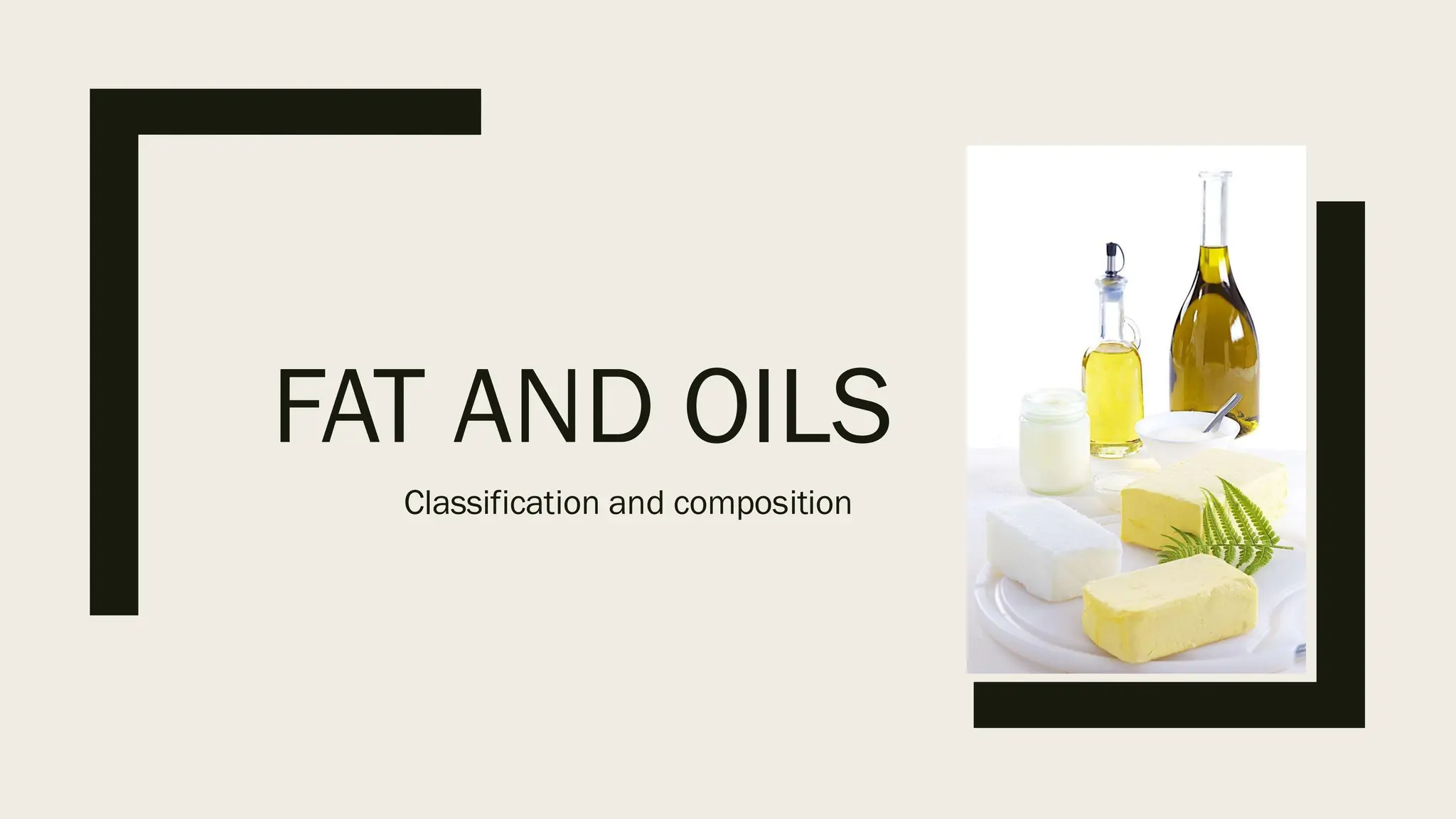
FAT AND OILS
Classification and composition
Fat &oils
■ The term lipid is derived from the greek word “lipos” Meaning fat
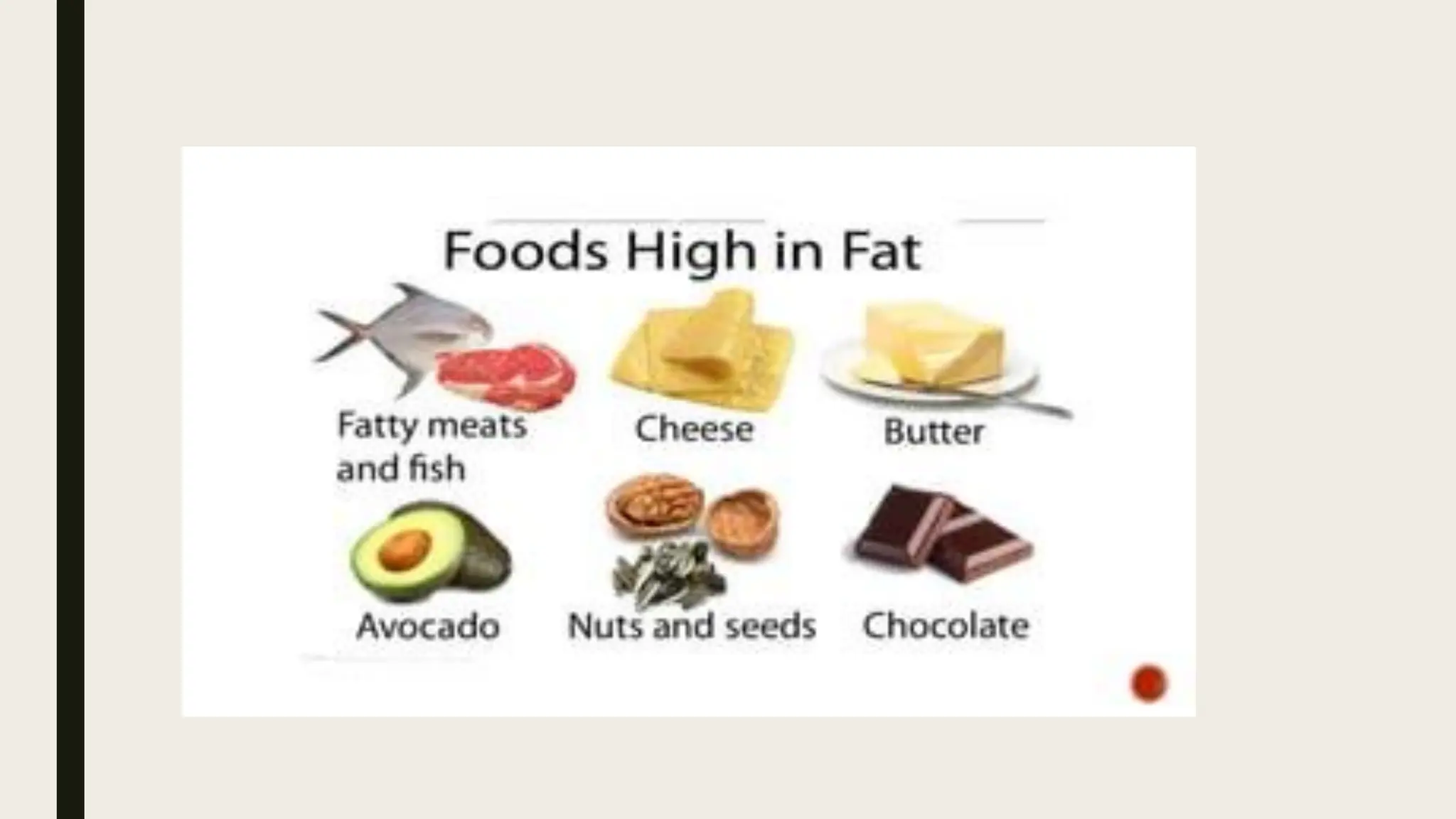
■ Fat are the principle component of the diet
■ Fat are the storage form of concentrated fuel for the human energy system
■ Fat readily digested and utilized in the body
■ In food fat may be in the form of either solid fat and liquid oil
■ Lipid that are solid at room temperature is known as fat and those are liquid are
known as oils
Difference between fat & oils
Fat
■ Remain solid at room temperature
■ High melting point
■ Obtained form animal body
■ Butter, ghee, egg , yolk ,meat
■ Oxidative rancidity high
■ Stored in the liver and beneath the skin of the animal
■ Low iodine value
■ Low molecular weight
■ High saponification value
Oil
■ Remain liquid at room temperature
■ Low melting point
■ Obtained from plant sources
■ Mustard oil, groundnut oil, almond oil
■ Oxidative rancidity low
■ Stored in seed and fruit of plants
■ High iodine value
■ High molecular weight
■ Low saponification value
Function of lipids
■ Storage form of energy
■ Add or modify flavor and texture
■ Contribute tenderness
■ Provide satiety
■ Hormone production
■ Insulation and protection
■ Transportation of nutrients
■ Anti inflammatory properties
Classification of lipids
1 .simple lipids
■ They are esters of fatty acids with certain alcohols
■ Simple lipids are important for energy storage, insulation and protection in various
organisms
■ Example: fat , oil ,waxes
2 .Compound lipids
■ They are esters of fatty acid along with an additional group
■ Simple lipid + additional group = compound lipid
■ Example : phospholipids , glycolipid
■ 3. Derived lipid
■ They are derived from lipid
■ They are liberated during hydrolysis of simple and compound lipid
■ Examples : fatty acids
fatty acid
■ Fatty acids are composed of carbon, hydrogen and oxygen in the proportion of 76%,
12.6% and 11.3 respectively
■ it is the most common lipids in the body.
■ The main building blocks of triglycerides are fatty acids. They are carboxylic acids
with a long hydrocarbon chain attached.
■ they are generally found either in ester linkage or amide linkage in different classes
of lipids.
■ Although, the acid end is polar, the nonpolar hydrocarbon tail makes fatty acids
insoluble in water.fatty acids are aliphatic carboxylic acids have the general
structural formula RCOOH, where carboxylic group represents the functional group.
Depending upon the ‘R’ group, the fatty acids may vary
Classification of fatty acids
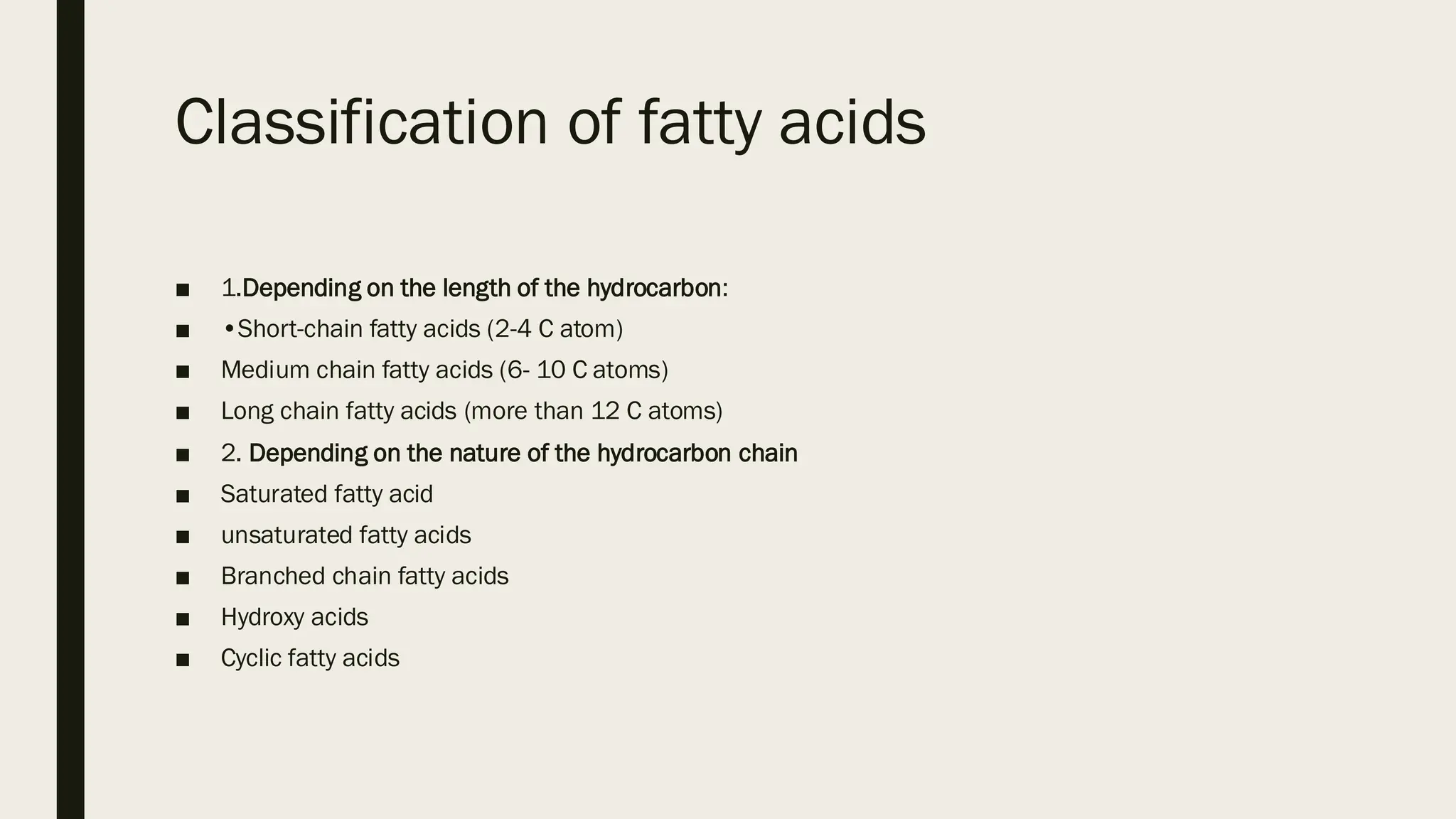
■ 1.Depending on the length of the hydrocarbon:
■ •Short-chain fatty acids (2-4 C atom)
■ Medium chain fatty acids (6- 10 C atoms)
■ Long chain fatty acids (more than 12 C atoms)
■ 2. Depending on the nature of the hydrocarbon chain
■ Saturated fatty acid
■ unsaturated fatty acids
■ Branched chain fatty acids
■ Hydroxy acids
■ Cyclic fatty acids
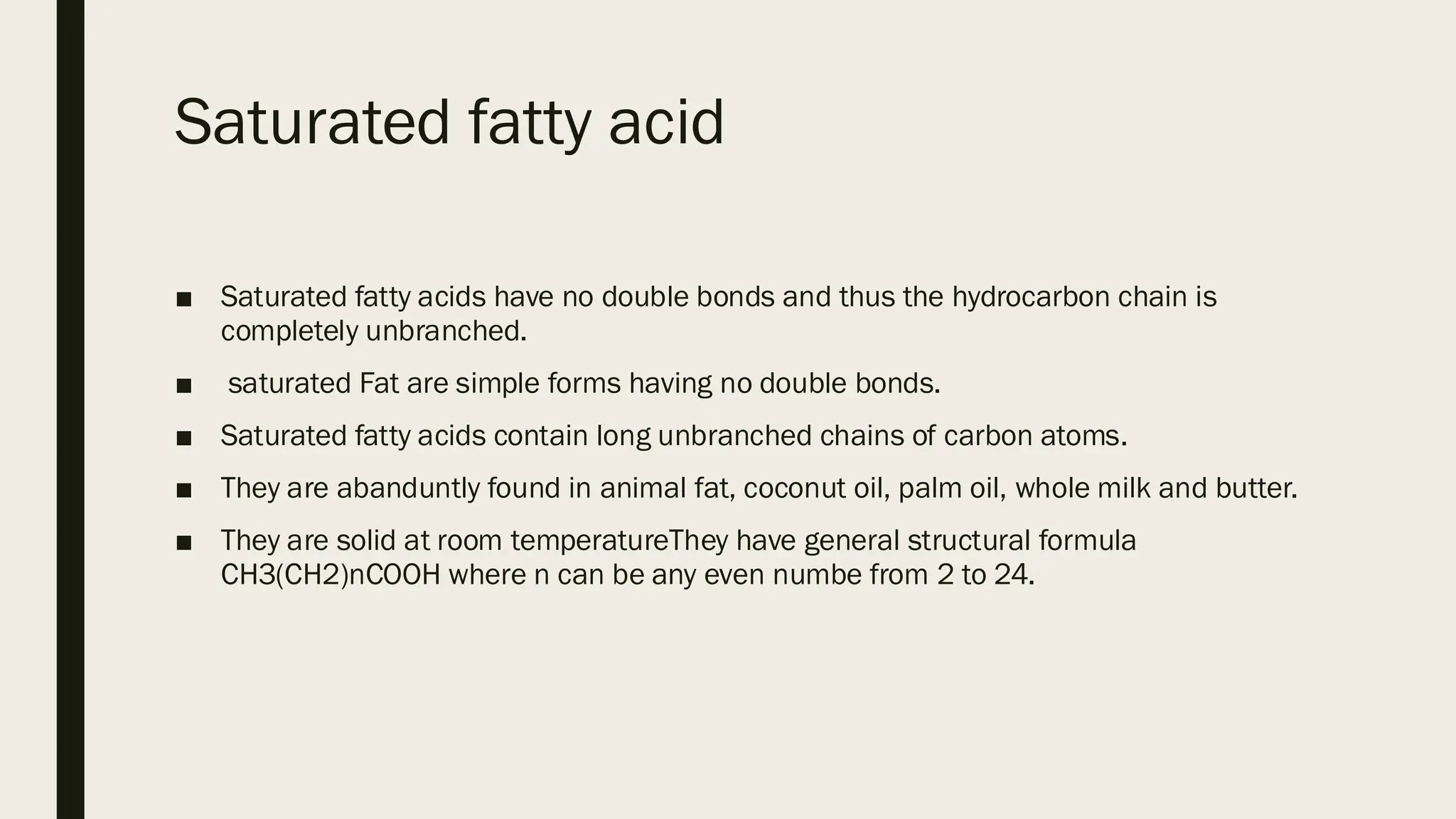
Saturated fatty acid
■ Saturated fatty acids have no double bonds and thus the hydrocarbon chain is
completely unbranched.
■ saturated Fat are simple forms having no double bonds.
■ Saturated fatty acids contain long unbranched chains of carbon atoms.
■ They are abanduntly found in animal fat, coconut oil, palm oil, whole milk and butter.
■ They are solid at room temperatureThey have general structural formula
CH3(CH2)nCOOH where n can be any even numbe from 2 to 24.
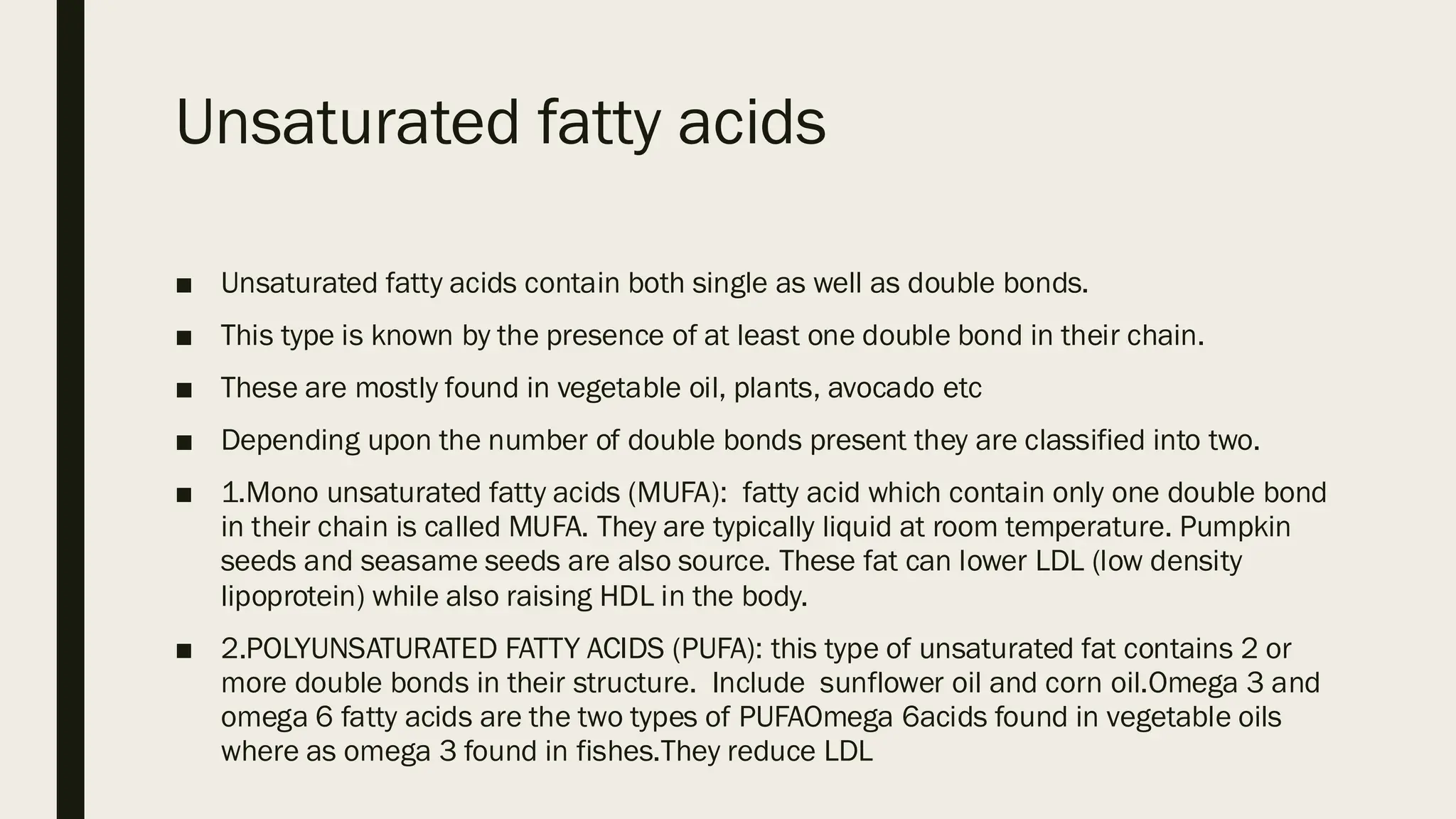
Unsaturated fatty acids
■ Unsaturated fatty acids contain both single as well as double bonds.
■ This type is known by the presence of at least one double bond in their chain.
■ These are mostly found in vegetable oil, plants, avocado etc
■ Depending upon the number of double bonds present they are classified into two.
■ 1.Mono unsaturated fatty acids (MUFA): fatty acid which contain only one double bond
in their chain is called MUFA. They are typically liquid at room temperature. Pumpkin
seeds and seasame seeds are also source. These fat can lower LDL (low density
lipoprotein) while also raising HDL in the body.
■ 2.POLYUNSATURATED FATTY ACIDS (PUFA): this type of unsaturated fat contains 2 or
more double bonds in their structure. Include sunflower oil and corn oil.Omega 3 and
omega 6 fatty acids are the two types of PUFAOmega 6acids found in vegetable oils
where as omega 3 found in fishes.They reduce LDL
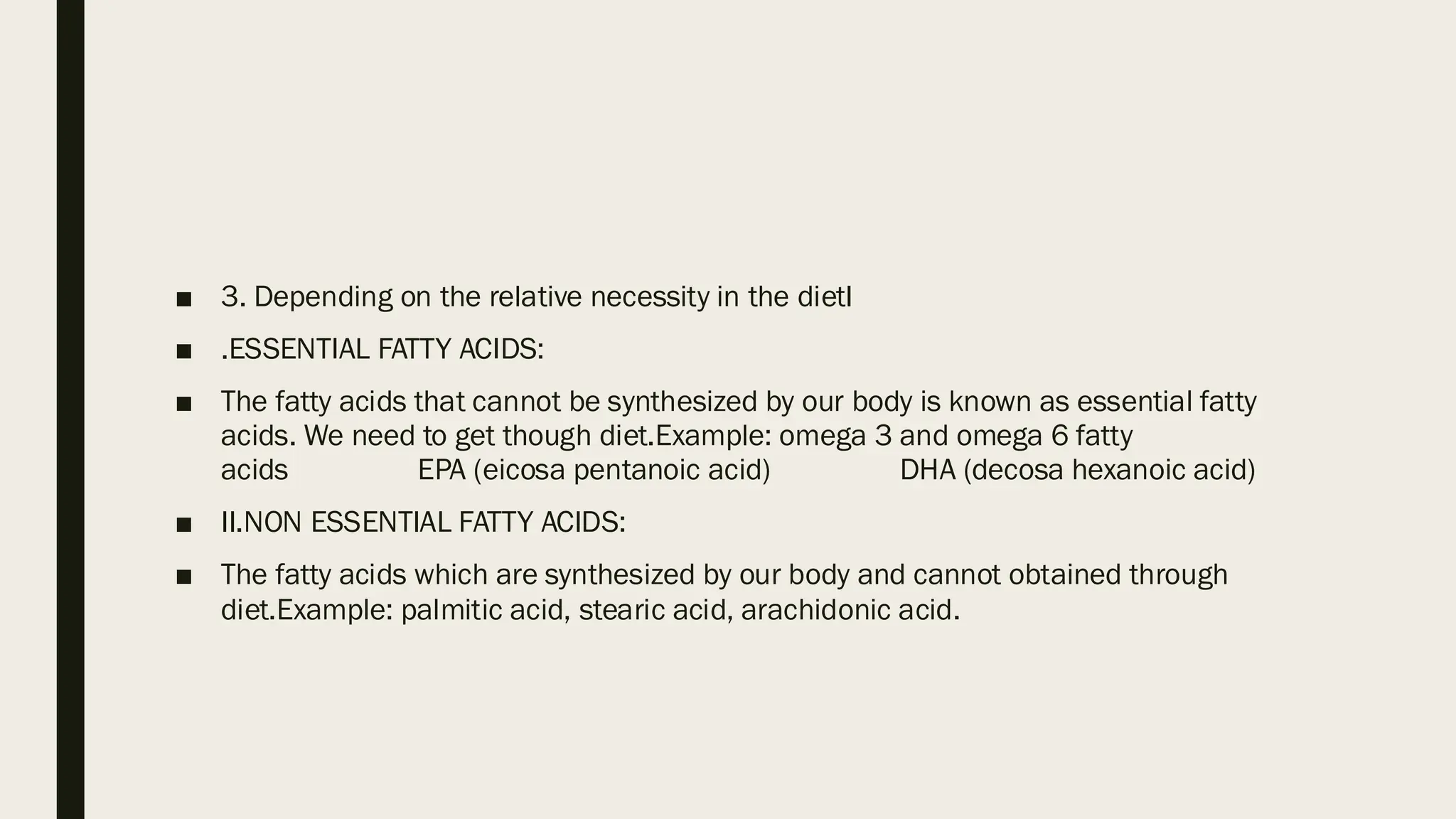
■ 3. Depending on the relative necessity in the dietI
■ .ESSENTIAL FATTY ACIDS:
■ The fatty acids that cannot be synthesized by our body is known as essential fatty
acids. We need to get though diet.Example: omega 3 and omega 6 fatty
acids EPA (eicosa pentanoic acid) DHA (decosa hexanoic acid)
■ II.NON ESSENTIAL FATTY ACIDS:
■ The fatty acids which are synthesized by our body and cannot obtained through
diet.Example: palmitic acid, stearic acid, arachidonic acid.
Composition of fat and oil
■ The main component of the fat and oil are triglycerides
■ Triglycerides:
■ Triglycerides are a common type of fat that come from food, especially oils, butter,
and other fats. Your body also produces triglycerides from extra calories that aren't
used immediately.
■ The minor component include free fatty acid , phospholipids, Sterols , fat soluble
acids , vitamins , waxes, pigments
■ Animal fat contains smaller amount of minor components
THANK YOU
Salva
1st sem msc food science and
technology
Roll no : 16

FAT AND OIL CLASSIFICATION AND COMPOSITION.pdf

  • 1.
  • 2.
    Fat &oils ■ Theterm lipid is derived from the greek word “lipos” Meaning fat ■ Fat are the principle component of the diet ■ Fat are the storage form of concentrated fuel for the human energy system ■ Fat readily digested and utilized in the body ■ In food fat may be in the form of either solid fat and liquid oil ■ Lipid that are solid at room temperature is known as fat and those are liquid are known as oils
  • 3.
    Difference between fat& oils Fat ■ Remain solid at room temperature ■ High melting point ■ Obtained form animal body ■ Butter, ghee, egg , yolk ,meat ■ Oxidative rancidity high ■ Stored in the liver and beneath the skin of the animal ■ Low iodine value ■ Low molecular weight ■ High saponification value Oil ■ Remain liquid at room temperature ■ Low melting point ■ Obtained from plant sources ■ Mustard oil, groundnut oil, almond oil ■ Oxidative rancidity low ■ Stored in seed and fruit of plants ■ High iodine value ■ High molecular weight ■ Low saponification value
  • 4.
    Function of lipids ■Storage form of energy ■ Add or modify flavor and texture ■ Contribute tenderness ■ Provide satiety ■ Hormone production ■ Insulation and protection ■ Transportation of nutrients ■ Anti inflammatory properties
  • 6.
    Classification of lipids 1.simple lipids ■ They are esters of fatty acids with certain alcohols ■ Simple lipids are important for energy storage, insulation and protection in various organisms ■ Example: fat , oil ,waxes 2 .Compound lipids ■ They are esters of fatty acid along with an additional group ■ Simple lipid + additional group = compound lipid ■ Example : phospholipids , glycolipid
  • 7.
    ■ 3. Derivedlipid ■ They are derived from lipid ■ They are liberated during hydrolysis of simple and compound lipid ■ Examples : fatty acids
  • 8.
    fatty acid ■ Fattyacids are composed of carbon, hydrogen and oxygen in the proportion of 76%, 12.6% and 11.3 respectively ■ it is the most common lipids in the body. ■ The main building blocks of triglycerides are fatty acids. They are carboxylic acids with a long hydrocarbon chain attached. ■ they are generally found either in ester linkage or amide linkage in different classes of lipids. ■ Although, the acid end is polar, the nonpolar hydrocarbon tail makes fatty acids insoluble in water.fatty acids are aliphatic carboxylic acids have the general structural formula RCOOH, where carboxylic group represents the functional group. Depending upon the ‘R’ group, the fatty acids may vary
  • 9.
    Classification of fattyacids ■ 1.Depending on the length of the hydrocarbon: ■ •Short-chain fatty acids (2-4 C atom) ■ Medium chain fatty acids (6- 10 C atoms) ■ Long chain fatty acids (more than 12 C atoms) ■ 2. Depending on the nature of the hydrocarbon chain ■ Saturated fatty acid ■ unsaturated fatty acids ■ Branched chain fatty acids ■ Hydroxy acids ■ Cyclic fatty acids
  • 10.
    Saturated fatty acid ■Saturated fatty acids have no double bonds and thus the hydrocarbon chain is completely unbranched. ■ saturated Fat are simple forms having no double bonds. ■ Saturated fatty acids contain long unbranched chains of carbon atoms. ■ They are abanduntly found in animal fat, coconut oil, palm oil, whole milk and butter. ■ They are solid at room temperatureThey have general structural formula CH3(CH2)nCOOH where n can be any even numbe from 2 to 24.
  • 11.
    Unsaturated fatty acids ■Unsaturated fatty acids contain both single as well as double bonds. ■ This type is known by the presence of at least one double bond in their chain. ■ These are mostly found in vegetable oil, plants, avocado etc ■ Depending upon the number of double bonds present they are classified into two. ■ 1.Mono unsaturated fatty acids (MUFA): fatty acid which contain only one double bond in their chain is called MUFA. They are typically liquid at room temperature. Pumpkin seeds and seasame seeds are also source. These fat can lower LDL (low density lipoprotein) while also raising HDL in the body. ■ 2.POLYUNSATURATED FATTY ACIDS (PUFA): this type of unsaturated fat contains 2 or more double bonds in their structure. Include sunflower oil and corn oil.Omega 3 and omega 6 fatty acids are the two types of PUFAOmega 6acids found in vegetable oils where as omega 3 found in fishes.They reduce LDL
  • 12.
    ■ 3. Dependingon the relative necessity in the dietI ■ .ESSENTIAL FATTY ACIDS: ■ The fatty acids that cannot be synthesized by our body is known as essential fatty acids. We need to get though diet.Example: omega 3 and omega 6 fatty acids EPA (eicosa pentanoic acid) DHA (decosa hexanoic acid) ■ II.NON ESSENTIAL FATTY ACIDS: ■ The fatty acids which are synthesized by our body and cannot obtained through diet.Example: palmitic acid, stearic acid, arachidonic acid.
  • 13.
    Composition of fatand oil ■ The main component of the fat and oil are triglycerides ■ Triglycerides: ■ Triglycerides are a common type of fat that come from food, especially oils, butter, and other fats. Your body also produces triglycerides from extra calories that aren't used immediately. ■ The minor component include free fatty acid , phospholipids, Sterols , fat soluble acids , vitamins , waxes, pigments ■ Animal fat contains smaller amount of minor components
  • 14.
    THANK YOU Salva 1st semmsc food science and technology Roll no : 16