Principles of food science and nutrition
Assignment : lipids(fats)
Lipids (fats)
Fats – composition and chemistry, classification,
functions
Nutritional disorders – fats deficiency
Energy metabolism – digestion,absorption and
utilization
Introduction
Lipids are a group of naturally occurring substances.
They occur widely in plant and animal Kingdom.
The basic structure of lipids is comprised of
carbon,hydrogen and oxygen.
Each gram of fat provides 9.0kcal of energy.
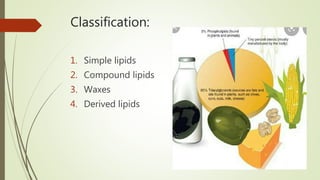
Classification:
1. Simple lipids
2. Compound lipids
3. Waxes
4. Derived lipids
Lipids present in diet:
1. Triglycerides:
It comprises about 95 percent of food lipids and
body lipids.
All triglycerides are similar in structure.
When triglycerides are metabolized the glycerol is
converted into glucose.
2. Phospolipids:
They are the important structure of all membranes.
They are similar to triglycerides, but contain two
polyunsaturated fatty acid.
3. Sterols:
It is the precursor of bile acids and sex hormones.
It is manufactured in all tissues of body, except brain.
Cholesterol, like lecithin is also present in foods, egg
yolk,meat.
A transport mechanism of cholesterol called low-
density lipoprotein is likely to cause risk for
cardiovascular disease called atherosclerosis.
Functions of fats:
It is a concentrated source of energy
Fat is essential for absorption of vitamin A,D,E,K and
carotenoids.
Vegetable fats are good sources of vitamin E.
Fats reduce the bulk of the diet as they provide much
calories.
Fats are deposited in adipose tissue.
Properties of fats:
Fats are soluble in organic solvents such as acetone,
petroleum ether etc.
Saponification value: it is defined as number of
milligrams of potassium hydroxide.
Iodine value: it is the measure of extent of
unsaturated fatty acids present in fats.
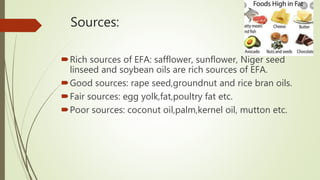
Sources:
Rich sources of EFA: safflower, sunflower, Niger seed
linseed and soybean oils are rich sources of EFA.
Good sources: rape seed,groundnut and rice bran oils.
Fair sources: egg yolk,fat,poultry fat etc.
Poor sources: coconut oil,palm,kernel oil, mutton etc.
Factors affecting the absorption of lipids:
Activity of pancreatic lipase.
Secretion of sufficient bile.
The lipid synthetic activity of intestinal mucosa.
Fatty acid deficiency in human beings:
1. Phrynoderma:
This is one of the common disorders of malnutrition
observed in adults and children
Deficiency in infants:
Hansen and co workers have reported that infants
fed on EFA deficient diet developed perennial
irritation in skin.
Thankyou

Lipids

  • 1.
    Principles of foodscience and nutrition Assignment : lipids(fats)
  • 2.
  • 3.
    Fats – compositionand chemistry, classification, functions Nutritional disorders – fats deficiency Energy metabolism – digestion,absorption and utilization
  • 4.
    Introduction Lipids are agroup of naturally occurring substances. They occur widely in plant and animal Kingdom. The basic structure of lipids is comprised of carbon,hydrogen and oxygen. Each gram of fat provides 9.0kcal of energy.
  • 5.
    Classification: 1. Simple lipids 2.Compound lipids 3. Waxes 4. Derived lipids
  • 6.
    Lipids present indiet: 1. Triglycerides: It comprises about 95 percent of food lipids and body lipids. All triglycerides are similar in structure. When triglycerides are metabolized the glycerol is converted into glucose. 2. Phospolipids: They are the important structure of all membranes. They are similar to triglycerides, but contain two polyunsaturated fatty acid.
  • 7.
    3. Sterols: It isthe precursor of bile acids and sex hormones. It is manufactured in all tissues of body, except brain. Cholesterol, like lecithin is also present in foods, egg yolk,meat. A transport mechanism of cholesterol called low- density lipoprotein is likely to cause risk for cardiovascular disease called atherosclerosis.
  • 8.
    Functions of fats: Itis a concentrated source of energy Fat is essential for absorption of vitamin A,D,E,K and carotenoids. Vegetable fats are good sources of vitamin E. Fats reduce the bulk of the diet as they provide much calories. Fats are deposited in adipose tissue.
  • 9.
    Properties of fats: Fatsare soluble in organic solvents such as acetone, petroleum ether etc. Saponification value: it is defined as number of milligrams of potassium hydroxide. Iodine value: it is the measure of extent of unsaturated fatty acids present in fats.
  • 10.
    Sources: Rich sources ofEFA: safflower, sunflower, Niger seed linseed and soybean oils are rich sources of EFA. Good sources: rape seed,groundnut and rice bran oils. Fair sources: egg yolk,fat,poultry fat etc. Poor sources: coconut oil,palm,kernel oil, mutton etc.
  • 11.
    Factors affecting theabsorption of lipids: Activity of pancreatic lipase. Secretion of sufficient bile. The lipid synthetic activity of intestinal mucosa.
  • 12.
    Fatty acid deficiencyin human beings: 1. Phrynoderma: This is one of the common disorders of malnutrition observed in adults and children Deficiency in infants: Hansen and co workers have reported that infants fed on EFA deficient diet developed perennial irritation in skin.
  • 13.