EPIGENTICS
Mrs. Praveen Garg
VITS College, Satna
INTRODUCTION
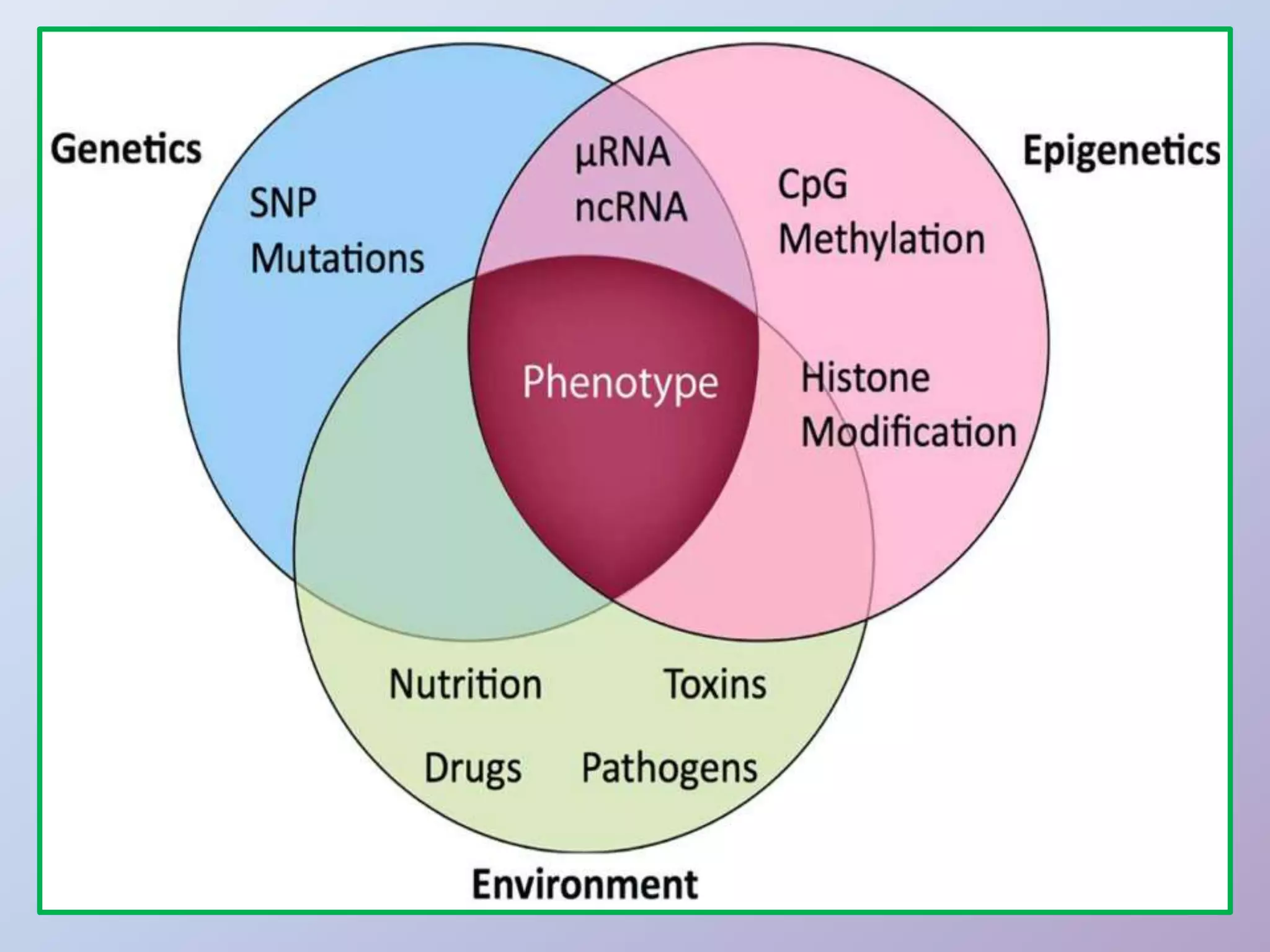
 Epigenetics is the study of heritable phenotype changes that do not
involve alterations in the DNA sequence.
 The term "epigenetic" has been used to describe any modification
of chromosomal regions, especially histone modifications, whether
or not these changes are heritable or associated with a phenotype.
 Its occur in active or inactive genes and regulate the process of
gene regulation.
 Epigenetic change is a regular and natural occurrence but can also
be influenced by several factors including age, the
environment/lifestyle, and disease state.
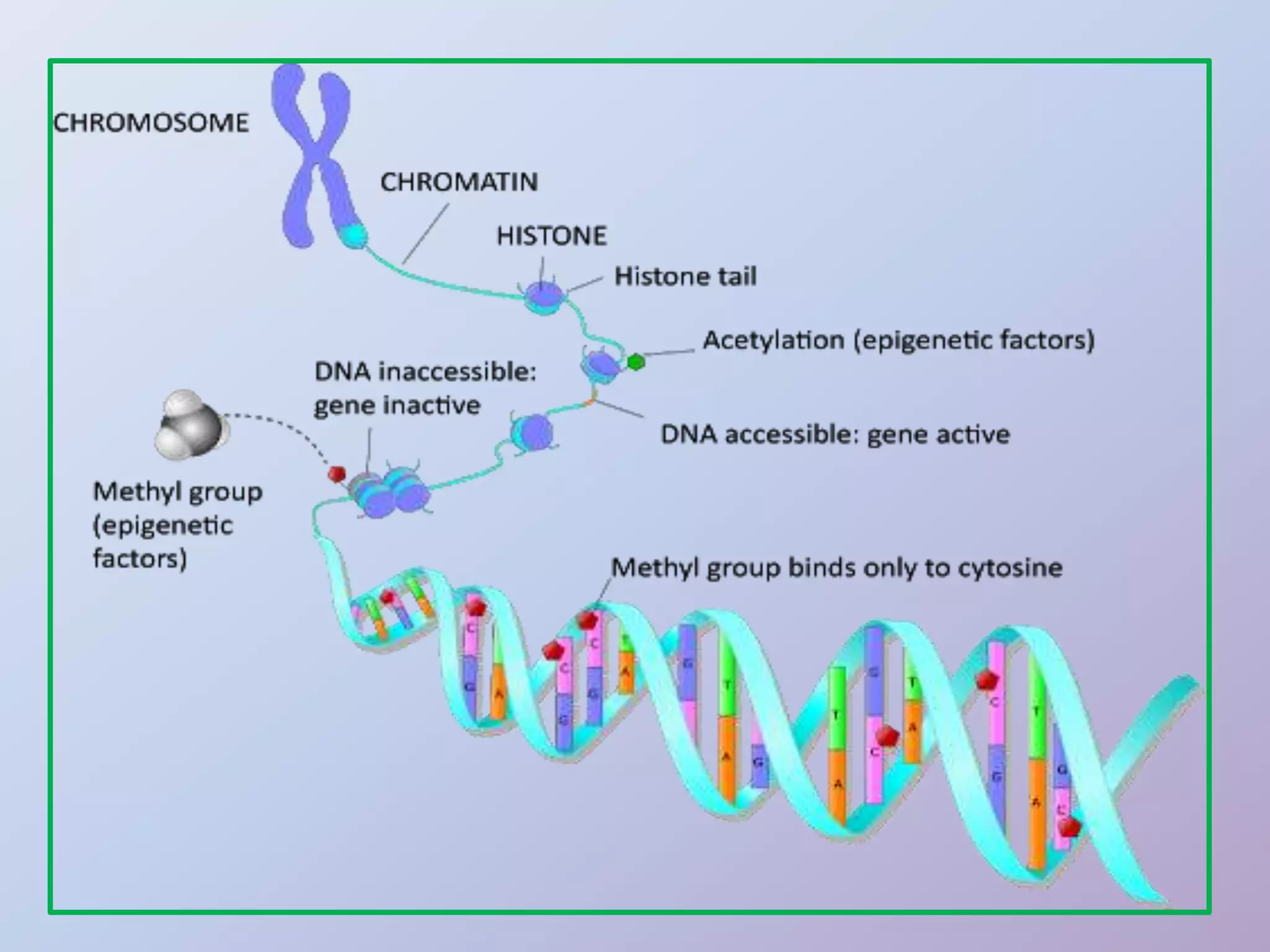
 DNA methylation, histone modification and gene silencing are
initiate and develop epigenetic change.
 The role of epigenetics in a variety of human disorders and fatal
diseases.
 The term epigenetics coined by Waddington in 1942, it described
the influence of genetic processes on development.
 Epigenetic modifications can be develop in skin cells, liver cells,
brain cells, etc.
 Epigenetic change can have more damaging effects that can result
in diseases like cancer.
 Epigenetic do not involve a change to the DNA sequence,
whereas genetic mechanisms involve the changes or mutations to
DNA sequence.
 Epigenetic regulation of gene expression is a common process
that acts during the differentiation of somatic cells, as well as in
response to environmental cues and stresses, and the passing on of
these modulations to the offspring constitutes epigenetic
inheritance.
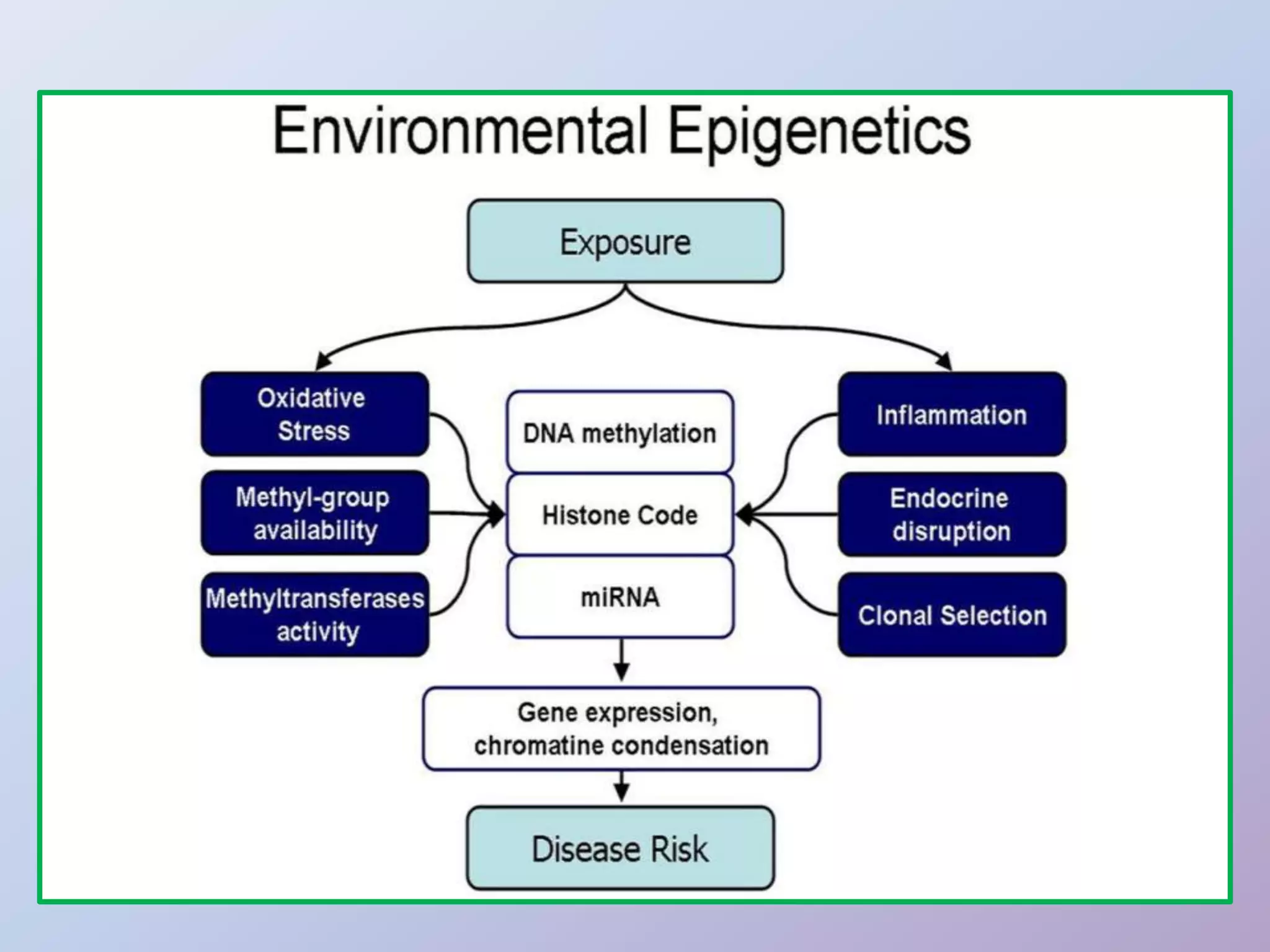
Epigenetics and the Environment
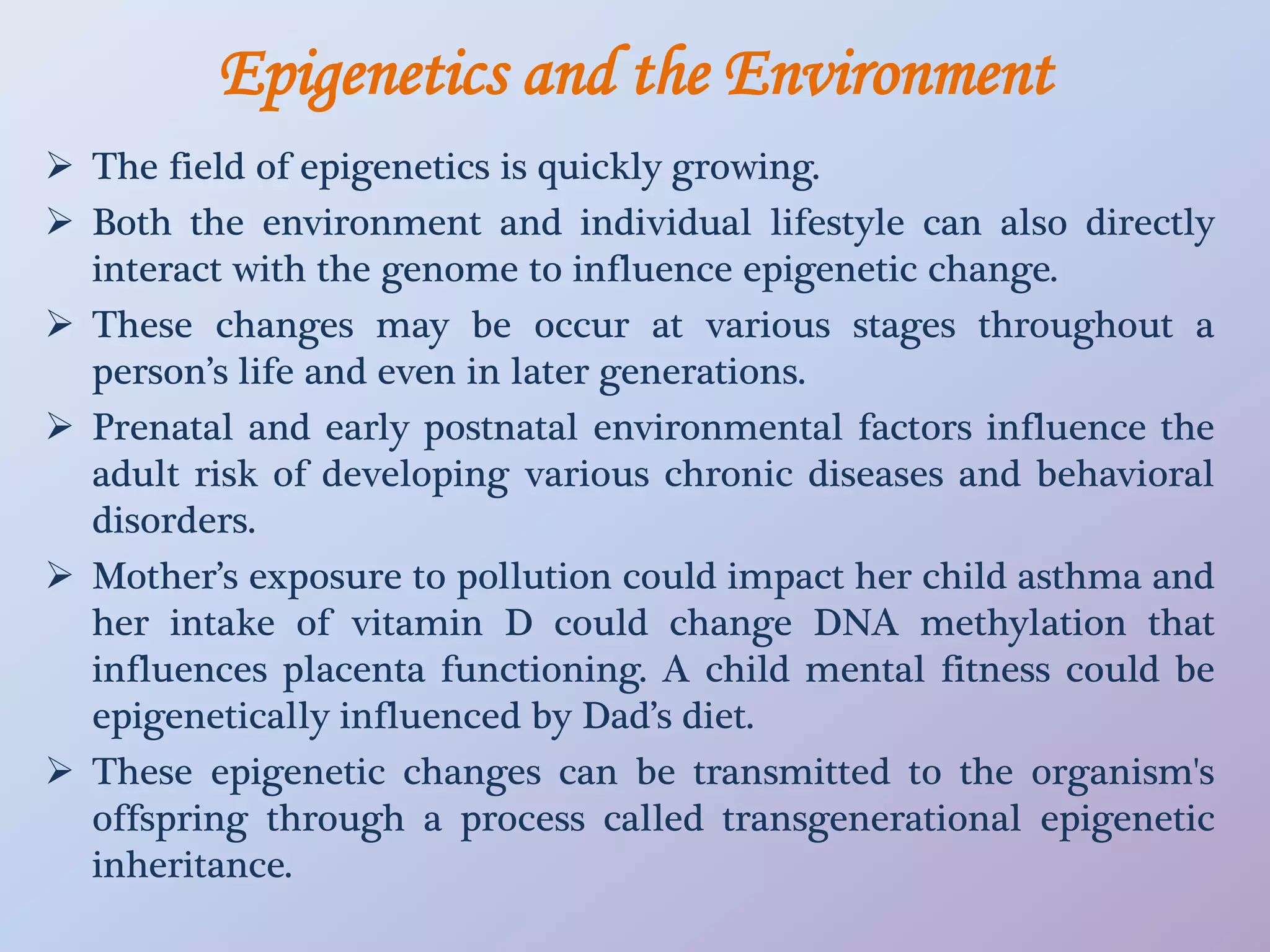
 The field of epigenetics is quickly growing.
 Both the environment and individual lifestyle can also directly
interact with the genome to influence epigenetic change.
 These changes may be occur at various stages throughout a
person’s life and even in later generations.
 Prenatal and early postnatal environmental factors influence the
adult risk of developing various chronic diseases and behavioral
disorders.
 Mother’s exposure to pollution could impact her child asthma and
her intake of vitamin D could change DNA methylation that
influences placenta functioning. A child mental fitness could be
epigenetically influenced by Dad’s diet.
 These epigenetic changes can be transmitted to the organism's
offspring through a process called transgenerational epigenetic
inheritance.
High fat, low carb diet couuld open up
chromatin and improve mental ability
Several lifestyle factors
modify epigenetic patterns, such
as diet, obesity, physical activity,
tobacco smoking, alcohol
consumption, environmental
pollutants, psychological stress,
and working on night shifts.
Causes of Epigentics
Thank You

Epigentics

  • 1.
  • 2.
    INTRODUCTION  Epigenetics isthe study of heritable phenotype changes that do not involve alterations in the DNA sequence.  The term "epigenetic" has been used to describe any modification of chromosomal regions, especially histone modifications, whether or not these changes are heritable or associated with a phenotype.  Its occur in active or inactive genes and regulate the process of gene regulation.  Epigenetic change is a regular and natural occurrence but can also be influenced by several factors including age, the environment/lifestyle, and disease state.  DNA methylation, histone modification and gene silencing are initiate and develop epigenetic change.  The role of epigenetics in a variety of human disorders and fatal diseases.
  • 4.
     The termepigenetics coined by Waddington in 1942, it described the influence of genetic processes on development.  Epigenetic modifications can be develop in skin cells, liver cells, brain cells, etc.  Epigenetic change can have more damaging effects that can result in diseases like cancer.  Epigenetic do not involve a change to the DNA sequence, whereas genetic mechanisms involve the changes or mutations to DNA sequence.  Epigenetic regulation of gene expression is a common process that acts during the differentiation of somatic cells, as well as in response to environmental cues and stresses, and the passing on of these modulations to the offspring constitutes epigenetic inheritance.
  • 7.
    Epigenetics and theEnvironment  The field of epigenetics is quickly growing.  Both the environment and individual lifestyle can also directly interact with the genome to influence epigenetic change.  These changes may be occur at various stages throughout a person’s life and even in later generations.  Prenatal and early postnatal environmental factors influence the adult risk of developing various chronic diseases and behavioral disorders.  Mother’s exposure to pollution could impact her child asthma and her intake of vitamin D could change DNA methylation that influences placenta functioning. A child mental fitness could be epigenetically influenced by Dad’s diet.  These epigenetic changes can be transmitted to the organism's offspring through a process called transgenerational epigenetic inheritance.
  • 12.
    High fat, lowcarb diet couuld open up chromatin and improve mental ability Several lifestyle factors modify epigenetic patterns, such as diet, obesity, physical activity, tobacco smoking, alcohol consumption, environmental pollutants, psychological stress, and working on night shifts. Causes of Epigentics
  • 13.