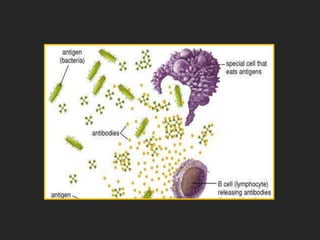
1. An antigen is any substance that causes the immune system to produce antibodies against it. Antigens can be external substances like viruses, bacteria, and pollen that enter the body, or they can be generated internally through infections or metabolism.
2. There are different types of antigens including exogenous antigens from outside the body, endogenous antigens produced internally, autoantigens that cause autoimmune disorders, and tumor antigens on cancer cells.
3. Antigens have antigenic determinants called epitopes that bind to receptors on lymphocytes and stimulate an immune response. Adjuvants are substances used in vaccines to enhance the immune response to antigens.