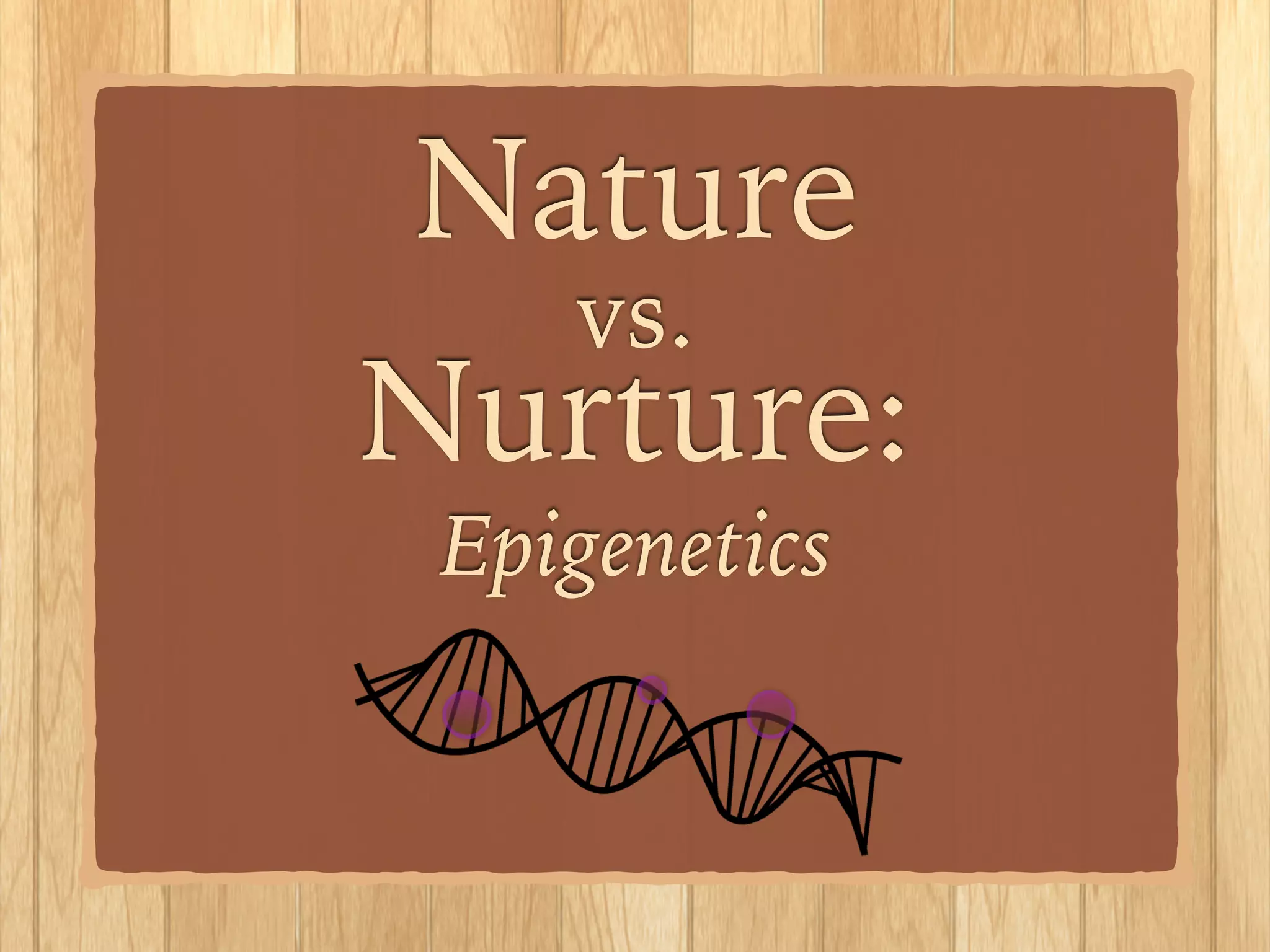
Nature
vs.
Nurture:
Epigenetics
Epigenetics
This is a new branch of genetics that is shedding light
on the “nature vs. nurture” debate.
“Epi” means “above” or “on top of” so epigenetics refers to
modifications that occur on top of your genes. Environmental
factors actually cause your cells and genetic code to change
over your lifetime. Your genetic code itself is always the same,
but genes can be “turned on” or “turned off.”
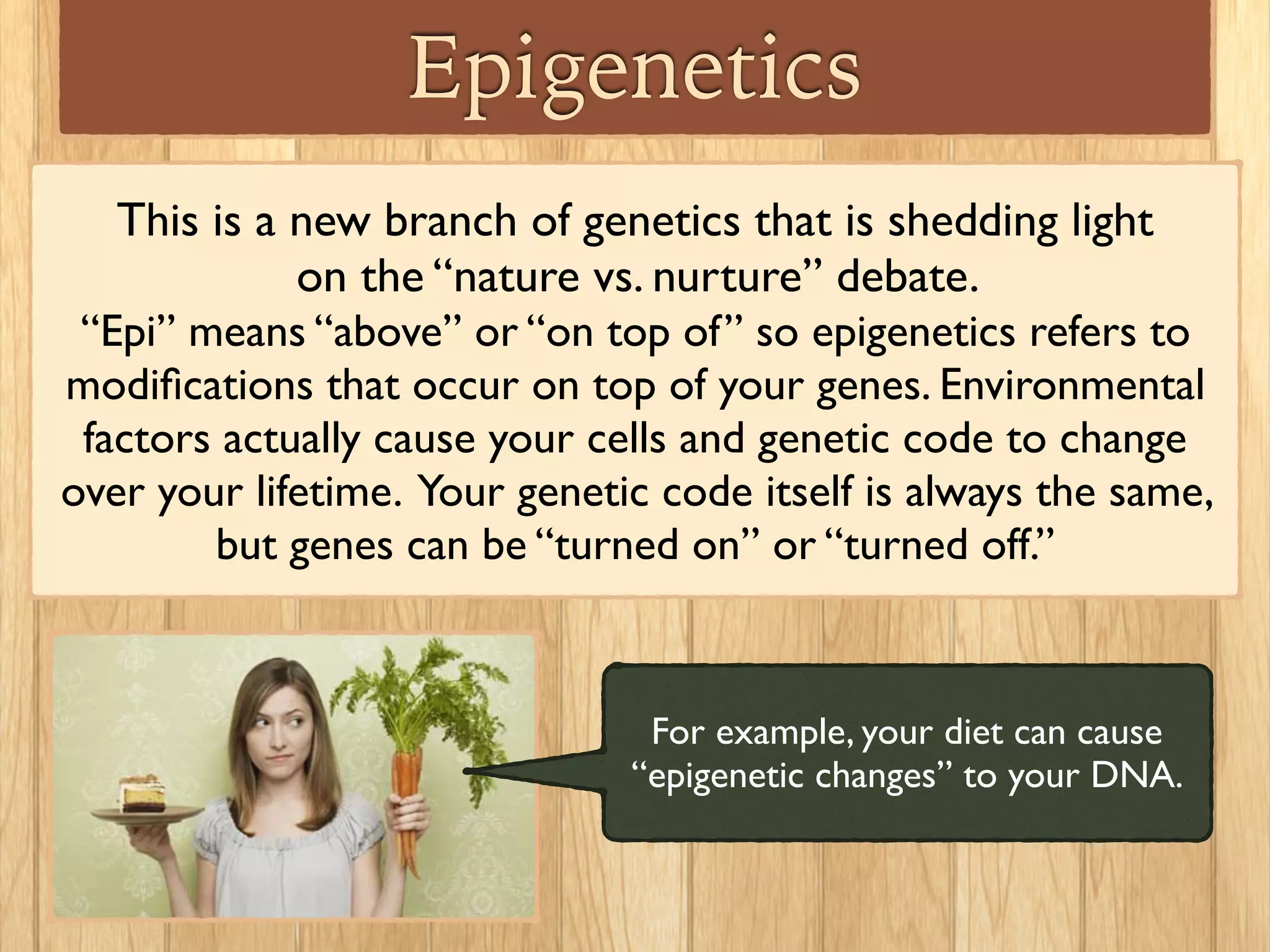
For example, your diet can cause
“epigenetic changes” to your DNA.
Epigenetics
This is a strand of DNA.
DNA is a long, ladder-shaped
molecule: the famous ‘double-helix’
shape. Inside our cells, DNA
contains all the information needed
to make us grow and live.
Epigenetics
Genes are short sections or
“chunks” of DNA.
They act as a set of
instructions for our
cells, telling them how
to build our bodies.
Epigenetics
Throughout your life, and
depending on specific
conditions, a chemical called
methyl attaches to genes.
This chemical “switches” on
or off only a selection of
your genes.
This process is known
as gene regulation.
Epigenetics
These chemical methyl
attachments are called
epigenetic
tags.
Epigenetics
These chemical methyl
attachments are called
epigenetic
tags.
Think of them like
switches that turn certain
genes on or off, making
them active or inactive.
Epigenetics
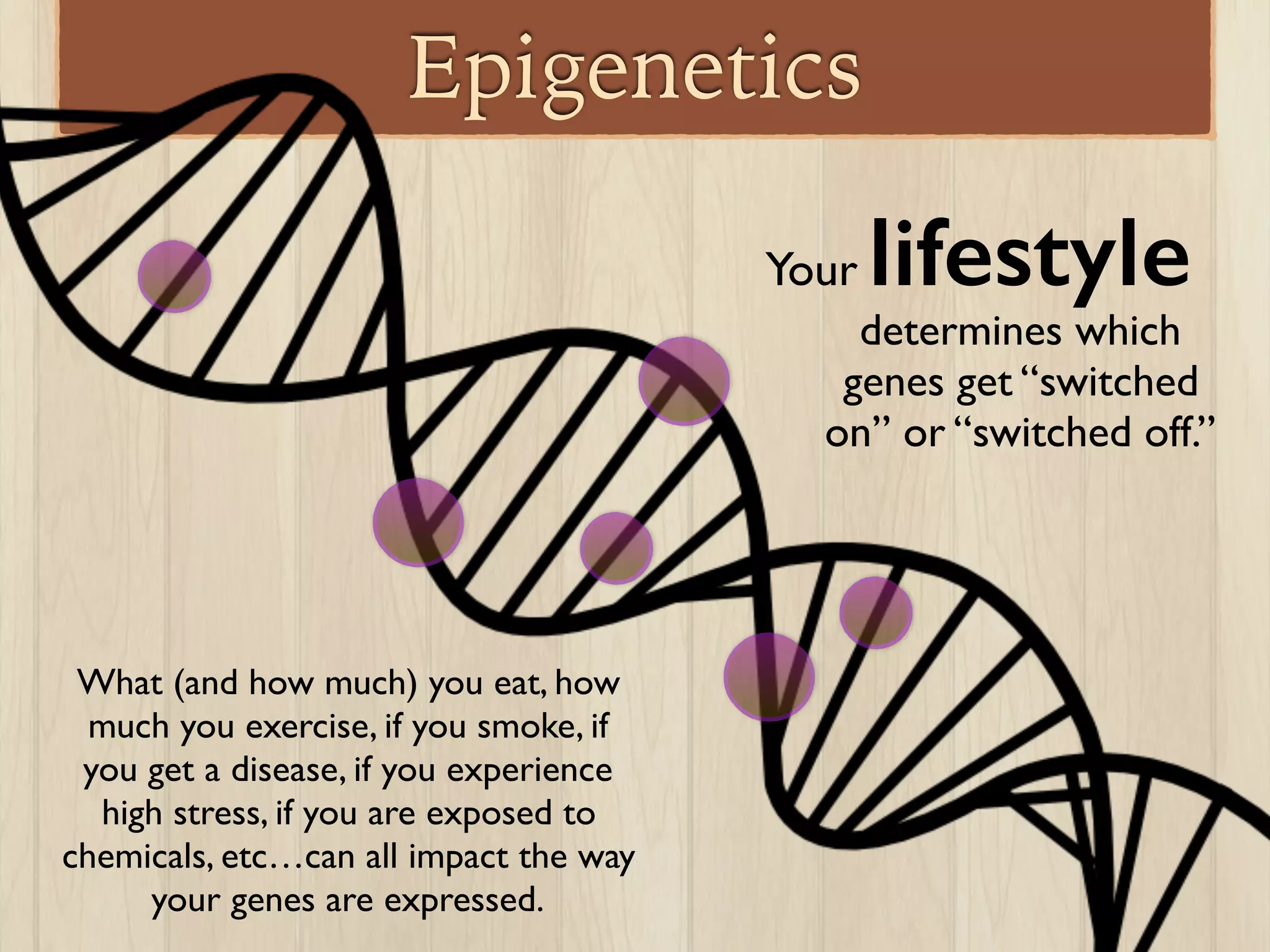
Your lifestyle
determines which
genes get “switched
on” or “switched off.”
What (and how much) you eat, how
much you exercise, if you smoke, if
you get a disease, if you experience
high stress, if you are exposed to
chemicals, etc…can all impact the way
your genes are expressed.
Epigenetics
During fertilization,
mom & dad’s DNA
mixes in the egg.
During the first days
after fertilization, the
epigenetic tags are
erased…mostly.
A small number of
tags remain on the
offspring’s DNA.
Epigenetics
Because a small number
of tags remain on the
offspring’s DNA…
…these are called
“imprinted
genes.”
Epigenetics
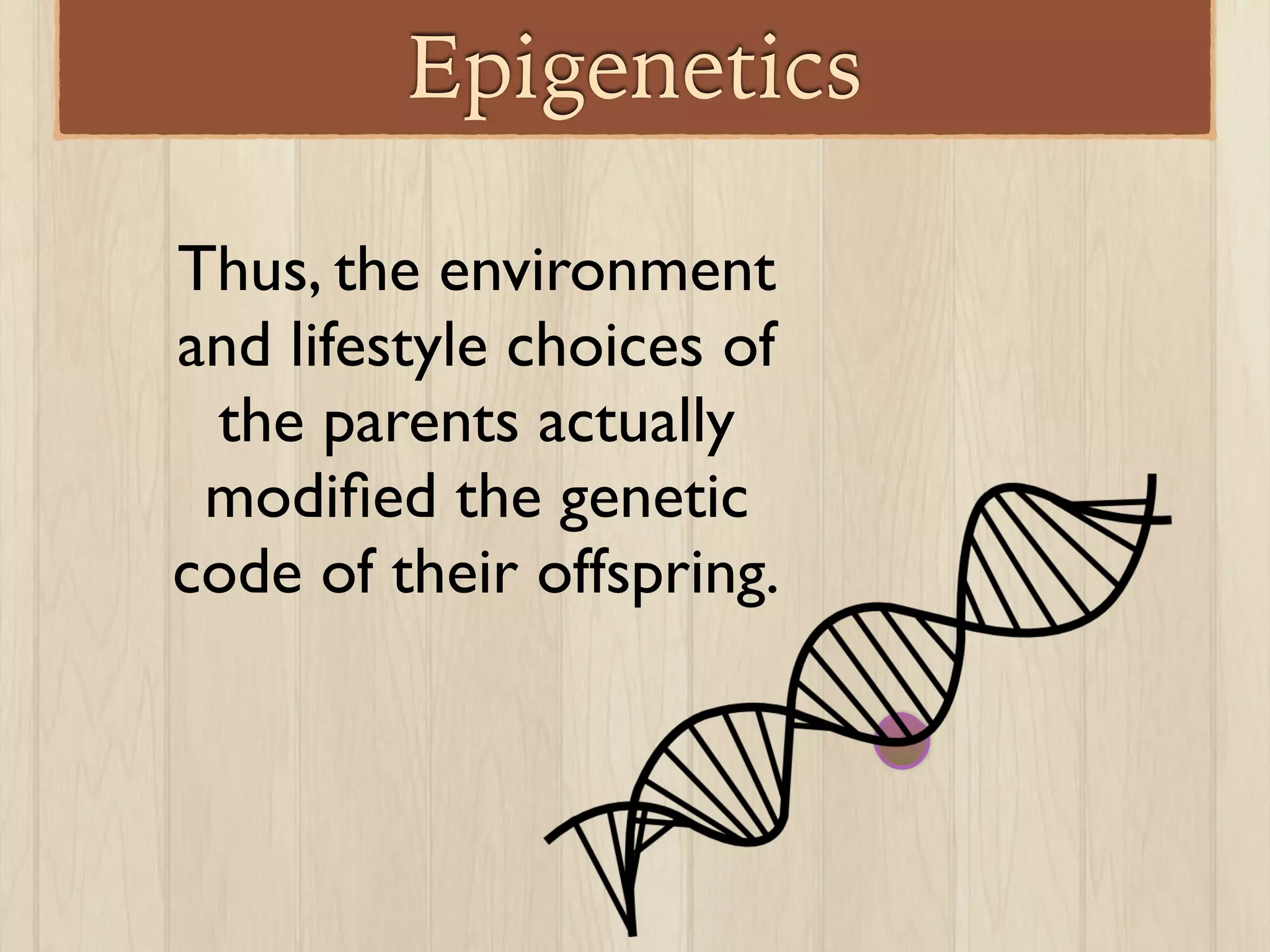
Thus, the environment
and lifestyle choices of
the parents actually
modified the genetic
code of their offspring.
Inherited Stress Tolerance?
Some people naturally respond
well to stress.When there is
too much work to get done,
these people remain calm,
organize time well, finish the
work with focus and without
feeling overwhelmed. Other people do not respond
well to stress.When they have
too much work to do, they feel
like the world is crushing them.
They feel panic. Sometimes, they
feel so much panic that they
can’t focus on the work that
needs to be done.
Inherited Stress Tolerance?
The lucky ones have a stress
response gene turned on.
The unlucky ones have the
stress response gene turned off.
Stress Gene Experiment
Experimental Group 1:
Baby rats are nurtured
by a mother rat
Experimental Group 2:
Baby rats are neglected
by a mother rat
?
Stress Gene Experiment
Group 1:
The babies’ DNA is tested
and epigenetic tags are
visible on the stress
response gene, turing it
“on.” These rats respond
very well in stressful
situations for the rest of
their lives.
Group 2:
The babies’ DNA is tested
and epigenetic tags are
NOT present on the stress
response gene, keeping it
“off.” These rats do NOT
respond well in stressful
situations for the rest of
their lives.
Stress Gene Experiment
Group 1:
The offspring of these rats
ALSO have epigenetic tags
on the stress response
gene: the babies inherit an
imprinted gene on which
the stress response gene is
“turned on.”
Group 2:
The offspring of these rats
ALSO have NO epigenetic
tags on the stress response
gene.Thus, these babies do
not respond well to stress
because their PARENTS
were not nurtured by a
mother rat.
Inherited Stress Tolerance?
The rats that were not nurtured as
babies had the stress response gene
“turned off.” In this case, the rats
could not handle stressful situations
well for the rest of their lives.They
also passed this inability to respond to
stress to their children.
This study shows that attentive, loving parents set their
children (and grandchildren!) up for future success by
creating an epigenetic modification that allows the children
to better cope with stress. The environment can change our
genes, and our genes impact certain aspects of our behavior.
Are Epigenetic Changes Permanent?
Epigenetics
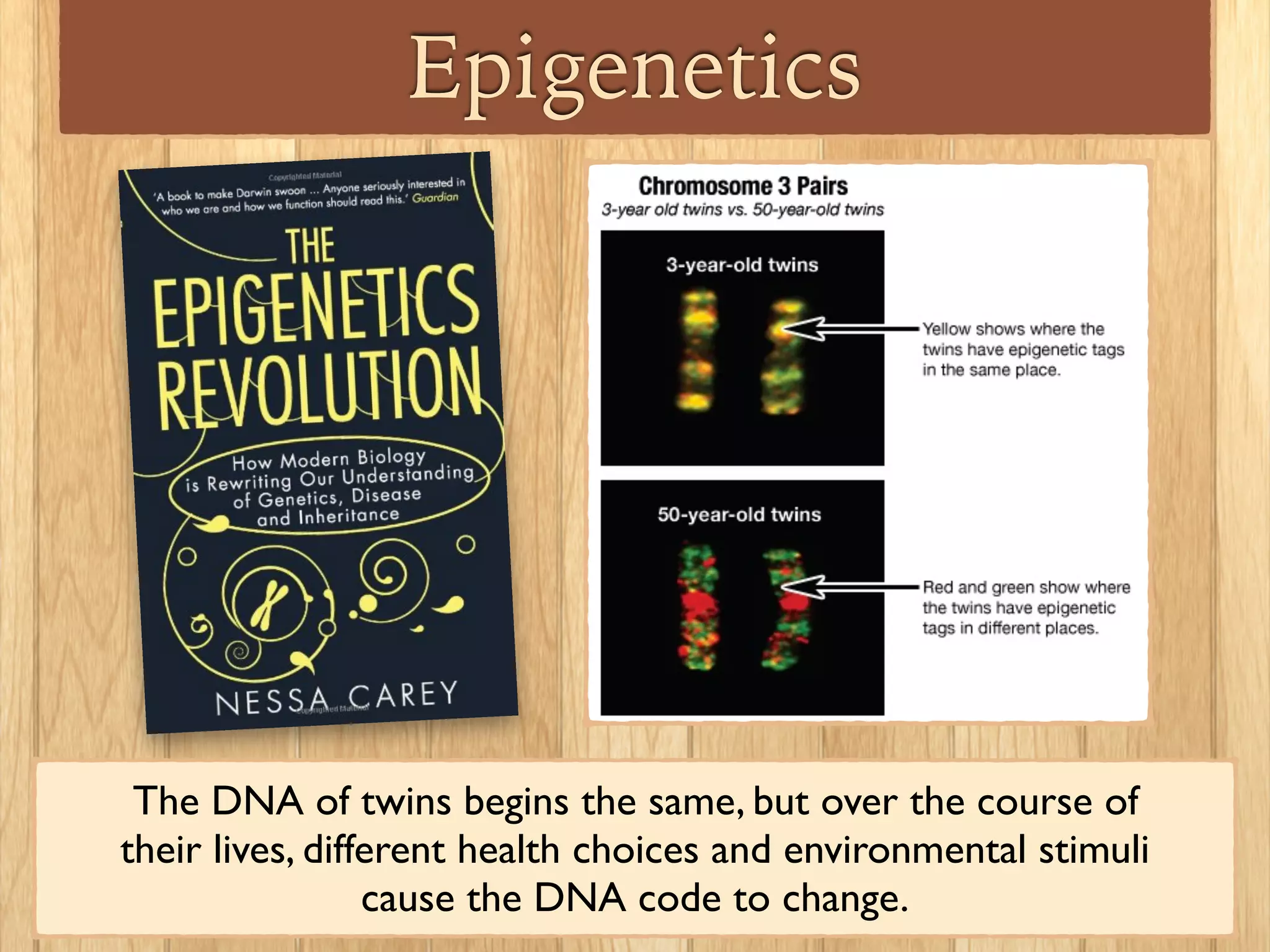
The DNA of twins begins the same, but over the course of
their lives, different health choices and environmental stimuli
cause the DNA code to change.
Epigenetics
Q: What does this mean for the nature vs. nurture debate?
A: That we are not defined by our genes. Our lifestyle choices can
actually impact our genetic codes, causing certain genetic traits to
express themselves more or less strongly.
But, this does not mean that our genes don’t impact who we are.
Some genes are not modifiable, meaning that epigenetic tags do not
affect those genes.
The nature vs. nurture debate rages on as psychologists try to
understand which plays a larger part in our development. They also
try to discover which plays a larger part in specific behaviors - like
gender expression, athletic ability, or optimism.

Epigenetics

  • 1.
  • 3.
    Epigenetics This is anew branch of genetics that is shedding light on the “nature vs. nurture” debate. “Epi” means “above” or “on top of” so epigenetics refers to modifications that occur on top of your genes. Environmental factors actually cause your cells and genetic code to change over your lifetime. Your genetic code itself is always the same, but genes can be “turned on” or “turned off.” For example, your diet can cause “epigenetic changes” to your DNA.
  • 4.
    Epigenetics This is astrand of DNA. DNA is a long, ladder-shaped molecule: the famous ‘double-helix’ shape. Inside our cells, DNA contains all the information needed to make us grow and live.
  • 5.
    Epigenetics Genes are shortsections or “chunks” of DNA. They act as a set of instructions for our cells, telling them how to build our bodies.
  • 6.
    Epigenetics Throughout your life,and depending on specific conditions, a chemical called methyl attaches to genes. This chemical “switches” on or off only a selection of your genes. This process is known as gene regulation.
  • 7.
  • 8.
    Epigenetics These chemical methyl attachmentsare called epigenetic tags. Think of them like switches that turn certain genes on or off, making them active or inactive.
  • 9.
    Epigenetics Your lifestyle determines which genesget “switched on” or “switched off.” What (and how much) you eat, how much you exercise, if you smoke, if you get a disease, if you experience high stress, if you are exposed to chemicals, etc…can all impact the way your genes are expressed.
  • 10.
    Epigenetics During fertilization, mom &dad’s DNA mixes in the egg. During the first days after fertilization, the epigenetic tags are erased…mostly. A small number of tags remain on the offspring’s DNA.
  • 11.
    Epigenetics Because a smallnumber of tags remain on the offspring’s DNA… …these are called “imprinted genes.”
  • 12.
    Epigenetics Thus, the environment andlifestyle choices of the parents actually modified the genetic code of their offspring.
  • 13.
    Inherited Stress Tolerance? Somepeople naturally respond well to stress.When there is too much work to get done, these people remain calm, organize time well, finish the work with focus and without feeling overwhelmed. Other people do not respond well to stress.When they have too much work to do, they feel like the world is crushing them. They feel panic. Sometimes, they feel so much panic that they can’t focus on the work that needs to be done.
  • 14.
    Inherited Stress Tolerance? Thelucky ones have a stress response gene turned on. The unlucky ones have the stress response gene turned off.
  • 15.
    Stress Gene Experiment ExperimentalGroup 1: Baby rats are nurtured by a mother rat Experimental Group 2: Baby rats are neglected by a mother rat ?
  • 16.
    Stress Gene Experiment Group1: The babies’ DNA is tested and epigenetic tags are visible on the stress response gene, turing it “on.” These rats respond very well in stressful situations for the rest of their lives. Group 2: The babies’ DNA is tested and epigenetic tags are NOT present on the stress response gene, keeping it “off.” These rats do NOT respond well in stressful situations for the rest of their lives.
  • 17.
    Stress Gene Experiment Group1: The offspring of these rats ALSO have epigenetic tags on the stress response gene: the babies inherit an imprinted gene on which the stress response gene is “turned on.” Group 2: The offspring of these rats ALSO have NO epigenetic tags on the stress response gene.Thus, these babies do not respond well to stress because their PARENTS were not nurtured by a mother rat.
  • 18.
    Inherited Stress Tolerance? Therats that were not nurtured as babies had the stress response gene “turned off.” In this case, the rats could not handle stressful situations well for the rest of their lives.They also passed this inability to respond to stress to their children. This study shows that attentive, loving parents set their children (and grandchildren!) up for future success by creating an epigenetic modification that allows the children to better cope with stress. The environment can change our genes, and our genes impact certain aspects of our behavior.
  • 19.
  • 20.
    Epigenetics The DNA oftwins begins the same, but over the course of their lives, different health choices and environmental stimuli cause the DNA code to change.
  • 21.
    Epigenetics Q: What doesthis mean for the nature vs. nurture debate? A: That we are not defined by our genes. Our lifestyle choices can actually impact our genetic codes, causing certain genetic traits to express themselves more or less strongly. But, this does not mean that our genes don’t impact who we are. Some genes are not modifiable, meaning that epigenetic tags do not affect those genes. The nature vs. nurture debate rages on as psychologists try to understand which plays a larger part in our development. They also try to discover which plays a larger part in specific behaviors - like gender expression, athletic ability, or optimism.