INTRODUCTION TO
EPIGENETICS
GARRY D. LASAGA
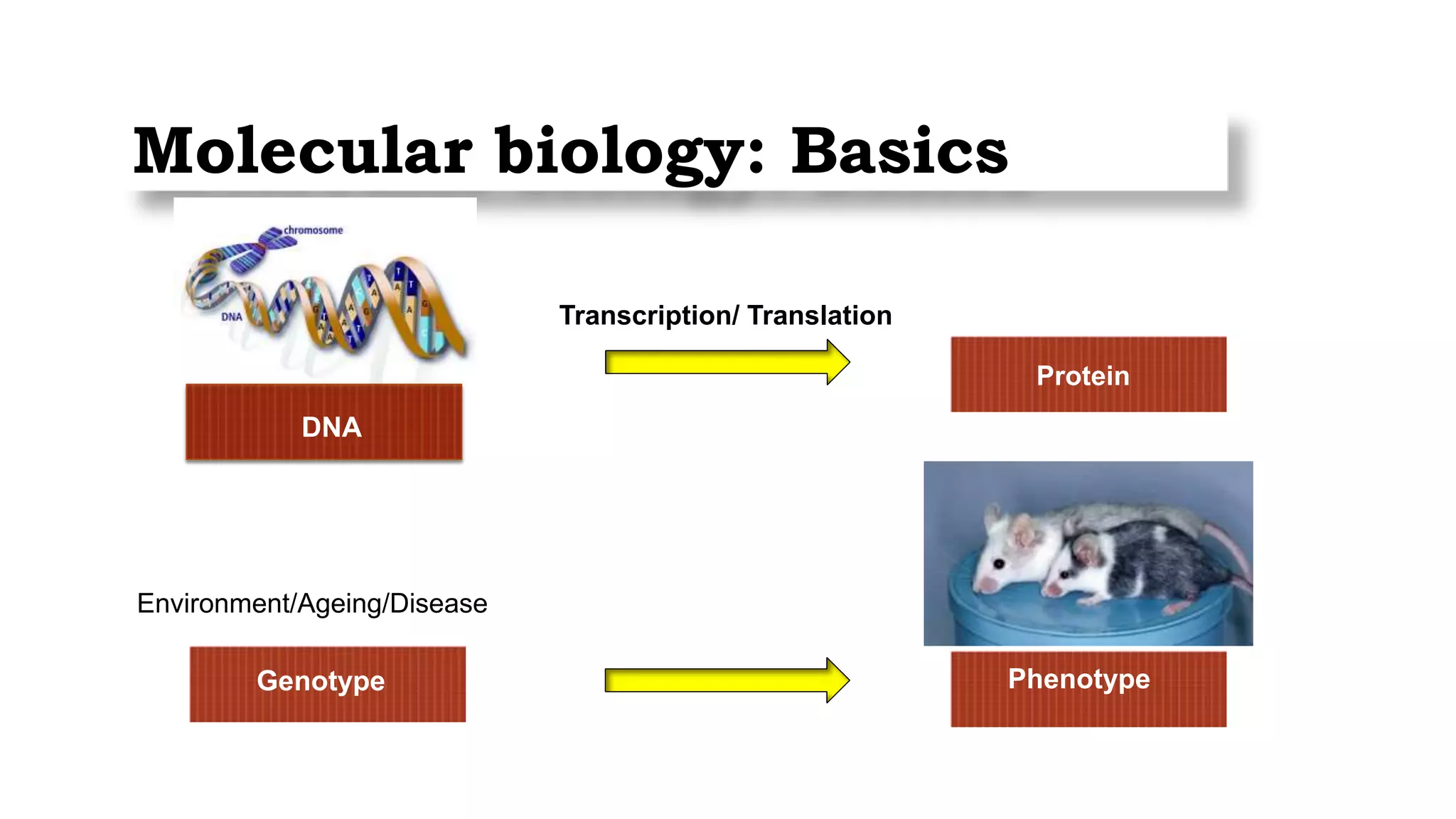
Molecular biology: Basics
DNA
Protein
Transcription/ Translation
Genotype Phenotype
Environment/Ageing/Disease
Terminologies
 Gene
 Gene expression
 Phenotype
 Genotype
EPIGENETICS
 A branch of genetics that studies the heritable
changes in a phenotype arising in the absence
of alterations in the DNA sequence.
EPIGENETICS: 1942
Conrad Hal Waddington (1905–1975)
 Developmental biologist
 Epigenetics formed as a combination of
genetics and epigenesis: “Epigenetic
landscape”
 Conceptual model of how genes might
interact with their surroundings to produce a
phenotype.
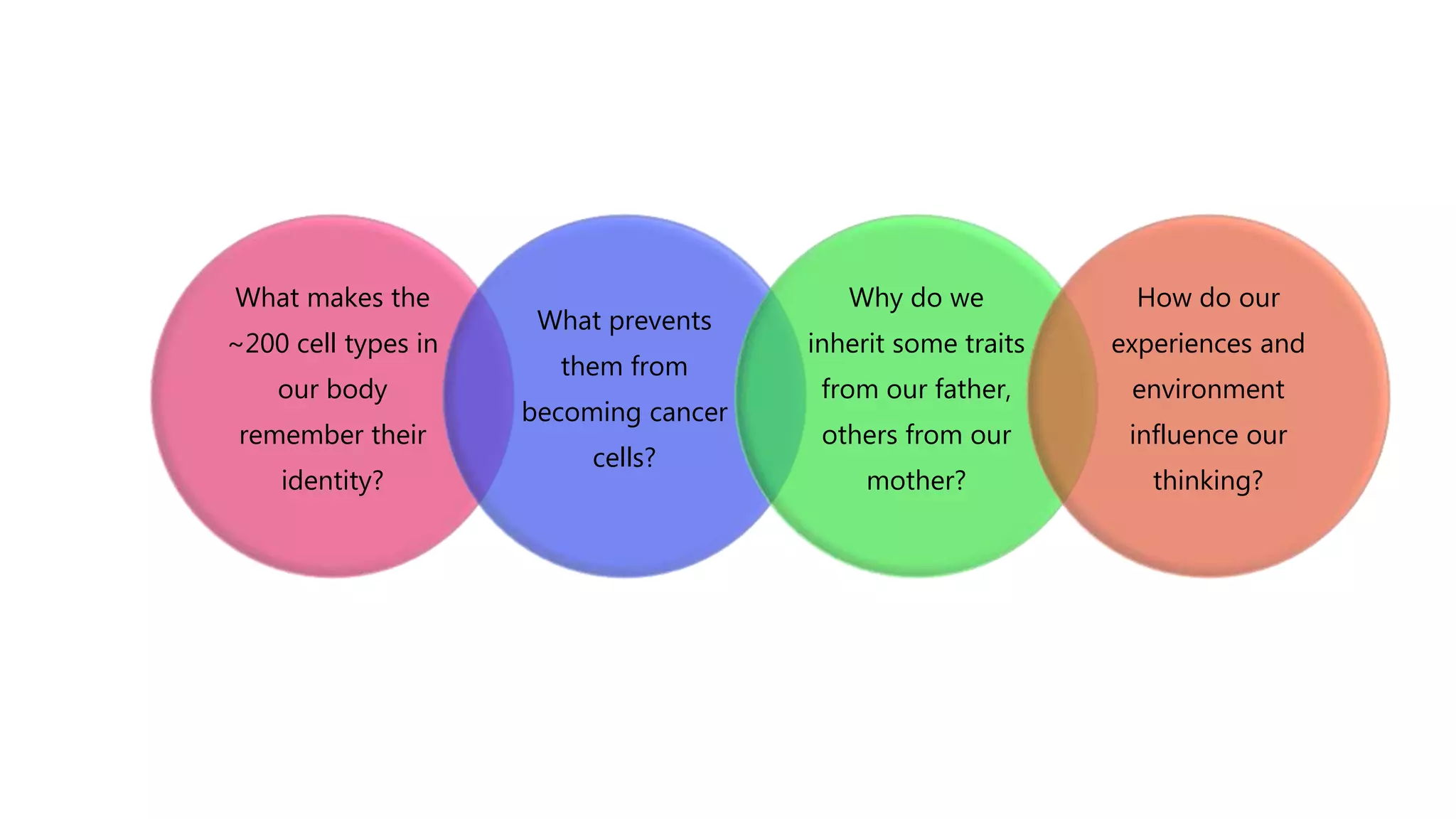
What makes the
~200 cell types in
our body
remember their
identity?
What prevents
them from
becoming cancer
cells?
Why do we
inherit some traits
from our father,
others from our
mother?
How do our
experiences and
environment
influence our
thinking?
Epigenetics Today: Definition
 The study of heritable changes in gene expression
or cellular phenotype caused by mechanisms
other than changes in the underlying DNA
sequence.
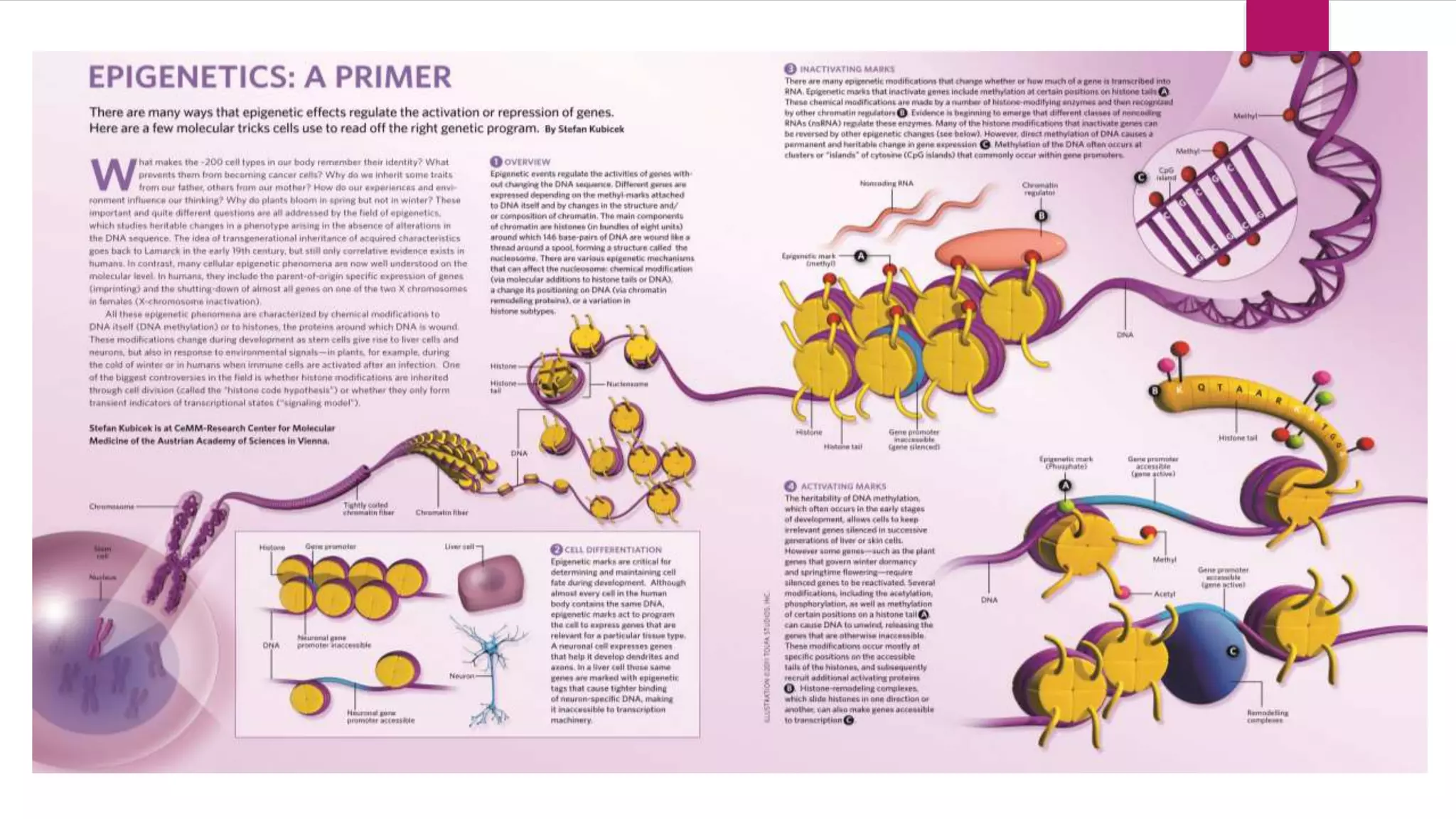
EPIGENETICS: Overview
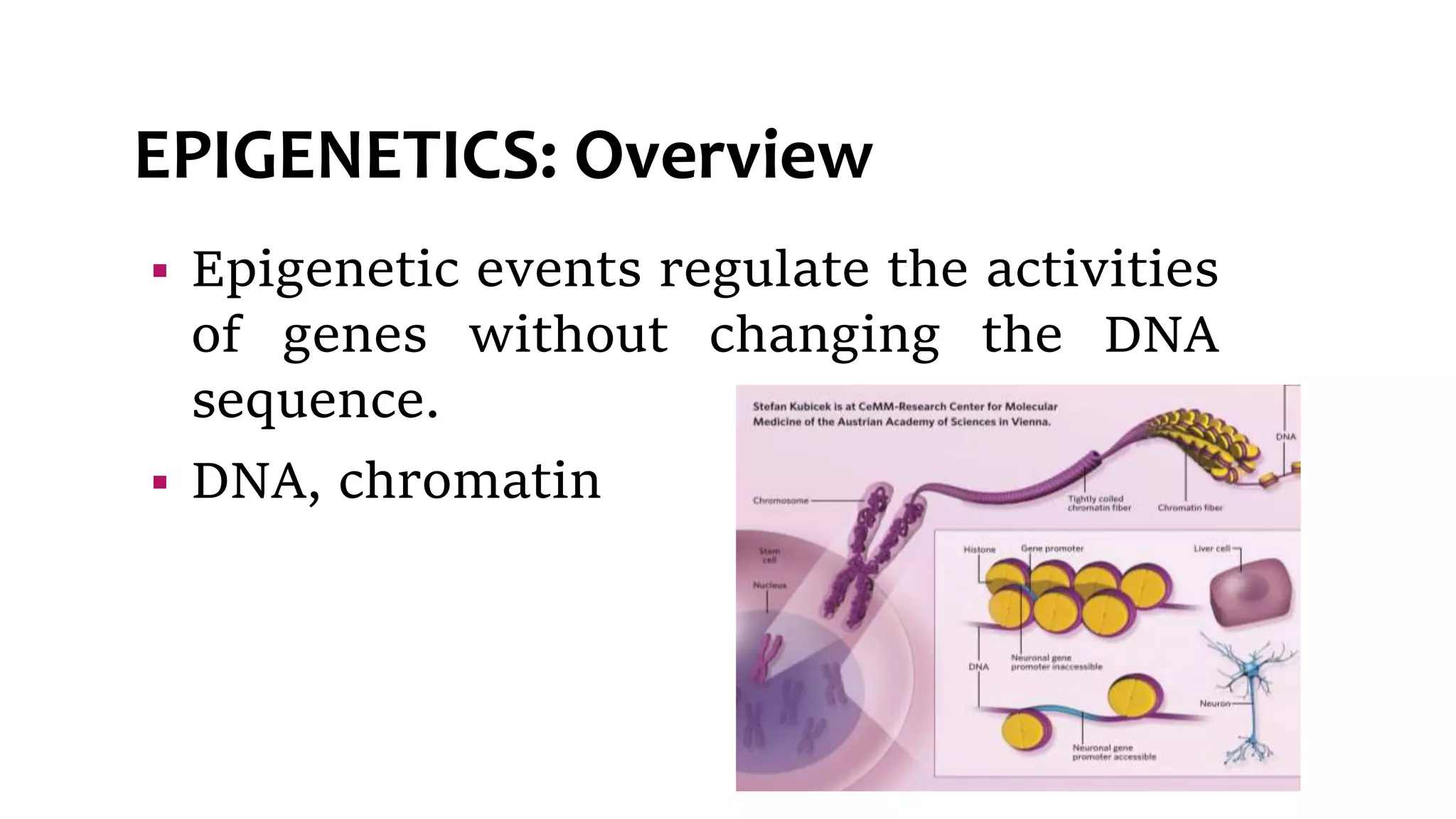
 Epigenetic events regulate the activities
of genes without changing the DNA
sequence.
 DNA, chromatin
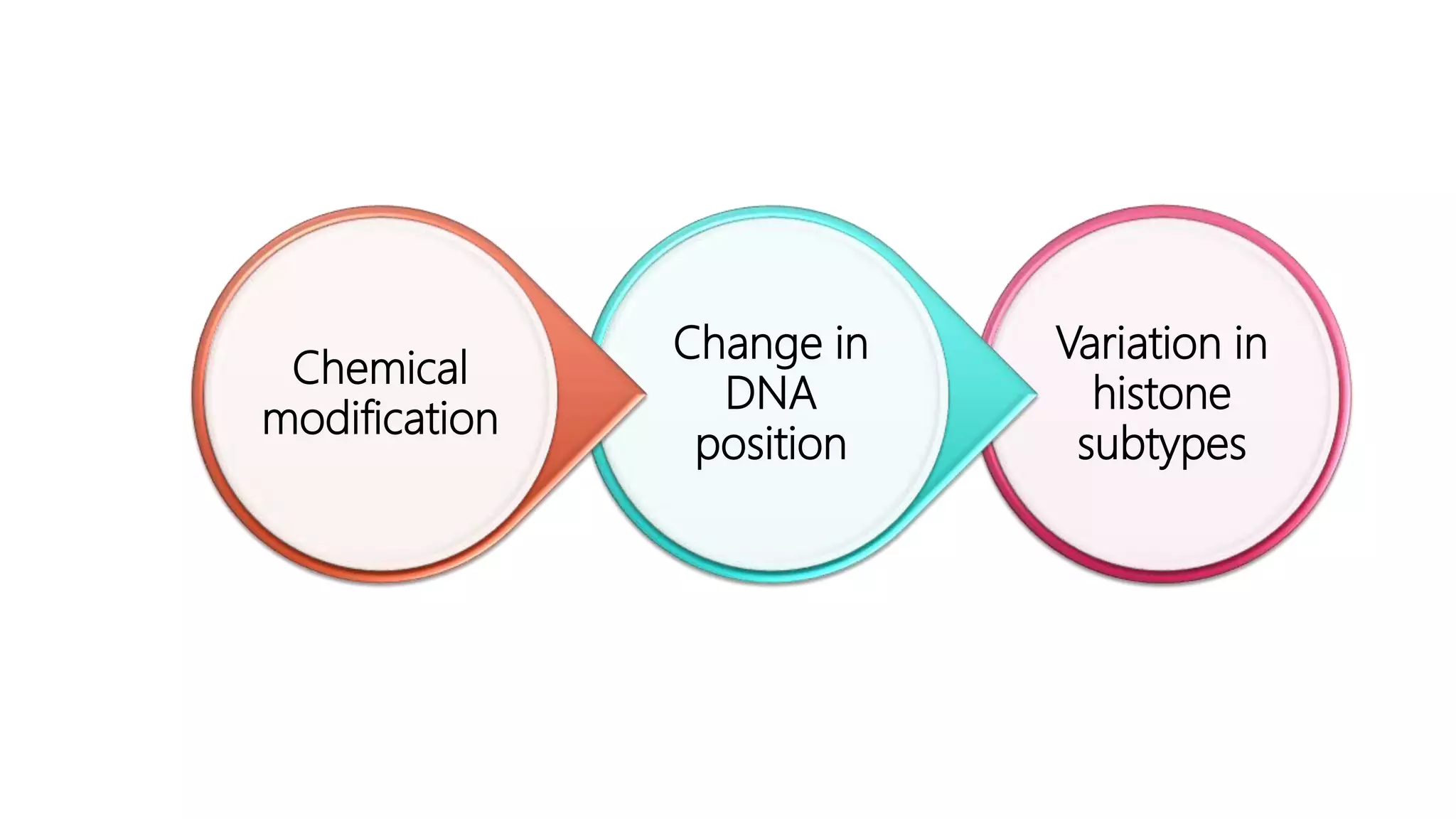
Variation in
histone
subtypes
Change in
DNA
position
Chemical
modification
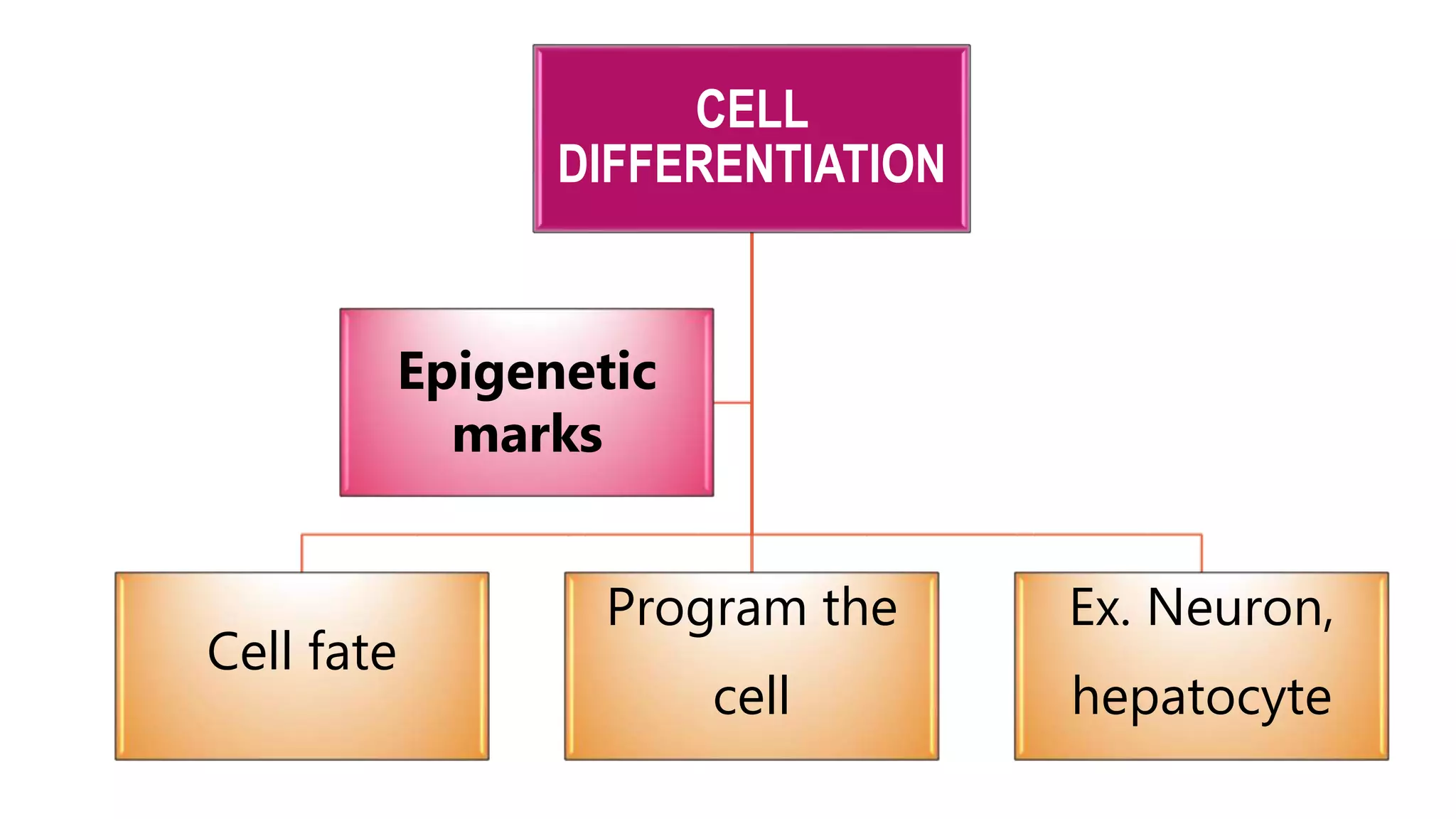
CELL
DIFFERENTIATION
Cell fate
Program the
cell
Ex. Neuron,
hepatocyte
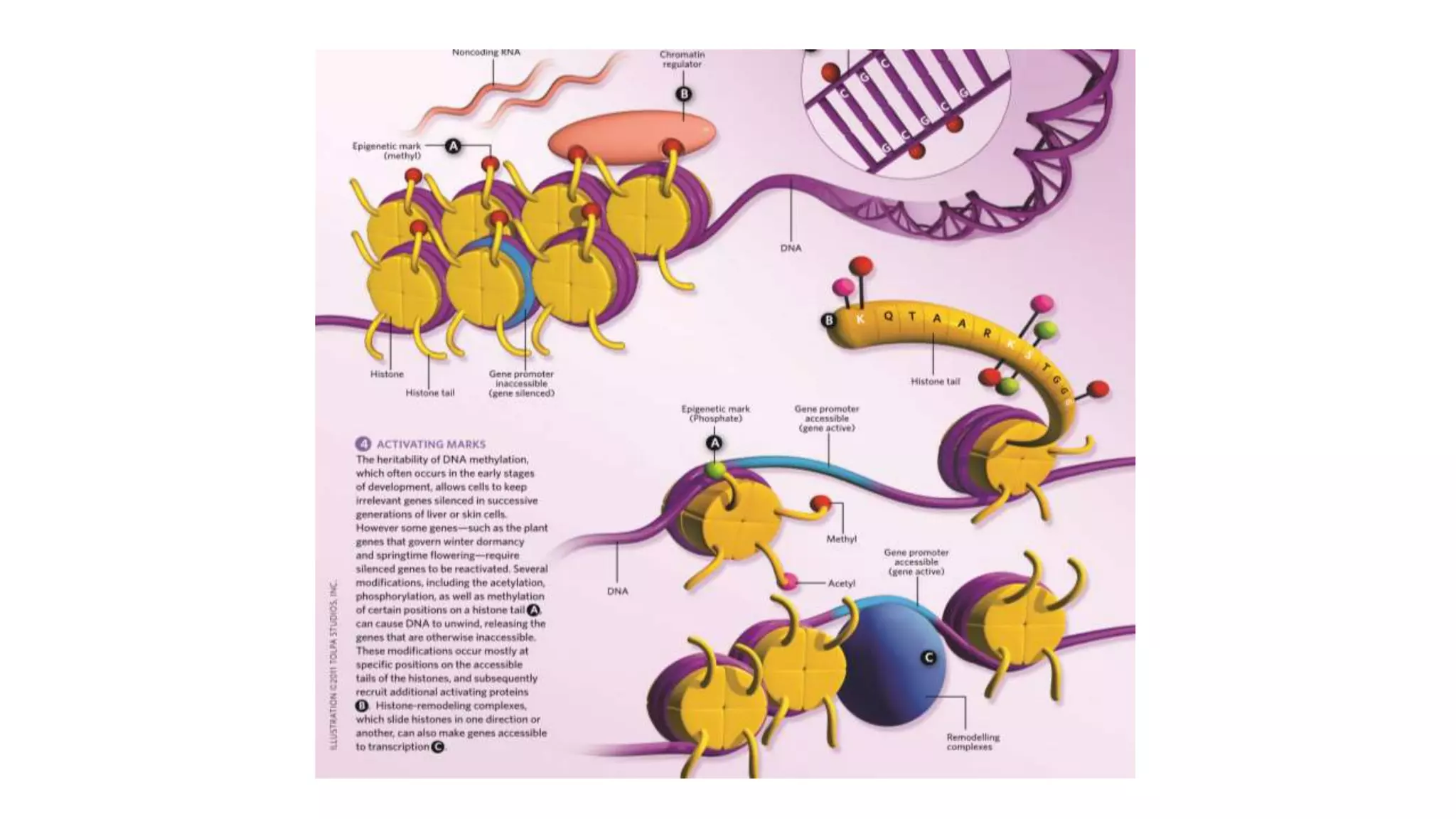
Epigenetic
marks
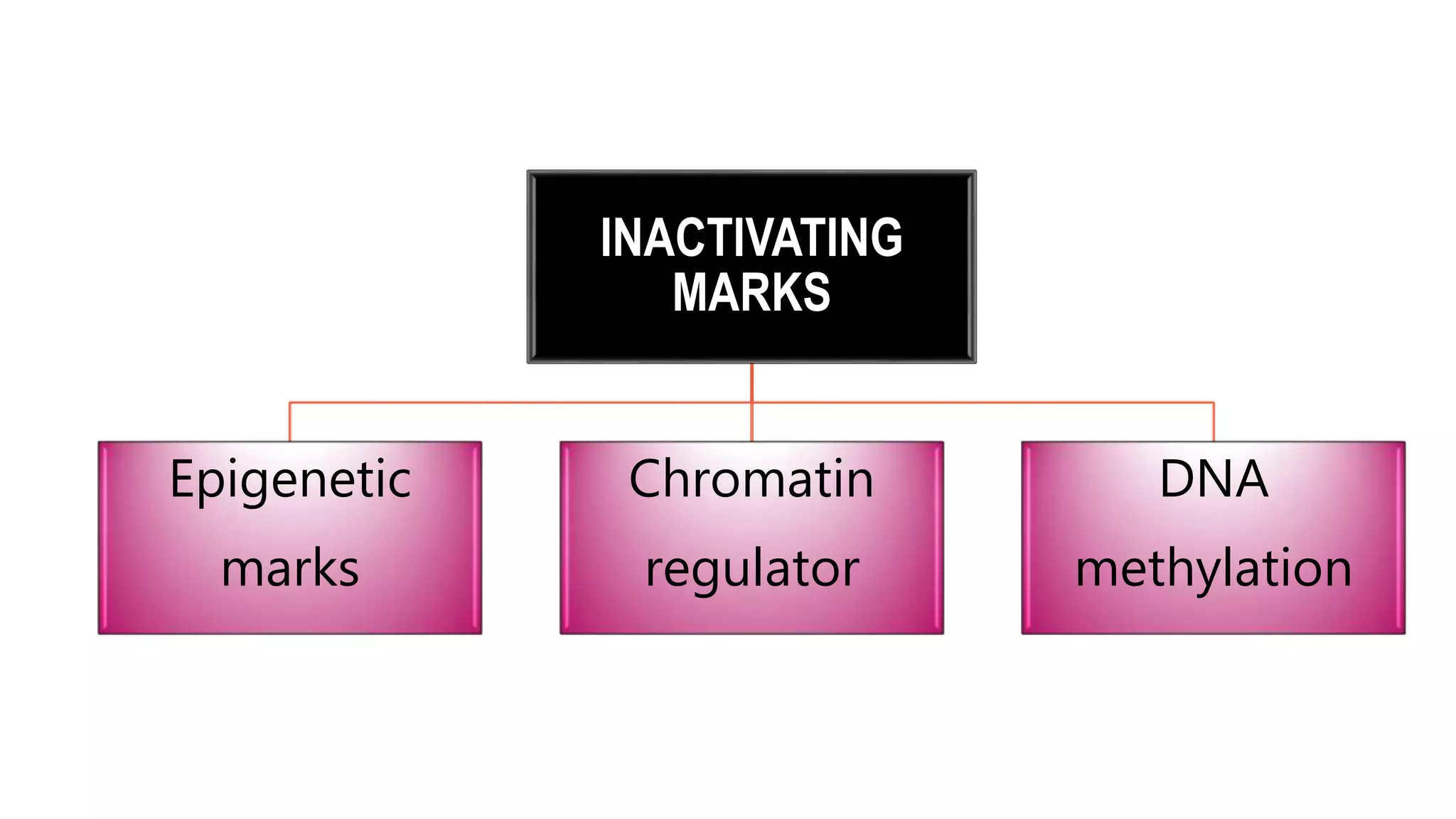
INACTIVATING
MARKS
Epigenetic
marks
Chromatin
regulator
DNA
methylation
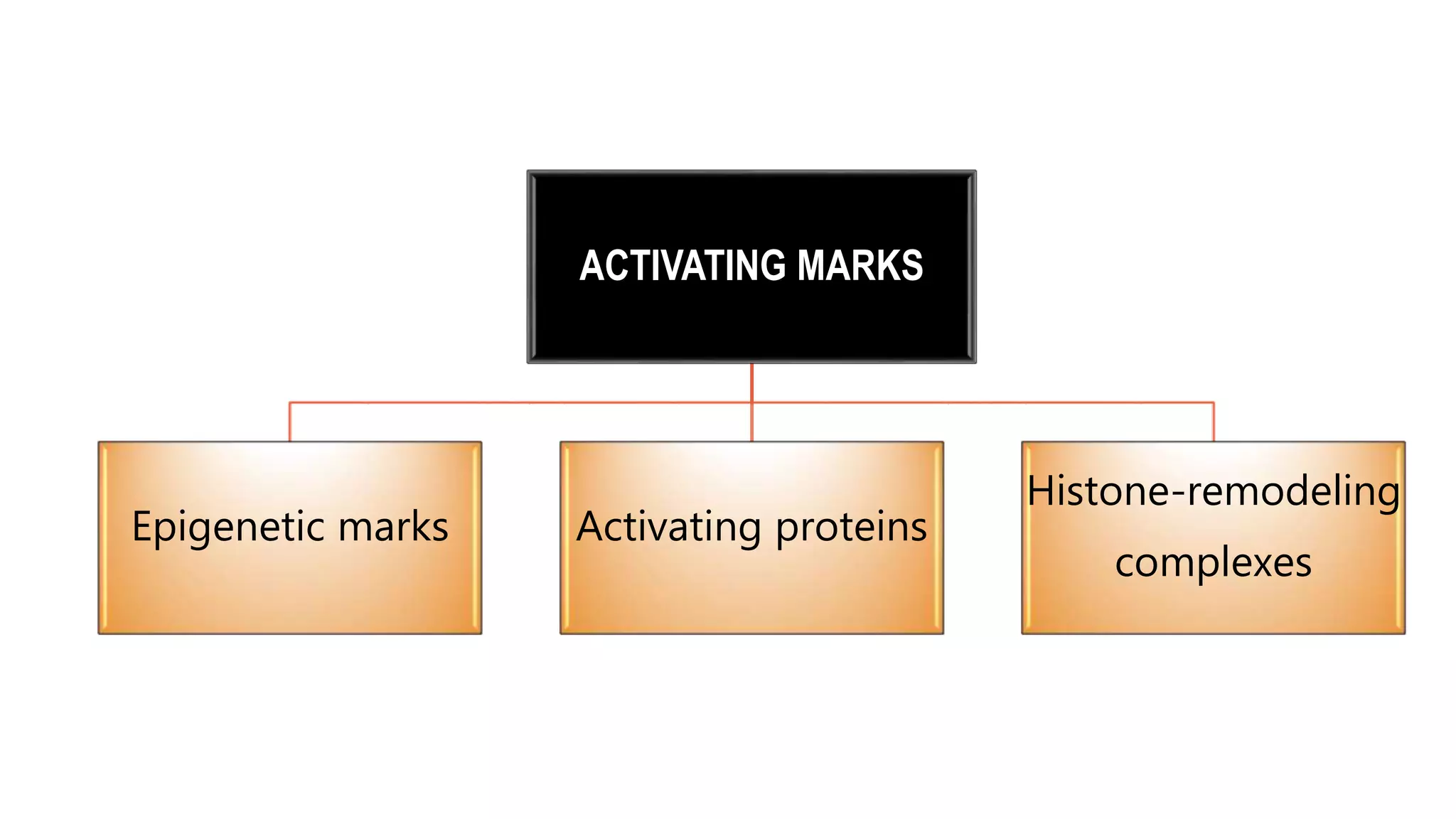
ACTIVATING MARKS
Epigenetic marks Activating proteins
Histone-remodeling
complexes
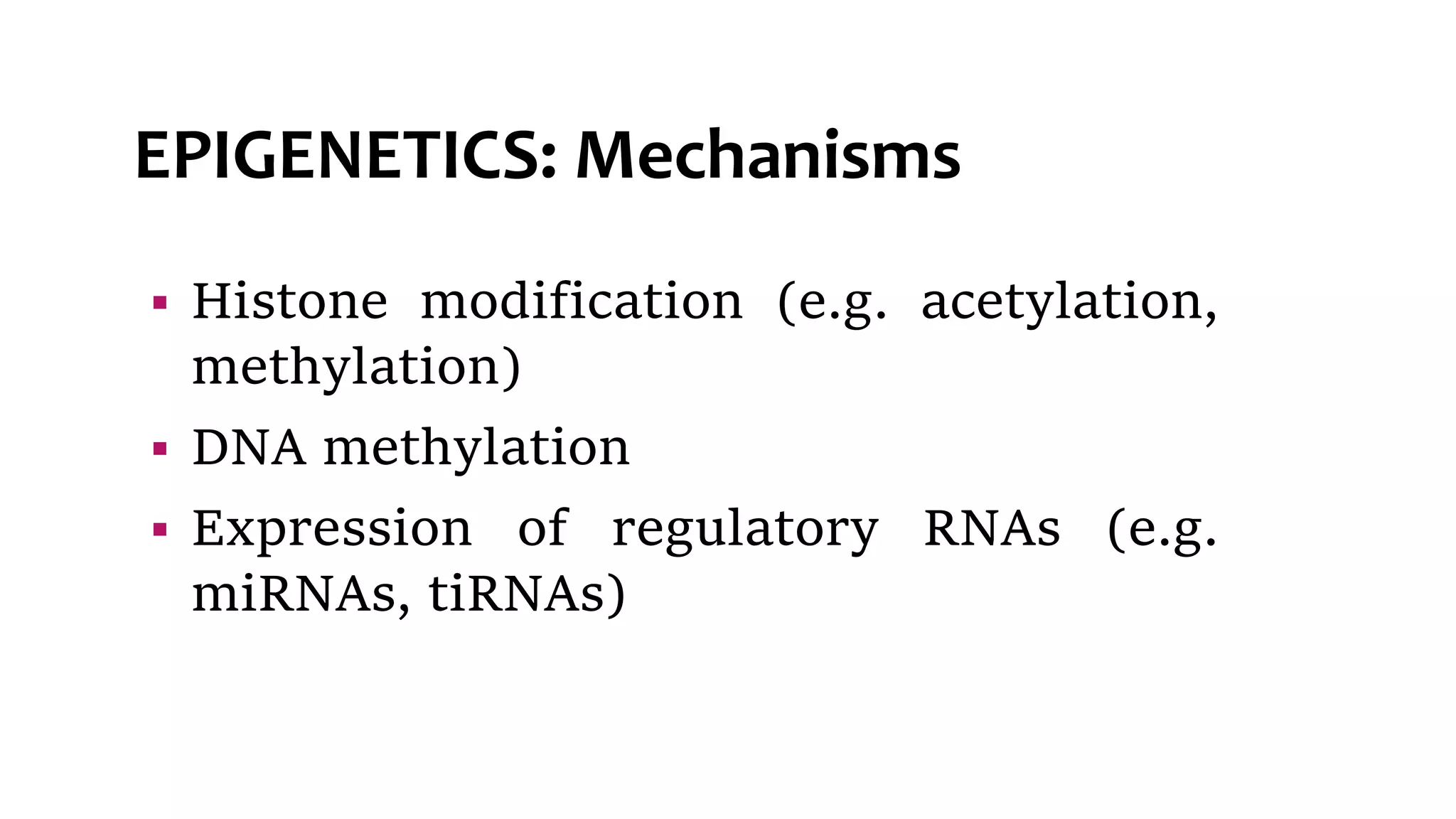
EPIGENETICS: Mechanisms
 Histone modification (e.g. acetylation,
methylation)
 DNA methylation
 Expression of regulatory RNAs (e.g.
miRNAs, tiRNAs)
Epigenetics: Histone
Modifications
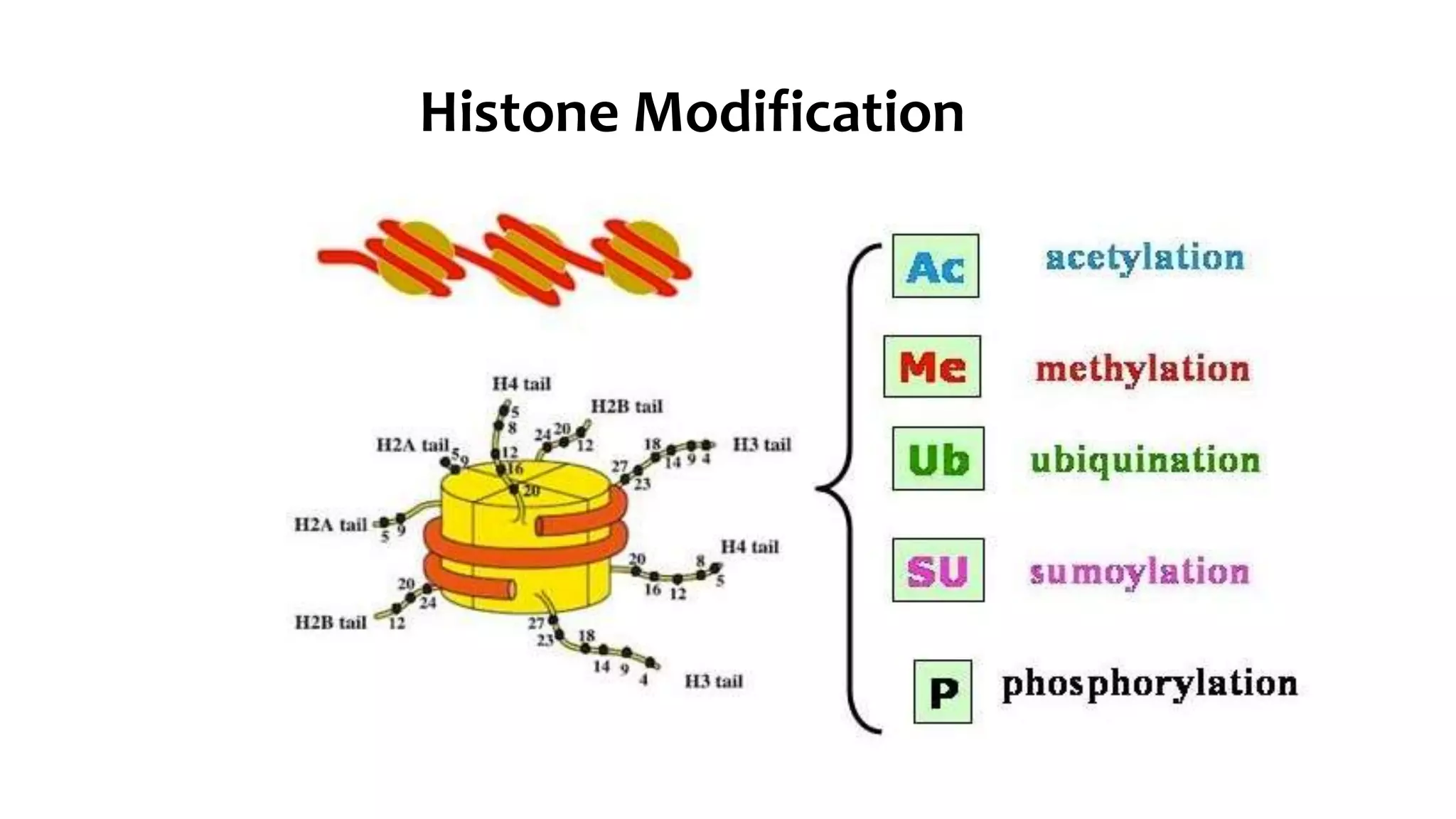
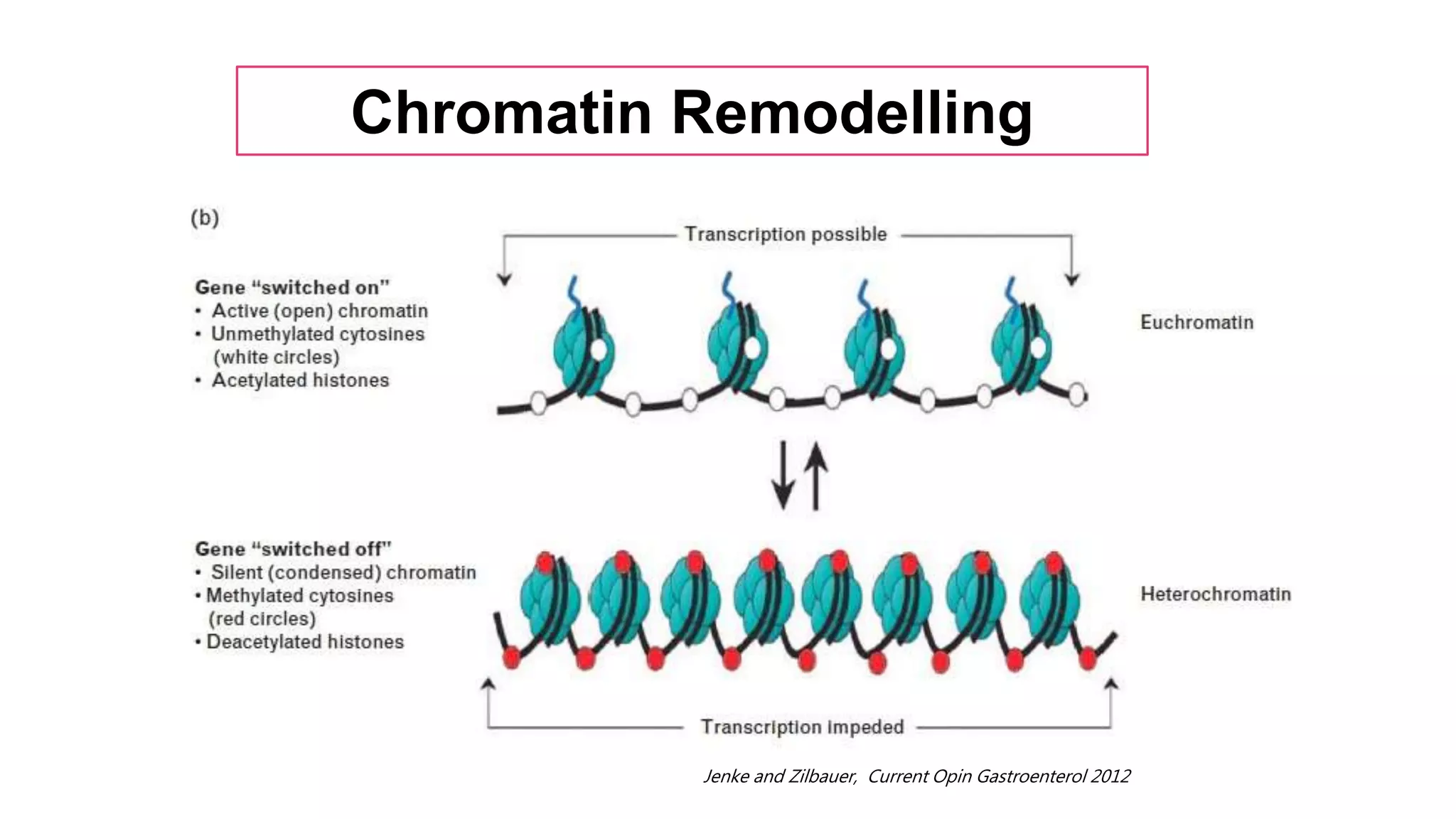
Histone Modification
Chromatin Remodelling
Jenke and Zilbauer, Current Opin Gastroenterol 2012
Epigenetics: DNA Methylation
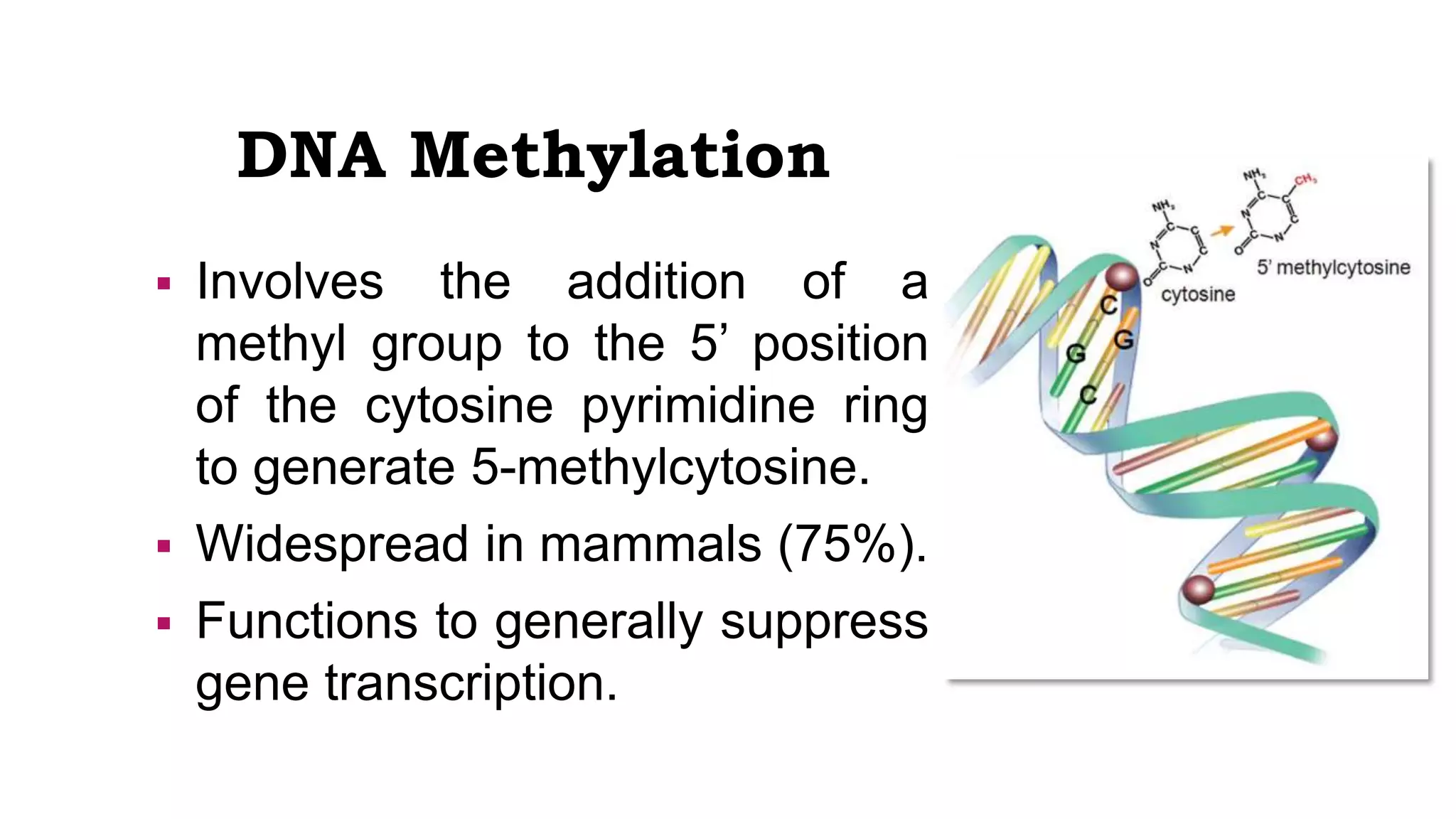
DNA Methylation
 Involves the addition of a
methyl group to the 5’ position
of the cytosine pyrimidine ring
to generate 5-methylcytosine.
 Widespread in mammals (75%).
 Functions to generally suppress
gene transcription.
Epigenetics: Non-coding RNA
Non-coding RNA
 Ex.: non-coding RNA-mediated regulation of
gene expression and chromatin remodeling.
 piwiRNAs (piRNAs), microRNAs (miRNAs),
long ncRNAs (lncRNAs)
 Function: regulate DNA processes (gene
expression)
 Involved in many aspects of farm animal
welfare:
Disease
Milk production
Adipogenesis
Reproduction (oocyte, embryonic development)
miRNA: Importance
 Reproduction and Nutriment-Nurture
Crosstalk: An Epigenetics Perspective
(Nayan et al., 2015)
 Epigenetic Landscape in light of Nutrition,
Environment and Developmental origins of
health and disease
Epigenetics
 Epigenetic modifications can be greatly
influenced by environment and nutrition.
 Early environmental conditions are
important for adult health and disease.
Epigenetics
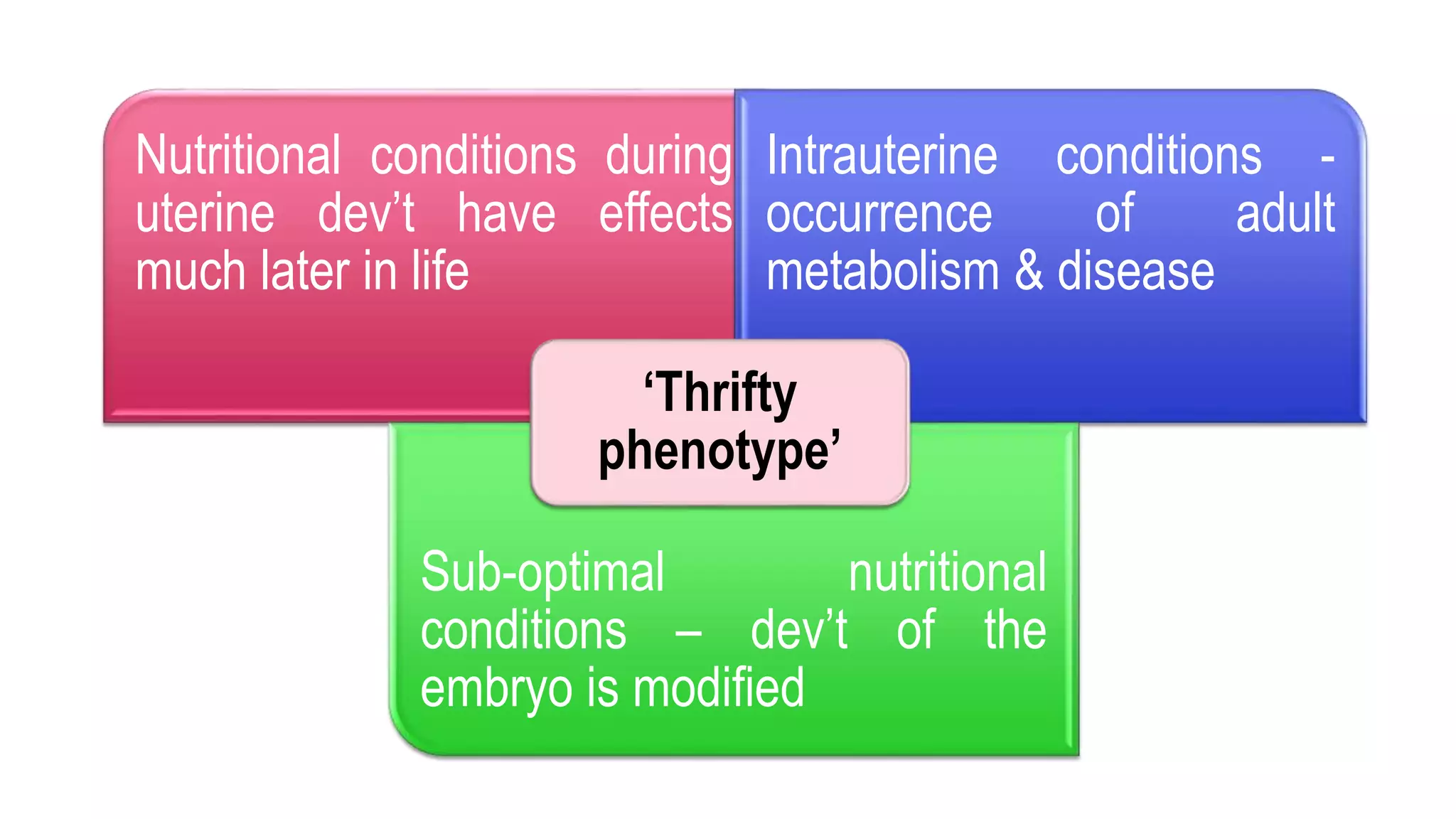
Nutritional conditions during
uterine dev’t have effects
much later in life
Intrauterine conditions -
occurrence of adult
metabolism & disease
Sub-optimal nutritional
conditions – dev’t of the
embryo is modified
‘Thrifty
phenotype’
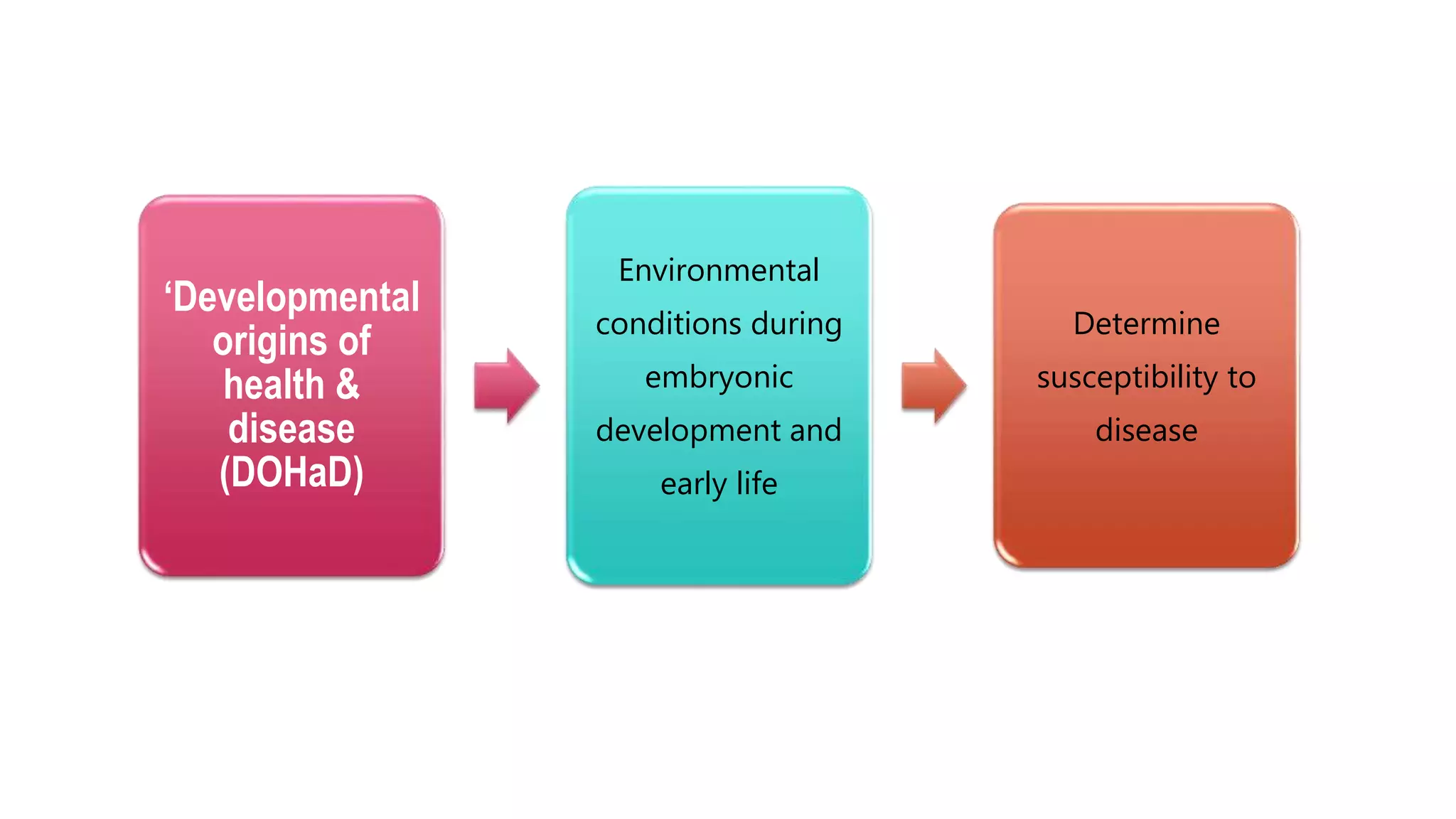
‘Developmental
origins of
health &
disease
(DOHaD)
Environmental
conditions during
embryonic
development and
early life
Determine
susceptibility to
disease
ENVIRONMENTAL
FACTORS
Physical Chemical Nutritional Biological
 Epigenetics: A Promising Paradigm for
Control of Fertility in Dairy Animals
(Nayan et al., 2014)
 Understanding the epigenetic regulation for
fertility augmentation in buffaloes and other
dairy animals in future.
Epigenetics Today
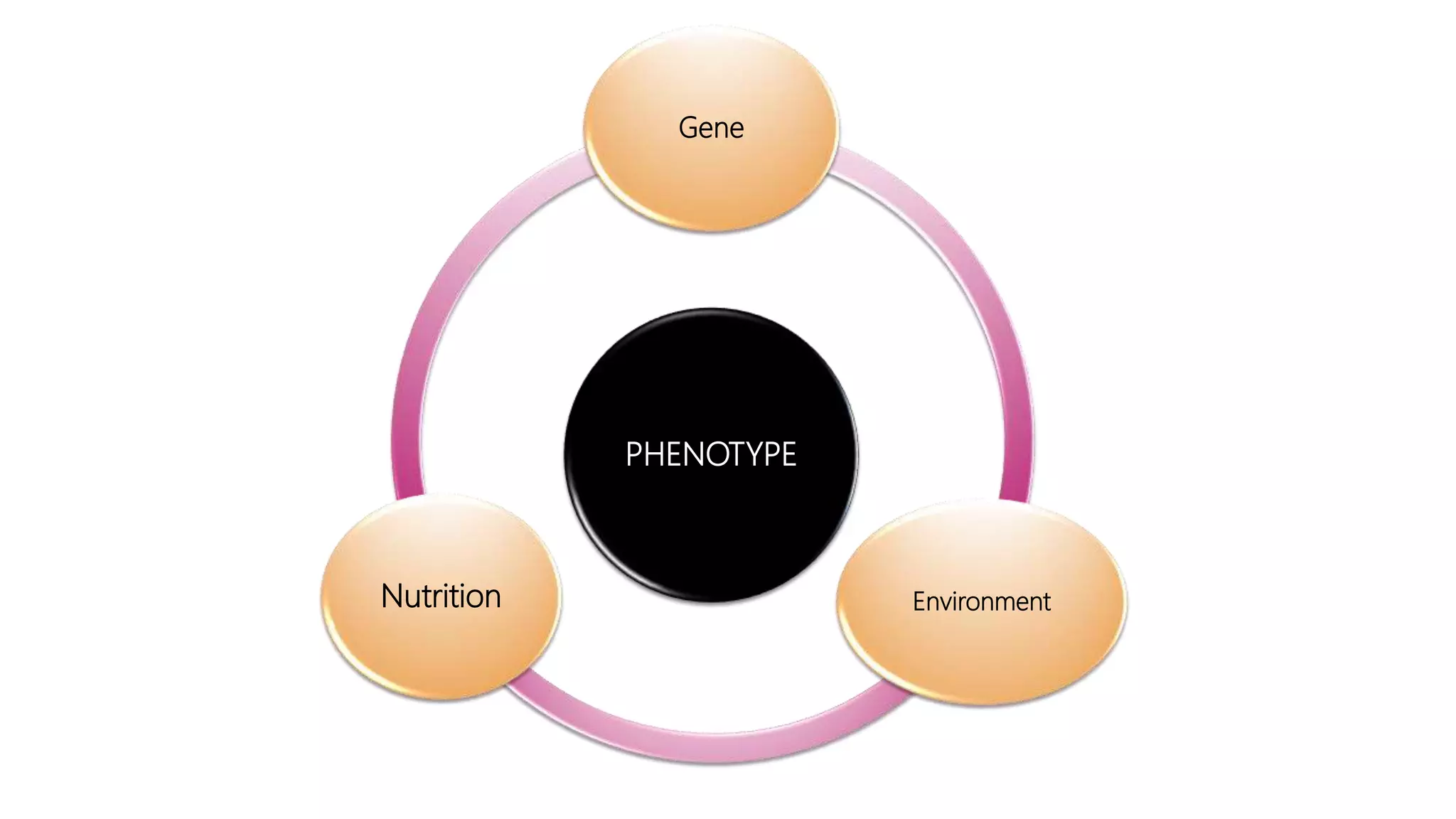
PHENOTYPE
Gene
EnvironmentNutrition
Environmental
factors
• Feed/fodder, toxins, stress, pathogens,
weather
Epigenetic
mechanisms
• DNA Methylation, Chromatin Remodeling,
Histone Modification, Non-coding RNA
Phenotype
• Reproductive Efficiency, Milk Production,
Stress Adaptability, Longevity, Behaviour

What is Epigenetics?

Editor's Notes

  • #2 What makes the ~200 cell types in our body remember their identity? What prevents them from becoming cancer cells? Why do we inherit some traits from our father, others from our father? How do our experiences and environment influence our thinking. These important questions are all addressed by the field of epigenetics.
  • #3 Molecular biology – study of the composition, structure and interactions of cellular molecules such as nucleic acids and proteins that carry out biological processes essential for the cell’s functions and maintenance. The central dogma of molecular biology explains the flow of genetic material within a cell. It is generally a 2-step process, transcription and translation, by which the information in genes flows into proteins: DNA – RNA – protein. GENOTYPE – the genetic makeup of an organism with reference to a single trait, set of traits, or an entire complex of traits. PHENOTYPE – the set of observable characteristics of an individual resulting from the interaction of its genotype with the environment. It is the physical or behavioral traits of the organism, for example, size and shape, metabolic activities, and patterns of movement.
  • #4 Gene: a segment of DNA that contains specific instructions to make a specific protein molecule; the basic biological unit of heredity. Gene expression: the process by which information encoded in a gene is converted to a protein product that determines an organism’s characteristics and functioning. Phenotype -
  • #6 The word Epigenetics (as in "epigenetic landscape") was coined by Conrad Waddington (1905-1975) in 1942 as a blend of the words epigenesis and genetics and as 98 equivalent to experimental embryology. It was defined as the branch of biology that studies the causal interactions between genes and their products, and which bring the phenotype into being. Epigenetics was ascribed as a developmental program, where genes determine the individual’s phenotype by considering the internal and external environmental cues. Epigenetics was also heralded as the study of heritable changes in gene expression that are 103 not caused by changes in the primary DNA sequence.
  • #7 What makes the ~200 cell types in our body remember their identity? What prevents them from becoming cancer cells? Why do we inherit some traits from our father, others from our mother? How do our experiences and environment influence our thinking?
  • #8 Epigenetics was first coined by Conrad Hal Waddington. Phenotype -
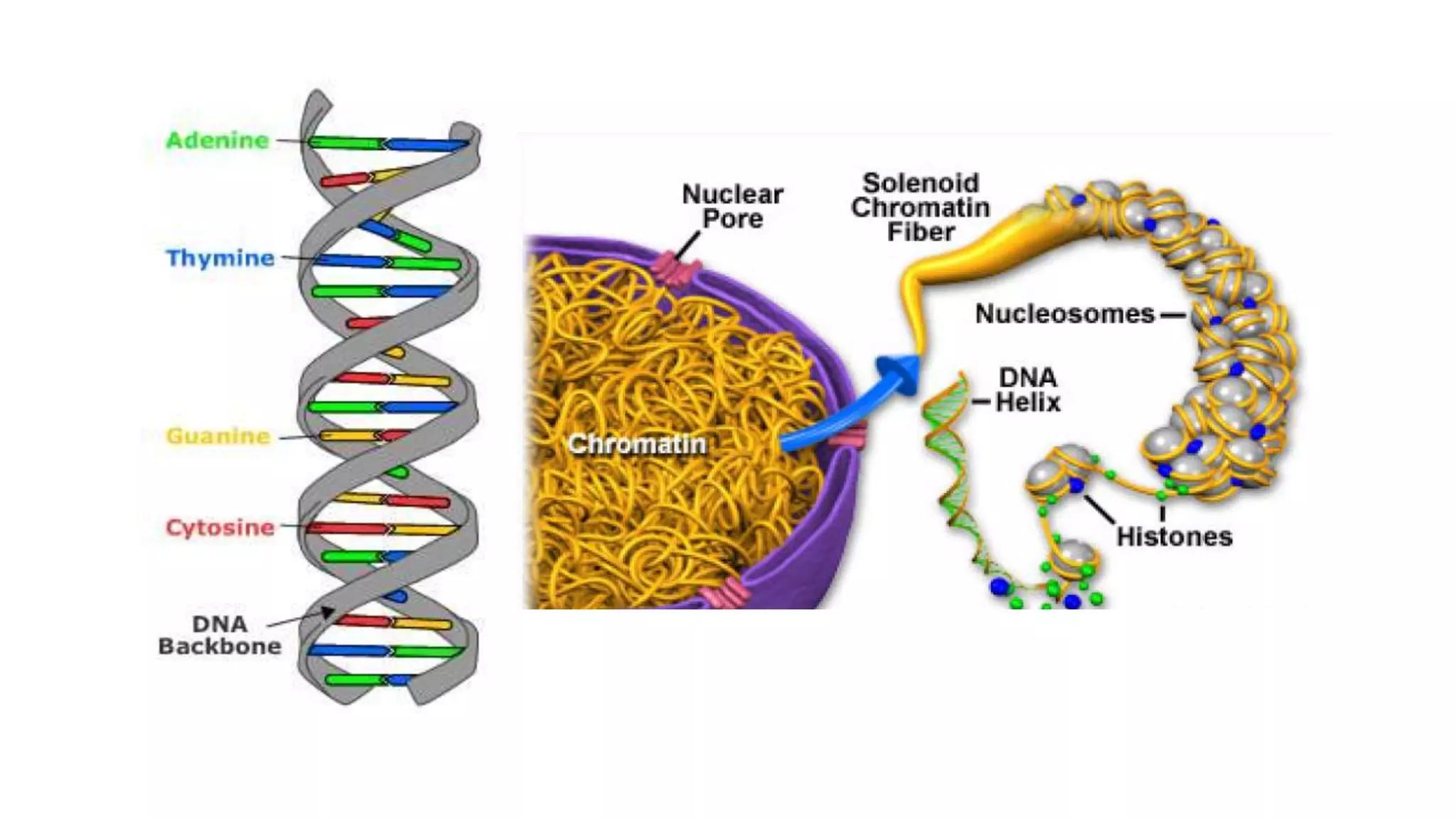
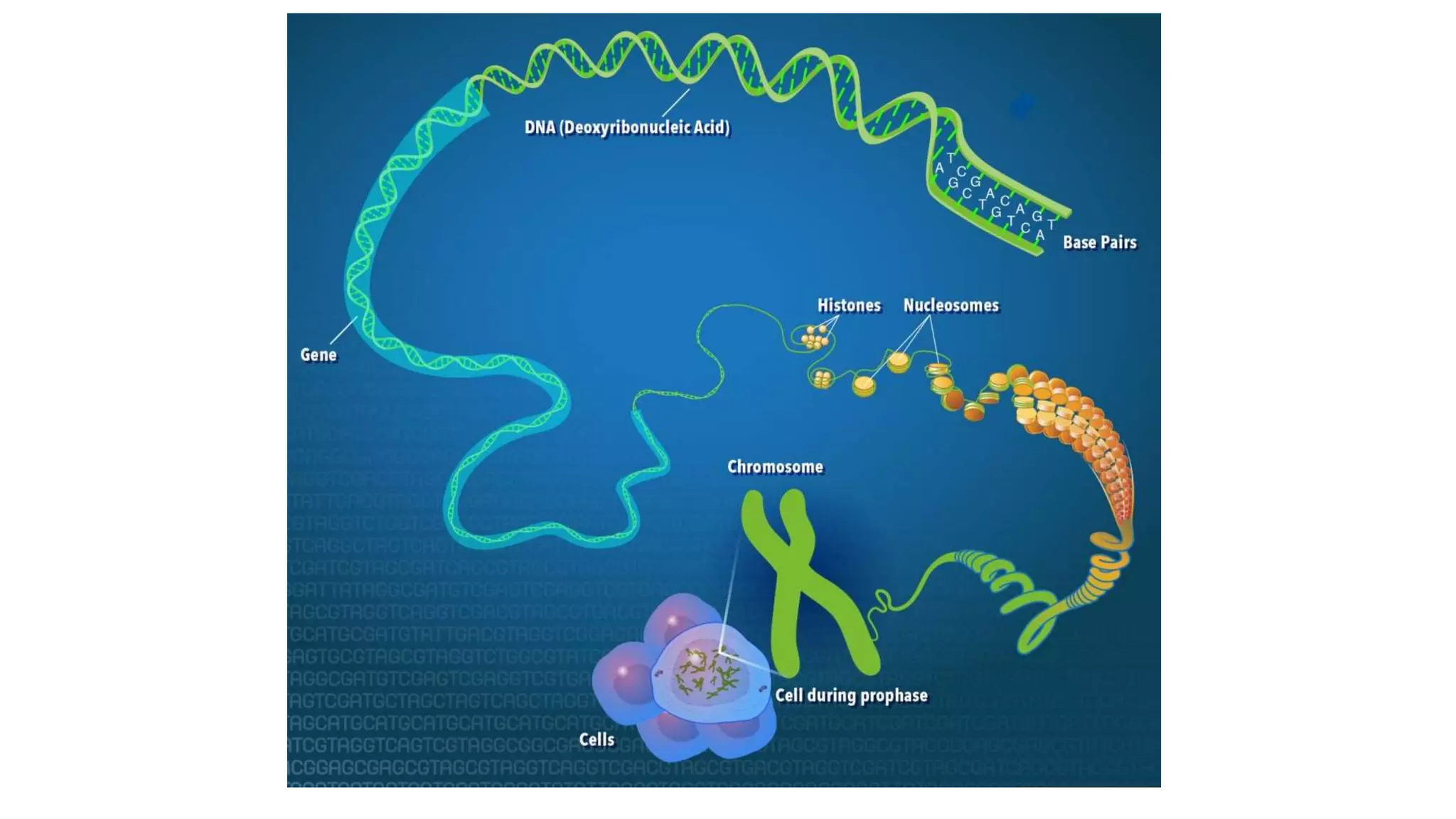
  • #9 The nucleus contains the chromosomes (threadlike part that carries the hereditary information in the form of genes). The chromosomes are made up of chromatin and the chromatin is a complex of DNA and proteins. Under the microscope, the chromatin looks like beads of strings. The beads are called nucleosomes. Each nucleosome is composed of DNA wrapped around eight proteins called histones. The histones are proteins where the thread-like DNA is wrapped around.
  • #10 The DNA is compacted and packaged into a macromolecular complex termed chromatin, the fundamental unit of which is a nucleosome. Nucleosomes consist of histones where the DNA are wound. The DNA encodes the organism’s blueprint or it contains the complete genetic information of the organism. It is composed of nucleotide bases namely adenine, thymine, guanine and cytosine.
  • #12 Epigenetic events regulate the activities of genes without changing the DNA sequence. Different genes are expressed depending on the methyl-marks attached to DNA itself and by changes in the structure and/ or composition of chromatin.
  • #13 The main components of chromatin are histones (in bundles of eight units) around which 146 base-pairs of DNA are wound like a thread around a spool, forming a structure called the nucleosome.
  • #14 There are various epigenetic mechanisms that can affect the nucleosome: chemical modification (via molecular additions to histone tails or DNA: histone modification & dna methylation), a change its positioning on DNA (via chromatin remodeling proteins), or a v ariation in histone subtypes (posttranslational histone modification).
  • #15 Epigenetic marks are critical for determining and maintaining cell fate during development. Although almost every cell in the human body contains the same DNA, epigenetic marks act to program the cell to express genes that are relevant for a particular tissue type. A neuronal cell expresses genes that help it develop dendrites and axons. In a liver cell those same genes are marked with epigenetic tags that cause tighter binding of neuron-specific DNA, making it inaccessible to transcription machinery.
  • #16 The main components of chromatin are histones (in bundles of eight units) around which 146 base-pairs of DNA are wound like a thread around a spool, forming a structure called the nucleosome.
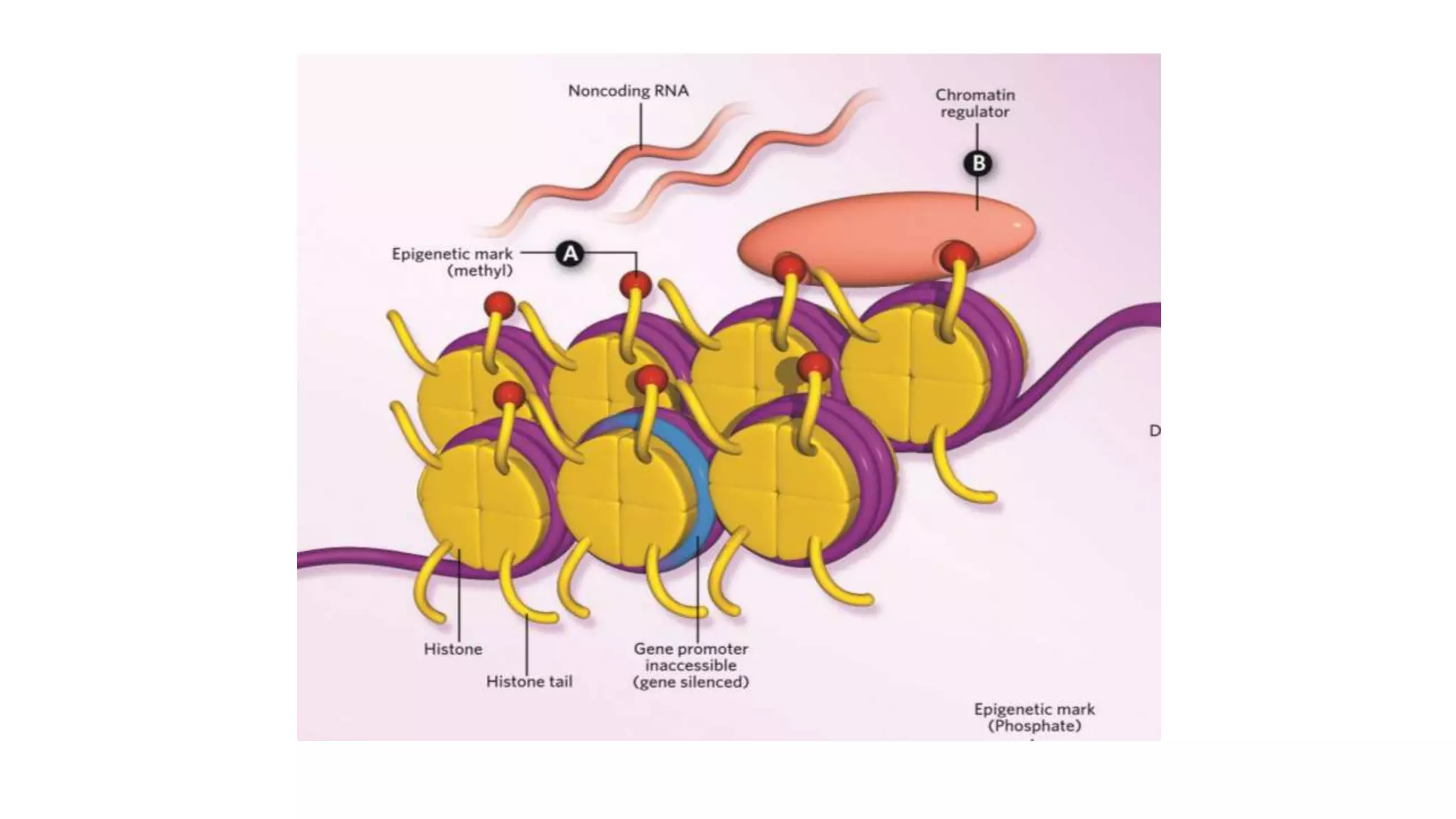
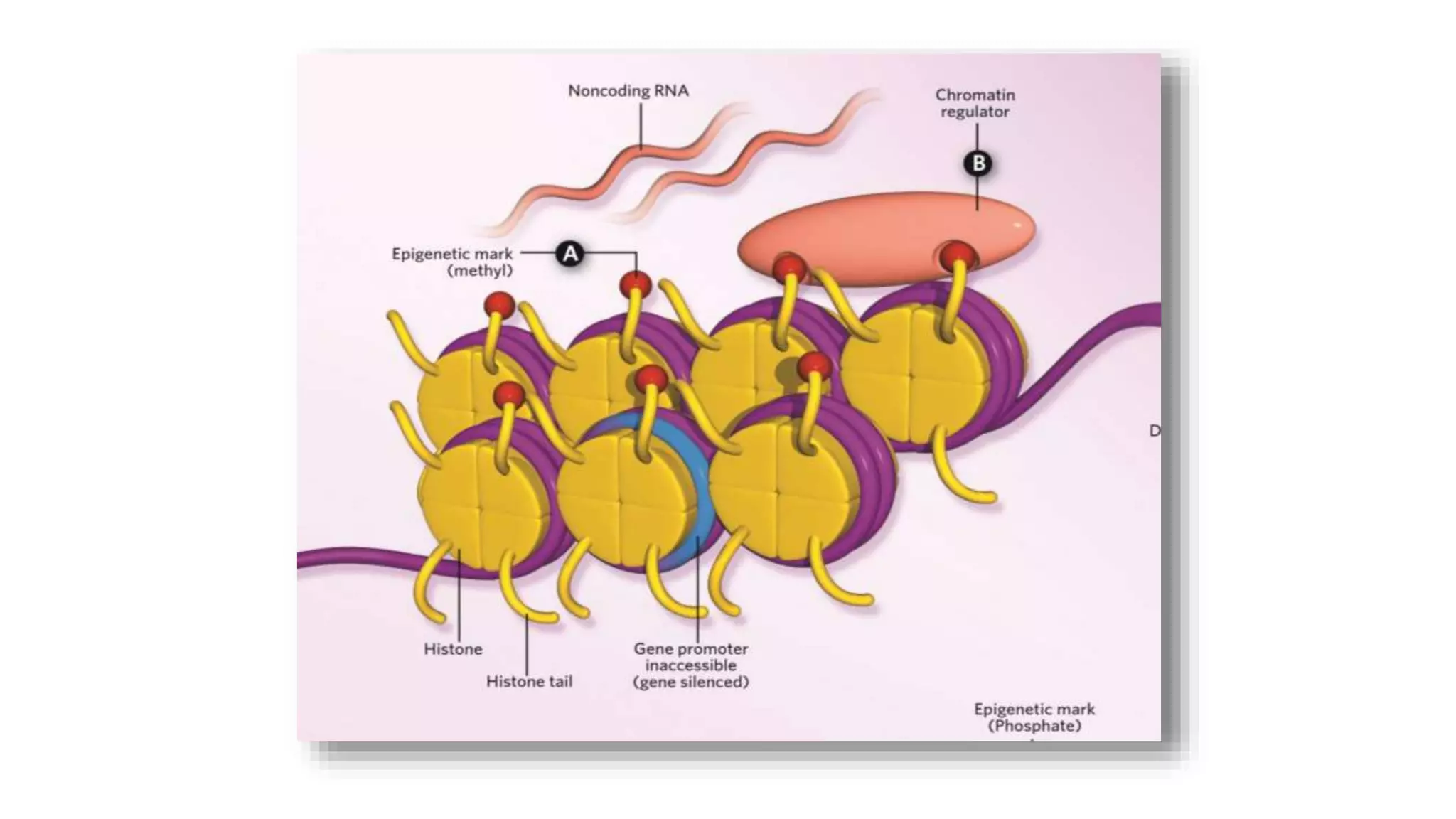
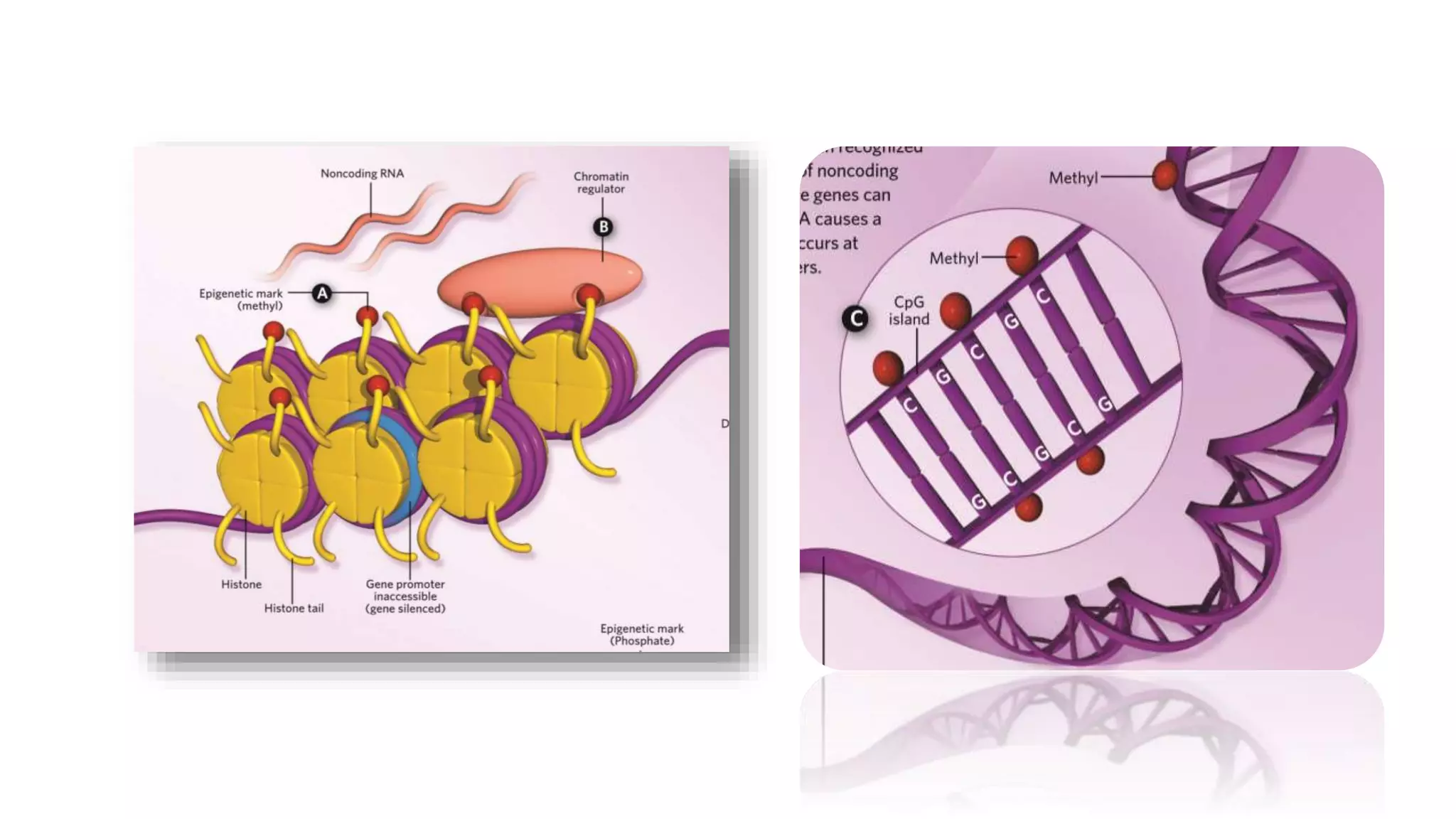
  • #17  INACTIVATING MARKS There are many epigenetic modifications that change whether or how much of a gene is transcribed into RNA. Epigenetic marks that inactivate genes include methylation (process of adding a methyl group to a DNA molecule) at certain positions on histone tails A. These chemical modifications are made by a number of histone-modifying enzymes and then recognized by other chromatin regulators B . Evidence is beginning to emerge that different classes of noncoding RNAs (nsRNA) regulate these enzymes. Many of the histone modifications that inactivate genes can be reversed by other epigenetic changes (see below). However, direct methylation of DNA causes a permanent and heritable change in gene expression C . DNA methylation (where does this occur? – next slide). DNA methylation, which often occurs in the early stages of development, allows cells to keep irrelevant genes silenced in successive generations of liver or skin cells.
  • #18 Methylation of the DNA often occurs at clusters or “islands” of cytosine (CpG islands).
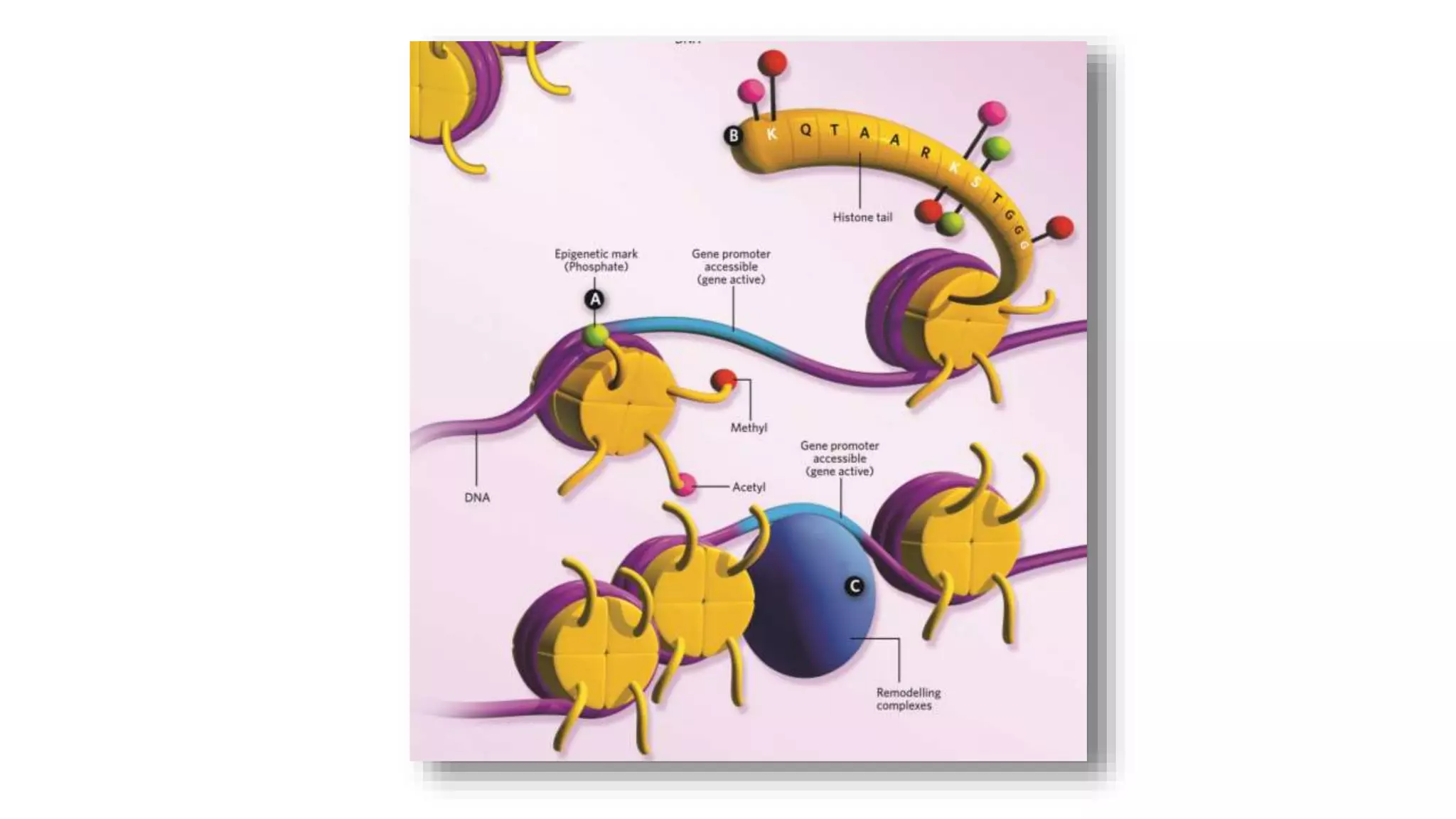
  • #19  ACTIVATING MARKS. Several modifications, including the acetylation, phosphorylation, as well as methylation of certain positions on a histone tail  A., can cause DNA to unwind, releasing the genes that are otherwise inaccessible. These modifications occur mostly at specific positions on the accessible tails of the histones, and subsequently recruit additional activating proteins  B . Histone-remodeling complexes, which slide histones in one direction or another, can also make genes accessible to transcription  C .
  • #21 All the epigenetic phenomena are characterized by chemical modifications to DNA itself or to histones. Histone: the proteins around which DNA is wound/coiled.
  • #23 Common modifications include acetylation, methylation, phosphorylation and ubiquitylination, and they are deposited on histones, or removed from histones, by specific enzymes.
  • #25 Chromatin remodeling involves the repositioning or restructuring of nucleosomes within chromatin to facilitate or inhibit access to nearby DNA. Dynamic remodeling of chromatin imparts an epigenetic regulatory role in several key biologic processes, including egg cell DNA replication and repair, apoptosis, development and pluripotency.
  • #27 Modifications involving DNA methylation of nucleic acids are tightly linked with many diseases. Aberrant DNA methylation is a feature of a number of important human diseases. Epigenetic changes are common in human cancer cells.
  • #32 Epigenetic modifications are dynamic throughout the life and can be greatly influenced by environment and nutrition. Various nutritional and environmental factors influence the developmental plasticity and thus phenotypes. Early environmental conditions are important for adult health and disease. It is thus true that gene-nutriment-nurture interactions contribute significantly to the health, aging, and disease.
  • #33 Hales and Barker’s ‘thrifty phenotype’ hypothesis also argued that nutritional conditions during uterine development have effects much later in life. Those intrauterine conditions influence the occurrence of adult metabolism and diseases. Under sub-optimal nutritional conditions, development of the embryo is modified in such a way to prepare the offspring for a future environment with low resources during adult life (a thrifty phenotype).
  • #34 Later on, the thrifty phenotype hypothesis evolved into a more general theory known as the ‘developmental origins of health and disease’ (DOHaD). The DOHaD theory proposed that a wide range of environmental conditions during embryonic development and early life determine susceptibility to disease during adult life.
  • #35 The nutritional and environmental elements can be physical, chemical, nutritional, and biological. Physical factors can be radiation, noise, abuse, stress, and temperature104. The chemicals include endocrine disrupting compounds (viz. bisphenol A, phthalates), pesticides, organic pollutants, and metals. Exposure to viruses, bacteria, parasites, and their toxins constitute the biological factors. nutrients have the 356 ability to interact and modulate molecular mechanisms underlying an organism’s physiological functions and has pressed for a revolution in the field of nutrition. diverse environmental 382 toxicants and abnormal nutrition have the ability to promote the epigenetic transgenerational inheritance of disease. Environmental stress can also enhance the epigenetic alterations that are transmitted to subsequent generations. All these results are encouraging and provide us a great opportunity for exploring and understanding the role of environment, management conditions, feed/dietary components in changing epigenetic landscape and definitely will have an impact on integrated -omics research in humans and animals alike.
  • #37 Understanding the epigenetic regulation concerning ovarian functions will pave the way for devising better strategies for fertility augmentation in buffaloes and other dairy animals in future.
  • #38 The animal phenotype is a summation of gene-environment-nutrition interactions.
  • #39 From this research, the authors concluded that reproduction in mammalian species involves a complex series of endocrinological, biochemical and molecular events during folliculogenesis and further developmental stages. Fertility in dairy animals encompasses several factors that must be considered altogether. The epigenetic modifications viz. DNA methylation, chromatin remodeling by covalent as well as ATP dependent non-covalent changes and noncoding transcripts (miRNAs) influence viability of female gamete and further embryo development.