Mrs. Praveen Garg
VITS College, Satna
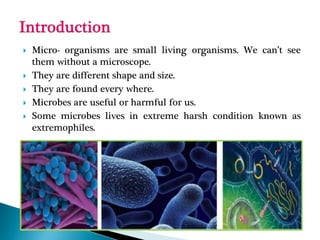
 Micro- organisms are small living organisms. We can’t see
them without a microscope.
 They are different shape and size.
 They are found every where.
 Microbes are useful or harmful for us.
 Some microbes lives in extreme harsh condition known as
extremophiles.
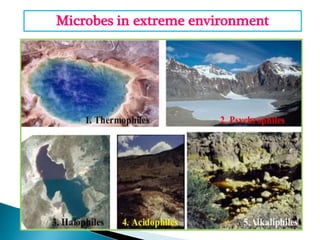
Microbes in extreme environment
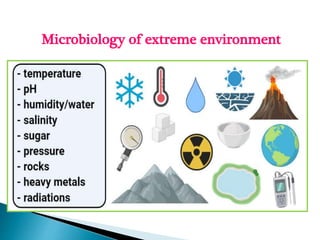
Microbiology of extreme environment
 These are micro-organisms lives in extreme condition. They
include:
 Thermophiles
 Halophiles
 Pschrophiles
 Barophiles
 Xerophiles
 Acidophiles
 Mathenogenic

 A thermophile is an organism—a type of extremophile—that
thrives at relatively high temperatures, between 41 and 122 °C
(106 and 252 °F). Many thermophiles are archaea.
 Thermophiles are found in various geothermally heated regions
of the Earth, such as hot springs like those in Yellowstone
National Park and deep sea hydrothermal vents.
 Thermophiles can survive at high temperatures, whereas other
bacteria would be damaged and sometimes killed if exposed to the
same temperatures.
 Thermophiles can be classified according to their optimal growth
temperatures:
 Simple thermophiles 50–64 °C
 Extreme thermophiles 65–79 °C
 Hyperthermophiles 80 °C, but not < 50 °C.
 The halophiles, means "salt-loving", are extremophiles that
thrive in high salt concentrations.
 While most halophiles are classified into the domain Archaea,
there are also bacterial halophiles and some eukaryotic species.
 Halophiles can be found in water bodies with salt concentration
more than five times greater than that of the ocean.
 Halophiles are categorized by the extent of their halotolerance:
slight, moderate, or extreme.
 Slight halophiles prefer 0.3 to 0.8 M, moderate halophiles 0.8 to
3.4 M, and extreme halophiles 3.4 to 5.1 M salt content.
 Halophiles require sodium chloride (salt) for growth, in contrast
to halotolerant organisms, which do not require salt but can
grow under saline conditions.

 These are lives in anaerobic condition.
 They are widely distributed in nature such as deep sea water,
sewage area and stomach cow.
 These are helpful to the ruminants for fermentation of
cellulose.
 Methanogens obtain their energy from the use of carbon
dioxide and hydrogen gas. They are autotrophs.
 These are obligate anaerobes.
 Psychrophiles or cryophiles are extremophilic organisms that are
capable of growth and reproduction in low temperatures,
ranging from −20 °C to +10 °C.
 They are found in places that are permanently cold, such as the
polar regions and the deep sea.
 Psychrophile is Greek for 'cold-loving'.
 Many such organisms are bacteria or archaea, but
some eukaryotes such as lichens, snow algae, fungi are also
classified as psychrophiles.
 They are present in permafrost, polar
ice, glaciers, snowfields and deep ocean waters.
 These organisms can also be found in pockets of sea ice with
high salinity content.
 A barophile is an organism that needs a high-pressure
environment in order to grow.
 Barophiles are a type of an extremophile.
 An example of a high-pressure habitat is the deep-sea
environment, such as ocean floors and deep lakes where the
pressure can exceed 380 atm.
 Barophiles that cannot survive outside their high-pressure
habitats are referred to as obligate barophiles.
 Those that can live at high pressures and in less extreme
environment are referred to as barotolerants.
 Many barophiles are sensitive to ultraviolet rays and are
susceptible to UV radiation.
 They lack the essential mechanisms of DNA repair to counter
the effects of UV radiation.
 Thus, many of them grow in darkness. Because of this, they
also tend to be psychrophilic. That means they live under cold
temperatures, e.g. about 2-3 °C below 100 m.
 Halomonas salaria, a Gram-negative proteobacterium, is an
example of an obligate barophile. It needs a pressure of 1000
atm.
 Another example of barophile is the Xenophyophores, which
are single-celled eukaryotes found in the deepest ocean area.
 Xerophiles are extremophilic organisms that can grow and
reproduce in conditions with a low availability of water, also
known as water activity.
 Water activity is a measure of the amount of water within a
substrate that an organism can use to support sexual growth.
 Xerophiles are "xerotolerant", meaning tolerant of dry conditions.
 The common food preservation method of reducing water
activities may not prevent the growth of xerophilic organisms,
often resulting in food spoilage.
 Some mold and yeast species are xerophilic. Mold growth on
bread is an example of food spoilage by xerophilic organisms.
 Examples of xerophiles include Trichosporonoides nigrescens
and cacti.
 Acidophiles or acidophilic organisms are those that thrive
under highly acidic conditions (usually at pH 2.0 or below).
 These organisms can be found in different branches of the
tree of life, including Archaea, Bacteria, and Eukarya.
Example:
 Sulfolobus
 Thiobacilus
 Mucor racemosus
Thank You

Extremophiles

  • 1.
    Mrs. Praveen Garg VITSCollege, Satna
  • 2.
     Micro- organismsare small living organisms. We can’t see them without a microscope.  They are different shape and size.  They are found every where.  Microbes are useful or harmful for us.  Some microbes lives in extreme harsh condition known as extremophiles.
  • 3.
  • 4.
  • 5.
     These aremicro-organisms lives in extreme condition. They include:  Thermophiles  Halophiles  Pschrophiles  Barophiles  Xerophiles  Acidophiles  Mathenogenic 
  • 6.
     A thermophileis an organism—a type of extremophile—that thrives at relatively high temperatures, between 41 and 122 °C (106 and 252 °F). Many thermophiles are archaea.  Thermophiles are found in various geothermally heated regions of the Earth, such as hot springs like those in Yellowstone National Park and deep sea hydrothermal vents.  Thermophiles can survive at high temperatures, whereas other bacteria would be damaged and sometimes killed if exposed to the same temperatures.  Thermophiles can be classified according to their optimal growth temperatures:  Simple thermophiles 50–64 °C  Extreme thermophiles 65–79 °C  Hyperthermophiles 80 °C, but not < 50 °C.
  • 7.
     The halophiles,means "salt-loving", are extremophiles that thrive in high salt concentrations.  While most halophiles are classified into the domain Archaea, there are also bacterial halophiles and some eukaryotic species.  Halophiles can be found in water bodies with salt concentration more than five times greater than that of the ocean.  Halophiles are categorized by the extent of their halotolerance: slight, moderate, or extreme.  Slight halophiles prefer 0.3 to 0.8 M, moderate halophiles 0.8 to 3.4 M, and extreme halophiles 3.4 to 5.1 M salt content.  Halophiles require sodium chloride (salt) for growth, in contrast to halotolerant organisms, which do not require salt but can grow under saline conditions. 
  • 8.
     These arelives in anaerobic condition.  They are widely distributed in nature such as deep sea water, sewage area and stomach cow.  These are helpful to the ruminants for fermentation of cellulose.  Methanogens obtain their energy from the use of carbon dioxide and hydrogen gas. They are autotrophs.  These are obligate anaerobes.
  • 9.
     Psychrophiles orcryophiles are extremophilic organisms that are capable of growth and reproduction in low temperatures, ranging from −20 °C to +10 °C.  They are found in places that are permanently cold, such as the polar regions and the deep sea.  Psychrophile is Greek for 'cold-loving'.  Many such organisms are bacteria or archaea, but some eukaryotes such as lichens, snow algae, fungi are also classified as psychrophiles.  They are present in permafrost, polar ice, glaciers, snowfields and deep ocean waters.  These organisms can also be found in pockets of sea ice with high salinity content.
  • 10.
     A barophileis an organism that needs a high-pressure environment in order to grow.  Barophiles are a type of an extremophile.  An example of a high-pressure habitat is the deep-sea environment, such as ocean floors and deep lakes where the pressure can exceed 380 atm.  Barophiles that cannot survive outside their high-pressure habitats are referred to as obligate barophiles.  Those that can live at high pressures and in less extreme environment are referred to as barotolerants.
  • 11.
     Many barophilesare sensitive to ultraviolet rays and are susceptible to UV radiation.  They lack the essential mechanisms of DNA repair to counter the effects of UV radiation.  Thus, many of them grow in darkness. Because of this, they also tend to be psychrophilic. That means they live under cold temperatures, e.g. about 2-3 °C below 100 m.  Halomonas salaria, a Gram-negative proteobacterium, is an example of an obligate barophile. It needs a pressure of 1000 atm.  Another example of barophile is the Xenophyophores, which are single-celled eukaryotes found in the deepest ocean area.
  • 12.
     Xerophiles areextremophilic organisms that can grow and reproduce in conditions with a low availability of water, also known as water activity.  Water activity is a measure of the amount of water within a substrate that an organism can use to support sexual growth.  Xerophiles are "xerotolerant", meaning tolerant of dry conditions.  The common food preservation method of reducing water activities may not prevent the growth of xerophilic organisms, often resulting in food spoilage.  Some mold and yeast species are xerophilic. Mold growth on bread is an example of food spoilage by xerophilic organisms.  Examples of xerophiles include Trichosporonoides nigrescens and cacti.
  • 13.
     Acidophiles oracidophilic organisms are those that thrive under highly acidic conditions (usually at pH 2.0 or below).  These organisms can be found in different branches of the tree of life, including Archaea, Bacteria, and Eukarya. Example:  Sulfolobus  Thiobacilus  Mucor racemosus
  • 14.