Seyed Mohammad Motevalli
October 2013
1
Outline





Definition
Historical background
General strategy
Methods of creation of transgenic animals

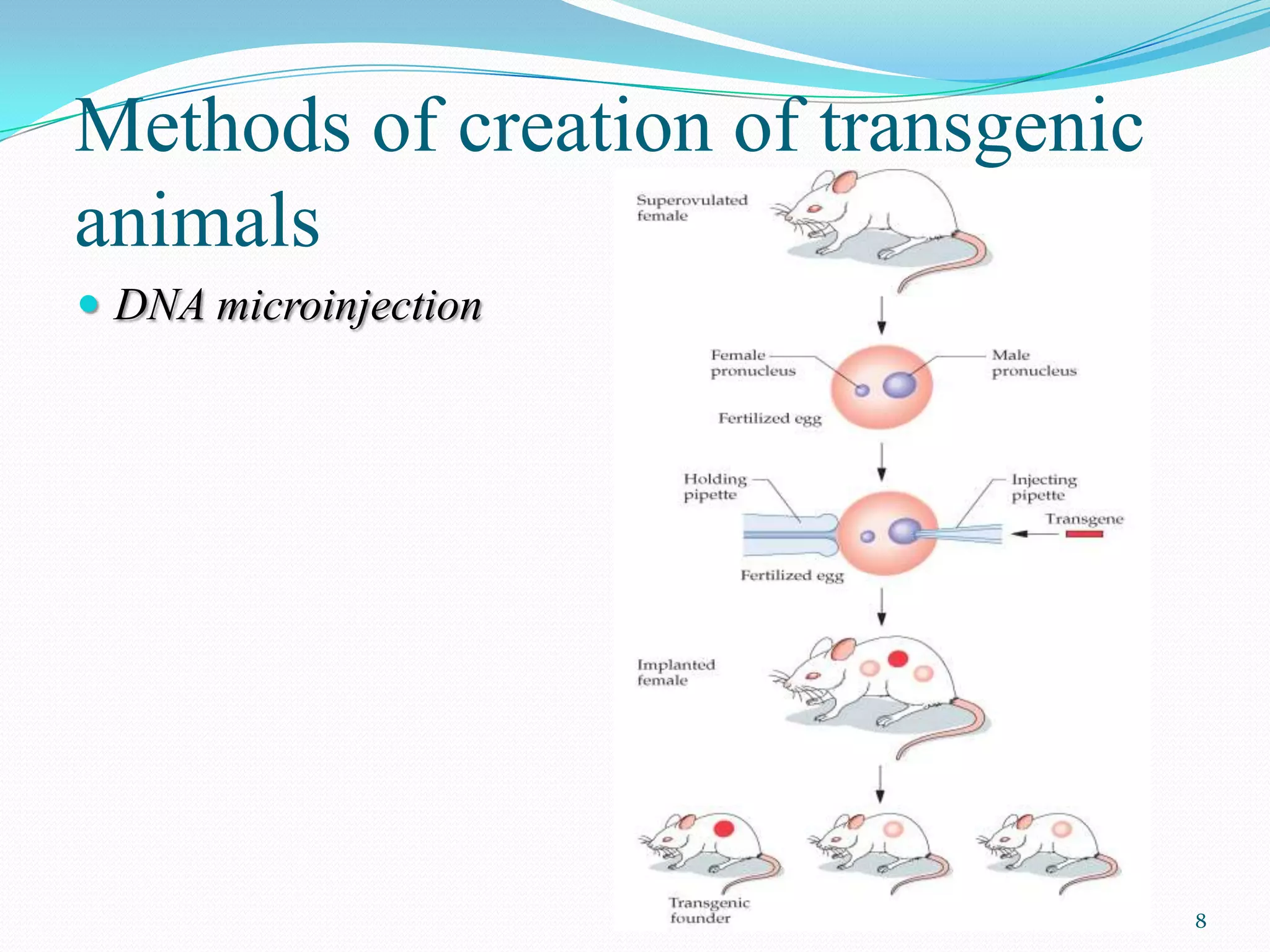
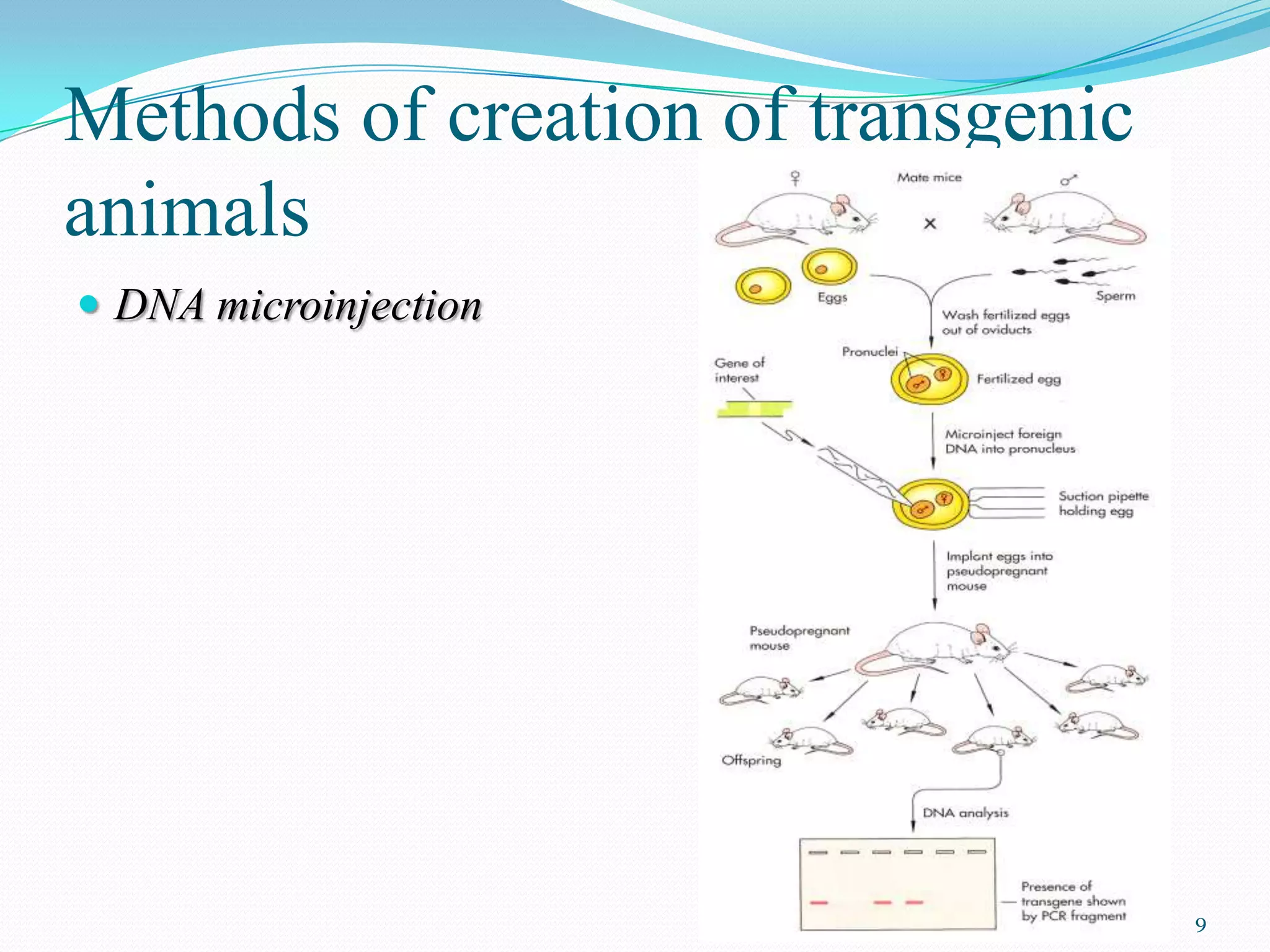
 DNA microinjection
 Retrovirus-mediated gene transfer
 Embryonic stem cell-mediated gene transfer

 How can we get embryonic cells?
 Selection of transfected cells
 Gene expression
 Transient gene expression
 Stable gene expression

 Transgenic Animals as Biotechnology

2
Definition
 The term transgenic animal refers to an animal in which

there has been a deliberate modification of the
genome, the material responsible for inherited
characteristics, in contrast to spontaneous mutation
(FELASA September 1992, revised February 1995).

3
Historical background
 During the 1970s, the first chimeric mice were produced







(Brinster, 1974)
DNA microinjection, the first technique to prove
successful in mammals, was first applied to mice (Gordon
and Ruddle, 1981)
retrovirus-mediated transgenesis (Jaenisch, 1976)
embryonic stem (ES) cell-mediated gene transfer (Gossler
et al., 1986)
the term transgenic was first used by J.W. Gordon and
F.H. Ruddle (1981) in 1981
4
General strategy
 Isolation and cloning of the gene of interest
 Generation of a (expression-competent) DNA-construct or

genetically modified ES cells
 Isolation of oocytes or blastocysts
 Injection of DNA or genetically modified ES cells and transfer of
the injected embryos into a foster mouse
 Analysis of the off-spring Analysis of the expression and
biological effects of the gene of interest in the transgenic animals

5
Methods of creation of transgenic
animals
 Transfer of ‘naked DNA’
 Calcium phosphate method
 DEAE-dextran

 Encapsulation of DNA in liposome vesicles
 Electroporation
 Micro-injection

6
Methods of creation of transgenic
animals
 DNA microinjection
 Transfection – transfer of nucleic acid into mammalian

cells (also refers to DNA-mediated transformation)
 insertion of DNA directly into the nucleus of individual
cells

7
Methods of creation of transgenic
animals
 DNA microinjection

8
Methods of creation of transgenic
animals
 DNA microinjection

9
Methods of creation of transgenic
animals
 DNA microinjection
Less than 5% of the
microinjected fertilized
eggs become transgenic
progeny

10
Methods of creation of transgenic
animals
 Viral-assisted DNA transfer
 Simian virus SV40
 Retrovirus-mediated gene transfer

11
Methods of creation of transgenic
animals
 Retrovirus-mediated gene transfer

Retroviral vectors can be used to
create transgenic animals

12
Methods of creation of transgenic
animals
 Retrovirus-mediated gene transfer

13
Methods of creation of transgenic
animals
 Embryonic stem cell-mediated gene transfer
 Embryonic stem cells
 Formation of gametocytes
 Injection into blastocysts

 Injection into foster mother
 Formation of new individual

14
15
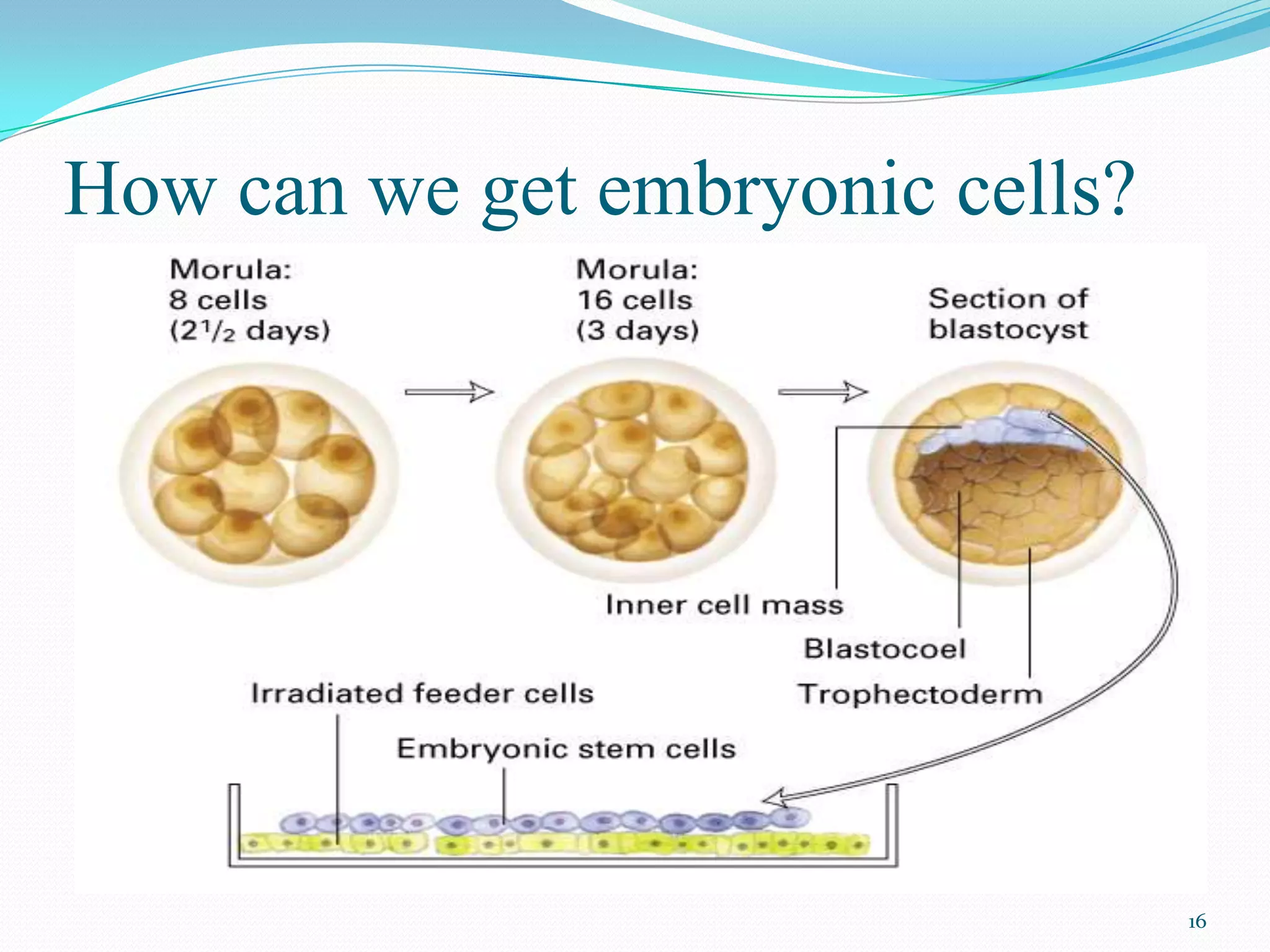
How can we get embryonic cells?

16
Selection of transfected cells
Cell selection by genetic markers
 proportion of cells that accept exogenous DNA may
be as low as 1 in 106

 marker gene incorporated into a recipient cell, allows
successful transfectants to be identified
 marker can be on the same vector as target gene

17
Selection of transfected cells
 Non-dominant genes

target cells must have endogenous genes mutated or
removed, only works with mutant cells
 Dominant genes
selection of any cell type, those that acquire specific
gene during transfection will survive
 Antibiotic resistance genes

18
Gene expression
 Transient gene expression


cells are not genetically stable and soon
lose their expression ability

19
Gene expression
 Stable gene expression

DNA is integrated into the
nucleus of the host cell, or
efficient extrachromosomal
replication
system
is
maintained
during
cell
division

20

Genetic engineering in animal cells

  • 1.
  • 2.
    Outline     Definition Historical background General strategy Methodsof creation of transgenic animals  DNA microinjection  Retrovirus-mediated gene transfer  Embryonic stem cell-mediated gene transfer  How can we get embryonic cells?  Selection of transfected cells  Gene expression  Transient gene expression  Stable gene expression  Transgenic Animals as Biotechnology 2
  • 3.
    Definition  The termtransgenic animal refers to an animal in which there has been a deliberate modification of the genome, the material responsible for inherited characteristics, in contrast to spontaneous mutation (FELASA September 1992, revised February 1995). 3
  • 4.
    Historical background  Duringthe 1970s, the first chimeric mice were produced     (Brinster, 1974) DNA microinjection, the first technique to prove successful in mammals, was first applied to mice (Gordon and Ruddle, 1981) retrovirus-mediated transgenesis (Jaenisch, 1976) embryonic stem (ES) cell-mediated gene transfer (Gossler et al., 1986) the term transgenic was first used by J.W. Gordon and F.H. Ruddle (1981) in 1981 4
  • 5.
    General strategy  Isolationand cloning of the gene of interest  Generation of a (expression-competent) DNA-construct or genetically modified ES cells  Isolation of oocytes or blastocysts  Injection of DNA or genetically modified ES cells and transfer of the injected embryos into a foster mouse  Analysis of the off-spring Analysis of the expression and biological effects of the gene of interest in the transgenic animals 5
  • 6.
    Methods of creationof transgenic animals  Transfer of ‘naked DNA’  Calcium phosphate method  DEAE-dextran  Encapsulation of DNA in liposome vesicles  Electroporation  Micro-injection 6
  • 7.
    Methods of creationof transgenic animals  DNA microinjection  Transfection – transfer of nucleic acid into mammalian cells (also refers to DNA-mediated transformation)  insertion of DNA directly into the nucleus of individual cells 7
  • 8.
    Methods of creationof transgenic animals  DNA microinjection 8
  • 9.
    Methods of creationof transgenic animals  DNA microinjection 9
  • 10.
    Methods of creationof transgenic animals  DNA microinjection Less than 5% of the microinjected fertilized eggs become transgenic progeny 10
  • 11.
    Methods of creationof transgenic animals  Viral-assisted DNA transfer  Simian virus SV40  Retrovirus-mediated gene transfer 11
  • 12.
    Methods of creationof transgenic animals  Retrovirus-mediated gene transfer Retroviral vectors can be used to create transgenic animals 12
  • 13.
    Methods of creationof transgenic animals  Retrovirus-mediated gene transfer 13
  • 14.
    Methods of creationof transgenic animals  Embryonic stem cell-mediated gene transfer  Embryonic stem cells  Formation of gametocytes  Injection into blastocysts  Injection into foster mother  Formation of new individual 14
  • 15.
  • 16.
    How can weget embryonic cells? 16
  • 17.
    Selection of transfectedcells Cell selection by genetic markers  proportion of cells that accept exogenous DNA may be as low as 1 in 106  marker gene incorporated into a recipient cell, allows successful transfectants to be identified  marker can be on the same vector as target gene 17
  • 18.
    Selection of transfectedcells  Non-dominant genes target cells must have endogenous genes mutated or removed, only works with mutant cells  Dominant genes selection of any cell type, those that acquire specific gene during transfection will survive  Antibiotic resistance genes 18
  • 19.
    Gene expression  Transientgene expression  cells are not genetically stable and soon lose their expression ability 19
  • 20.
    Gene expression  Stablegene expression DNA is integrated into the nucleus of the host cell, or efficient extrachromosomal replication system is maintained during cell division 20

Editor's Notes

  • #8 This method involves the direct microinjection of a chosen gene construct (a single gene or a combination of genes) from another member of the same species or from a different species, into the pronucleus of a fertilized ovum
  • #12  *promote transfer of DNA to cells because of capsid proteins that bind to cell membrane receptors *contain promoters that allow expression of inserted genes in animal cells * replicate to high copy numbers (several copies of required genes within cell) * some viruses’ genomic material integrate into the animal cell genome
  • #14 1) Retroviruses used as vectors to transfer genetic material into the host cell, resulting in a chimera, an organism consisting of tissues or parts of diverse genetic constitution2) Retroviruses are also efficient vectors for integration of foreign genes into animal cellsHave RNA genome, complementary DNA copies are formed by the enzyme reverse transcriptase3) DNA can be incorporated into host cells’ genome without causing cell lysisRetroviral structural genes are replaced with foreign DNA
  • #15 Genetically engineered embryonic stem (ES) cells can be used to create transgenic animals, but this method is labor intensive and used to allow for gene targeting via homologous recombination
  • #20 assayed from cell culture 1-3 days after uptake of DNA
  • #21 ideal recombinant cells grow with doubling time of ~18 hours, is genetically stable, and secretes a recombinant protein at ~20% of total cellular protein