GENETICS
A Conceptual Approach
FIFTH EDITION
Benjamin A. Pierce
CHAPTER 21
Epigenetics
© 2014 W. H. Freeman and Company
21.1 What is Epigenetics?
• How, through the process of development, a
genotype produces a phenotype
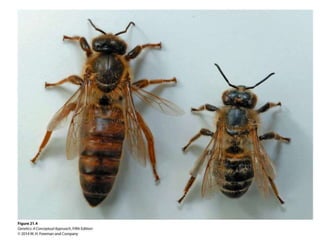
• “epigenesis”–how an embryo develops
• “genetics”–the study of genes and heredity
• Changes that are heritable
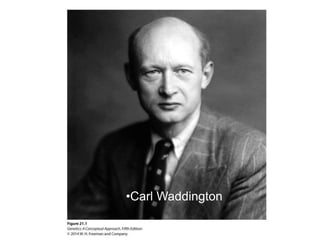
•Carl Waddington
21.2 Several Molecular Processes Lead
to Epigenetic Changes
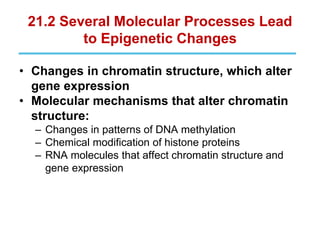
• Changes in chromatin structure, which alter
gene expression
• Molecular mechanisms that alter chromatin
structure:
– Changes in patterns of DNA methylation
– Chemical modification of histone proteins
– RNA molecules that affect chromatin structure and
gene expression
21.2 Several Molecular Processes Lead
to Epigenetic Changes
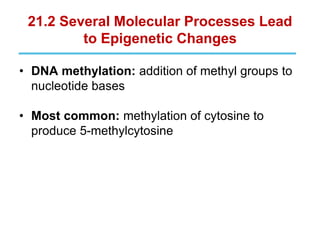
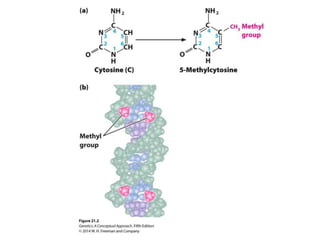
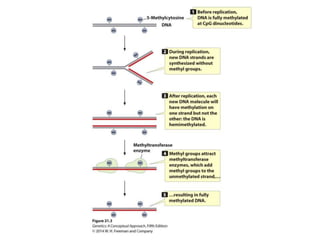
• DNA methylation: addition of methyl groups to
nucleotide bases
• Most common: methylation of cytosine to
produce 5-methylcytosine
21.2 Several Molecular Processes Lead
to Epigenetic Changes
• Histone modifications: more than 100 different
posttranslational modifications of histone
proteins
• Modifications include addition of:
– Phosphates
– Methyl groups
– Acetyl groups
– ubiquitin
21.2 Several Molecular Processes Lead
to Epigenetic Changes
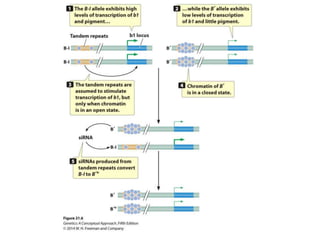
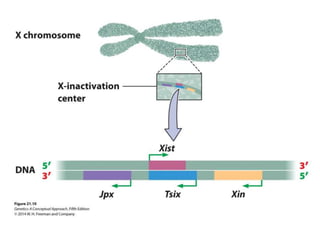
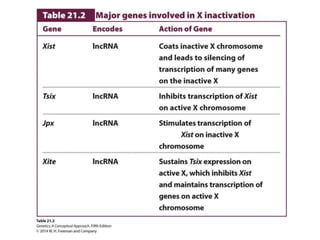
• Epigenetic effects by RNA molecules
• Examples:
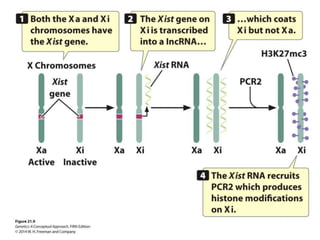
– X inactivation by Xist
– Paramutation in corn by siRNAs
21.3 Epigenetic Processes Produce a
Diverse Set of Effects
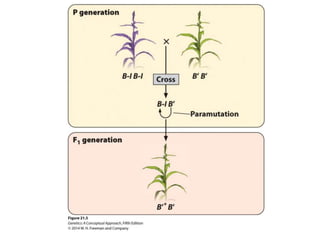
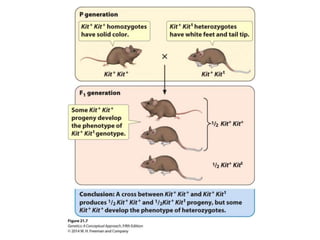
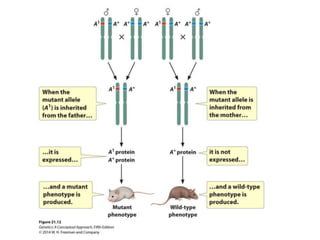
• Paramutation: an interaction between two
alleles that leads to a heritable change in
expression of one of the alleles
• Examples:
– Paramutation in corn
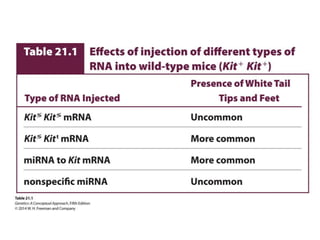
– Paramutation in mice
21.3 Epigenetic Processes Produce a
Diverse Set of Effects
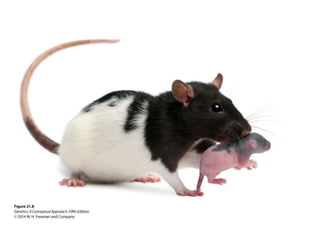
• Behavioral epigenetics: life experiences,
especially early in life, have long-lasting effects
on behavior
• Epigenetic changes induced by maternal
behavior
• Epigenetic effects of early stress in humans
• Epigenetics in cognition
21.3 Epigenetic Processes Produce a
Diverse Set of Effects
• Epigenetic effects of environmental
chemicals
• Transgenerational epigenetic effects on
metabolism
• Epigenetic effects in monozygotic twins
• X inactivation
21.3 Epigenetic Processes Produce a
Diverse Set of Effects
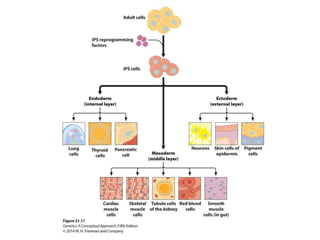
• Epigenetic Changes Associated with Cell
Differentiation
• Genomic Imprinting
• Epigenetic effects in monozygotic twins
21.4 The Epigenome
• Epigenome: overall pattern of chromatin
modifications possessed by each individual
organism
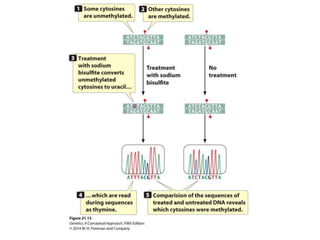
• Detecting DNA methylation
− Restriction endonucleases
− Bisulfate sequencing
• Detecting histone modifications
− ChIP
• Genome-wide epigenetic marks
Pierce5e_ch21_lecturePPT.ppt

Pierce5e_ch21_lecturePPT.ppt

  • 1.
    GENETICS A Conceptual Approach FIFTHEDITION Benjamin A. Pierce CHAPTER 21 Epigenetics © 2014 W. H. Freeman and Company
  • 3.
    21.1 What isEpigenetics? • How, through the process of development, a genotype produces a phenotype • “epigenesis”–how an embryo develops • “genetics”–the study of genes and heredity • Changes that are heritable
  • 4.
  • 5.
    21.2 Several MolecularProcesses Lead to Epigenetic Changes • Changes in chromatin structure, which alter gene expression • Molecular mechanisms that alter chromatin structure: – Changes in patterns of DNA methylation – Chemical modification of histone proteins – RNA molecules that affect chromatin structure and gene expression
  • 6.
    21.2 Several MolecularProcesses Lead to Epigenetic Changes • DNA methylation: addition of methyl groups to nucleotide bases • Most common: methylation of cytosine to produce 5-methylcytosine
  • 10.
    21.2 Several MolecularProcesses Lead to Epigenetic Changes • Histone modifications: more than 100 different posttranslational modifications of histone proteins • Modifications include addition of: – Phosphates – Methyl groups – Acetyl groups – ubiquitin
  • 11.
    21.2 Several MolecularProcesses Lead to Epigenetic Changes • Epigenetic effects by RNA molecules • Examples: – X inactivation by Xist – Paramutation in corn by siRNAs
  • 12.
    21.3 Epigenetic ProcessesProduce a Diverse Set of Effects • Paramutation: an interaction between two alleles that leads to a heritable change in expression of one of the alleles • Examples: – Paramutation in corn – Paramutation in mice
  • 17.
    21.3 Epigenetic ProcessesProduce a Diverse Set of Effects • Behavioral epigenetics: life experiences, especially early in life, have long-lasting effects on behavior • Epigenetic changes induced by maternal behavior • Epigenetic effects of early stress in humans • Epigenetics in cognition
  • 19.
    21.3 Epigenetic ProcessesProduce a Diverse Set of Effects • Epigenetic effects of environmental chemicals • Transgenerational epigenetic effects on metabolism • Epigenetic effects in monozygotic twins • X inactivation
  • 23.
    21.3 Epigenetic ProcessesProduce a Diverse Set of Effects • Epigenetic Changes Associated with Cell Differentiation • Genomic Imprinting • Epigenetic effects in monozygotic twins
  • 26.
    21.4 The Epigenome •Epigenome: overall pattern of chromatin modifications possessed by each individual organism • Detecting DNA methylation − Restriction endonucleases − Bisulfate sequencing • Detecting histone modifications − ChIP • Genome-wide epigenetic marks