Page 1
ECG
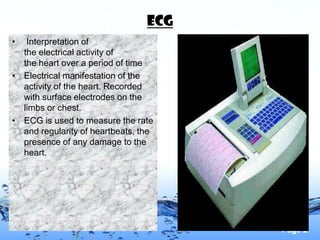
•  Interpretation of
  the electrical activity of
  the heart over a period of time
• Electrical manifestation of the
  activity of the heart. Recorded
  with surface electrodes on the
  limbs or chest.
• ECG is used to measure the rate
  and regularity of heartbeats, the
  presence of any damage to the
  heart.


                                       Page 2
Page 3
Page 4
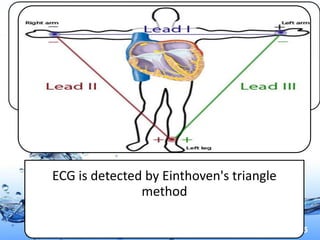
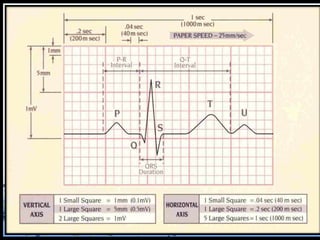
ECG is detected by Einthoven's triangle
               method

                                          Page 5
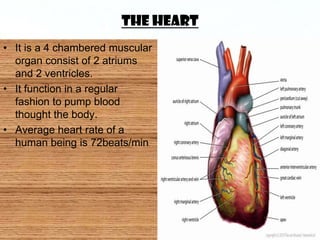
THE HEART
• It is a 4 chambered muscular
  organ consist of 2 atriums
  and 2 ventricles.
• It function in a regular
  fashion to pump blood
  thought the body.
• Average heart rate of a
  human being is 72beats/min


                                   Page 6
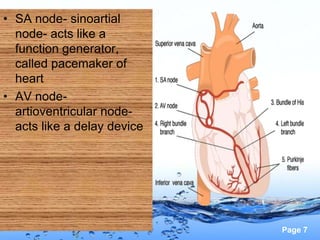
• SA node- sinoartial
  node- acts like a
  function generator,
  called pacemaker of
  heart
• AV node-
  artioventricular node-
  acts like a delay device


                             Page 7
Page 8
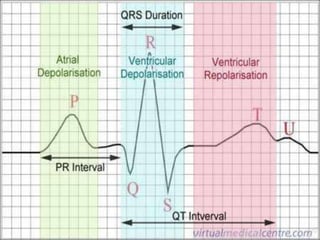
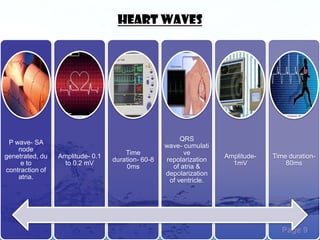
HEART WAVES


                                                        QRS
 P wave- SA
                                                   wave- cumulati
    node
                                      Time               ve
genetrated, du   Amplitude- 0.1                                     Amplitude-   Time duration-
                                  duration- 60-8   repolarization
     e to          to 0.2 mV                                          1mV            80ms
                                       0ms           of atria &
contraction of
                                                   depolarization
    atria.
                                                    of ventricle.


                                                                                    Page 9
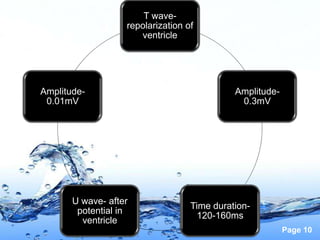
T wave-
                   repolarization of
                      ventricle


Amplitude-                                   Amplitude-
 0.01mV                                       0.3mV


       U wave- after
                                   Time duration-
        potential in
                                     120-160ms
         ventricle
                                                          Page 10
Page 11
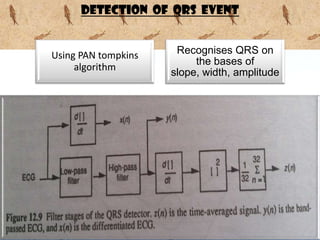
DETECTION OF QRS EVENT


Using PAN tompkins    Recognises QRS on
                          the bases of
     algorithm
                     slope, width, amplitude


                                               Page 12
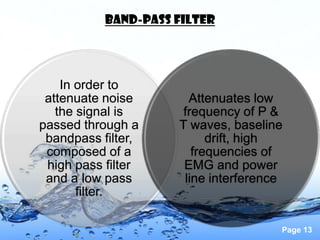
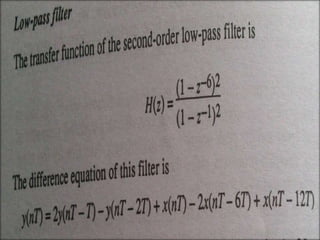
Band-pass filter


    In order to
 attenuate noise       Attenuates low
   the signal is      frequency of P &
passed through a     T waves, baseline
 bandpass filter,          drift, high
 composed of a          frequencies of
 high pass filter     EMG and power
 and a low pass       line interference
       filter.

                                      Page 13
Page 14
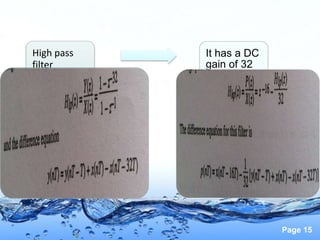
High pass   It has a DC
filter      gain of 32


                          Page 15
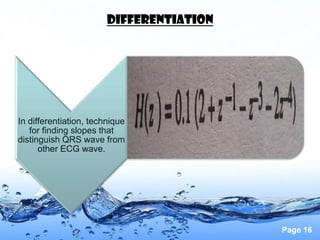
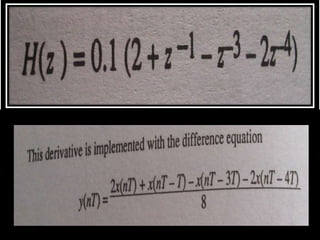
Differentiation


In differentiation, technique
   for finding slopes that
distinguish QRS wave from
      other ECG wave.


                                          Page 16
Page 17
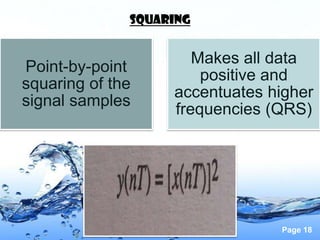
Squaring


                      Makes all data
Point-by-point
                       positive and
squaring of the
                   accentuates higher
signal samples
                   frequencies (QRS)


                                Page 18
Page 19
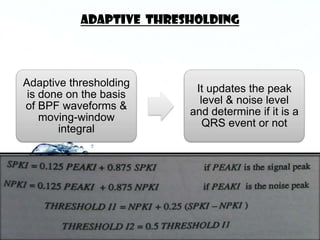
Adaptive thresholding


Adaptive thresholding
                          It updates the peak
 is done on the basis
                           level & noise level
of BPF waveforms &
                         and determine if it is a
    moving-window
                            QRS event or not
       integral


                                             Page 20
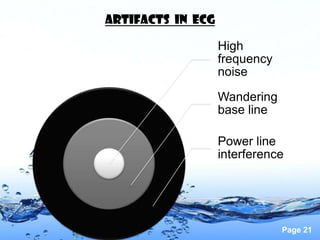
Artifacts in ECG

                   High
                   frequency
                   noise

                   Wandering
                   base line

                   Power line
                   interference


                               Page 21
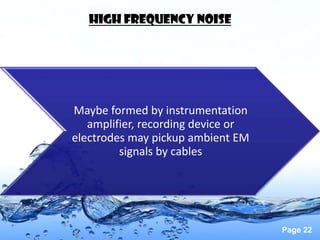
High frequency noise


Maybe formed by instrumentation
   amplifier, recording device or
electrodes may pickup ambient EM
         signals by cables


                                    Page 22
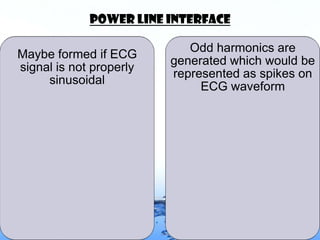
Power line interface

                            Odd harmonics are
Maybe formed if ECG
                         generated which would be
signal is not properly
                         represented as spikes on
     sinusoidal
                              ECG waveform


                                           Page 23
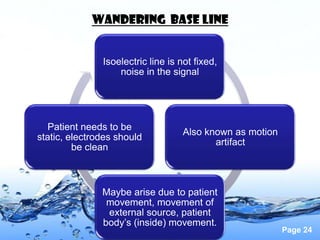
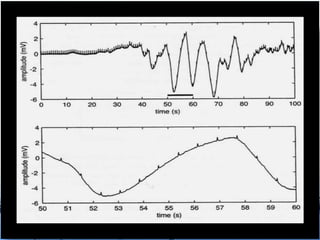
Wandering Base line


               Isoelectric line is not fixed,
                   noise in the signal


   Patient needs to be
                                   Also known as motion
static, electrodes should
                                          artifact
         be clean


               Maybe arise due to patient
                movement, movement of
                external source, patient
               body’s (inside) movement.
                                                          Page 24
Page 25
Page 26

Ecg ppt

  • 1.
  • 2.
    ECG • Interpretationof the electrical activity of the heart over a period of time • Electrical manifestation of the activity of the heart. Recorded with surface electrodes on the limbs or chest. • ECG is used to measure the rate and regularity of heartbeats, the presence of any damage to the heart. Page 2
  • 3.
  • 4.
  • 5.
    ECG is detectedby Einthoven's triangle method Page 5
  • 6.
    THE HEART • Itis a 4 chambered muscular organ consist of 2 atriums and 2 ventricles. • It function in a regular fashion to pump blood thought the body. • Average heart rate of a human being is 72beats/min Page 6
  • 7.
    • SA node-sinoartial node- acts like a function generator, called pacemaker of heart • AV node- artioventricular node- acts like a delay device Page 7
  • 8.
  • 9.
    HEART WAVES QRS P wave- SA wave- cumulati node Time ve genetrated, du Amplitude- 0.1 Amplitude- Time duration- duration- 60-8 repolarization e to to 0.2 mV 1mV 80ms 0ms of atria & contraction of depolarization atria. of ventricle. Page 9
  • 10.
    T wave- repolarization of ventricle Amplitude- Amplitude- 0.01mV 0.3mV U wave- after Time duration- potential in 120-160ms ventricle Page 10
  • 11.
  • 12.
    DETECTION OF QRSEVENT Using PAN tompkins Recognises QRS on the bases of algorithm slope, width, amplitude Page 12
  • 13.
    Band-pass filter In order to attenuate noise Attenuates low the signal is frequency of P & passed through a T waves, baseline bandpass filter, drift, high composed of a frequencies of high pass filter EMG and power and a low pass line interference filter. Page 13
  • 14.
  • 15.
    High pass It has a DC filter gain of 32 Page 15
  • 16.
    Differentiation In differentiation, technique for finding slopes that distinguish QRS wave from other ECG wave. Page 16
  • 17.
  • 18.
    Squaring Makes all data Point-by-point positive and squaring of the accentuates higher signal samples frequencies (QRS) Page 18
  • 19.
  • 20.
    Adaptive thresholding Adaptive thresholding It updates the peak is done on the basis level & noise level of BPF waveforms & and determine if it is a moving-window QRS event or not integral Page 20
  • 21.
    Artifacts in ECG High frequency noise Wandering base line Power line interference Page 21
  • 22.
    High frequency noise Maybeformed by instrumentation amplifier, recording device or electrodes may pickup ambient EM signals by cables Page 22
  • 23.
    Power line interface Odd harmonics are Maybe formed if ECG generated which would be signal is not properly represented as spikes on sinusoidal ECG waveform Page 23
  • 24.
    Wandering Base line Isoelectric line is not fixed, noise in the signal Patient needs to be Also known as motion static, electrodes should artifact be clean Maybe arise due to patient movement, movement of external source, patient body’s (inside) movement. Page 24
  • 25.
  • 26.