Bioelectrical
Signal Analysis
What these are?
Biomedical

engineering

concerned

with

the

is

a

discipline

development

and

manufacture of prostheses, medical devices,
diagnostic devices, drugs etc. And all these
require

bioelectrical

signals.

These

bioelectrical signals are typically very small in
amplitude

and

require

amplification

to

accurately record, display and analyze the
signals
Measurement (Equipments)

heart (electrocardiogram/ECG);
muscles (electromyograph/EMG);
skin (Galvanic skin response/GSR);
scalp (electroencephalograph/EEG);
eyes (electrooculogram/EOG
Importance of Biosignals

Diagnosis

Patient monitoring
Biomedical research
Characteristics of Biosignals
Often hidden in a background of other
signals and noise components.
Generated by highly complex and dynamic
biological processes
with parameters
usually more than a few and varying
continuously
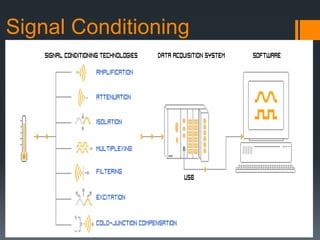
Signal Conditioning
Biosignal Processing
In order to derive the required information from the
bio signals:
-Disturbance should be filtered out
-The amount of data should be reduced by
discriminating only the most significant ones
related with the required information
Stages of Biosignal Processing
 Signal acquisition
 Transformation and reduction of the
signals

 Computation of signal parameters
that are diagnostically significant
 Interpretation or classification of the
signals
Application of Biosignal Analysis
In ICUs
 integrating signals from multiple sources
 presenting information in the most appropriate form
 interpreting variations over prolonged time periods
 learning and recognizing profiles
 triggering “intelligent” alarms
Application Areas of Biosignal Analysis
Biosignals offer parameters that support
medical decision making and trend
analysis.
Bio signal analysis techniques help to
extract
these
parameters
accurately, analyze and interpret them
objectively.
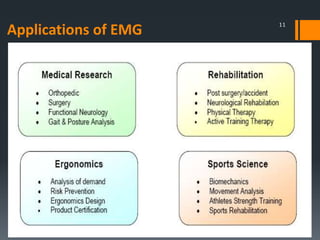
Applications of EMG

11
Applications of EMG in Ergonomics
► ANALYSIS OF DESIGN.
► RISK PREVENTION.

► ERGONOMIC DESIGN.
► PRODUCT CERTIFICATION.

12
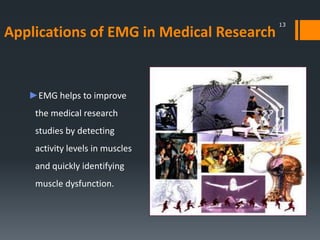
Applications of EMG in Medical Research

►EMG helps to improve
the medical research
studies by detecting
activity levels in muscles
and quickly identifying
muscle dysfunction.

13
Applications of EMG in Medical Research

FUNCTIONAL NEUROLOGY
GAIT AND POSTURE ANALYSIS
PROSTHETIC DEVICES
ORTHOPEDICS
SURGERY

14
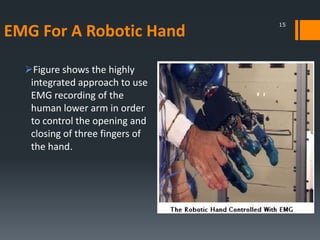
EMG For A Robotic Hand
Figure shows the highly
integrated approach to use
EMG recording of the
human lower arm in order
to control the opening and
closing of three fingers of
the hand.

15
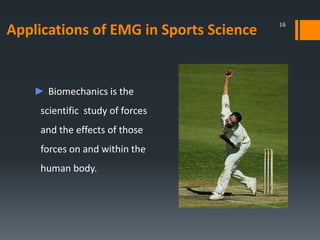
Applications of EMG in Sports Science

► Biomechanics is the
scientific study of forces
and the effects of those
forces on and within the
human body.

16
Thanks…………

Bioelectrical signals

  • 1.
  • 2.
    What these are? Biomedical engineering concerned with the is a discipline development and manufactureof prostheses, medical devices, diagnostic devices, drugs etc. And all these require bioelectrical signals. These bioelectrical signals are typically very small in amplitude and require amplification to accurately record, display and analyze the signals
  • 3.
    Measurement (Equipments) heart (electrocardiogram/ECG); muscles(electromyograph/EMG); skin (Galvanic skin response/GSR); scalp (electroencephalograph/EEG); eyes (electrooculogram/EOG
  • 4.
    Importance of Biosignals Diagnosis Patientmonitoring Biomedical research
  • 5.
    Characteristics of Biosignals Oftenhidden in a background of other signals and noise components. Generated by highly complex and dynamic biological processes with parameters usually more than a few and varying continuously
  • 6.
  • 7.
    Biosignal Processing In orderto derive the required information from the bio signals: -Disturbance should be filtered out -The amount of data should be reduced by discriminating only the most significant ones related with the required information
  • 8.
    Stages of BiosignalProcessing  Signal acquisition  Transformation and reduction of the signals  Computation of signal parameters that are diagnostically significant  Interpretation or classification of the signals
  • 9.
    Application of BiosignalAnalysis In ICUs  integrating signals from multiple sources  presenting information in the most appropriate form  interpreting variations over prolonged time periods  learning and recognizing profiles  triggering “intelligent” alarms
  • 10.
    Application Areas ofBiosignal Analysis Biosignals offer parameters that support medical decision making and trend analysis. Bio signal analysis techniques help to extract these parameters accurately, analyze and interpret them objectively.
  • 11.
  • 12.
    Applications of EMGin Ergonomics ► ANALYSIS OF DESIGN. ► RISK PREVENTION. ► ERGONOMIC DESIGN. ► PRODUCT CERTIFICATION. 12
  • 13.
    Applications of EMGin Medical Research ►EMG helps to improve the medical research studies by detecting activity levels in muscles and quickly identifying muscle dysfunction. 13
  • 14.
    Applications of EMGin Medical Research FUNCTIONAL NEUROLOGY GAIT AND POSTURE ANALYSIS PROSTHETIC DEVICES ORTHOPEDICS SURGERY 14
  • 15.
    EMG For ARobotic Hand Figure shows the highly integrated approach to use EMG recording of the human lower arm in order to control the opening and closing of three fingers of the hand. 15
  • 16.
    Applications of EMGin Sports Science ► Biomechanics is the scientific study of forces and the effects of those forces on and within the human body. 16
  • 17.