Earned Value Analysis 
Concept and Application 
Presented by 
Ahmed Rami Elsherif 
27/12/2012
Concept 
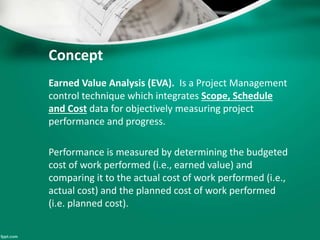
Earned Value Analysis (EVA). Is a Project Management 
control technique which integrates Scope, Schedule 
and Cost data for objectively measuring project 
performance and progress. 
Performance is measured by determining the budgeted 
cost of work performed (i.e., earned value) and 
comparing it to the actual cost of work performed (i.e., 
actual cost) and the planned cost of work performed 
(i.e. planned cost).
Definitions 
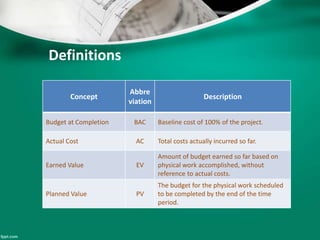
Concept 
Abbre 
viation 
Description 
Budget at Completion BAC Baseline cost of 100% of the project. 
Actual Cost AC Total costs actually incurred so far. 
Earned Value EV 
Amount of budget earned so far based on 
physical work accomplished, without 
reference to actual costs. 
Planned Value PV 
The budget for the physical work scheduled 
to be completed by the end of the time 
period.
Metrics 
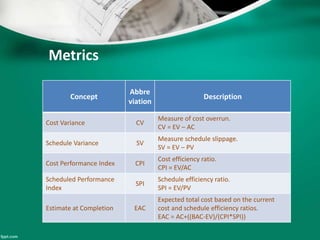
Concept 
Abbre 
viation 
Description 
Cost Variance CV 
Measure of cost overrun. 
CV = EV – AC 
Schedule Variance SV 
Measure schedule slippage. 
SV = EV – PV 
Cost Performance Index CPI 
Cost efficiency ratio. 
CPI = EV/AC 
Scheduled Performance 
Index 
SPI 
Schedule efficiency ratio. 
SPI = EV/PV 
Estimate at Completion EAC 
Expected total cost based on the current 
cost and schedule efficiency ratios. 
EAC = AC+((BAC-EV)/(CPI*SPI))
For example 
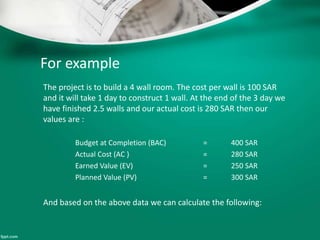
The project is to build a 4 wall room. The cost per wall is 100 SAR 
and it will take 1 day to construct 1 wall. At the end of the 3 day we 
have finished 2.5 walls and our actual cost is 280 SAR then our 
values are : 
Budget at Completion (BAC) = 400 SAR 
Actual Cost (AC ) = 280 SAR 
Earned Value (EV) = 250 SAR 
Planned Value (PV) = 300 SAR 
And based on the above data we can calculate the following:
Calculated Metrics 
Cost Variance is CV = EV – AC = 250 – 280 = -30 
we are over budget by 30 SAR 
Scheduled Variance is SV = EV – PV = 250 – 300 = -50 
we behind scheduled by 50 SAR 
Cost Performance Index is CPI = EV / AC = 250 / 280 = .89 
For each 1 SAR we spend we gain .89 halalas 
Schedule Performance Index is SPI = EV / PV = 250 / 300 = .83 
We are behind schedule by 17 %. 
Estimate at Completion is EAC = AC+((BAC-EV)/(CPI*SPI)) = 483 
If we continue with the same efficiency rates, we might end up with 
a total cost of 483 SAR.
Proposal 
Recent research studies have shown that the tools and 
techniques of Earned Value Analysis have positive impact on 
improving project controls on Scope, Cost and Schedule and 
are good predictors of project success. 
Popularity of EVA has grown significantly in recent years for 
which we would like to recommend using it for ATCO 
projects (i.e. construction, big projects in EWE, EWF). 
For that we have developed a simple module in the EIS 
where project managers will enter the EV parameters which 
the system will combine with data booked in accounts and 
calculates the EV metrics. 
Data from RAS ALKHER project is entered in the system for 
testing.
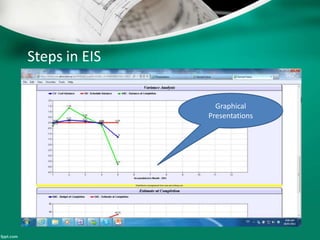
Steps in EIS 
1. Login to EIS by assigned operational staff. 
2. Process the EV report of his particular division. 
3. Enter the EV values of the Month and any comments 
regarding the variances. 
Graphical 
Presentations 
4. Use the data and reports in the monthly project status 
reporting. 
Project EV data entered 
by Operations on a 
monthly basis 
Projects status 
dashboard report
Proposed Plan 
1. Agree with you if this is a suitable solution. 
We can discuss this by taking RAS ALKHER 
project data which is already entered in the 
system as an example. 
2. If Yes share it with operations for feedback 
on possible enhancements or 
improvements. 
3. Identify users in each divisions and do 
training. 
4. Start using the new process.

Earned Value Analysis

  • 1.
    Earned Value Analysis Concept and Application Presented by Ahmed Rami Elsherif 27/12/2012
  • 2.
    Concept Earned ValueAnalysis (EVA). Is a Project Management control technique which integrates Scope, Schedule and Cost data for objectively measuring project performance and progress. Performance is measured by determining the budgeted cost of work performed (i.e., earned value) and comparing it to the actual cost of work performed (i.e., actual cost) and the planned cost of work performed (i.e. planned cost).
  • 3.
    Definitions Concept Abbre viation Description Budget at Completion BAC Baseline cost of 100% of the project. Actual Cost AC Total costs actually incurred so far. Earned Value EV Amount of budget earned so far based on physical work accomplished, without reference to actual costs. Planned Value PV The budget for the physical work scheduled to be completed by the end of the time period.
  • 4.
    Metrics Concept Abbre viation Description Cost Variance CV Measure of cost overrun. CV = EV – AC Schedule Variance SV Measure schedule slippage. SV = EV – PV Cost Performance Index CPI Cost efficiency ratio. CPI = EV/AC Scheduled Performance Index SPI Schedule efficiency ratio. SPI = EV/PV Estimate at Completion EAC Expected total cost based on the current cost and schedule efficiency ratios. EAC = AC+((BAC-EV)/(CPI*SPI))
  • 5.
    For example Theproject is to build a 4 wall room. The cost per wall is 100 SAR and it will take 1 day to construct 1 wall. At the end of the 3 day we have finished 2.5 walls and our actual cost is 280 SAR then our values are : Budget at Completion (BAC) = 400 SAR Actual Cost (AC ) = 280 SAR Earned Value (EV) = 250 SAR Planned Value (PV) = 300 SAR And based on the above data we can calculate the following:
  • 6.
    Calculated Metrics CostVariance is CV = EV – AC = 250 – 280 = -30 we are over budget by 30 SAR Scheduled Variance is SV = EV – PV = 250 – 300 = -50 we behind scheduled by 50 SAR Cost Performance Index is CPI = EV / AC = 250 / 280 = .89 For each 1 SAR we spend we gain .89 halalas Schedule Performance Index is SPI = EV / PV = 250 / 300 = .83 We are behind schedule by 17 %. Estimate at Completion is EAC = AC+((BAC-EV)/(CPI*SPI)) = 483 If we continue with the same efficiency rates, we might end up with a total cost of 483 SAR.
  • 7.
    Proposal Recent researchstudies have shown that the tools and techniques of Earned Value Analysis have positive impact on improving project controls on Scope, Cost and Schedule and are good predictors of project success. Popularity of EVA has grown significantly in recent years for which we would like to recommend using it for ATCO projects (i.e. construction, big projects in EWE, EWF). For that we have developed a simple module in the EIS where project managers will enter the EV parameters which the system will combine with data booked in accounts and calculates the EV metrics. Data from RAS ALKHER project is entered in the system for testing.
  • 8.
    Steps in EIS 1. Login to EIS by assigned operational staff. 2. Process the EV report of his particular division. 3. Enter the EV values of the Month and any comments regarding the variances. Graphical Presentations 4. Use the data and reports in the monthly project status reporting. Project EV data entered by Operations on a monthly basis Projects status dashboard report
  • 9.
    Proposed Plan 1.Agree with you if this is a suitable solution. We can discuss this by taking RAS ALKHER project data which is already entered in the system as an example. 2. If Yes share it with operations for feedback on possible enhancements or improvements. 3. Identify users in each divisions and do training. 4. Start using the new process.