Earned Value Management
(EVM)
Shenin Hassan
2015
Outline
• Introduction
• Basic Elements of EVM
• Performance Analysis
and Forecasting
• Guidance for the use of
Key EVM Practices
Introduction
• Feedback of the Project
is critical
– Identify problems
– Early decision making
• EVM is one of the most
effective “performance
measurements and
feedback tools”
EVM
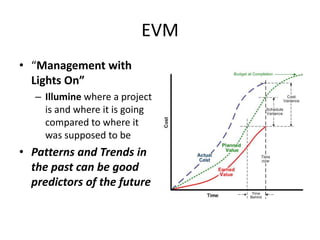
• “Management with
Lights On”
– Illumine where a project
is and where it is going
compared to where it
was supposed to be
• Patterns and Trends in
the past can be good
predictors of the future
EVM
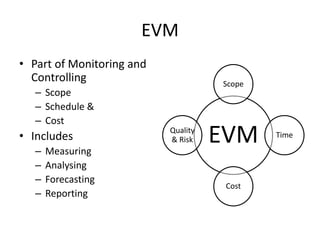
• Part of Monitoring and
Controlling
– Scope
– Schedule &
– Cost
• Includes
– Measuring
– Analysing
– Forecasting
– Reporting
EVM
Scope
Time
Cost
Quality
& Risk
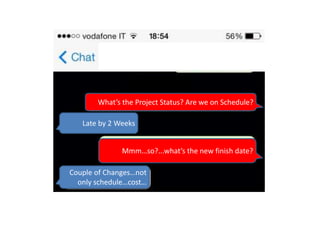
What’s the Project Status? Are we on Schedule?
Late by 2 Weeks
Mmm…so?...what’s the new finish date?
Couple of Changes…not
only schedule…cost…
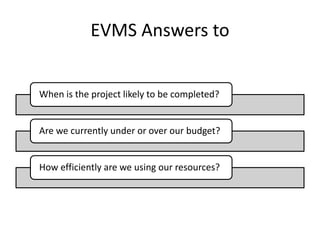
EVMS Answers to
When is the project likely to be completed?
Are we currently under or over our budget?
How efficiently are we using our resources?
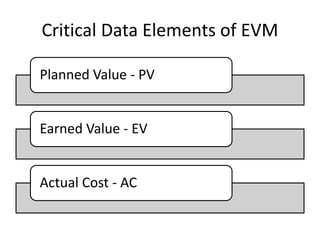
Critical Data Elements of EVM
Planned Value - PV
Earned Value - EV
Actual Cost - AC
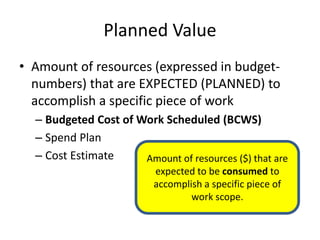
Planned Value
• Amount of resources (expressed in budget-
numbers) that are EXPECTED (PLANNED) to
accomplish a specific piece of work
– Budgeted Cost of Work Scheduled (BCWS)
– Spend Plan
– Cost Estimate Amount of resources ($) that are
expected to be consumed to
accomplish a specific piece of
work scope.
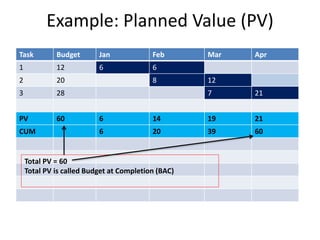
Example: Planned Value (PV)
Task Budget Jan Feb Mar Apr
1 12 6 6
2 20 8 12
3 28 7 21
PV 60 6 14 19 21
CUM 6 20 39 60
Total PV = 60
Total PV is called Budget at Completion (BAC)
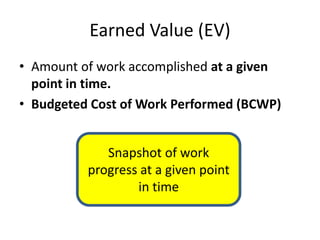
Earned Value (EV)
• Amount of work accomplished at a given
point in time.
• Budgeted Cost of Work Performed (BCWP)
Snapshot of work
progress at a given point
in time
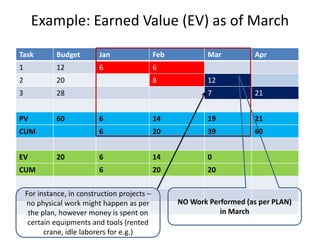
Example: Earned Value (EV) as of March
Task Budget Jan Feb Mar Apr
1 12 6 6
2 20 8 12
3 28 7 21
PV 60 6 14 19 21
CUM 6 20 39 60
EV 20 6 14 0
CUM 6 20 20
NO Work Performed (as per PLAN)
in March
For instance, in construction projects –
no physical work might happen as per
the plan, however money is spent on
certain equipments and tools (rented
crane, idle laborers for e.g.)
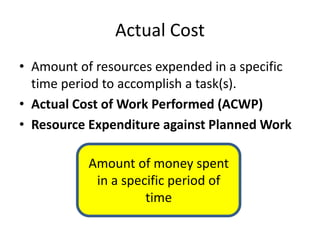
Actual Cost
• Amount of resources expended in a specific
time period to accomplish a task(s).
• Actual Cost of Work Performed (ACWP)
• Resource Expenditure against Planned Work
Amount of money spent
in a specific period of
time
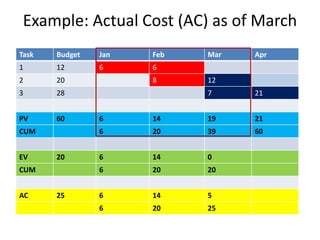
Example: Actual Cost (AC) as of March
Task Budget Jan Feb Mar Apr
1 12 6 6
2 20 8 12
3 28 7 21
PV 60 6 14 19 21
CUM 6 20 39 60
EV 20 6 14 0
CUM 6 20 20
AC 25 6 14 5
6 20 25
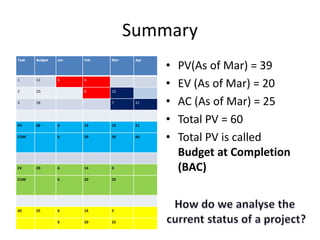
Summary
Task Budget Jan Feb Mar Apr
1 12 6 6
2 20 8 12
3 28 7 21
PV 60 6 14 19 21
CUM 6 20 39 60
EV 20 6 14 0
CUM 6 20 20
AC 25 6 14 5
6 20 25
• PV(As of Mar) = 39
• EV (As of Mar) = 20
• AC (As of Mar) = 25
• Total PV = 60
• Total PV is called
Budget at Completion
(BAC)
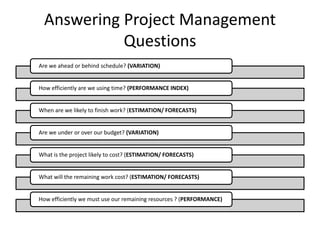
Answering Project Management
Questions
Are we ahead or behind schedule? (VARIATION)
How efficiently are we using time? (PERFORMANCE INDEX)
When are we likely to finish work? (ESTIMATION/ FORECASTS)
Are we under or over our budget? (VARIATION)
What is the project likely to cost? (ESTIMATION/ FORECASTS)
What will the remaining work cost? (ESTIMATION/ FORECASTS)
How efficiently we must use our remaining resources ? (PERFORMANCE)
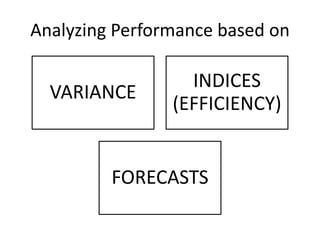
Analyzing Performance based on
VARIANCE
INDICES
(EFFICIENCY)
FORECASTS
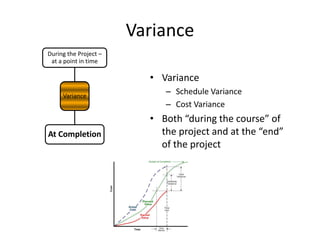
Variance
Variance
During the Project –
at a point in time
At Completion
• Variance
– Schedule Variance
– Cost Variance
• Both “during the course” of
the project and at the “end”
of the project
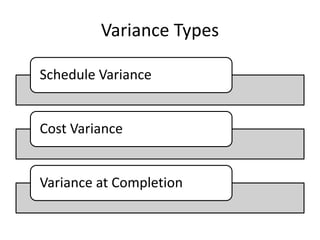
Variance Types
Schedule Variance
Cost Variance
Variance at Completion
Variance
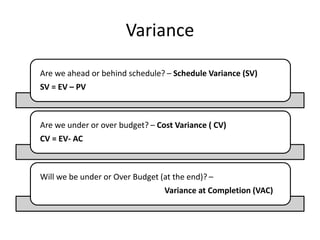
Are we ahead or behind schedule? – Schedule Variance (SV)
SV = EV – PV
Are we under or over budget? – Cost Variance ( CV)
CV = EV- AC
Will we be under or Over Budget (at the end)? –
Variance at Completion (VAC)
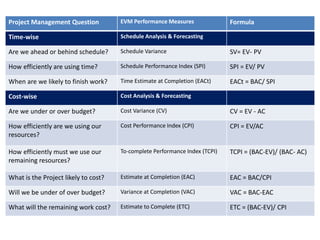
Project Management Question EVM Performance Measures Formula
Time-wise Schedule Analysis & Forecasting
Are we ahead or behind schedule? Schedule Variance SV= EV- PV
How efficiently are using time? Schedule Performance Index (SPI) SPI = EV/ PV
When are we likely to finish work? Time Estimate at Completion (EACt) EACt = BAC/ SPI
Cost-wise Cost Analysis & Forecasting
Are we under or over budget? Cost Variance (CV) CV = EV - AC
How efficiently are we using our
resources?
Cost Performance Index (CPI) CPI = EV/AC
How efficiently must we use our
remaining resources?
To-complete Performance Index (TCPI) TCPI = (BAC-EV)/ (BAC- AC)
What is the Project likely to cost? Estimate at Completion (EAC) EAC = BAC/CPI
Will we be under of over budget? Variance at Completion (VAC) VAC = BAC-EAC
What will the remaining work cost? Estimate to Complete (ETC) ETC = (BAC-EV)/ CPI
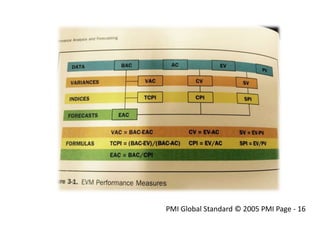
PMI Global Standard © 2005 PMI Page - 16
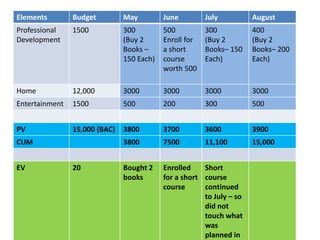
Elements Budget May June July August
Professional
Development
1500 300
(Buy 2
Books –
150 Each)
500
Enroll for
a short
course
worth 500
300
(Buy 2
Books– 150
Each)
400
(Buy 2
Books– 200
Each)
Home 12,000 3000 3000 3000 3000
Entertainment 1500 500 200 300 500
PV 15,000 (BAC) 3800 3700 3600 3900
CUM 3800 7500 11,100 15,000
EV 20 Bought 2
books
Enrolled
for a short
course
Short
course
continued
to July – so
did not
touch what
was
planned in

Earned value management for Beginners

  • 1.
  • 2.
    Outline • Introduction • BasicElements of EVM • Performance Analysis and Forecasting • Guidance for the use of Key EVM Practices
  • 3.
    Introduction • Feedback ofthe Project is critical – Identify problems – Early decision making • EVM is one of the most effective “performance measurements and feedback tools”
  • 4.
    EVM • “Management with LightsOn” – Illumine where a project is and where it is going compared to where it was supposed to be • Patterns and Trends in the past can be good predictors of the future
  • 5.
    EVM • Part ofMonitoring and Controlling – Scope – Schedule & – Cost • Includes – Measuring – Analysing – Forecasting – Reporting EVM Scope Time Cost Quality & Risk
  • 6.
    What’s the ProjectStatus? Are we on Schedule? Late by 2 Weeks Mmm…so?...what’s the new finish date? Couple of Changes…not only schedule…cost…
  • 7.
    EVMS Answers to Whenis the project likely to be completed? Are we currently under or over our budget? How efficiently are we using our resources?
  • 8.
    Critical Data Elementsof EVM Planned Value - PV Earned Value - EV Actual Cost - AC
  • 9.
    Planned Value • Amountof resources (expressed in budget- numbers) that are EXPECTED (PLANNED) to accomplish a specific piece of work – Budgeted Cost of Work Scheduled (BCWS) – Spend Plan – Cost Estimate Amount of resources ($) that are expected to be consumed to accomplish a specific piece of work scope.
  • 10.
    Example: Planned Value(PV) Task Budget Jan Feb Mar Apr 1 12 6 6 2 20 8 12 3 28 7 21 PV 60 6 14 19 21 CUM 6 20 39 60 Total PV = 60 Total PV is called Budget at Completion (BAC)
  • 11.
    Earned Value (EV) •Amount of work accomplished at a given point in time. • Budgeted Cost of Work Performed (BCWP) Snapshot of work progress at a given point in time
  • 12.
    Example: Earned Value(EV) as of March Task Budget Jan Feb Mar Apr 1 12 6 6 2 20 8 12 3 28 7 21 PV 60 6 14 19 21 CUM 6 20 39 60 EV 20 6 14 0 CUM 6 20 20 NO Work Performed (as per PLAN) in March For instance, in construction projects – no physical work might happen as per the plan, however money is spent on certain equipments and tools (rented crane, idle laborers for e.g.)
  • 13.
    Actual Cost • Amountof resources expended in a specific time period to accomplish a task(s). • Actual Cost of Work Performed (ACWP) • Resource Expenditure against Planned Work Amount of money spent in a specific period of time
  • 14.
    Example: Actual Cost(AC) as of March Task Budget Jan Feb Mar Apr 1 12 6 6 2 20 8 12 3 28 7 21 PV 60 6 14 19 21 CUM 6 20 39 60 EV 20 6 14 0 CUM 6 20 20 AC 25 6 14 5 6 20 25
  • 15.
    Summary Task Budget JanFeb Mar Apr 1 12 6 6 2 20 8 12 3 28 7 21 PV 60 6 14 19 21 CUM 6 20 39 60 EV 20 6 14 0 CUM 6 20 20 AC 25 6 14 5 6 20 25 • PV(As of Mar) = 39 • EV (As of Mar) = 20 • AC (As of Mar) = 25 • Total PV = 60 • Total PV is called Budget at Completion (BAC)
  • 16.
    Answering Project Management Questions Arewe ahead or behind schedule? (VARIATION) How efficiently are we using time? (PERFORMANCE INDEX) When are we likely to finish work? (ESTIMATION/ FORECASTS) Are we under or over our budget? (VARIATION) What is the project likely to cost? (ESTIMATION/ FORECASTS) What will the remaining work cost? (ESTIMATION/ FORECASTS) How efficiently we must use our remaining resources ? (PERFORMANCE)
  • 17.
    Analyzing Performance basedon VARIANCE INDICES (EFFICIENCY) FORECASTS
  • 18.
    Variance Variance During the Project– at a point in time At Completion • Variance – Schedule Variance – Cost Variance • Both “during the course” of the project and at the “end” of the project
  • 19.
    Variance Types Schedule Variance CostVariance Variance at Completion
  • 20.
    Variance Are we aheador behind schedule? – Schedule Variance (SV) SV = EV – PV Are we under or over budget? – Cost Variance ( CV) CV = EV- AC Will we be under or Over Budget (at the end)? – Variance at Completion (VAC)
  • 21.
    Project Management QuestionEVM Performance Measures Formula Time-wise Schedule Analysis & Forecasting Are we ahead or behind schedule? Schedule Variance SV= EV- PV How efficiently are using time? Schedule Performance Index (SPI) SPI = EV/ PV When are we likely to finish work? Time Estimate at Completion (EACt) EACt = BAC/ SPI Cost-wise Cost Analysis & Forecasting Are we under or over budget? Cost Variance (CV) CV = EV - AC How efficiently are we using our resources? Cost Performance Index (CPI) CPI = EV/AC How efficiently must we use our remaining resources? To-complete Performance Index (TCPI) TCPI = (BAC-EV)/ (BAC- AC) What is the Project likely to cost? Estimate at Completion (EAC) EAC = BAC/CPI Will we be under of over budget? Variance at Completion (VAC) VAC = BAC-EAC What will the remaining work cost? Estimate to Complete (ETC) ETC = (BAC-EV)/ CPI
  • 22.
    PMI Global Standard© 2005 PMI Page - 16
  • 23.
    Elements Budget MayJune July August Professional Development 1500 300 (Buy 2 Books – 150 Each) 500 Enroll for a short course worth 500 300 (Buy 2 Books– 150 Each) 400 (Buy 2 Books– 200 Each) Home 12,000 3000 3000 3000 3000 Entertainment 1500 500 200 300 500 PV 15,000 (BAC) 3800 3700 3600 3900 CUM 3800 7500 11,100 15,000 EV 20 Bought 2 books Enrolled for a short course Short course continued to July – so did not touch what was planned in

Editor's Notes

  • #10 Budgeted Cost of Work Scheduled (BCWS)